



Design and multi-objective optimization of heavy-load lifting buffer airbag
-
摘要: 针对大载重无人平台吊落式着陆的冲击防护问题,设计了一种实现安全着陆的缓冲气囊系统。基于理论模型初步确定气囊几何参数和排气孔面积,利用控制体积法(control volume method, CVM)建立有限元仿真模型,模拟气囊缓冲过程。通过单参数分析,揭示了排气孔尺寸、临界排气压力、气囊底面积及高度对缓冲性能的影响规律,发现上述参数在降低最大过载与提升比吸能之间存在冲突。为解决此问题,采用最优拉丁超立方设计采样,结合神经网络构建目标函数代理模型,并集成NSGA-II遗传算法进行多目标优化。优化结果表明,当排气孔面积为
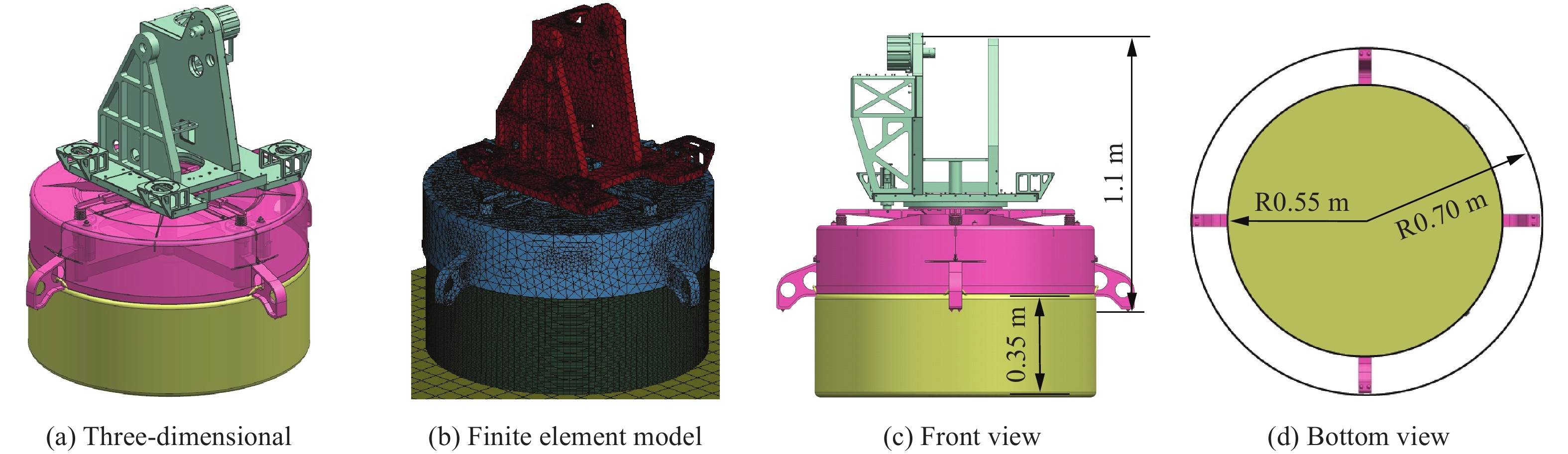
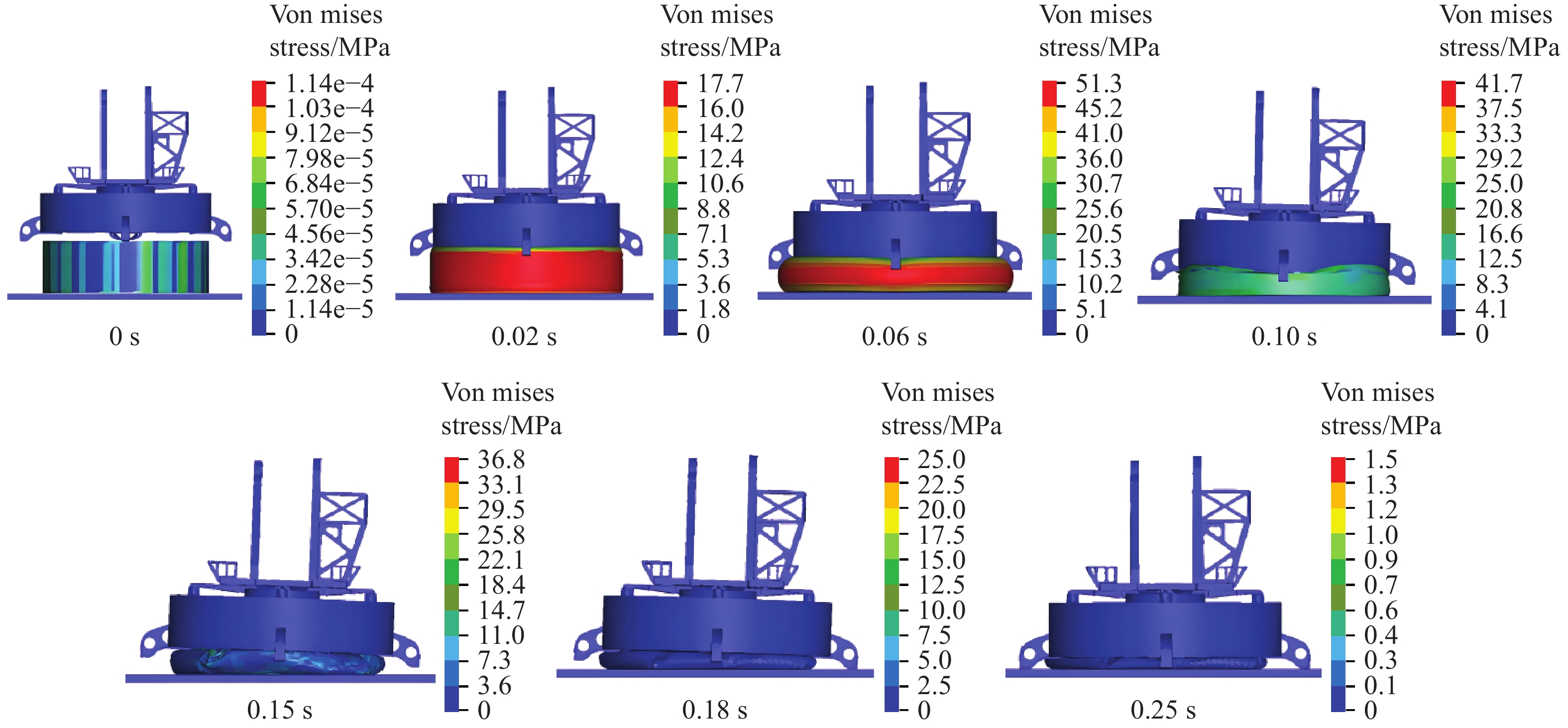
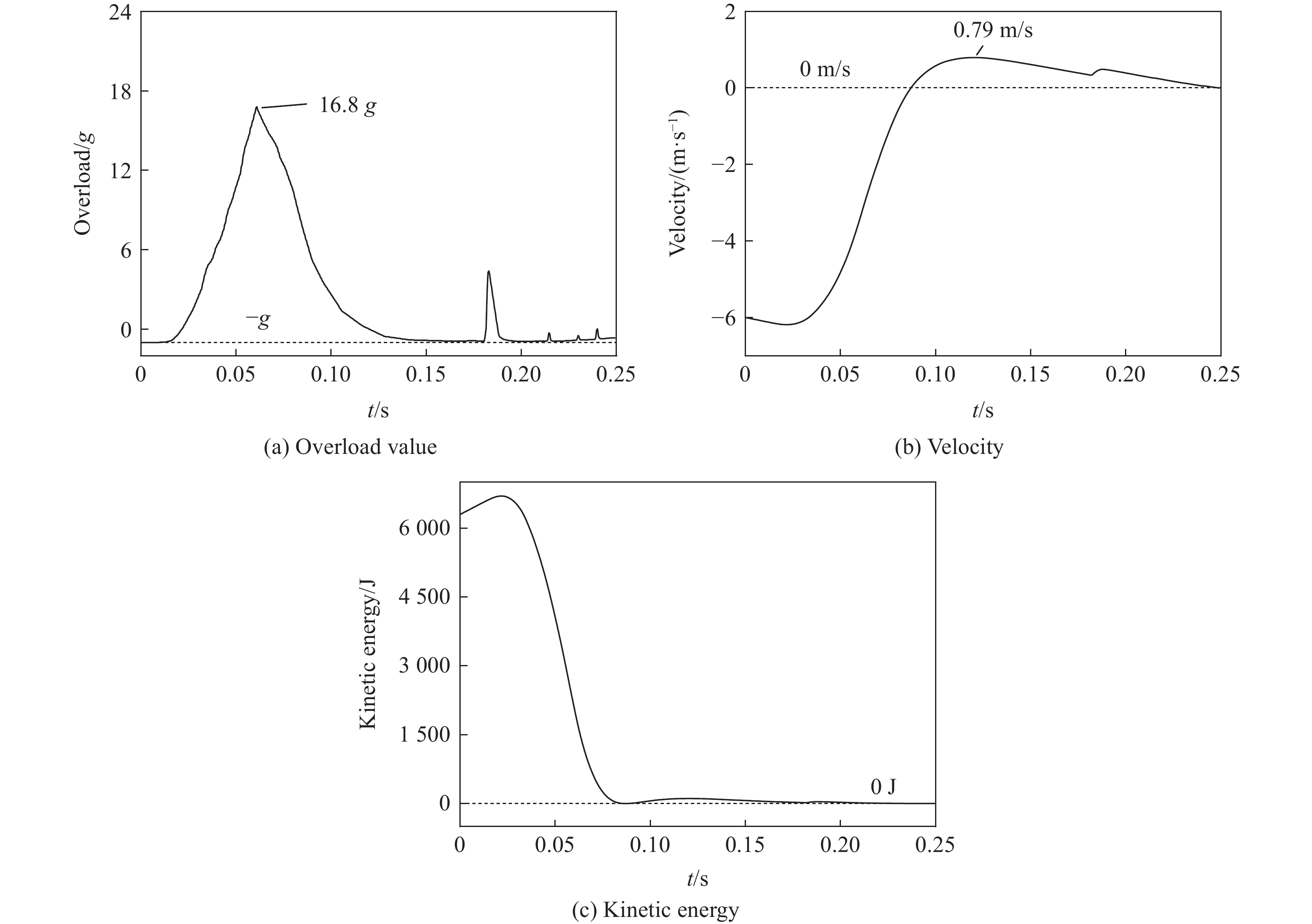
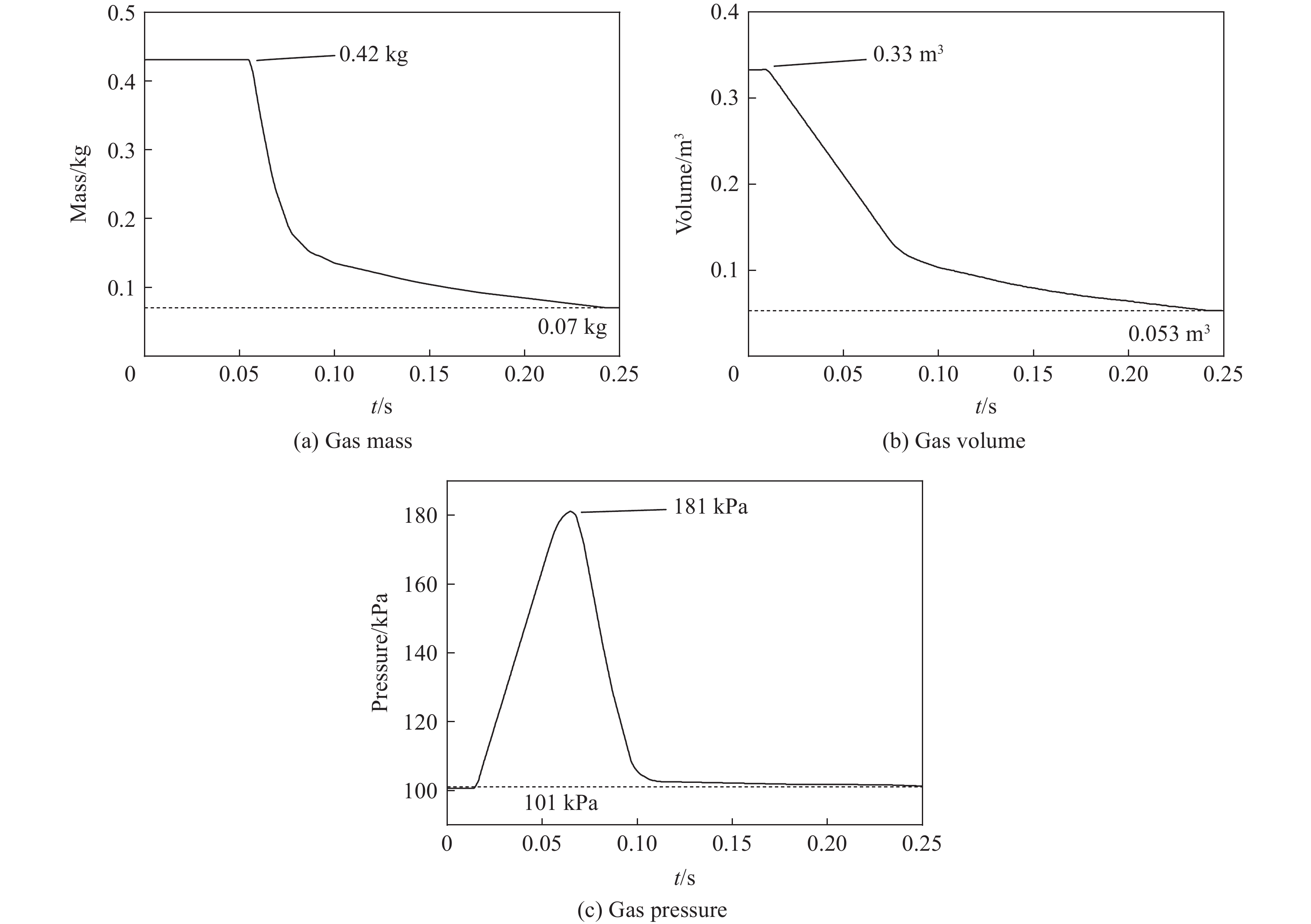
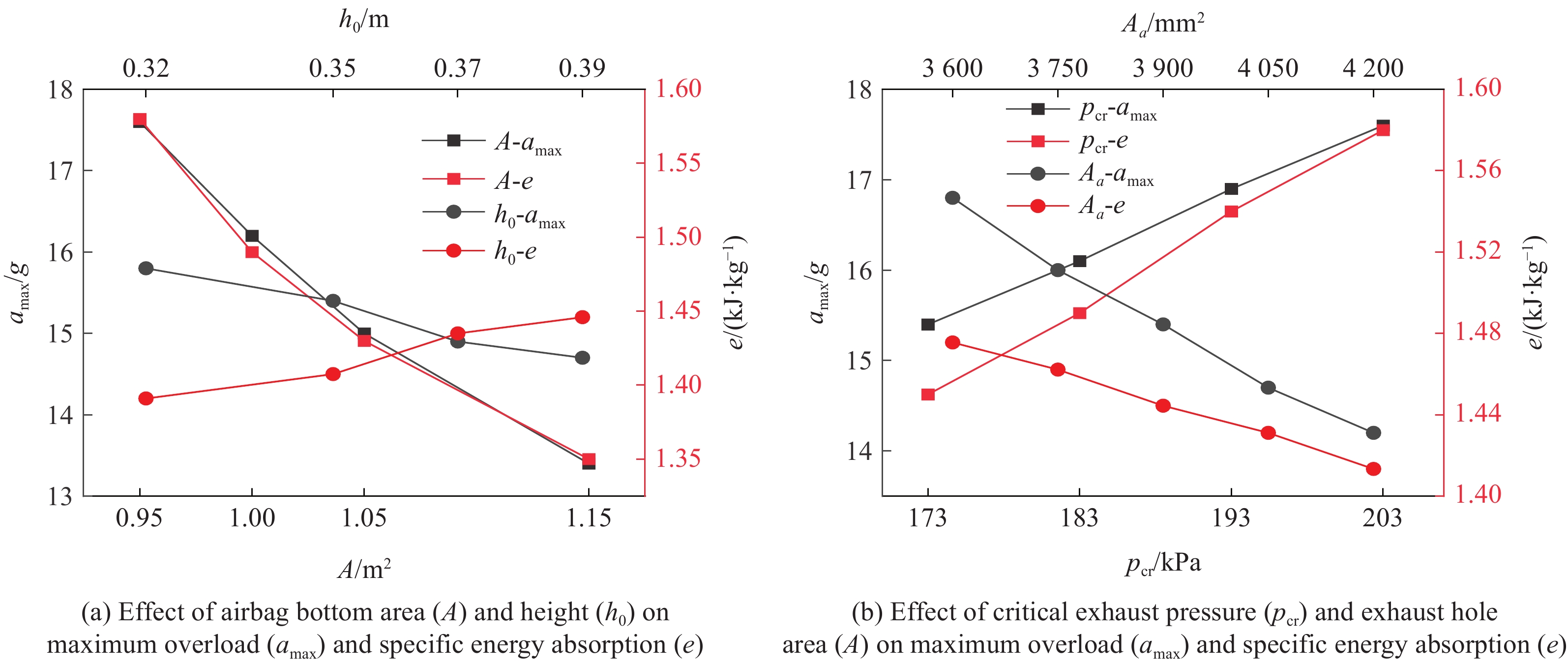
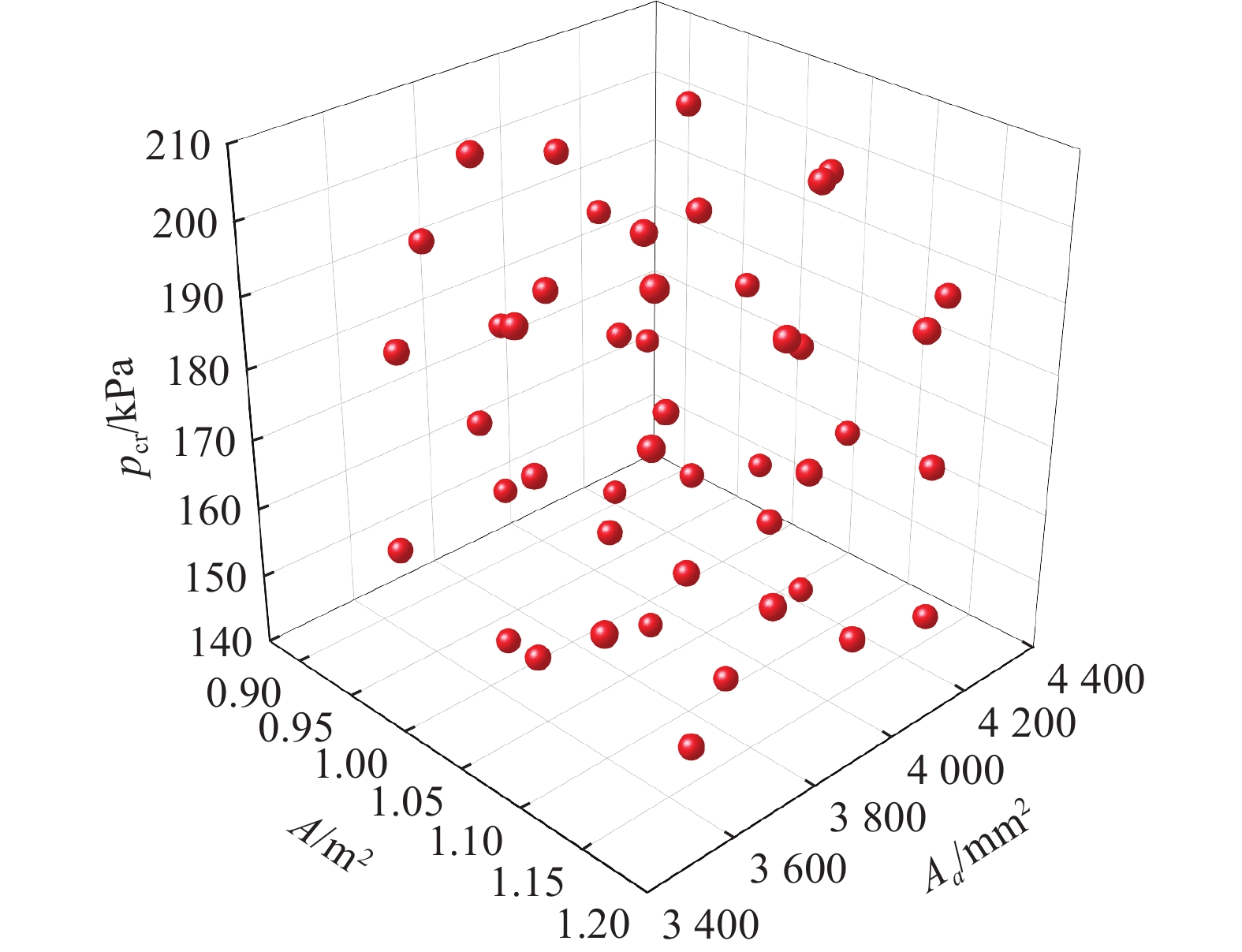
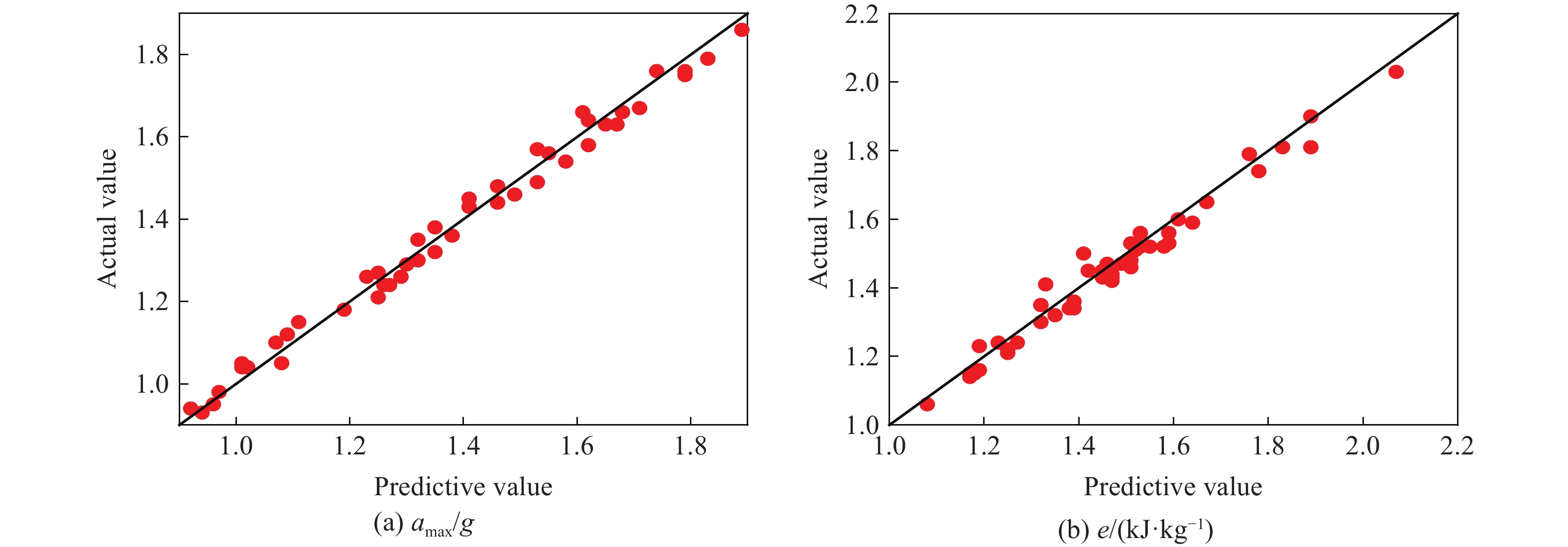
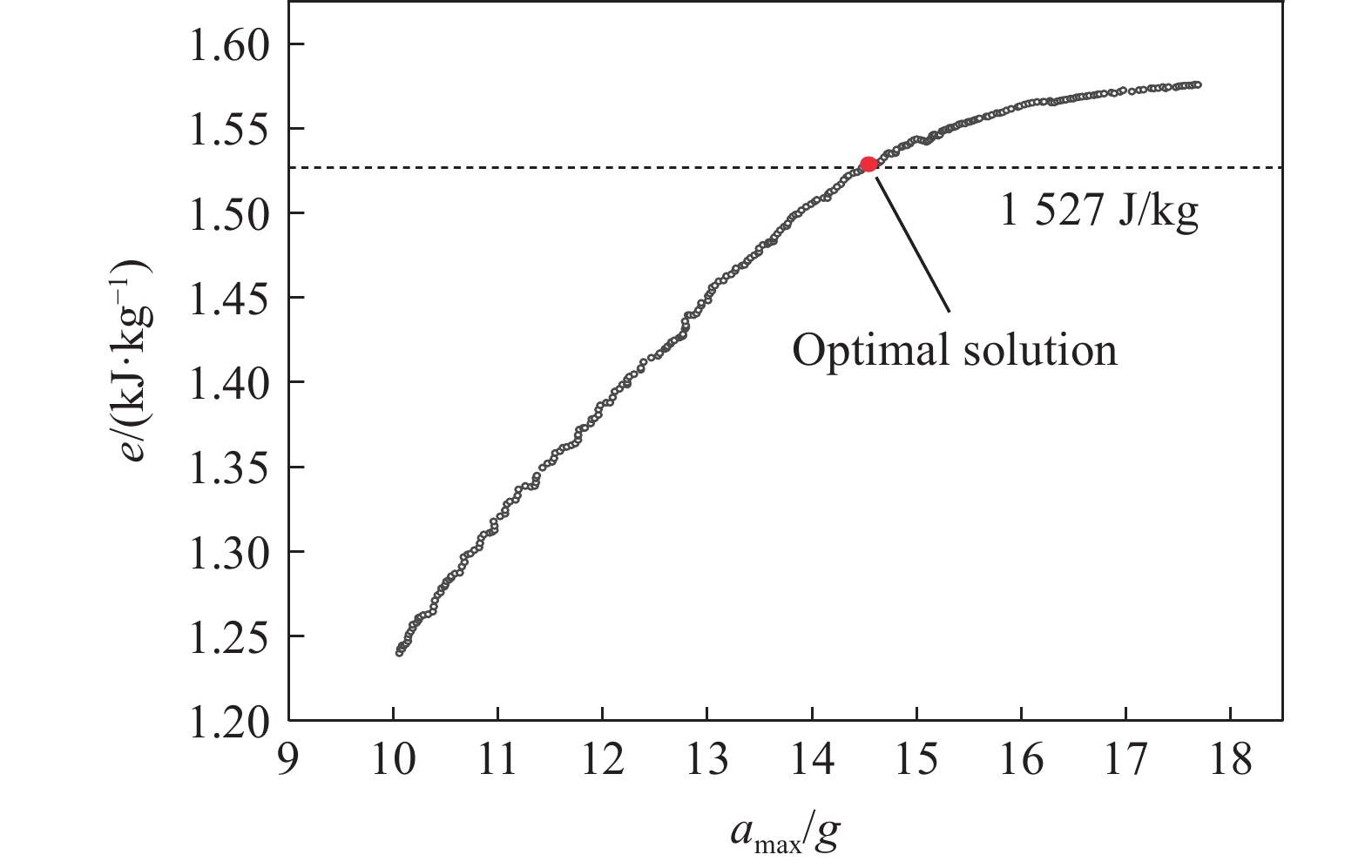
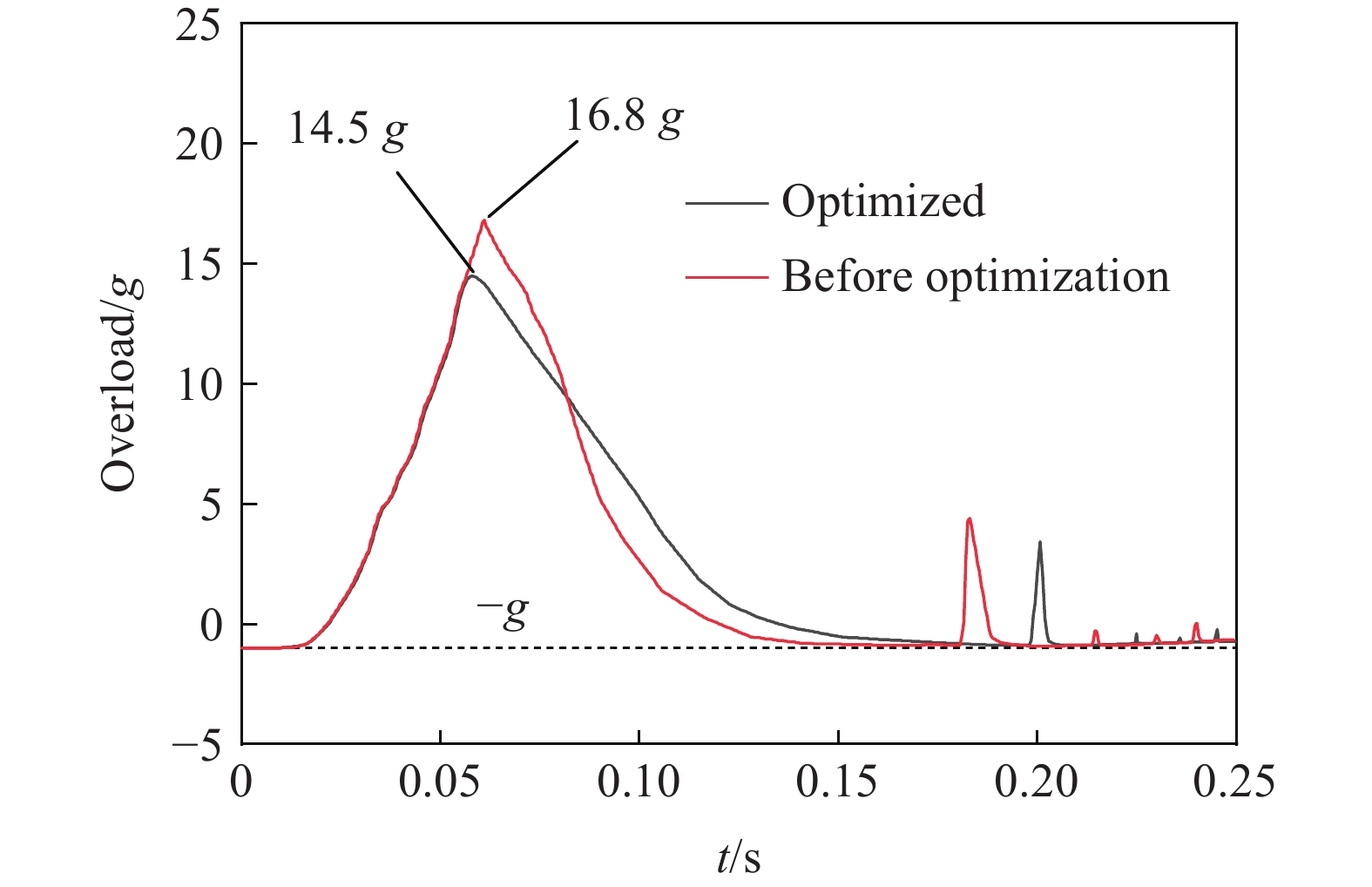
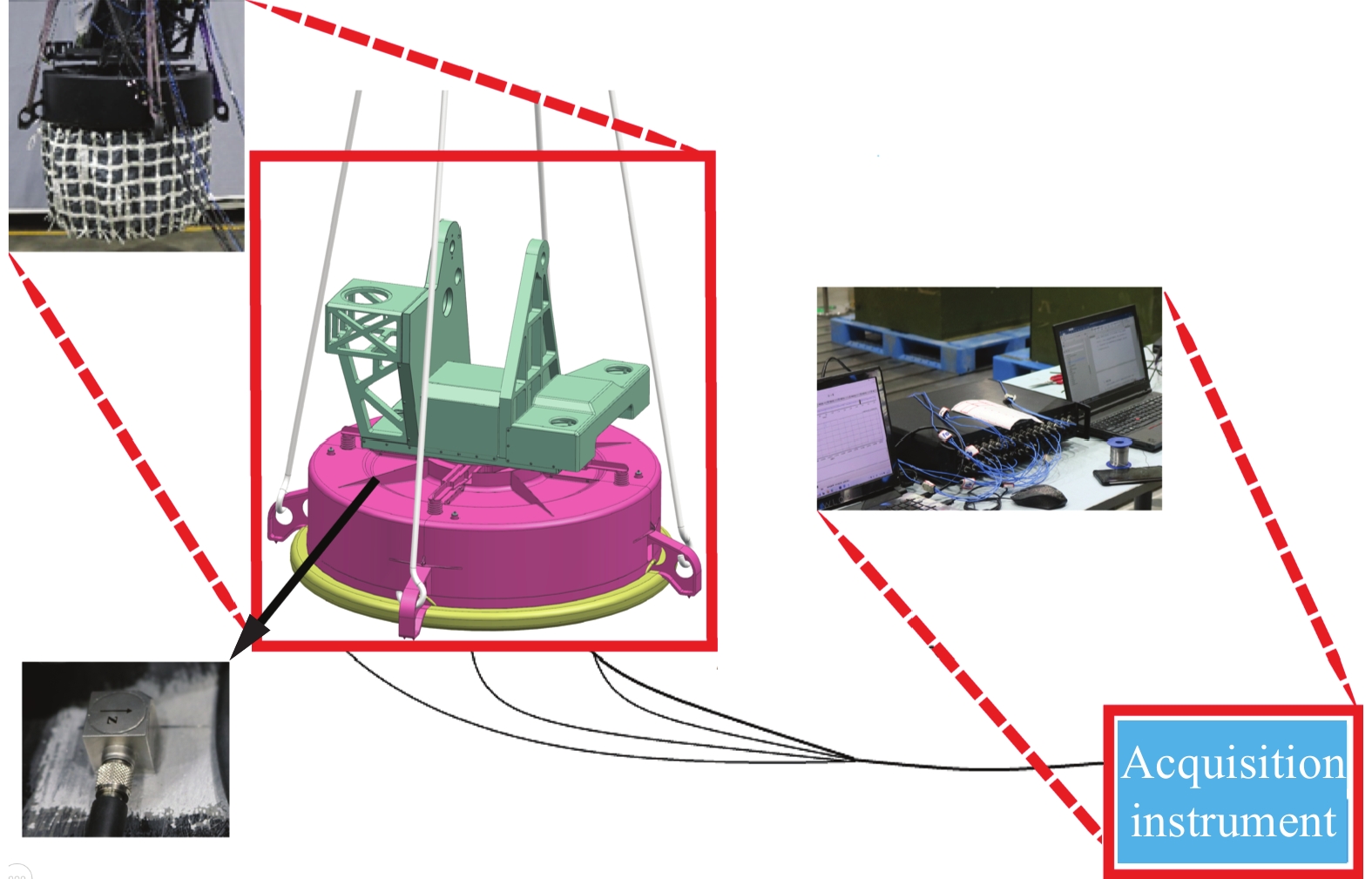
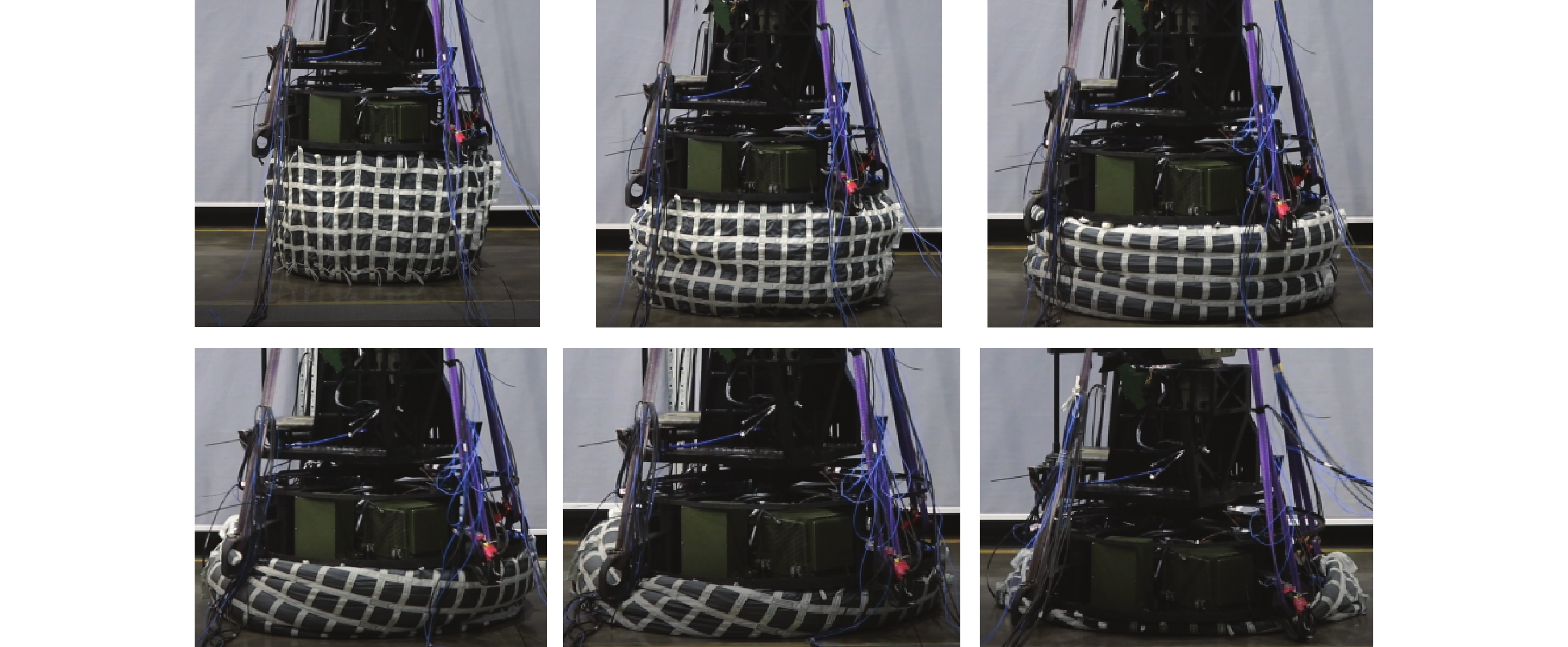
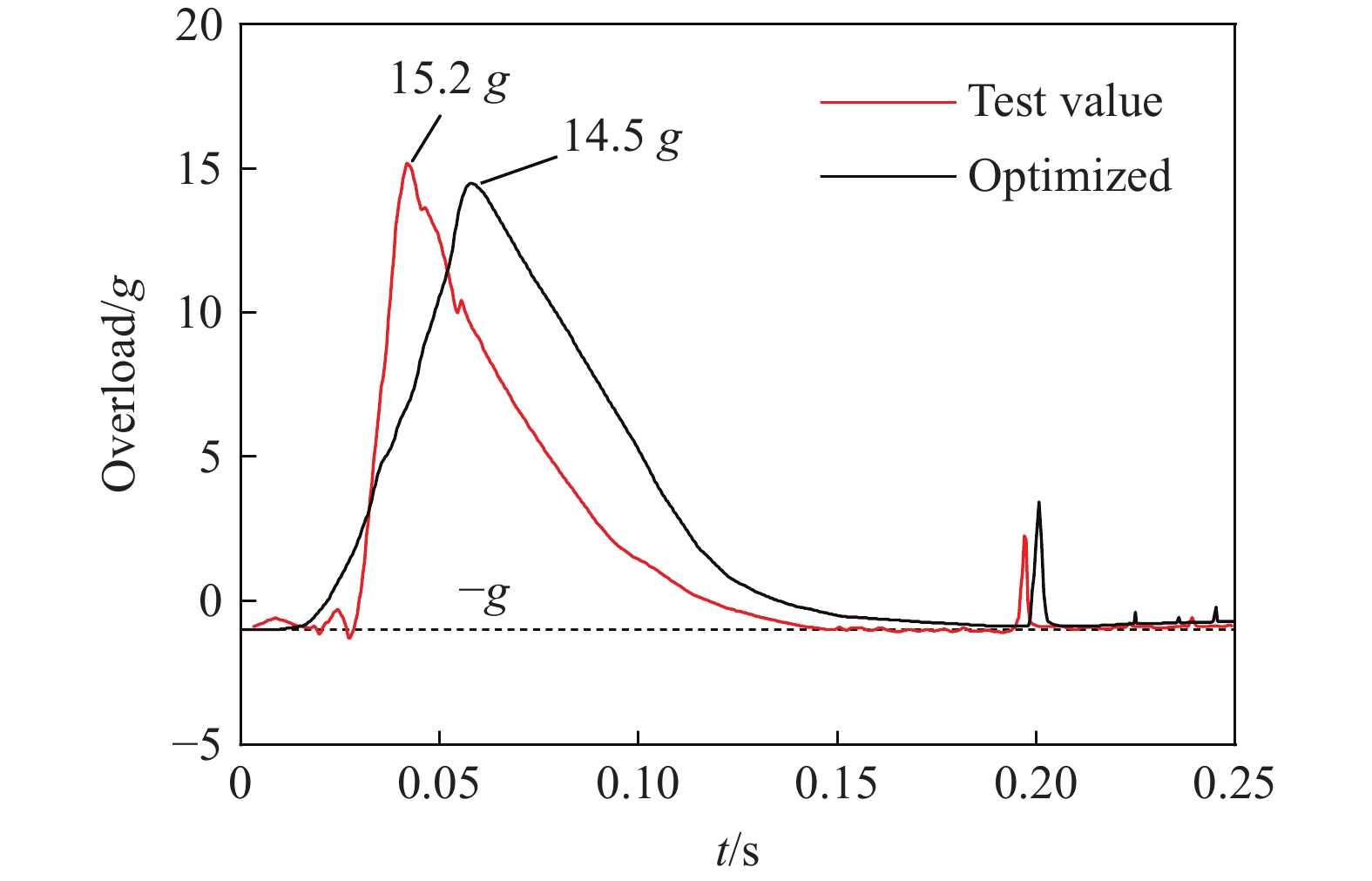
3952 mm2、临界排气压力158 kPa、气囊底面积1.08 m2时,最大过载从16.8g降至14.5g,比吸能保持在1529 J/kg。试验显示最大过载试验值为15.2g,与仿真结果误差仅为4.8%,证实了优化方案的有效性。Abstract: To address the challenges of rapid deployment for heavy-duty unmanned platforms and impact protection during drop-landing, a buffer airbag system was designed to ensure the safe landing of the unmanned platform. First, theoretical modeling was used to preliminarily determine the geometric parameters of the buffer airbag and the size of the vent holes. A finite element simulation model that included the buffer airbag, the unmanned platform and the ground was established using the control volume method (CVM) to simulate the cushioning process of the airbag. The impact dynamics response during the landing attenuation process was analyzed, and the specific energy absorption (SEA) of the buffer airbag system was introduced to evaluate its cushioning performance. The analysis results indicate that during the landing buffer process, the unmanned platform reached a maximum overload value of 16.8g at 0.06s, and the platform velocity reached a post-rebound maximum of 0.79 m/s at 0.1 s. At 0.18 s, the platform shifted laterally due to the center of gravity, and one side of the platform first contacted the ground. This led to fluctuations in overload value and velocity, but the overall landing process remained stable. The calculated SEA of the buffer airbag system was1527 J/kg. Using the control variable method, the influence of key parameters on the buffer performance of the airbag was analyzed, revealing the effects of vent hole size, critical exhaust pressure, airbag base area and airbag height on the performance of the buffer. The study found that the influence of airbag height on the two key indicators (maximum overload and SEA) was consistent, presenting no optimization conflict. However, after the height exceeded 0.37 m, a diminishing returns effect appeared. When the other three variables were changed individually, they caused a conflict between the goals of minimizing maximum overload and maximizing SEA, making it impossible to improve both simultaneously through independent optimization. To resolve this issue, an optimal latin hypercube design was used for sampling, and a three-layer neural network was employed to construct proxy models for the objective functions. The root mean square error (RMSE) and coefficient of determination (R2) of these two types of proxy models were calculated to evaluate their regression performance. The NSGA-II genetic algorithm was integrated for multi-objective optimization. The results showed that for the proxy models predicting maximum overload and SEA, the RMSEs were0.4895 and0.7262 , and the R2 values were0.9833 and0.9364 , respectively. All R2 values were greater than the industry benchmark of 0.9, indicating high reliability of the proxy models. When the vent hole area was3952 mm2, the critical exhaust pressure, the airbag base area were 158 kPa and 1.08 m2, respectively. Meanwhile, the maximum overload was reduced from 16.8g to 14.5g, and the SEA remained stable at1529 J/kg. Based on the characteristics of the airbag's buffer process, a gantry crane-based simulation test method for unmanned platform airdrop and lifting was designed. A piezoelectric IEPE acceleration sensor was used to measure the overload value of the unmanned platform. Experimental verification showed that the measured maximum overload value was 15.2g, with a mere 4.8% error compared to the simulation result, confirming the correctness of the optimization scheme. This research provides efficient and low-cost design technical support for the soft landing systems of unmanned platforms, enhancing the safety and efficiency of operational deployment. -
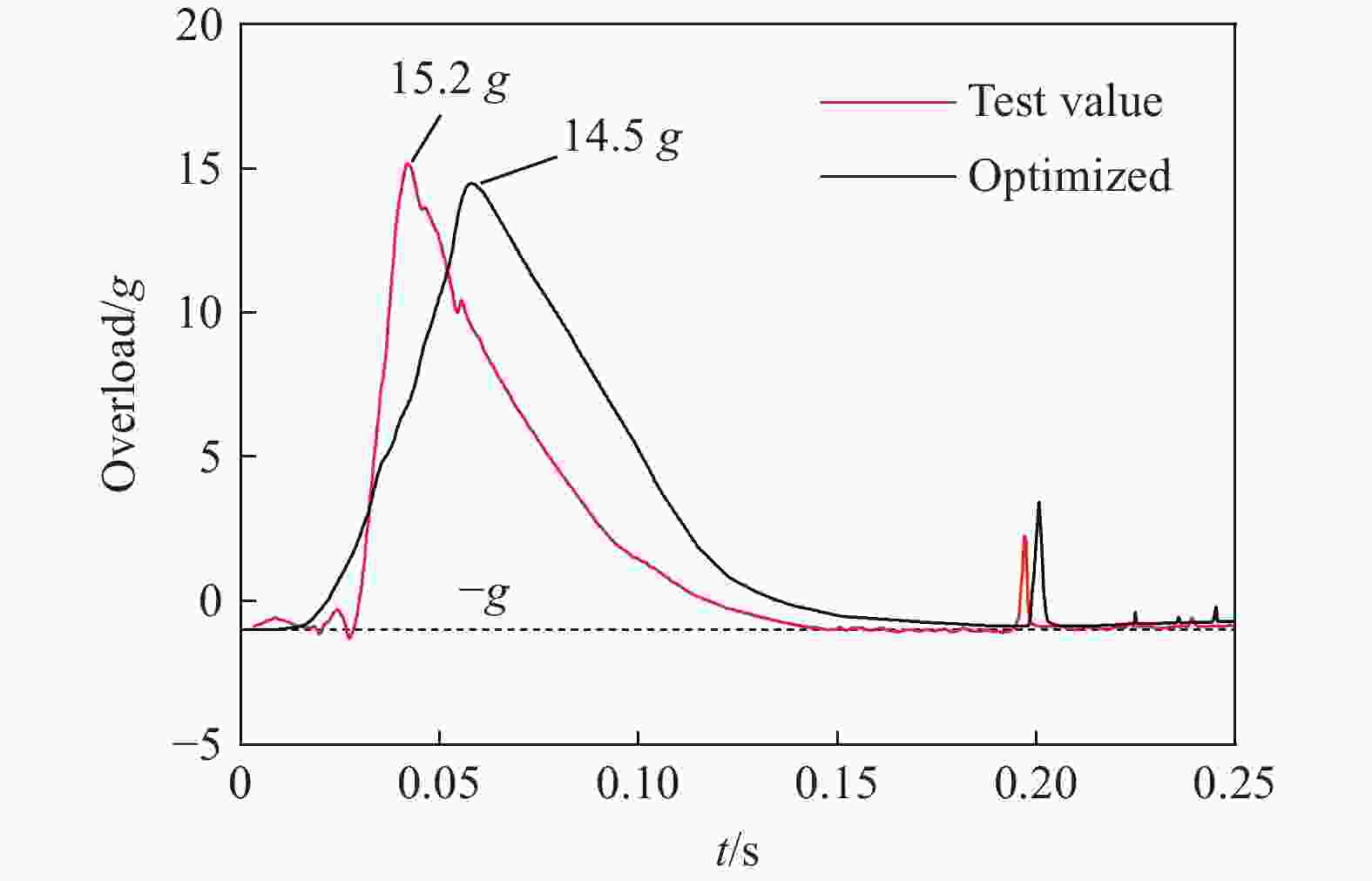
图 13 着陆过载动态特性验证
Figure 13. Verification of dynamic characteristics of landing overload
表 1 缓冲气囊模型参数
Table 1. Buffer airbag model parameters
定容比热/(J·kg−1·K−1) 定压比热/(J·kg−1·K−1) 温度/K 排气孔面积/m2 大气压力/kPa 环境空气密度/(kg·m−3) 重力转换常数 临界排气压力/kPa 717 1004 293 3.6×10⁻³ 101 1.2 1 173  下载: 导出CSV
表 2 缓冲气囊材料参数
Table 2. Buffer airbag material parameters
密度/(kg·m−3) 弹性模量/MPa 泊松比 剪切模量/MPa 876.03 380 0.2 40
下载: 导出CSV
表 3 不同参数组合案例
Table 3. Cases of different parameter combinations
工况 Aa/mm2 pcr/kPa A/m2 h0/m amax/g e/(J$ \cdot $kg−1) 1 3600 173 0.95 0.35 16.8 1527 2 3750 173 0.95 0.35 16.0 1492 3 3900 173 0.95 0.35 15.4 1453 4 4050 173 0.95 0.35 14.7 1420 5 4200 173 0.95 0.35 14.2 1381 6 3900 183 0.95 0.35 16.1 1498 7 3900 193 0.95 0.35 16.9 1540 8 3900 203 0.95 0.35 17.6 1589 9 3900 203 1.00 0.35 16.2 1498 10 3900 203 1.05 0.35 15.0 1434 11 3900 203 1.15 0.35 13.4 1356 12 3900 173 0.95 0.32 15.8 1427 13 3900 173 0.95 0.37 14.9 1505 14 3900 173 0.95 0.39 14.7 1522
下载: 导出CSV
表 4 优化结果
Table 4. optimization results
参数 排气孔尺寸/mm2 排气临界压力/kPa 气囊底面积/m2 最大过载值/g 比吸能/(J·kg−1) 优化前 3600 173 0.95 16.8 1527 优化后 3952 158 1.08 14.5 1529
下载: 导出CSV
-
[1] WANG J T, NEFSKE D J. A new CAL3D airbag inflation model [C]//Proceedings of the SAE International Congress and Exposition. Detroit: SAE, 1988: 1. DOI: 10.4271/880654. [2] HE H, CHEN Z, HE C, et al. A hierarchical updating method for finite element model of airbag buffer system under landing impact [J]. Chinese Journal of Aeronautics, 2015, 28(6): 1629–1639. DOI: 10.1016/j.cja.2015.10.010. [3] WANG H Y, HONG H J, LI J Y, et al. Study on multi-objective optimization of airbag landing attenuation system for heavy airdrop [J]. Defence Technology, 2013, 9(4): 237–241. DOI: 10.1016/j.dt.2013.12.004. [4] ZHOU X, ZHOU S M, LI D K, et al. Direct folding method of cylindrical airbag and its application in landing buffer [J]. Journal of Aerospace Engineering, 2022, 35(6): 04022083. DOI: 10.1061/(asce)as.1943-5525.0001482. [5] FOKIN D, LOKHANDE N. On airbag simulation in LS–DYNA with the use of the Arbitrary Lagrangian-Eulerian Method [C]//Proceedings of the 4th European LS-DYNA Users Conference. Ulm: DYNAmore GmbH, 2003. [6] 杨占华, 刘春生, 李军, 等. 空降车辆着陆缓冲过程动态建模仿真 [J]. 兵工学报, 2022, 43(S1): 26–34. DOI: 10.12382/bgxb.2022.A021.YANG Z H, LIU C S, LI J, et al. Dynamic modeling and simulation of airborne vehicle’s landing buffer process [J]. Acta Armamentarii, 2022, 43(S1): 26–34. DOI: 10.12382/bgxb.2022.A021. [7] 石坚, 杨占华, 刘春生, 等. 空降车辆着陆缓冲过程系统建模仿真研究综述 [J]. 兵器装备工程学报, 2024, 45(9): 104–115. DOI: 10.11809/bqzbgcxb2024.09.013.SHI J, YANG Z H, LIU C S, et al. Review on modeling and simulation of landing buffer process system for airborne vehicles [J]. Journal of Ordnance Equipment Engineering, 2024, 45(9): 104–115. DOI: 10.11809/bqzbgcxb2024.09.013. [8] 张鹏飞, 卫剑征, 陈雪岩, 等. 大载重气囊缓冲性能分析及多目标优化 [J]. 振动与冲击, 2020, 39(24): 91–98,142. DOI: 10.13465/j.cnki.jvs.2020.24.013.ZHANG P F, WEI J Z, CHEN X Y, et al. Analysis and multi-objective optimization for buffer performance of heavy landing airbags [J]. Journal of Vibration and Shock, 2020, 39(24): 91–98,142. DOI: 10.13465/j.cnki.jvs.2020.24.013. [9] 张鹏飞. 组合气囊着陆缓冲特性及优化设计研究 [D]. 哈尔滨: 哈尔滨工业大学, 2019. DOI: 10.27061/d.cnki.ghgdu.2019.004306.ZHANG P F. Study on landing attenuation characteristics and optimum design of combined airbags [D]. Harbin: Harbin Institute of Technology, 2019. DOI: 10.27061/d.cnki.ghgdu.2019.004306. [10] LIU X, GUO W W, HUANG L, et al. The multi-objective reliability-based design optimisation of buffering characteristics of airbag seat in manned airdrop [J]. International Journal of Crashworthiness, 2024, 29(3): 391–401. DOI: 10.1080/13588265.2023.2252216. [11] 洪煌杰, 王红岩, 李建阳, 等. 基于代理模型的空投装备气囊缓冲系统多目标优化 [J]. 振动与冲击, 2015, 34(3): 215–220. DOI: 10.13465/j.cnki.jvs.2015.03.035.HONG H J, WANG H Y, LI J Y, et al. Multi-objective optimization of an airbag cushion system for airdropping equipment based on surrogate model [J]. Journal of Vibration and Shock, 2015, 34(3): 215–220. DOI: 10.13465/j.cnki.jvs.2015.03.035. [12] 鲁超宇, 陈金宝, 王宸, 等. 组合式气囊在重装空投中的缓冲性能分析 [J]. 宇航学报, 2023, 44(6): 841–850. DOI: 10.3873/j.issn.1000-1328.2023.06.004.LU C Y, CHEN J B, WANG C, et al. Analysis of cushioning performance of combined airbag in heavy airdrop [J]. Journal of Astronautics, 2023, 44(6): 841–850. DOI: 10.3873/j.issn.1000-1328.2023.06.004. [13] 付新华, 汪君, 陈勇, 等. 战车载人空投着陆缓冲过程仿真模型研究 [J]. 振动与冲击, 2021, 40(24): 57–64. DOI: 10.13465/j.cnki.jvs.2021.24.008.FU X H, WANG J, CHEN Y, et al. A study on soft-landing buffering process of manned armored vehicle airdrop [J]. Journal of Vibration and Shock, 2021, 40(24): 57–64. DOI: 10.13465/j.cnki.jvs.2021.24.008. [14] 李建阳, 王建国, 白云, 等. 自落式气囊缓冲过程数值仿真及试验验证 [C]//第三十五届中国仿真大会论文集. 合肥: 安徽省人民政府, 中国仿真学会, 2023: 5. DOI: 10.26914/c.cnkihy.2023.077893. [15] XU Y, YANG Y L, HUANG H, et al. Multi-objective optimization design of an origami-inspired combined cushion airbag [J]. Aerospace, 2024, 11(3): 169. DOI: 10.3390/aerospace11030169. [16] 徐彦, 杨毅龙, 陈刚, 等. 基于折纸技术的组合型缓冲气囊设计及仿真 [J]. 航天返回与遥感, 2022, 43(5): 24–35. DOI: 10.3969/j.issn.1009-8518.2022.05.003.XU Y, YANG Y L, CHEN G, et al. Design and simulation of a novel combined cushion airbag based on origami technology [J]. Spacecraft Recovery & Remote Sensing, 2022, 43(5): 24–35. DOI: 10.3969/j.issn.1009-8518.2022.05.003. [17] 王一波. 小型电子设备着陆缓冲气囊的设计与优化 [D]. 南京: 南京航空航天大学, 2018.WANG Y B. Design and optimization of landing cushion airbag for small electronic equipment [D]. Nanjing: Nanjing University of Aeronautics and Astronautics, 2018. [18] 李建阳, 王红岩, 芮强, 等. 空降车着陆冲击累积损伤评估方法研究 [J]. 系统仿真学报, 2014, 26(1): 208–214,220. DOI: 10.16182/j.cnki.joss.2014.01.011.LI J Y, WANG H Y, RUI Q, et al. Research on cumulative damage assessment method for airborne vehicle at landing based on finite element analysis [J]. Journal of System Simulation, 2014, 26(1): 208–214,220. DOI: 10.16182/j.cnki.joss.2014.01.011. [19] 王高才. 高空精密设备着陆气囊缓冲性能研究 [D]. 长沙: 湖南大学, 2023. DOI: 10.27135/d.cnki.ghudu.2023.001567.WANG G C. Research on the cushioning performance of landing airbags for high-altitude precision equipment [D]. Changsha: Hunan University, 2023. DOI: 10.27135/d.cnki.ghudu.2023.001567. [20] 杨越. 组合式气囊缓冲动力学仿真及多工况协同优化研究 [D]. 长沙: 湖南大学, 2020. DOI: 10.27135/d.cnki.ghudu.2020.003559.YANG Y. Dynamic simulation of combined airbag cushion and collaborative optimization of multiple working conditions [D]. Changsha: Hunan University, 2020. DOI: 10.27135/d.cnki.ghudu.2020.003559. -

计量
- 文章访问数: 685
- HTML全文浏览量: 150
- PDF下载量: 44
- 被引次数: 0