



Mechanical behavior of unidirectional fiber reinforced polymer based on micromechanical model
-
摘要: 基于Hashin等复合材料经典失效准则的宏观有限元模拟虽然能够考虑纤维断裂、基体损伤以及分层等宏观损伤机制,但无法反映碳纤维增强复合材料(carbon fiber reinforced polymer,CFRP)内部的微观损伤行为,例如纤维与基体之间的界面脱粘。为了解决这个问题,建立了一个同时考虑纤维、基体和界面的多相细观力学模型,综合考虑纤维断裂、基体失效和界面脱粘等多种损伤机制,系统分析了横向拉伸/压缩、纵向拉伸/压缩以及面内/外剪切等典型载荷路径下单向碳纤维增强复合材料(unidirectional carbon fiber reinforced polymer,UD CFRP)的损伤演化过程。结果表明:实验与仿真得到的峰值应力和失效应变的相对误差小于5%,同时模型预测的裂纹扩展路径与扫描电镜的观测结果一致,验证了考虑微观结构的微观力学模型的准确性。在此基础上,模型准确捕捉到了不同载荷条件下UD CFRP的损伤演化规律,这对于构建CFRP损伤容限设计准则和结构完整性评估体系具有重要工程价值。Abstract: Although macroscopic finite-element simulations based on classical composite failure criteria such as Hashin’s can account for macroscopic damage mechanisms such as fiber fracture, matrix damage, and delamination, these approaches are unable to represent microscopic damage mechanisms within carbon-fiber-reinforced polymer (CFRP), particularly interfacial debonding between fibers and the matrix. To overcome this limitation, a multiphase micromechanical model was developed that explicitly incorporates distinct constituent phases-fiber, matrix, and interface. This model integrates multiple damage mechanisms such as fiber fracture, matrix failure, and interfacial debonding, enabling a more granular analysis of damage initiation and progression. Periodic boundary conditions were applied to the model to ensure kinematic consistency and mechanical representativeness. A mesh-convergence study was subsequently carried out on the basis of the predicted elastic moduli of CFRP in various material directions, leading to an optimized discretization strategy that balances accuracy and computational cost. Comprehensive validation was performed by comparing the model-predicted stress-strain responses with experimental data obtained from unidirectional CFRP (UD CFRP) under a range of loading conditions, including transverse tension and compression, longitudinal tension and compression, and in-plane and out-of-plane shear. The damage-evolution processes under these representative loading paths were systematically analyzed. The results indicate that the relative errors in peak stress and failure strain between simulations and experiments are less than 5%. Moreover, the crack-propagation paths predicted by the model show strong agreement with observations from scanning electron microscopy, thereby confirming the accuracy of the proposed microstructure-aware micromechanical modeling framework. Furthermore, the model successfully captures the detailed damage evolution of UD CFRP under various loading scenarios. Under transverse tensile loading, damage is initiated by interfacial debonding, followed by plastic deformation and eventual failure of the matrix near debonded regions. In contrast, under transverse compression, interfacial debonding and matrix plastic deformation are observed to occur simultaneously. Under longitudinal loading, the dominant damage mechanism is identified as fiber fracture, whereas the damage patterns under in-plane and out-of-plane shear are found to be consistent with those under transverse compression and transverse tension, respectively. These insights offer significant engineering value for the development of damage-tolerant design criteria and structural-integrity evaluation frameworks for CFRP components and assemblies.
-
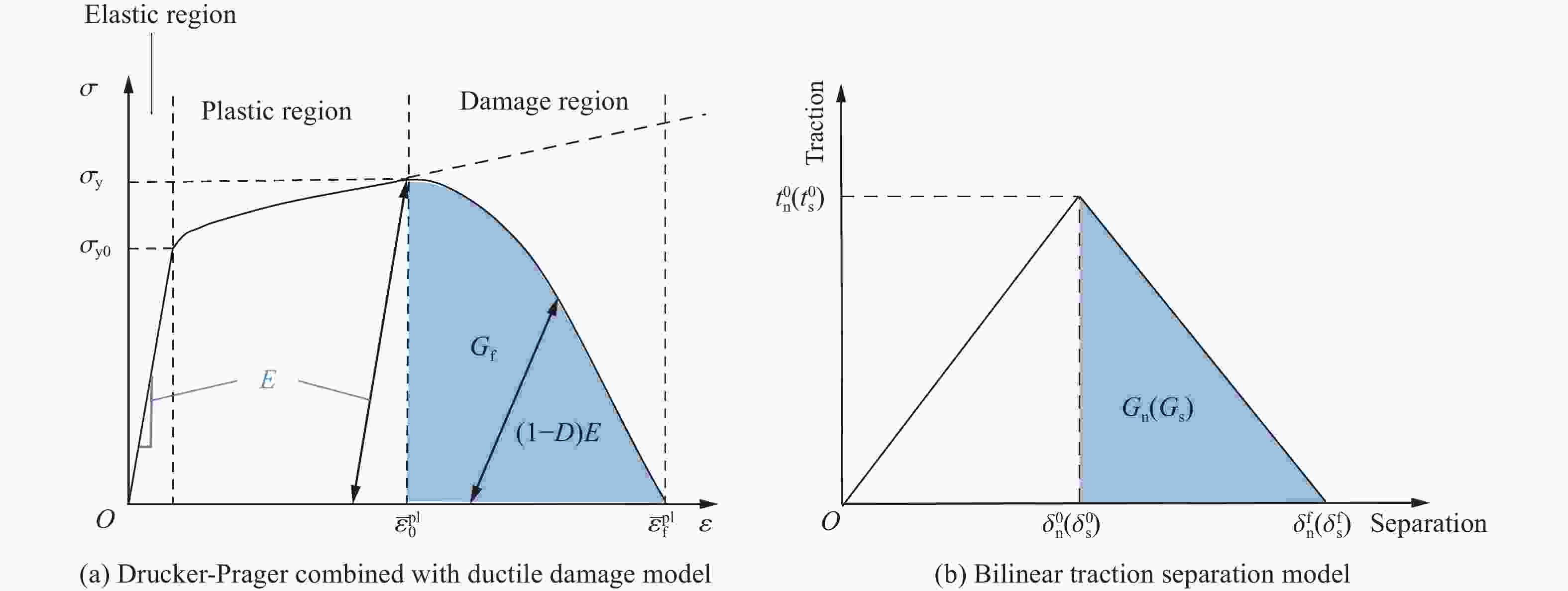
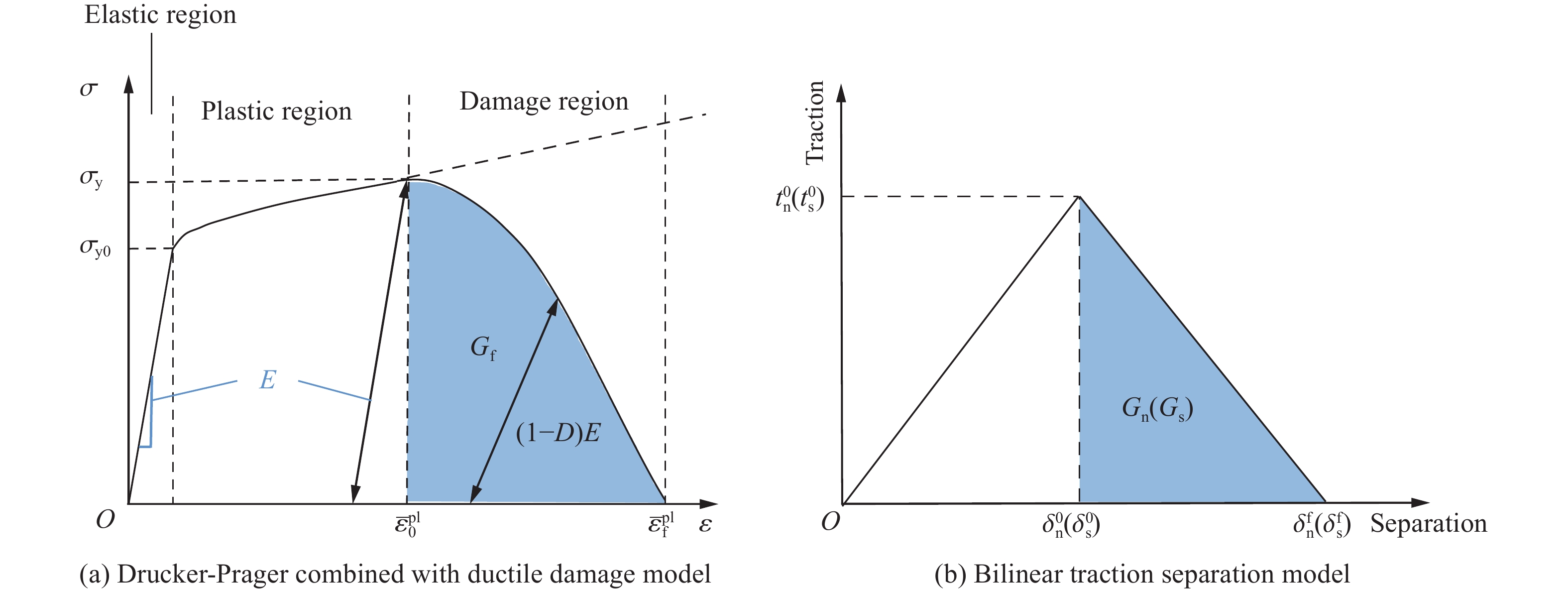
图 2 Drucker-Prager结合延性损伤模型和双线性牵引分离模型
Figure 2. Drucker-Prager combined with ductile damage model and bilinear traction separation model
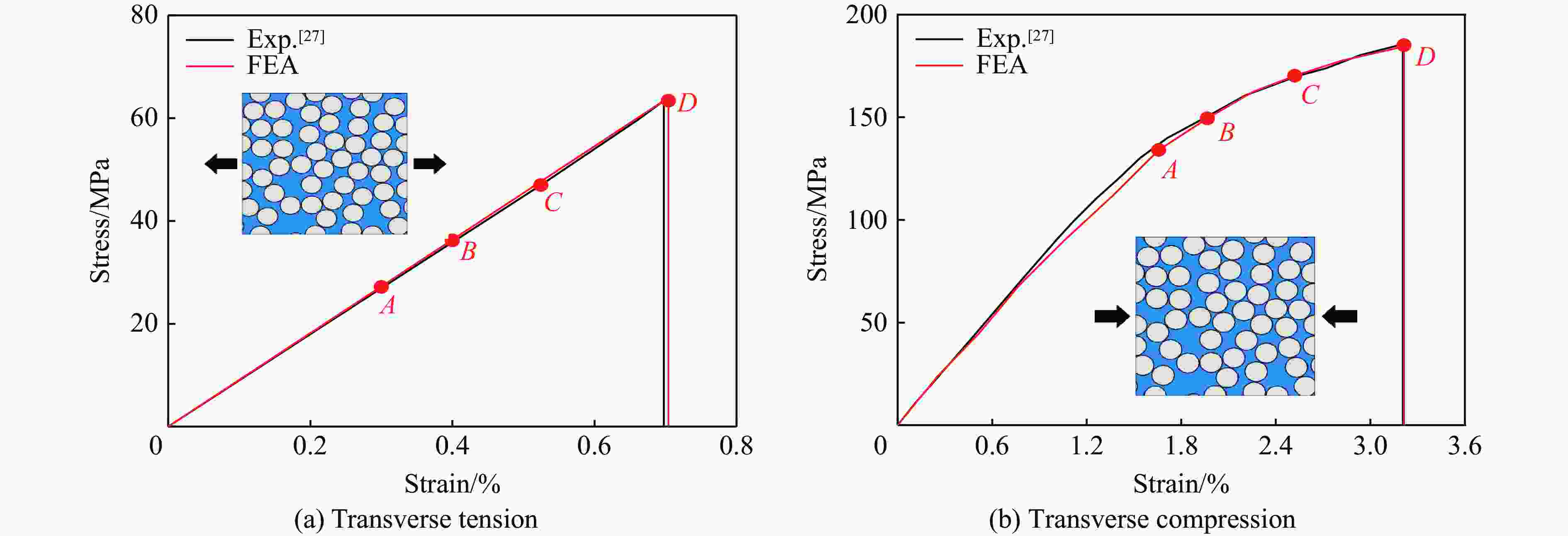
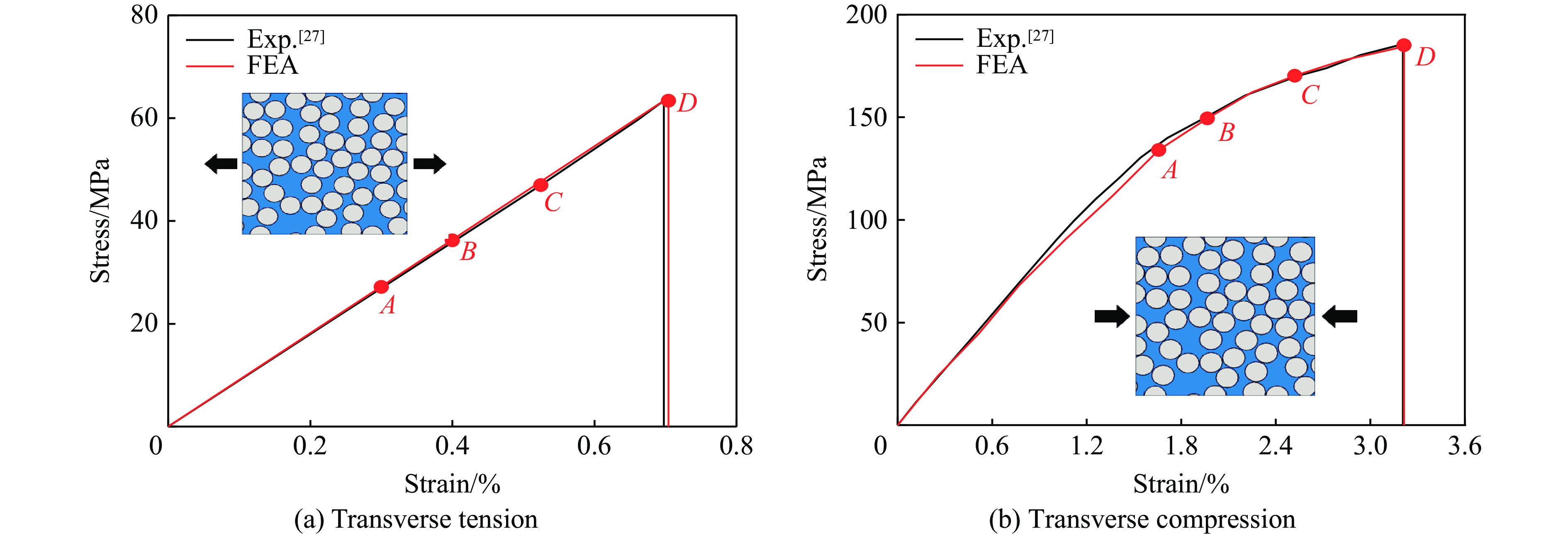
图 4 实验与数值模拟的横向应力-应变曲线
Figure 4. Transverse stress-strain curves of experiment and numerical simulation
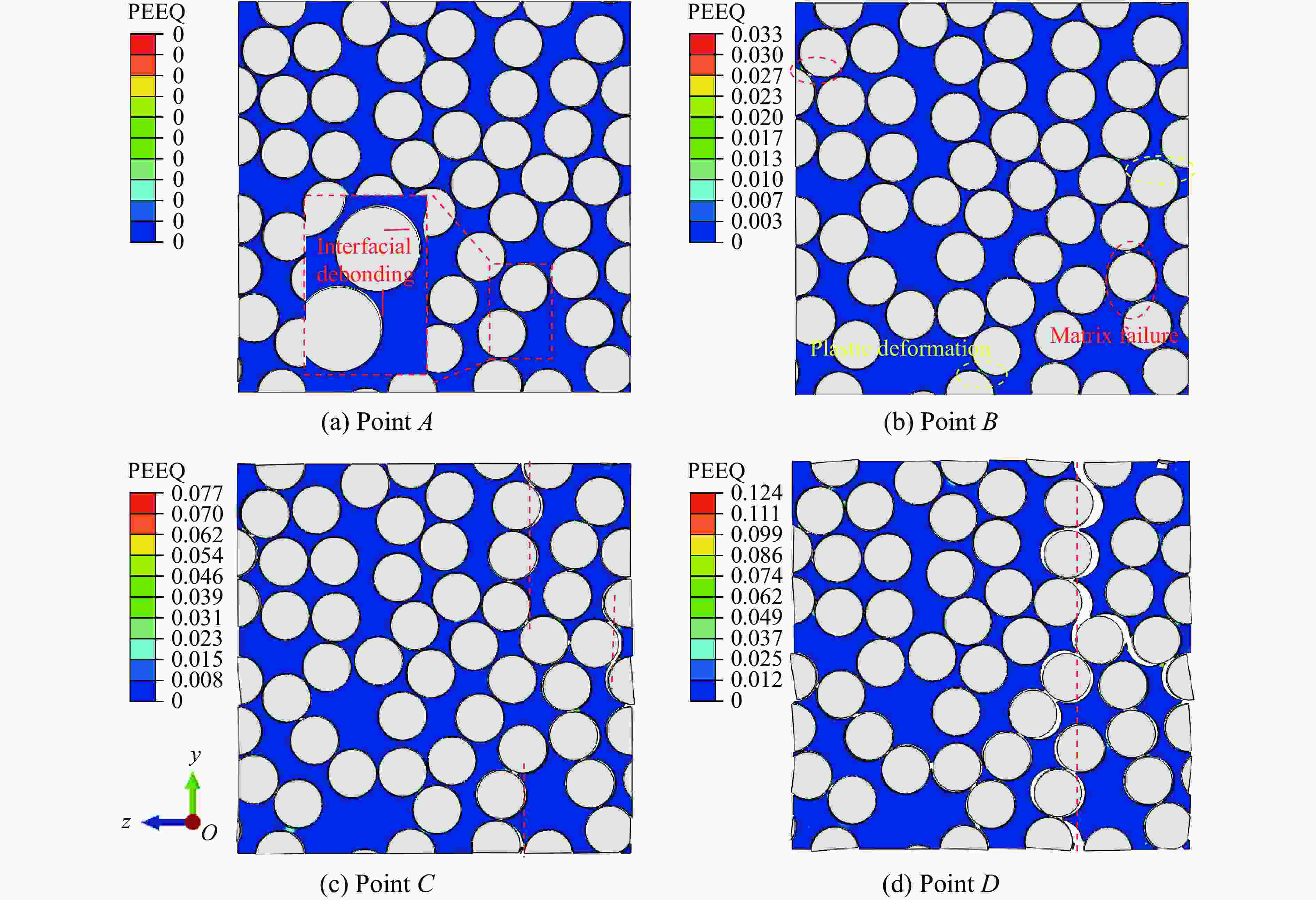
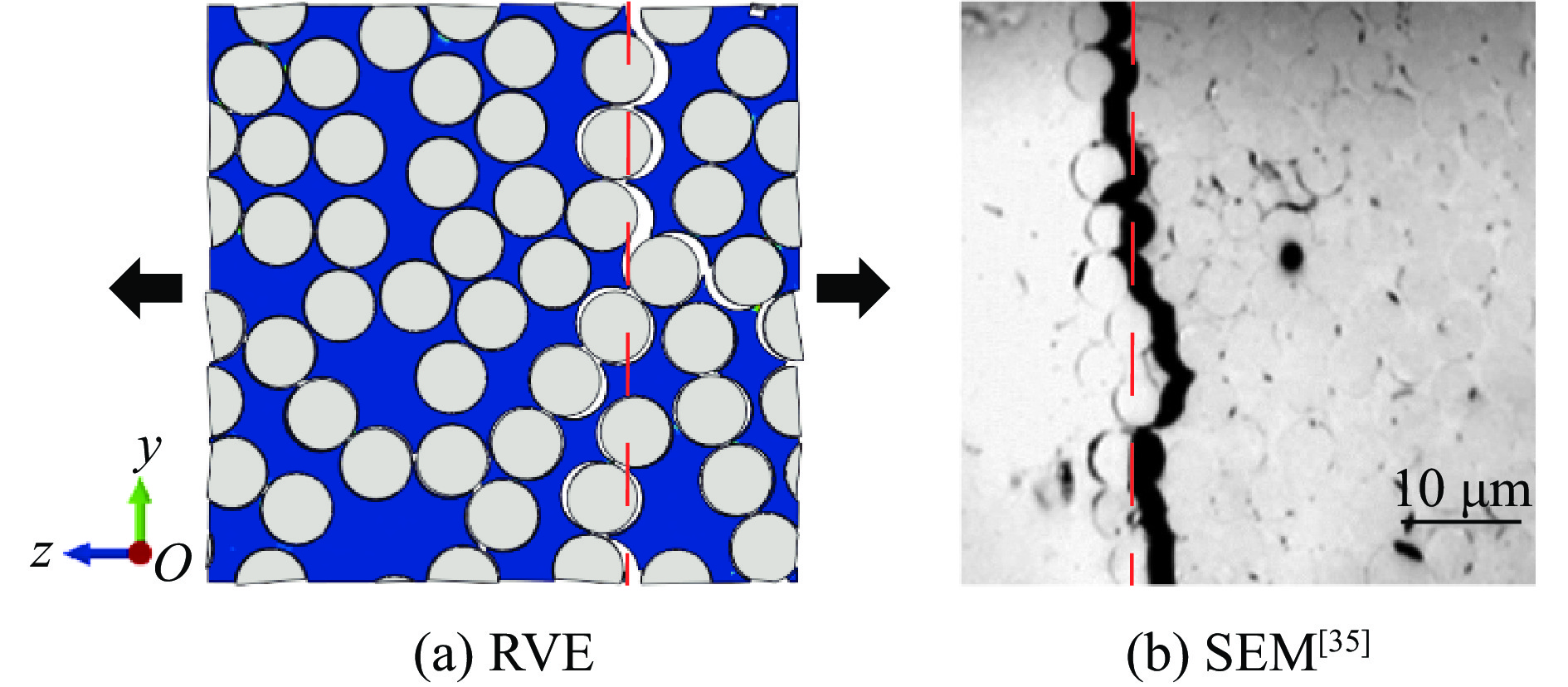
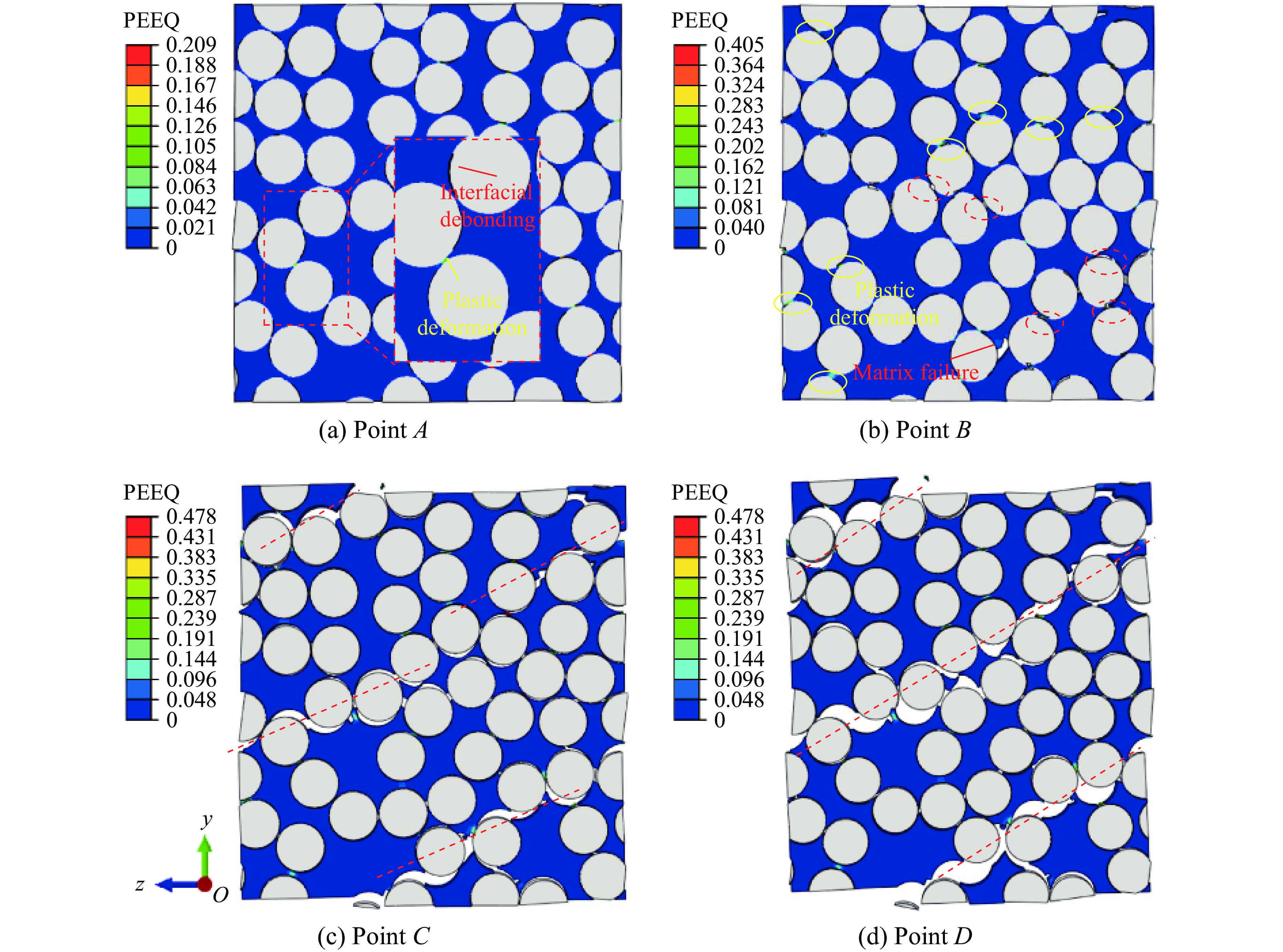
图 5 横向拉伸条件下UD CFRP损伤演化过程
Figure 5. Damage evolution process of UD CFRP under transverse tensile loading
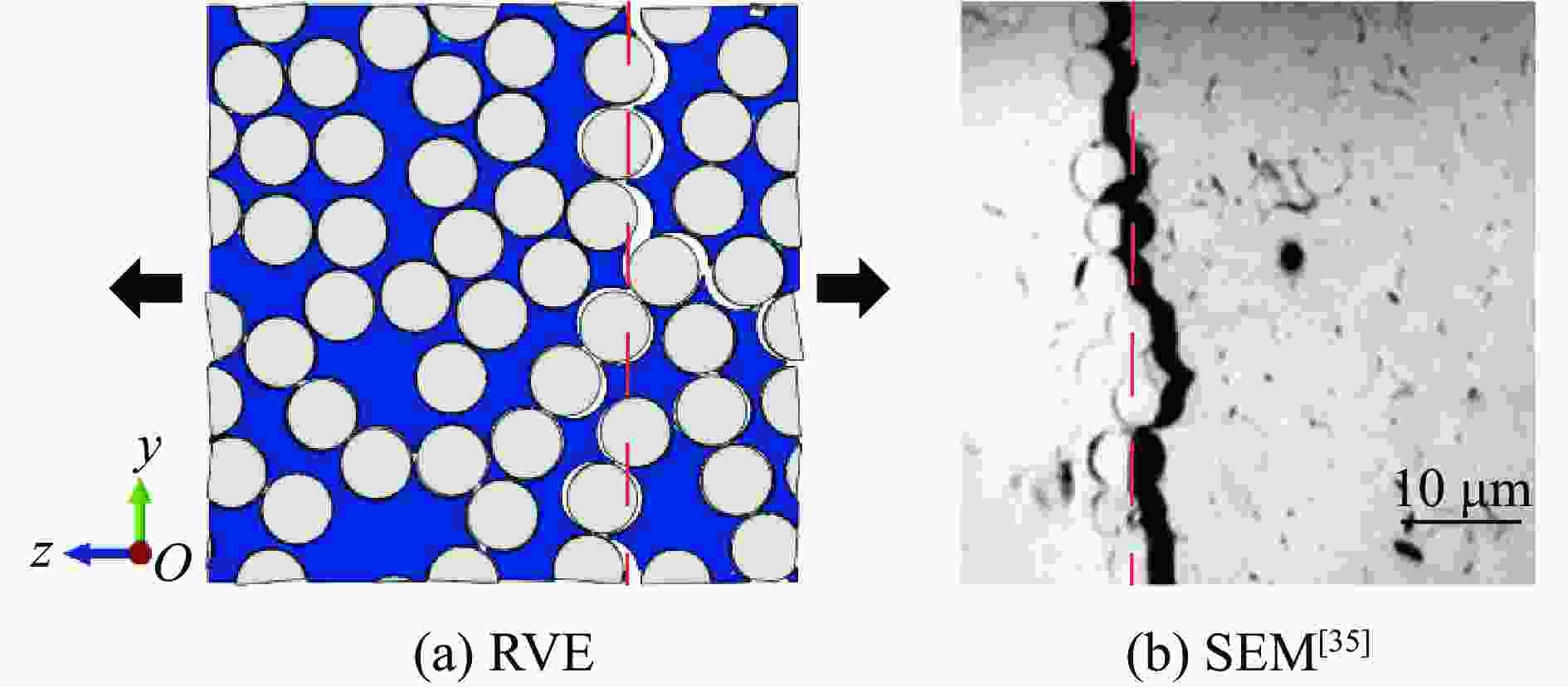
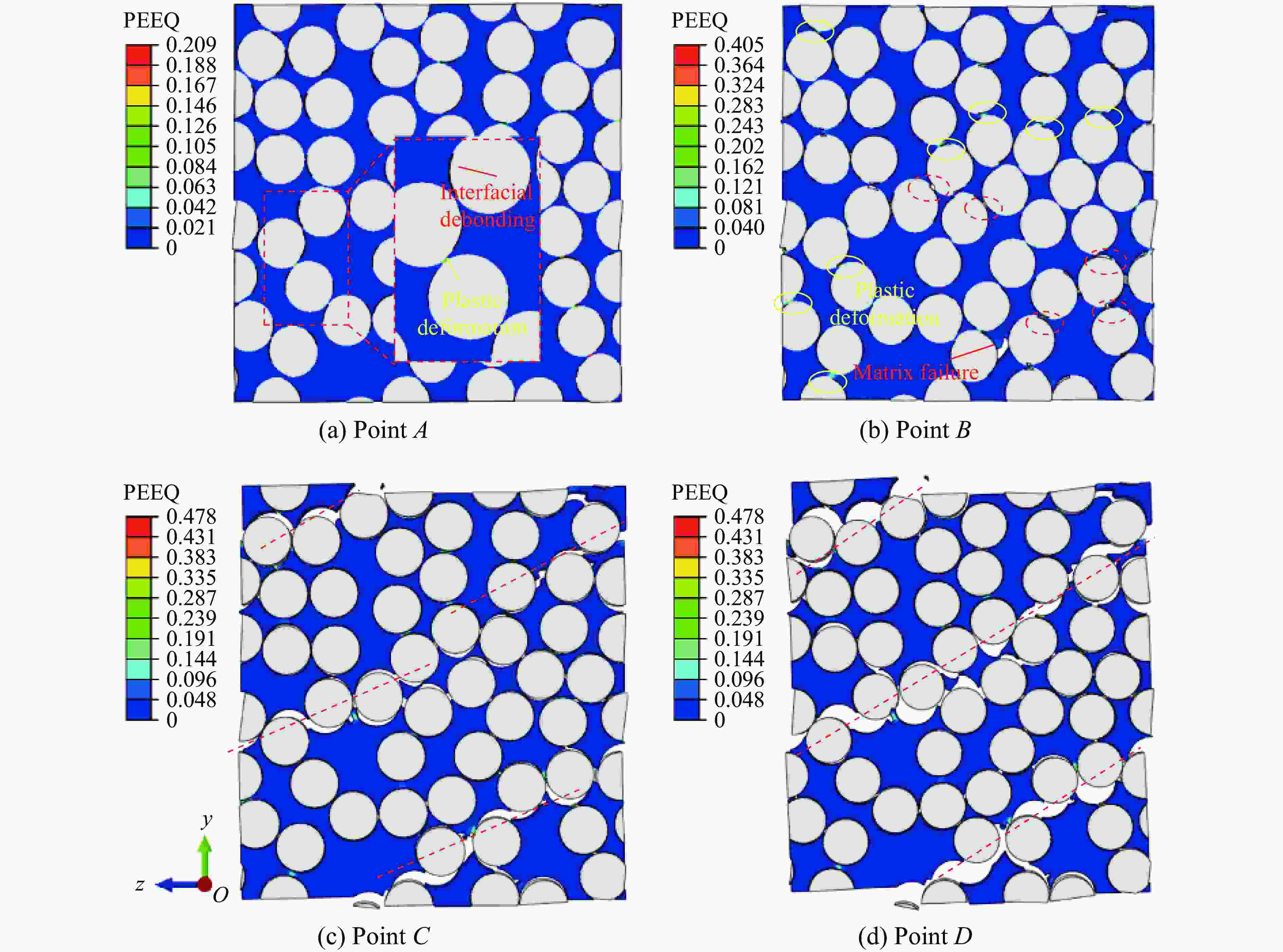
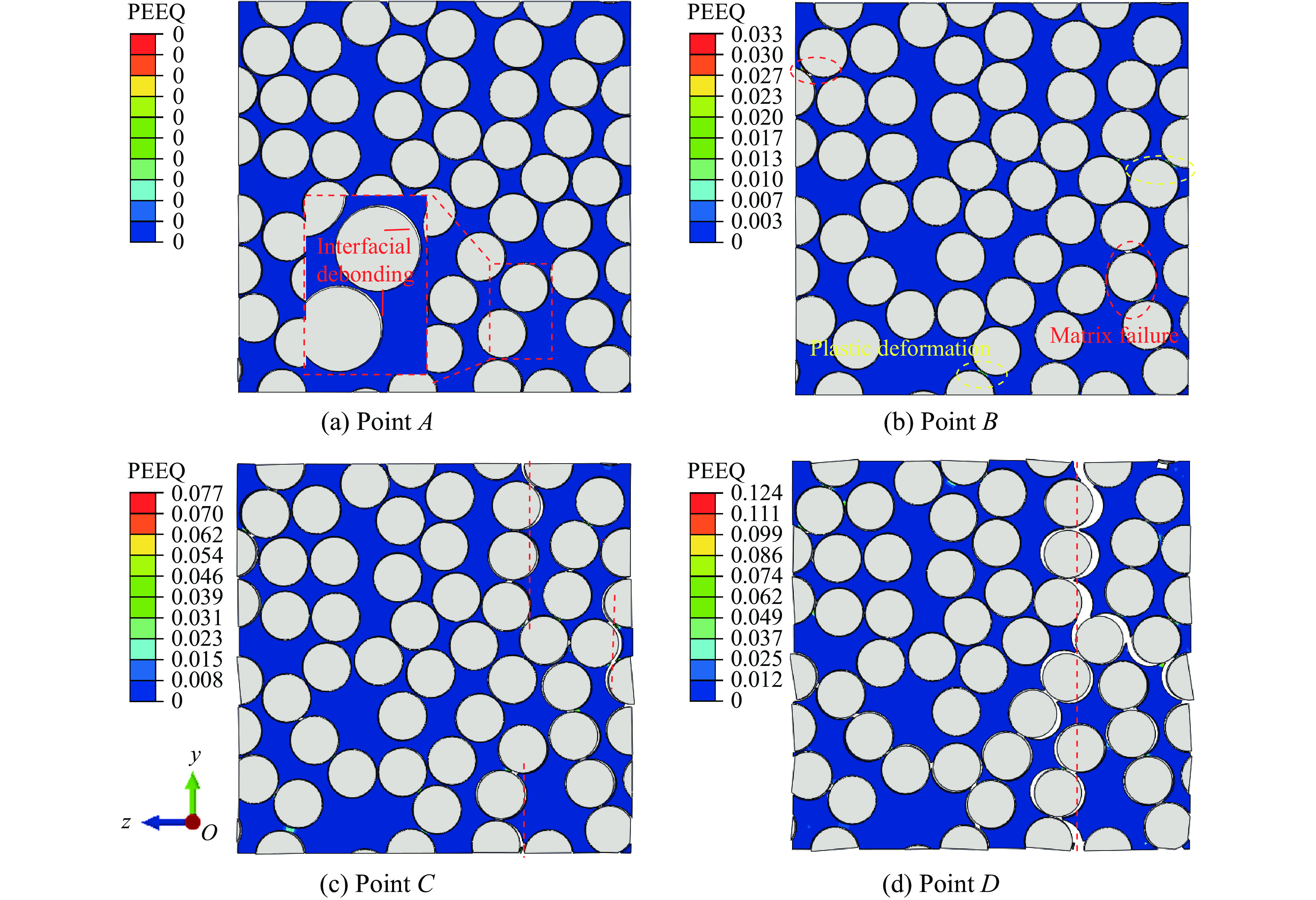
图 7 横向压缩条件下UD CFRP损伤演化过程
Figure 7. Damage evolution process of UD CFRP under transverse compression loading
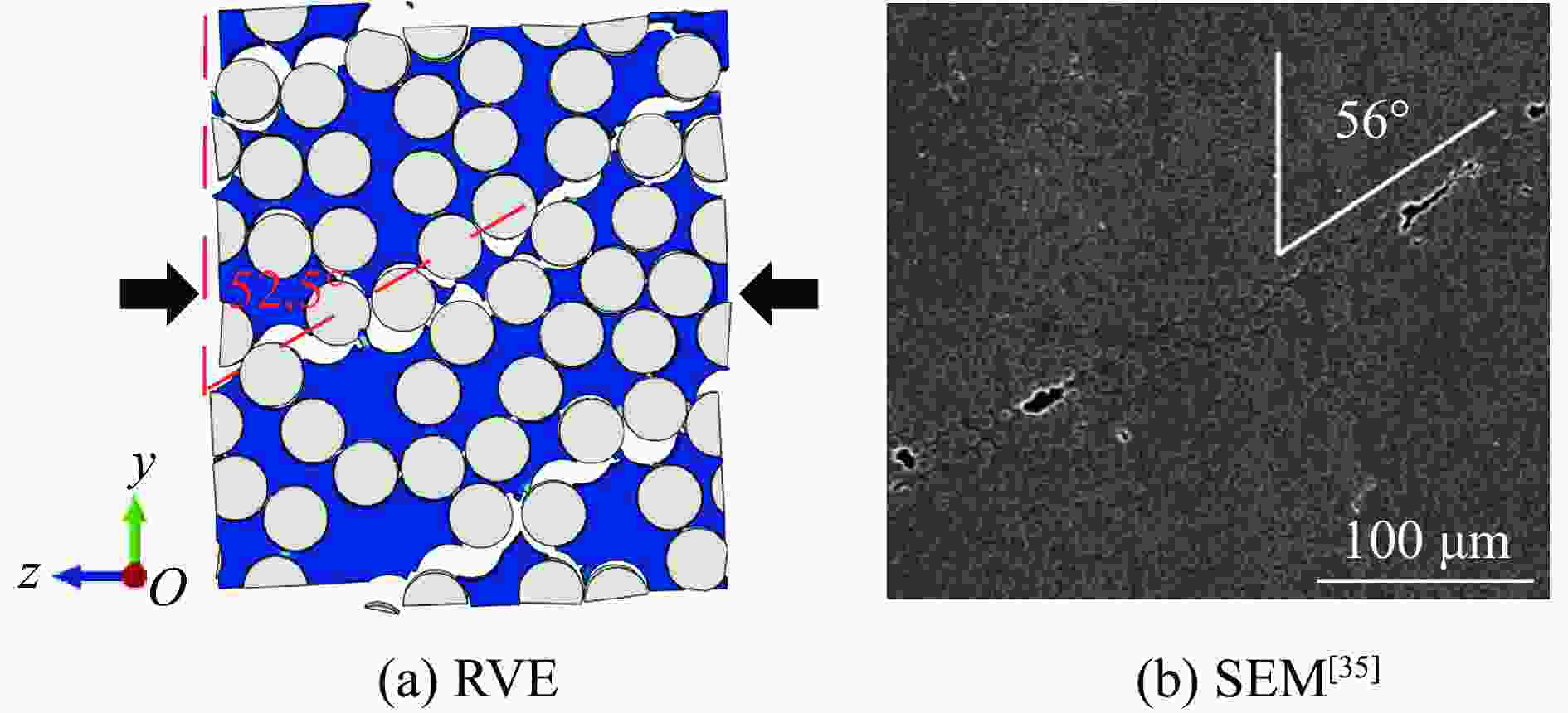
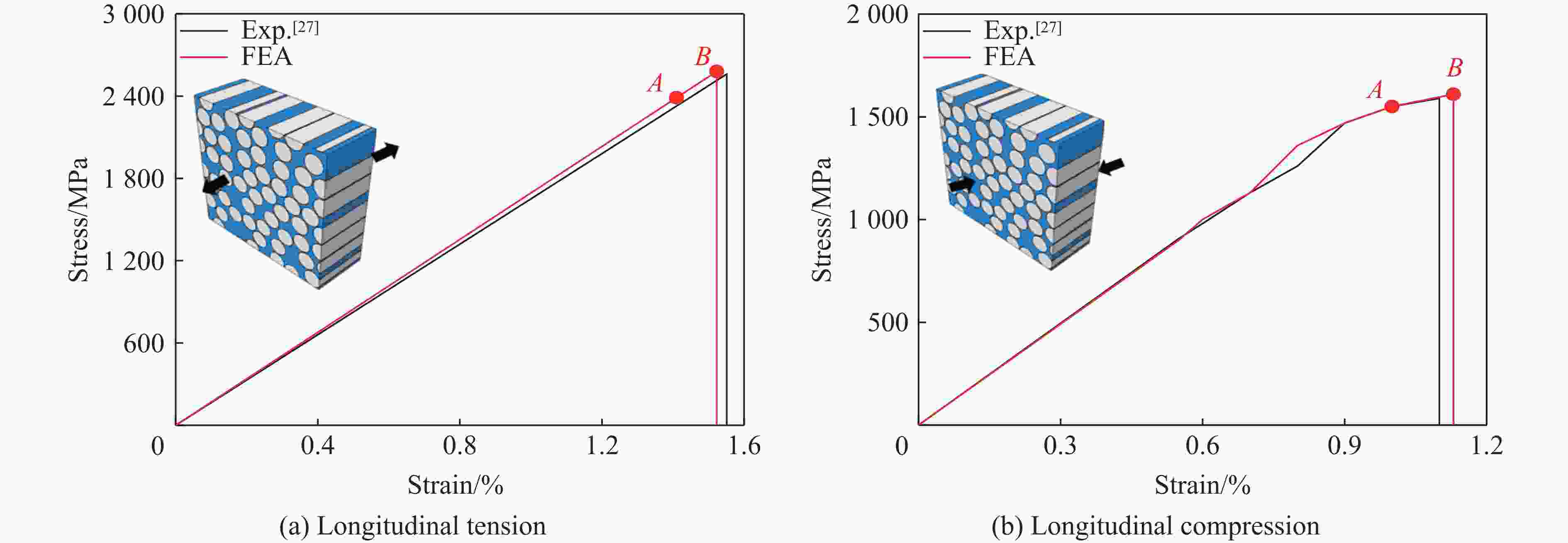
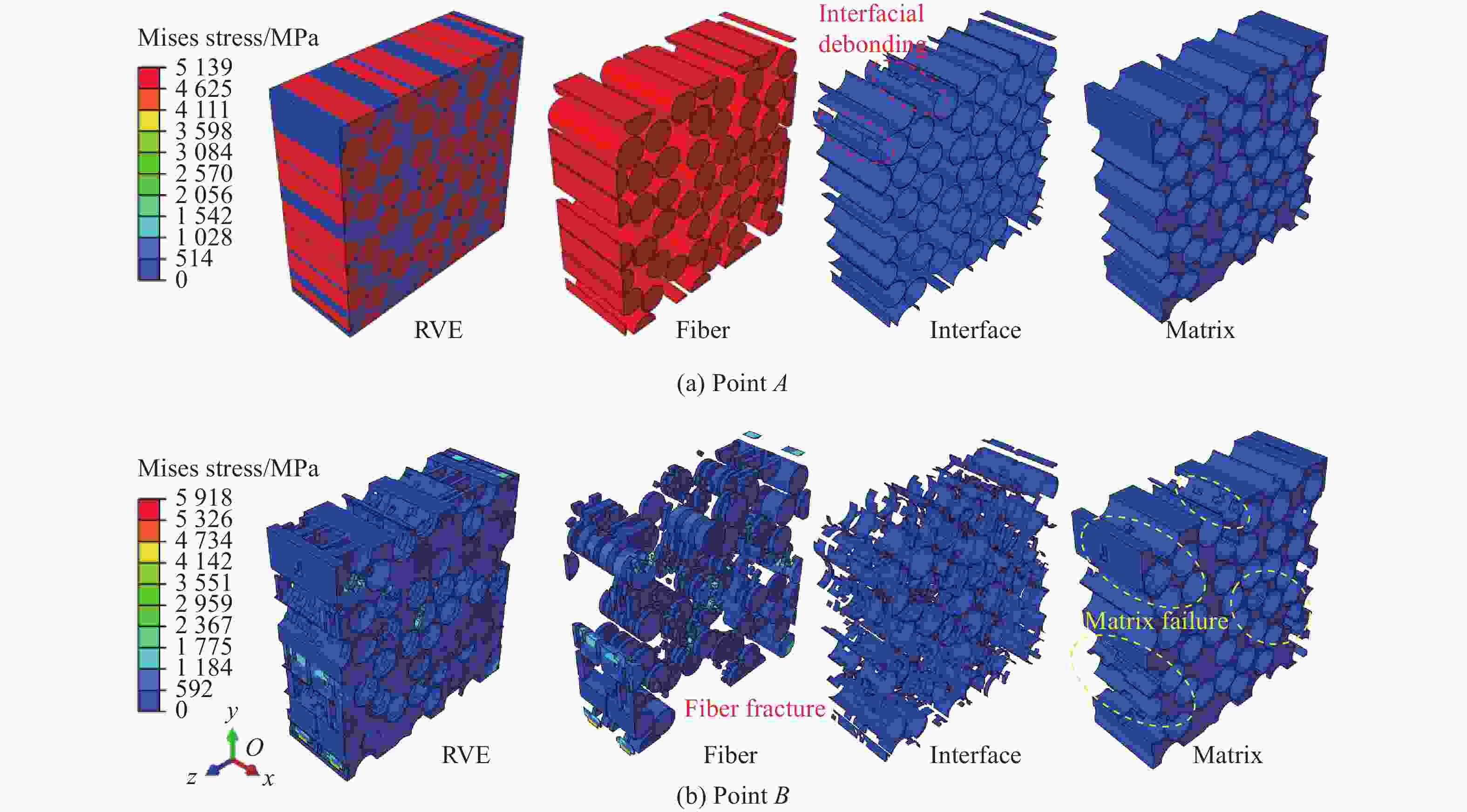
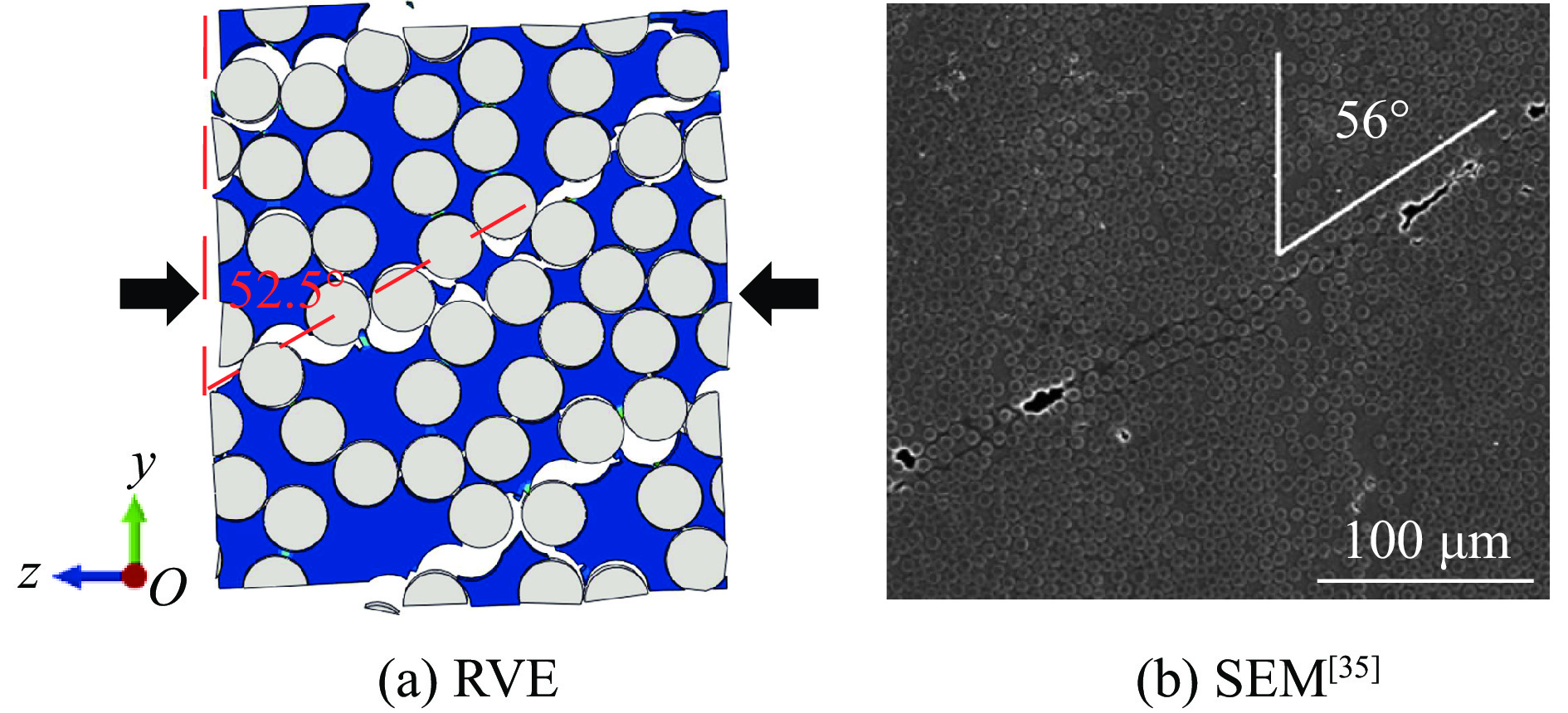
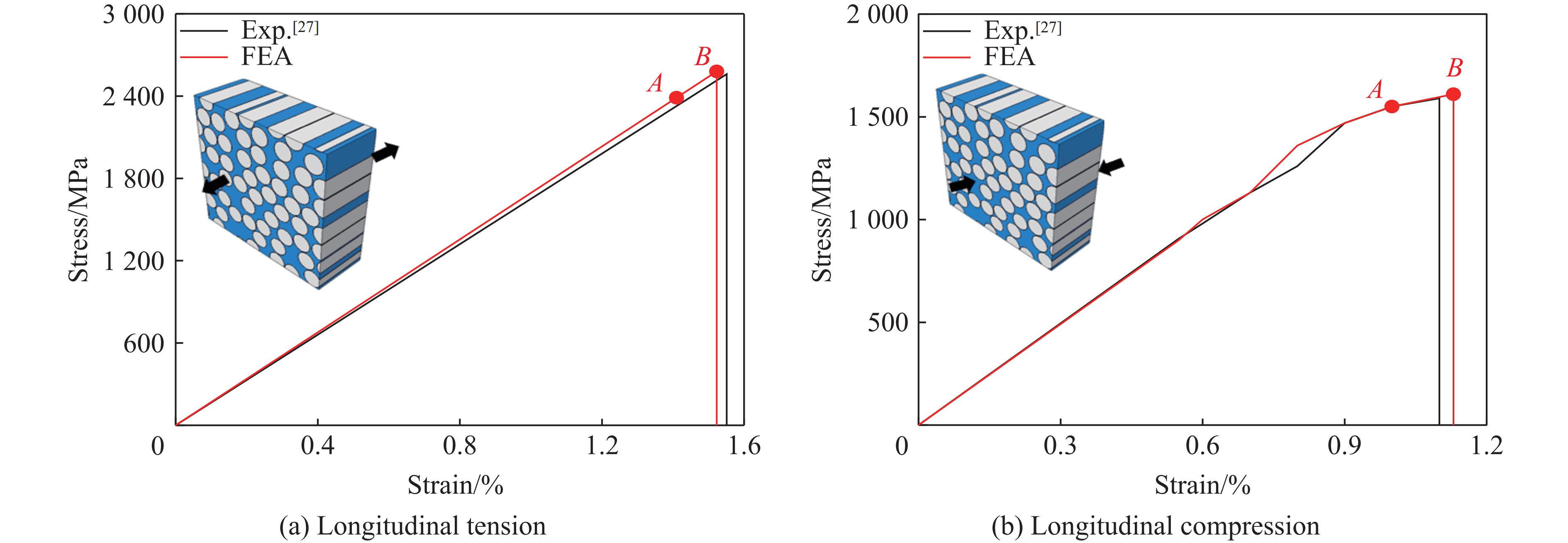
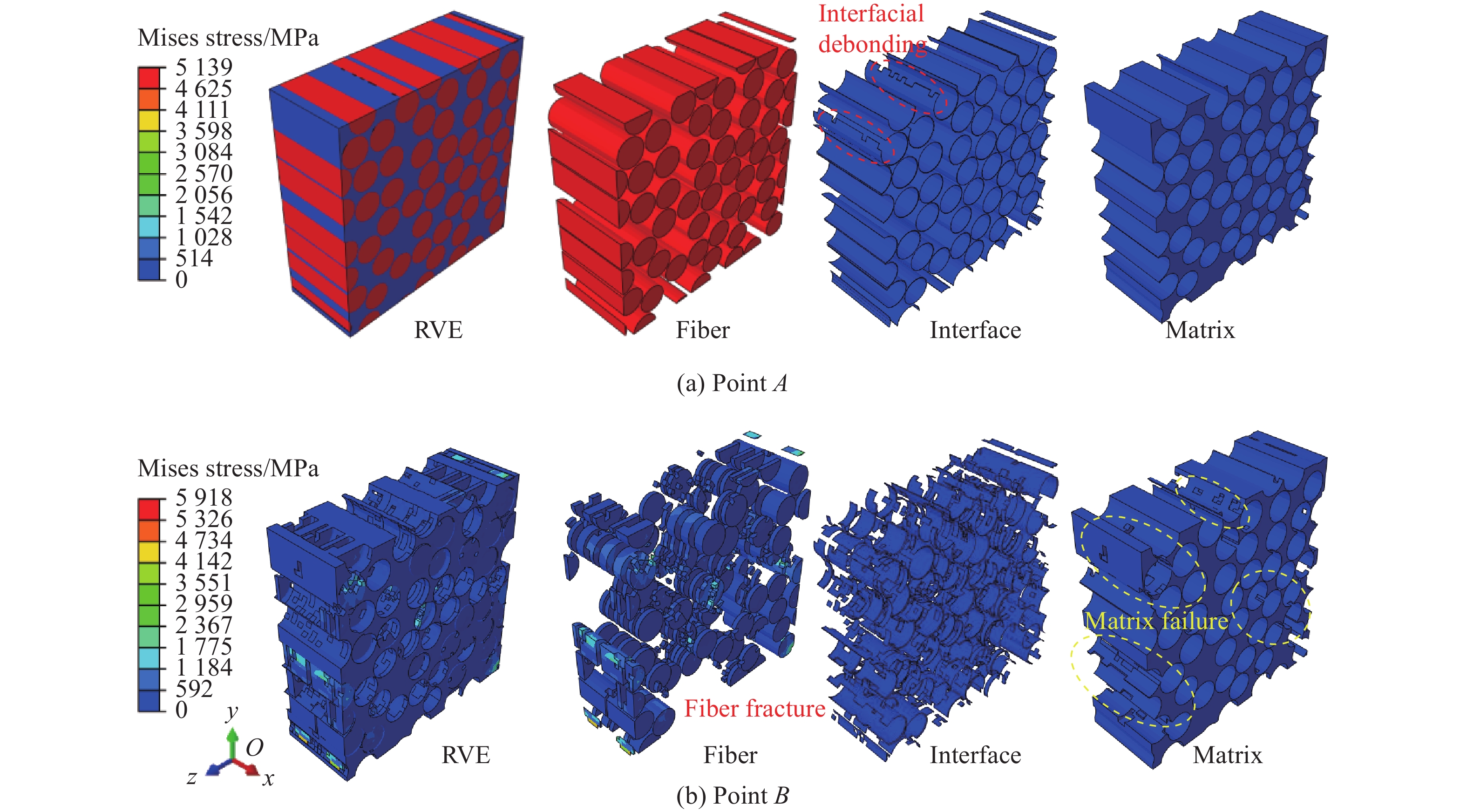
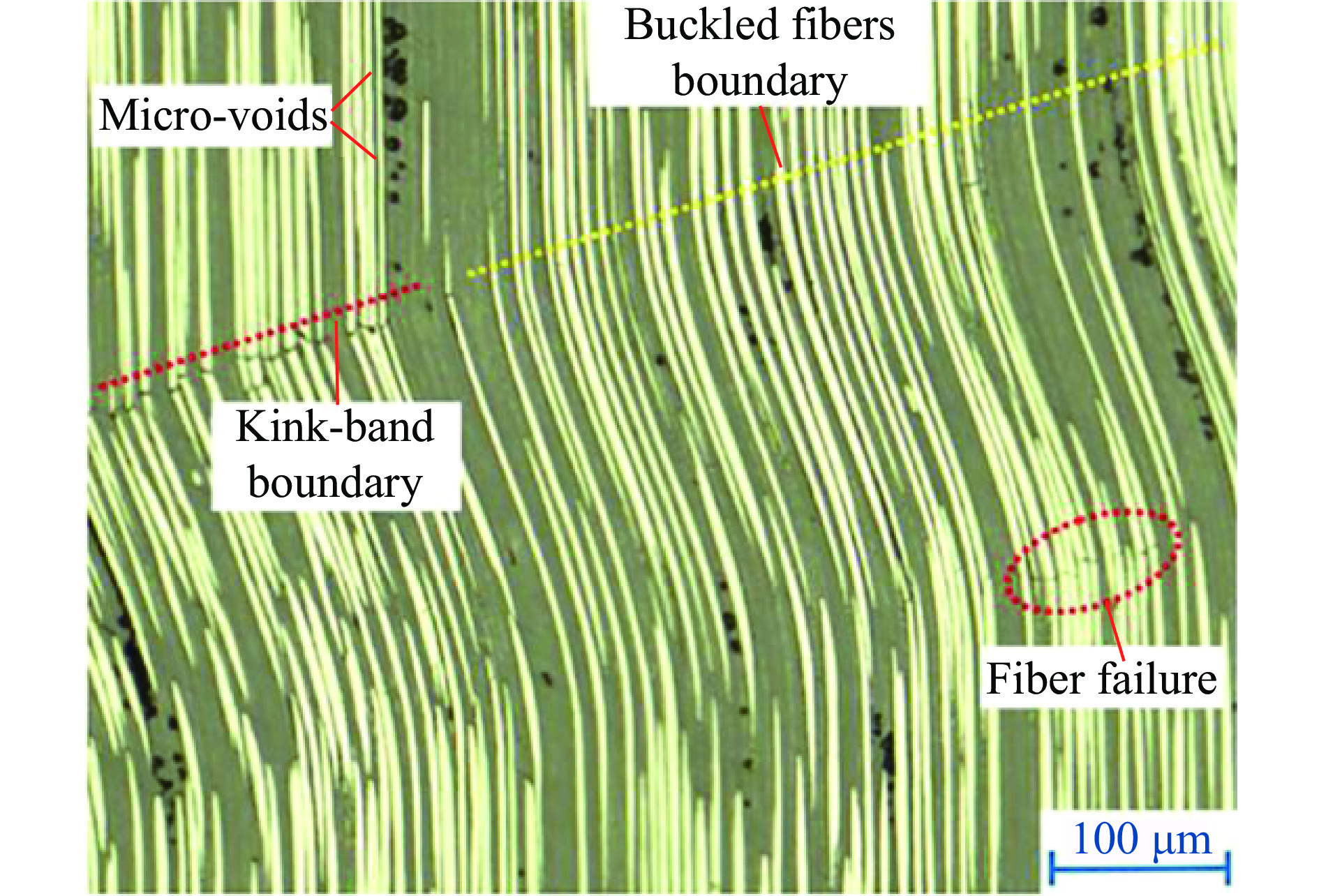
图 10 纵向拉伸条件下UD CFRP的初始损伤和最终损伤时刻应力分布
Figure 10. Initial damage and final damage stress distribution of UD CFRP under longitudinal tensile conditions
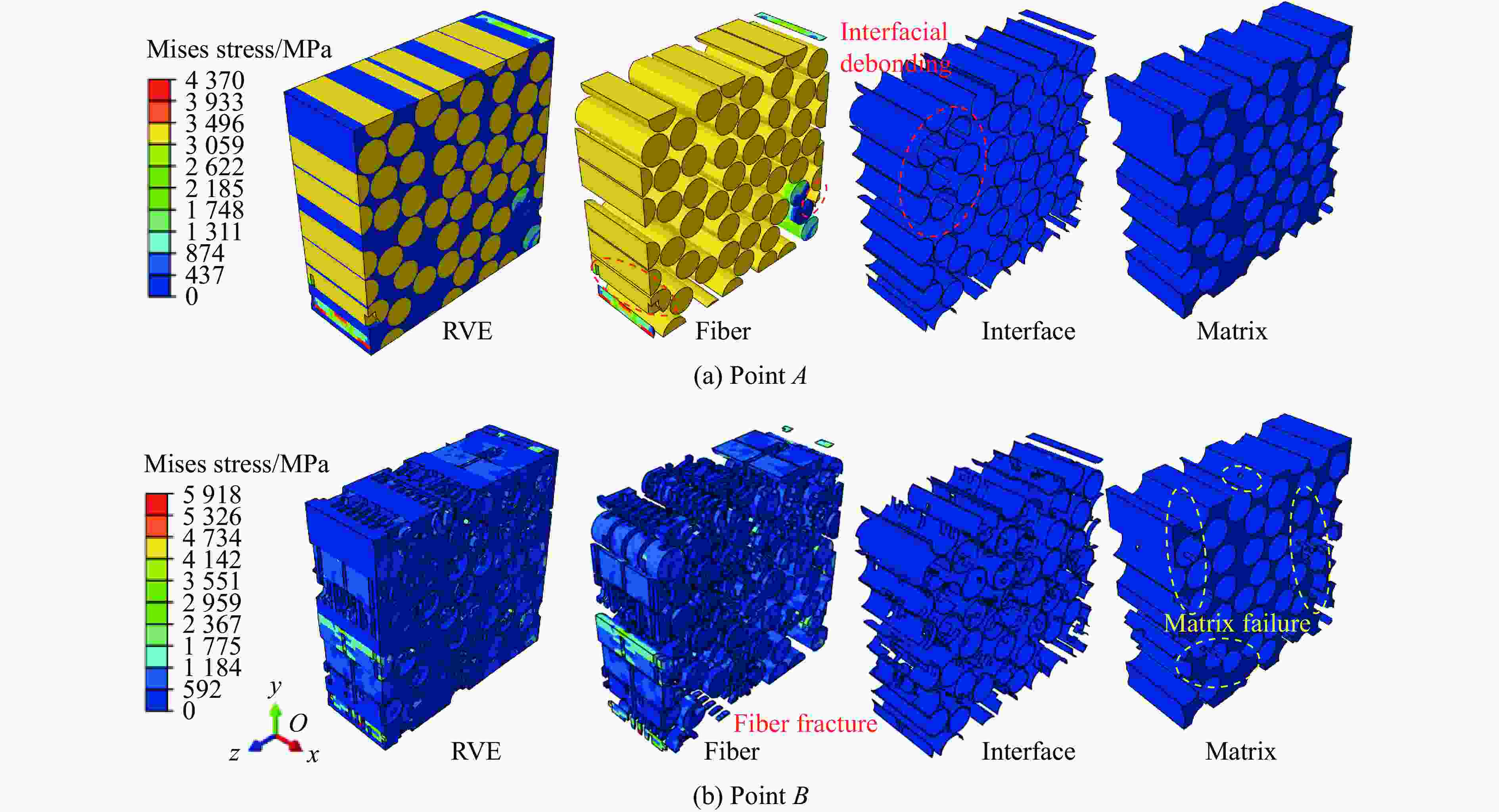
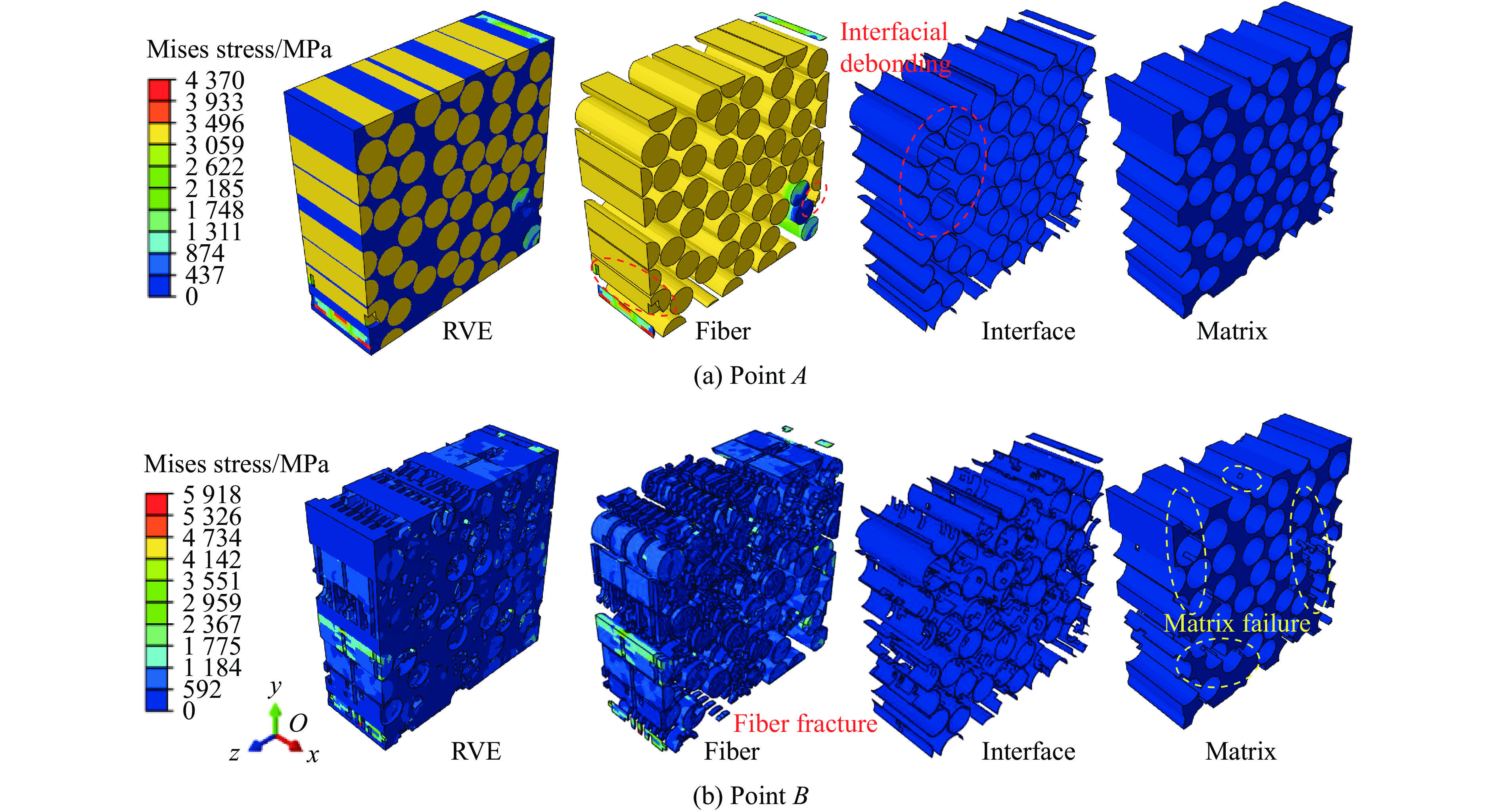
图 12 纵向压缩条件下UD CFRP的初始损伤和最终损伤时刻的应力分布
Figure 12. Initial damage and final damage stress distribution of UD CFRP under longitudinal compression conditions
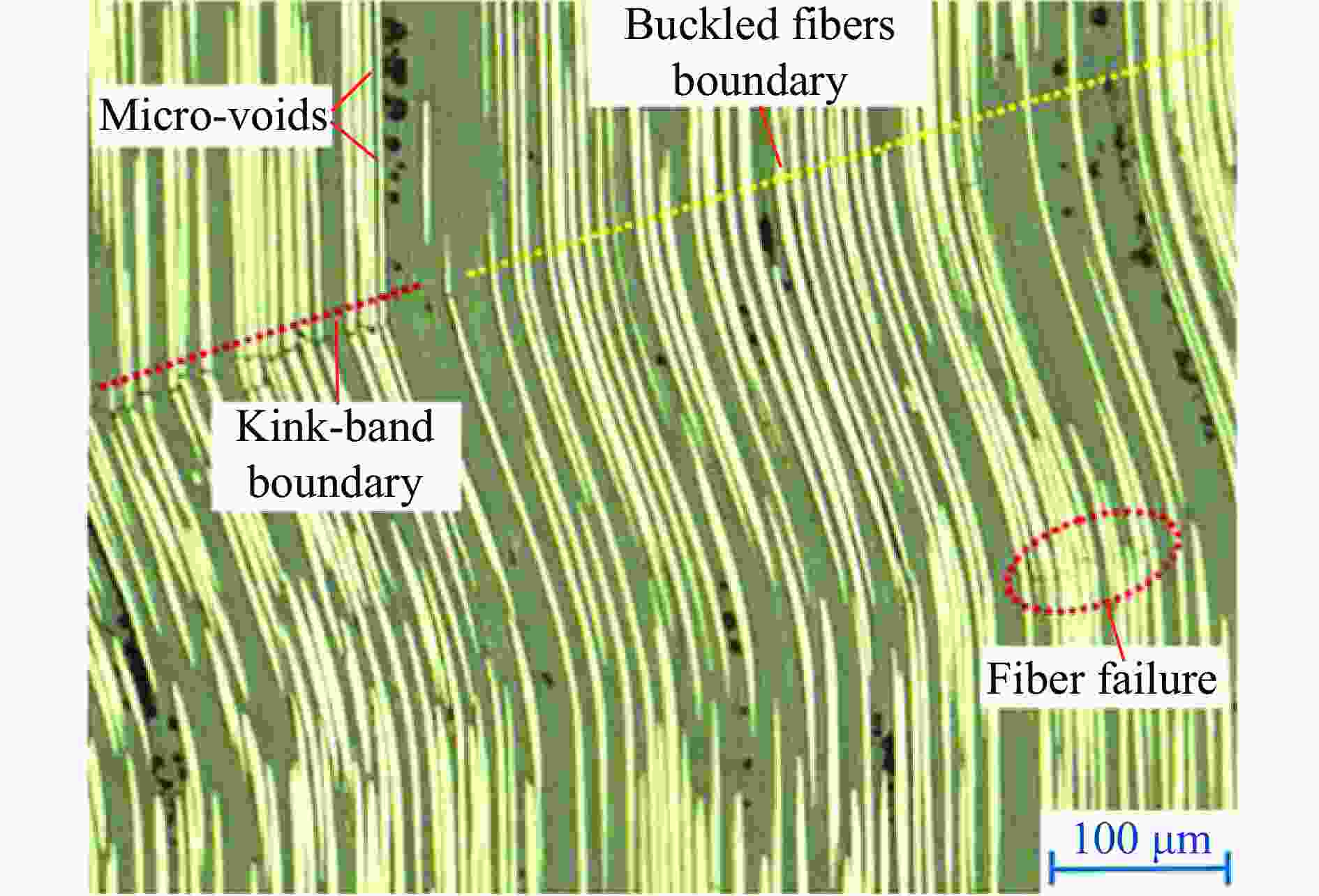
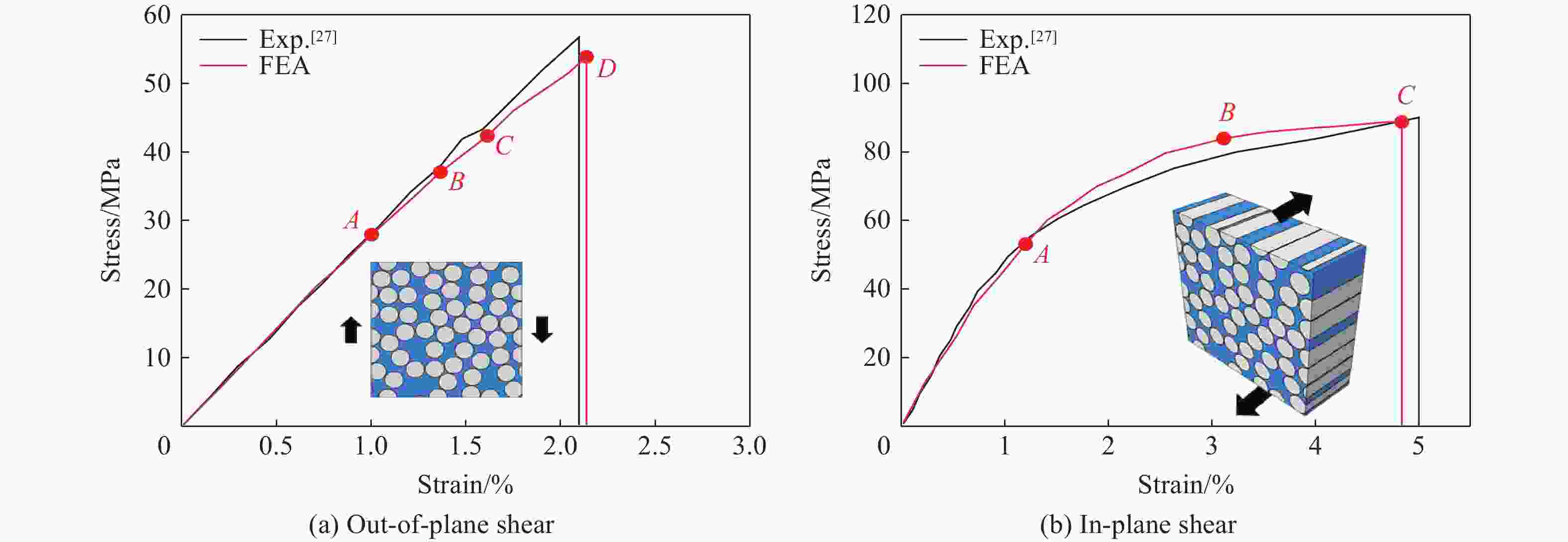
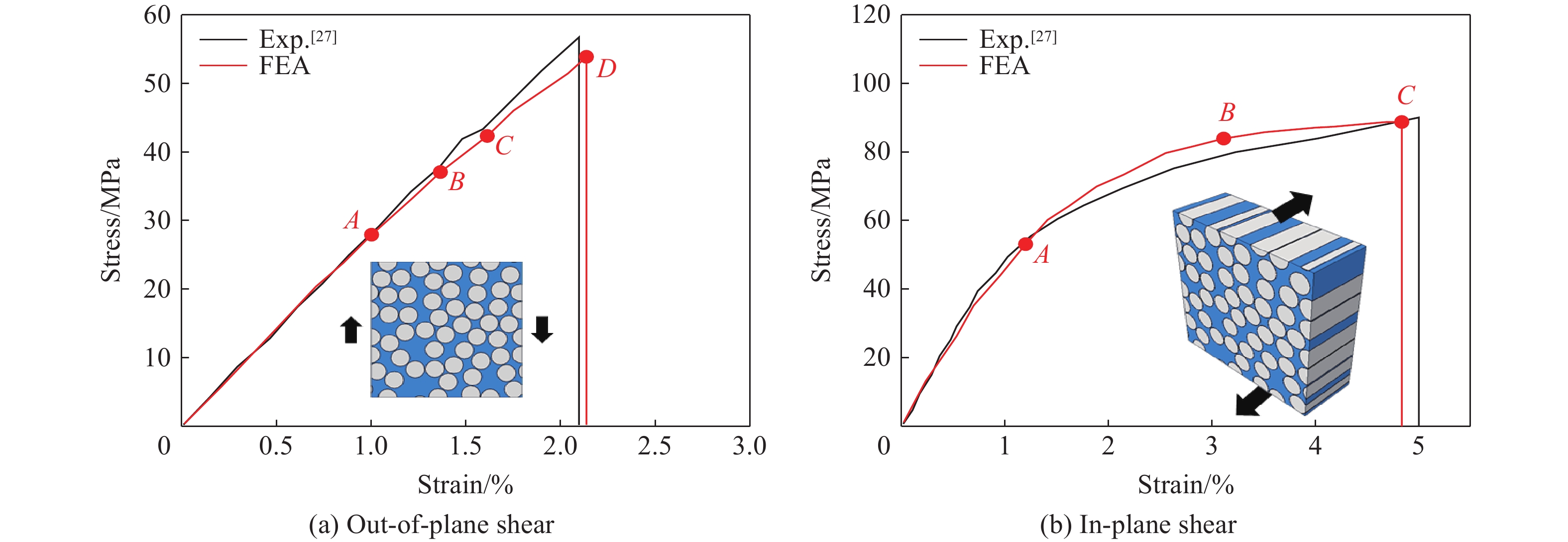
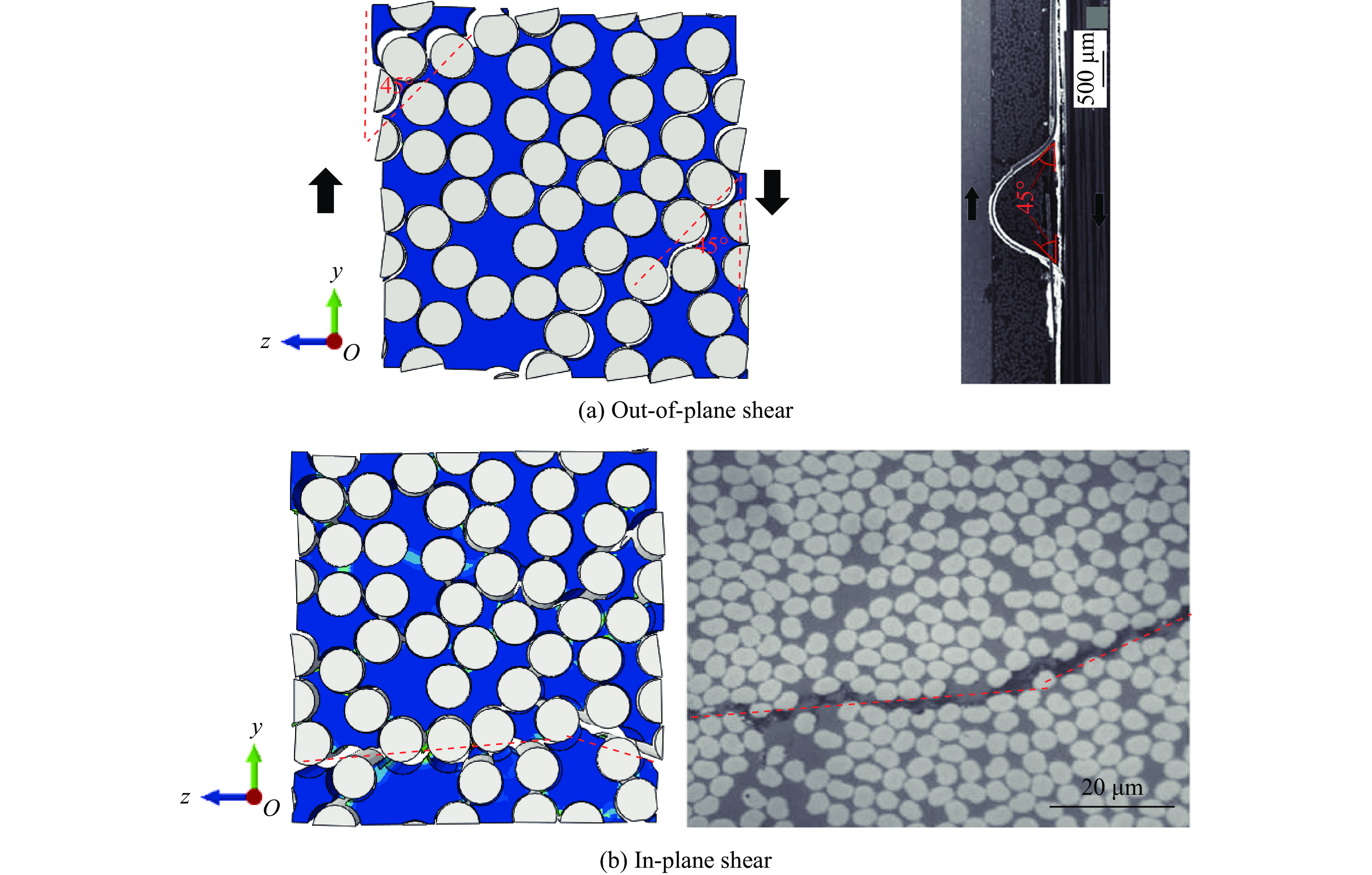
图 14 实验与数值模拟的剪切应力-应变曲线
Figure 14. Shear stress-strain curves of experiment and numerical simulation
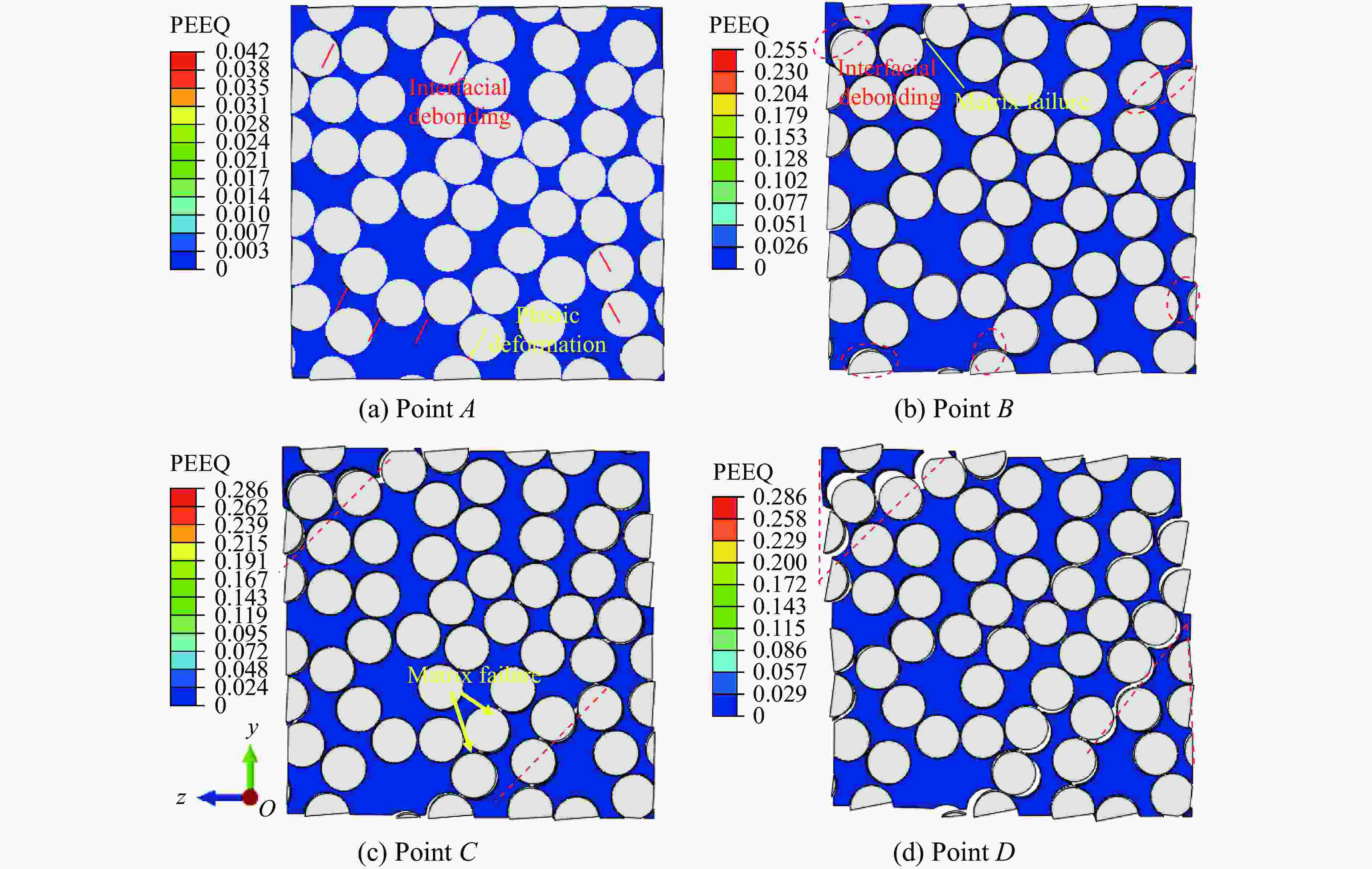
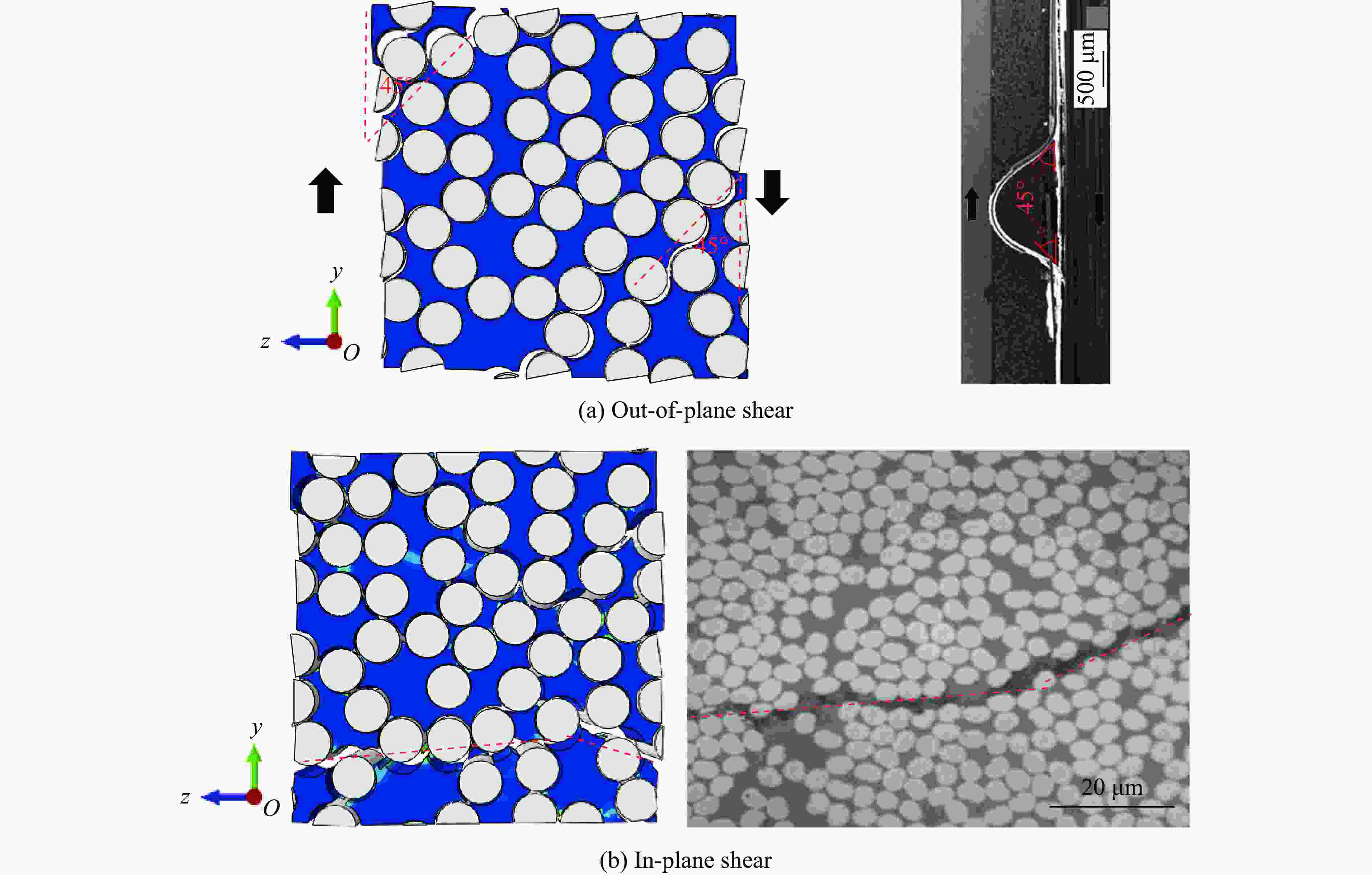
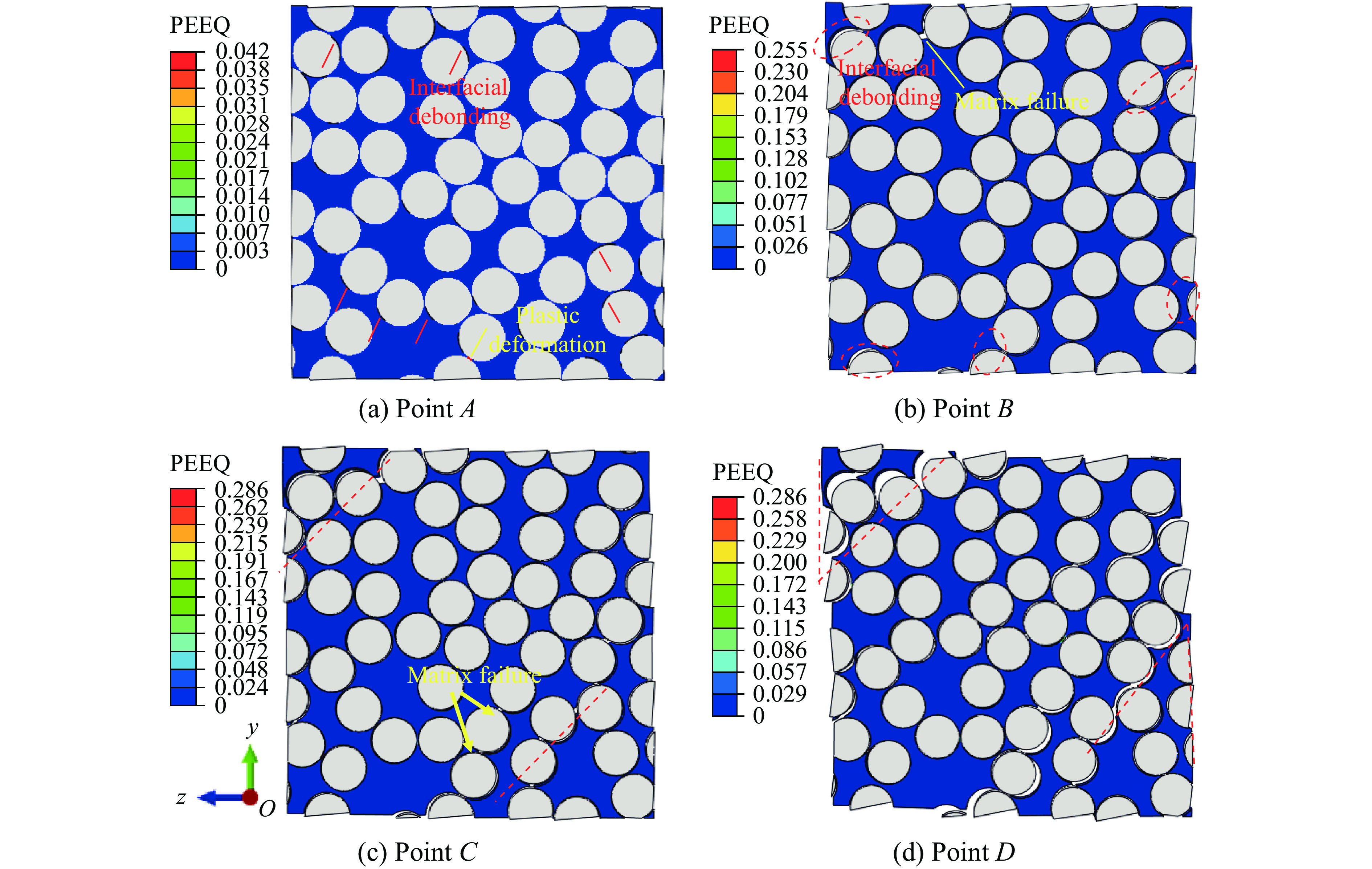
图 15 面外剪切条件下UD CFRP的损伤演化过程
Figure 15. Damage evolution process of UD CFRP under out-of-plane shear loading
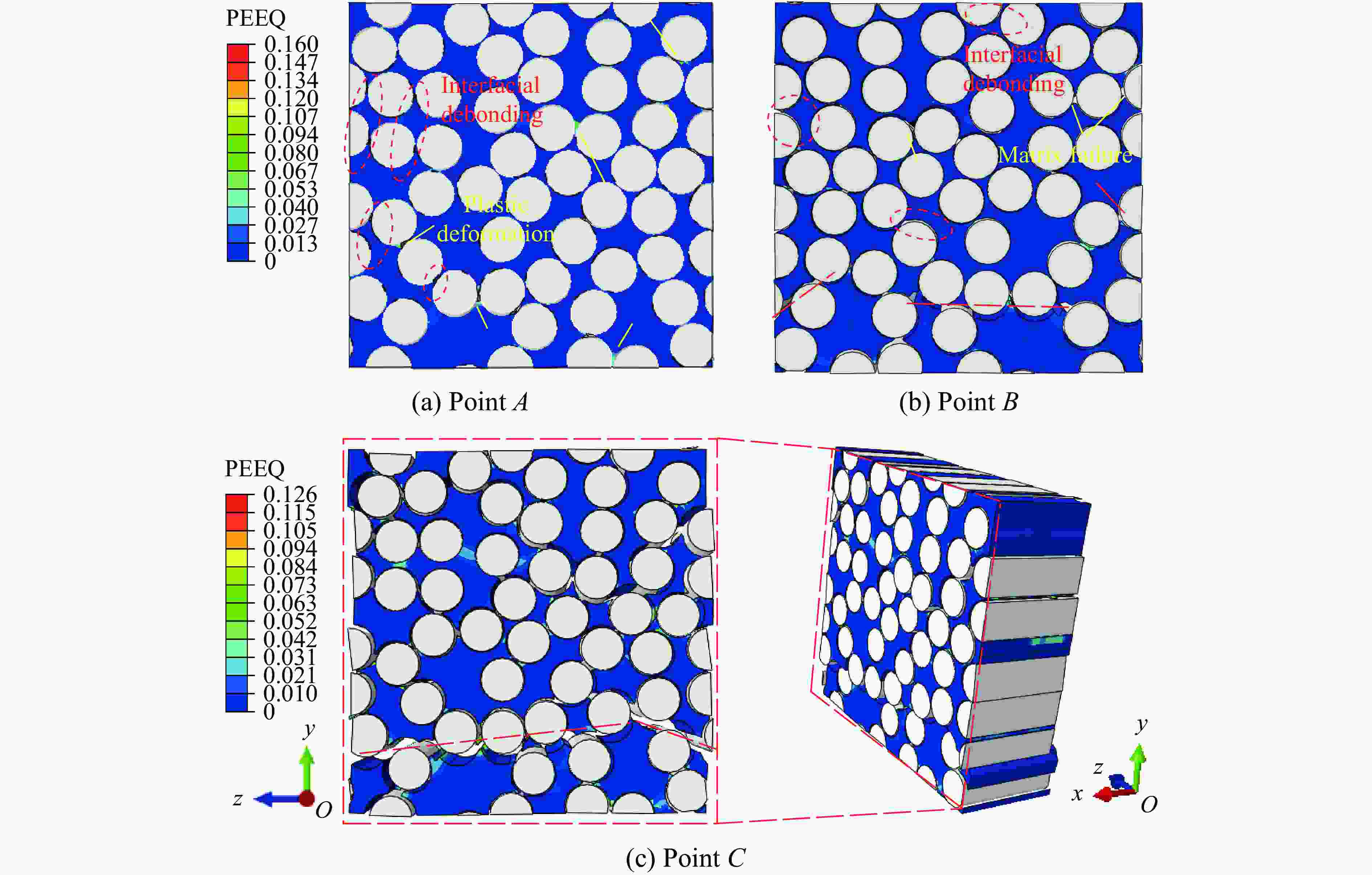
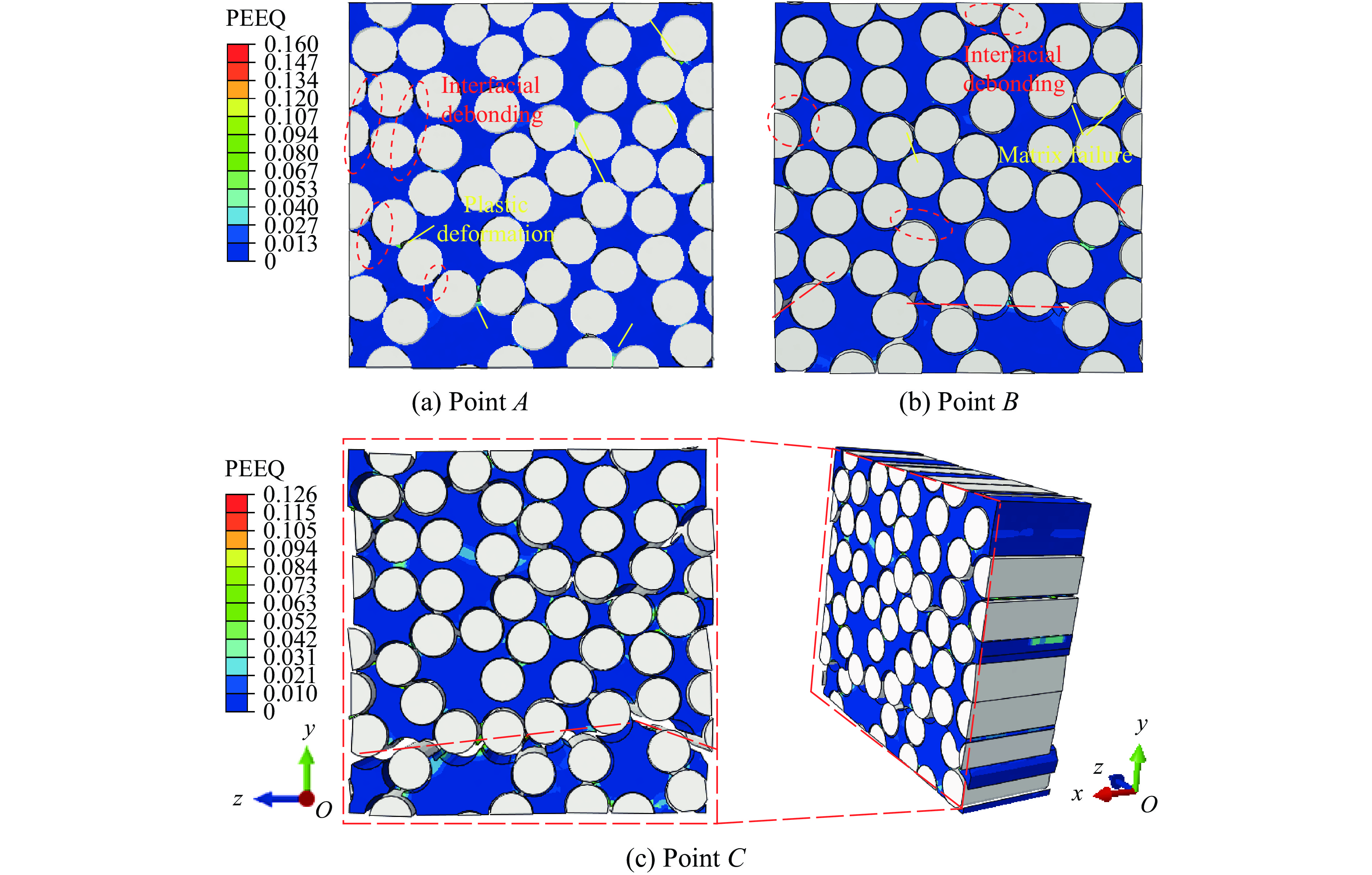
图 16 面内剪切条件下UD CFRP的损伤演化过程
Figure 16. Damage evolution process of UD CFRP under in-plane shear loading
E11/GPa E22/GPa E33/GPa ν12 ν13 ν23 276 19 19 0.2 0.2 0.357 G12/GPa G13/GPa G23/GPa S11T/GPa S11C/GPa S12/GPa 27 27 7 5.18 3.2 3.5  下载: 导出CSV
E/GPa ν β/(°) k θ/(°) σy/MPa Gf/(J·m-2) 4.08 0.38 0 0.89 30 130 1
下载: 导出CSV
K1/(MPa·mm−1) K2/(MPa·mm−1) K3/(MPa·mm−1) $t^0_{\mathrm{n}} $/MPa $t^0_{\mathrm{s}} $/MPa 108 108 108 57 96 $t^0_{\mathrm{t}} $/MPa Gn/(J·m−2) Gs/(J·m−2) Gt/(J·m−2) η 96 2 104 104 1.45
下载: 导出CSV
表 4 不同载荷条件下RVE模型预测的峰值应力及失效应变与实验结果[27]的对比
Table 4. Comparison of peak stress and failure strain predicted by the RVE model under different load conditions and experimental results[27]
载荷工况 实验结果[27] 预测结果 误差 峰值应力/MPa 失效应变/% 峰值应力/MPa 失效应变/% 应力误差/% 应变误差/% 横向拉伸 63 0.69 64 0.65 1.56 2.52 横向压缩 185 3.20 184 3.21 0.54 0.31 纵向拉伸 2560 1.51 2580 1.52 0.78 0.66 纵向压缩 1590 1.10 1610 1.13 1.20 3.63 面外剪切 56 2.09 54 2.13 3.57 1.91 面内剪切 90 4.99 88 4.83 2.22 3.21
下载: 导出CSV
-
[1] SUN G Y, CHEN D D, ZHU G H, et al. Lightweight hybrid materials and structures for energy absorption: a state-of-the-art review and outlook [J]. Thin-Walled Structures, 2022, 172: 108760. DOI: 10.1016/j.tws.2021.108760. [2] TONGA D A, AKBAR M F, SHRIFAN N H M M, et al. Nondestructive evaluation of fiber-reinforced polymer using microwave techniques: a review [J]. Coatings, 2023, 13(3): 590. DOI: 10.3390/coatings13030590. [3] 单忠德, 宋文哲, 范聪泽, 等. 面向2035年复合材料构件精确制造发展战略研究 [J]. 中国工程科学, 2023, 25(1): 113–120. DOI: 10.15302/J-SSCAE-2023.07.002.SHAN Z D, SONG W Z, FAN C Z, et al. Development strategy for precision manufacturing of composite components facing 2035 [J]. Strategic Study of CAE, 2023, 25(1): 113–120. DOI: 10.15302/J-SSCAE-2023.07.002. [4] 彭苗娇, 黄锦文, 胡殿印, 等. 航空发动机CFRP复合材料界面力学性能、损伤机理与强化策略研究进展 [J]. 航空学报, 2025, 46(16): 231600. DOI: 10.7527/S1000-6893.2025.31600.PENG M J, HUANG J W, HU D Y, et al. Research progress on interfacial mechanical properties, damage mechanisms, and reinforcement strategies of CFRP composites for aero-engines [J]. Acta Aeronautica et Astronautica Sinica, 2025, 46(16): 231600. DOI: 10.7527/S1000-6893.2025.31600. [5] PAGET C, SPECKMANN H, KRICHEL T, et al. Validation of SHM sensors in airbus A380 full-scale fatigue test [J]. Encyclopedia of Structural Health Monitoring, 2009. DOI: 10.1002/9780470061626.shm149. [6] 柯映林, 曲巍崴, 李江雄, 等. 碳纤维复合材料结构件自动铺放技术与装备研究进展 [J]. 机械工程学报, 2023, 59(20): 401–435. DOI: 10.3901/JME.2023.20.401.KE Y L, QU W W, LI J X, et al. Researches on automated placement technologies and equipment for carbon fiber reinforced composites: a state-of-the-art review [J]. Journal of Mechanical Engineering, 2023, 59(20): 401–435. DOI: 10.3901/JME.2023.20.401. [7] AIROLDI A, CACCHIONE B. Modelling of impact forces and pressures in Lagrangian bird strike analyses [J]. International Journal of Impact Engineering, 2006, 32(10): 1651–1677. DOI: 10.1016/j.ijimpeng.2005.04.011. [8] ANGHILERI M, CASTELLETTI L M L, INVERNIZZI F, et al. A survey of numerical models for hail impact analysis using explicit finite element codes [J]. International Journal of Impact Engineering, 2005, 31(8): 929–944. DOI: 10.1016/j.ijimpeng.2004.06.009. [9] KRISHNAPPA S, GURURAJA S. Compressive failure mechanisms in unidirectional fiber reinforced polymer composites with embedded wrinkles [J]. Composites Part B: Engineering, 2024, 284: 111688. DOI: 10.1016/j.compositesb.2024.111688. [10] LIU L B, ZHANG X H, WANG Z B, et al. Micromechanics modeling of transverse tensile strength for unidirectional CFRP composite [J]. Materials, 2022, 15(23): 8577. DOI: 10.3390/ma15238577. [11] SWOLFS Y, MORTON H, SCOTT A E, et al. Synchrotron radiation computed tomography for experimental validation of a tensile strength model for unidirectional fibre-reinforced composites [J]. Composites Part A: Applied Science and Manufacturing, 2015, 77: 106–113. DOI: 10.1016/j.compositesa.2015.06.018. [12] JUMAHAT A, SOUTIS C, JONES F R, et al. Fracture mechanisms and failure analysis of carbon fibre/toughened epoxy composites subjected to compressive loading [J]. Composite Structures, 2010, 92(2): 295–305. DOI: 10.1016/j.compstruct.2009.08.010. [13] LU K Y, ZHU W M, SU Q F, et al. Correlation between compression strength and failure mechanism of carbon fiber composite with tailored modulus of amide acid/SiO2 synergistically stiffened epoxy matrix [J]. Composites Science and Technology, 2021, 202: 108593. DOI: 10.1016/j.compscitech.2020.108593. [14] ZHANG N Y, HUANG D, QUAN H F, et al. Unveiling the microscopic compression failure behavior of mesophase-pitch-based carbon fibers for improving the compressive strength of their polymer composites [J]. Composites Part B: Engineering, 2024, 283: 111658. DOI: 10.1016/j.compositesb.2024.111658. [15] YUAN Y N, NIU K M, ZHANG Z Q. Compressive damage mode manipulation of fiber-reinforced polymer composites [J]. Engineering Fracture Mechanics, 2020, 223: 106799. DOI: 10.1016/j.engfracmech.2019.106799. [16] 宋健, 温卫东. 不同温度下树脂基复合材料层合板力学性能试验 [J]. 航空动力学报, 2016, 31(4): 1006–1018. DOI: 10.13224/j.cnki.jasp.2016.04.030.SONG J, WEN W D. Experiment on mechanical properties of resin matrix composites laminates under various temperatures [J]. Journal of Aerospace Power, 2016, 31(4): 1006–1018. DOI: 10.13224/j.cnki.jasp.2016.04.030. [17] SETHI S, RATHORE D K, RAY B C. Effects of temperature and loading speed on interface-dominated strength in fibre/polymer composites: an evaluation for in-situ environment [J]. Materials & Design (1980-2015), 2015, 65: 617–626. DOI: 10.1016/j.matdes.2014.09.053. [18] TIE Y, ZHANG Q S, HOU Y L, et al. Impact damage assessment in orthotropic CFRP laminates using nonlinear Lamb wave: experimental and numerical investigations [J]. Composite Structures, 2020, 236: 111869. DOI: 10.1016/j.compstruct.2020.111869. [19] SHARMA A, DAGGUMATI S, GUPTA A, et al. On the prediction of the bi-axial failure envelope of a UD CFRP composite lamina using computational micromechanics: effect of microscale parameters on macroscale stress–strain behavior [J]. Composite Structures, 2020, 251: 112605. DOI: 10.1016/j.compstruct.2020.112605. [20] WAN L, ULLAH Z, YANG D M, et al. Probability embedded failure prediction of unidirectional composites under biaxial loadings combining machine learning and micromechanical modelling [J]. Composite Structures, 2023, 312: 116837. DOI: 10.1016/j.compstruct.2023.116837. [21] TANG C R, ZOU J C, XIONG Y F, et al. Automatic reconstruction of closely packed fabric composite RVEs using yarn-level micro-CT images processed by convolutional neural networks (CNNs) and based on physical characteristics [J]. Composites Science and Technology, 2024, 252: 110616. DOI: 10.1016/j.compscitech.2024.110616. [22] SHARMA A, DAGGUMATI S. Computational micromechanical modeling of transverse tensile damage behavior in unidirectional glass fiber-reinforced plastic composite plies: ductile versus brittle fracture mechanics approach [J]. International Journal of Damage Mechanics, 2020, 29(6): 943–964. DOI: 10.1177/1056789519894379. [23] DAGGUMATI S, SHARMA A, VAN PAEPEGEM W. Synergistic effects of microscale variabilities on the thermo-mechanical behavior of a UD CFRP ply [J]. International Journal of Mechanical Sciences, 2023, 242: 108004. DOI: 10.1016/j.ijmecsci.2022.108004. [24] WANG H, ZHONG X Y, JIA H, et al. Micromechanical modeling for longitudinal tensile property of unidirectional CFRP considering dispersion of fiber properties [J]. Composite Structures, 2024, 339: 118081. DOI: 10.1016/j.compstruct.2024.118081. [25] XU K L, LIU L L, ZHAO Z H, et al. Development of a hygrothermal constitutive model for epoxy resin considering the glass transition temperature and its applications [J]. International Journal of Mechanical Sciences, 2024, 261: 108697. DOI: 10.1016/j.ijmecsci.2023.108697. [26] SUN Q P, ZHOU G W, MENG Z X, et al. Failure criteria of unidirectional carbon fiber reinforced polymer composites informed by a computational micromechanics model [J]. Composites Science and Technology, 2019, 172: 81–95. DOI: 10.1016/j.compscitech.2019.01.012. [27] KADDOUR A S, HINTON M J. Input data for test cases used in benchmarking triaxial failure theories of composites [J]. Journal of Composite Materials, 2012, 46(19/20): 2295–2312. DOI: 10.1177/0021998312449886. [28] YANG L, YAN Y, RAN Z G, et al. A new method for generating random fibre distributions for fibre reinforced composites [J]. Composites Science and Technology, 2013, 76: 14–20. DOI: 10.1016/j.compscitech.2012.12.001. [29] GU Y Z, LI M, WANG J, et al. Characterization of the interphase in carbon fiber/polymer composites using a nanoscale dynamic mechanical imaging technique [J]. Carbon, 2010, 48(11): 3229–3235. DOI: 10.1016/j.carbon.2010.05.008. [30] NAYA F, GONZÁLEZ C, LOPES C S, et al. Computational micromechanics of the transverse and shear behavior of unidirectional fiber reinforced polymers including environmental effects [J]. Composites Part A: Applied Science and Manufacturing, 2017, 92: 146–157. DOI: 10.1016/j.compositesa.2016.06.018. [31] 李响, 贾欲明, 洪润民. Hashin准则的应力应变形式在复合材料渐进损伤计算中的对比 [J]. 机械工程学报, 2022, 58(22): 284–293. DOI: 10.3901/JME.2022.22.284.LI X, JIA Y M, HONG R M. Comparison between the stress form and strain form of Hashin criteria in progressive failure analysis of composite materials [J]. Journal of Mechanical Engineering, 2022, 58(22): 284–293. DOI: 10.3901/JME.2022.22.284. [32] LÜ Q, LIU S H, MAO W Z, et al. A numerical simulation-based ANN method to determine the shear strength parameters of rock minerals in nanoscale [J]. Computers and Geotechnics, 2024, 169: 106175. DOI: 10.1016/j.compgeo.2024.106175. [33] ZHAO D, YIN B, STORM J, et al. A ductile phase-field fracture formulation with regularized fracture toughness through a gradient-extended micromorphic approach [J]. Computer Methods in Applied Mechanics and Engineering, 2024, 430: 117203. DOI: 10.1016/j.cma.2024.117203. [34] WAN L, ZHANG K, CHEN J Y, et al. Experimental testing and micromechanical modelling of unidirectional CFRP composite laminae under multiaxial loading conditions [J]. Composite Structures, 2025, 357: 118889. DOI: 10.1016/j.compstruct.2025.118889. [35] JI C H, ZHAI Y N, LI D S, et al. Transverse failure prediction of unidirectional carbon fiber reinforced polymer composites subjected to uniaxial and biaxial loading by stress-triaxiality-dependent computational micromechanics [J]. Composite Structures, 2024, 345: 118359. DOI: 10.1016/j.compstruct.2024.118359. [36] ROMANOWICZ M. A numerical approach for predicting the failure locus of fiber reinforced composites under combined transverse compression and axial tension [J]. Computational Materials Science, 2012, 51(1): 7–12. DOI: 10.1016/j.commatsci.2011.07.039. [37] YAMAMOTO G, ONODERA M, KOIZUMI K, et al. Considering the stress concentration of fiber surfaces in the prediction of the tensile strength of unidirectional carbon fiber-reinforced plastic composites [J]. Composites Part A: Applied Science and Manufacturing, 2019, 121: 499–509. DOI: 10.1016/j.compositesa.2019.04.011. [38] SUN Q P, GUO H D, ZHOU G W, et al. Experimental and computational analysis of failure mechanisms in unidirectional carbon fiber reinforced polymer laminates under longitudinal compression loading [J]. Composite Structures, 2018, 203: 335–348. DOI: 10.1016/j.compstruct.2018.06.028. -


计量
- 文章访问数: 814
- HTML全文浏览量: 305
- PDF下载量: 508
- 被引次数: 0