



Stress wave control method for the Hopkinson bar used in the impact fatigue experiment
-
摘要: 在国防与民用领域,一些装备和结构不可避免地会承受间断性的、高加载率的、重复性的强冲击作用,即所谓的重复冲击或冲击疲劳作用。要研究装备或结构的冲击疲劳行为,首先需要建立可靠的冲击疲劳试验技术或方法。对传统的Hopkinson杆冲击加载技术进行了修改和功能提升,并分析和研究了连续冲击时加载杆、试样、夹具等应力波传播问题,对作用于试样的冲击加载波的幅值、脉宽和应力波脉冲构型进行了分析与调制,以及对在冲击疲劳试验中如何实现单脉冲加载进行了理论分析。通过优化和改进撞击弹的撞击速度、长度以及弹体的几何形状实现了有效的加载波幅值、脉宽和应力波脉冲构型控制。最终提出了一种简单快速可适用于冲击疲劳试验的单脉冲加载方法,其原理为:通过设计加载杆的长度与材料参数,使试样和入射杆端面协同作用与分离,避免了加载杆上来回传播的应力波对试样的不规则随机二次或多次加载问题,实现了连续冲击时,每单次冲击对试样的单次加载功能。通过数值模拟和实际试验验证,证明了所提出的冲击疲劳单脉冲加载方法的有效性和可行性。并建立了用于剪切冲击疲劳的加载装置,获得了TC4钛合金的剪切冲击疲劳应力-寿命曲线。
-
关键词:
- 冲击疲劳 /
- 应力波 /
- 单脉冲加载 /
- Hopkinson杆
Abstract: In both national defense and civilian applications, various equipment and structural components are frequently subjected to intermittent, high loading rates, and repetitive severe impact loads, which are referred to as repeated impacts or impact fatigue. To study the impact fatigue behavior of equipment or structures, it is necessary to first establish reliable impact fatigue testing techniques or methodologies. Therefore, the conventional Hopkinson bar impact loading system was modified and enhanced, and the stress wave propagation characteristics in the loading bar, specimen, and associated fixtures under successive impacts were analyzed in detail. The method for controlling the amplitude, width, and waveform configuration of the impact loading pulse applied to the specimen was systematically analyzed. In addition, a theoretical analysis was conducted on the principle of achieving single pulse loading in impact fatigue testing. Effective control of the amplitude, pulse width, and the stress wave pulse configuration of the loading wave is realized by optimizing and modifying the impact velocity, length, and geometric shape of the projectile. Consequently, a simple and efficient single pulse loading method suitable for impact fatigue testing was proposed. The core principle involves designing the length and material parameters of the loading bar such that the end surfaces of the specimen and the bar coordinate and then separate, thereby preventing irregular and random secondary or multiple loadings caused by reflected stress waves. This design ensures that each individual impact in a continuous impact sequence results in a single loading on the specimen. The effectiveness and feasibility of the proposed impact fatigue testing technique have been verified through a combination of numerical simulations and experimental investigations. Additionally, a dedicated loading fixture for shear-type impact fatigue was developed, enabling the acquisition of the shear impact fatigue stress-life curve of TC4 titanium alloy, thus demonstrating the method’s applicability to complex loading modes.-
Key words:
- impact fatigue /
- stress wave /
- single pulse loading /
- Hopkinson bar
-
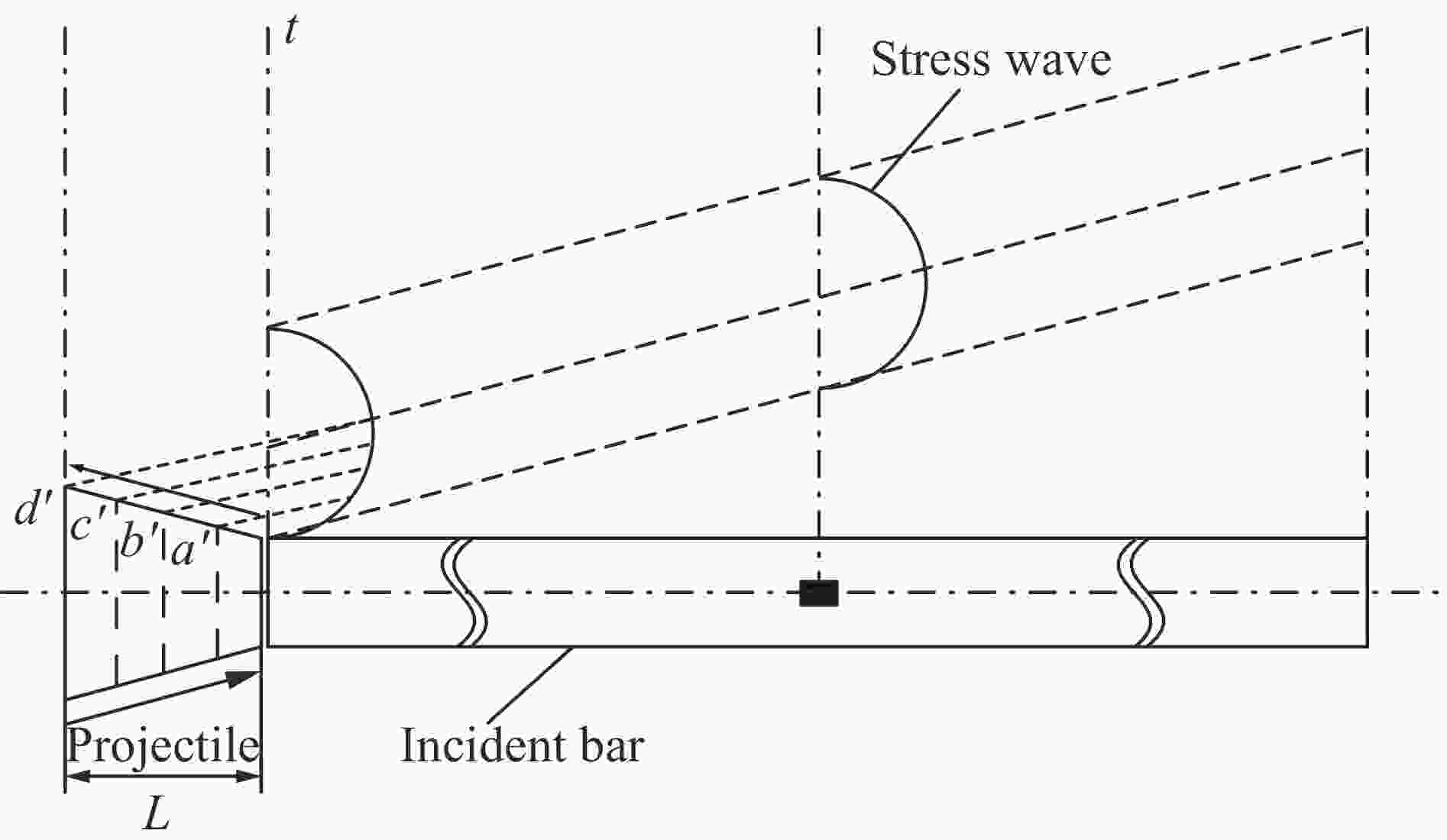
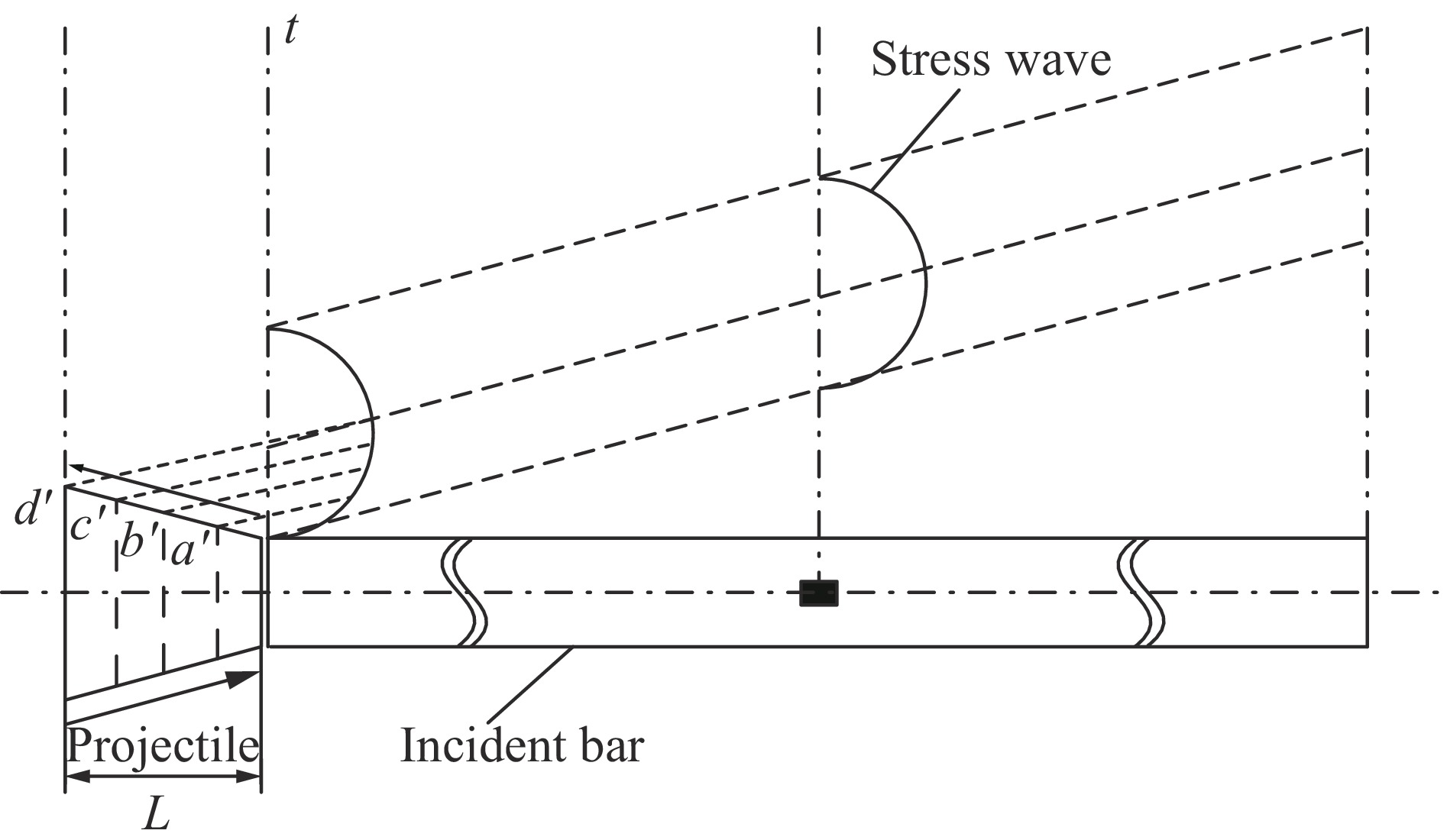
图 1 异形几何撞击弹产生应力波脉冲示意图
Figure 1. Schematic diagram of stress wave pulse generated by irregular-shaped projectile
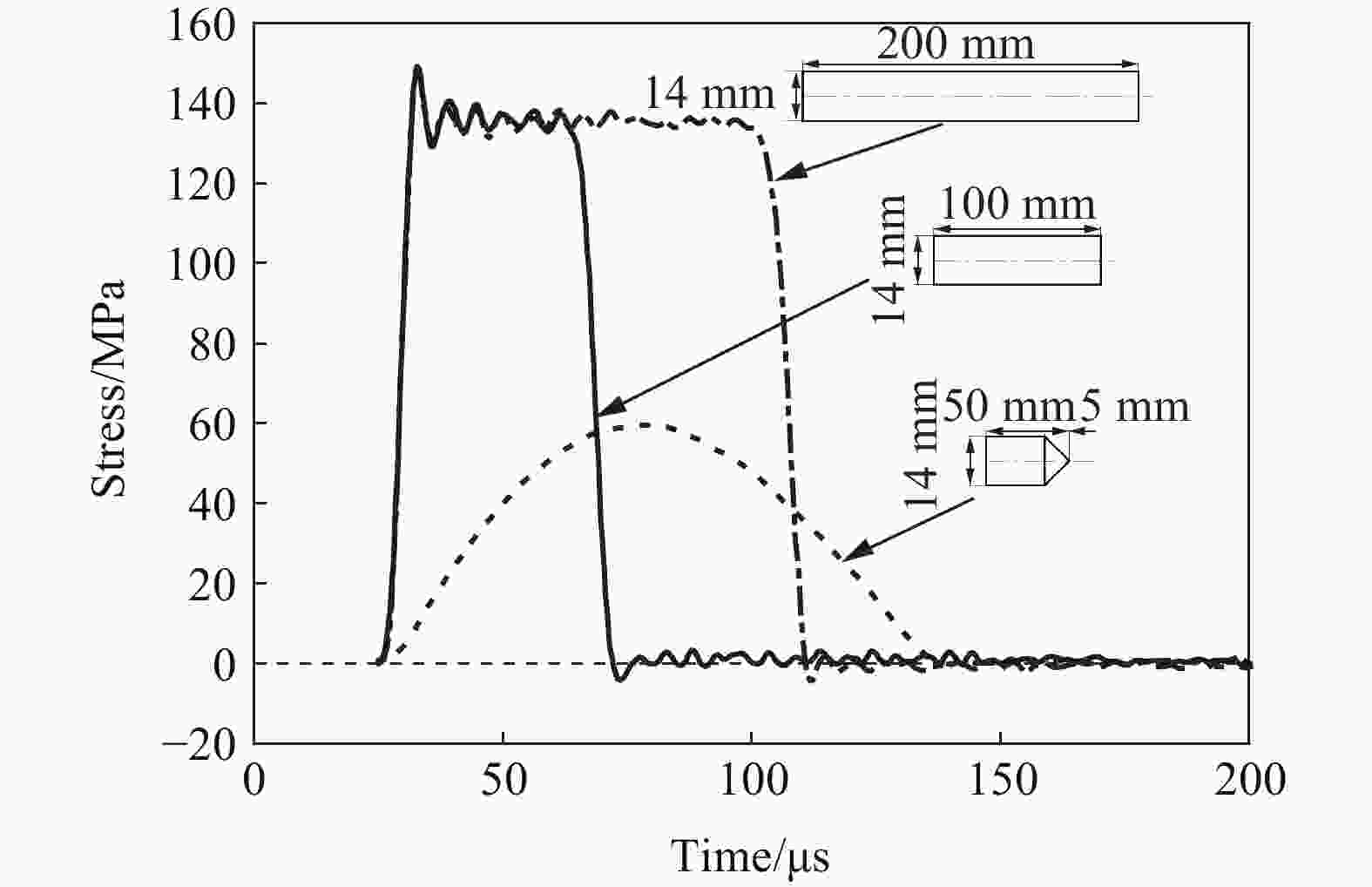
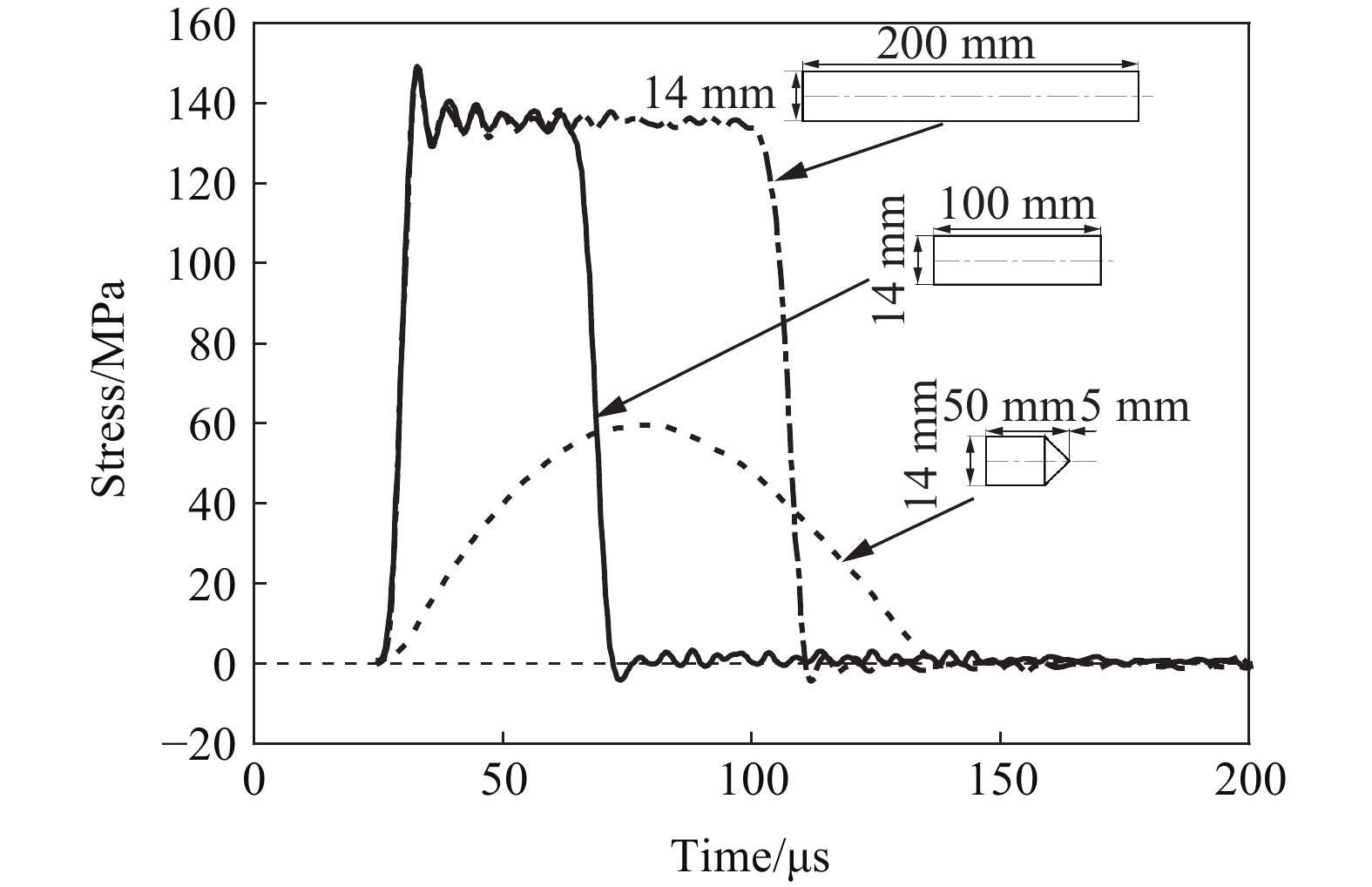
图 2 不同形状撞击弹产生的不同构型的应力波脉冲
Figure 2. Stress wave pulses of different configurations generated by projectiles of different shapes
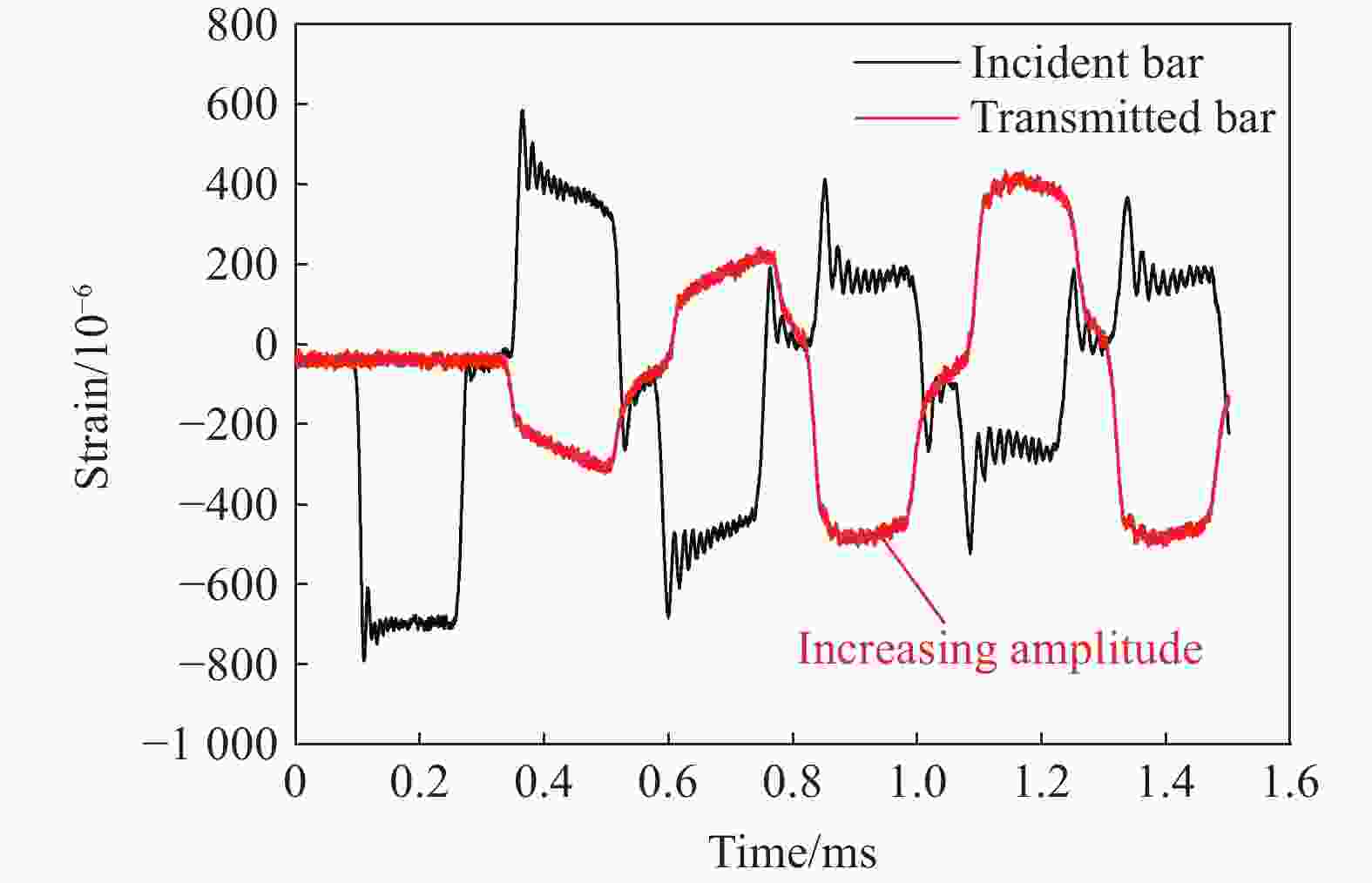
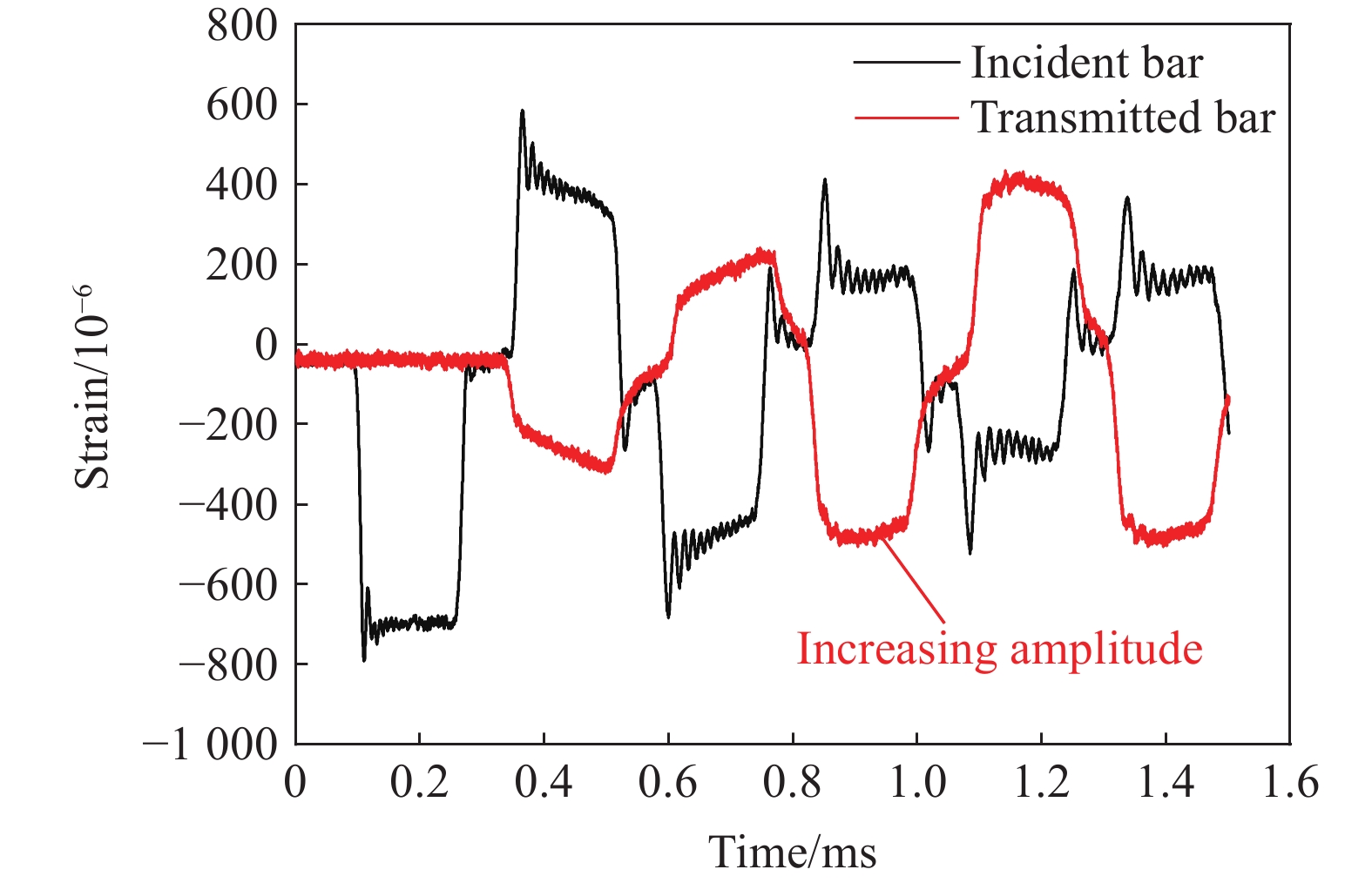
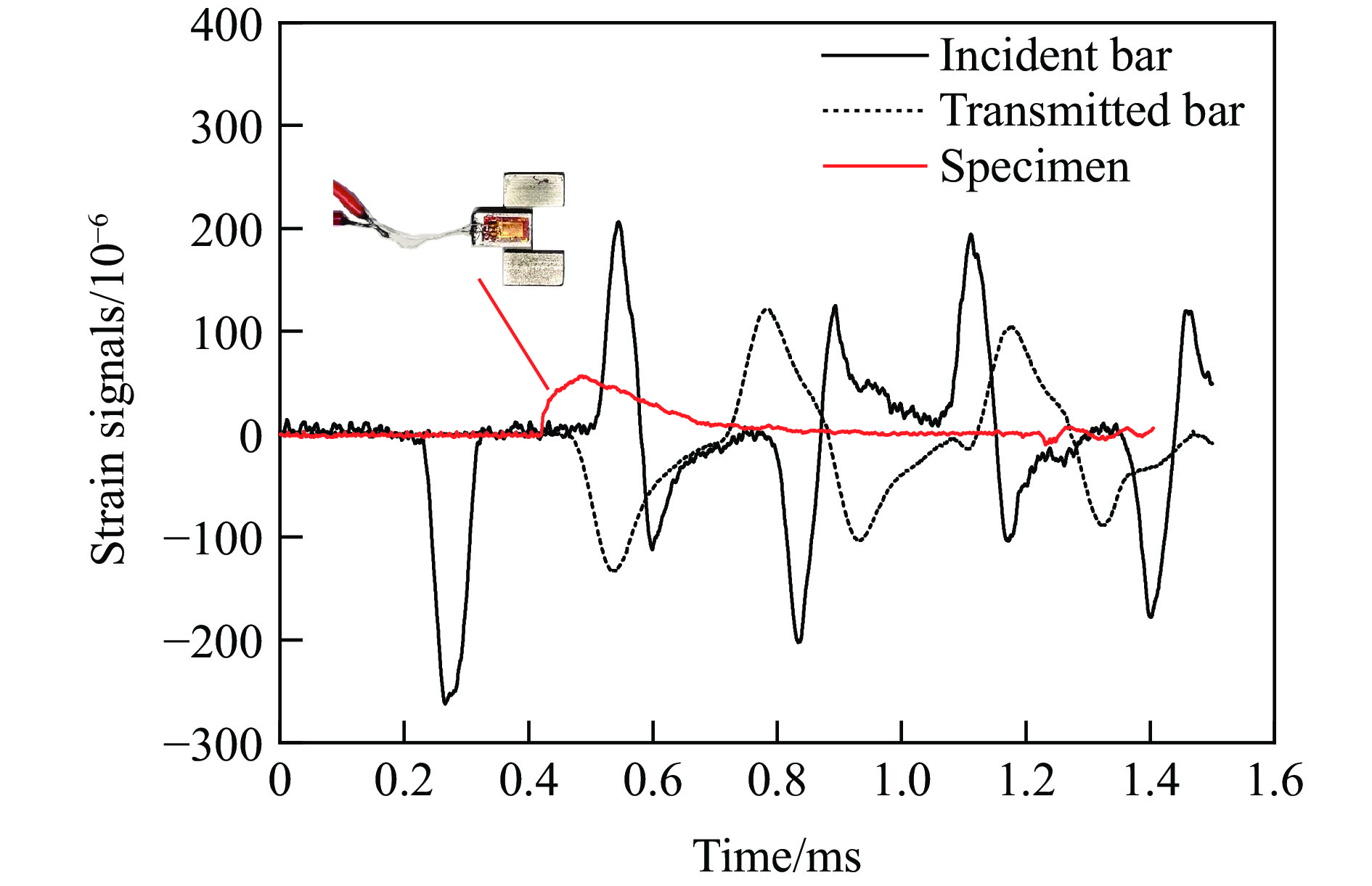
图 3 典型SHPB试验中加载杆的应变-时间历程曲线
Figure 3. Strain-time history curves of loading bars in a typical SHPB test
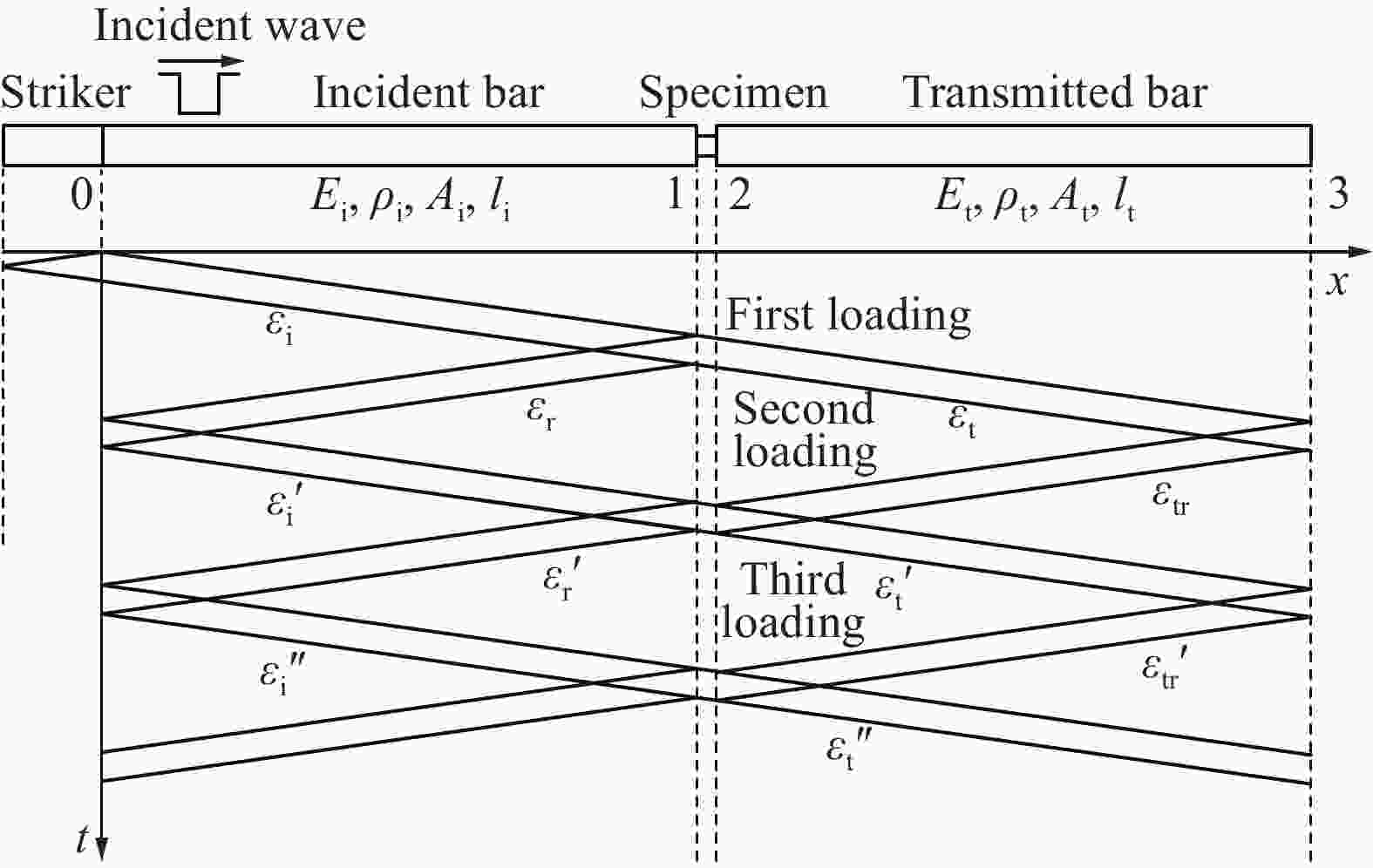
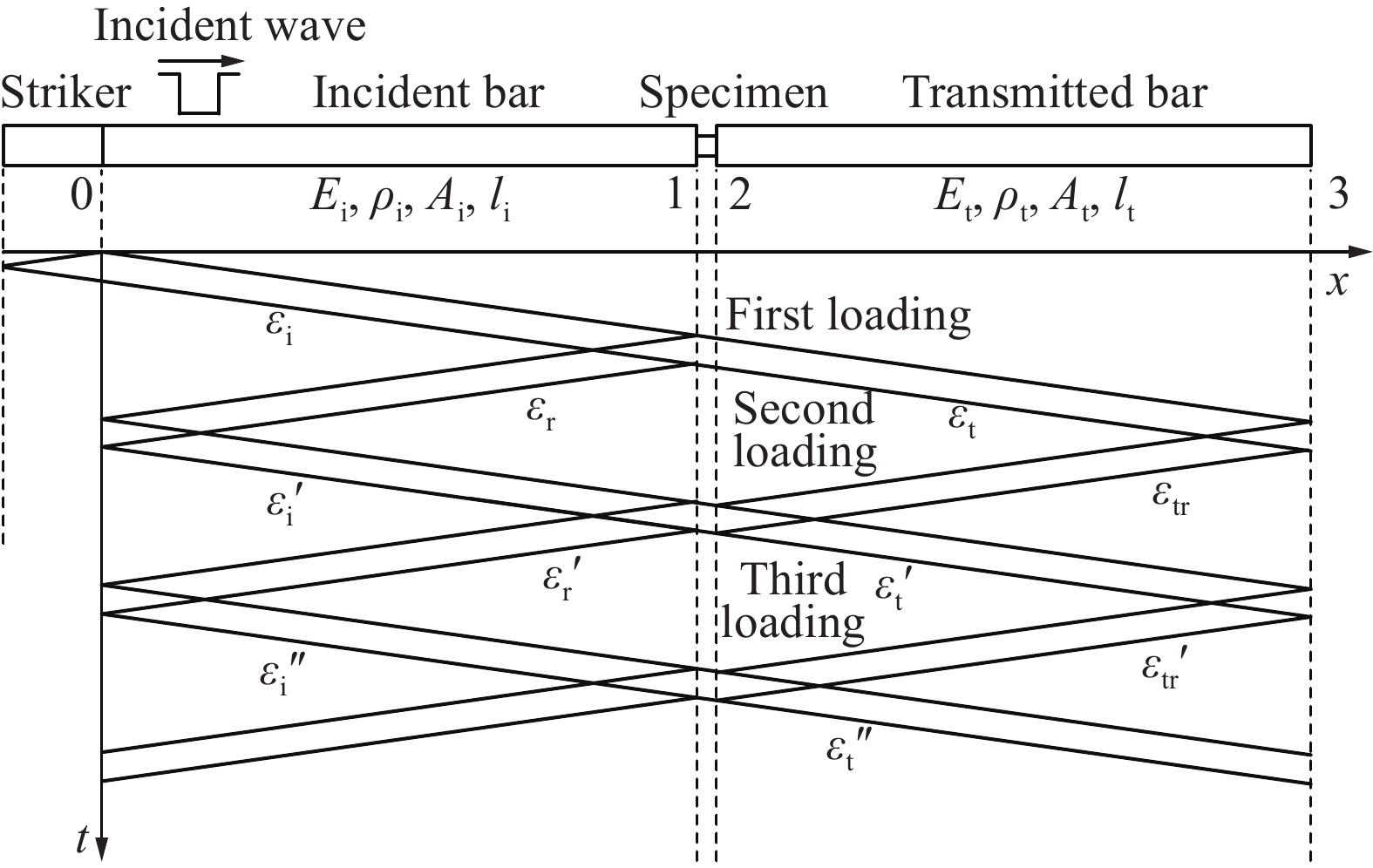
图 4 应力波在相同长度的入射杆和透射杆中的传播过程
Figure 4. Propagation process of stress waves in incident bar and transmitted bar with the same length

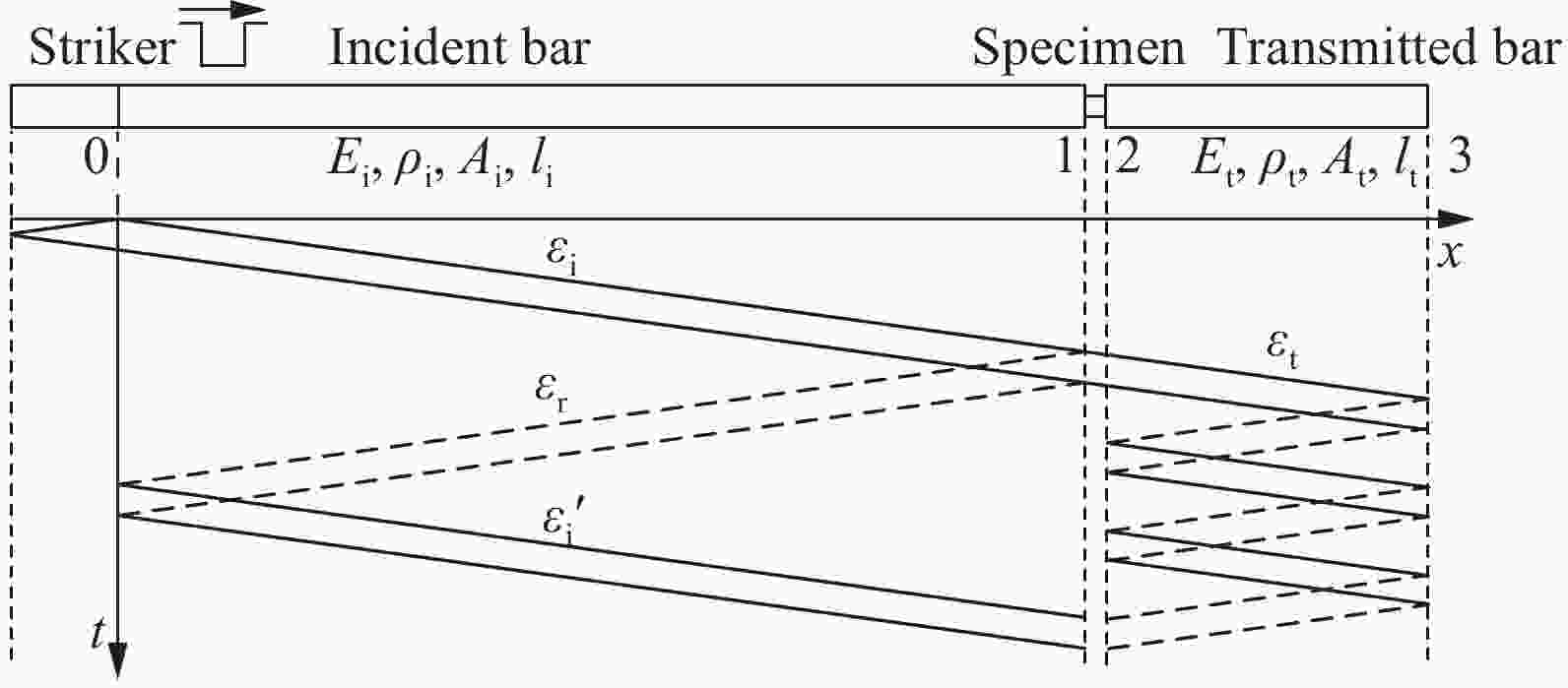
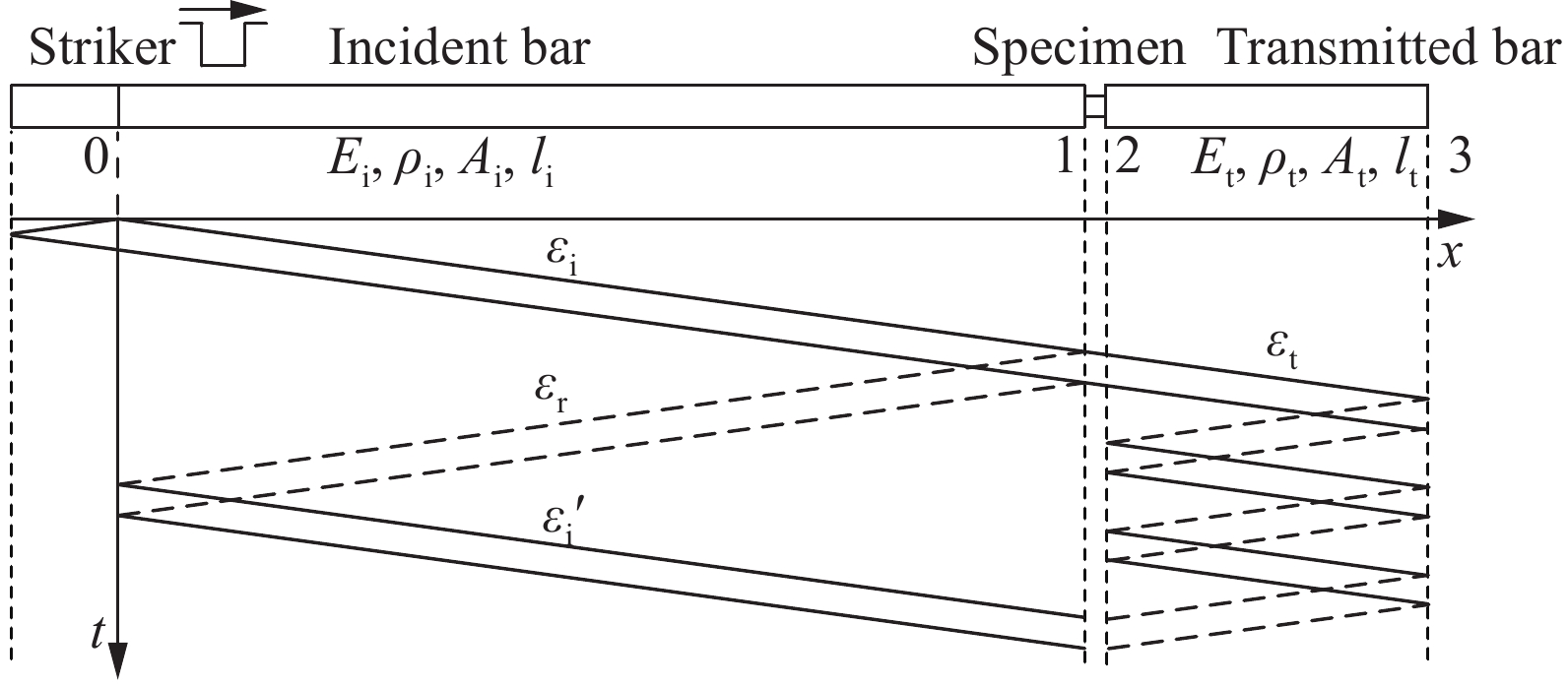
图 6 应力波在不同长度的入射杆和透射杆中的传播过程
Figure 6. Propagation process of stress waves in incident bar and transmitted bar with different lengths
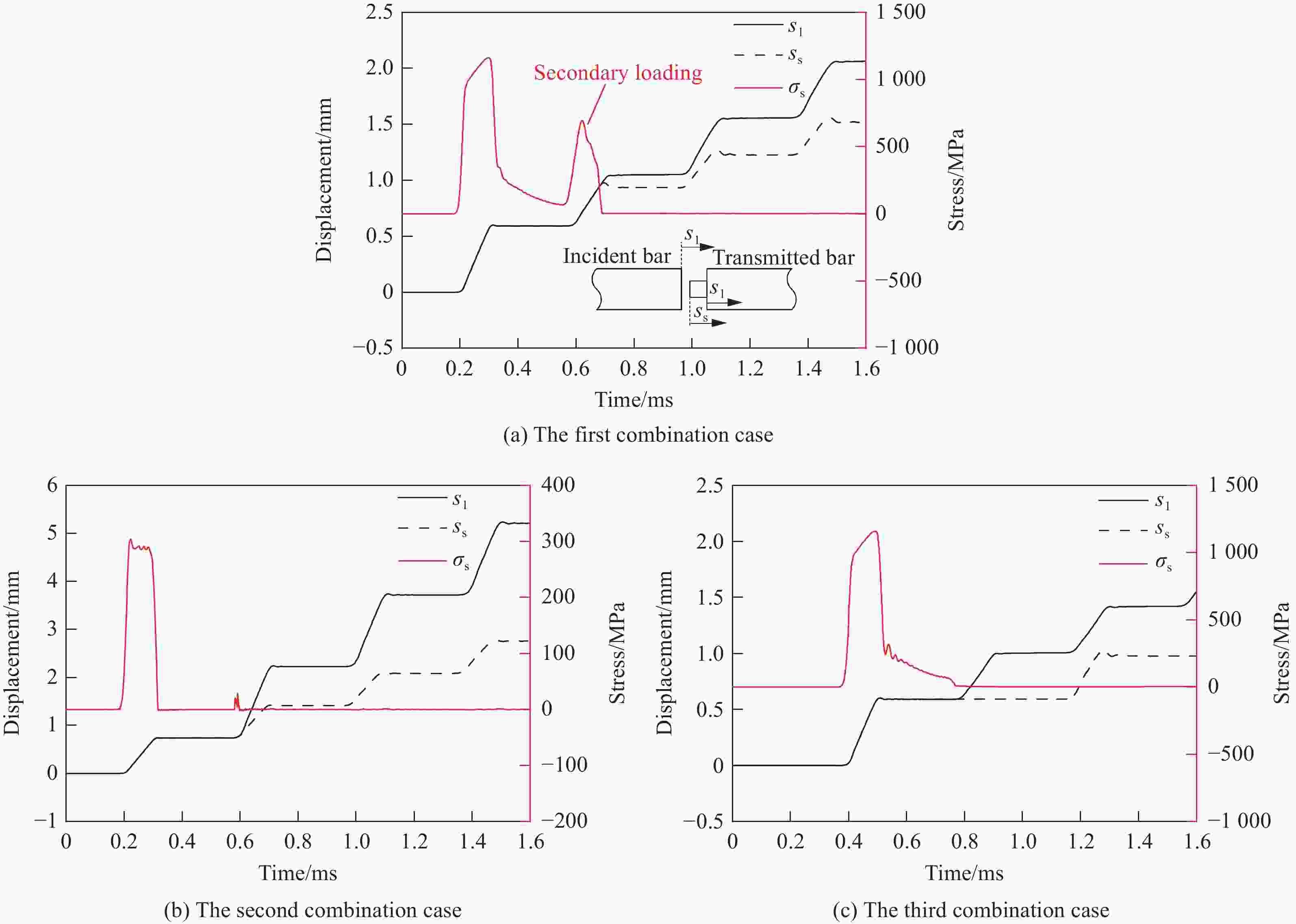
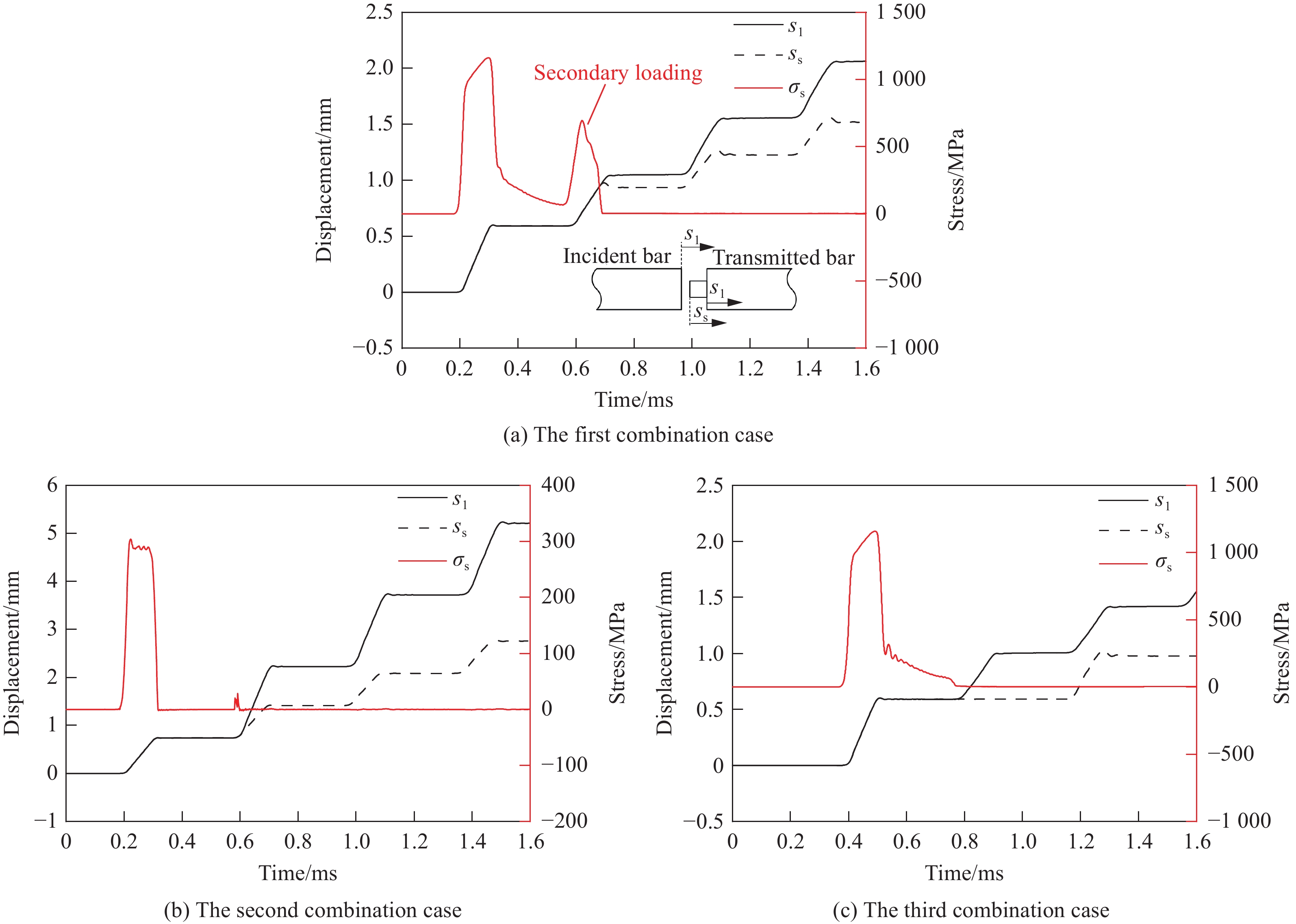
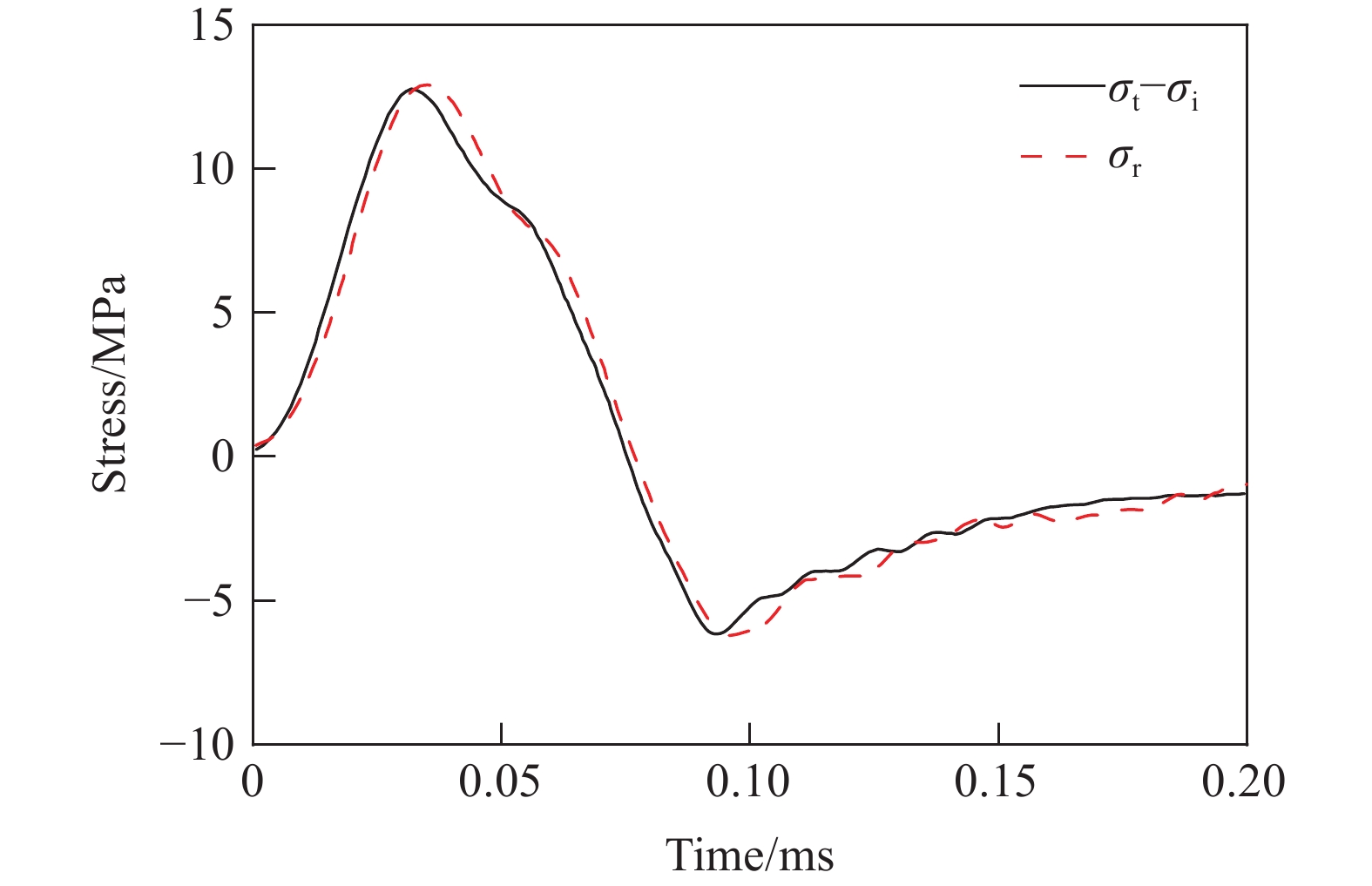
图 7 端面位移和试样应力的数值模拟结果
Figure 7. Numerical simulation results of end face displacement and specimen stress

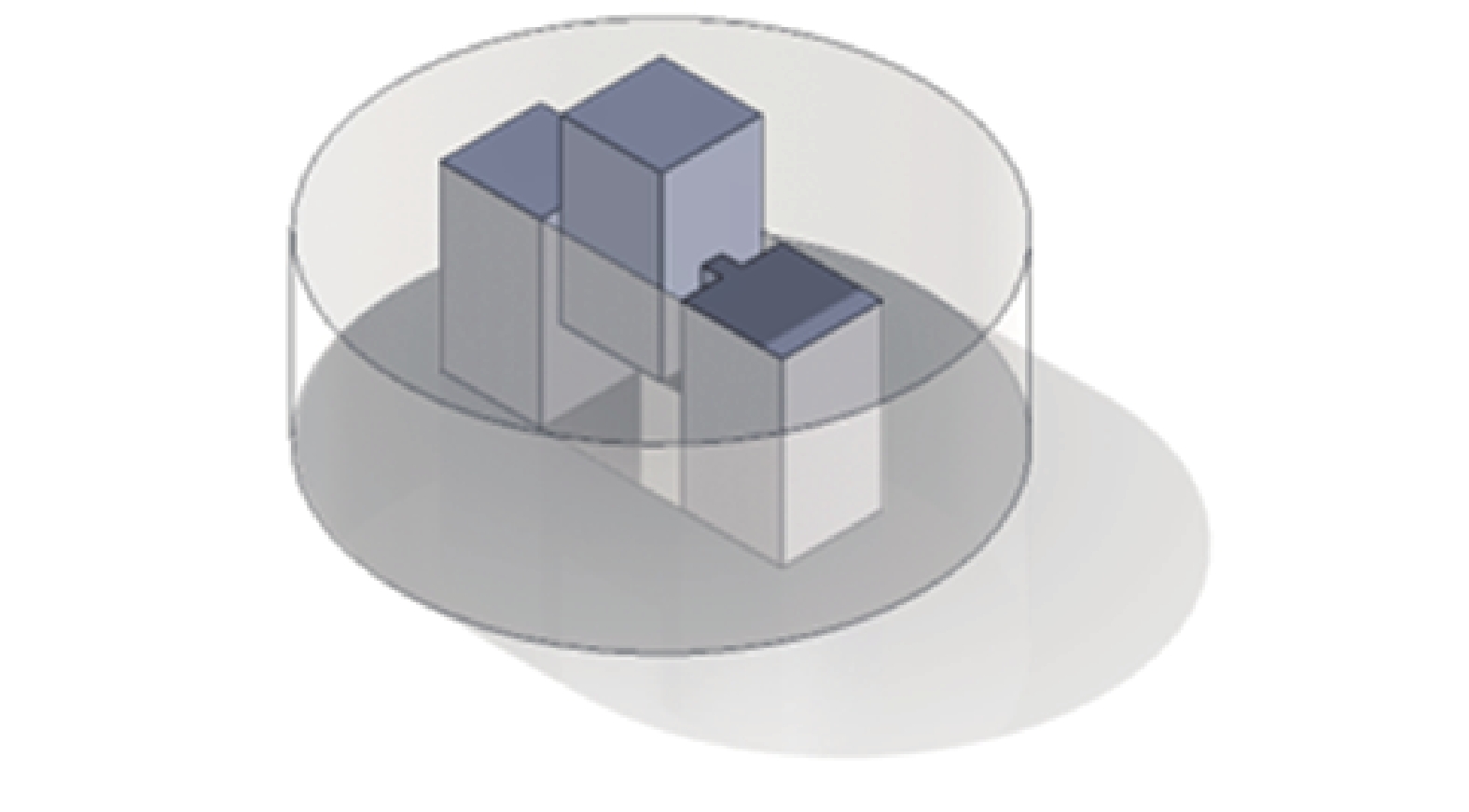
图 8 冲击疲劳装置加载部分的示意图
Figure 8. Schematic diagram of the loading part of the impact fatigue device
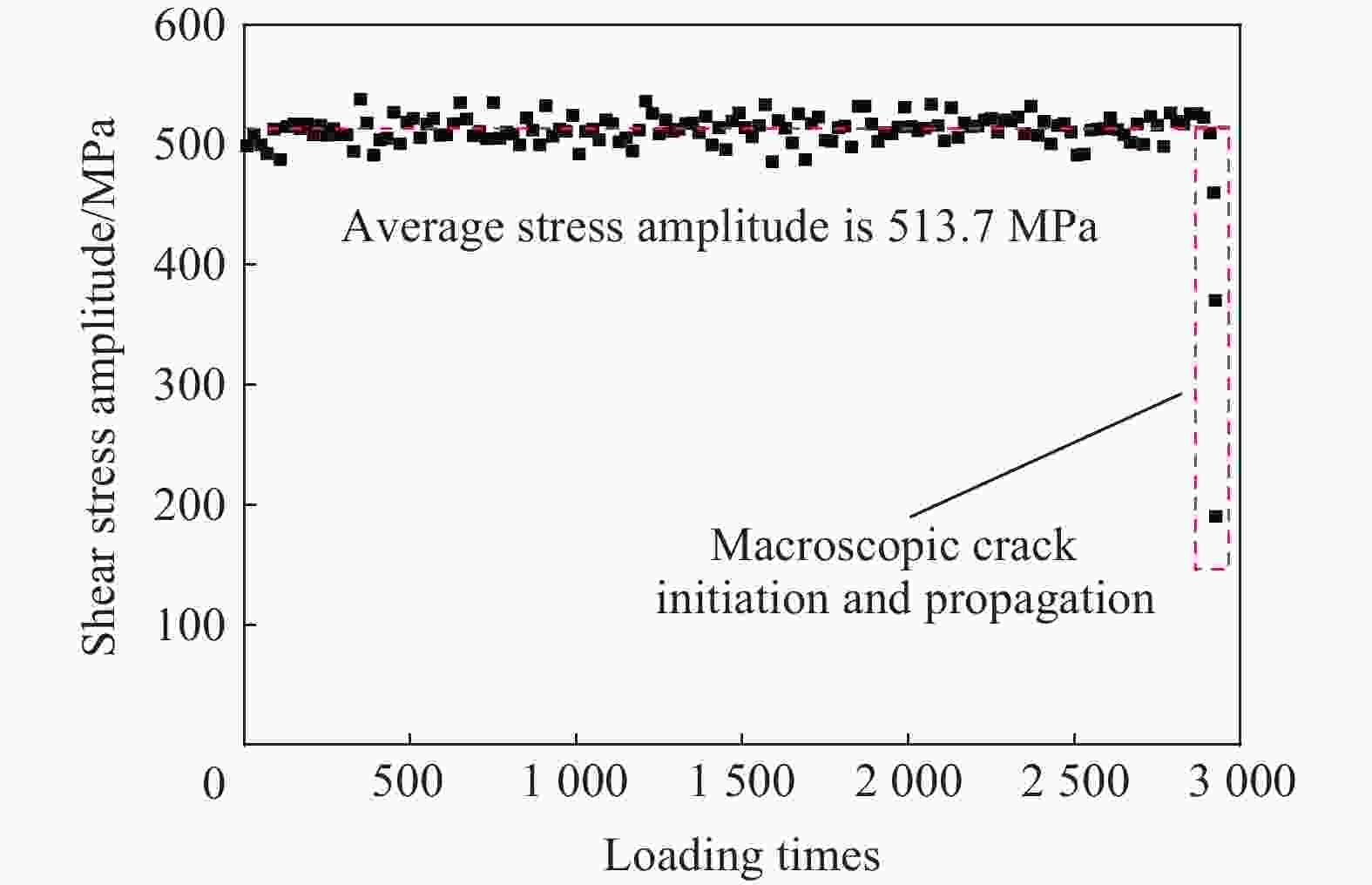
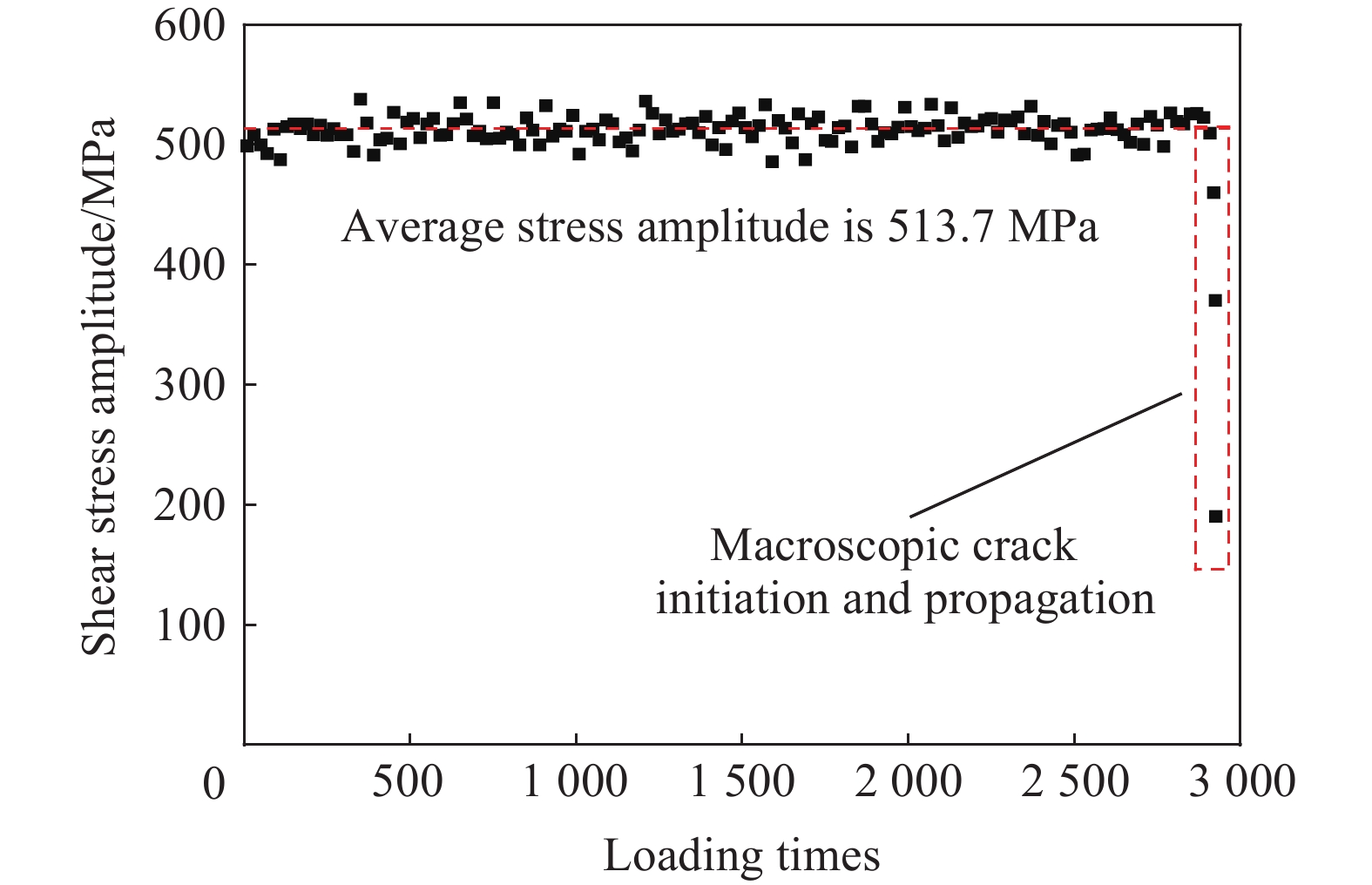
图 13 剪切冲击疲劳试验应力波幅值统计
Figure 13. Impact fatigue stress amplitude in impact fatigue test of shear specimens
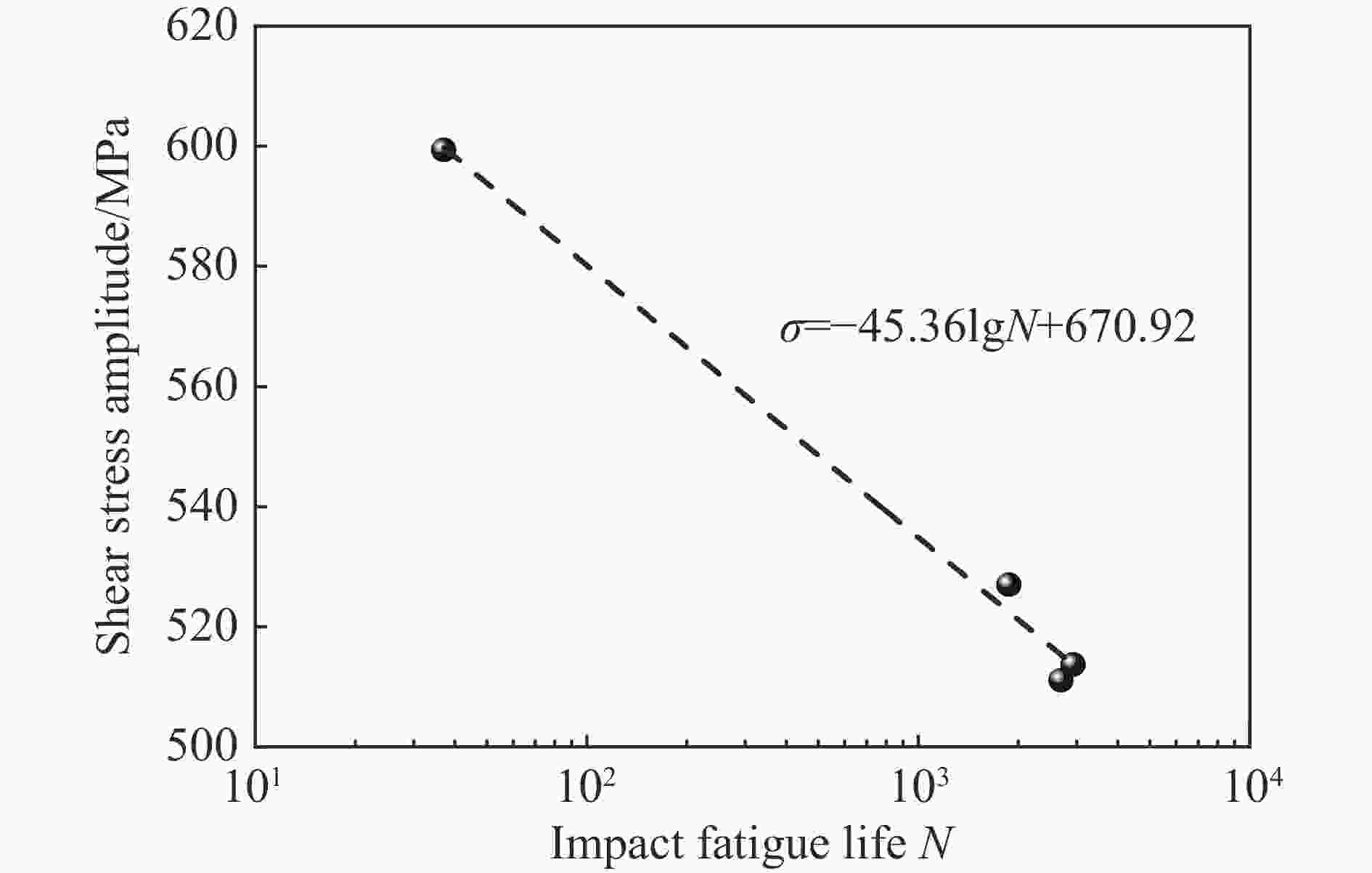
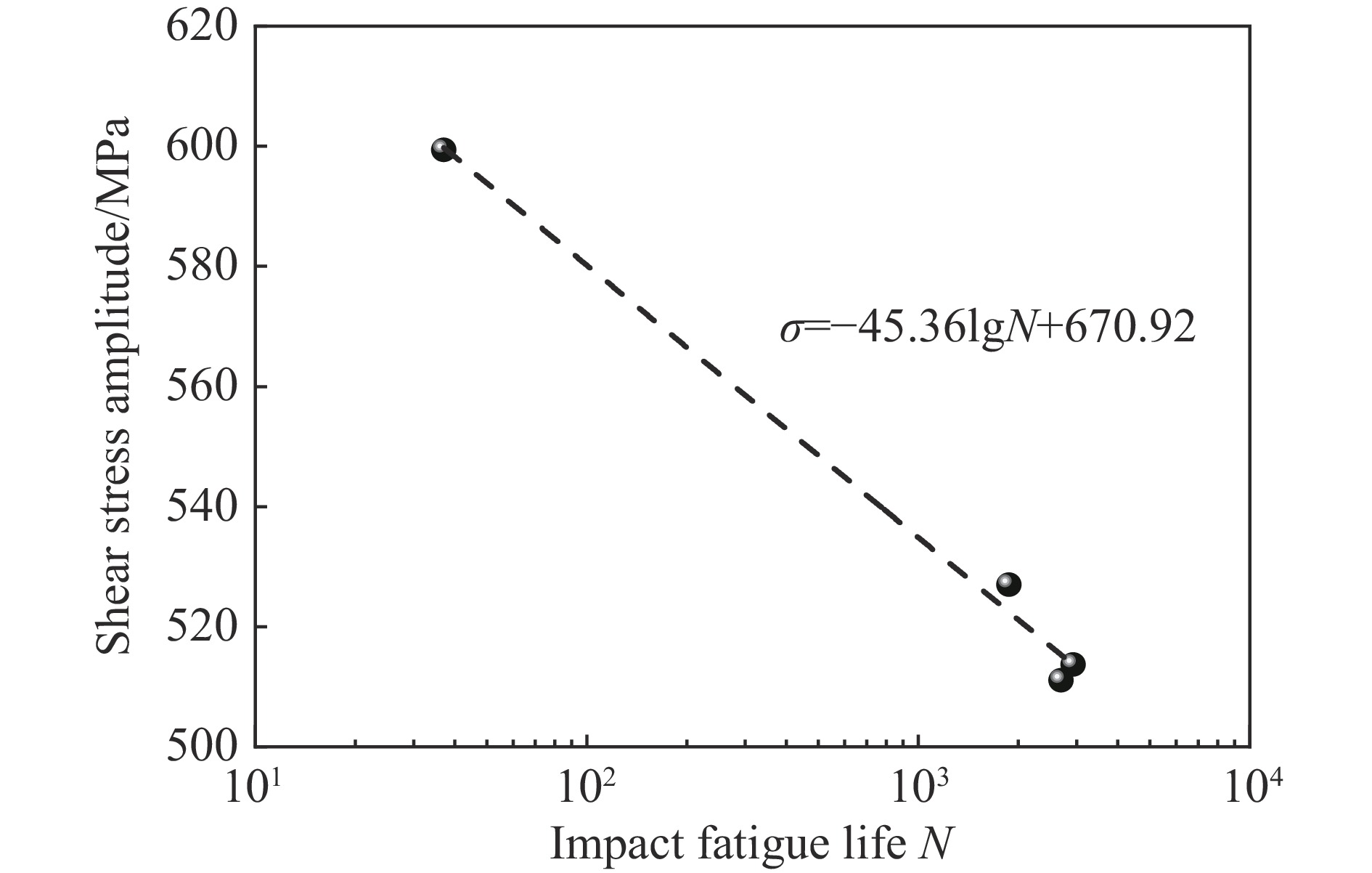
图 14 剪切试样冲击疲劳应力幅值-寿命曲线
Figure 14. Impact fatigue stress amplitude-life curve of shear specimens
表 1 钢质试样的J-C本构模型参数
Table 1. Parameters of J-C constitutive model of steel specimen
A/MPa B/MPa C n 432.5 1201.6 0.013 0.4  下载: 导出CSV
表 2 冲击疲劳试验数据
Table 2. Experimental results of impact fatigue
试样编号 应力幅值/MPa 平均剪切应变率/s−1 N 1 513.7 1197.1 2927 2 511.1 1102.9 2695 3 527.0 1014.7 1876 4 599.4 1738.6 37
下载: 导出CSV
-
[1] 熊文强, 张闰, 张晓晴, 等. 舰载无人机拦阻着舰中机身冲击响应分析 [J]. 航空学报, 2019, 40(12): 222892. DOI: 10.7527/S1000-6893.2019.22892.XIONG W Q, ZHANG R, ZHANG X Q, et al. Analysis of impact response of mid-fuselage ground arresting in a carrier-based UAV [J]. Acta Aeronautica et Astronautica Sinica, 2019, 40(12): 222892. DOI: 10.7527/S1000-6893.2019.22892. [2] 聂宏, 彭一明, 魏小辉, 等. 舰载飞机着舰拦阻动力学研究综述 [J]. 航空学报, 2014, 35(1): 1–12. DOI: 10.7527/S1000-6893.2013.0424.NIE H, PENG Y M, WEI X H, et al. Overview of carrier-based aircraft arrested deck-landing dynamics [J]. Acta Aeronautica et Astronautica Sinica, 2014, 35(1): 1–12. DOI: 10.7527/S1000-6893.2013.0424. [3] 何玲, 徐诚. 枪械自动机冲击疲劳试验机加载机构设计优化及性能分析 [J]. 兵工学报, 2011, 32(7): 805–811.HE L, XU C. Design optimization and performance analysis of loading mechanism of impact fatigue test machine for firearm automaton [J]. Acta Armamentarii, 2011, 32(7): 805–811. [4] TRUONG D D, HUYNH V V, JANG B S, et al. Empirical formulations for prediction of permanent set evolution of steel plates due to repeated impulsive pressure loadings induced by slamming [J]. Ocean Engineering, 2023, 268: 113430. DOI: 10.1016/j.oceaneng.2022.113430. [5] WANG B W, QIAN C C, BAI C Y, et al. Study on impact fatigue test and life prediction method of TC18 titanium alloy [J]. International Journal of Fatigue, 2023, 168: 107391. DOI: 10.1016/j.ijfatigue.2022.107391. [6] LI X F, HU W P, WANG B, et al. A new combined impact fatigue damage model and its application of influencing factors analysis on impact fatigue of TC18 titanium alloy [J]. International Journal of Fatigue, 2024, 182: 108180. DOI: 10.1016/j.ijfatigue.2024.108180. [7] AZOUAOUI K, OUALI N, OUROUA Y, et al. Damage characterisation of glass/polyester composite plates subjected to low-energy impact fatigue [J]. Journal of Sound and Vibration, 2007, 308(3/4/5): 504–513. DOI: 10.1016/j.jsv.2007.04.014. [8] DUMITRU I, MARSAVINA L, FAUR N. Experimental study of torsional impact fatigue of shafts [J]. Journal of Sound and Vibration, 2007, 308(3/4/5): 479–488. DOI: 10.1016/j.jsv.2007.04.011. [9] ISAKOV M, TERHO S, KUOKKALA V T. Low-cycle impact fatigue testing based on an automatized split Hopkinson bar device [J]. AIP Conference Proceedings, 2020, 2309(1): 020021. DOI: 10.1063/5.0034182. [10] PAGANO S J, JEWELL P A, LAMBERSON L E. A tunable modified-Hopkinson impact fatigue device [J]. Review of Scientific Instruments, 2019, 90(10): 105104. DOI: 10.1063/1.5100033. [11] YIN J P, ZHANG C X, SUN R H, et al. Controllable kilohertz impact fatigue loading functioned by cyclic stress wave of Hopkinson tension bar and its application for TC4 titanium alloy [J]. International Journal of Fatigue, 2025, 194: 108828. DOI: 10.1016/j.ijfatigue.2025.108828. [12] ZHANG C X, SUN R H, YIN J P, et al. Failure behaviours of steel/aluminium threaded connections under impact fatigue [J]. Engineering Failure Analysis, 2025, 174: 109473. DOI: 10.1016/j.engfailanal.2025.109473. [13] ZHANG C X, SUN R H, YIN J P, et al. Mechanical behaviour and failure mechanism of 7075 aluminium alloy threaded connections under wide loading rate [J]. Thin-Walled Structures, 2025, 215: 113555. DOI: 10.1016/j.tws.2025.113555. [14] 李泊立, 赵思晗, 刘圆梦, 等. Hopkinson杆式冲击疲劳试验方法研究 [J]. 振动与冲击, 2023, 42(2): 132–138. DOI: 10.13465/j.cnki.jvs.2023.02.016.LI B L, ZHAO S H, LIU Y M, et al. Method for experiment study on impact fatigue based on Hopkinson bar [J]. Journal of Vibration and Shock, 2023, 42(2): 132–138. DOI: 10.13465/j.cnki.jvs.2023.02.016. [15] 袁康博, 杨建辉, 李泊立, 等. 基于Hopkinson杆的恒幅冲击疲劳试验方法研究 [J]. 固体力学学报, 2024, 45(1): 1–15. DOI: 10.19636/j.cnki.cjsm42-1250/o3.2023.045.YUAN K B, YANG J H, LI B L, et al. Research on constant-amplitude impact fatigue test method based on Hopkinson bar [J]. Chinese Journal of Solid Mechanics, 2024, 45(1): 1–15. DOI: 10.19636/j.cnki.cjsm42-1250/o3.2023.045. [16] YUAN K B, GUO W G, SU Y, et al. Study on several key problems in shock calibration of high-g accelerometers using Hopkinson bar [J]. Sensors and Actuators A: Physical, 2017, 258: 1–13. DOI: 10.1016/j.sna.2017.02.017. [17] BARANOWSKI P, MALACHOWSKI J, GIELETA R, et al. Numerical study for determination of pulse shaping design variables in SHPB apparatus [J]. Bulletin of the Polish Academy of Sciences: Technical Sciences, 2013, 61(2): 459–466. DOI: 10.2478/bpasts-2013-0045. [18] 李夕兵, 古德生, 赖海辉. 冲击载荷下岩石动态应力-应变全图测试中的合理加载波形 [J]. 爆炸与冲击, 1993, 13(2): 125–130.LI X B, GU D S, LAI H H. On the reasonable loading stress waveforms determined by dynamic stress-strain curves of rocks by SHPB [J]. Explosion and Shock Waves, 1993, 13(2): 125–130. [19] NEMAT-NASSER S, ISAACS J B. Direct measurement of isothermal flow stress of metals at elevated temperatures and high strain rates with application to Ta and TaW alloys [J]. Acta Materialia, 1997, 45(3): 907–919. DOI: 10.1016/S1359-6454(96)00243-1. [20] SONG B, CHEN W. Loading and unloading split Hopkinson pressure bar pulse-shaping techniques for dynamic hysteretic loops [J]. Experimental Mechanics, 2004, 44(6): 622–627. DOI: 10.1177/0014485104048911. [21] NEMAT-NASSER S, ISAACS J B, STARRETT J E. Hopkinson techniques for dynamic recovery experiments [J]. Proceedings of the Royal Society of London. Series A: Mathematical and Physical Sciences, 1991, 435(1894): 371–391. DOI: 10.1098/rspa.1991.0150. -



计量
- 文章访问数: 632
- HTML全文浏览量: 261
- PDF下载量: 265
- 被引次数: 0