



Dynamic response and impact energy release mechanism of (Ti2Zr)1.5NbVAl0.5 high-entropy alloy
-
摘要: 针对高速冲击下传统金属材料能量释放效率低、动态响应不足等瓶颈问题,聚焦于Ti-Zr-Nb-V系难熔高熵合金,利用其多组元协同效应开发出一种单相体心立方晶体结构(body-centered cubic, BCC)高熵合金(Ti2Zr)1.5NbVAl0.5,其晶格常数为
3.3501 Å,平均晶粒尺寸为336.7 μm。随后开展了准静态、动态力学测试和直接弹道试验,结果表明,合金具有良好的强塑性协同效应,屈服强度为885.2 MPa,当压缩应变率由0.001 s−1升至6000 s−1时,屈服强度提升123%,并且低温下其对应变率的敏感性显著高于高温。当冲击速度由734 m/s升至1375 m/s时,弹丸的破碎程度加剧,准密闭容器内温度场不断升高至峰值2124.15 K,相应的释能持续时间由5 ms延长至12 ms。利用有限元-光滑粒子流体动力学耦合(finite element method-smoothed particle hydrodynamics, FEM-SPH)算法复现了高熵合金侵彻温升和破碎行为,验证了拟合的Johnson-Cook本构参数及Grüneisen状态方程的可靠性。微观分析揭示了(Ti2Zr)1.5NbVAl0.5高熵合金能量释放机制源于绝热剪切带内的位错重组,高速冲击下交滑移的抑制导致位错达到饱和状态,并引发局部晶格失稳进一步导致整体结构失效,而低速冲击下动态再结晶行为能够有效延缓失效进程。Abstract: To overcome the limitations of traditional metallic materials regarding energy-release efficiency under high-velocity impact, this study designed and fabricated a novel single-phase body-centered cubic (BCC) structured lightweight refractory high-entropy alloy (Ti2Zr)1.5NbVAl0.5. The investigation employed a combined approach of multi-scale experimentation and numerical simulation. The as-cast microstructure was characterized, revealing a homogeneous composition with an average grain size of 336.7 μm. Quasi-static and dynamic mechanical tests were conducted to evaluate strength, plasticity, and strain-rate sensitivity, providing data to fit the Johnson-Cook constitutive and damage parameters. Direct ballistic experiments were conducted at impact velocities of 734, 950, and1375 m/s to analyze fragmentation behavior, temperature evolution, and energy release within a quasi-confined chamber. A coupled finite element method-smoothed particle hydrodynamics (FEM-SPH) numerical model was developed to simulate the penetration process, successfully replicating experimental temperature rises and fragmentation patterns. The results showed that the alloy possesses an excellent strength-plasticity synergy and remarkable strain-rate sensitivity, with yield strength increasing by 123% to1977.3 MPa at6000 s−1. Ballistic tests demonstrated that increased impact velocity intensified fragmentation and energy release, achieving a peak chamber temperature of2124.15 K and extending the release duration to 12 ms at1375 m/s. Microstructural analysis revealed that the energy release mechanism is governed by dislocation dynamics within adiabatic shear bands (ASBs). At lower impact velocities (e.g., 734 m/s), dynamic recrystallization in ASBs alleviates strain hardening. In contrast, at high velocities (e.g.,1375 m/s), suppressed cross-slip leads to dislocation saturation, local lattice instability, and ultimately severe fragmentation coupled with exothermic oxidation. The study concludes that (Ti2Zr)1.5NbVAl0.5 high-entropy alloy exhibits outstanding dynamic properties and controllable impact-induced energy release, primarily driven by velocity-dependent microstructural evolution in ASBs, demonstrating significant potential as a new-generation energetic structural material for extreme dynamic loading applications.-
Key words:
- high-entropy alloy /
- mechanical property /
- impact energy release /
- adiabatic shearing
-
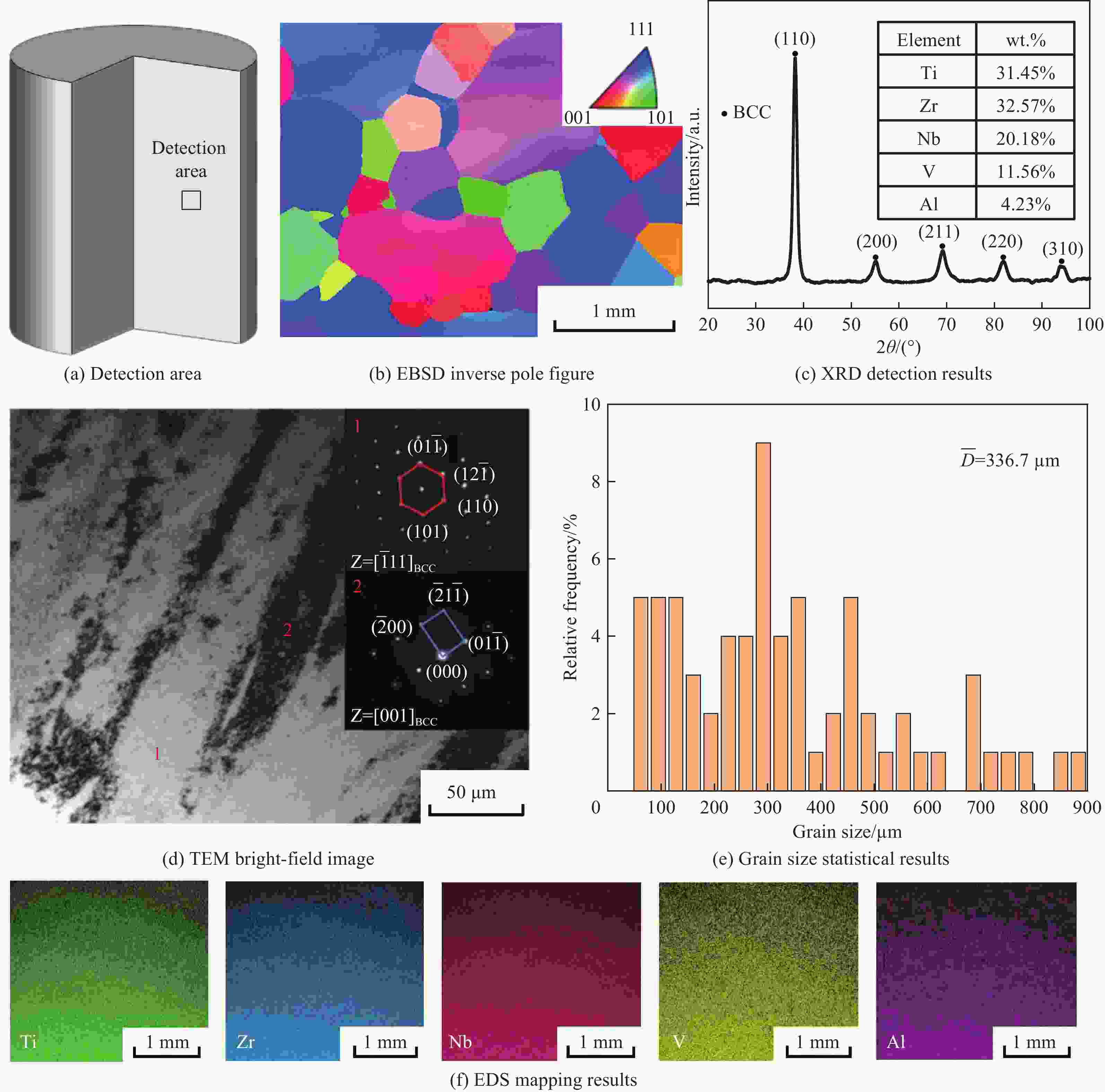
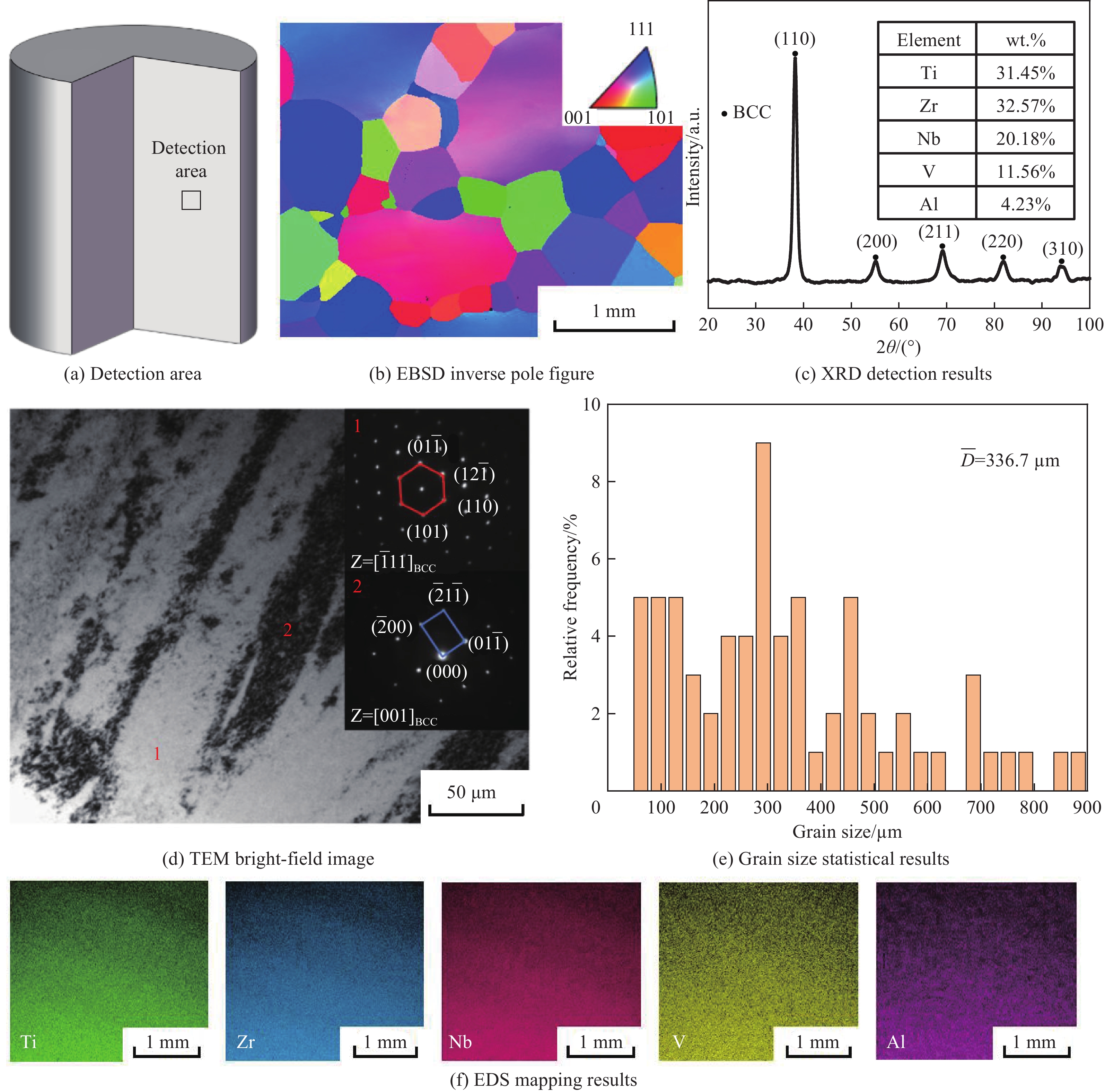
图 2 铸态(Ti2Zr)1.5NbVAl0.5合金试样的初始物相
Figure 2. The Initial phases of the as-cast (Ti2Zr)1.5NbVAl0.5 alloy specimen
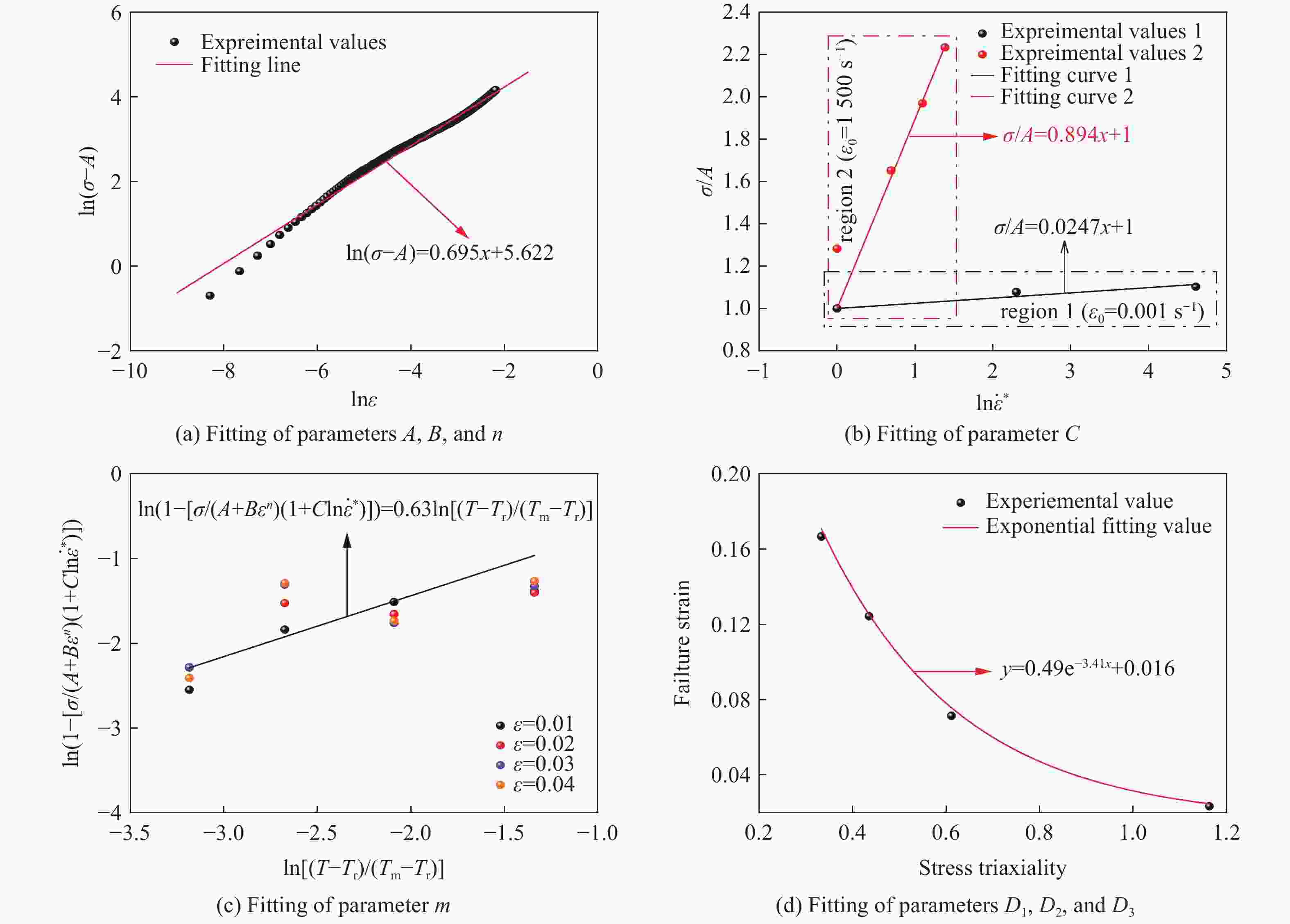
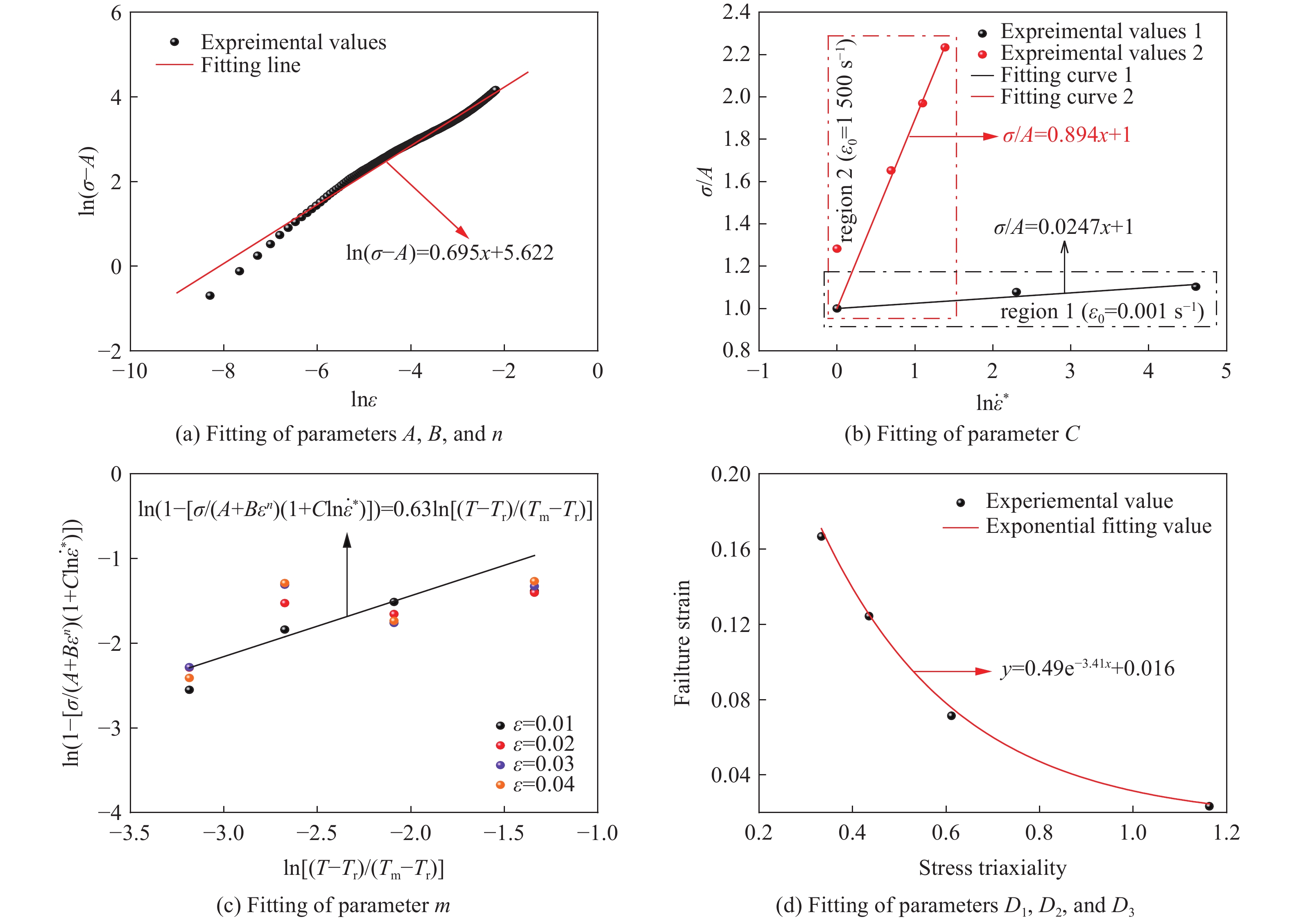
图 10 Johnson-Cook本构模型参数及损伤参数
Figure 10. Fitting of Johnson-Cook constitutive model parameters and damage parameters
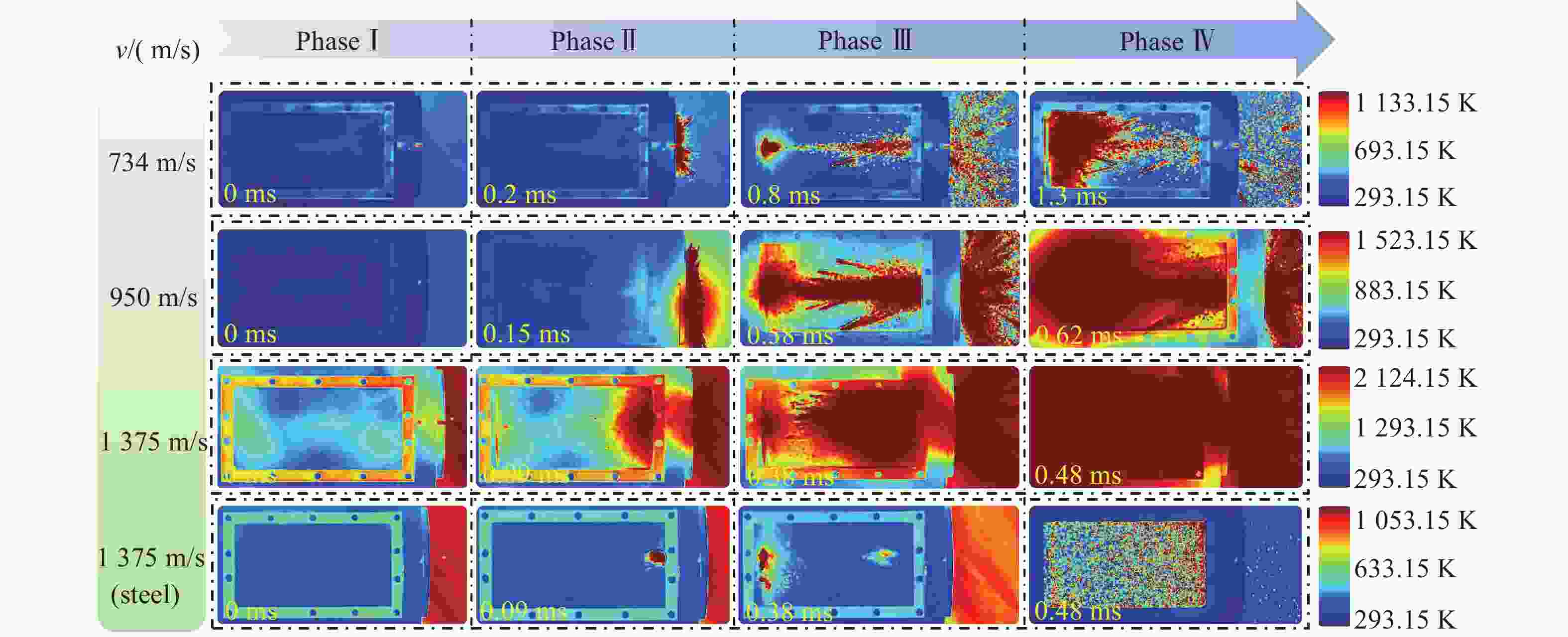
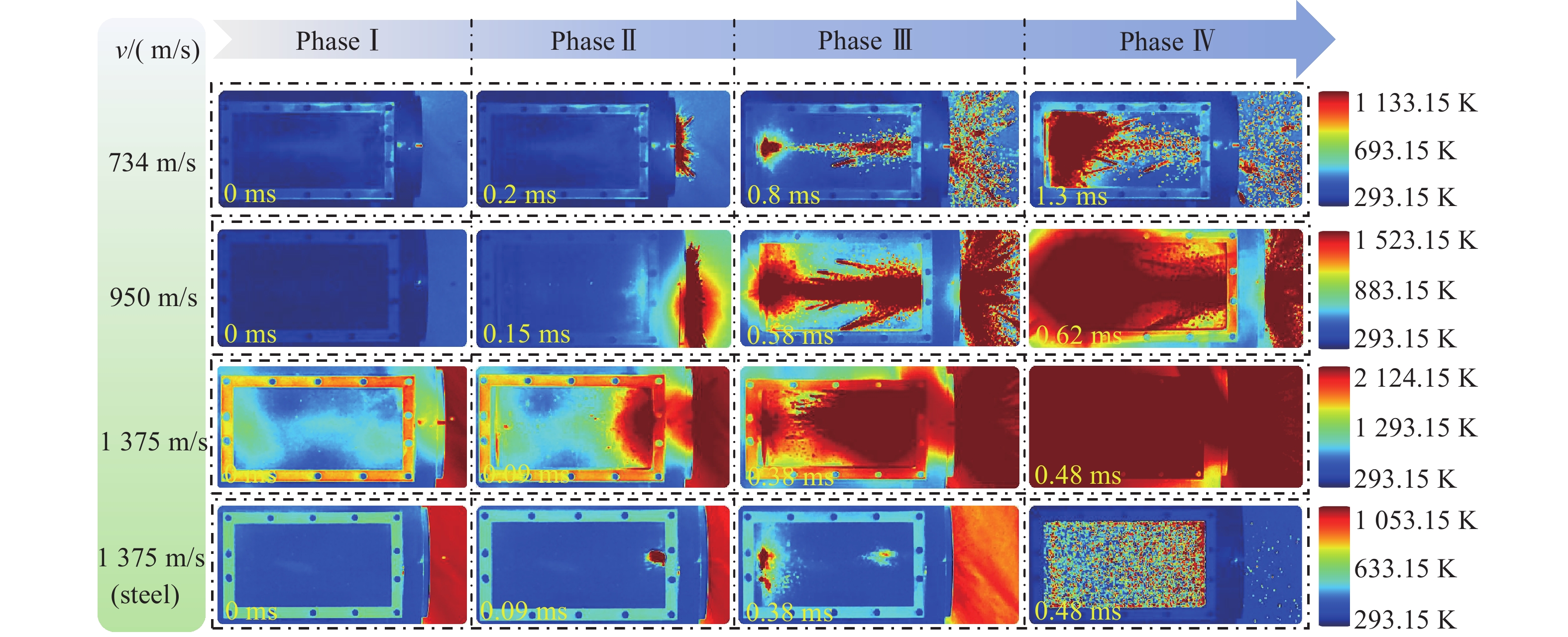
图 11 高速摄影捕捉到的不同时刻直接弹道试验过程照片
Figure 11. Photos of the direct ballistic test process at different moments captured by high-speed photography
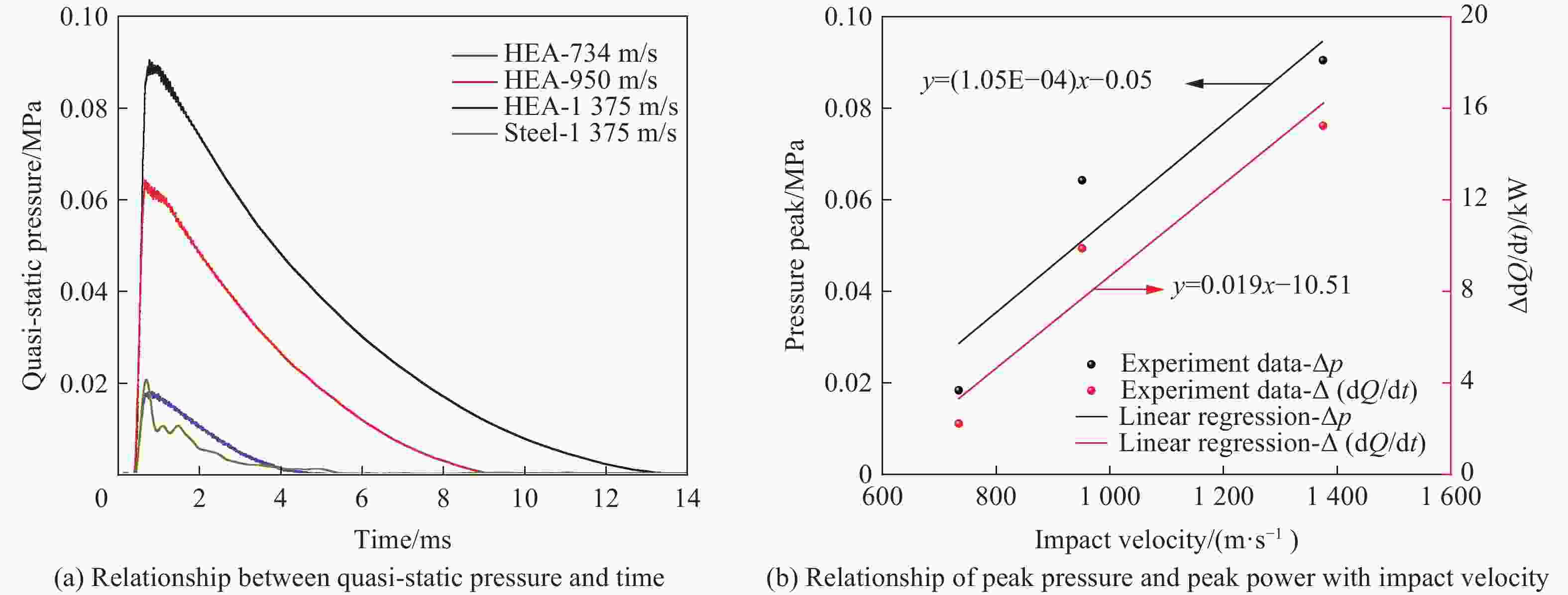
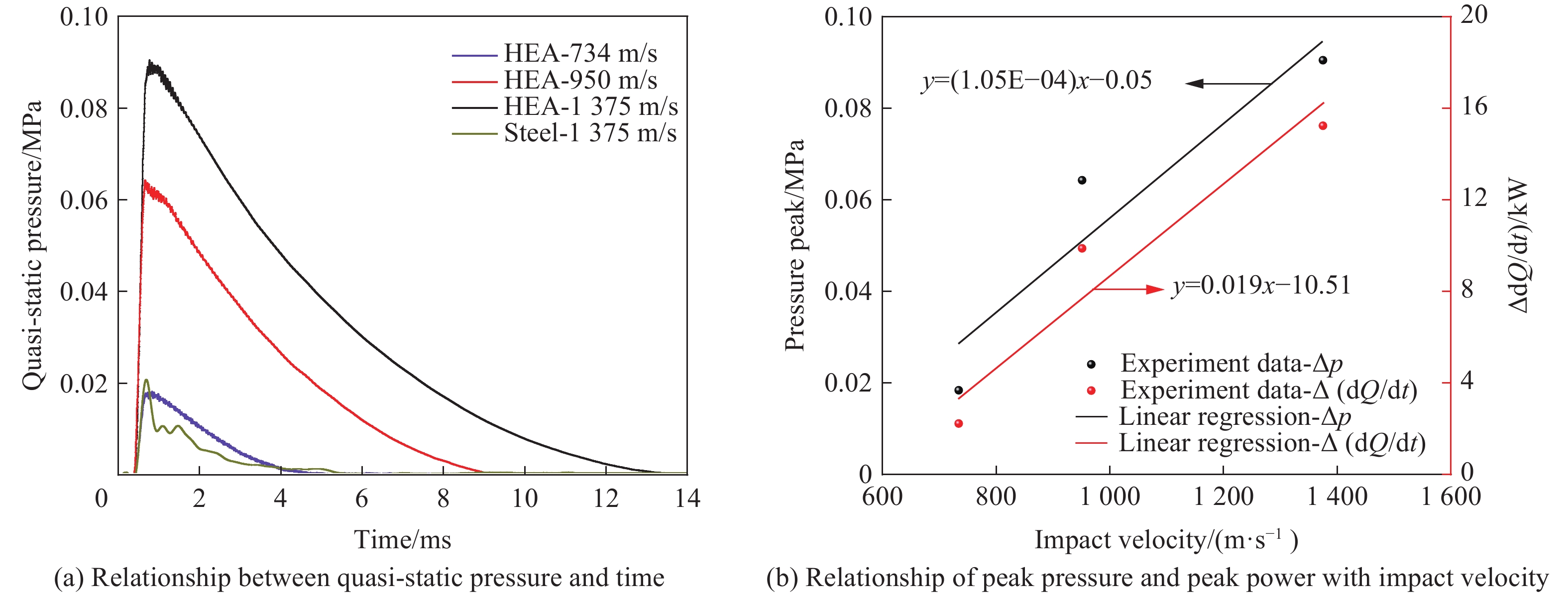
图 12 准密闭容器压力传感器测得数据
Figure 12. Data measured by pressure sensors in a quasi-closed container
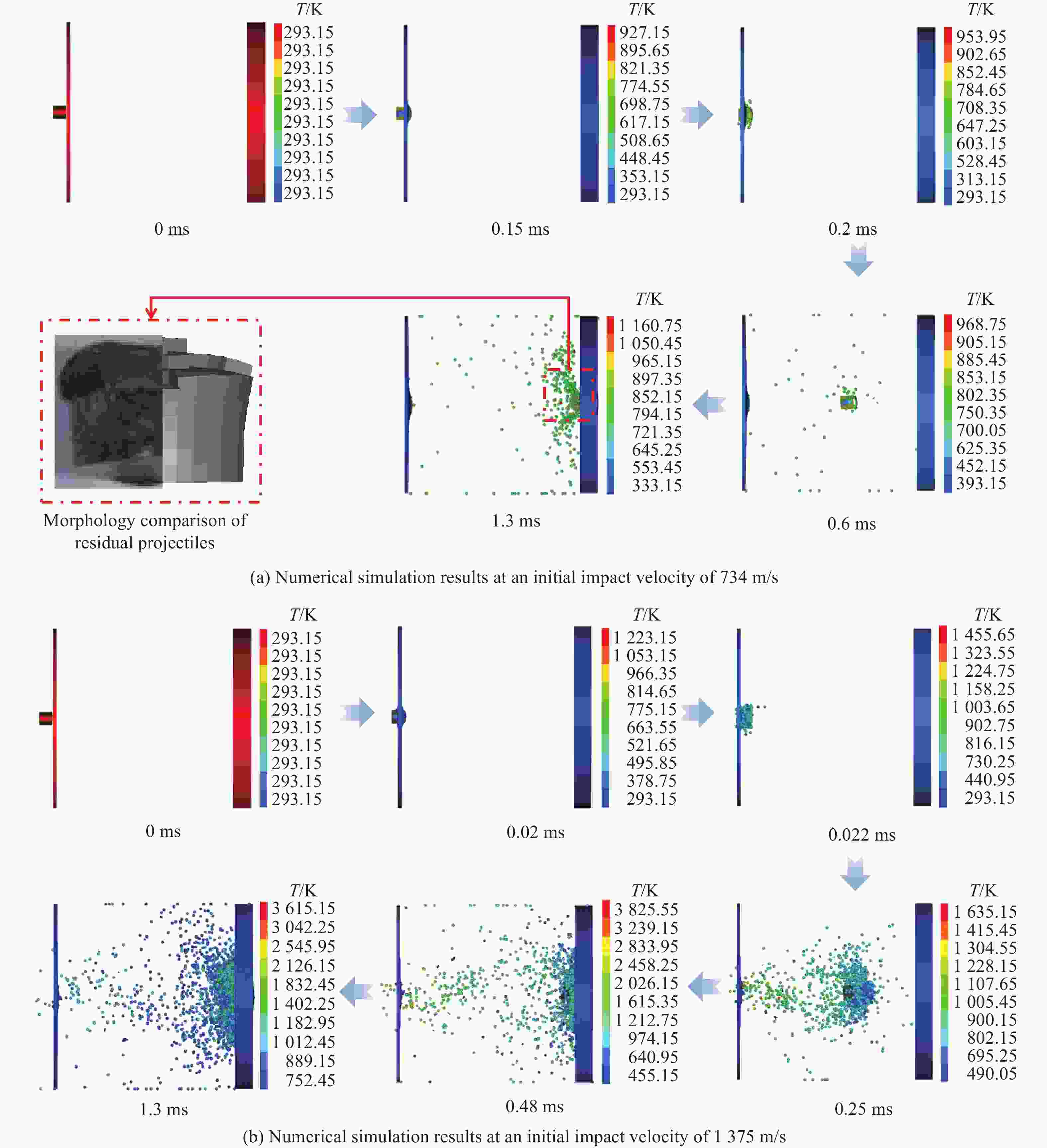
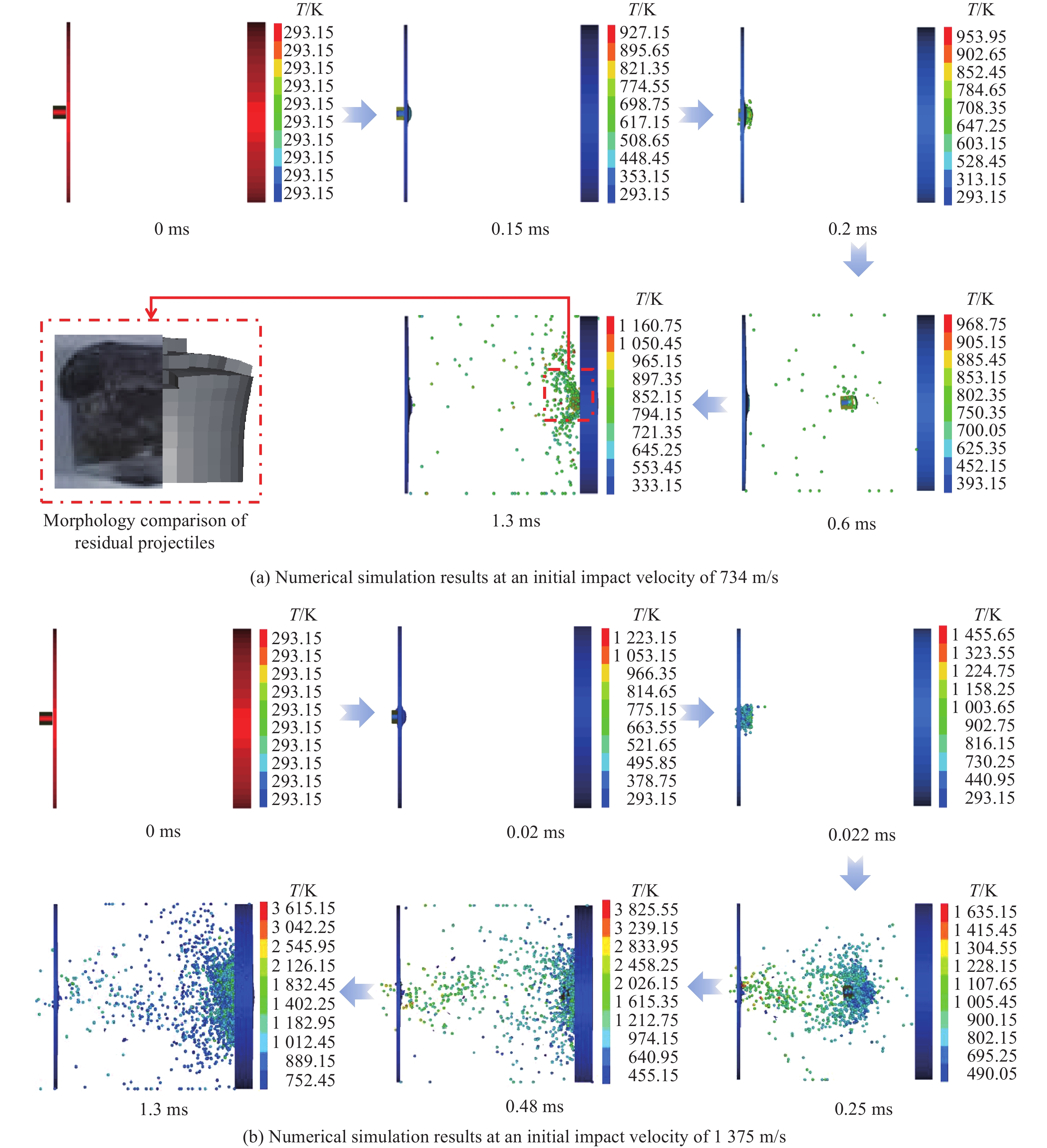
图 14 不同侵彻速度下数值模拟结果
Figure 14. Numerical simulation results at different penetration velocities
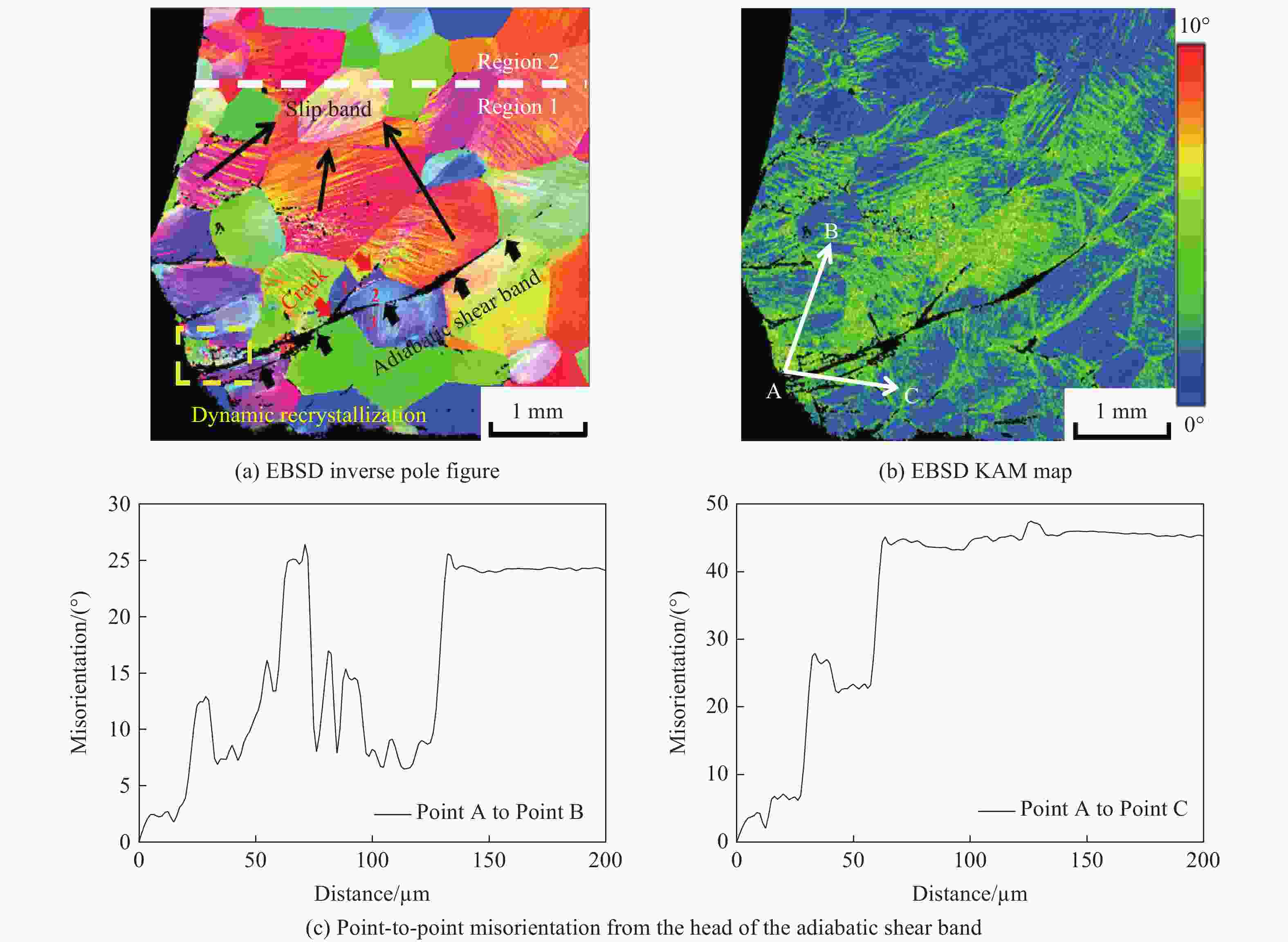
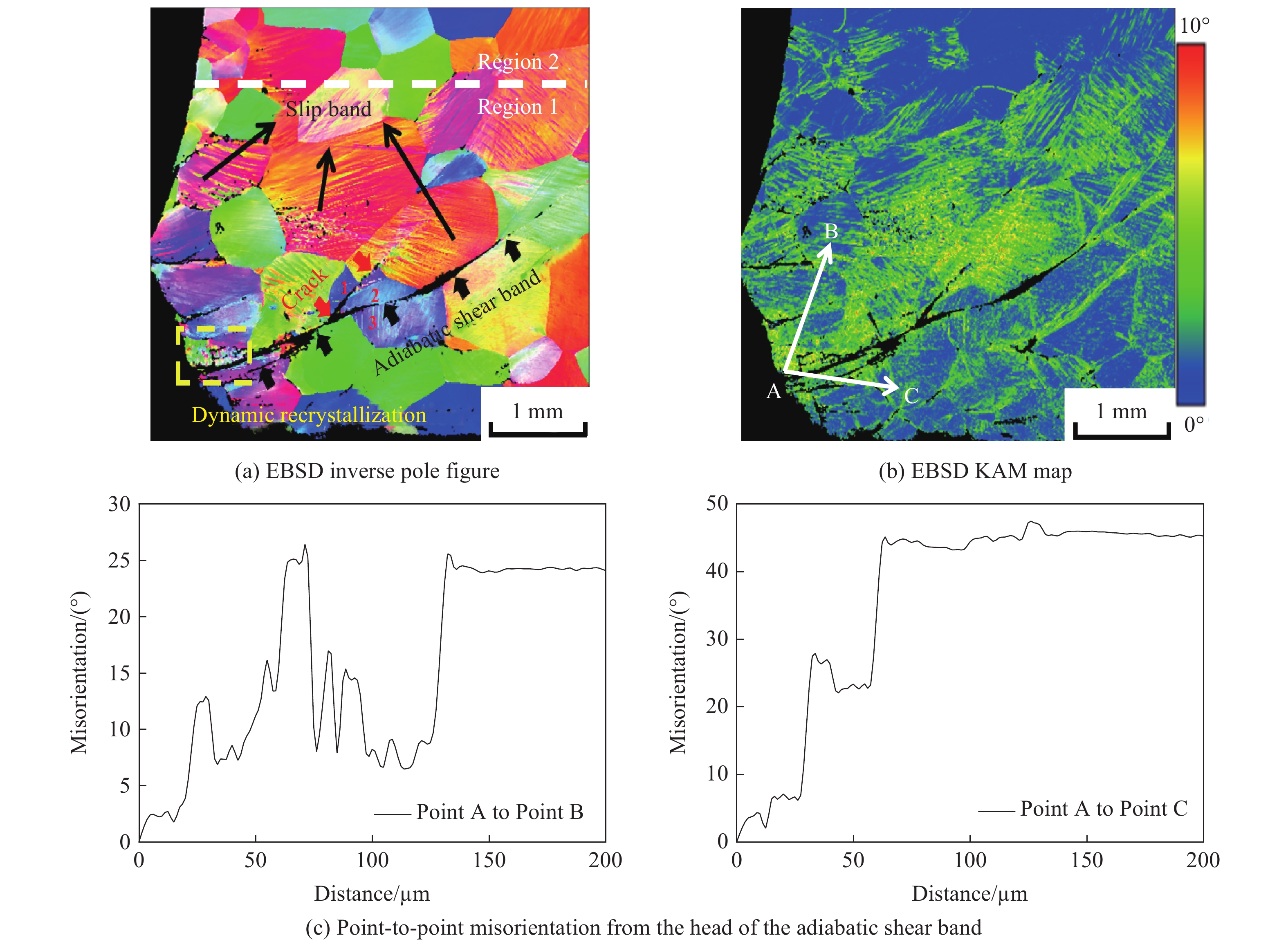
图 15 侵彻速度为734 m/s的工况下回收的残余弹体微观形貌
Figure 15. Microscopic morphology of the residual projectiles recovered at a penetration velocity of 734 m/s
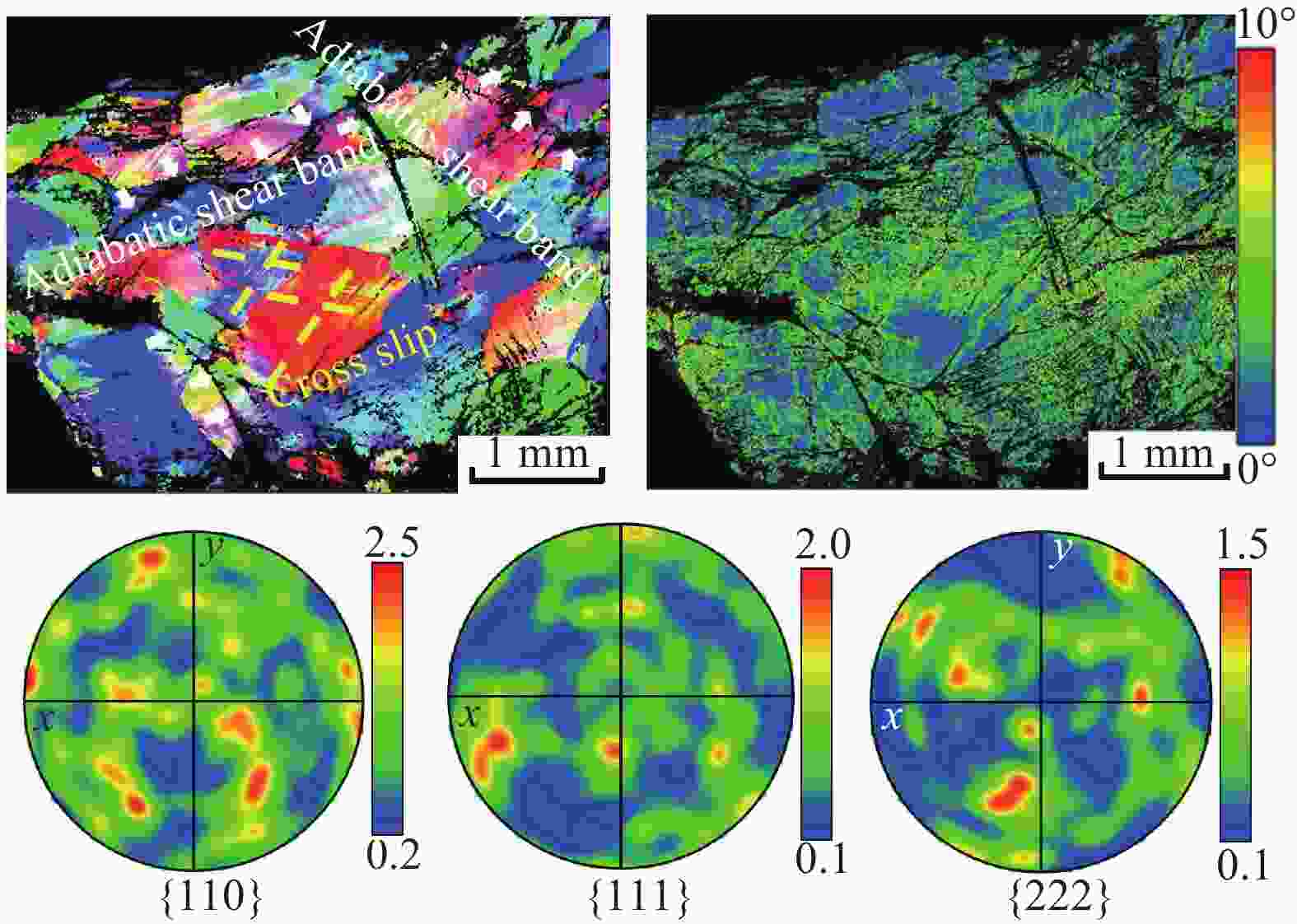
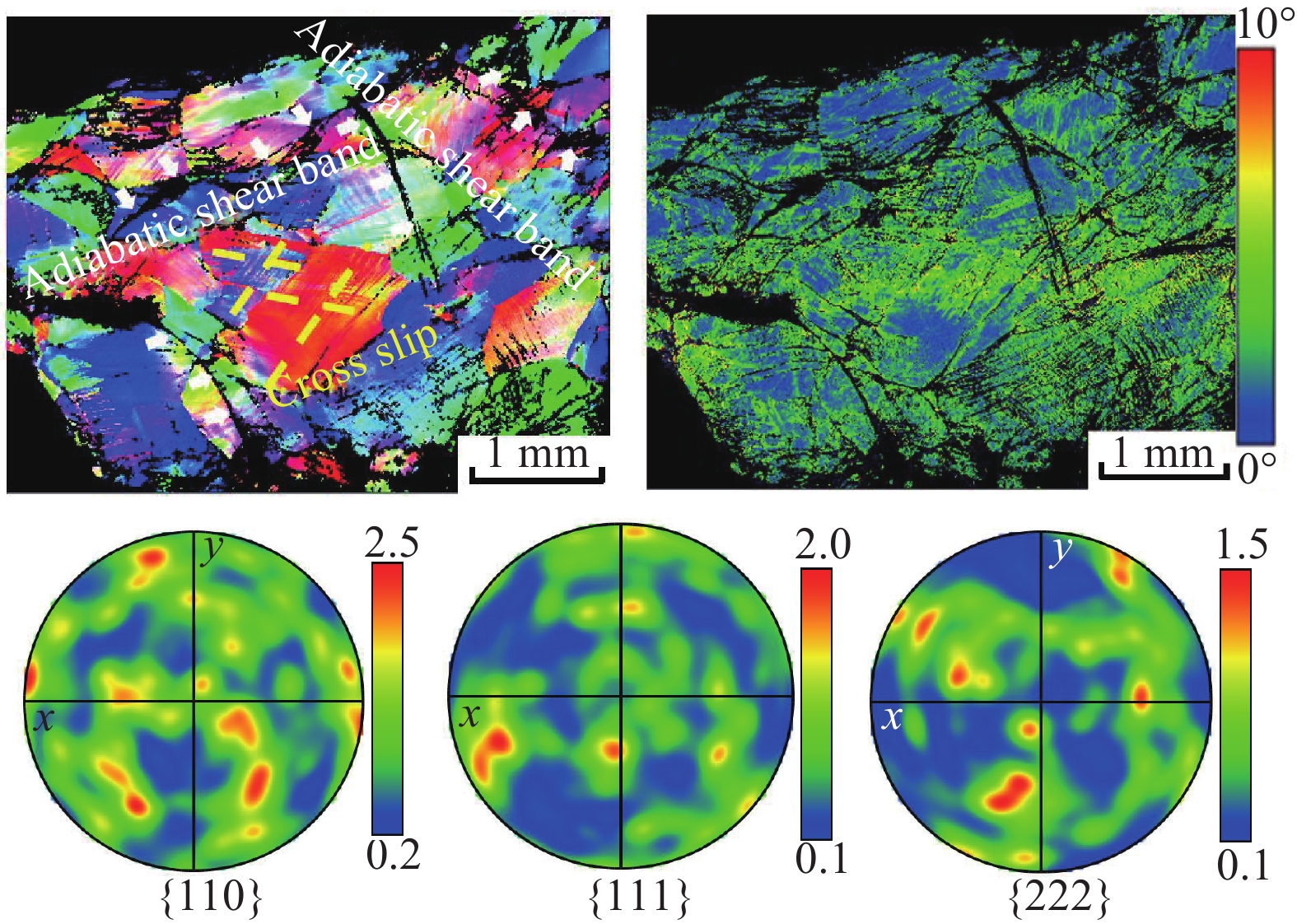
图 16 侵彻速度为
1375 m/s的工况下回收的残余弹体微观形貌Figure 16. Microscopic morphology of the residual projectile recovered at a penetration velocity of
1375 m/s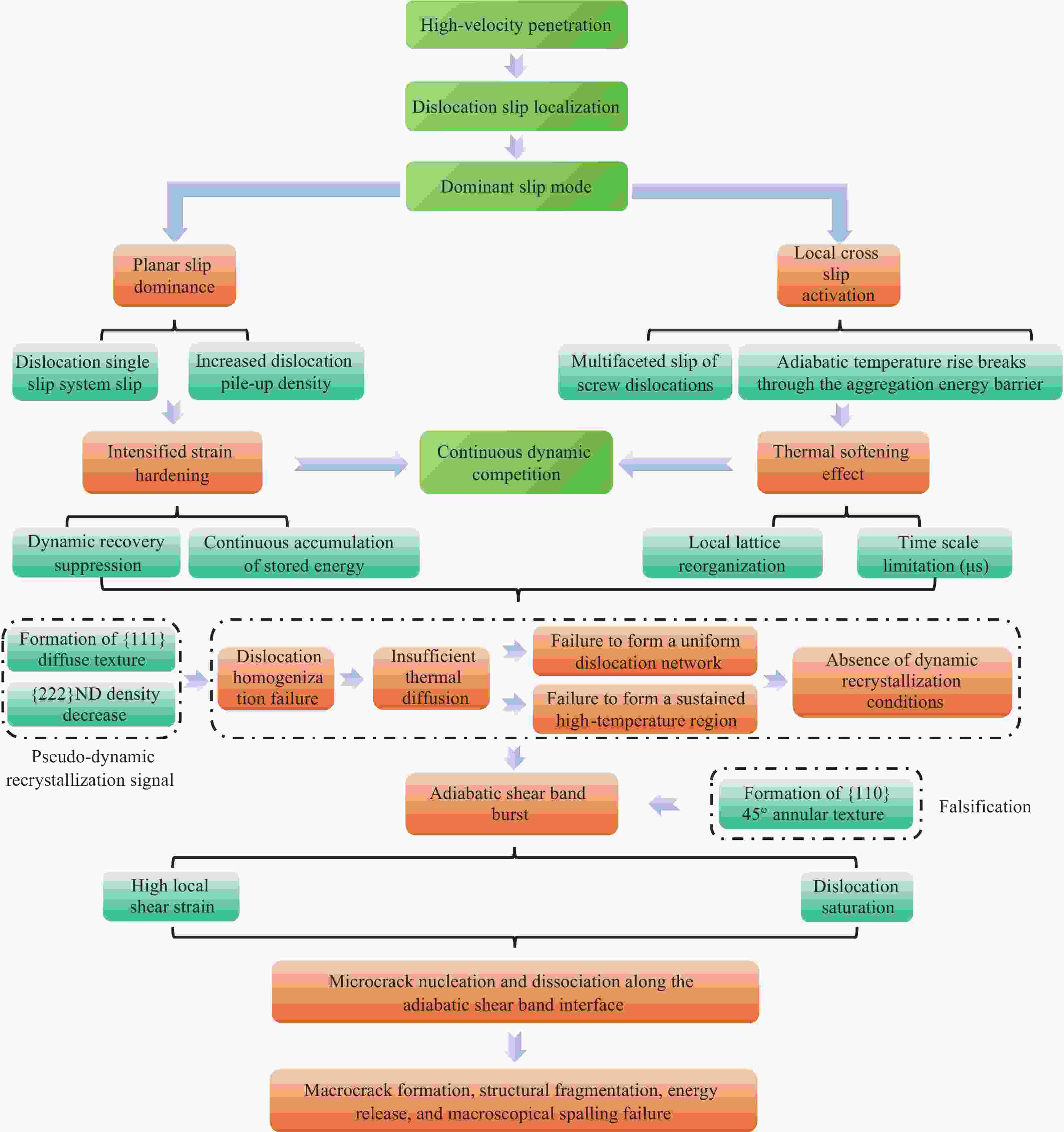
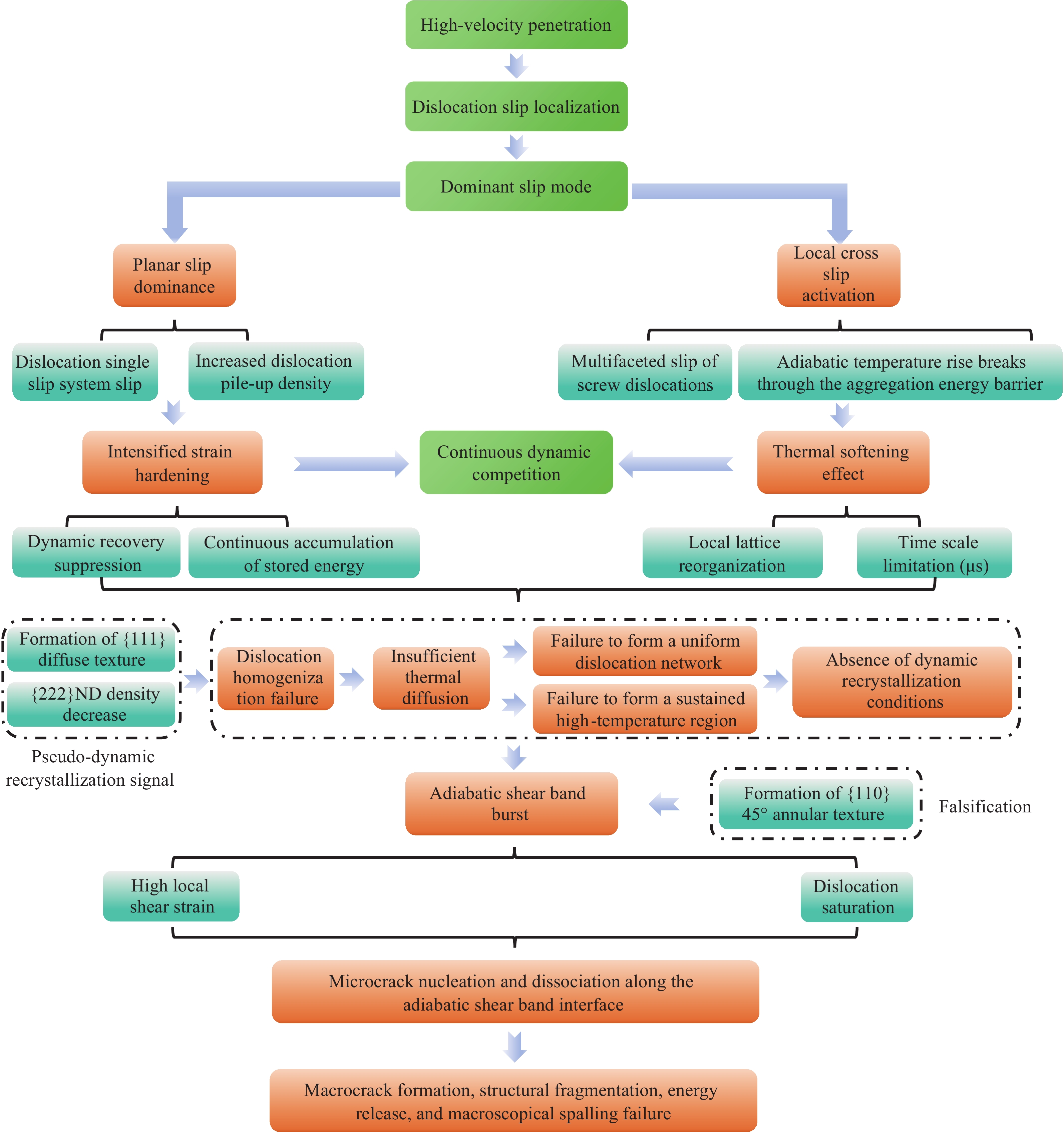
图 17 高速侵彻下合金内部演化机制
Figure 17. Evolution mechanism of the internal structure of alloys under high-velocity penetration
ρ/(g·cm−3) E/GPa A/MPa B/MPa n C m Tm/K 7.85 210 800 320 0.28 0.064 1.06 1765 D1 D2 D3 D4 D5 S γ c/(m·s−1) 0.1 0.76 1.57 0.005 −0.84 1.49 2.17 4569  下载: 导出CSV
表 2 (Ti2Zr)1.5NbVAl0.5高熵合金Johnson-Cook本构模型参数
Table 2. Johnson-Cook constitutive model parameters for (Ti2Zr)1.5NbVAl0.5 high-entropy alloy
A/MPa B/MPa n C m 885.2 276.4 0.695 0.894 0.63
下载: 导出CSV
表 3 (Ti2Zr)1.5NbVAl0.5高熵合金失效参数
Table 3. Failure parameters for (Ti2Zr)1.5NbVAl0.5 high-entropy alloy
D1 D2 D3 D4 D5 0.016 0.484 −3.409 0 0
下载: 导出CSV
表 4 (Ti2Zr)1.5NbVAl0.5高熵合金各元素相关参数[39]
Table 4. Element-specific parameters for (Ti2Zr)1.5NbVAl0.5 high-entropy alloy[39]
元素 质量分数/% cn/(km·s−1) S γ Ti 42.86 5.220 0.767 1.09 Zr 21.43 3.757 1.018 1.09 Nb 14.29 4.439 1.207 1.47 V 14.29 5.077 1.201 1.29 Al 7.14 5.240 1.49 1.97
下载: 导出CSV
表 5 (Ti2Zr)1.5NbVAl0.5高熵合金Grünsien参数
Table 5. Grünsien parameters for (Ti2Zr)1.5NbVAl0.5 high-entropy alloy
cn/(km·s−1) S γ 4.097 0.972 1.22
下载: 导出CSV
-
[1] WANG Z X, ZHOU Y K, ZHENG H L, et al. Mechanical response and deformation mechanism of Zr-Ti-Nb-Ta-Al refractory high-entropy alloy under the synergistic effects of temperature and strain rate [J]. Journal of Materials Science and Technology, 2026, 240: 65–79. DOI: 10.1016/j.jmst.2025.02.065. [2] ZHENG H L, WANG Z X, LI Z K, et al. Study on deformation mechanism and energy release characteristics of refractory high-entropy alloy (Ti2Zr)1.5NbVAl0.5 under different loading conditions [J]. Journal of Alloys and Compounds, 2025, 1018: 179031. DOI: 10.1016/j.jallcom.2025.179031. [3] 乔珺威, 张勇, 王志华. 高熵合金及其性能[M]. 北京: 科学出版社, 2025: 2-3. [4] SENKOV O N, WILKS G B, SCOTT J M, et al. Mechanical properties of Nb25Mo25Ta25W25 and V20Nb20Mo20Ta20W20 refractory high entropy alloys [J]. Intermetallics, 2011, 19(5): 698–706. DOI: 10.1016/j.intermet.2011.01.004. [5] ZHANG Y, ZUO T T, TANG Z, et al. Microstructures and properties of high-entropy alloys [J]. Progress in Materials Science, 2014, 61: 1–93. DOI: 10.1016/j.pmatsci.2013.10.001. [6] HAN Y, LI H B, FENG H, et al. Mechanism of dislocation evolution during plastic deformation of nitrogen-doped CoCrFeMnNi high-entropy alloy [J]. Materials Science and Engineering: A, 2021, 814: 141235. DOI: 10.1016/j.msea.2021.141235. [7] WU J M, LIN S J, YEH J W, et al. Adhesive wear behavior of AlxCoCrCuFeNi high-entropy alloys as a function of aluminum content [J]. Wear, 2006, 261(5/6): 513–519. DOI: 10.1016/j.wear.2005.12.008. [8] XU J C, ZHANG F, ZHANG Z G, et al. Effect of precipitation on the kink deformation and damage in a (WTaNb)50Hf50 body-centered-cubic high-entropy alloy at high strain rate [J]. Materials Science and Engineering: A, 2025, 942: 148641. DOI: 10.1016/j.msea.2025.148641. [9] HUANG S R, WU H, ZHU H G, et al. Effect of niobium addition upon microstructure and tensile properties of CrMnFeCoNix high entropy alloys [J]. Materials Science and Engineering: A, 2021, 809: 140959. DOI: 10.1016/j.msea.2021.140959. [10] JIANG L H, LIU X G, GUO Z H, et al. Effect of high strain rate on adiabatic shear susceptibility and microstructures in Al0.4CoCrFeNi high-entropy alloy [J]. Journal of Materials Research and Technology, 2024, 31: 2003–2013. DOI: 10.1016/j.jmrt.2024.06.177. [11] JI W S, YIN X Y, ZOU Q, et al. Research on penetration characteristics of Nb1Zr2Ti1W2 high entropy alloy [J]. Journal of Alloys and Compounds, 2024, 1005: 176088. DOI: 10.1016/j.jallcom.2024.176088. [12] CHEN H H, ZHANG X F, DAI L H, et al. Experimental study on WFeNiMo high-entropy alloy projectile penetrating semi-infinite steel target [J]. Defence Technology, 2022, 18(8): 1470–1482. DOI: 10.1016/j.dt.2021.06.001. [13] 张先锋, 赵晓宁. 多功能含能结构材料研究进展 [J]. 含能材料, 2009, 17(6): 731–739. DOI: 10.3969/j.issn.1006-9941.2009.06.021.ZHANG X F, ZHAO X N. Review on multifunctional energetic structural materials [J]. Chinese Journal of Energetic Materials, 2009, 17(6): 731–739. DOI: 10.3969/j.issn.1006-9941.2009.06.021. [14] REN K R, CHEN J, QING H, et al. Study on shock-induced chemical energy release behavior of Al/W/PTFE reactive material with mechanical-thermal-chemical coupling SPH approach [J]. Propellants, Explosives, Pyrotechnics, 2020, 45(12): 1937–1948. DOI: 10.1002/prep.202000152. [15] REN K R, LIU H Y, CHEN R, et al. Compression properties and impact energy release characteristics of TiZrNbV high-entropy alloy [J]. Materials Science and Engineering: A, 2021, 827: 142074. DOI: 10.1016/j.msea.2021.142074. [16] ZHANG Z R, ZHANG H, TANG Y, et al. Microstructure, mechanical properties and energetic characteristics of a novel high-entropy alloy HfZrTiTa0.53 [J]. Materials & Design, 2017, 133: 435–443. DOI: 10.1016/j.matdes.2017.08.022. [17] 侯先苇, 熊玮, 陈海华, 等. 两种典型高熵合金冲击释能及毁伤特性研究 [J]. 力学学报, 2021, 53(9): 2528–2540. DOI: 10.6052/0459-1879-21-327.HOU X W, XIONG W, CHEN H H, et al. Impact energy release and damage characteristics of two high-entropy alloys [J]. Chinese Journal of Theoretical and Applied Mechanics, 2021, 53(9): 2528–2540. DOI: 10.6052/0459-1879-21-327. [18] 姬文苏, 尹肖云, 邹强, 等. Nb1Zr2Ti1W2高熵合金的冲击释能与破碎行为 [J]. 火炸药学报, 2025, 48(3): 230–237. DOI: 10.14077/j.issn.1007-7812.202409017.JI W S, YIN X Y, ZOU Q, et al. Impact energy release and crushing behavior of Nb1Zr2Ti1W2 high entropy alloy [J]. Chinese Journal of Explosives & Propellants, 2025, 48(3): 230–237. DOI: 10.14077/j.issn.1007-7812.202409017. [19] WOODRUFF C, DEAN S W, CAGLE C, et al. Comparing pyrometry and thermography in ballistic impact experiments [J]. Measurement, 2022, 189: 110488. DOI: 10.1016/j.measurement.2021.110488. [20] DING F, ZHANG T, LAI Z J, et al. Quantitative analysis of the mechanism and influencing factors of mechanical fracture-induced light emission of Zr-based bulk metallic glasses [J]. Materials Today Communications, 2023, 35: 106319. DOI: 10.1016/j.mtcomm.2023.106319. [21] LIU S, LIU X W, XIE R Y, et al. Mechanism and influence factors on energy-release capacity under the high-velocity impact fragmentation of Zr-Nb alloys [J]. Journal of Alloys and Compounds, 2023, 935(Pt 2): 168022. DOI: 10.1016/j.jallcom.2022.168022. [22] CHEN C, GAO R K, GUO K, et al. Quantitative determination of impact release energy for TiZrHfX0.3 multicomponent materials in vacuum environment [J]. International Communications in Heat and Mass Transfer, 2022, 133: 105958. DOI: 10.1016/j.icheatmasstransfer.2022.105958. [23] KANG S, LIU S M, TANG W R, et al. Local deformation of Mg-7Gd-5Y-1.2Nd-0.5Zr magnesium alloy under high speed impact along extrusion direction [J]. International Journal of Impact Engineering, 2022, 163: 104179. DOI: 10.1016/j.ijimpeng.2022.104179. [24] TIAN X L, GUO J. RETRACTED: dynamic mechanical properties and modification of fracture criteria of 6061-T651 aluminum alloy [J]. Engineering Fracture Mechanics, 2022, 262: 108273. DOI: 10.1016/j.engfracmech.2022.108273. [25] REN K R, CHEN R, LIN Y L, et al. Probing the impact energy release behavior of Al/Ni-based reactive metals with experimental and numerical methods [J]. Metals, 2019, 9(5): 499. DOI: 10.3390/met9050499. [26] GUO B Y, REN K R, LI Z B, et al. Modelling on shock-induced energy release behavior of reactive materials considering mechanical-thermal-chemical coupled effect [J]. Shock and Vibration, 2021, 2021(8): 6669573. DOI: 10.1155/2021/6669573. [27] 王江波, 李汶峰, 任文科, 等. SHPB入射波相似律与整形技术的试验与数值研究 [J]. 振动与冲击, 2022, 41(6): 169–176, 221. DOI: 10.13465/j.cnki.jvs.2022.06.022.WANG J B, LI W F, REN W K, et al. Experimental and numerical study on the incident pulse similarity law and pulse shaping technique in SHPB test [J]. Journal of Vibration and Shock, 2022, 41(6): 169–176, 221. DOI: 10.13465/j.cnki.jvs.2022.06.022. [28] 周峰, 李立国, 邢炳楠, 等. 护套强度对钨丝集束弹芯侵彻性能的影响 [J]. 兵工学报, 2025, 46(7): 293–304. DOI: 10.12382/bgxb.2024.0726.ZHOU F, LI L G, XING B N, et al. The influence of strength of jacket materials on the penetration performance of WF/Zr-MG rods [J]. Acta Armamentari, 2025, 46(7): 293–304. DOI: 10.12382/bgxb.2024.0726. [29] FERNÁNDEZ-CABALLERO A, WRÓBEL J S, MUMMERY P M, et al. Short-range order in high entropy alloys: theoretical formulation and application To Mo-Nb-Ta-V-W system [J]. Journal of Phase Equilibria and Diffusion, 2017, 38(4): 391–403. DOI: 10.1007/s11669-017-0582-3. [30] 卜叶强, 王宏涛. 多主元合金中的化学短程有序 [J]. 力学进展, 2021, 51(4): 915–919. DOI: 10.6052/1000-0992-21-027.BU Y Q, WANG H T. Short-range order in multicomponent alloys [J]. Advances in Mechanics, 2021, 51(4): 915–919. DOI: 10.6052/1000-0992-21-027. [31] CHEN B, LI S Z, ZONG H X, et al. Unusual activated processes controlling dislocation motion in body-centered-cubic high-entropy alloys [J]. Proceedings of the National Academy of Sciences of the United States of America, 2020, 117(28): 16199–16206. DOI: 10.1073/pnas.1919136117. [32] MA E. Unusual dislocation behavior in high-entropy alloys [J]. Scripta Materialia, 2020, 181: 127–133. DOI: 10.1016/j.scriptamat.2020.02.021. [33] DU B, DING Y, BAI X, et al. Tensile behavior of CoCrFeMnNi high-entropy alloy with intermediate strain rate included [J]. European Journal of Mechanics - A/Solids, 2024, 108: 105412. DOI: 10.1016/j.euromechsol.2024.105412. [34] ZHENG H L, WANG Z X, LI Z K, et al. The research on the dynamic damage constitutive model parameters of the novel TiZrNbVAl refractory high-entropy alloy under impact conditions [J]. Journal of Materials Engineering and Performance, 2025, 34(20): 22915–22930. DOI: 10.1007/s11665-025-10942-y. [35] LI J B, LI W B, WANG X M. Effects of shock stress and microstructure on shock response of Al-Hf reactive materials [J]. Journal of Alloys and Compounds, 2024, 970: 172569. DOI: 10.1016/j.jallcom.2023.172569. [36] LI L X, LIU X Y, XU J, et al. Shock compression and spall damage of dendritic high-entropy alloy CoCrFeNiCu [J]. Journal of Alloys and Compounds, 2023, 947: 169650. DOI: 10.1016/j.jallcom.2023.169650. [37] BOBBILI R, MADHU V. A modified johnson-cook model for FeCoNiCr high entropy alloy over a wide range of strain rates [J]. Materials Letters, 2018, 218: 103–105. DOI: 10.1016/j.matlet.2018.01.163. [38] SWAN C C, KOSAKA I. Voigt-reuss topology optimization for structures with nonlinear material behaviors [J]. International Journal for Numerical Methods in Engineering, 1997, 40(20): 3785–3814. DOI: 10.1002/(sici)1097-0207(19971030)40:20<3785::aid-nme240>3.0.co;2-v. [39] 辛春亮, 朱星宇, 薛再清, 等. 有限元分析常用材料参数手册[M]. 2版. 北京: 机械工业出版社, 2022: 170–218. [40] AMES R G. Vented chamber calorimetry for impact-initiated energetic materials [C]//Proceedings of the 43rd AIAA Aerospace Sciences Meeting and Exhibit. Reno, 2005: 279. DOI: 10.2514/6.2005-279. -

计量
- 文章访问数: 356
- HTML全文浏览量: 93
- PDF下载量: 264
- 被引次数: 0