



Non-contact measurement of BOS shock wave overpressure based on structure-aware variational optical flow method
-
摘要: 背景纹影(background-oriented schlieren,BOS)技术因其非接触与高时空分辨率的优势,已成为爆炸力学外场试验的重要测量手段,但受强光干扰、产物散射及冲击波信号微弱且形态复杂等因素影响,BOS图像中波阵面的自动精确提取十分困难。为此,提出了一种结构感知加权变分光流方法(structure-aware weighted variational optical flow,SAW-VF),用于对冲击波的高速瞬态位移场进行鲁棒量化,其核心是最小化一个针对性构建的能量泛函:首先,在数据保真项中融合一阶光度与二阶Hessian矩阵不变性约束,从而显著增强对冲击波线状局部几何特征的敏感性;其次,引入由归一化互相关(normalized cross-correlation,NCC)驱动的空间自适应加权机制,能够动态抑制严重畸变区域对估计结果的负面影响;然后,采用受佩罗娜-马利克(Perona-Malik)扩散启发的各向异性正则项,以有效保护冲击波锋锐的运动边界。为了以应对大位移运动,整个优化过程嵌入由粗至精的高斯金字塔框架中。在此基础上,进一步构建了物理模型驱动的波阵面拟合方法,通过最大内点集优化与冲击波动力学约束精确提取波阵面。最终,通过基于几何标定与时间序列估计冲击波半径及传播速度,结合兰金-雨贡纽(Rankine-Hugoniot)理论实现非接触式超压定量测量。在TNT爆炸试验中,该方法测量结果与压力传感器数据的相对误差为0.93%~9.85%,验证了其在冲击波非侵入式超压测量中的有效性与准确性。Abstract: Background-oriented schlieren (BOS) imaging, owing to its non-contact nature and high spatiotemporal resolution, has become an important measurement technique in field experiments of explosion mechanics. However, due to strong illumination interference, scattering from detonation products, and the inherently weak and morphologically complex shockwave signature, automatic and accurate extraction of the shock front from BOS images remains highly challenging. To address this issue, we propose a structure-aware weighted variational optical flow method (SAW-VF) for robust quantification of the high-speed transient displacement field of shockwaves. The proposed approach minimizes a purpose-designed energy functional. Specifically, the data fidelity term combines a first-order photometric constraint with a second-order Hessian-invariance constraint, substantially enhancing sensitivity to the local line-like geometric features of shock fronts. In addition, a spatially adaptive weighting mechanism driven by normalized cross-correlation (NCC) is introduced to dynamically suppress the adverse influence of severely distorted regions on the estimation. Moreover, an anisotropic regularization term inspired by Perona-Malik diffusion is employed to effectively preserve the sharp motion boundaries of the shock front. To cope with large displacements, the optimization is embedded in a coarse-to-fine Gaussian pyramid framework. Building upon the estimated displacement field, we further develop a physics model–driven shock-front fitting method, in which the shock front is accurately extracted via maximum-inlier-set optimization coupled with shockwave dynamical constraints. Finally, the shock radius and propagation velocity are estimated using geometric calibration and temporal information, and the overpressure is quantitatively determined in a non-contact manner based on the Rankine-Hugoniot theory. In TNT explosion experiments, the proposed method achieves a relative error of 0.93%−9.85% with respect to pressure sensor measurements, demonstrating its effectiveness and accuracy for non-intrusive overpressure measurement of shockwaves.
-
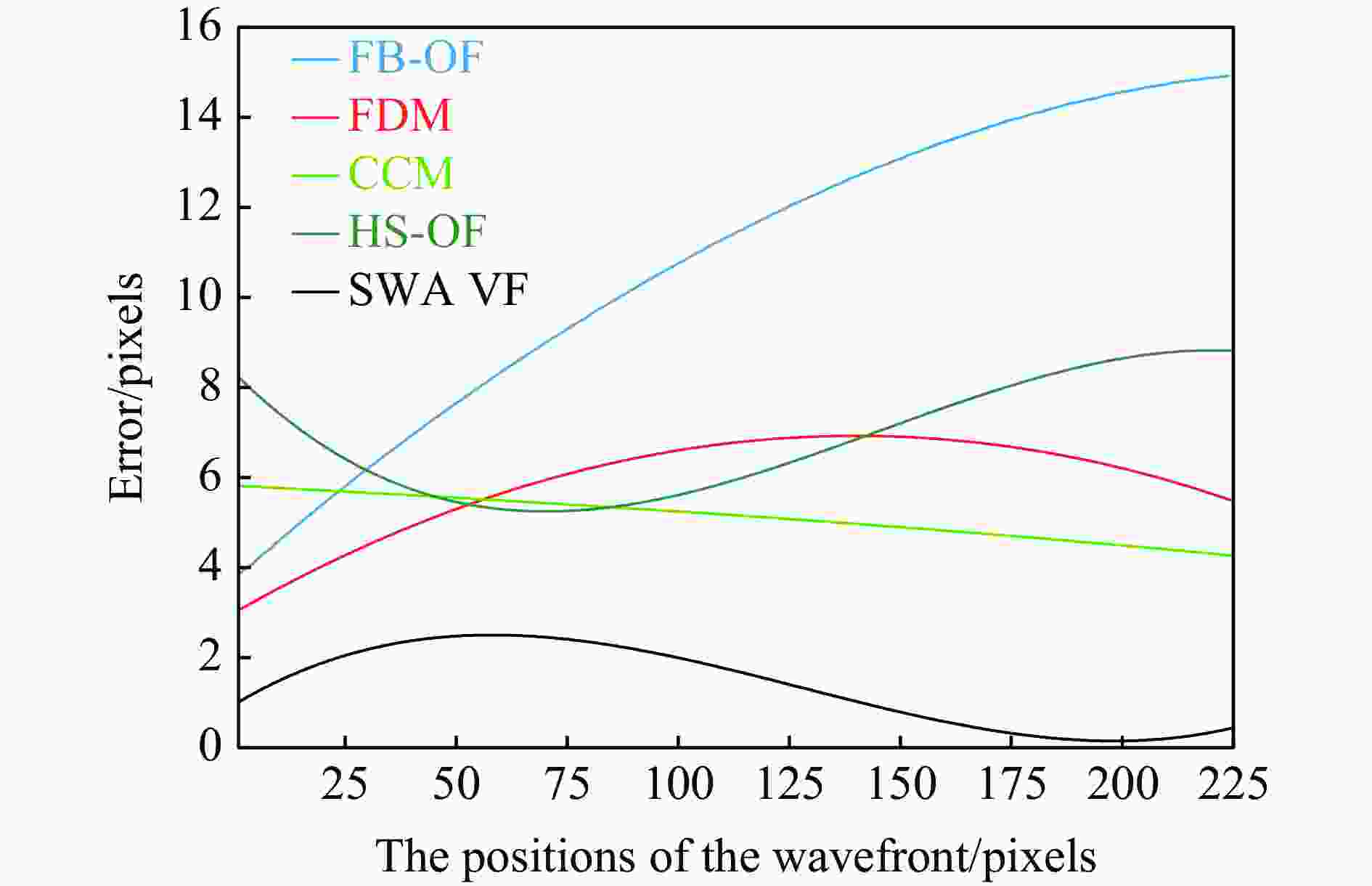
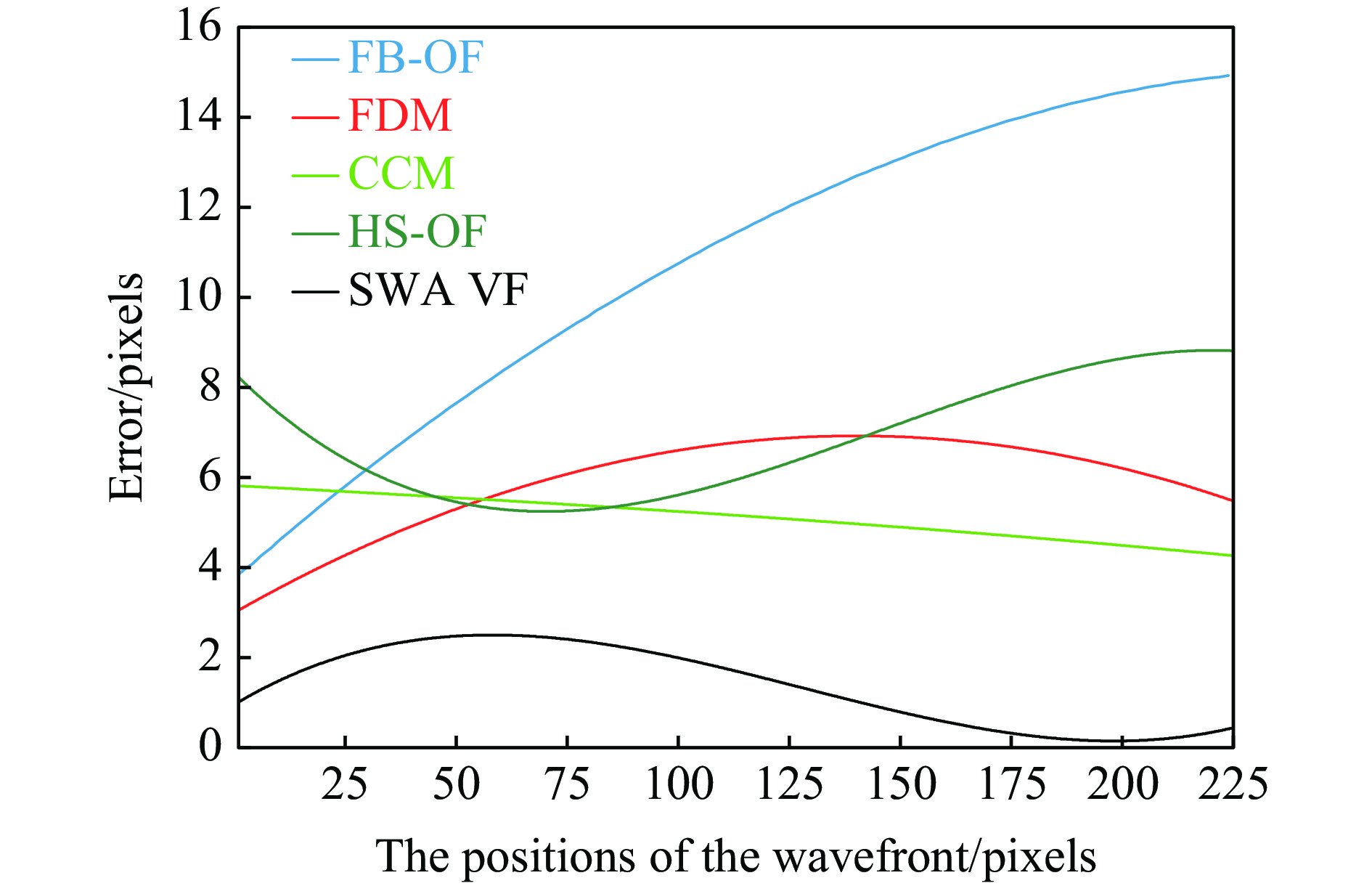
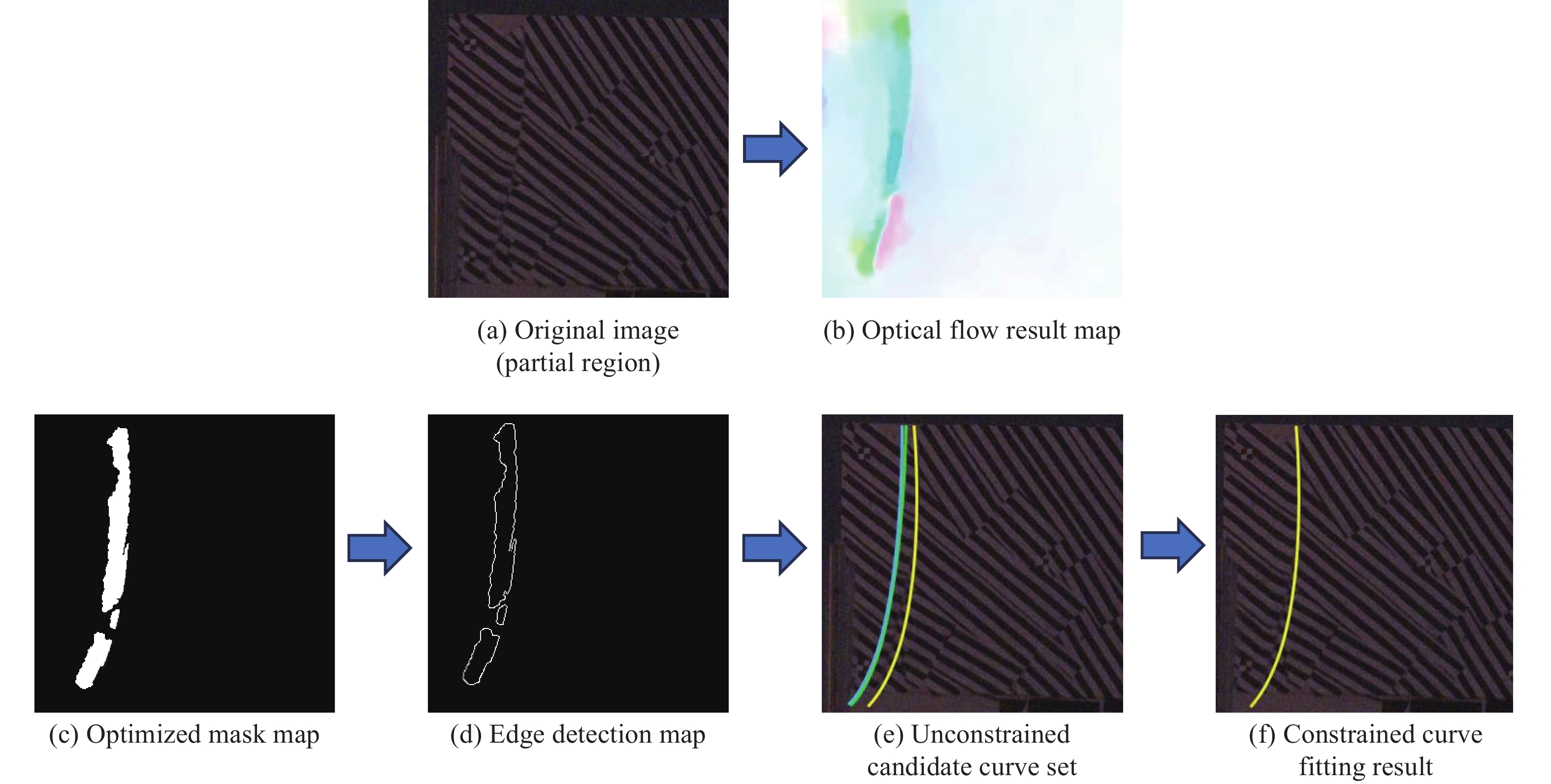
图 5 不同方法拟合曲线的像素误差曲线
Figure 5. Pixel error curves of fitted wavefronts using different methods
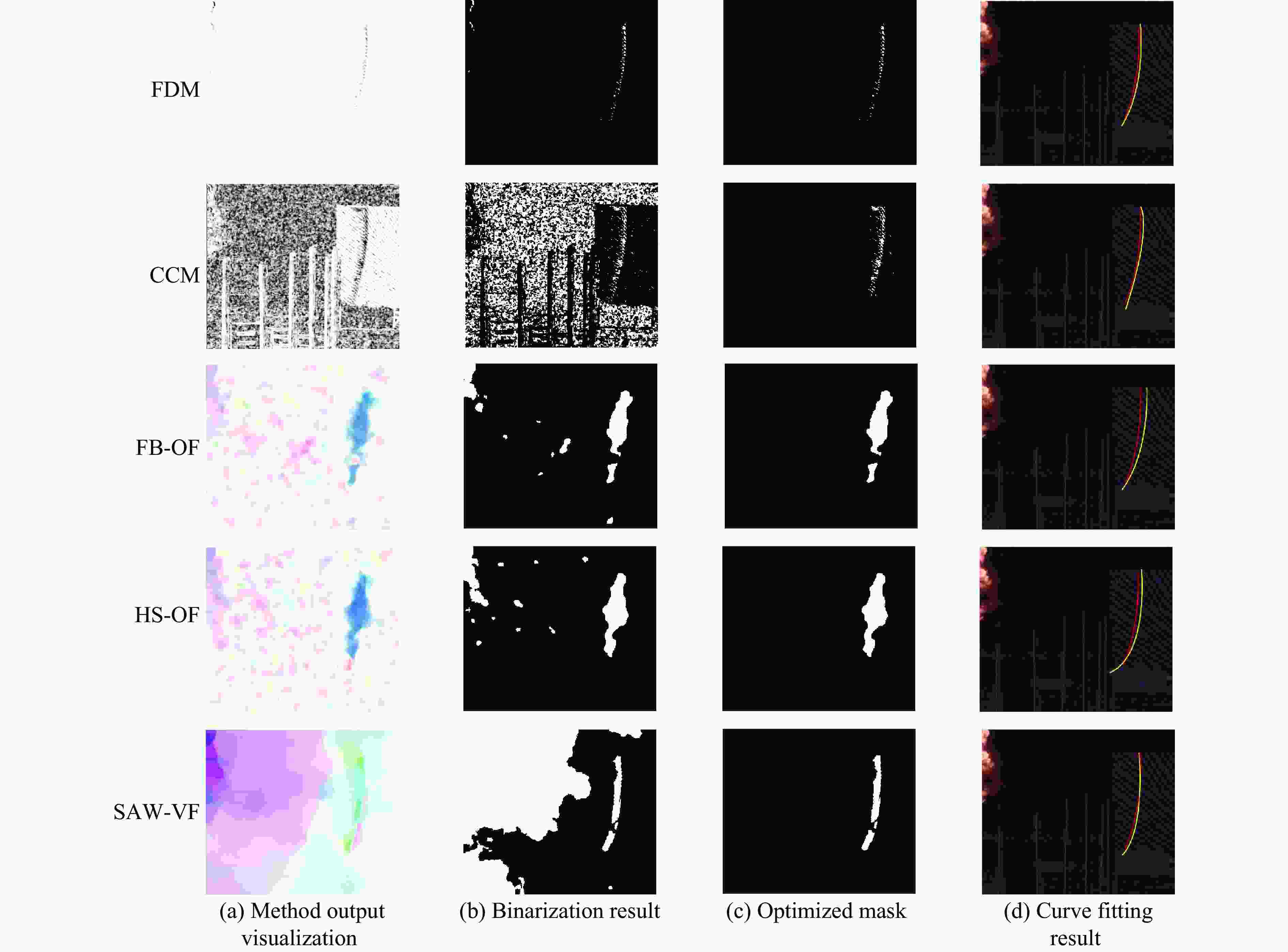
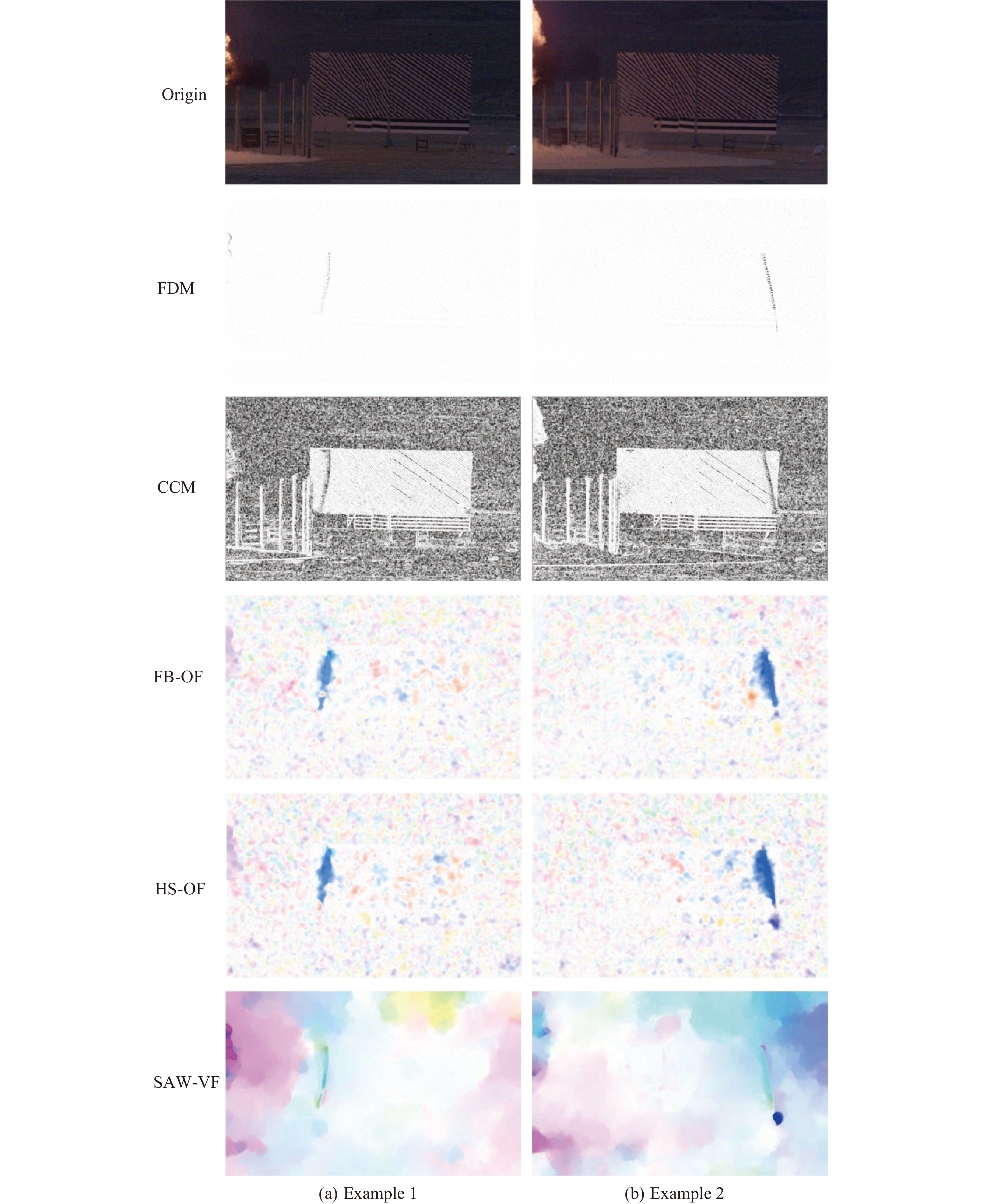
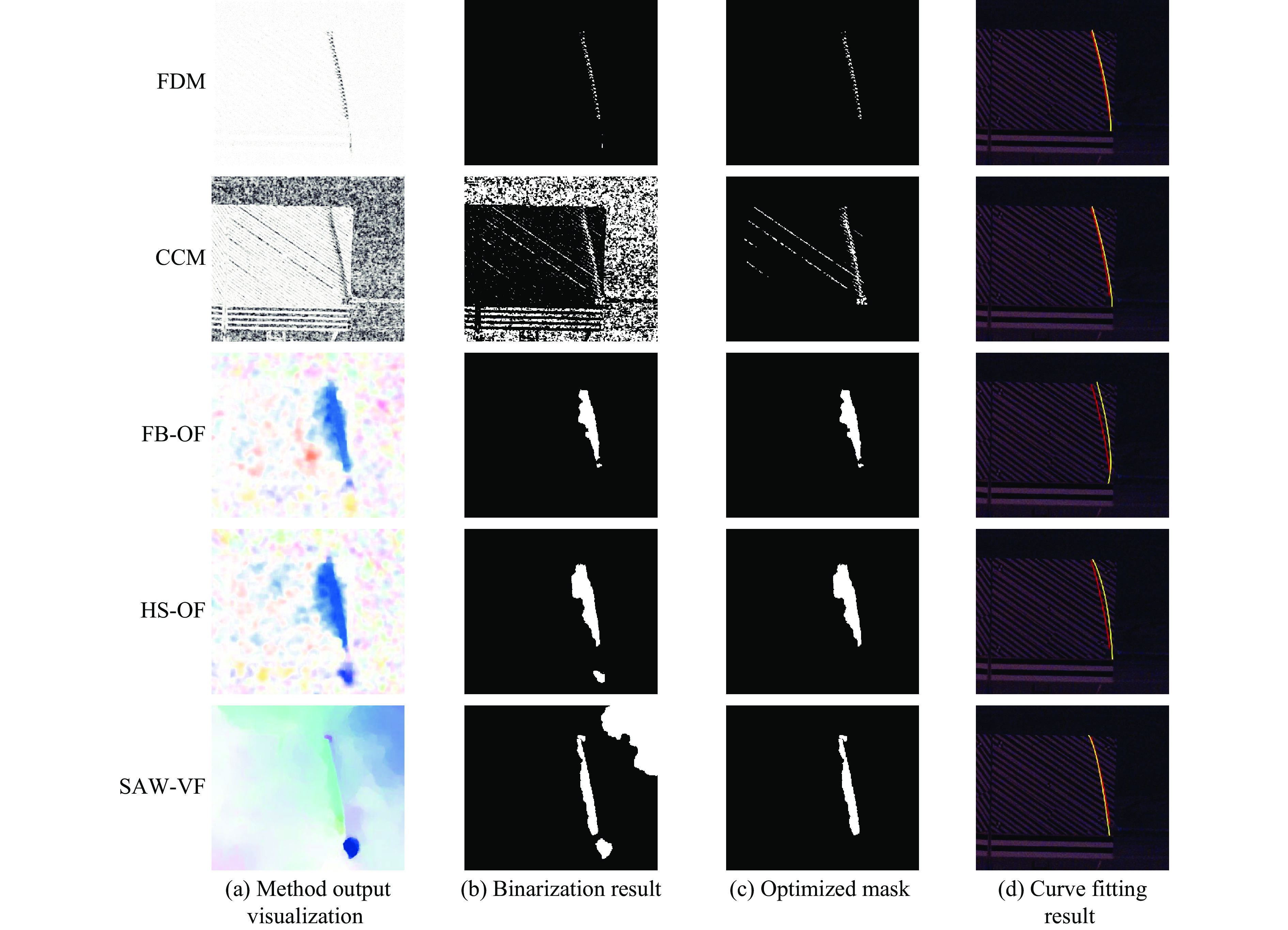
图 7 样例1不同方法对比结果
Figure 7. Comparison of results obtained by different methods for Example 1
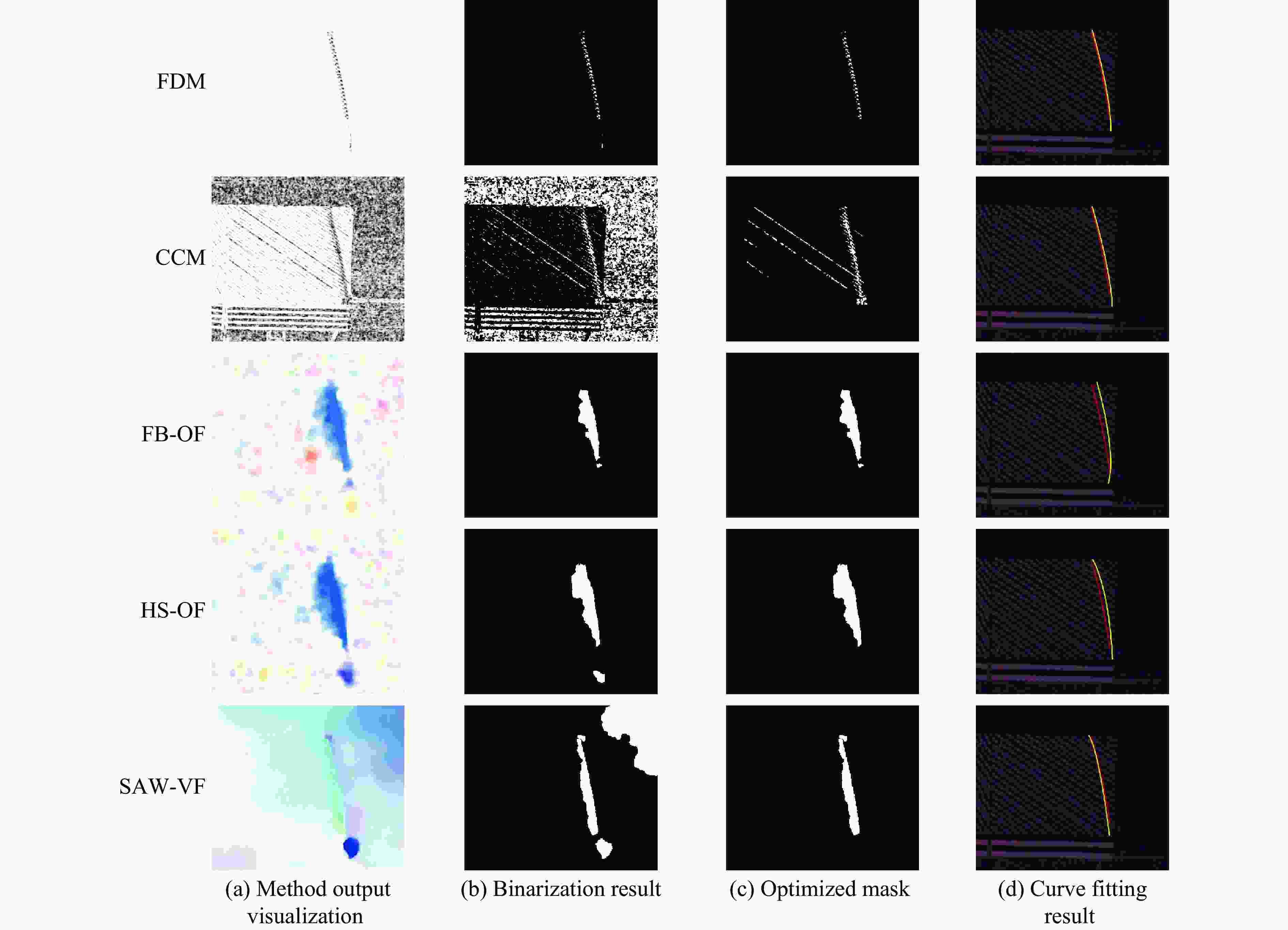
图 8 样例2不同方法对比结果
Figure 8. Comparison of results obtained by different methods for Example 2
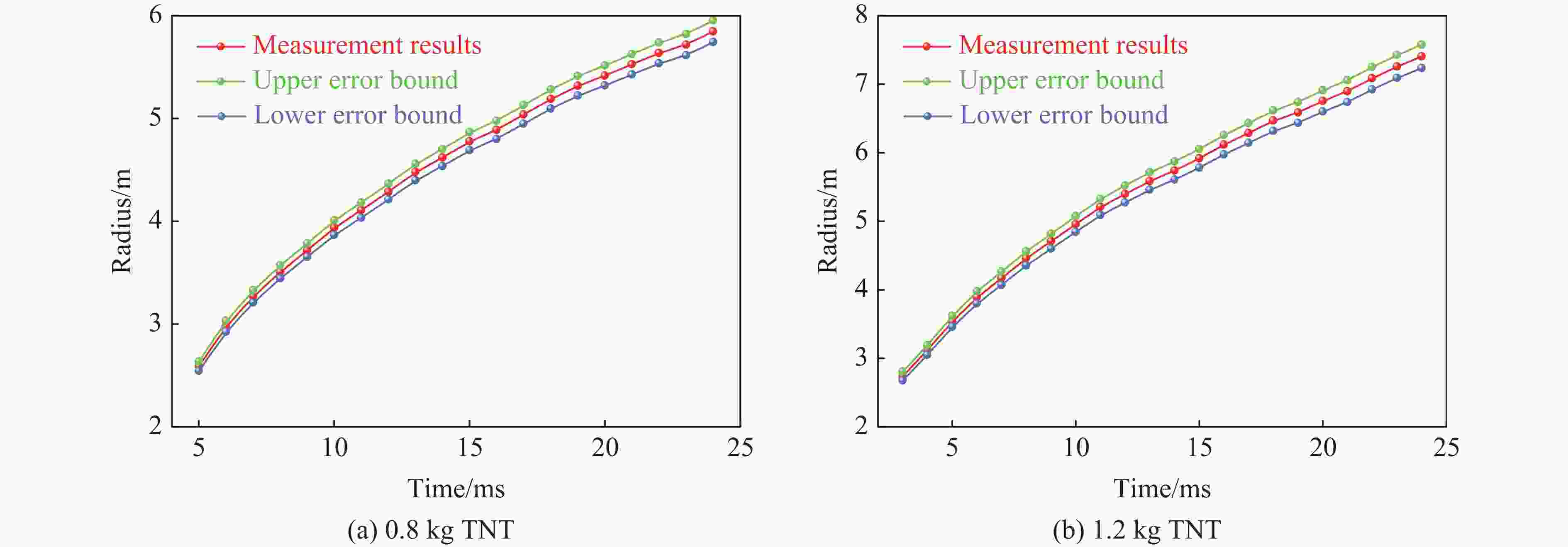
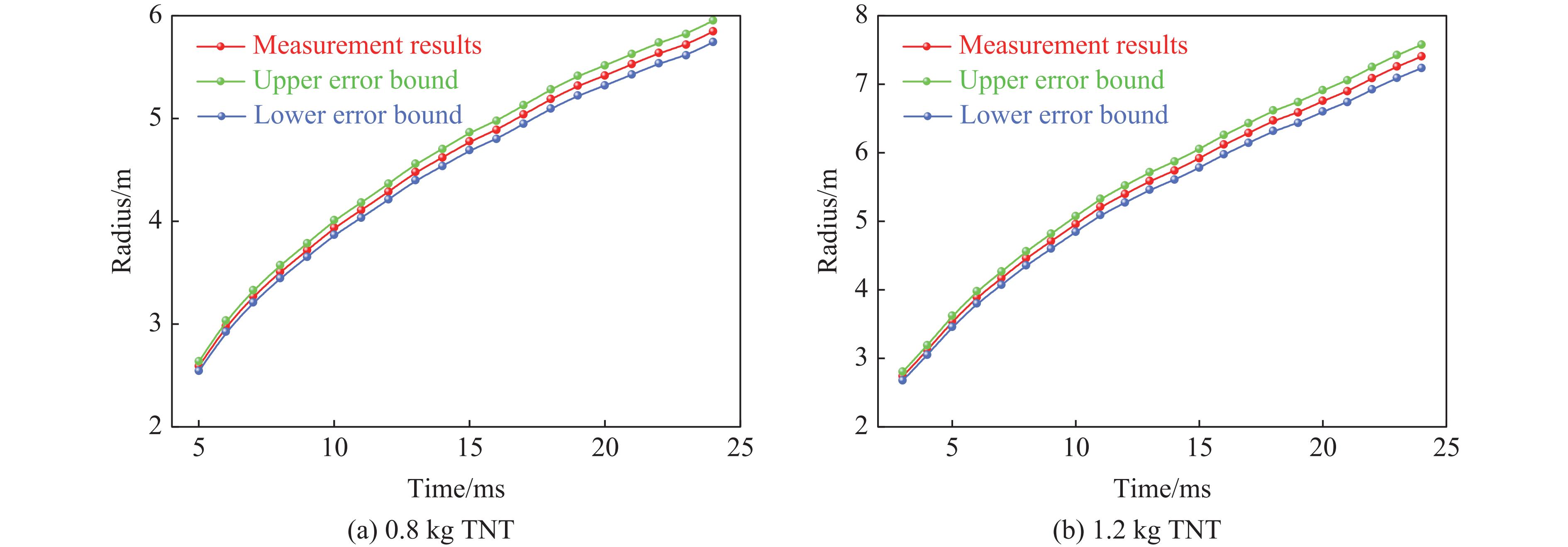
图 11 冲击波测得半径及误差界随时间变化曲线
Figure 11. Measured shock-wave radius with upper and lower error bounds versus time
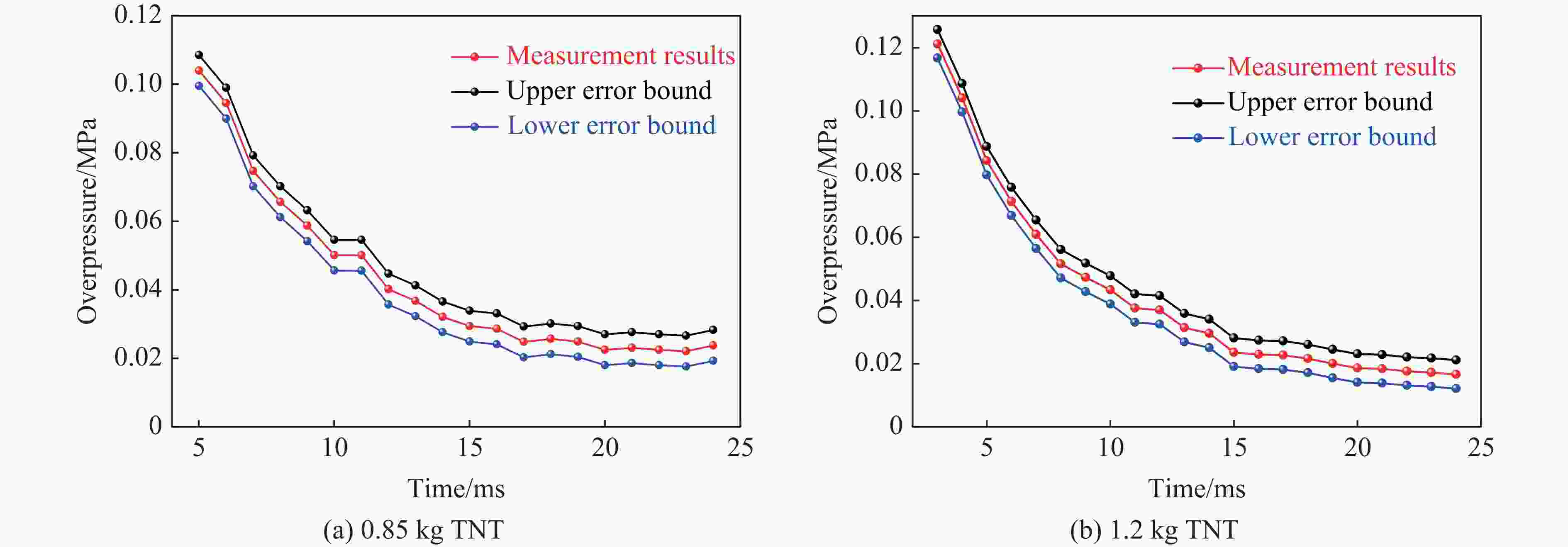
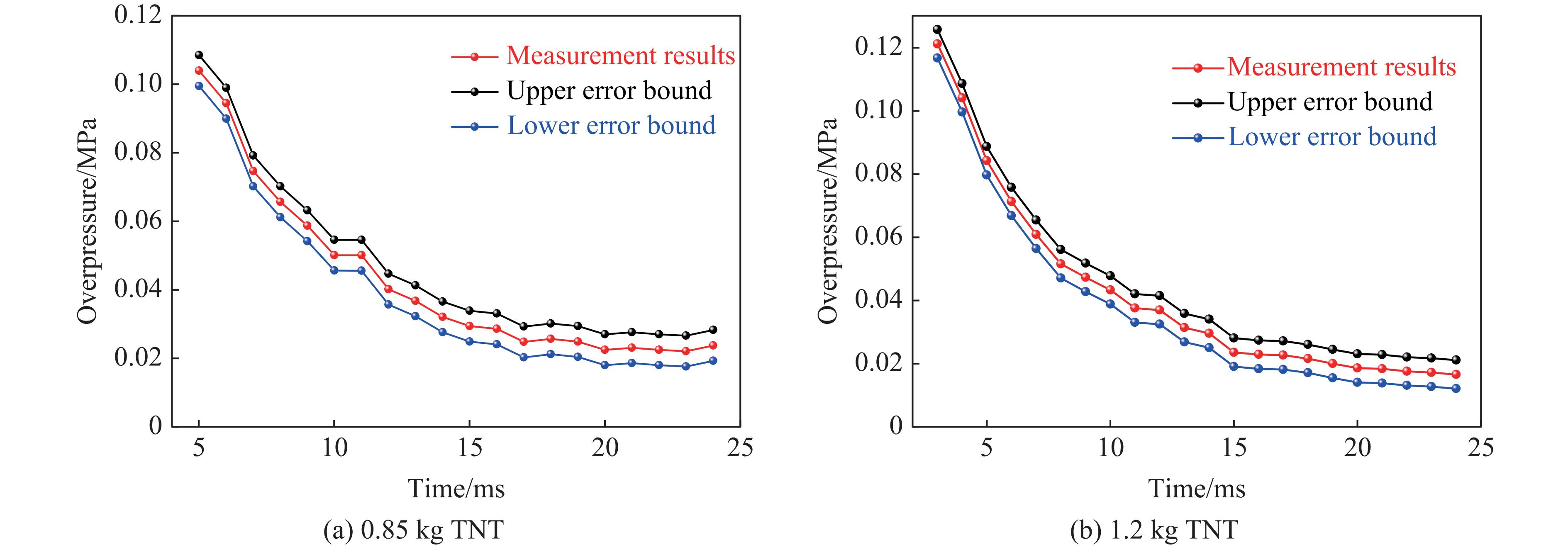
图 12 冲击波测得超压及误差界随时间变化曲线
Figure 12. Measured shock-wave overpressure with upper and lower error bounds versus time
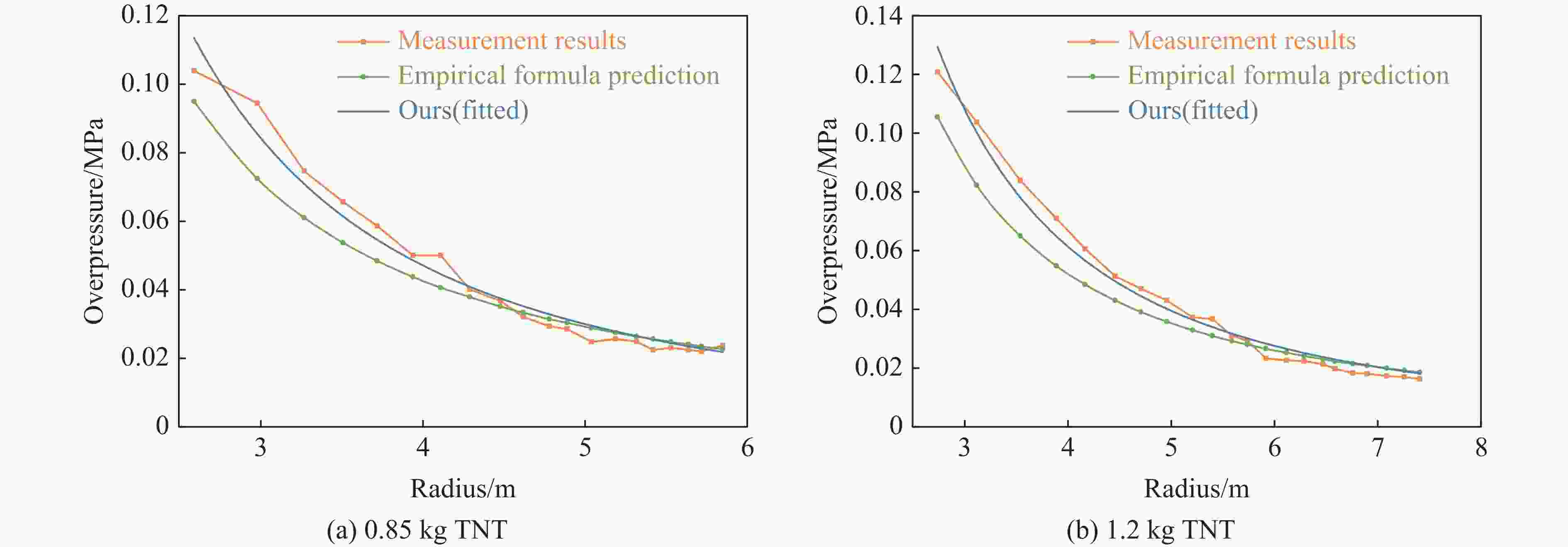
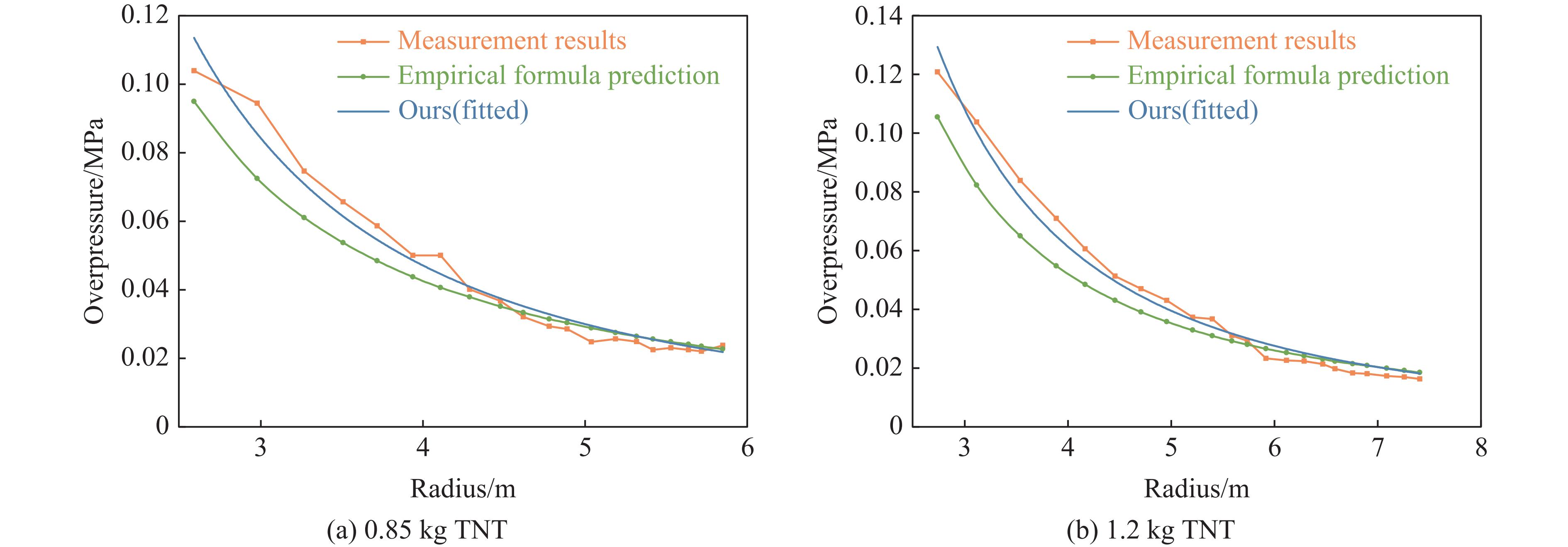
图 13 冲击波测得超压随半径变化曲线及对比结果
Figure 13. Radial variation of the measured shock-wave overpressure and comparison results
表 1 不同方法与 SAW-VF 的评价指标对比
Table 1. Comparison of evaluation metrics for different methods
方法 平均绝对误差/pixels 均方误差/pixels FDM 5.8271 35.1475 CCM 4.9899 26.2430 FB-OF 9.3556 104.7900 HS-OF 12.6970 184.1961 SWA-VF 1.5536 4.7066  下载: 导出CSV
表 2 不同方法与SWPM-CFA的评价指标对比
Table 2. Comparison of evaluation metrics between various methods and the SWPM-CFA method
方法 平均绝对误差/pixels 均方误差/pixels R2 LSM 5.72 8.28 0.86 NSWPM-CFA 3.2 3.0 0.90 SWPM-CFA(Ours) 2.95 2.20 0.94
下载: 导出CSV
表 3 0.85 kg TNT 当量条件下本方法测量结果误差统计
Table 3. Relative errors of the proposed method for a 0.85 kg TNT equivalent charge
距离/m 压力传感器测量值/MPa 经验公式预测值/MPa 本文方法测量值/MPa 相对误差/% 3 0.0936 0.0717 0.0844 9.85 (PSV)
17.71 (EFP)4 0.0504 0.0427 0.0474 5.69 (PSV)
11.01(EFP)5 0.0299 0.0290 0.0304 1.75 (PSV)
4.83 (EFP)
下载: 导出CSV
表 4 1.2 kg TNT 当量条件下本方法测量结果误差统计
Table 4. Relative errors of the proposed method for a 1.2 kg TNT equivalent charge
距离/m 压力传感器测量值/MPa 经验公式预测值/MPa 本文方法测量值/MPa 相对误差/% 3 0.1190 0.0895 0.1087 8.68 (PSV)
21.45 (EFP)4 0.0637 0.0521 0.0618 2.76 (PSV)
18.62 (EFP)5 0.0414 0.0355 0.0396 4.32 (PSV)
11.55 (EFP)6 0.0276 0.0262 0.0279 0.93(PSV)
6.49 (EFP)7 0.0199 0.0207 0.0202 1.59 (PSV)
2.42 (EFP)
下载: 导出CSV
-
[1] YU J X, LI W B, LI J B, et al. The detonation wave propagation and the calculation methods for shock wave overpressure distribution of composite charges [J]. Defence Technology, 2025, 48: 204–220. DOI: 10.1016/j.dt.2025.01.017. [2] 卢芳云, 李翔宇, 田占东, 等. 武器毁伤与评估 [M]. 北京: 科学出版社, 2021.LU F Y, LI X Y, TIAN Z D, et al. Weapon damage and assessment [M]. Beijing: Science Press, 2021. [3] DU N, XIONG W, WANG T, et al. Study on energy release characteristics of reactive material casings under explosive loading [J]. Defence Technology, 2021, 17(5): 1791–1803. DOI: 10.1016/j.dt.2020.11.008. [4] ZHANG H Y, XU Y X, XIAO L H, et al. Physics-informed machine learning model for prediction of ground reflected wave peak overpressure [J]. Defence Technology, 2024, 41: 119–133. DOI: 10.1016/j.dt.2024.06.004. [5] ZHANG X B, SHEN S S, YANG M, et al. Influence of length and angle of bifurcated tunnel on shock wave propagation [J]. Journal of Loss Prevention in the Process Industries, 2022, 78: 104802. DOI: 10.1016/j.jlp.2022.104802. [6] 叶希洋, 苏健军, 姬建荣. 冲击波测试效应靶法综述 [J]. 兵器装备工程学报, 2019, 40(12): 55–61,124. DOI: 10.11809/bqzbgcxb2019.12.012.YE X Y, SU J J, JI J R. Review of effect target method for shock wave measurement [J]. Journal of Ordnance Equipment Engineering, 2019, 40(12): 55–61,124. DOI: 10.11809/bqzbgcxb2019.12.012. [7] LI X Y, DUAN Z P, LONG R R. Research on vibration compensation technology of pressure sensors in shock wave overpressure measurement [J]. Journal of Physics: Conference Series, 2022, 2369(1): 012075. DOI: 10.1088/1742-6596/2369/1/012075. [8] WANG D H, SONG L L, ZHANG Z J. A pressure measurement system based on stored measurement theory for explosion shock waves [C]//Proceedings of 2010 International Symposium on Intelligent Signal Processing and Communication Systems. Chengdu: IEEE, 2010: 1–4. DOI: 10.1109/ISPACS.2010.5704702. [9] WINTER K O, HARGATHER M J. Three-dimensional shock wave reconstruction using multiple high-speed digital cameras and background-oriented schlieren imaging [J]. Experiments in Fluids, 2019, 60(6): 93. DOI: 10.1007/s00348-019-2738-x. [10] LEI T H, GUAN B L, LIANG M Z, et al. Motion measurements of explosive shock waves based on an event camera [J]. Optics Express, 2024, 32(9): 15390–15409. DOI: 10.1364/OE.506662. [11] JAKA M, FABIAN R, JERNEJ J J , et al. Multi-frame multi-exposure shock wave imaging and pressure measurements [J]. Optics Express, 2022, 30(21): 37664-37674. DOI: 10.1364/OE.470695. [12] LI S, ZHANG A M, HAN R, et al. Experimental and numerical study of two underwater explosion bubbles: coalescence, fragmentation and shock wave emission [J]. Ocean Engineering, 2019, 190: 106414. DOI: 10.1016/j.oceaneng.2019.106414. [13] BOLTON J T, THUROW B S, ALVI F S, et al. Single camera 3D measurement of a shock wave-turbulent boundary layer interaction [C]//Proceedings of the 55th AIAA Aerospace Sciences Meeting. Grapevine: AIAA, 2017: 0985. DOI: 10.2514/6.2017-0985. [14] ZHANG G. Experimental study on shock wave propagation of the explosion in a pipe with holes by high-speed schlieren method [J]. Shock and Vibration, 2020, 2020(1): 8850443. DOI: 10.1155/2020/8850443. [15] SLANGEN P R, LAURET P, HEYMES F, et al. High-speed imaging optical techniques for shockwave and droplets atomization analysis [J]. Optical Engineering, 2016, 55(12): 121706–121706. DOI: 10.1117/1.OE.55.12.121706. [16] HIGHAM J E, ISAAC O S, RIGBY S E. Optical flow tracking velocimetry of near-field explosions [J]. Measurement Science and Technology, 2022, 33(4): 047001. DOI: 10.1088/1361-6501/ac4599. [17] RIGBY S E, KNIGHTON R, CLARKE S D, et al. Reflected near-field blast pressure measurements using high speed video [J]. Experimental Mechanics, 2020, 60(7): 875–888. DOI: 10.1007/s11340-020-00615-3. [18] GOMEZ M, GRAUER S J, LUDWIGSEN J, et al. Megahertz-rate background-oriented schlieren tomography in post-detonation blasts [J]. Applied Optics, 2022, 61(10): 2444–2458. DOI: 10.1364/AO.449654. [19] SOMMERSEL O K, BJERKETVEDT D, CHRISTENSEN S O, et al. Application of background oriented schlieren for quantitative measurements of shock waves from explosions [J]. Shock Waves, 2008, 18(4): 291–297. DOI: 10.1007/s00193-008-0142-1. [20] HARGATHER M J. Background-oriented schlieren diagnostics for large-scale explosive testing [J]. Shock Waves, 2013, 23(5): 529–536. DOI: 10.1007/s00193-013-0446-7. [21] ZHOU T, GASKINS J, SWAINE S, et al. High magnification telecentric Background Oriented Schlieren (BOS) and its application to a supersonic turbulent boundary layer [C]//Proceedings of the AIAA SCITECH 2023 Forum. National Harbor: AIAA, 2023: 2437. DOI: 10.2514/6.2023-2437. [22] PONTALIER Q, LOISEAU J, GOROSHIN S, et al. Experimental investigation of blast mitigation and particle-blast interaction during the explosive dispersal of particles and liquids [J]. Shock Waves, 2018, 28(3): 489–511. DOI: 10.1007/s00193-018-0821-5. [23] SCHMIDT B E, BATHEL B F, GRAUER S J, et al. Twenty-five years of background-oriented schlieren: advances and novel applications [C]//Proceedings of the AIAA SCITECH 2025 Forum. Orlando: AIAA, 2025: 1627. DOI: 10.2514/6.2025-1627. [24] MIZUKAKI T, WAKABAYASHI K, MATSUMURA T, et al. Background-oriented schlieren with natural background for quantitative visualization of open-air explosions [J]. Shock Waves, 2014, 24(1): 69–78. DOI: 10.1007/s00193-013-0465-4. [25] STEWARD B J, GROSS K C, PERRAM G P. Optical characterization of large caliber muzzle blast waves [J]. Propellants, Explosives, Pyrotechnics, 2011, 36(6): 564–575. DOI: 10.1002/prep.201100037. [26] VENKATAKRISHNAN L, SURIYANARAYANAN P, JAGADEESH G. Density field visualization of a micro-explosion using background-oriented schlieren [J]. Journal of Visualization, 2013, 16(3): 177–180. DOI: 10.1007/s12650-013-0164-3. [27] STREBE K. Quantitative background-oriented schlieren (BOS) analysis of density fields around supersonic projectiles using two optical flow techniques [D]. Socorro: New Mexico Institute of Mining and Technology, 2023. [28] ATCHESON B, HEIDRICH W, IHRKE I. An evaluation of optical flow algorithms for background oriented schlieren imaging [J]. Experiments in Fluids, 2009, 46(3): 467–476. DOI: 10.1007/s00348-008-0572-7. [29] SCHMIDT B E, WOIKE M R. Wavelet-based optical flow analysis for background-oriented schlieren image processing [J]. AIAA Journal, 2021, 59(8): 3209–3216. DOI: 10.2514/1.J060218. [30] RAJENDRAN L K, BANE S P M, VLACHOS P P. Dot tracking methodology for background-oriented schlieren (BOS) [J]. Experiments in Fluids, 2019, 60(11): 162. DOI: 10.1007/s00348-019-2793-3. [31] HORN B K P, SCHUNCK B G. Determining optical flow [J]. Artificial Intelligence, 1981, 17(1/2/3): 185–203. DOI: 10.1016/0004-3702(81)90024-2. [32] MARTÍNEZ-GONZALEZ A, MORENO-HERNANDEZ D, GUERRERO-VIRAMONTES J A. Measurement of temperature and velocity fields in a convective fluid flow in air using schlieren images [J]. Applied Optics, 2013, 52(22): 5562–5569. DOI: 10.1364/ao.52.005562. [33] FU S, WU Y J. Detection of velocity distribution of a flow field using sequences of schlieren images [J]. Optical Engineering, 2001, 40(8): 1661–1666. DOI: 10.1117/1.1386792. [34] SUTER D. Motion estimation and vector splines [C]//Proceedings of IEEE Conference on Computer Vision and Pattern Recognition. Seattle: IEEE, 1994: 939–942. DOI: 10.1109/CVPR.1994.323929. [35] CORPETTI T, HEITZ D, ARROYO G, et al. Fluid experimental flow estimation based on an optical-flow scheme [J]. Experiments in Fluids, 2006, 40(1): 80–97. DOI: 10.1007/s00348-005-0048-y. [36] FARNEBÄCK G. Two-frame motion estimation based on polynomial expansion [C]//Proceedings of the 13th Scandinavian Conference on Image Analysis. Halmstad: Springer, 2003: 363–370. DOI: 10.1007/3-540-45103-X_50. [37] ZACH C, POCK T, BISCHOF H. A duality based approach for realtime TV-L1 optical flow [C]//Proceedings of the 29th DAGM Symposium on Pattern Recognition. Heidelberg: Springer, 2007: 214–223. DOI: 10.1007/978-3-540-74936-3_22. [38] BROX T, BRUHN A, PAPENBERG N, et al. High accuracy optical flow estimation based on a theory for warping [C]//Proceedings of the 8th European Conference on Computer Vision. Prague: Springer, 2004: 25–36. DOI: 10.1007/978-3-540-24673-2_3. [39] XUE T F, RUBINSTEIN M, WADHWA N, et al. Refraction wiggles for measuring fluid depth and velocity from video [C]//Proceedings of the 13th European Conference on Computer Vision. Zurich: Springer, 2014: 767–782. DOI: 10.1007/978-3-319-10578-9_50. [40] LIU T S. OpenOpticalFlow: an open source program for extraction of velocity fields from flow visualization images [J]. Journal of Open Research Software, 2017, 5(1): 29. DOI: 10.5334/jors.168. [41] MCLEAN D. Continuum fluid mechanics and the Navier-Stokes equations [M]//MCLEAN D. Understanding Aerodynamics: Arguing from the Real Physics. Boeing, 2012: 13–78. DOI: 10.1002/9781118454190.ch3. [42] IPPEN E P, SHANK C V. Techniques for measurement [M]//SHAPIRO S L. Ultrashort Light Pulses: Picosecond Techniques and Applications. Berlin, Heidelberg: Springer, 2005: 83–122. DOI: 10.1007/3-540-13493-X_17. [43] BRUHN A, WEICKERT J, SCHNÖRR C. Lucas/Kanade meets Horn/Schunck: combining local and global optic flow methods [J]. International Journal of Computer Vision, 2005, 61(3): 211–231. DOI: 10.1023/B:VISI.0000045324.43199.43. [44] HALEEM B A, EL AGHOURY I M, TORK B S. An overview of iterative techniques used for solving the systems of equations resulting from the finite element analysis [J]. IOSR Journal of Mechanical and Civil Engineering, 2020, 17(5): 48–57. DOI: 10.9790/1684-1705024857. [45] SUN D Q, ROTH S, BLACK M J. A quantitative analysis of current practices in optical flow estimation and the principles behind them [J]. International Journal of Computer Vision, 2014, 106(2): 115–137. DOI: 10.1007/s11263-013-0644-x. [46] DEWEY J M. Measurement of the physical properties of blast waves [M]//IGRA O, SEILER F. Experimental Methods of Shock Wave Research. Cham: Springer, 2015: 53–86. DOI: 10.1007/978-3-319-23745-9_2. [47] KREHL P O K. The classical Rankine-Hugoniot jump conditions: an important cornerstone of modern shock wave physics—ideal assumptions vs. reality [J]. The European Physical Journal H, 2015, 40(2): 159–204 . DOI: 10.1140/epjh/e2015-50010-4. -

计量
- 文章访问数: 502
- HTML全文浏览量: 214
- PDF下载量: 420
- 被引次数: 0