



Johnson-Cook constitutive model and failure criterion for nuclear-grade stainless steel Z2CN18.10
-
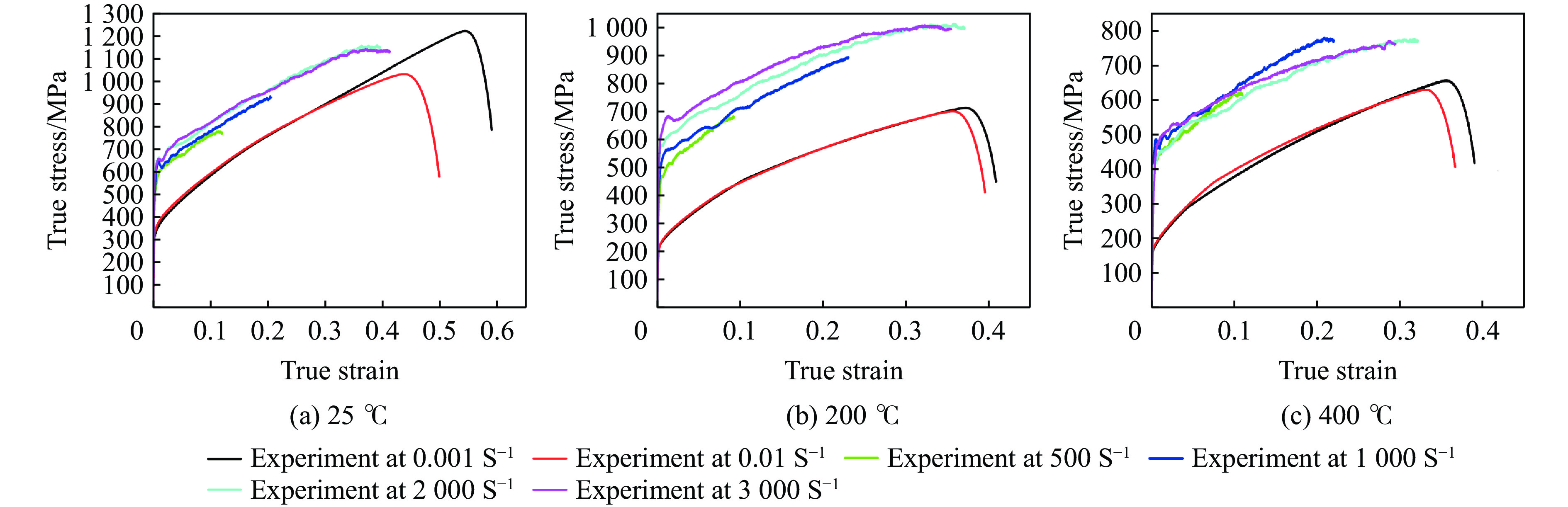
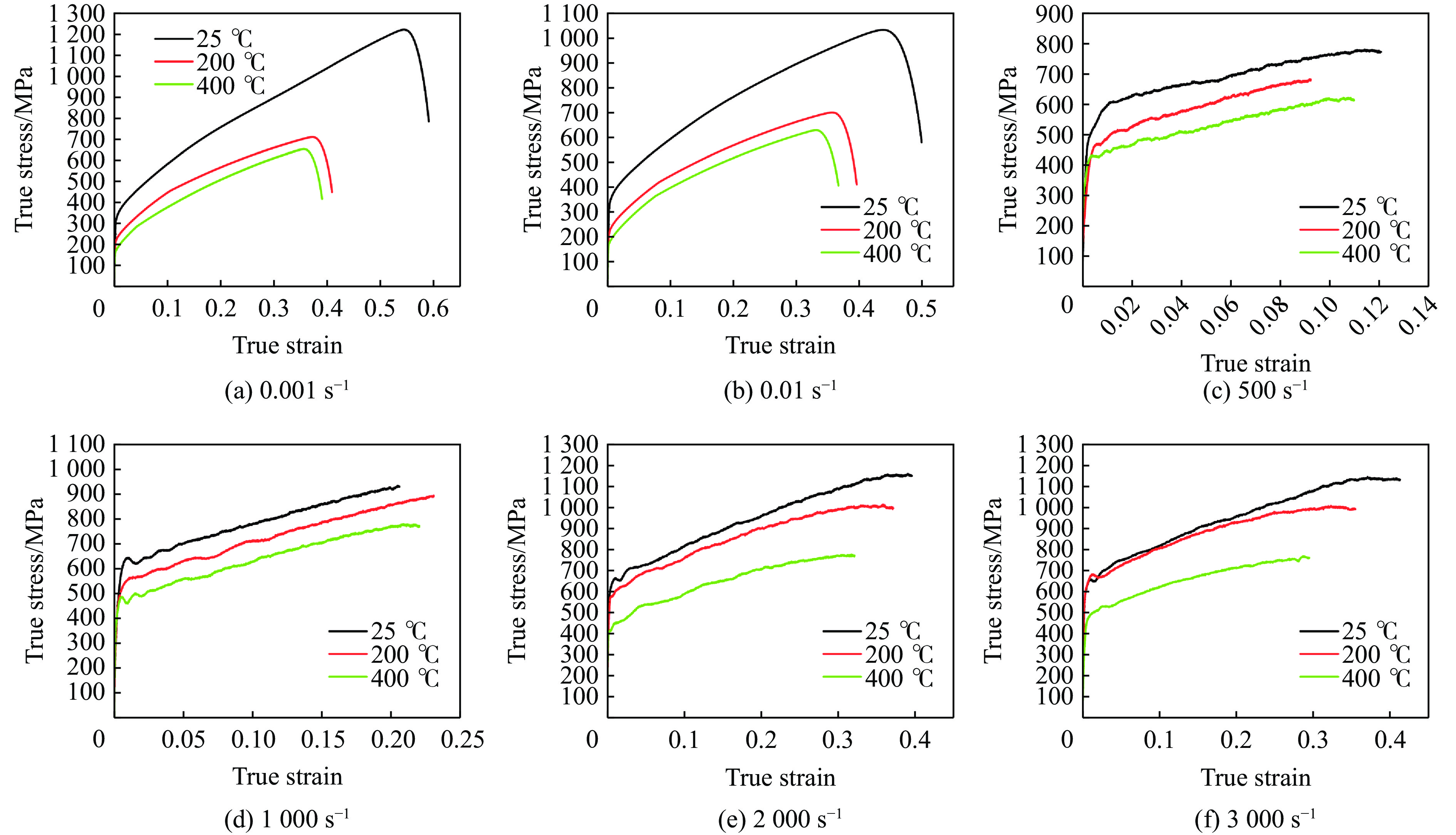
摘要: 为准确描述核级不锈钢Z2CN18.10在动态载荷下的力学行为,通过电子万能试验机和传统Hopkinson拉杆系统开展了准静态与高应变率拉伸试验,获取了该材料在常温至400 ℃、应变率10−3~103 s−1范围内的应力-应变响应。针对传统Hopkinson杆无法实现大应变加载的局限,采用电磁驱动双向Hopkinson拉杆测量了Z2CN18.10不锈钢在不同应力三轴度下的失效应变。基于实验数据拟合了Johnson-Cook本构模型和失效准则参数,并通过空气炮高速冲击试验验证了模型的有效性。结果表明,数值仿真与试验关于破孔尺寸、峰值应变和支撑反力的差值分别为4.4%、7.5%和2.3%,吻合良好。建立的Z2CN18.10不锈钢可靠动态本构模型和失效准则可为核电站管道系统的抗冲击设计与安全评估提供了重要的方法与数据基础。
-
关键词:
- 不锈钢Z2CN18.10 /
- Johnson-Cook本构模型 /
- Johnson-Cook失效准则 /
- 电磁Hopkinson杆 /
- 高速冲击试验
Abstract: Nuclear-grade stainless steel Z2CN18.10 is widely used in nuclear power plant piping systems. Its dynamic mechanical behavior under combined high strain rates and elevated temperatures is of great significance for assessing structural integrity under impact loads. To accurately characterize the mechanical behavior of Z2CN18.10 under dynamic loading, quasi-static and high-strain-rate tensile tests were conducted using a universal electronic testing machine and a conventional split Hopkinson tension bar system. The stress-strain responses of the material were obtained within temperature ranges from ambient (25 ℃) up to 400 ℃ and strain rates from 10−3 to 103 s−1. To overcome the limitation of conventional Hopkinson bar apparatus in achieving large-strain loading, an electromagnetically driven bidirectional Hopkinson tension bar system was employed to measure the failure strain of the material under different stress triaxialities. Based on the experimental data, parameters for the Johnson-Cook constitutive model and failure criterion were fitted, and the validity of the model was verified through high-speed impact tests using a gas gun. The results show that the differences between numerical simulations and experiments in terms of perforation diameter, peak strain, and support reaction force were 4.4%, 7.5%, and 2.3%, respectively, indicating good agreement. The established reliable dynamic constitutive model and failure criterion for Z2CN18.10 stainless steel provide an important methodological and data foundation for the impact-resistant design and safety assessment of nuclear power piping systems. -
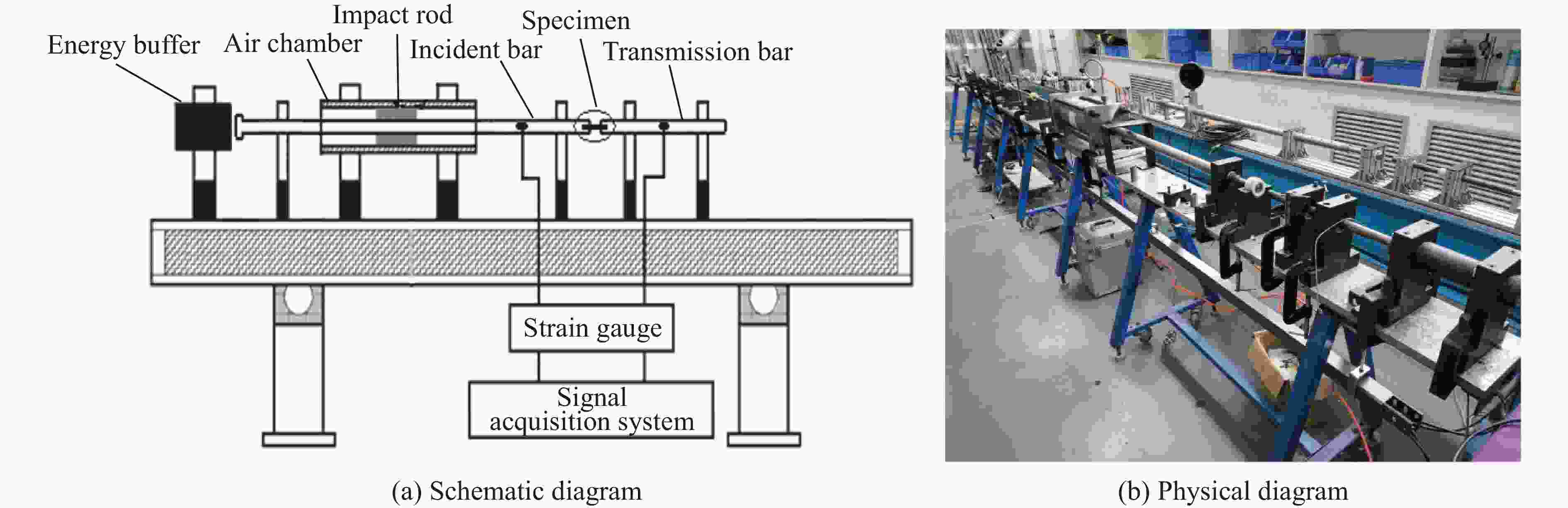
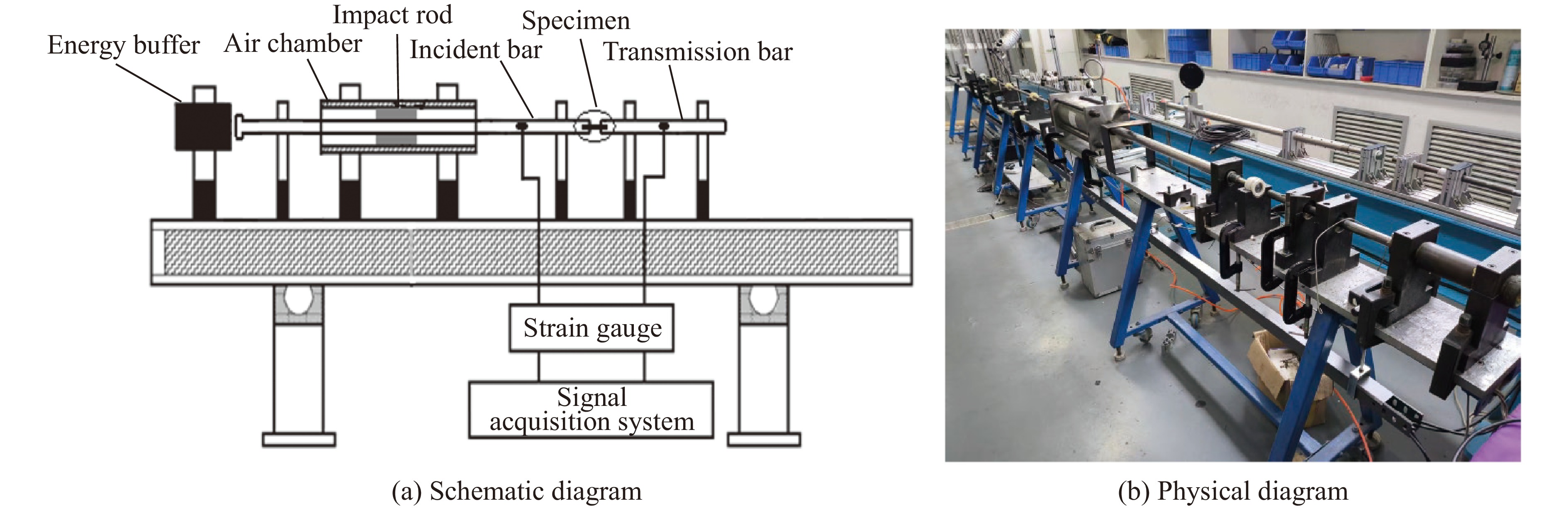
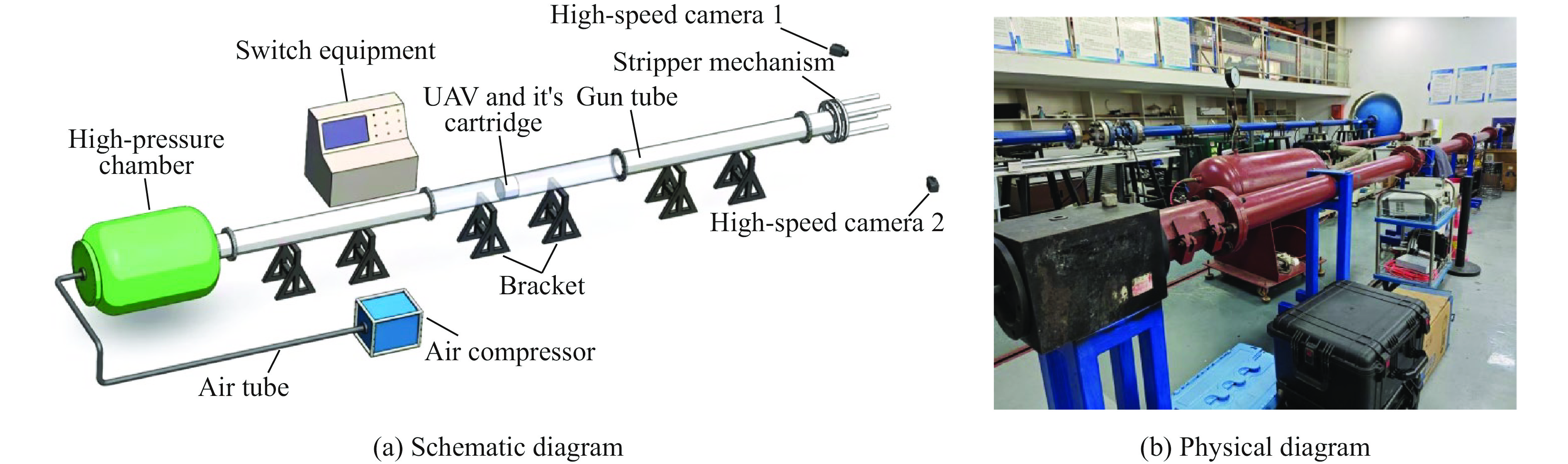
图 3 传统撞击式Hopkinson拉杆实验装置
Figure 3. Conventional striker-driven split Hopkinson tension bar experimental setup
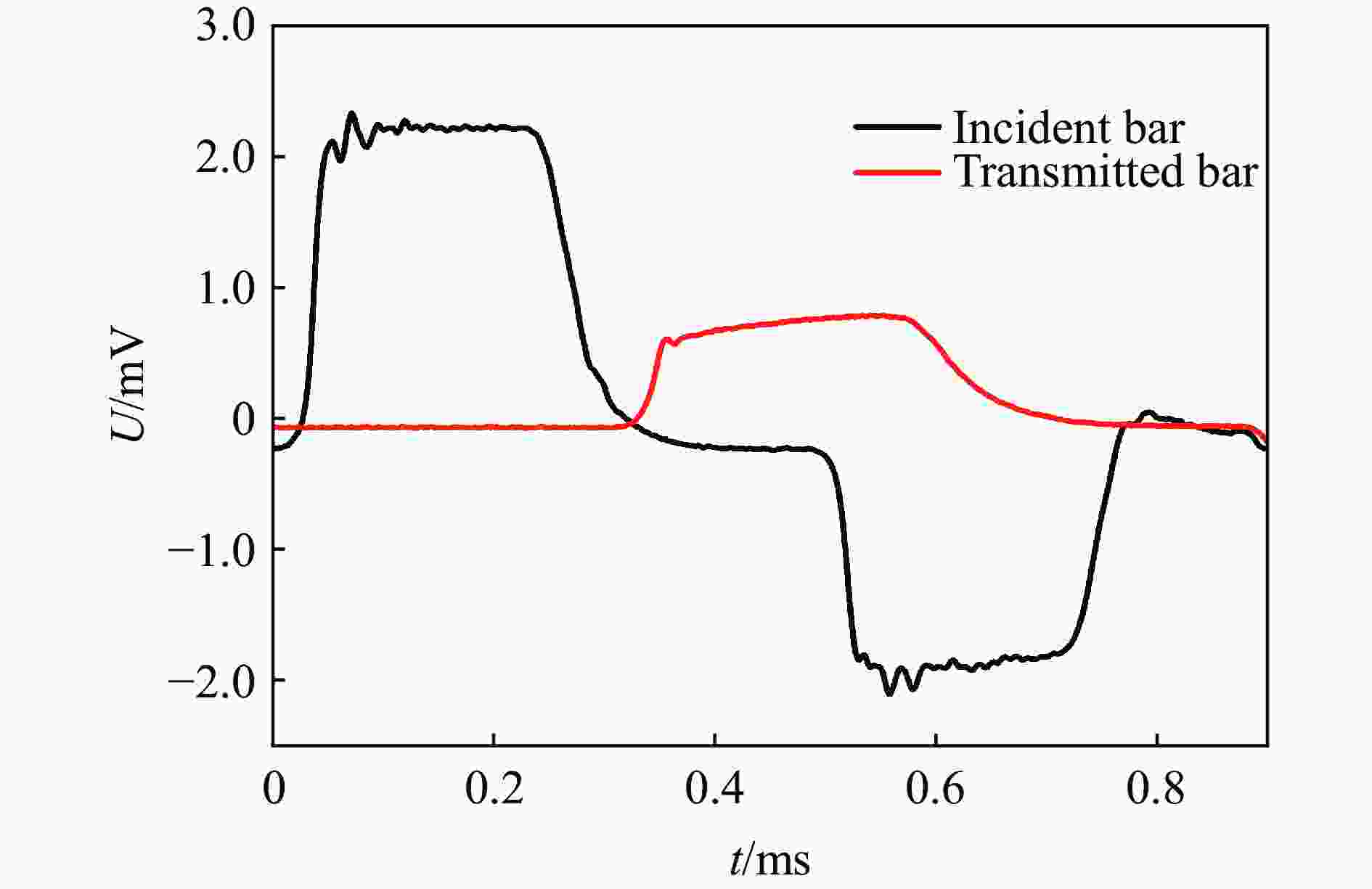
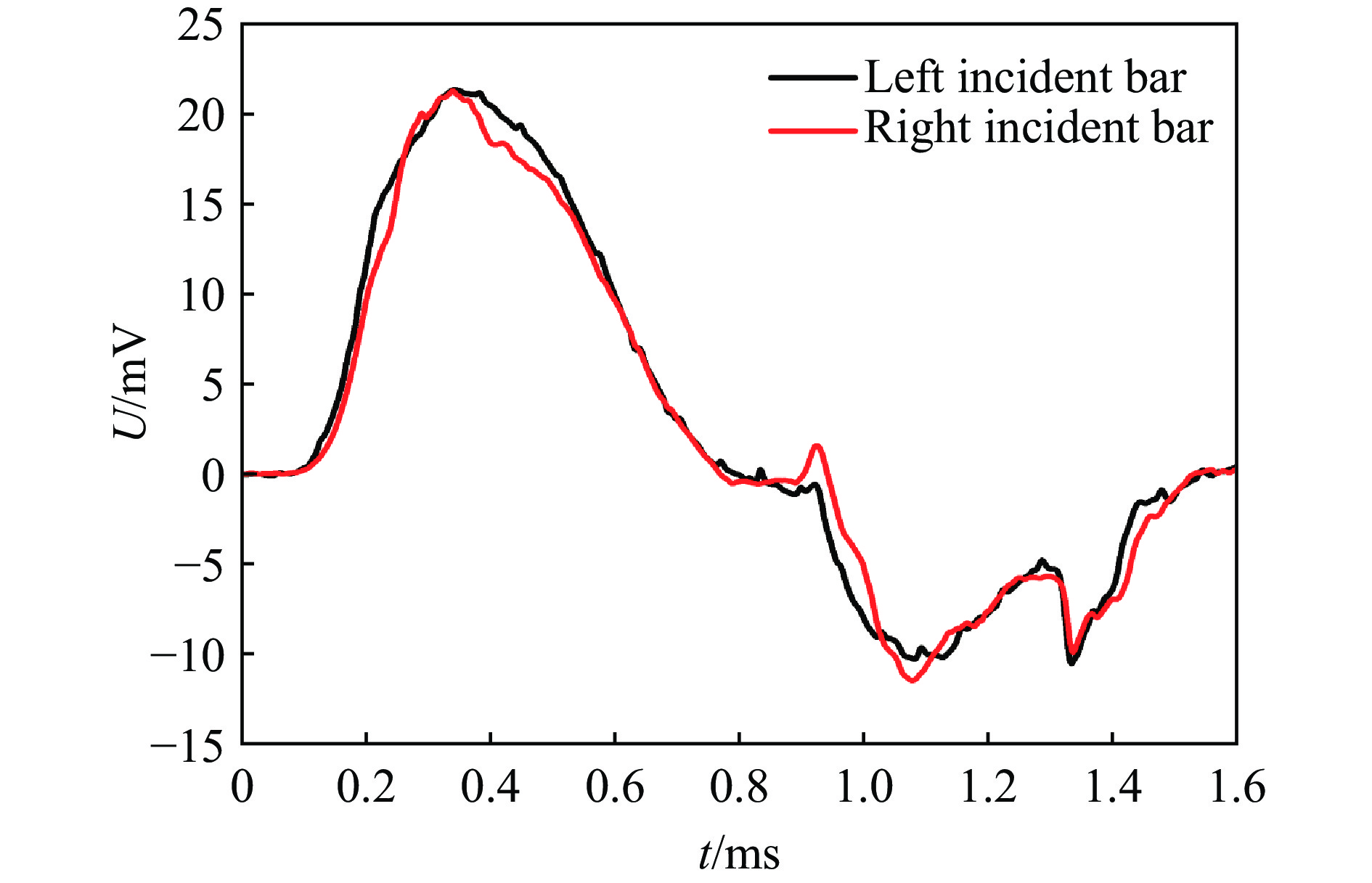
图 4 动态拉伸试验典型原始波形(25 ℃、
1000 s −1)Figure 4. Typical raw waveforms from dynamic tensile tests (25 ℃,
1000 s−1)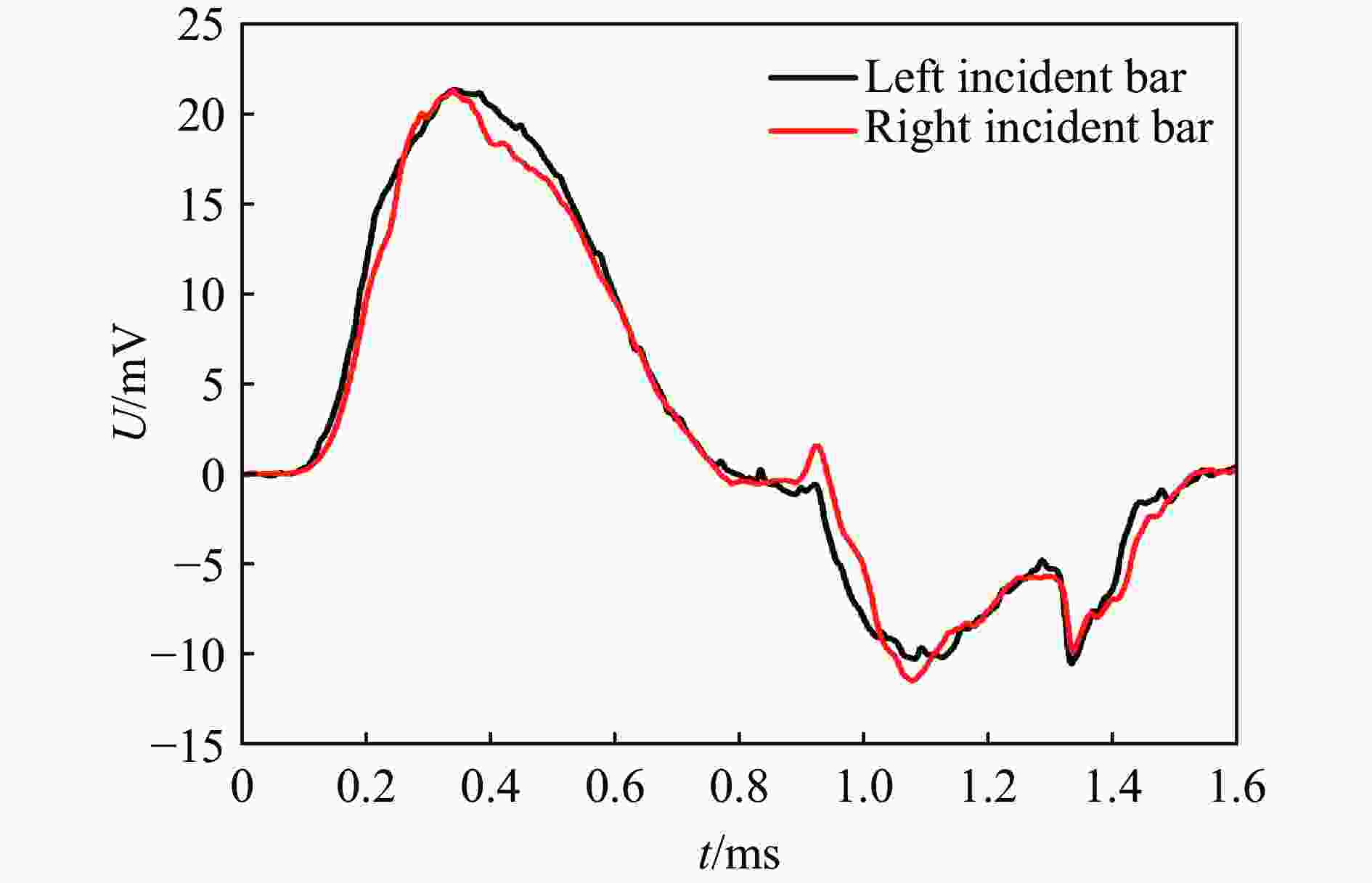
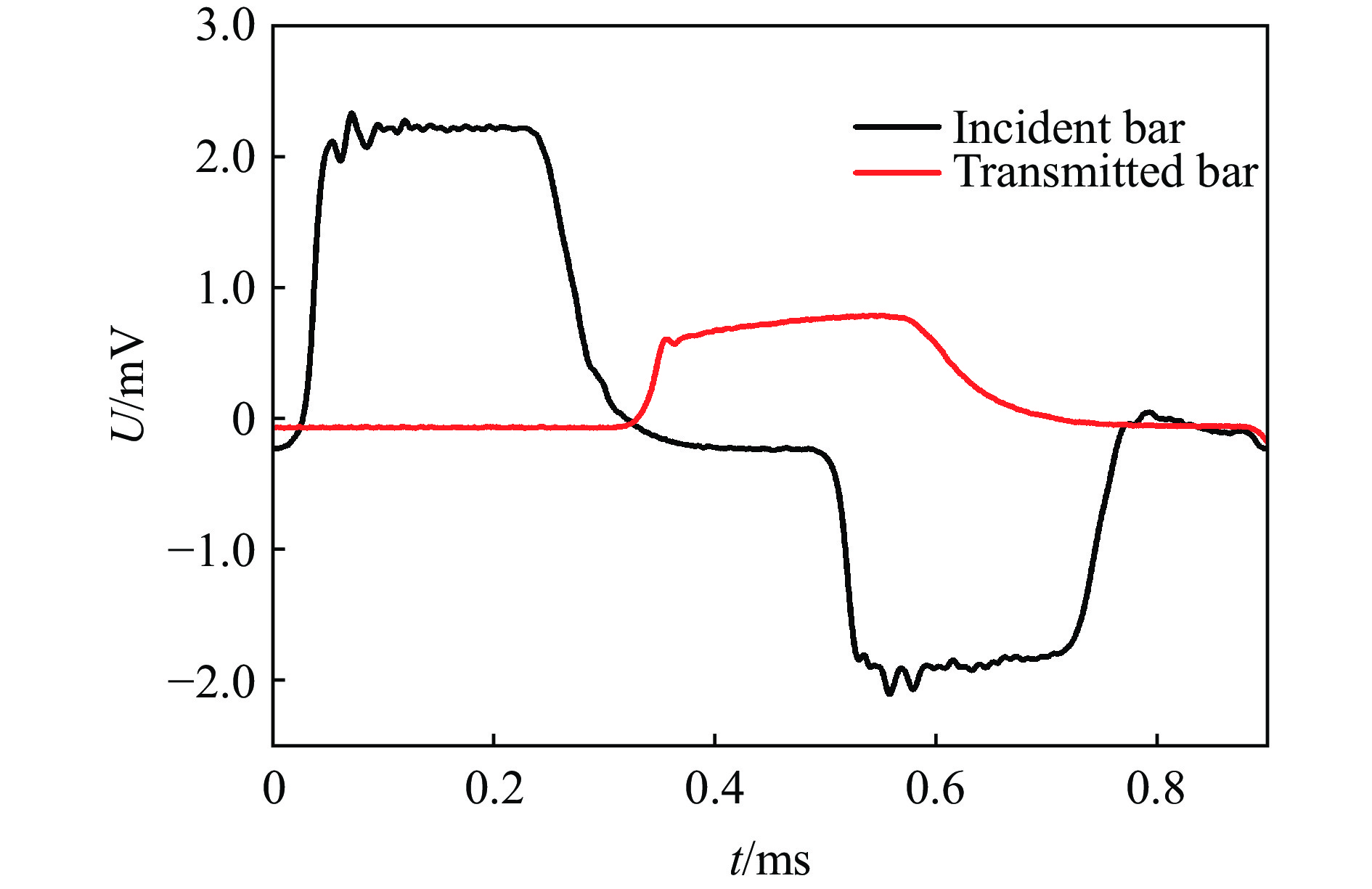
图 8 缺口拉伸试验原始波形(25 ℃、
1500 s−1、0.3333 应力三轴度)Figure 8. Typical raw waveform of notched tensile test (25 ℃、
1500 s−1、stress triaxiality of0.3333 )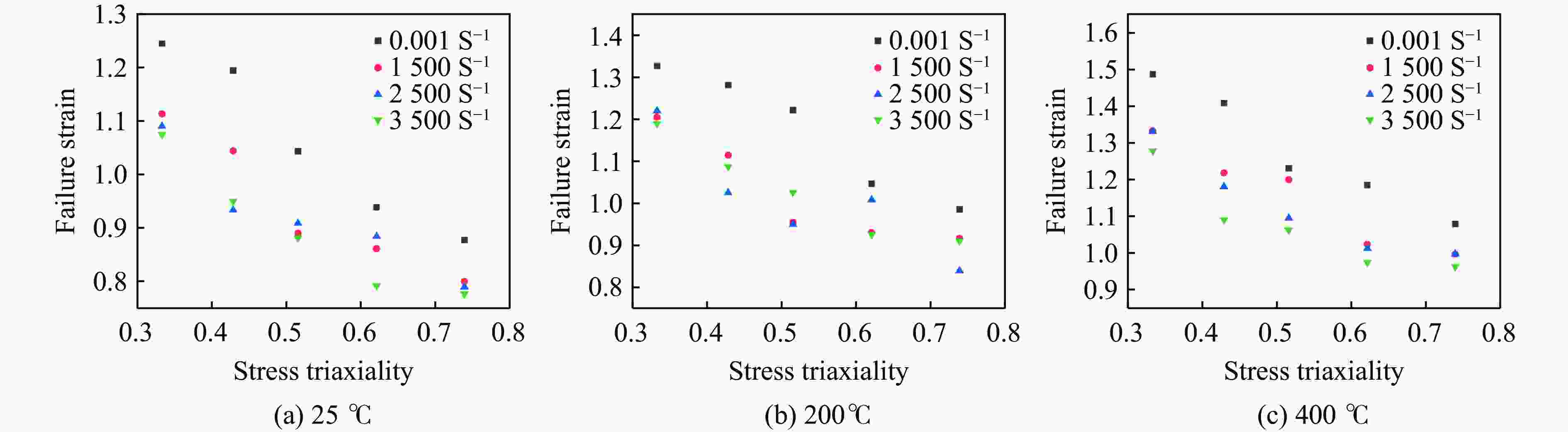
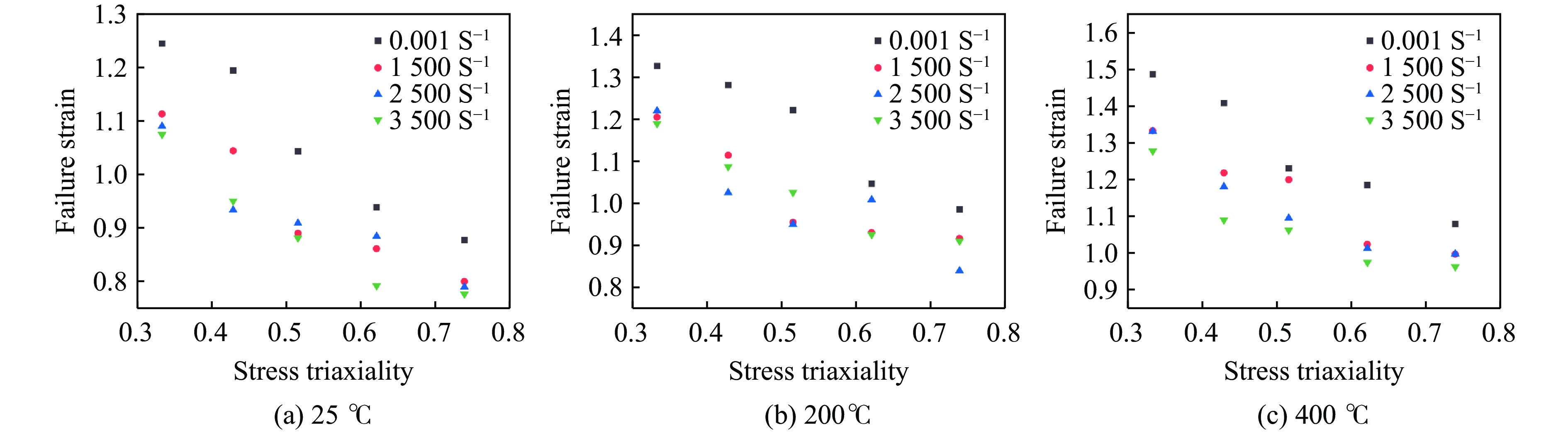
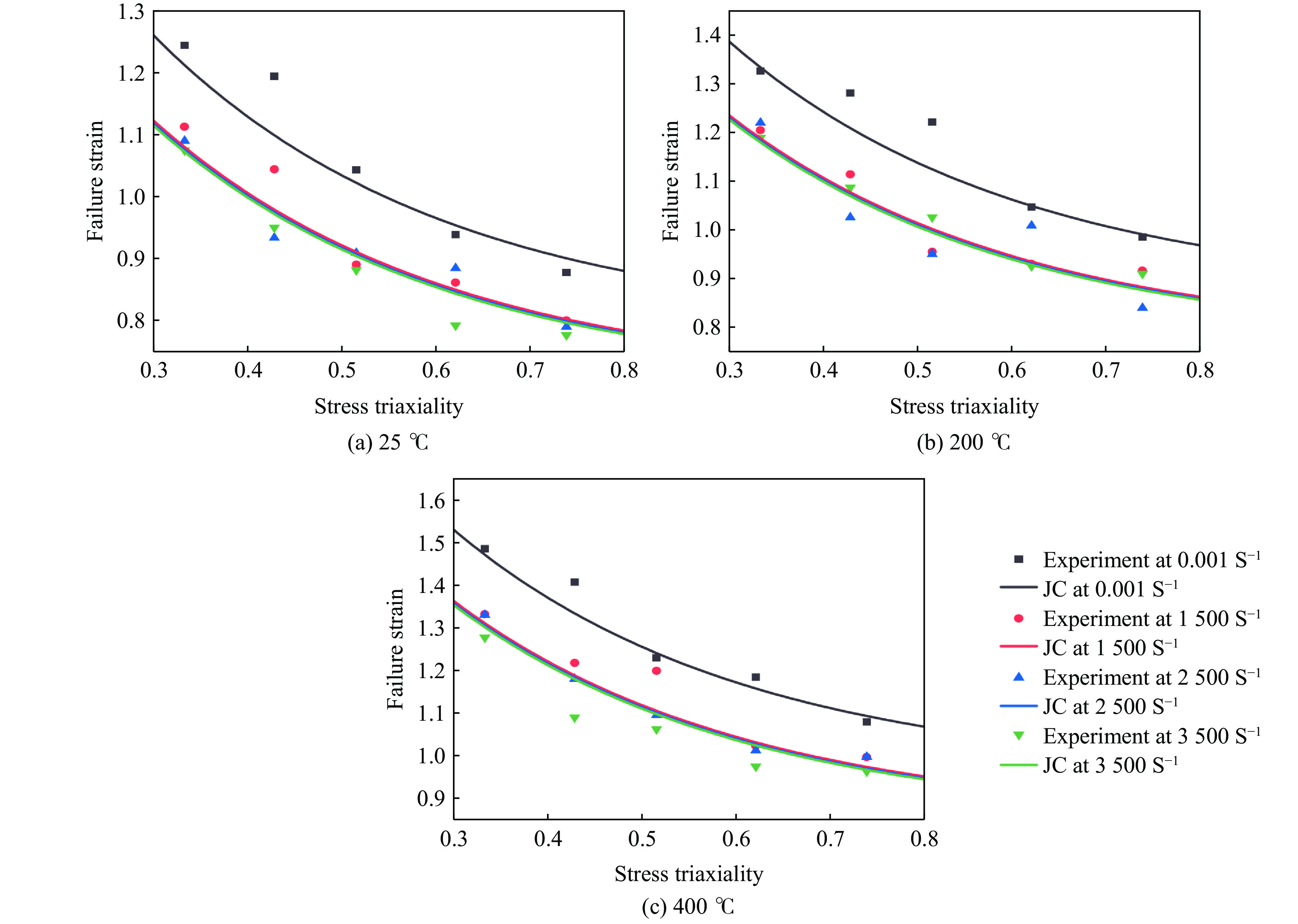
图 14 不同应变率的失效应变-应力三轴度关系
Figure 14. Failure strain versus stress triaxiality at different strain rates
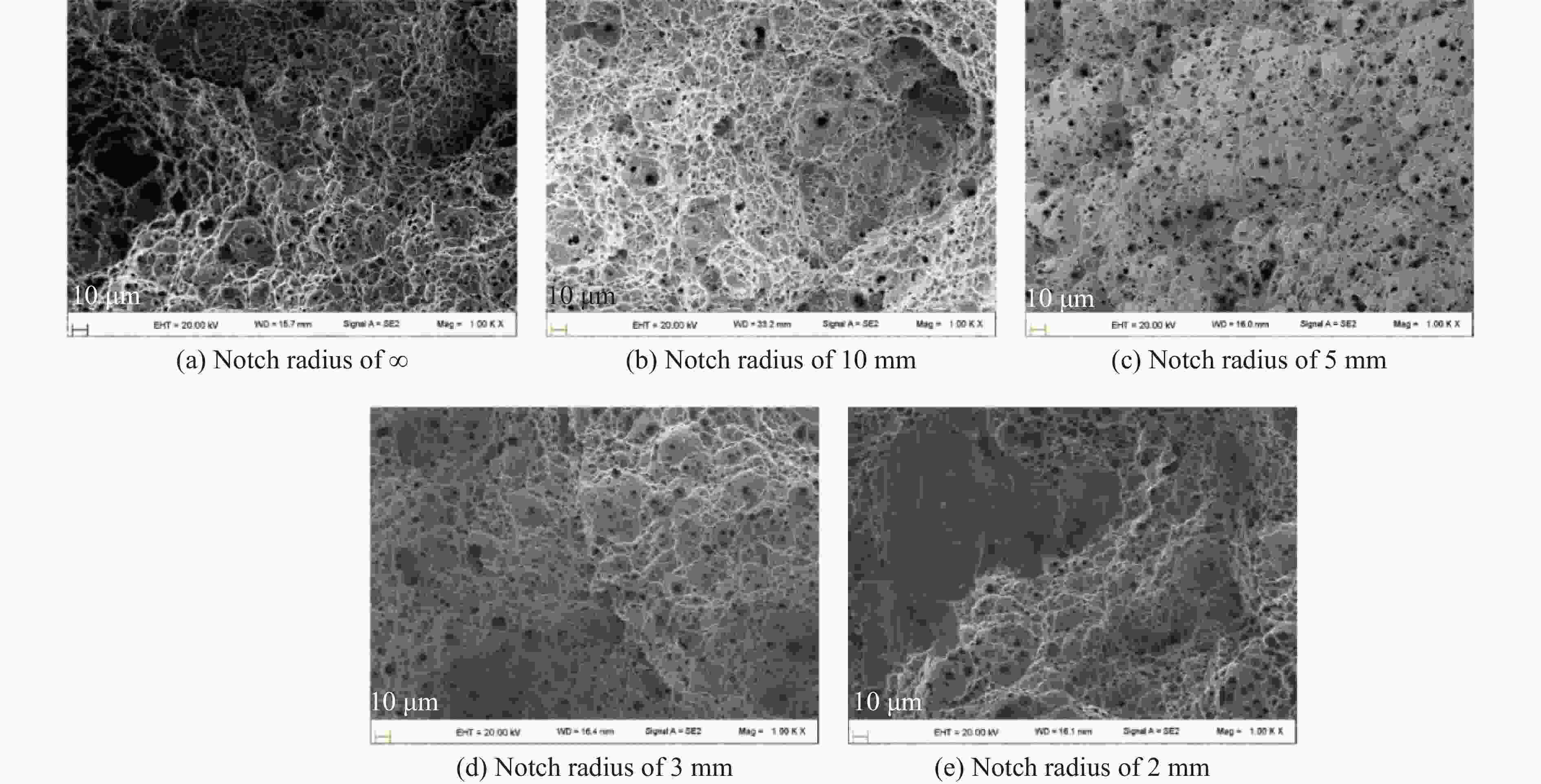
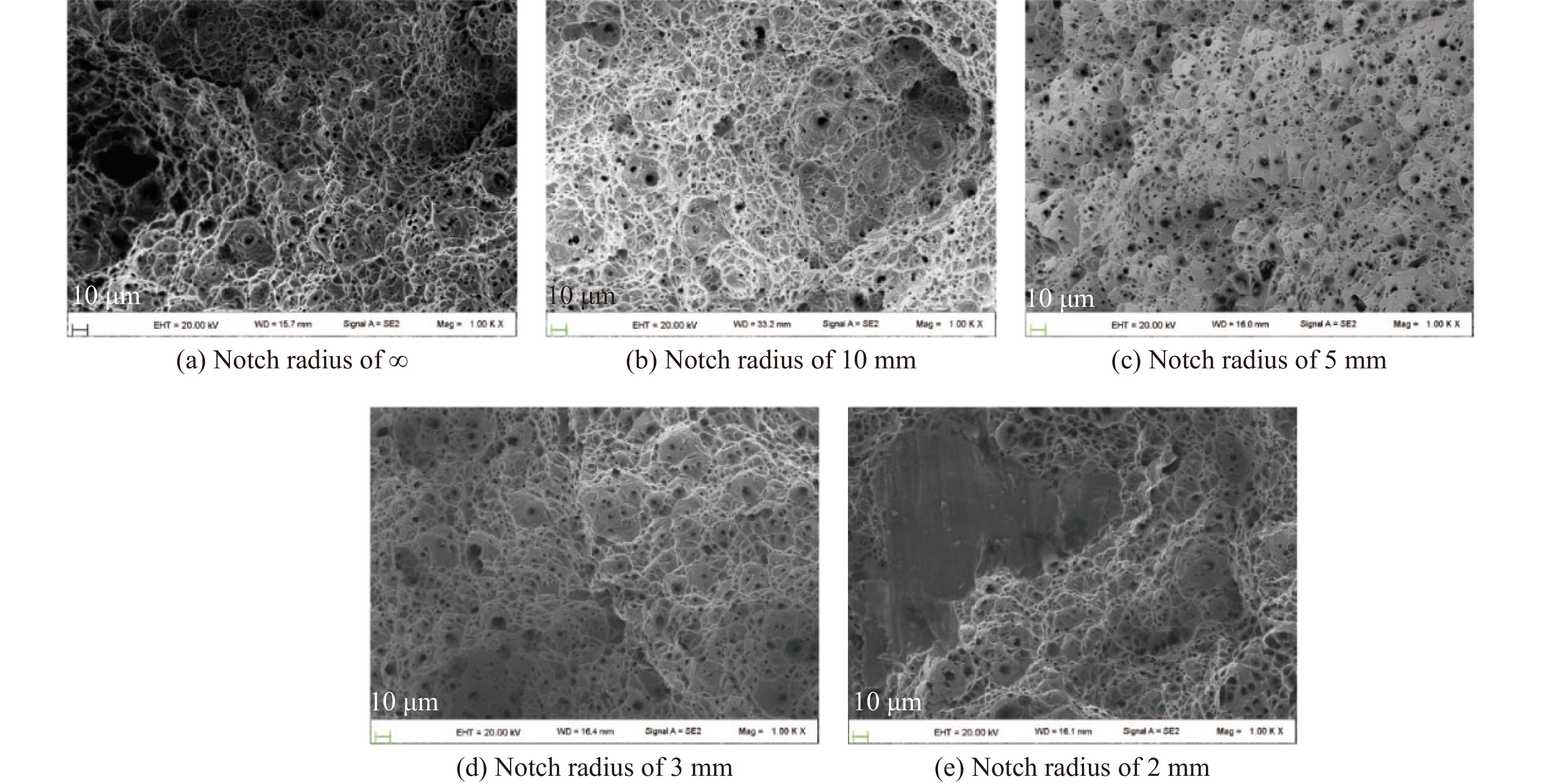
图 15 温度400℃应变率
3500 s−1下不同缺口半径的断口形貌SEM图Figure 15. SEM images of fracture morphology of notched specimens with different notch radii at 400 ℃ and a strain rate of
3500 s−1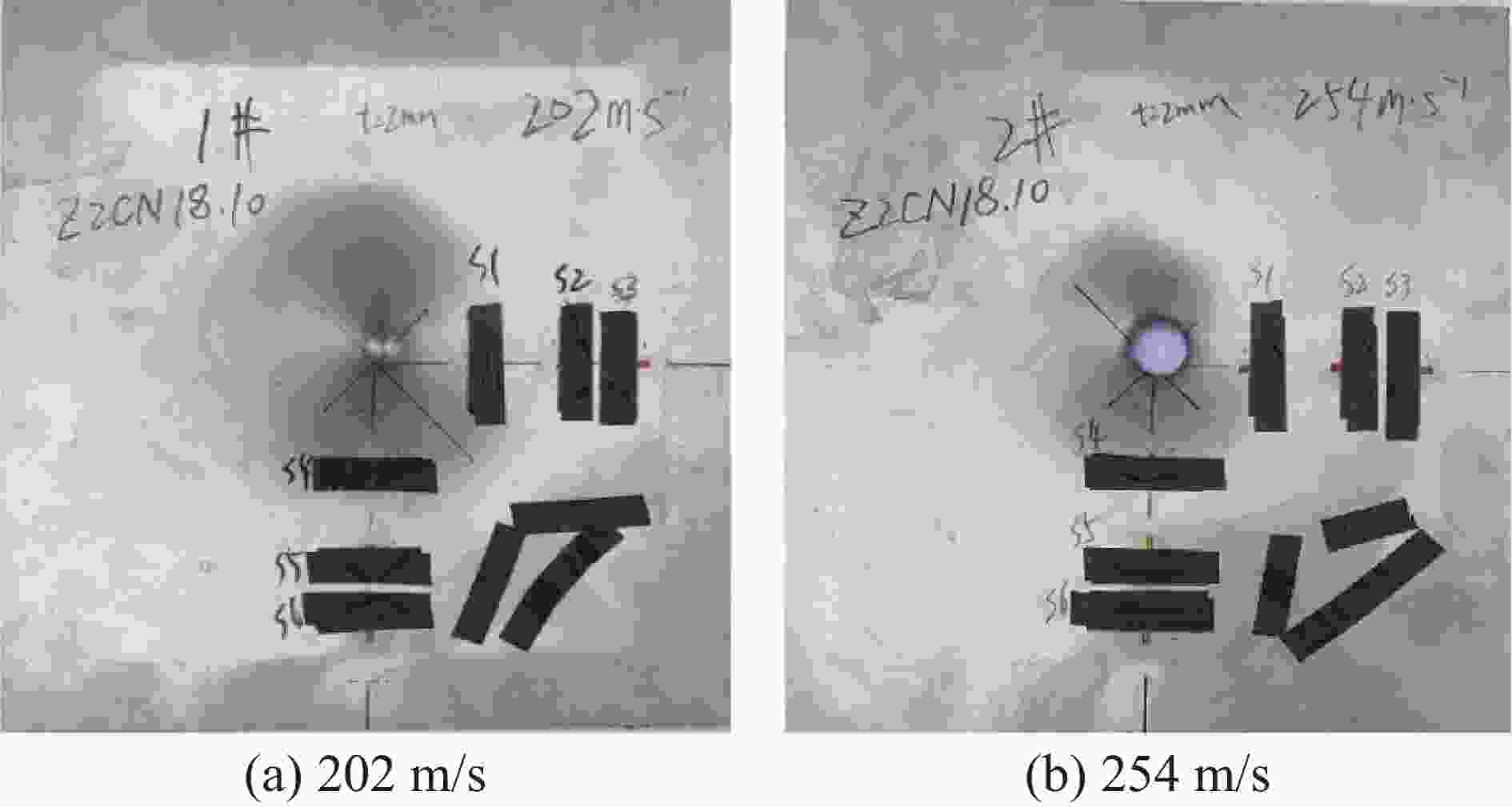
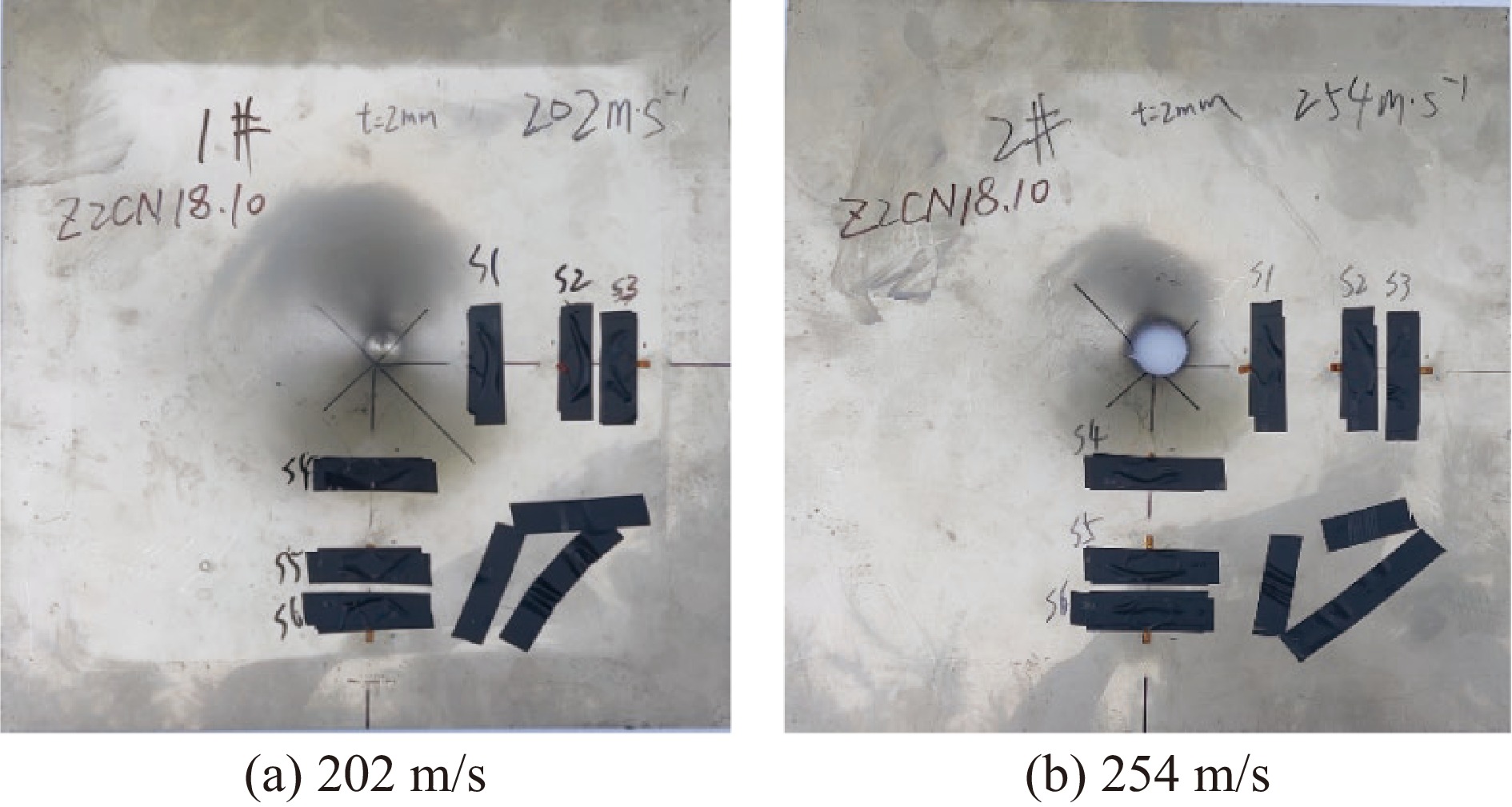
图 18 不同弹体速度下靶板的变形及损伤
Figure 18. Deformation and damage patterns of target plate impacted by projectiles at different velocities
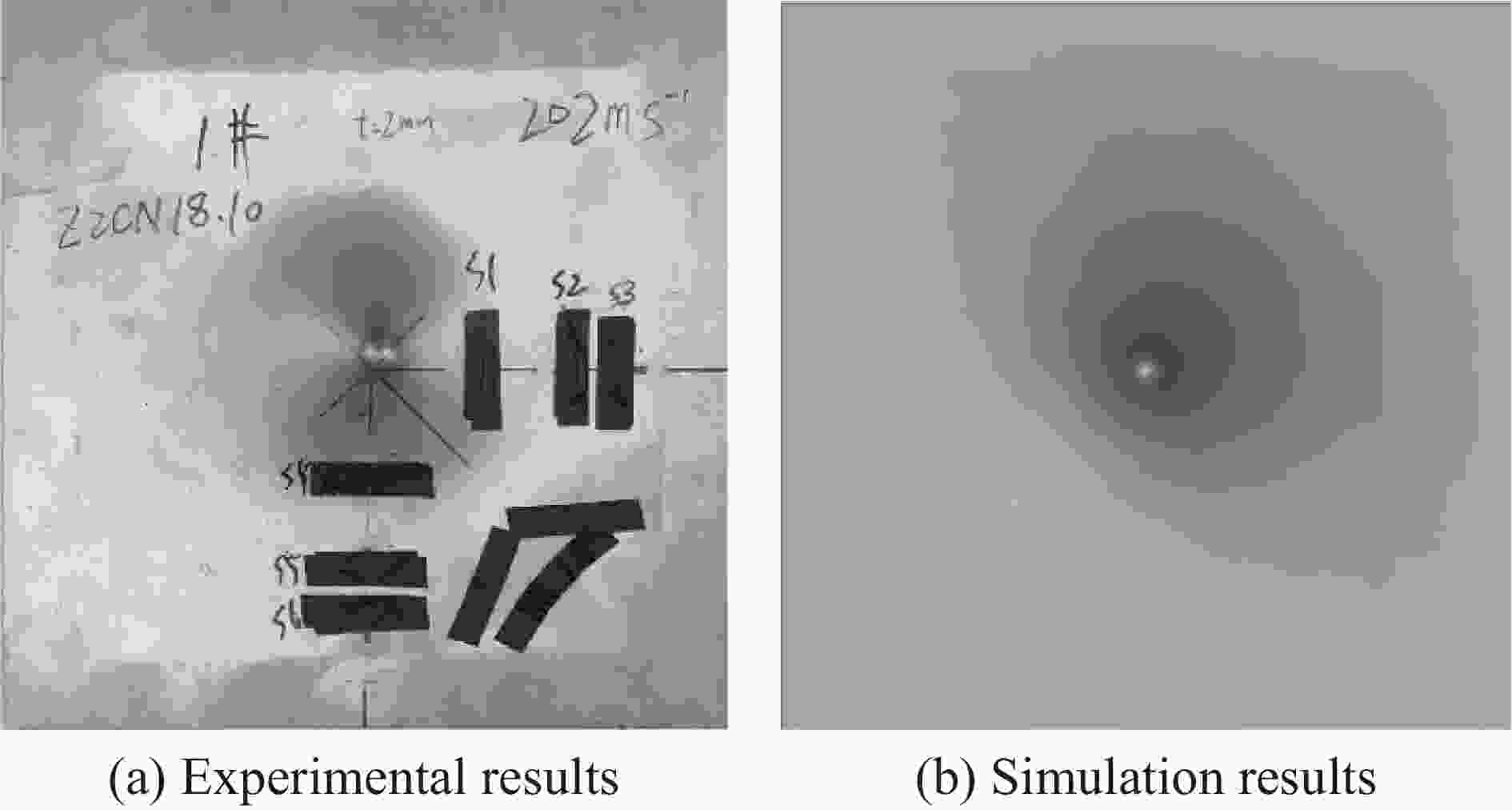
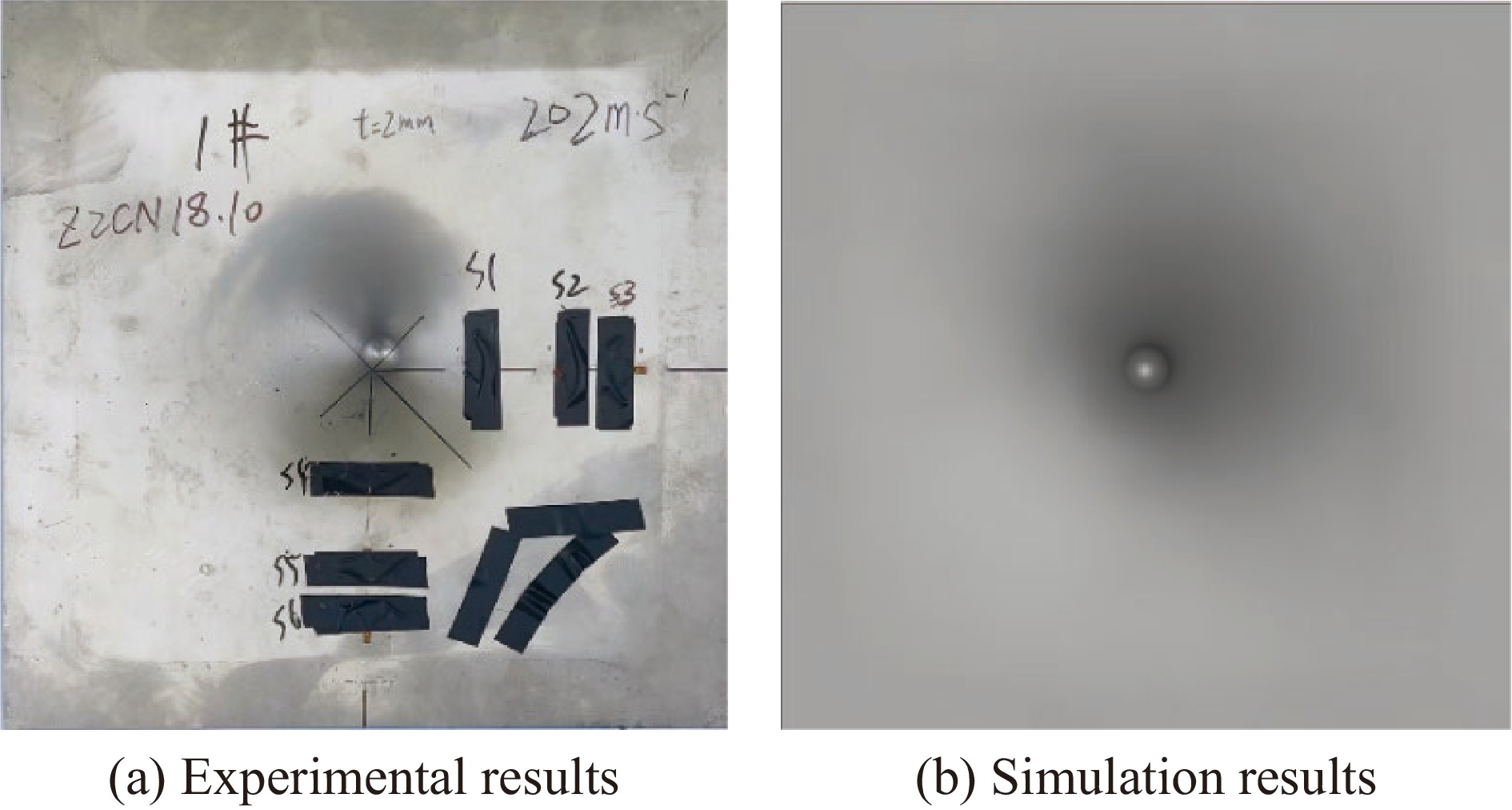
图 20 202 m/s弹体速度下靶板变形及损伤结果
Figure 20. Deformation and damage results of the target plate at a projectile velocity of 202 m/s
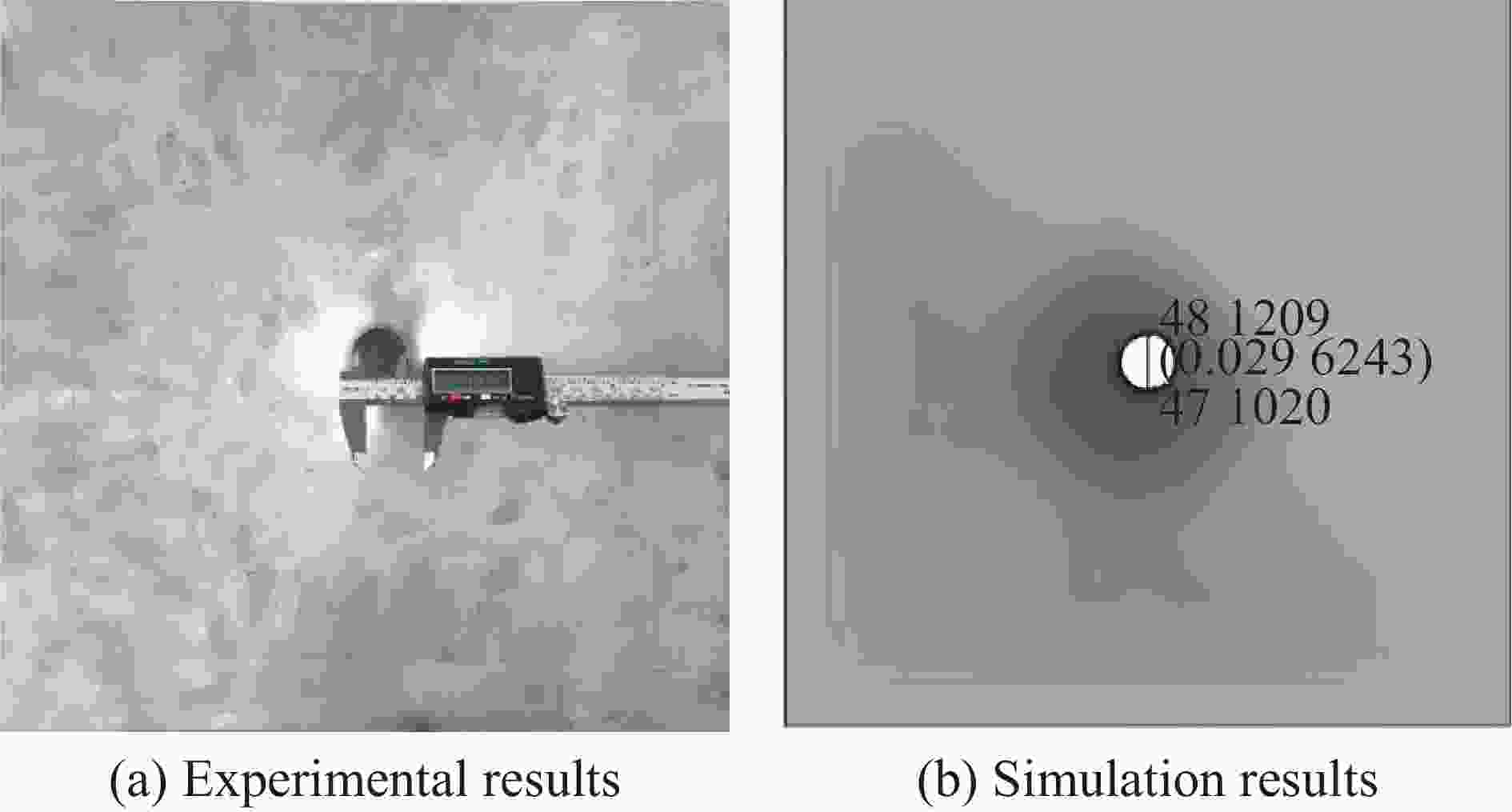
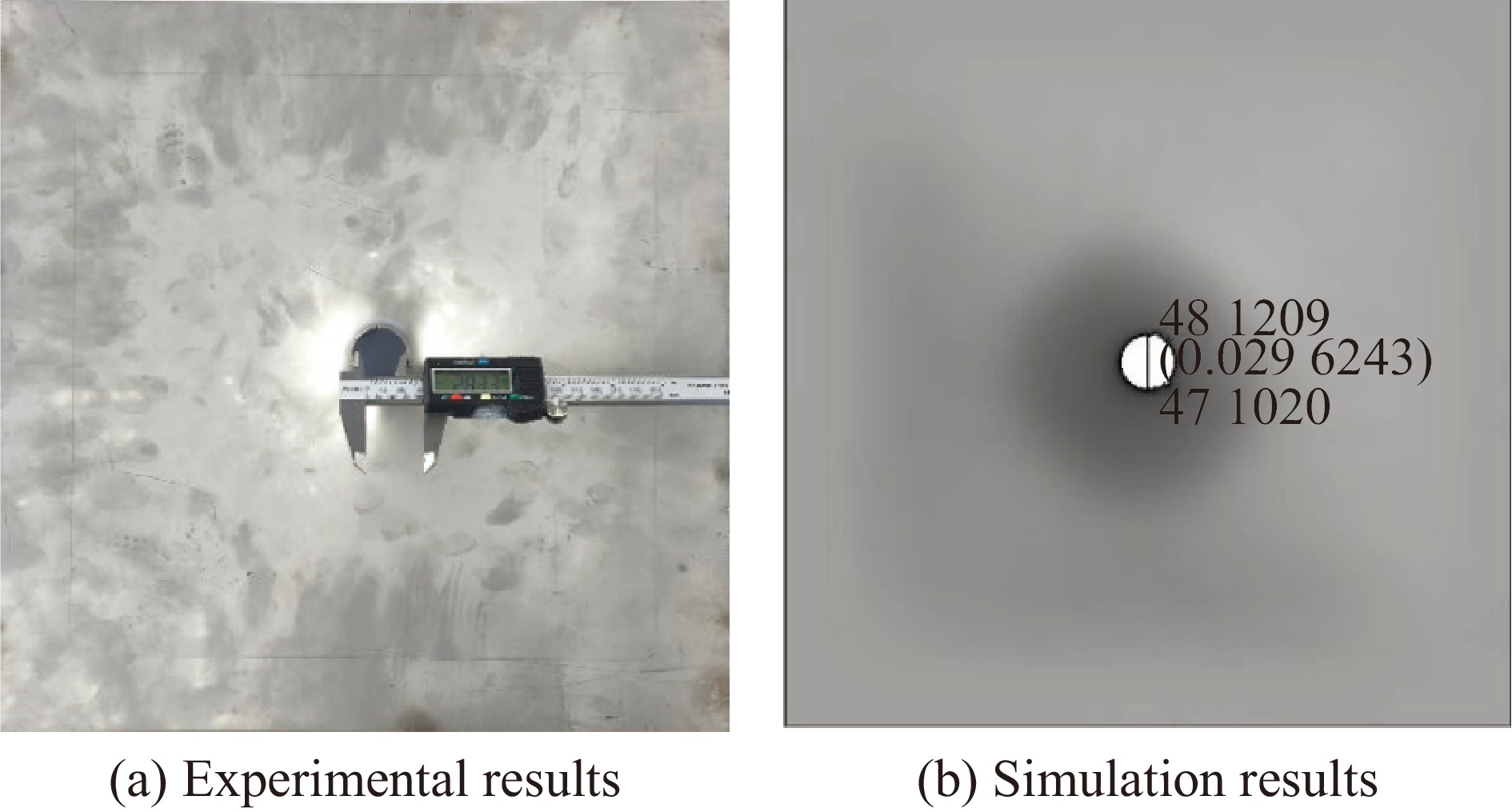
图 21 254 m/s弹体速度下靶板变形及损伤结果
Figure 21. Deformation and damage results of the target plate at a projectile velocity of 254 m/s
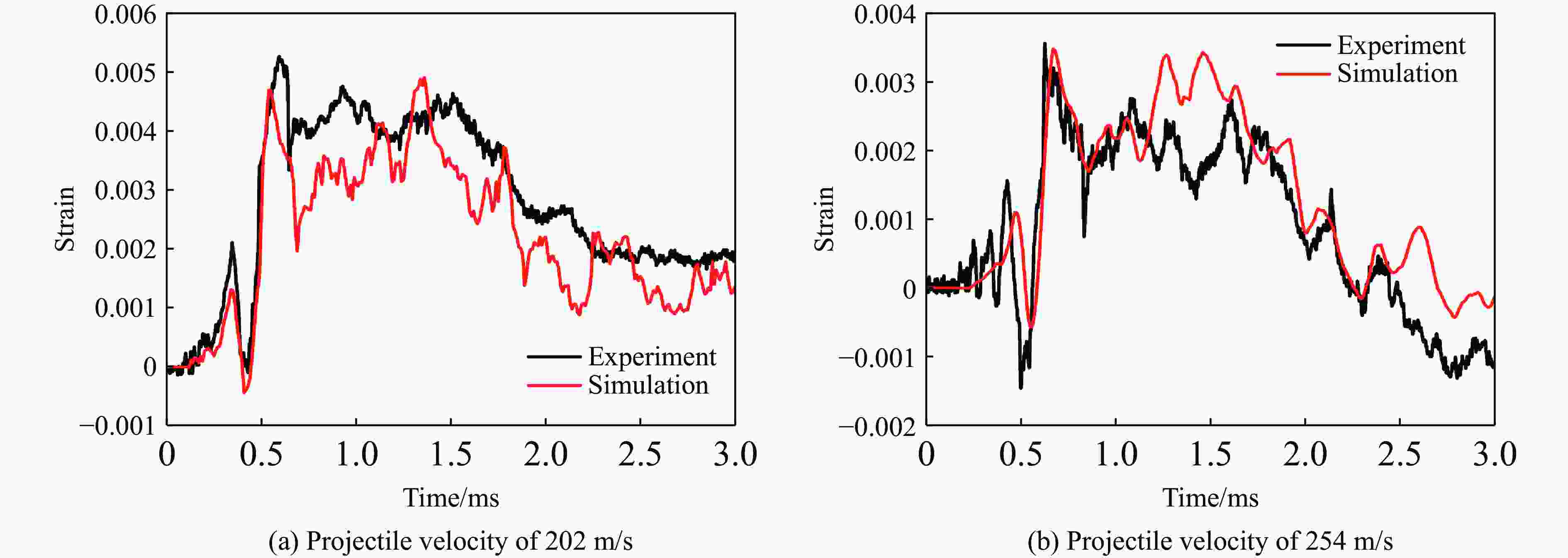
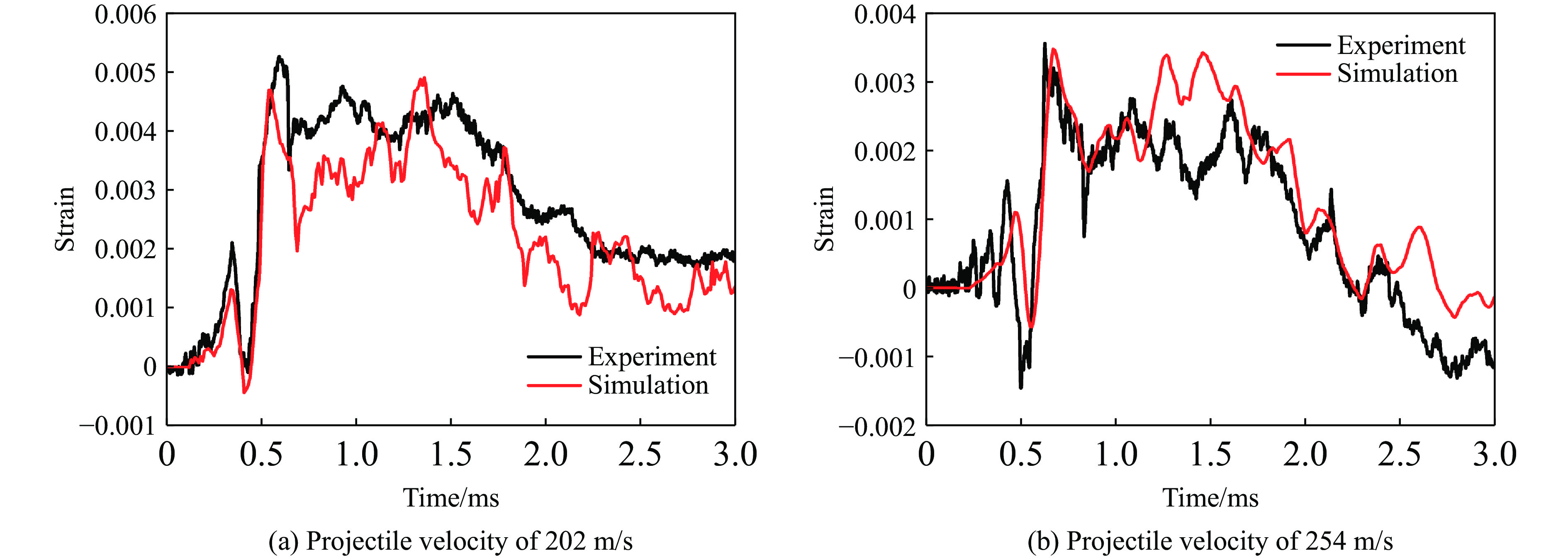
图 22 高速冲击不同弹体速度下试验与仿真应变时程对比
Figure 22. Comparison of experimental and simulated strain histories at different projectile velocities
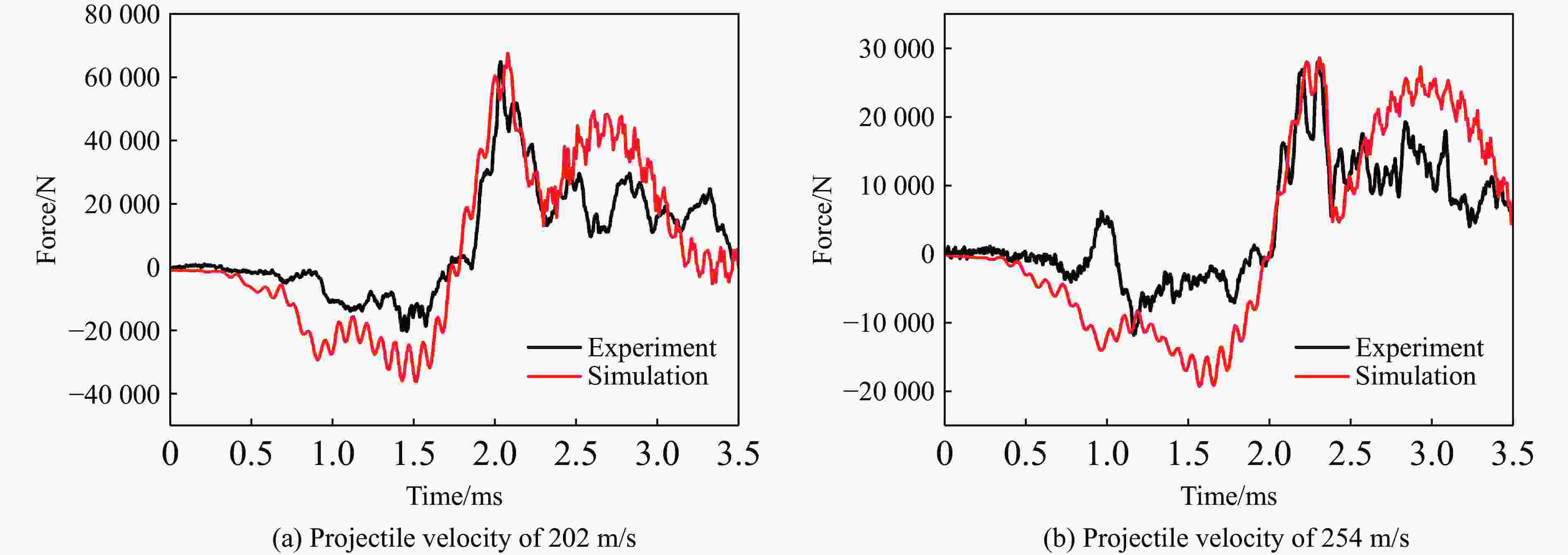
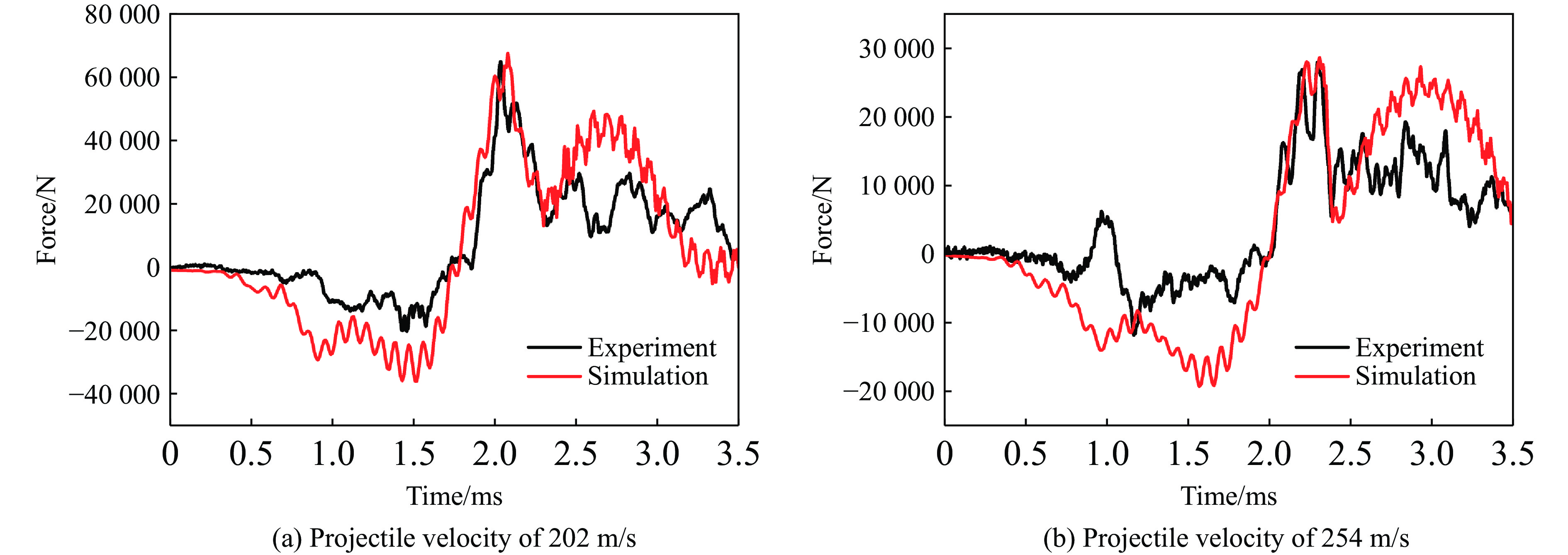
图 23 高速冲击不同弹体速度下试验与仿真支撑载荷时程对比
Figure 23. Comparison of experimental and simulated support load histories at different projectile velocities
表 1 准静态拉伸和动态拉伸试验工况
Table 1. Test cases for quasi-static and dynamic tensile tests
序号 温度/℃ 试验内容 应变率/s−1 试验设备 1 25 准静态拉伸 10−3 电子万能试验机 2 准静态拉伸 10−2 电子万能试验机 3 动态拉伸 500 撞击式Hopkinson拉杆 4 动态拉伸 1000 撞击式Hopkinson拉杆 5 动态拉伸 2000 撞击式Hopkinson拉杆 6 动态拉伸 3000 撞击式Hopkinson拉杆 7 200 准静态拉伸 10−3 电子万能试验机 8 准静态拉伸 10−2 电子万能试验机 9 动态拉伸 500 撞击式Hopkinson拉杆 10 动态拉伸 1000 撞击式Hopkinson拉杆 11 动态拉伸 2000 撞击式Hopkinson拉杆 12 动态拉伸 3000 撞击式Hopkinson拉杆 13 400 准静态拉伸 10−3 电子万能试验机 14 准静态拉伸 10−2 电子万能试验机 15 动态拉伸 500 撞击式Hopkinson拉杆 16 动态拉伸 1000 撞击式Hopkinson拉杆 17 动态拉伸 2000 撞击式Hopkinson拉杆 18 动态拉伸 3000 撞击式Hopkinson拉杆  下载: 导出CSV
表 2 缺口试验工况
Table 2. Test cases for notch tests
序号 温度/℃ 试验内容 应变率/s−1 试验设备 1 25 准静态拉伸 10−3 电子万能试验机 2 动态拉伸 1500 电磁Hopkinson杆 3 动态拉伸 2500 电磁Hopkinson杆 4 动态拉伸 3500 电磁Hopkinson杆 5 200 准静态拉伸 10−3 电子万能试验机 6 动态拉伸 1500 电磁Hopkinson杆 7 动态拉伸 2500 电磁Hopkinson杆 8 动态拉伸 3500 电磁Hopkinson杆 9 400 准静态拉伸 10−3 电子万能试验机 10 动态拉伸 1500 电磁Hopkinson杆 11 动态拉伸 2500 电磁Hopkinson杆 12 动态拉伸 3500 电磁Hopkinson杆
下载: 导出CSV
表 3 高速冲击试验工况
Table 3. Test cases for high-speed impact tests
工况 弹体直径/mm 弹体形状 弹体速度/(m·s−1) 弹体材料 靶板规格 靶板厚度/mm 靶板材料 1 30 球形 202 轴承钢 400 mm×400 mm 2 Z2CN18.10 2 30 球形 254 轴承钢 400 mm×400 mm 2 Z2CN18.10
下载: 导出CSV
表 4 J-C本构模型参数值
Table 4. J-C constitutive model parameters
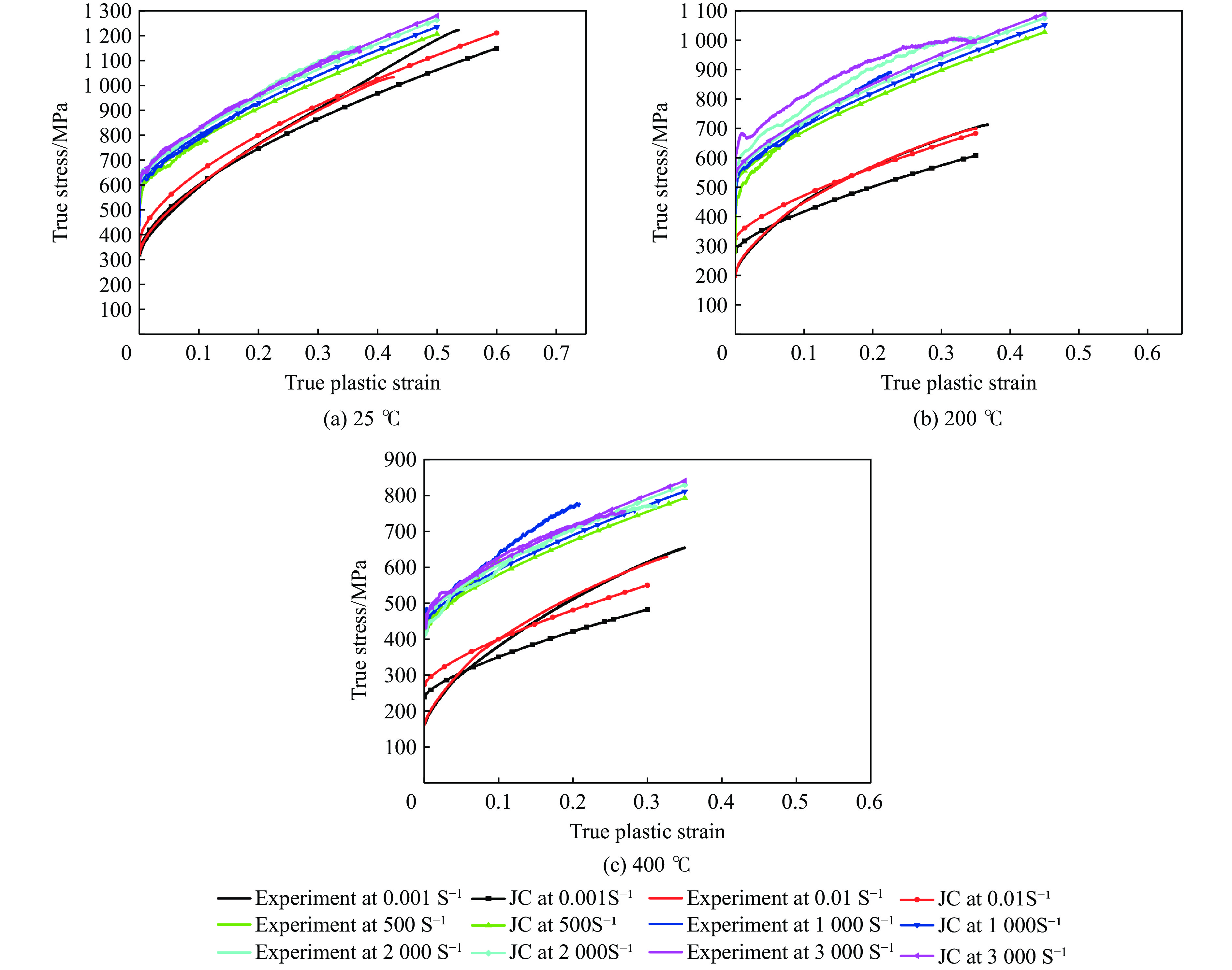
材料 A/MPa B/Mpa n C m Z2CN18.10 321.7 569.619 0.709 0.061 1.04
下载: 导出CSV
表 5 Z2CN18.10材料不同工况拟合相关系数R2
Table 5. Fitted Correlation Coefficients (R2) of Z2CN18.10 Material Under Different Conditions
应变率/s−1 R2 25 ℃ 200 ℃ 400 ℃ 0.001 0.925 0.762 0.548 0.01 0.902 0.916 0.859 500 0.909 0.841 0.905 1000 0.954 0.95 0.686 2000 0.983 0.864 0.995 3000 0.992 0.669 0.988
下载: 导出CSV
表 6 Johnson-Cook失效准则参数值
Table 6. Johnson-Cook failure criterion parameters
材料 D1 D2 D3 D4 D5 Z2CN18.10 0.786 1.255 −3.237 −0.008 0.788
下载: 导出CSV
-
[1] 国家核安全局. 核动力厂设计安全规定: HAF102-2016 [S]. 北京: 国家核安全局, 2016. [2] 卢喜丰, 王新军, 熊夫睿, 等. 核级管道强动态载荷传递特性研究 [J]. 核动力工程, 2023, 44(S2): 98–103. DOI: 10.13832/j.jnpe.2023.S2.0098.LU X F, WANG X J, XIONG F R, et al. Research on strong dynamic load transfer characteristics of nuclear pipe [J]. Nuclear Power Engineering, 2023, 44(S2): 98–103. DOI: 10.13832/j.jnpe.2023.S2.0098. [3] TENG X, WIERZBICKI T. Evaluation of six fracture models in high velocity perforation [J]. Engineering Fracture Mechanics, 2006, 73(12): 1653–1678. DOI: 10.1016/j.engfracmech.2006.01.009. [4] MIRONE G, CORALLO D. A local viewpoint for evaluating the influence of stress triaxiality and Lode angle on ductile failure and hardening [J]. International Journal of Plasticity, 2010, 26(3): 348–371. DOI: 10.1016/j.ijplas.2009.07.006. [5] JOHNSON G R, COOK W H. A constitutive model and data for metals subjected to large strains, high strain rates, and high temperatures [C]//Proceedings 7th International Symposium on Ballistics. Hague, 1983: 541–547. [6] 张伟, 肖新科, 魏刚. 7A04铝合金的本构关系和失效模型 [J]. 爆炸与冲击, 2011, 31(1): 81–87. DOI: 10.11883/1001-1455(2011)01-0081-07.ZHANG W, XIAO X K, WEI G. Constitutive relation and fracture model of 7A04 aluminum alloy [J]. Explosion and Shock Waves, 2011, 31(1): 81–87. DOI: 10.11883/1001-1455(2011)01-0081-07. [7] CHENG W Y, OUTEIRO J, COSTES J P, et al. A constitutive model for Ti6Al4V considering the state of stress and strain rate effects [J]. Mechanics of Materials, 2019, 137: 103103. DOI: 10.1016/j.mechmat.2019.103103. [8] 胡凌, 郑航, 冯琦杰, 等. 长期中子辐照Al-Mg-Si合金的压缩力学行为 [J]. 爆炸与冲击, 2019, 39(12): 123101. DOI: 10.11883/bzycj-2018-0483.HU L, ZHENG H, FENG Q J, et al. Mechanical behavior of long-term neutron-irradiated Al-Mg-Si alloy under compression [J]. Explosion and Shock Waves, 2019, 39(12): 123101. DOI: 10.11883/bzycj-2018-0483. [9] 高宁, 徐刚, 张亮, 等. 核电站常用管道材料J-C本构模型参数识别及验证 [J]. 压力容器, 2024, 41(6): 8–15. DOI: 10.3969/j.issn.1001-4837.2024.06.002.GAO N, XU G, ZHANG L, et al. Identification and verification of J-C constitutive model parameters for pipeline materials commonly used in nuclear power plants [J]. Pressure Vessel Technology, 2024, 41(6): 8–15. DOI: 10.3969/j.issn.1001-4837.2024.06.002. [10] 林莉, 黄博, 肖新科, 等. Q355B钢动态材料性能研究 [J]. 振动与冲击, 2020, 39(18): 231–237. DOI: 10.13465/j.cnki.jvs.2020.18.031.LIN L, HUANG B, XIAO X K, et al. Behavior of dynamic material Q355B steel based on the Johnson-Cook model [J]. Journal of Vibration and Shock, 2020, 39(18): 231–237. DOI: 10.13465/j.cnki.jvs.2020.18.031. [11] 陈春林, 马坤, 杨锦程, 等. Al基含能结构材料的Johnson-Cook本构模型及失效参数研究 [J]. 固体力学学报, 2023, 44(6): 782–794. DOI: 10.19636/j.cnki.cjsm42-1250/o3.2023.049.CHEN C L, MA K, YANG J C, et al. Johnson-Cook constitutive model and failure parameters of Al-based energetic structural material [J]. Chinese Journal of Solid Mechanics, 2023, 44(6): 782–794. DOI: 10.19636/j.cnki.cjsm42-1250/o3.2023.049. [12] ZOU S Z, GAO Y T, YANG Z R, et al. Development of the split-Hopkinson pressure bar and its application in testing the dynamic mechanical properties of quasi-brittle materials: a review [J]. Journal of Materials Research and Technology, 2024, 33: 9463–9483. DOI: 10.1016/j.jmrt.2024.11.244. [13] 胡时胜, 王礼立, 宋力, 等. Hopkinson压杆技术在中国的发展回顾 [J]. 爆炸与冲击, 2014, 34(6): 641–657. DOI: 10.11883/1001-1455(2014)06-0641-17.HU S S, WANG L L, SONG L, et al. Review of the development of Hopkinson pressure bar technique in China [J]. Explosion and Shock Waves, 2014, 34(6): 641–657. DOI: 10.11883/1001-1455(2014)06-0641-17. [14] WALLEY S M, PROUD W G, RAE P J, et al. Comparison of two methods of measuring the rapid temperature rises in split Hopkinson bar specimens [J]. Review of Scientific Instruments, 2000, 71(4): 1766–1771. DOI: 10.1063/1.1150534. [15] 舒畅, 程礼, 许煜. Johnson-Cook本构模型参数估计研究 [J]. 中国有色金属学报, 2020, 30(5): 1073–1083. DOI: 10.11817/j.ysxb.1004.0609.2020-35760.SHU C, CHENG L, XU Y. Research on parameter estimation of Johnson-Cook constitutive model [J]. The Chinese Journal of Nonferrous Metals, 2020, 30(5): 1073–1083. DOI: 10.11817/j.ysxb.1004.0609.2020-35760. [16] NIE H L, SUO T, WU B B, et al. A versatile split Hopkinson pressure bar using electromagnetic loading [J]. International Journal of Impact Engineering, 2018, 116: 94–104. DOI: 10.1016/j.ijimpeng.2018.02.002. [17] 王维斌, 索涛, 郭亚洲, 等. 电磁霍普金森杆实验技术及研究进展 [J]. 力学进展, 2021, 51(4): 729–754. DOI: 10.6052/1000-0992-20-024.WANG W B, SUO T, GUO Y Z, et al. Experimental technique and research progress of electromagnetic Hopkinson bar [J]. Advances in Mechanics, 2021, 51(4): 729–754. DOI: 10.6052/1000-0992-20-024. [18] 王禹晨, 刘晓艳, 黄懿赟, 等. 霍普金森杆电磁加载系统设计及实验 [J]. 强激光与粒子束, 2022, 34(7): 075009. DOI: 10.11884/HPLPB202234.210486.WANG Y C, LIU X Y, HUANG Y Y, et al. Design and experiment of Hopkinson bar electromagnetic loading system [J]. High Power Laser and Particle Beams, 2022, 34(7): 075009. DOI: 10.11884/HPLPB202234.210486. [19] 王晓荷, 曹增强, 郭映江, 等. 基于电磁加载的冲击测试方法及应用 [J]. 航空制造技术, 2024, 67(7): 112–124. DOI: 10.16080/j.issn1671-833x.2024.07.112.WANG X H, CAO Z Q, GUO Y J, et al. Investigation and application of impact testing technologies based on electromagnetic loading [J]. Aeronautical Manufacturing Technology, 2024, 67(7): 112–124. DOI: 10.16080/j.issn1671-833x.2024.07.112. [20] 聂海亮. 电磁式Hopkinson杆技术及应用研究 [D]. 西安: 西北工业大学, 2018: 57–60. -

计量
- 文章访问数: 345
- HTML全文浏览量: 145
- PDF下载量: 400
- 被引次数: 0