



Coupling mechanism between jet and ground effect for a triangular three-nozzle rocket-sled and its layout effects
-
摘要: 为研究多发动机并联火箭橇的复杂尾流场特性,重点分析了喷管水平中心距和冲击高度对流动结构和地面效应的作用机制。通过对比大间距(l=7d)、小间距(l=1d)、低冲击高度(h=2d)及高冲击高度(h=5.5d)4种工况(l为喷管水平中心距,h为冲击高度,d为喷管出口直径,d=275 mm),系统揭示了不同构型下流场结构、压力分布与对地面的热冲刷行为。结果表明:小间距布局在无地效时会诱发强烈的射流干涉,导致压力恢复呈现“多波峰-慢恢复”特性,显著延缓了流场弛豫过程。地面效应与干涉的耦合作用由冲击高度主导:低冲击高度工况下,射流冲击地面诱发涡结构剧烈重组与破碎,形成速度高达960 m/s的壁面射流,地表温度峰值达
1286.6 K且持续高温,轨道烧蚀风险显著增大;而高冲击高度可有效抑制地效作用,流场结构更趋均匀稳定,地表温度峰值降低约65%,最大流速降低58%,烧蚀风险显著缓解。火箭橇起始段(0~8 m)为热-力载荷最恶劣区间,该阶段平均加速度高达832.7 m/s2且单位距离作用时间长为1.84 ms/m,与瞬态复杂流场耦合,构成了轨道烧蚀的极高风险。数值模拟结果与高速摄影试验结果在流场形态、冲击高度及涡核位置等方面高度吻合,验证了所建立“内弹道-外弹道-流场”耦合模型的可靠性。Abstract: To investigate the complex wake flow characteristics of multi-motor parallel rocket sleds, this study focuses on the mechanisms by which the nozzle horizontal spacing and the impingement height influence the flow structure and ground effect. A three-dimensional physical model was constructed for a dual-rail rocket sled system featuring three nozzles arranged in a triangular pyramid configuration. Four operating conditions were established, including large spacing (l = 7d), small spacing (l = 1d), low impingement height (h = 2d), and high impingement height (h=5.5d). The effects of nozzle center distance and impingement height on the flow field structure and ground effect were comparatively analyzed. Numerical simulations were performed using a computational fluid dynamics (CFD) method based on the Reynolds-Averaged Navier-Stokes equations, coupled with the Realizable k-ε turbulence model for transient solutions. The combustion chamber pressure-time curve derived from interior ballistic theory was applied to the nozzle inlet via a user-defined function (UDF). The sled velocity-time curve, determined from the exterior ballistic particle trajectory equation, was assigned as the far-field pressure boundary condition, enabling a coupled simulation framework of interior ballistics, exterior ballistics and flow field. The computational domain utilized a structured grid with refinement in the jet interaction region and near the ground to ensure calculation accuracy. The velocity and pressure fields obtained from numerical simulations were compared and validated against jet morphology, impingement height, and vortex core positions recorded by high-speed photography (2000 Hz). The flow field structure, pressure distribution, and thermal erosion behavior on the ground under different configurations are systematically revealed. The results indicate that the small-spacing nozzle arrangement triggers intense jet interference without ground effect participation, leading to a multi-peak and slow-recovery pressure evolution feature and substantially delays the flow field relaxation process. The coupling relationship between ground effect and jet interference is dominated by impingement height. At low impingement height conditions, the jet impinging on the ground induces intense reorganization and fragmentation of vortex structures, generating wall jets with velocities up to 960 m/s. Consequently, the peak ground surface temperatures reaches1286.6 K with sustained high temperatures, which significantly elevates the risk of rail ablation. Conversely, a high impingement height effectively suppresses the ground effect, resulting in a more homogeneous and stable flow field structure. In this case, the peak ground temperature reduced by approximately 65% and maximum velocity reduced by 58%, significantly mitigating ablation risk. The initial phase (0-8 m) of the rocket sled is identified as the critical region subjected to the most severe thermomechanical loads. During this stage, the average acceleration reaches 832.7 m/s2, and the specific action time per unit distance is prolonged to 1.84 ms/m. Coupled with the transient complex flow field, this constitutes an extremely high risk for rail ablation. The numerical simulation results show excellent agreement with high-speed photographic experimental data regarding flow field morphology, impingement height, and vortex core positions, thereby validating the reliability of the established coupled model. This study elucidates the complex flow mechanisms of multi-nozzle parallel systems under strongly constrained conditions, and provids important theoretical foundations and design parameters for structural layout optimization and thermal protection design in high-acceleration, heavy-load rocket sled test systems.-
Key words:
- rocket sled test /
- rocket motor /
- 3D simulation /
- nozzle flow field /
- ground effect of flow field
-
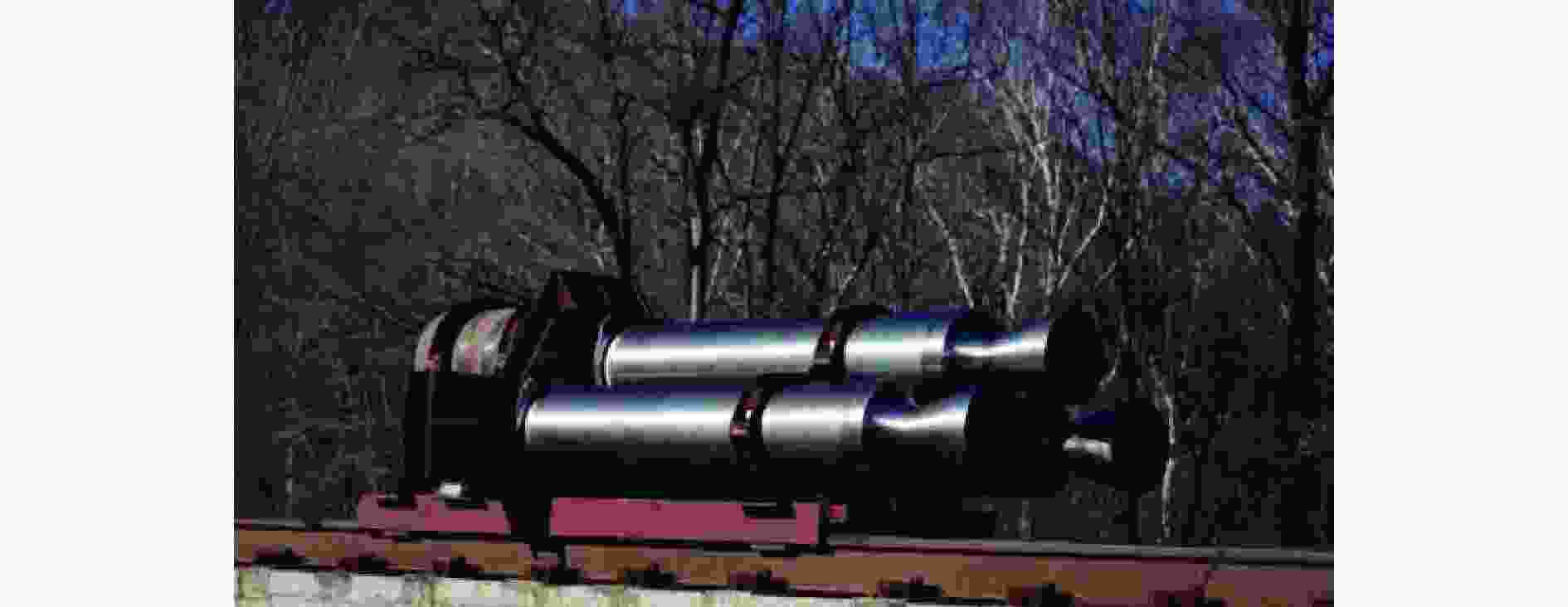
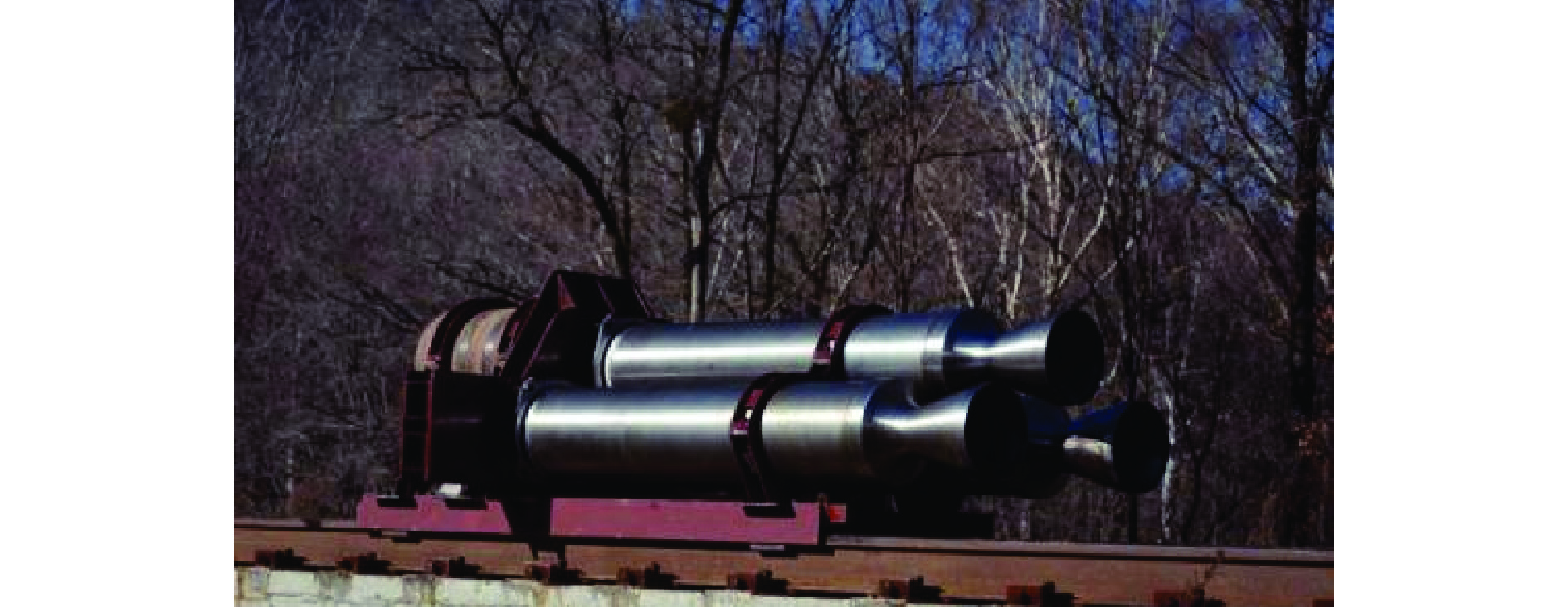
图 1 安装3台火箭发动机的火箭橇橇车结构图
Figure 1. Structure of the rocket sled car with three rocket motors
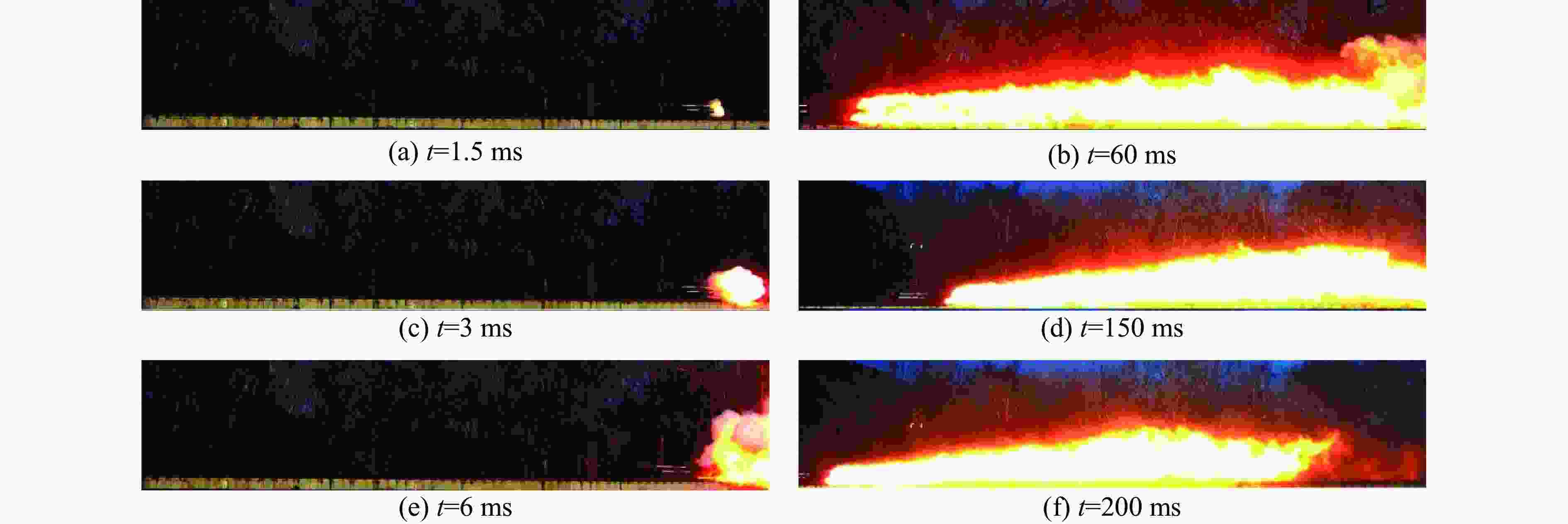
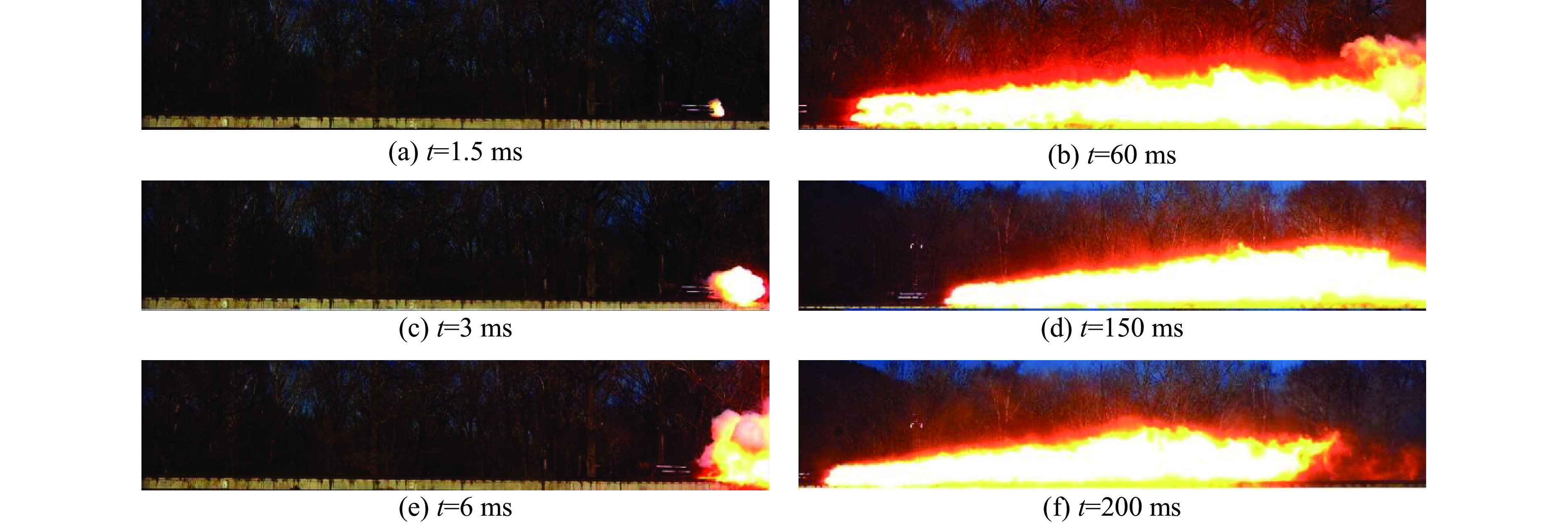
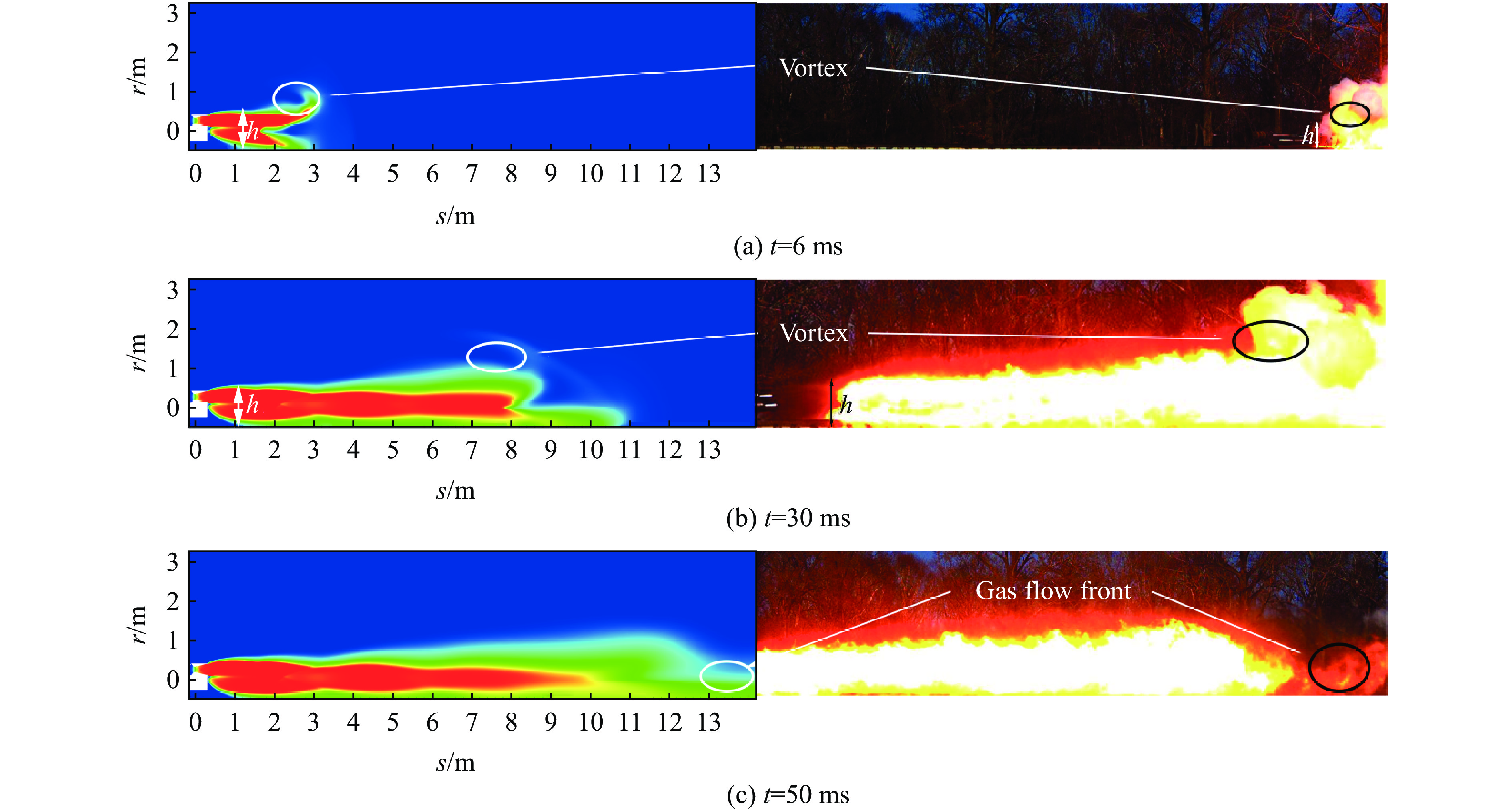
图 3 火箭橇试验不同时刻高速摄像记录的射流火焰演化
Figure 3. High-speed camera images of jet flame evolution at different moments
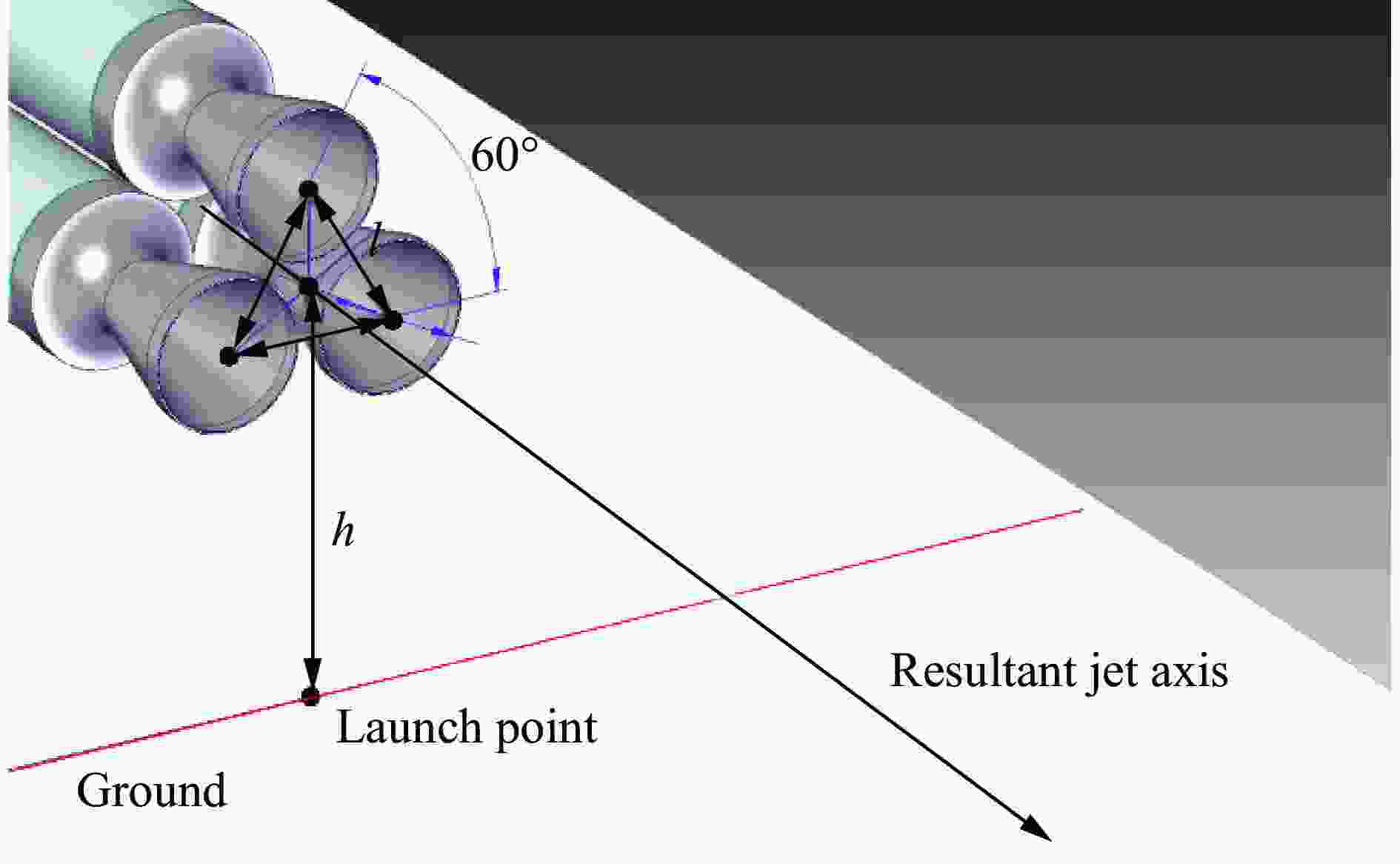
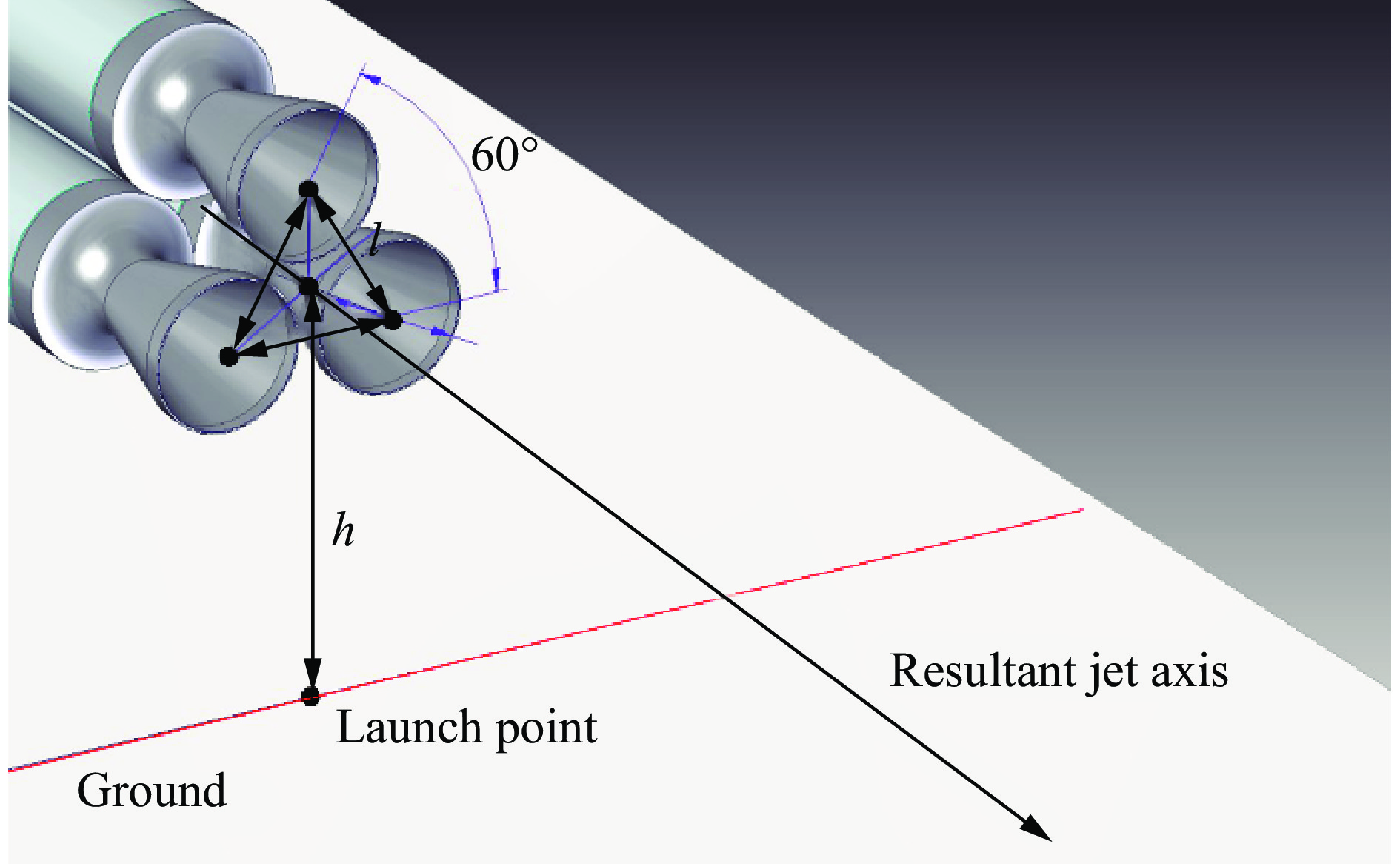
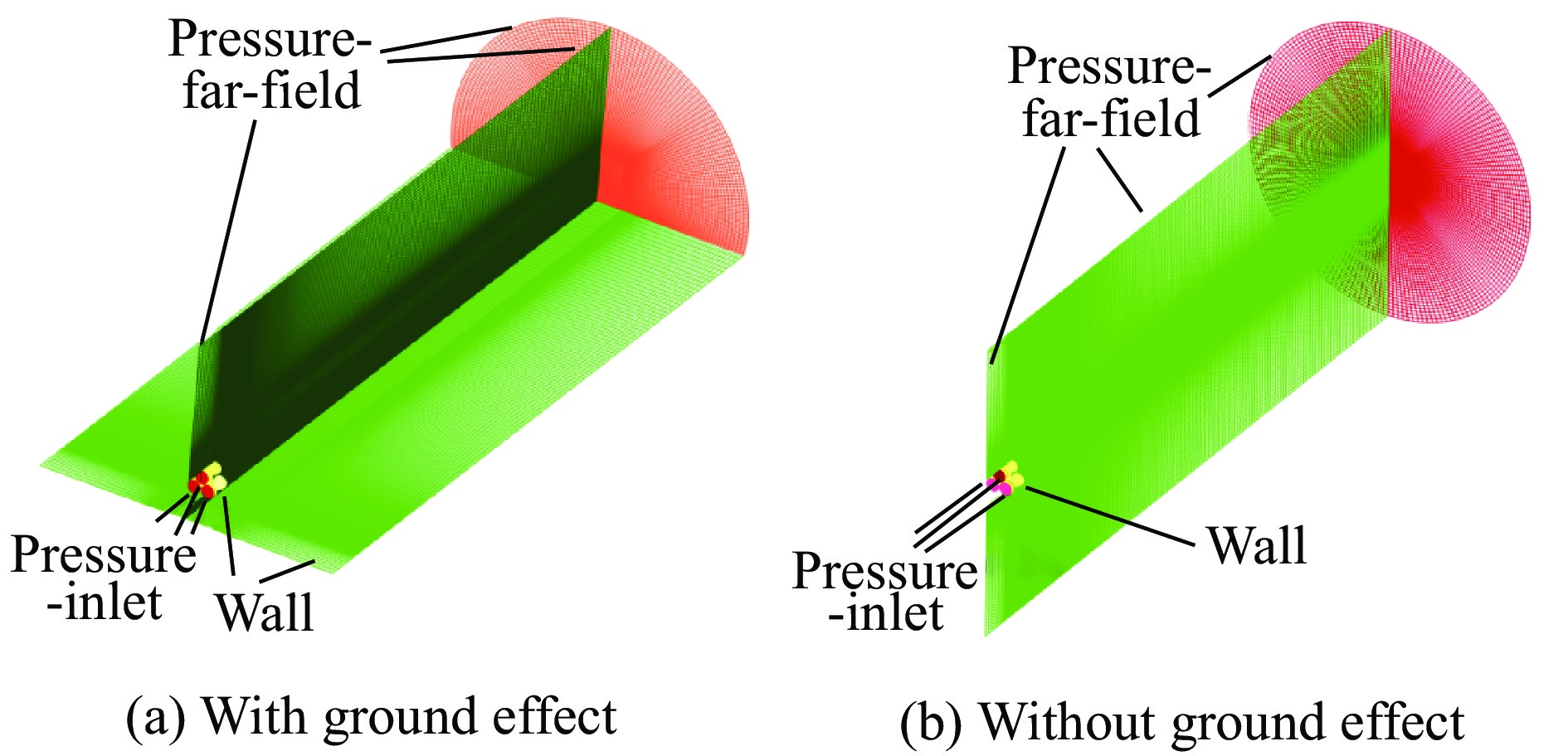
图 4 三喷管火箭橇动力系统物理模型示意图
Figure 4. Schematic diagram of the physical model of the three-nozzle rocket sled propulsion system
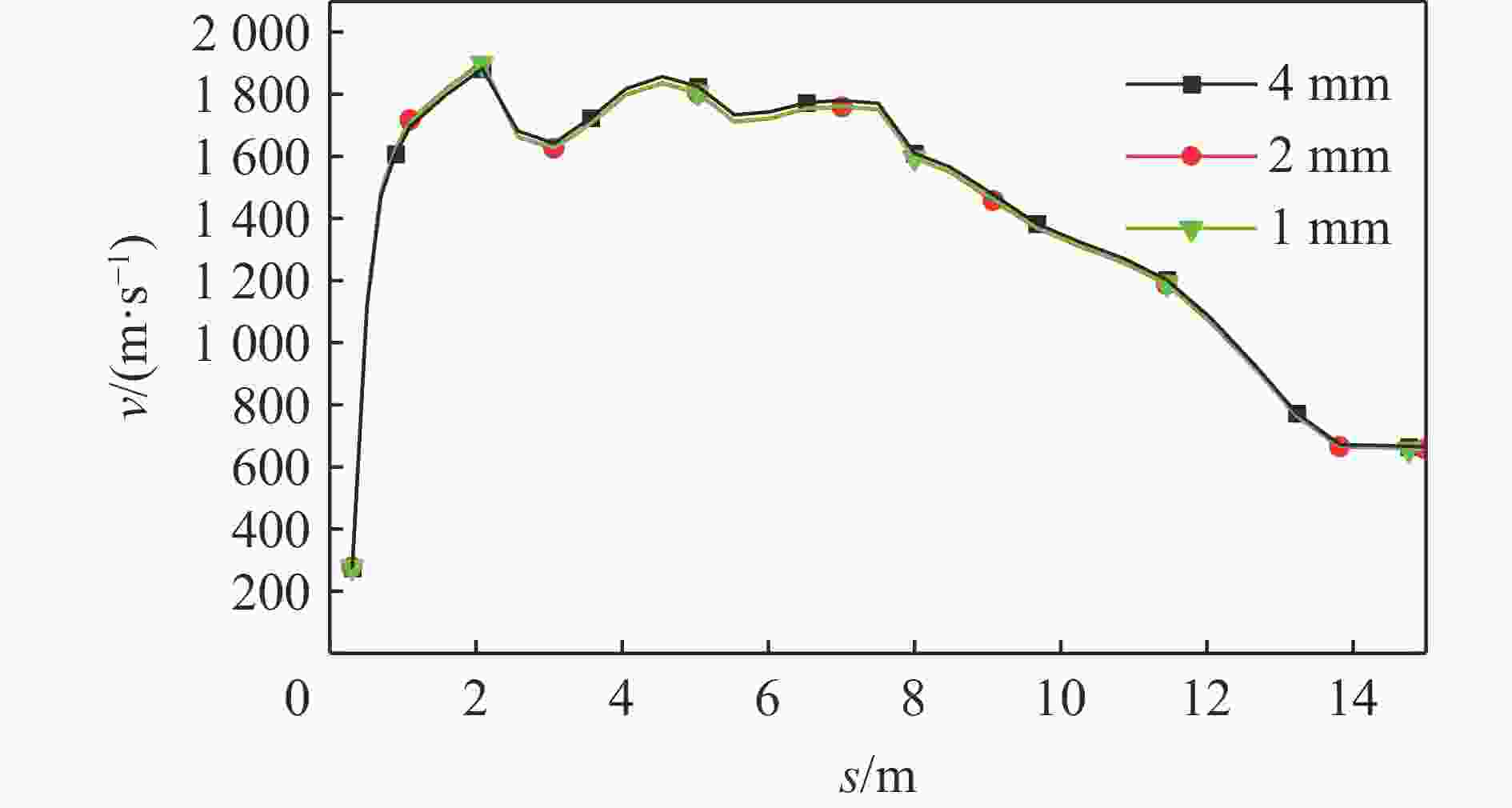
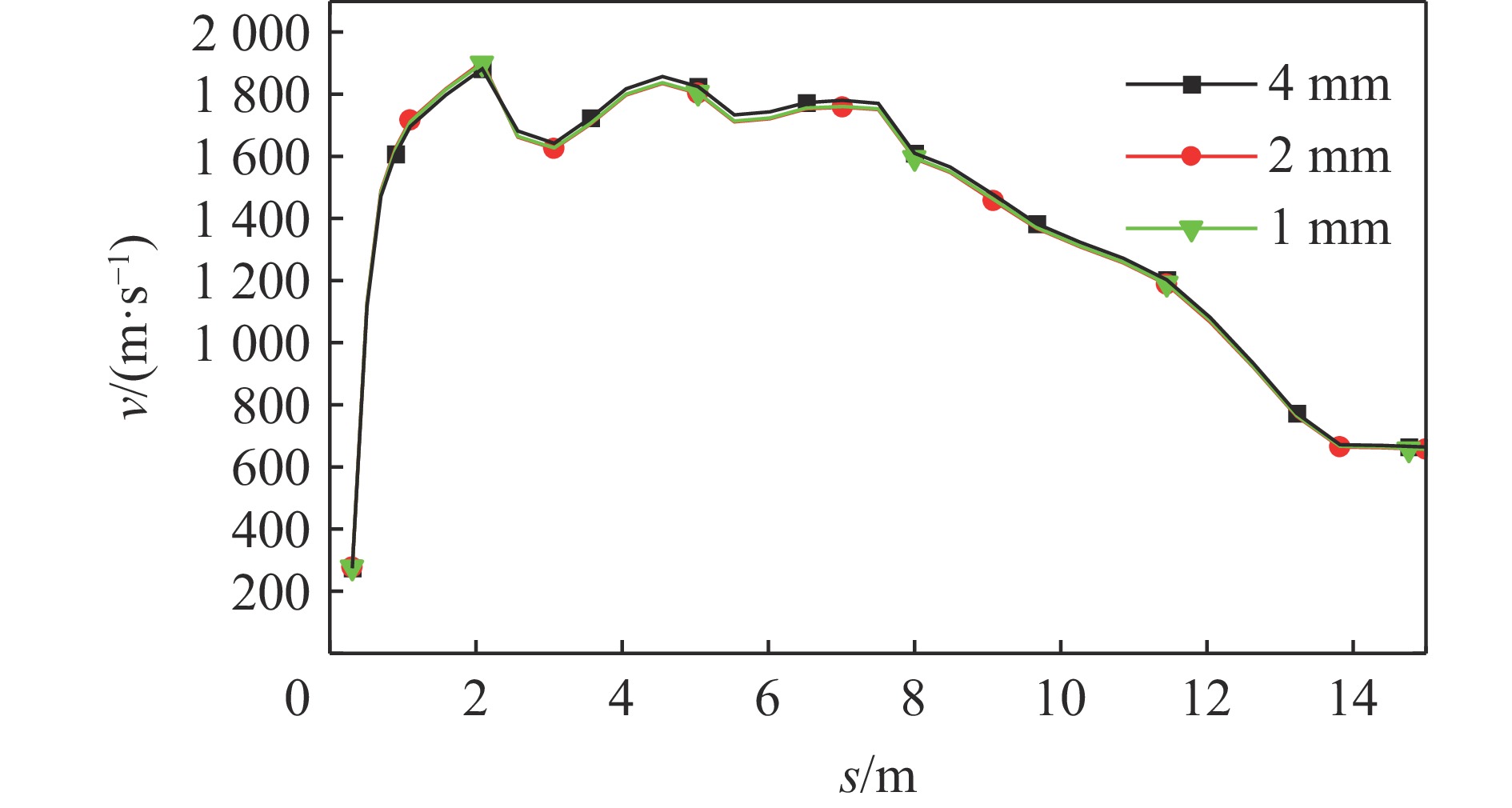
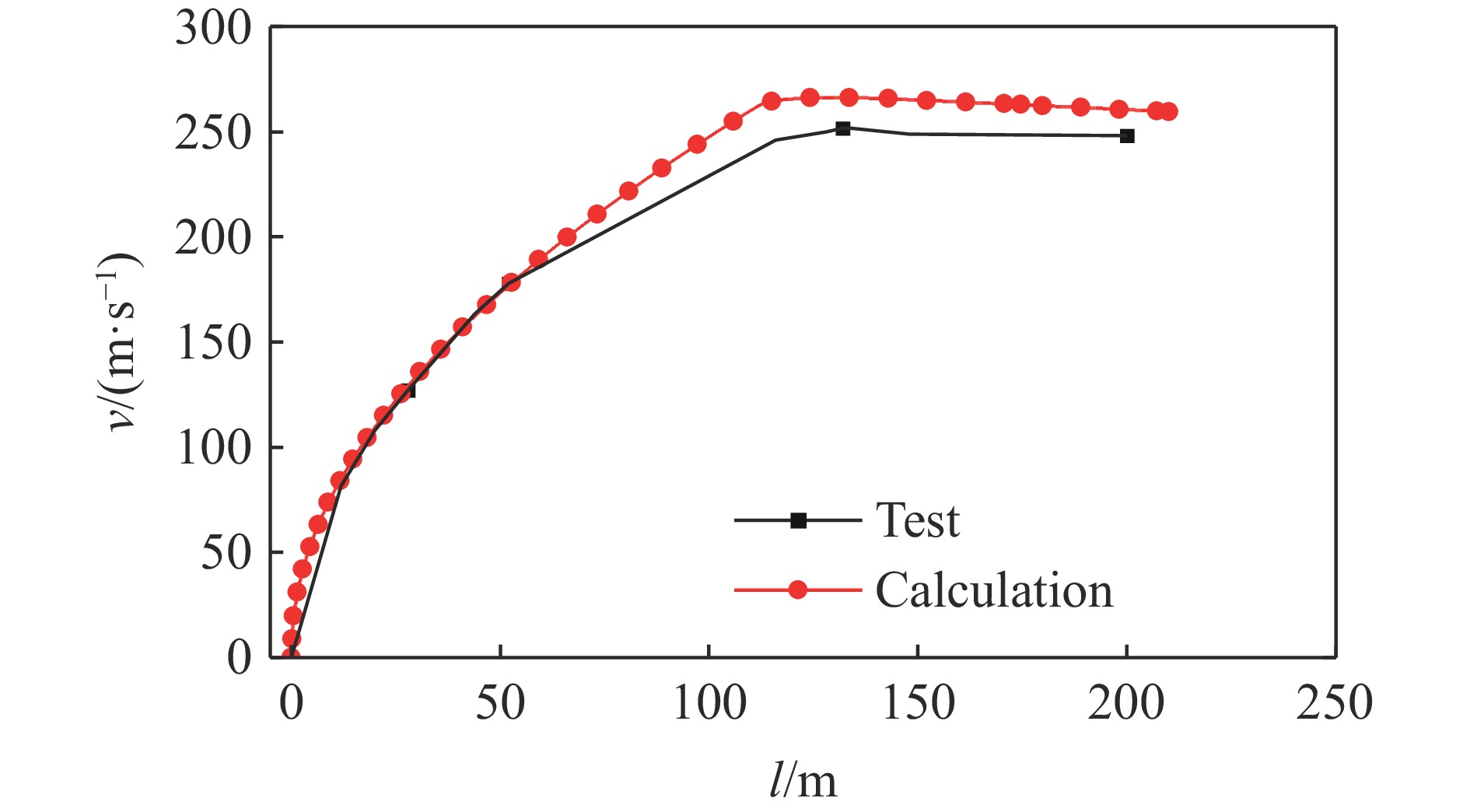
图 5 不同网格密度下工况3轴线速度随传播距离的变化(t=60 ms)
Figure 5. Variation of axial velocity with travel distance for Case 3 under different grid densities (t=60 ms)
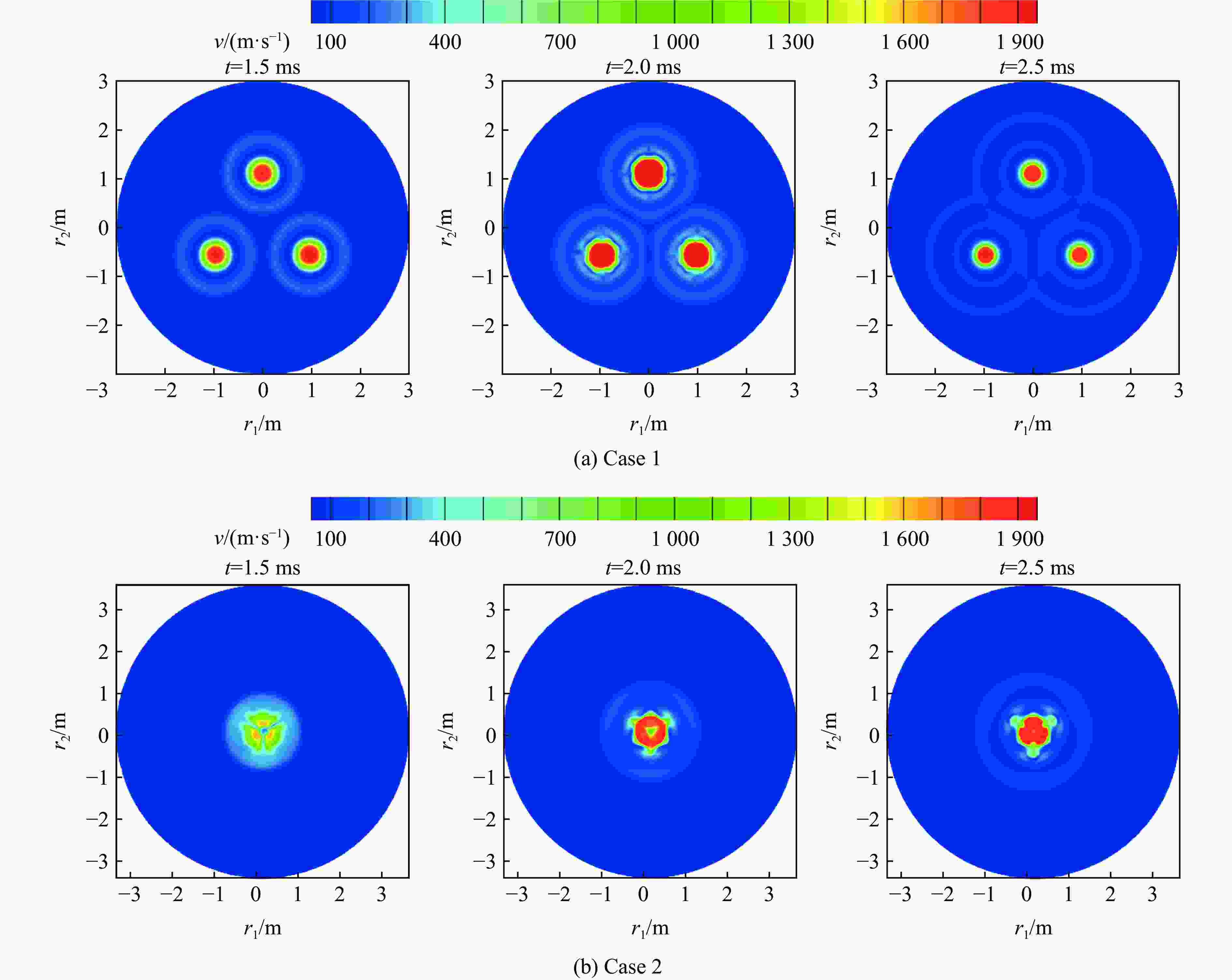
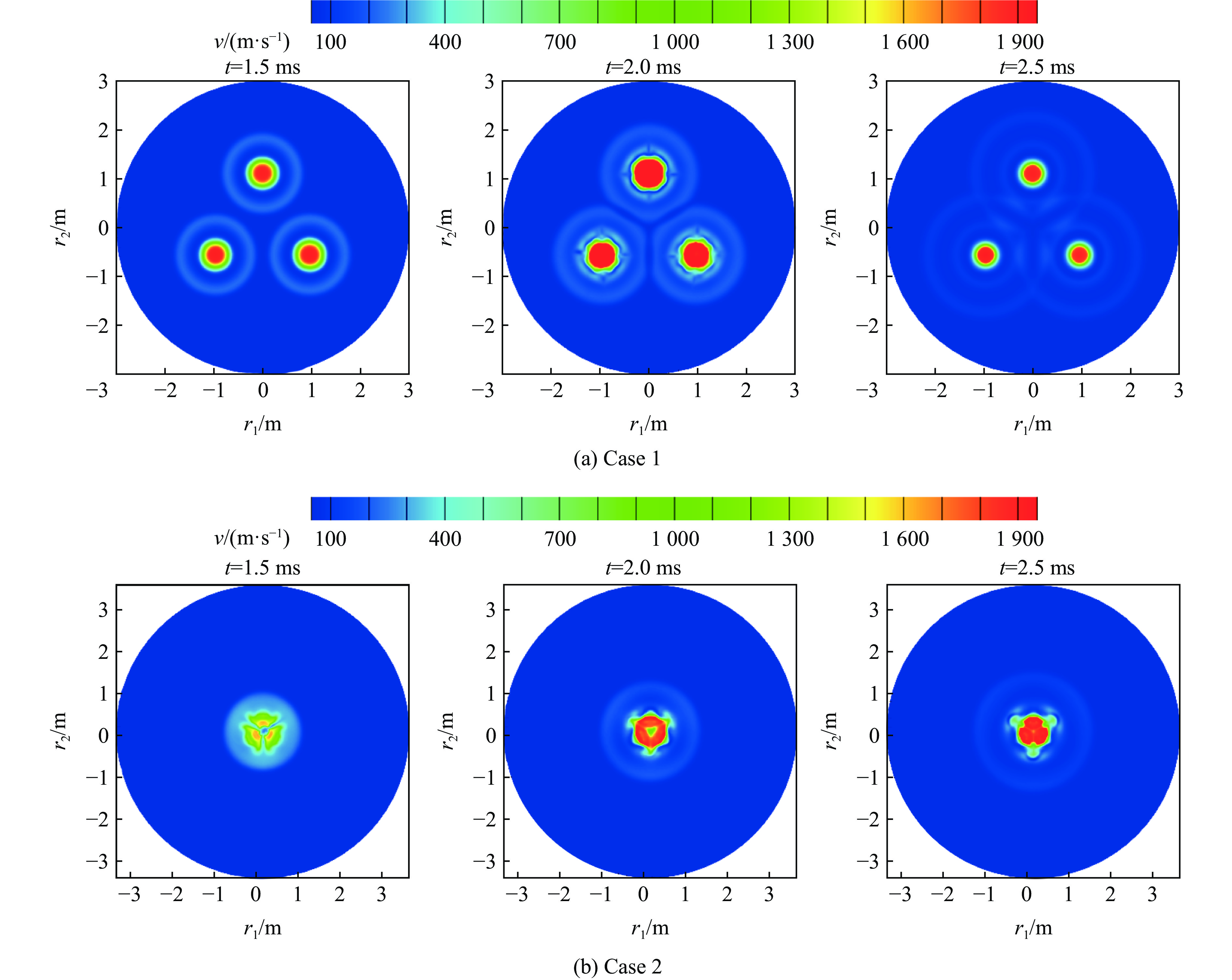
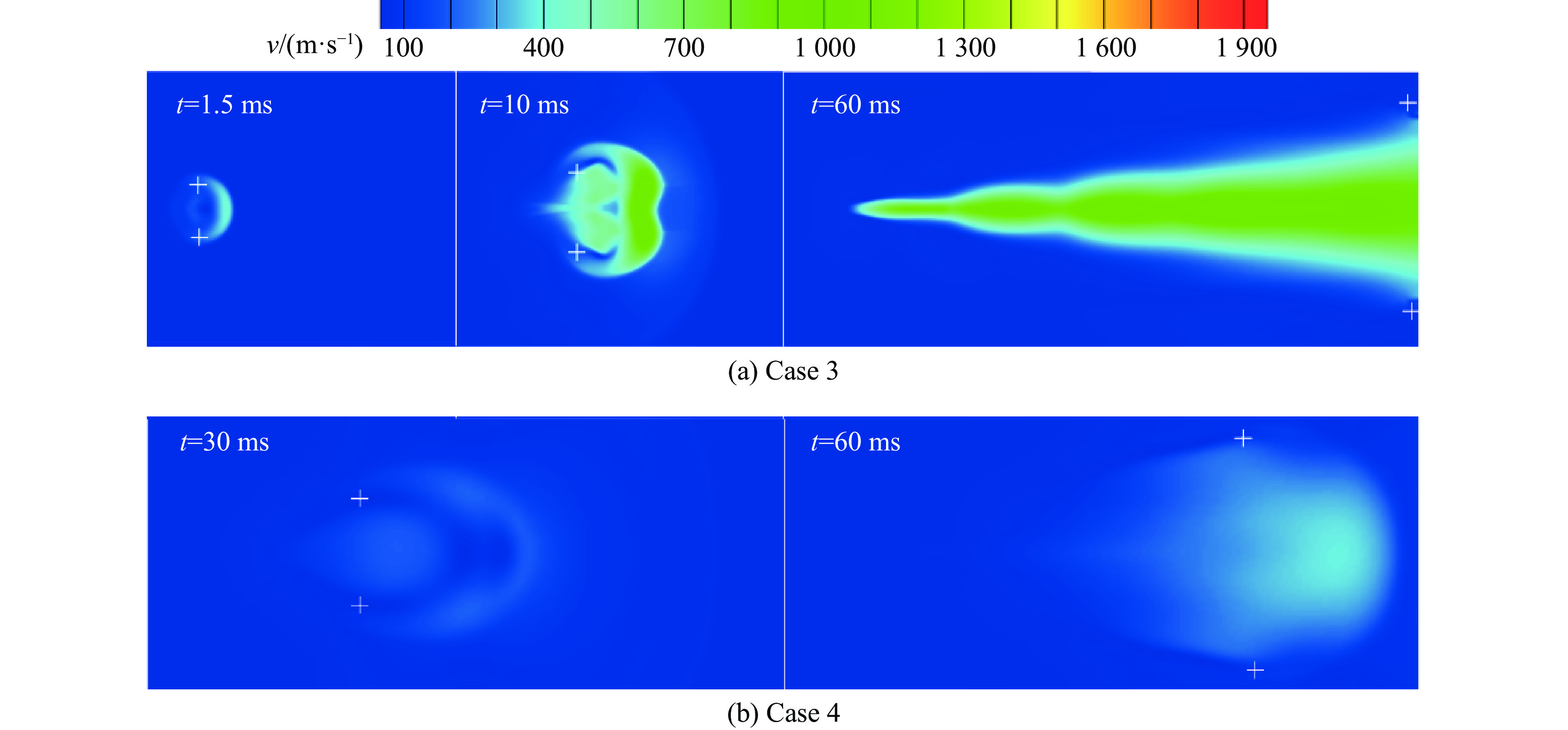
图 10 喷管出口下游0.7 m截面速度云图序列
Figure 10. Velocity contour sequence of the 0.7 m cross section downstream of nozzle outlet
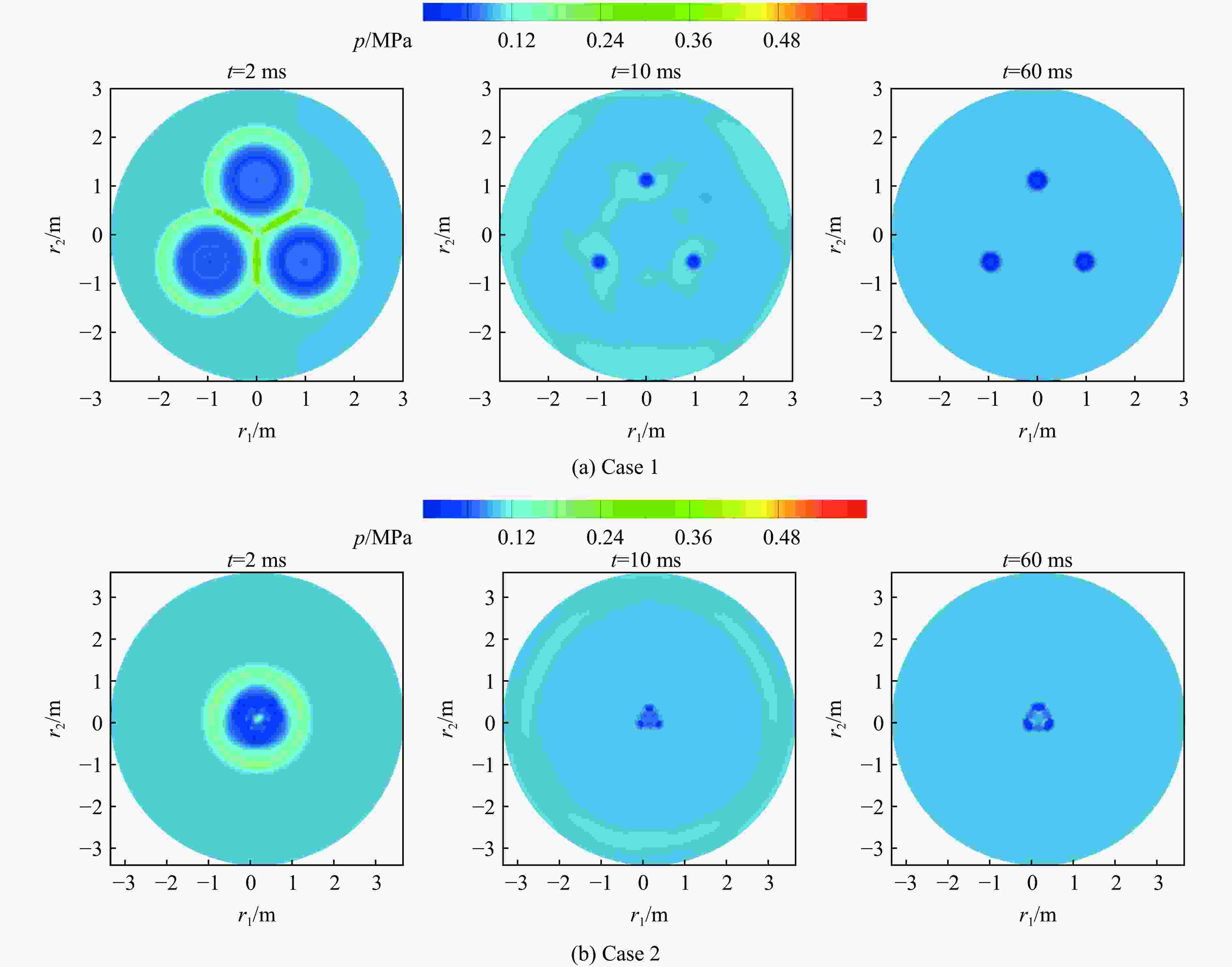
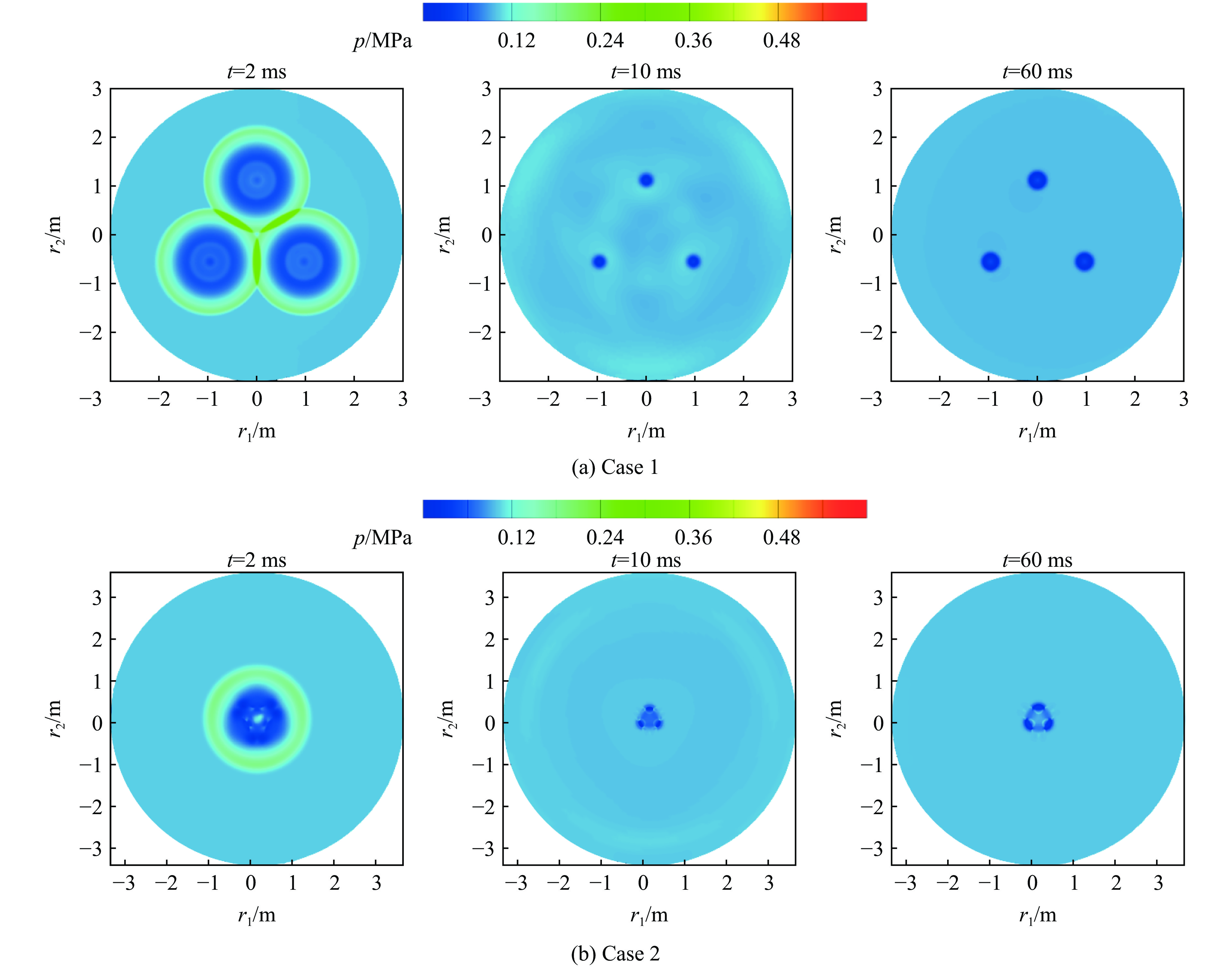
图 12 喷管出口下游0.7 m截面压力云图序列
Figure 12. Pressure contour sequence of the 0.7 m cross section downstream of nozzle outlet
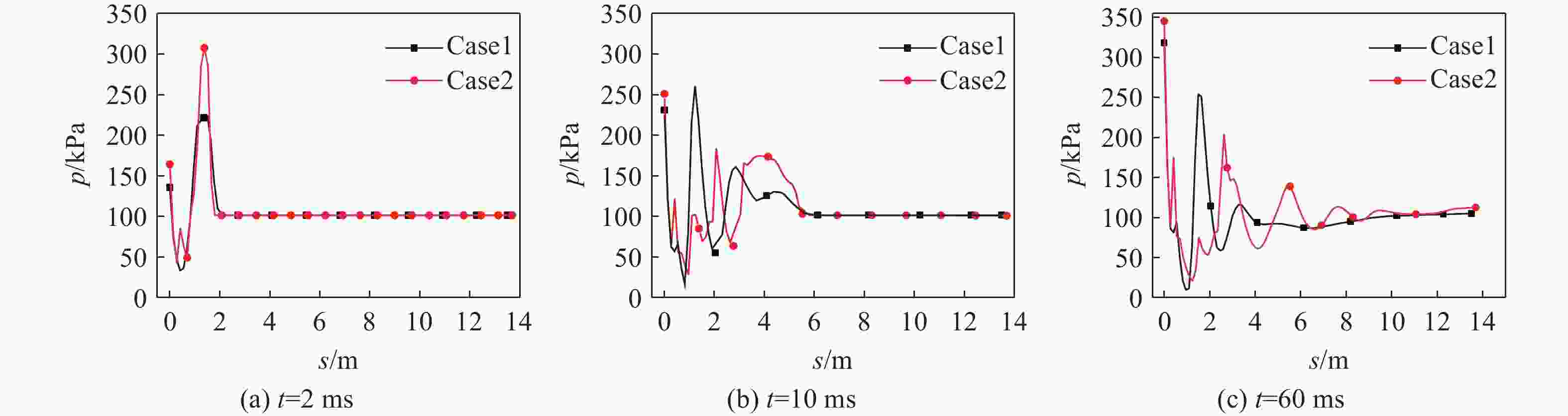
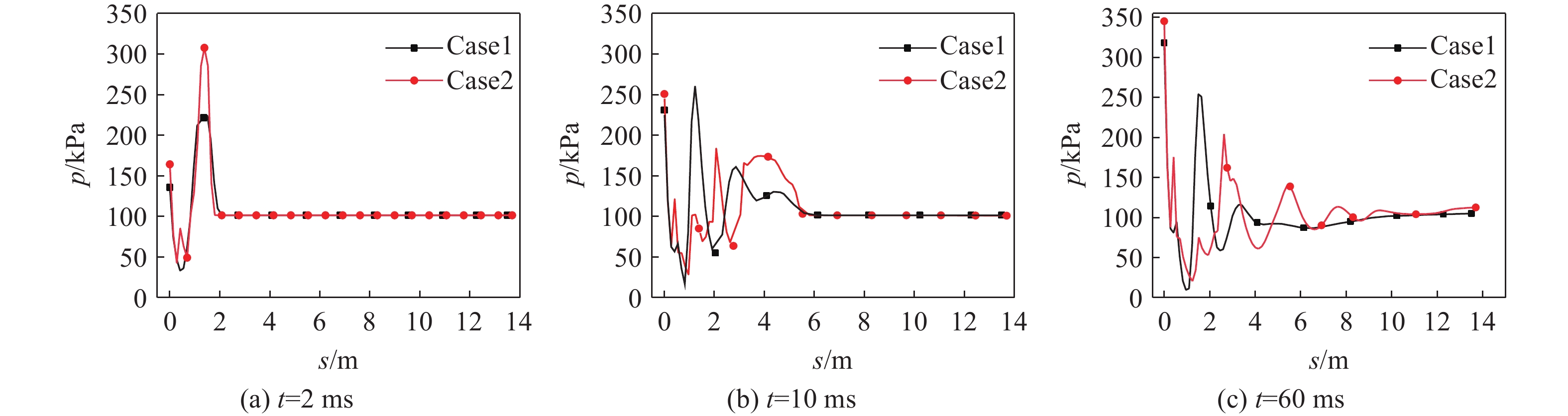
图 11 不同时刻单喷管轴线压力分布
Figure 11. Axial pressure distribution of single nozzle at different moments
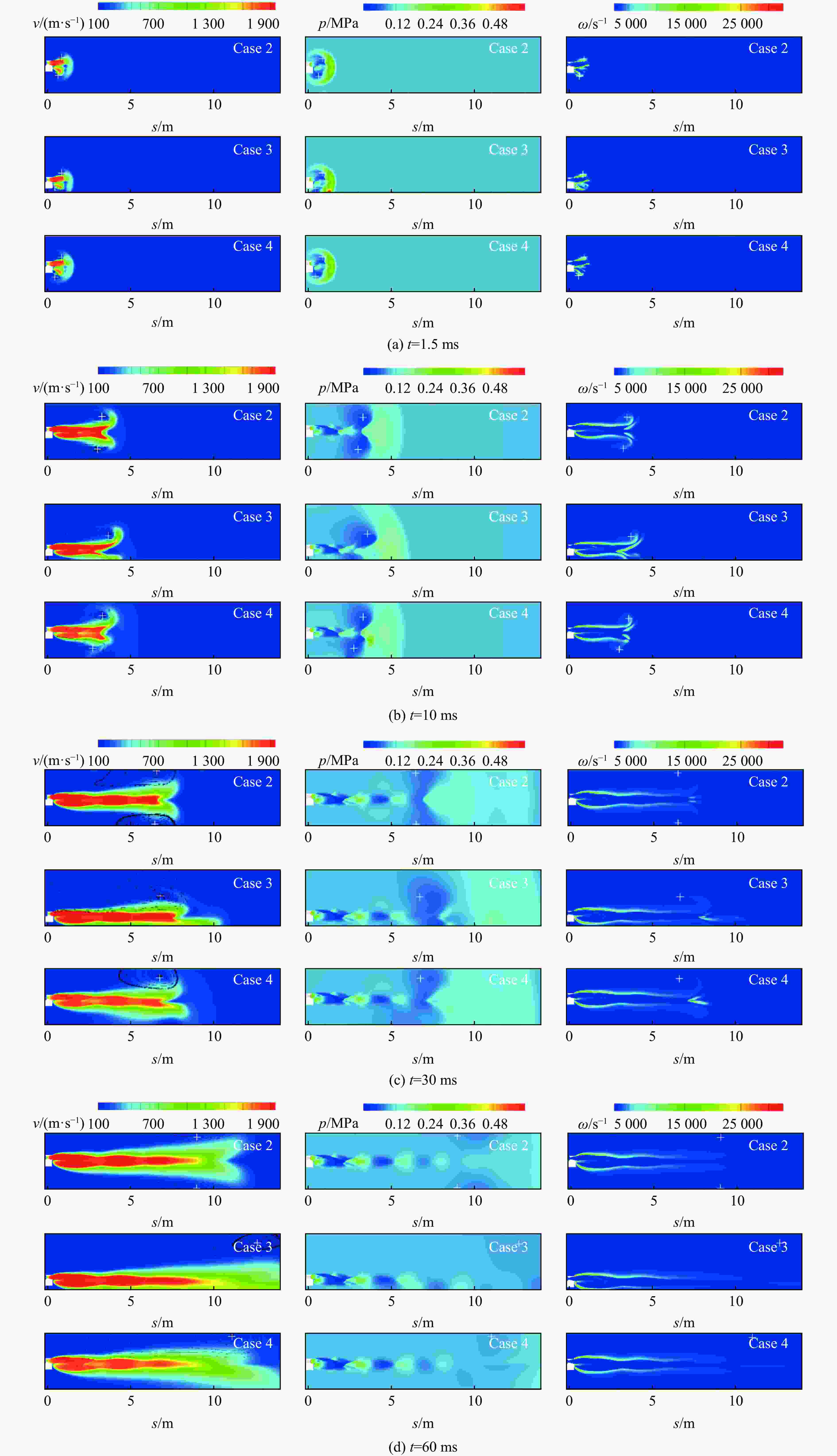
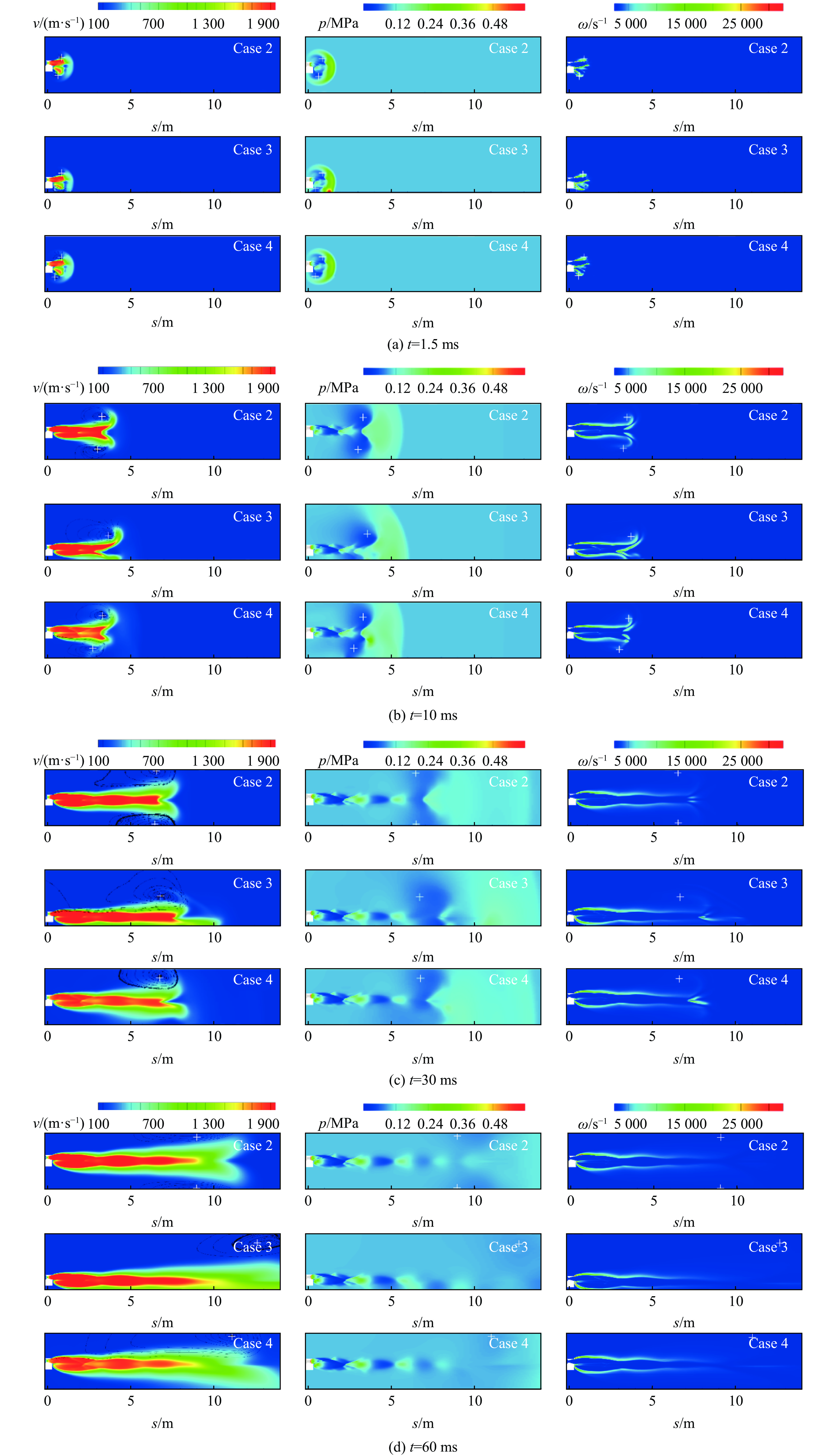
图 13 不同冲击高度下三喷管射流多物理场时序演化对比
Figure 13. Comparison of multi-physics time-Series evolution of three-nozzle jets at different impact heights
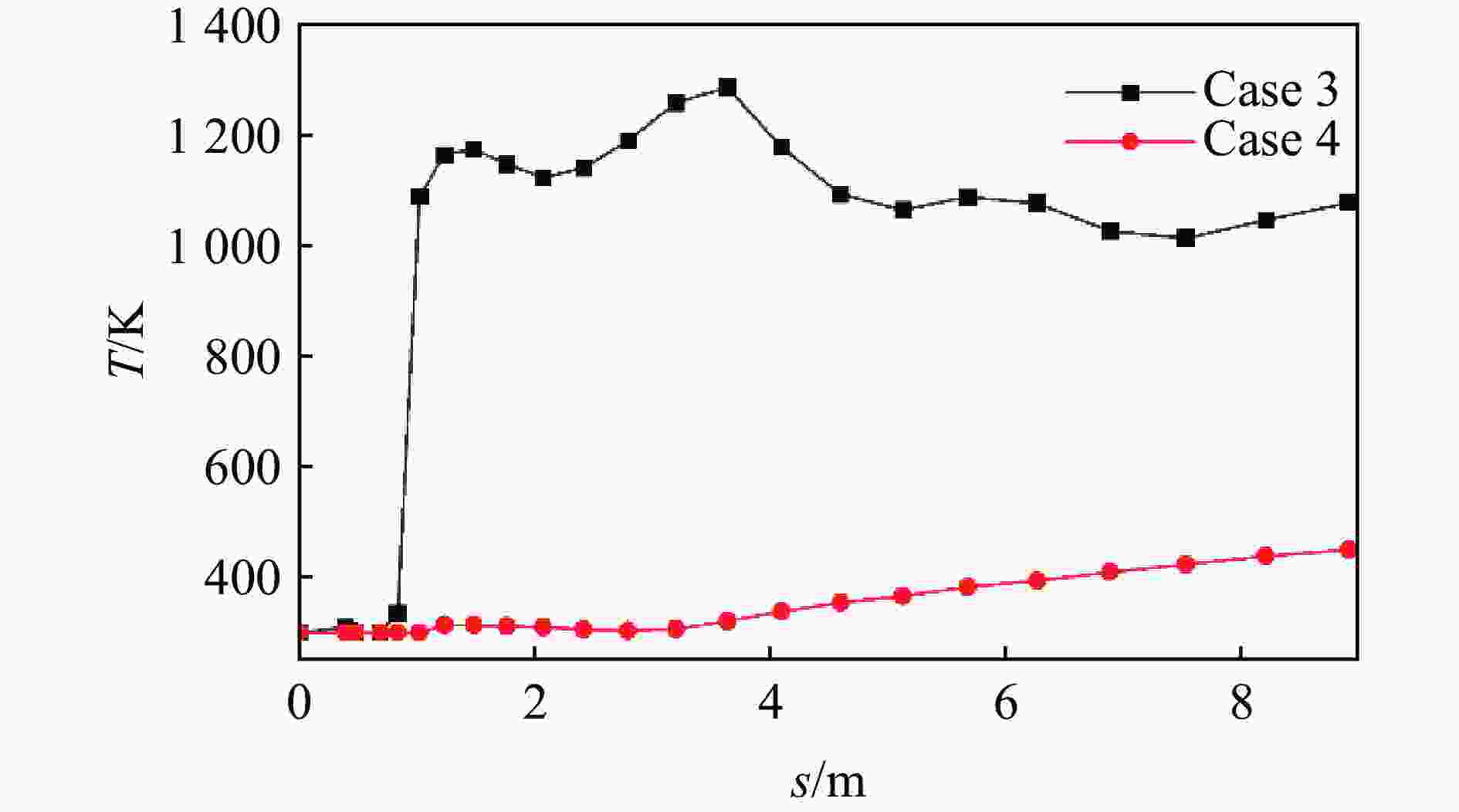
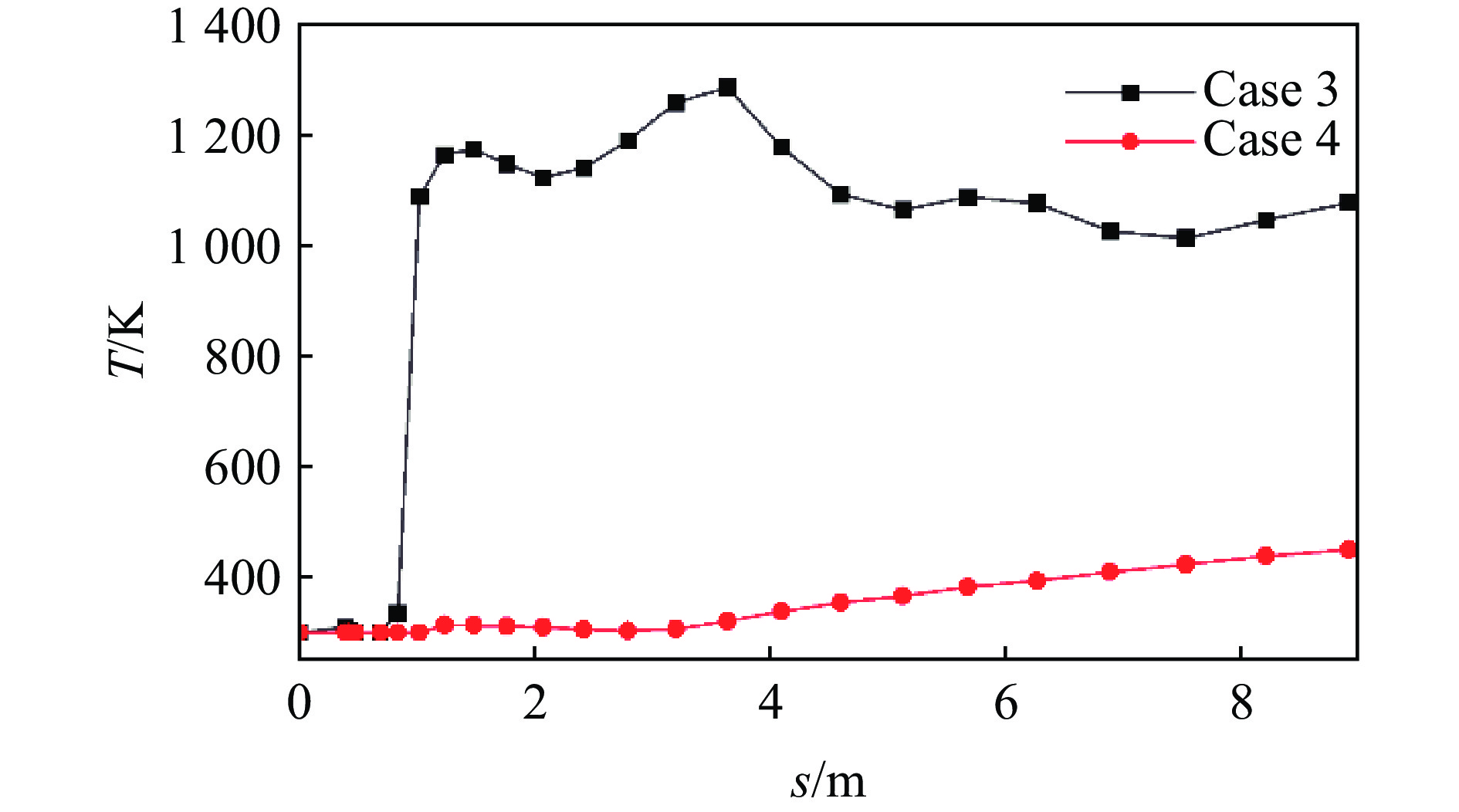
图 15 起始点处地表温度随行程的变化
Figure 15. Variation of surface temperature with travel distance at the starting point
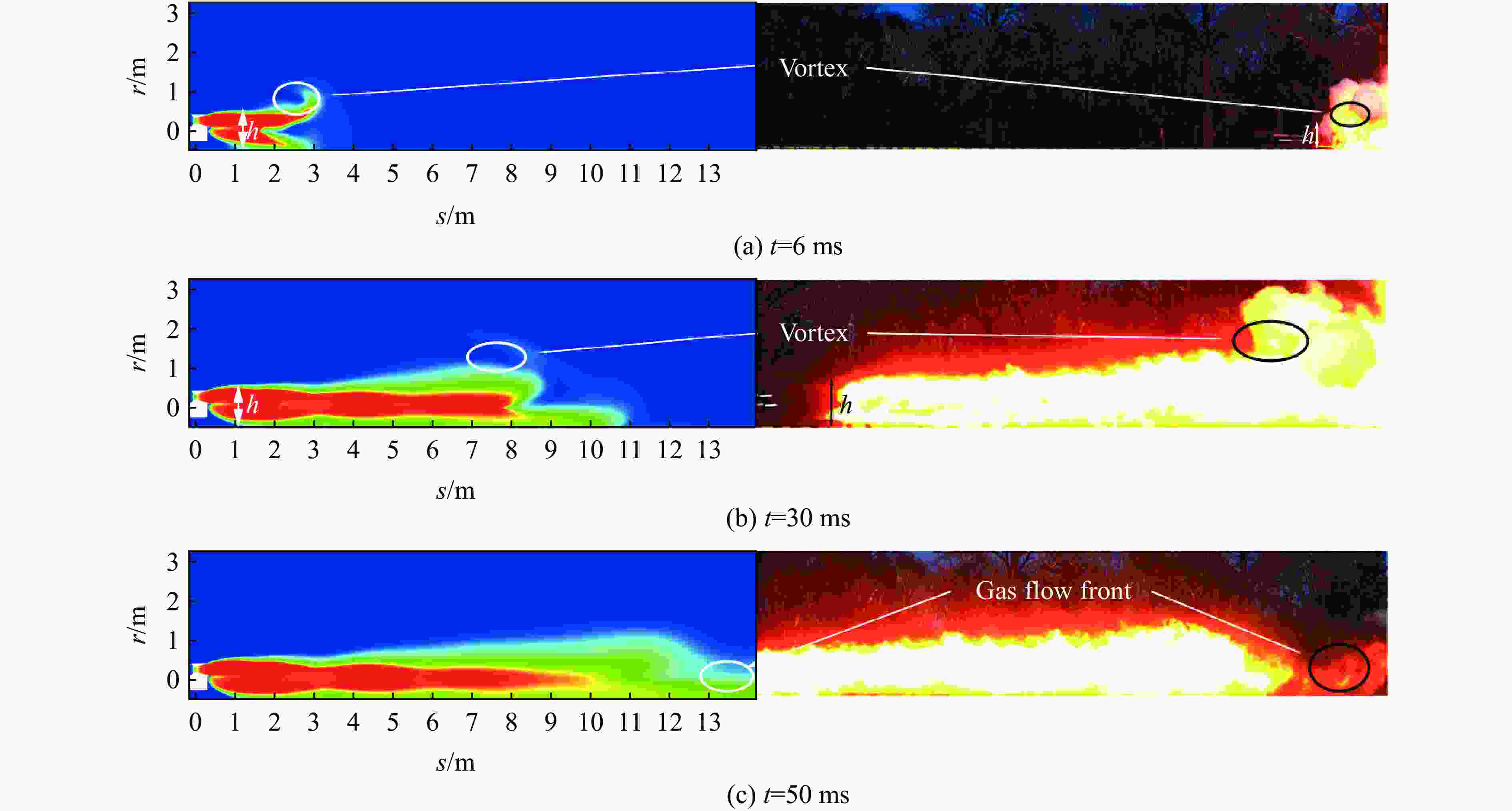
图 16 数值模拟与试验高速摄影射流形态对比
Figure 16. Comparison of jet flow field patterns between numerical simulation and high-speed experiment
表 1 火箭橇橇车分段行程数据
Table 1. Segment travel data for rocket sled vehicle
橇车行程/m 时间/s 区间初速度/
(m·s−1)区间末速度/
(m·s−1)平均加速度/
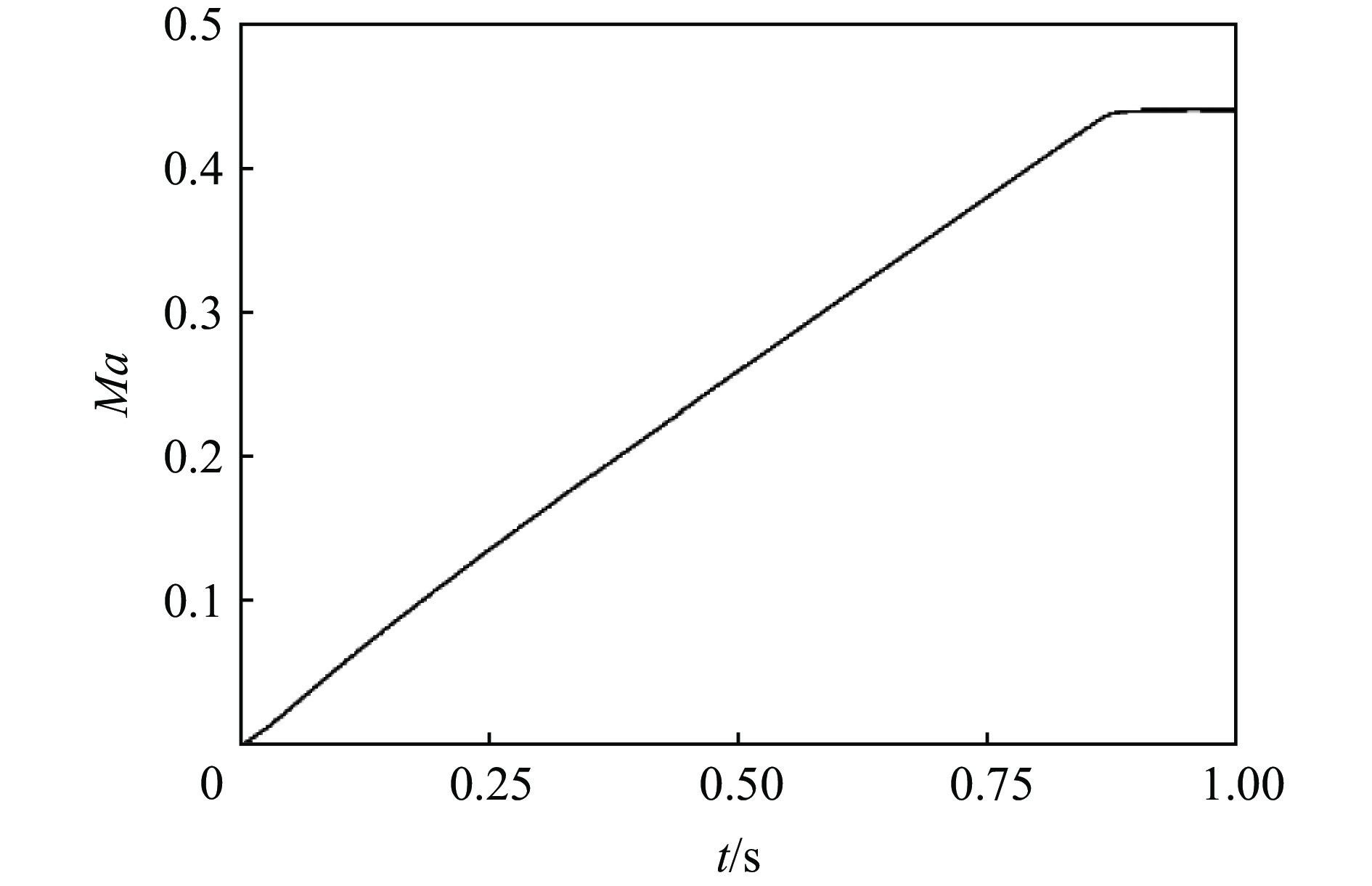
(m·s−2)0~8 0.098 0.00 81.63 832.7 >8~16 0.074 81.63 108.11 357.8 >16~24 0.063 108.11 126.98 299.2 ··· ··· ··· ··· ··· >112~120 0.033 246.15 250 116.7  下载: 导出CSV
表 2 数值模拟工况参数
Table 2. Working condition parameters of numerical simulation
工况编号 地面存在性 l/d h/d 1 无 7 − 2 无 1 − 3 有 1 2 4 有 1 5.5
下载: 导出CSV
表 3 无地面工况低压区面积参数
Table 3. Low-pressure zone area parameters for no-ground conditions
时刻/ms 低压区面积/m2 工况1 工况2 2 4.65 1.53 10 0.233 0.300 60 0.463 0.325
下载: 导出CSV
表 4 射流干涉导致的轴向动量损失
Table 4. Axial momentum loss induced by jet interference
工况 l/d 时间/ms $ \dot{J} $/kN 相对损失/% 1 7 2 483.8 0(基准) 60 748.7 2 1 2 369.0 −23.7 60 740.4 −1.1
下载: 导出CSV
表 5 不同工况射流前锋涡核位置涡量值
Table 5. Vorticity values at the vortex core of the jet front under different working conditions
工况 时刻/ms 上涡核
涡量/s−1下涡核
涡量/s−1涡量差值/s−1 地表涡
涡量/s−11.5 5072 9360 4288 − 2 10 2047 2385 338 − 60 245 300 55 − 1.5 5083 9800 4717 − 3 10 2381 N/A 2381 2604 60 174 N/A 174 450 1.5 5061 9365 4304 − 4 10 2043 2400 357 − 60 382 N/A 382 665 注:“−”表示该工况下未形成或未识别出此涡结构;“N/A”表示该涡核已破碎重组,其强度体现为地表涡。
下载: 导出CSV
表 6 不同冲击高度下近地面区域动量通量对比
Table 6. Comparison of near-ground momentum flux at different impact heights
工况 h/d 总动量通量/MN 基准通量/MN 耗散于地面动量/MN 3 2.0 6.999 2.487 4.513 4 5.5 1.929 4.335 1.495 注:基准通量为同位置、同时刻无地面效应工况(工况2)的动量通量;耗散动量=总动量通量-基准通量,表征因地效冲击而损失的能量。
下载: 导出CSV
-
[1] 王栋, 封锋, 陈军. 固体火箭发动机基础 [M]. 北京: 北京理工大学出版社, 2016: 1–324.WANG D, FENG F, CHEN J. Solid rocket engine foundation [M]. Beijing: Beijing Institute of Technology Press, 2016: 1–324. [2] 夏有财, 孔维红, 孙其会, 等. 两级推进单轨火箭橇试验研究 [J]. 航空动力学报, 2025, 40(3): 20230370. DOI: 10.13224/j.cnki.jasp.20230370.XIA Y C, KONG W H, SUN Q H, et al. Experimental study on two-stage propulsion monorail rocket sled [J]. Journal of Aerospace Power, 2025, 40(3): 20230370. DOI: 10.13224/j.cnki.jasp.20230370. [3] 王文杰, 马鑫雨, 赵旭, 等. 基于无翼载荷的火箭橇多场耦合特性分析 [J]. 兵工学报, 2025, 46(4): 240394. DOI: 10.12382/bgxb.2024.0394.WANG W J, MA X Y, ZHAO X, et al. Analysis of multi-field coupling characteristics of rocket sled with a wingless payload [J]. Acta Armamentarii, 2025, 46(4): 240394. DOI: 10.12382/bgxb.2024.0394. [4] DOIG G. Transonic and supersonic ground effect aerodynamics [J]. Progress in Aerospace Sciences, 2014, 69: 1–28. DOI: 10.1016/j.paerosci.2014.02.002. [5] SZMEREKOVSKY A G, PALAZOTTO A N, BAKER W P. Scaling numerical models for hypervelocity test sled slipper-rail impacts [J]. International Journal of Impact Engineering, 2006, 32(6): 928–946. DOI: 10.1016/j.ijimpeng.2004.09.011. [6] QIAN H J, NIU Y S, JIANG Y, et al. Aerodynamic and aeroacoustic characteristics of rocket sled under strong ground effect [J]. International Journal of Aeroacoustics, 2024, 23(5-6): 494–514. DOI: 10.1177/1475472X241259101. [7] 余元元, 王方元, 王彬, 等. 超声速火箭橇流动特征和气动力激励振动分析 [J]. 西北工业大学学报, 2022, 40(5): 1080–1089. DOI: 10.1051/jnwpu/20224051080.YU Y Y, WANG F Y, WANG B, et al. Analysis on flow characteristics and aerodynamic-force-induced vibration of supersonic rocket-sled [J]. Journal of Northwestern Polytechnical University, 2022, 40(5): 1080–1089. DOI: 10.1051/jnwpu/20224051080. [8] 周柏航, 王浩, 阮文俊, 等. 地面效应对火箭橇发动机尾喷管流场特性的影响研究 [J]. 推进技术, 2021, 42(6): 1380–1386. DOI: 10.13675/j.cnki.tjjs.200717.ZHOU B H, WANG H, RUAN W J, et al. Influence of ground effect on flow field characteristics of rocket skid motor tail nozzle [J]. Journal of Propulsion Technology, 2021, 42(6): 1380–1386. DOI: 10.13675/j.cnki.tjjs.200717. [9] 张俊, 田中旭, 高天宇, 等. 固体火箭发动机尾流场数值模拟 [J]. 弹箭与制导学报, 2018, 38(6): 15–18. DOI: 10.15892/j.cnki.djzdxb.2018.06.004.ZHANG J, TIAN Z X, GAO T Y, et al. Numerical simulation for wake flow field of solid rocket motor [J]. Journal of Projectiles, Rockets, Missiles and Guidance, 2018, 38(6): 15–18. DOI: 10.15892/j.cnki.djzdxb.2018.06.004. [10] 赵鹏刚, 刘振, 党天骄, 等. 地面效应影响下的高速火箭橇气动特性数值与风洞试验研究 [J]. 计算力学学报, 2023, 40(2): 314–322. DOI: 10.7511/jslx20210914001.ZHAO P G, LIU Z, DANG T J, et al. Numerical and wind tunnel test research on aerodynamic characteristics of high-speed rocket sled under the influence of ground effect [J]. Chinese Journal of Computational Mechanics, 2023, 40(2): 314–322. DOI: 10.7511/jslx20210914001. [11] WANG B, ZHENG J, YU Y Y. Shock-wave/rail-fasteners interaction for two rocket sleds in the supersonic flow regime [J]. Fluid Dynamics & Materials Processing, 2020, 16(4): 675–684. DOI: 10.32604/fdmp.2020.09681. [12] 王明清. 基于固体火箭发动机的火箭橇动力系统研究 [D]. 南京: 南京理工大学, 2017.WANG M Q. Research on dynamical system of rocket sled with solid rocket motors [D]. Nanjing: Nanjing University of Science and Technology, 2017. [13] ANDERSON J D JR. Computational fluid dynamics: the basics with applications [M]. New York: McGraw-Hill, 1995: 1–547. [14] SHIH T H, LIOU W W, SHABBIR A, et al. A new k-ϵ eddy viscosity model for high Reynolds number turbulent flows [J]. Computers & Fluids, 1995, 24(3): 227–238. DOI: 10.1016/0045-7930(94)00032-T. [15] SUTHERLAND W. LII. The viscosity of gases and molecular force [J]. The London, Edinburgh, and Dublin Philosophical Magazine and Journal of Science, 1893, 36(223): 507–531. DOI: 10.1080/14786449308620508. [16] 王福军. 计算流体动力学分析: CFD软件原理与应用 [M]. 北京: 清华大学出版社, 2004: 39–40.WANG F J. Computational fluid dynamics analysis: CFD software principle and application [M]. Beijing: Tsinghua University Press, 2004: 39–40. [17] ANDERSON J D JR. Modern compressible flow: with historical perspective [M]. 3rd ed. New York: McGraw-Hill, 2003. -

计量
- 文章访问数: 340
- HTML全文浏览量: 139
- PDF下载量: 219
- 被引次数: 0