



Analysis of the competing mechanisms between inertial and structural effects in data-driven hybrid lattice structures
-
摘要: 混杂点阵结构通过将不同微结构胞元在空间中进行混杂排布,可实现宏观力学性能的改善,是一种有效的轻质点阵结构设计方法。目前该类结构的微结构设计多集中于准静态力学性能的提升,而在高速冲击载荷下的相关研究较为缺乏,主要原因在于惯性效应会显著影响结构的动态响应,增加多目标协同设计的复杂度。本文中以2种不同相对密度的菱形十二面体胞元结构构建了正交各向同性的四阶双密度混杂点阵结构,采用双向长短期记忆网络建立预测模型,扩展有限元数值模拟所获得的应力-应变曲线数据规模,并通过多维度评价指标验证模型预测的可靠性。基于准静态平面压缩分析了混杂点阵结构的比吸能行为及相应的结构效应;进一步将压缩速度提高至100 m/s的动态加载条件,对比研究了高速冲击下惯性效应对混杂点阵结构动态响应的影响机制。根据混杂点阵结构中胞元混杂程度的不同,分类讨论惯性效应与结构效应之间的竞争与协同关系。通过机器学习方法实现了有限元数据的高效扩展,揭示了动态加载下惯性效应与胞元配比、空间排布之间的内在联系,对混杂点阵结构在抗冲击防护等工程领域的应用具有指导意义。Abstract: Through spatial arrangement of different microstructures, well-designed hybrid lattice structures exhibit enhanced mechanical properties compared with uniform lattice structures composed of a single unit cell, thereby serving as a promising strategy for lightweight lattice structure design. However, current microstructure design approaches for hybrid lattices primarily focus on improving quasi-static compressive mechanical performance. In reality, engineering protection often involves complex dynamic impact environments rather than simple quasi-static loads. However, research on the microstructural design of hybrid lattices under high strain rate impact loading remains limited. This is due to the significant influence of inertial effects on dynamic structural mechanical response, which complicates multi-objective optimization. A fourth-order hybrid orthogonal isotropic lattice structure was constructed using two types of rhombic dodecahedron (RD) unit cells with different relative densities. A bidirectional long short-term memory (Bi-LSTM) network was employed to develop a predictive model that expanded the dataset of stress-strain curves obtained from finite element simulations. The reliability of the model’s predictions was validated through multi-dimensional evaluation metrics based on the predicted stress points along the stress–strain curves. The coefficient of determination (R2) of the predicted results reached 0.971 and 0.990 under dynamic and quasi-static compression, respectively. Specific energy absorption (SEA) was adopted as an indicator for evaluating energy absorption capacity based on the accurately predicted stress-strain curves. The structural effects on the energy absorption behavior of the hybrid lattice were analyzed under quasi-static planar compression. By increasing the compression speed to 100 m/s to simulate high strain rate conditions, the role of inertial effects on the dynamic mechanical response was investigated through comparative analysis. Furthermore, the competition and synergy between inertial effects and structural effects were systematically analyzed by categorizing the hybrid lattices according to the degree of unit cell mixing. The results indicate that inertial effects become dominant under high strain rate loading, while structural effects govern the response under quasi-static conditions. By using machine learning to efficiently expand the data scale of finite element simulations, the internal relationships among inertial effects, unit cell proportion, and spatial arrangement under high strain rate conditions were revealed. The findings provide valuable insights for the application of hybrid lattice structures in impact protection and related engineering fields.
-
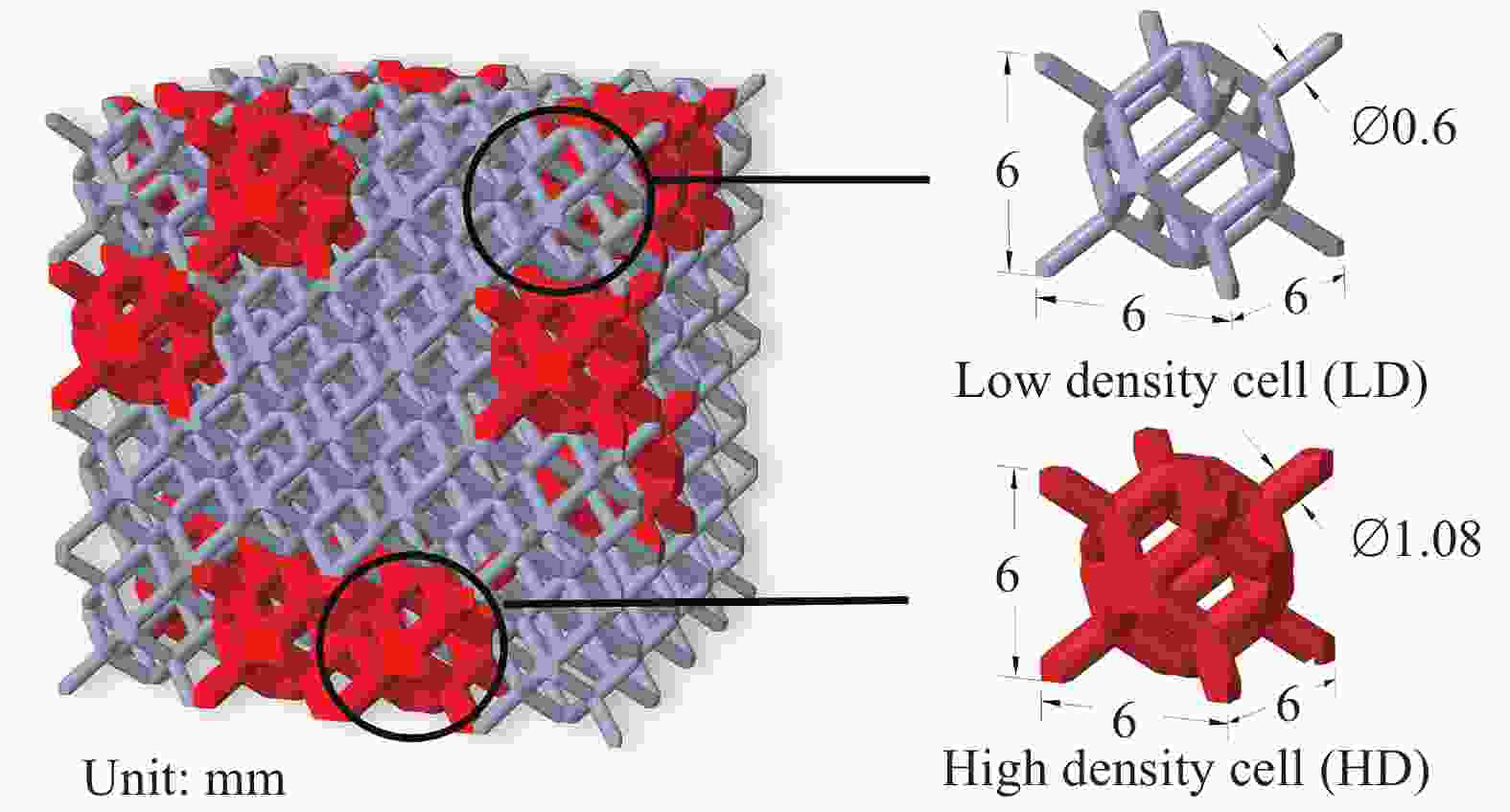
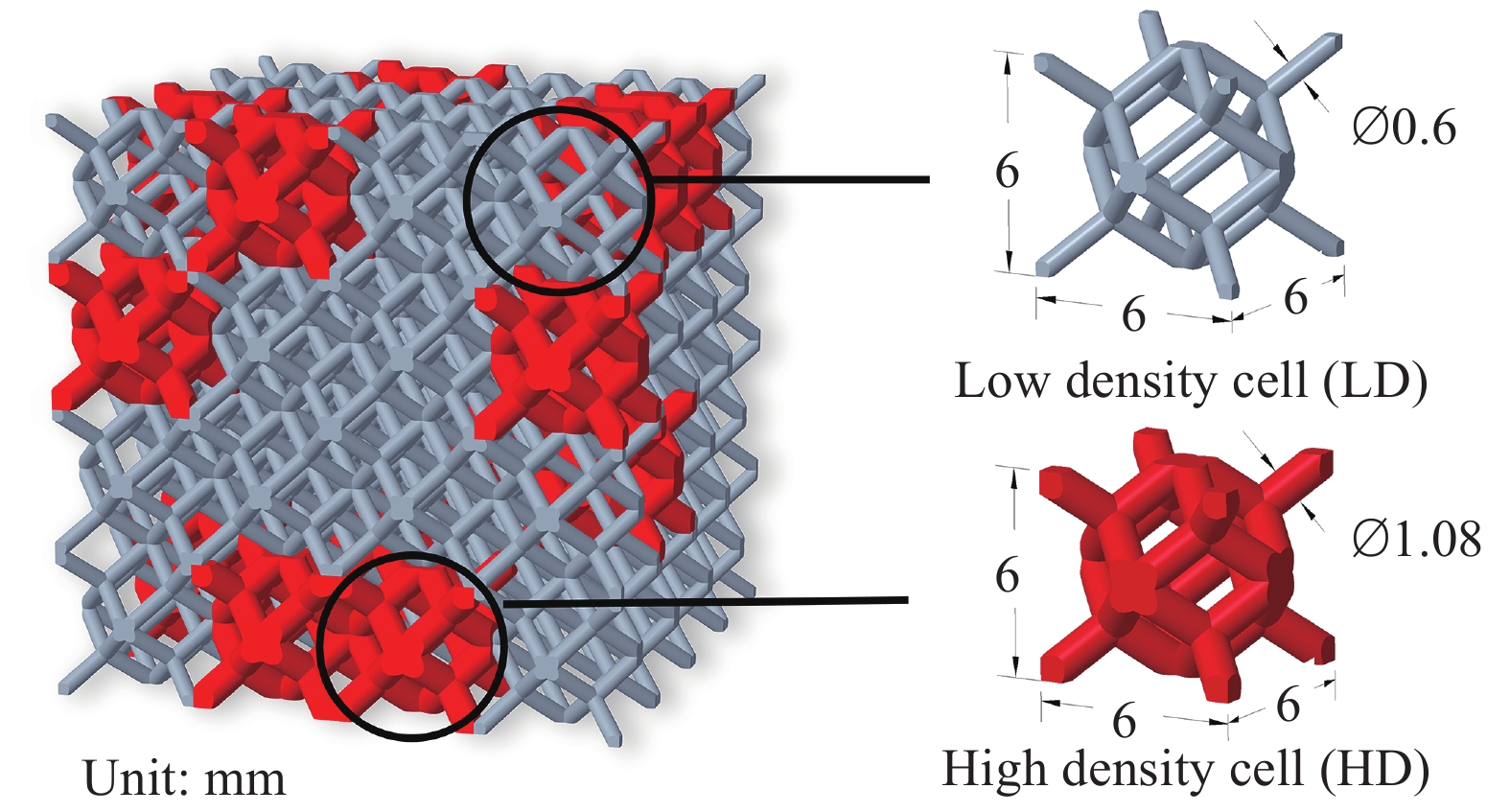
图 1 基于不同孔隙率菱形十二面体胞元的双密度混杂点阵结构
Figure 1. The dual-density hybrid lattice structure formed by rhombic dodecahedron cells with different porosities
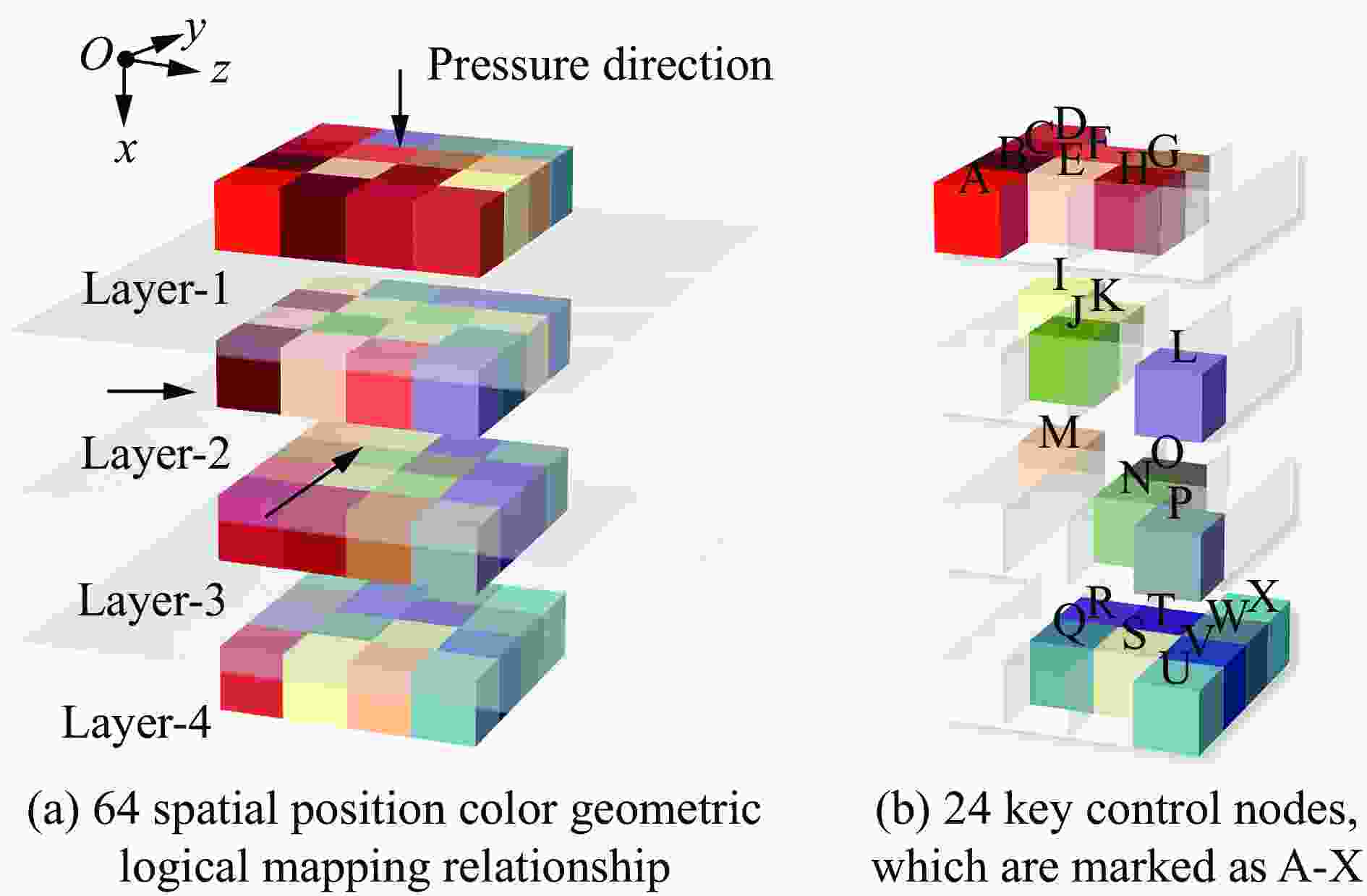
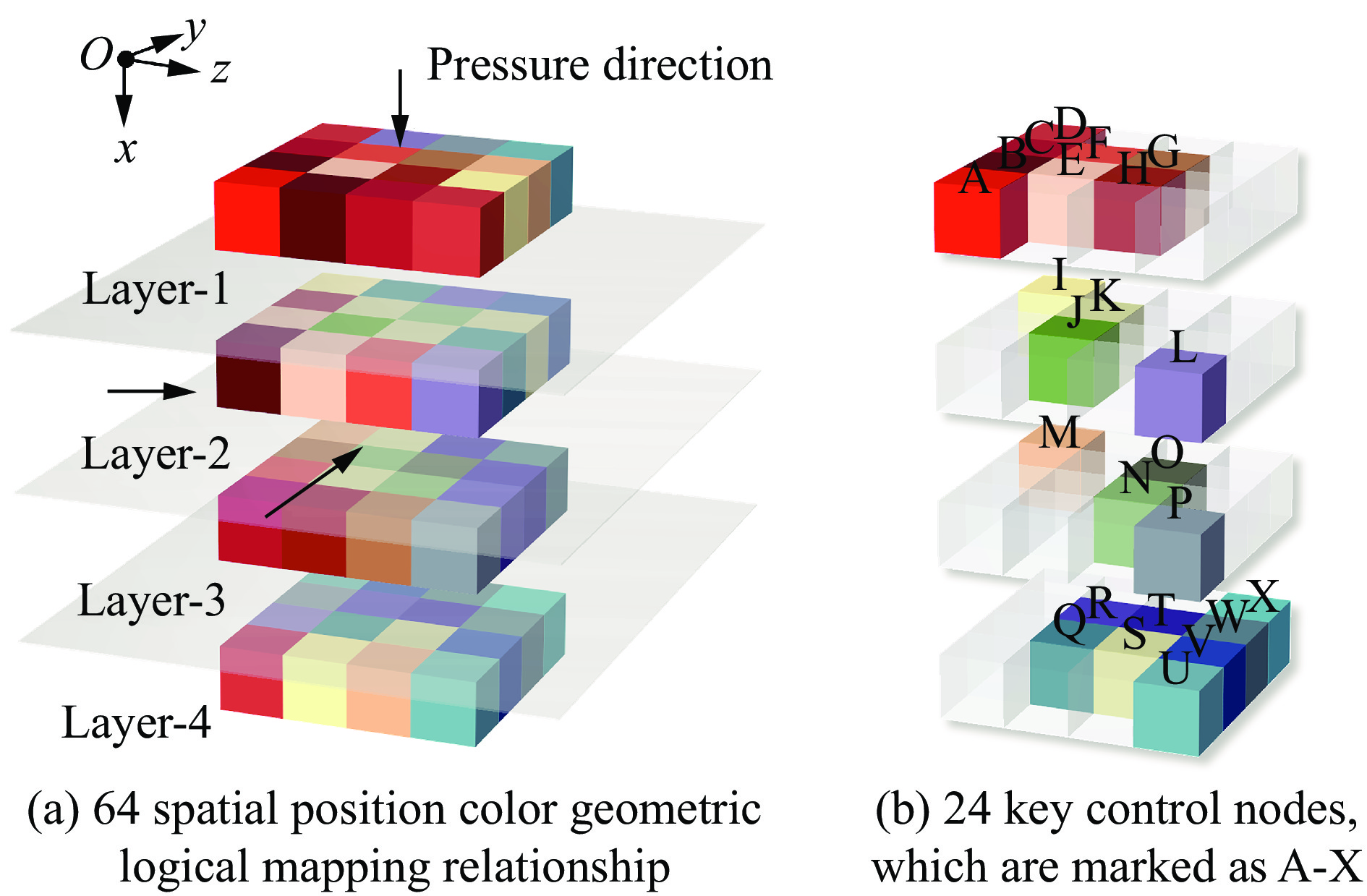
图 2 HOIL中胞元空间位置之间的逻辑映射关系
Figure 2. The logical mapping relationship between the spatial positions of HOIL cells
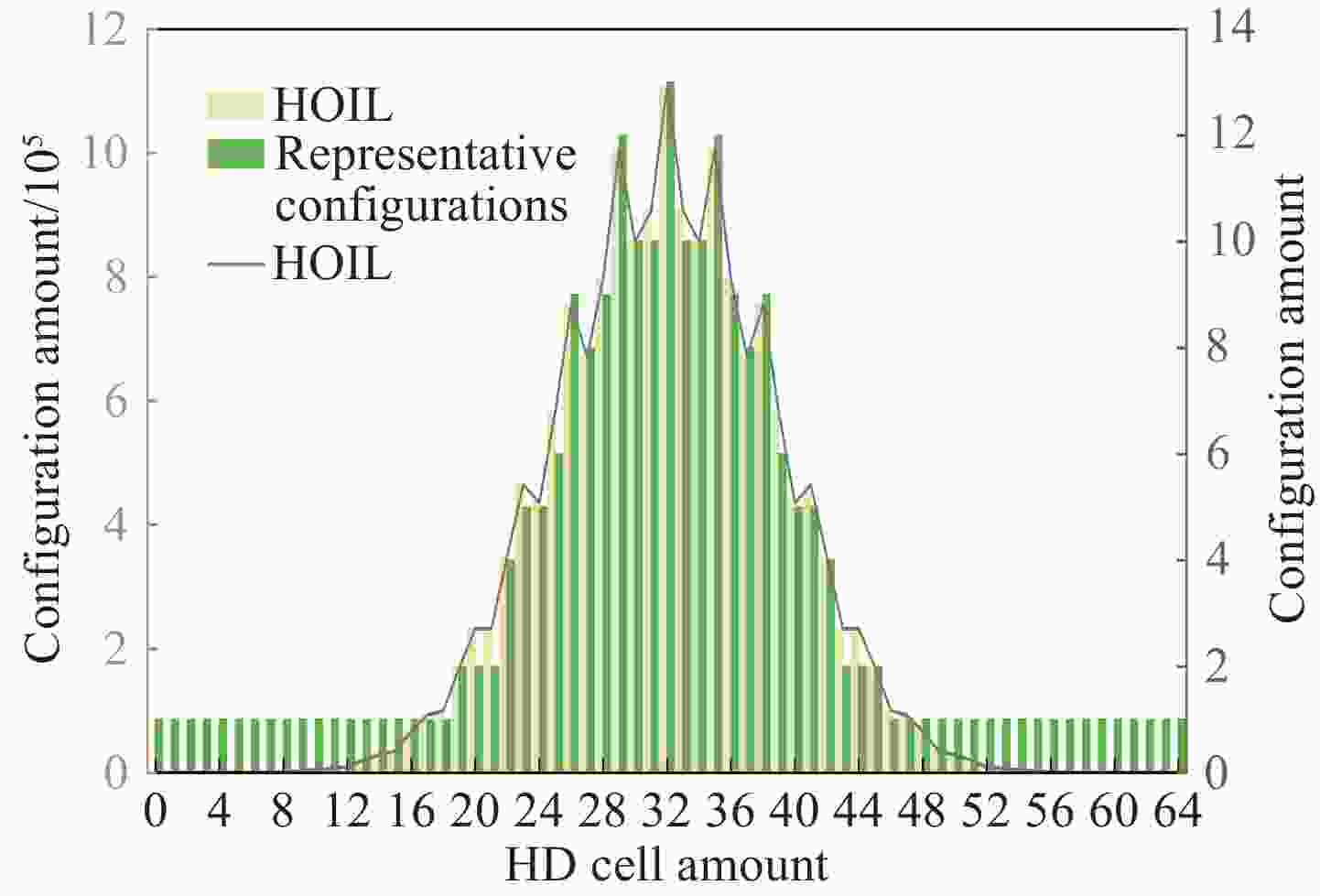
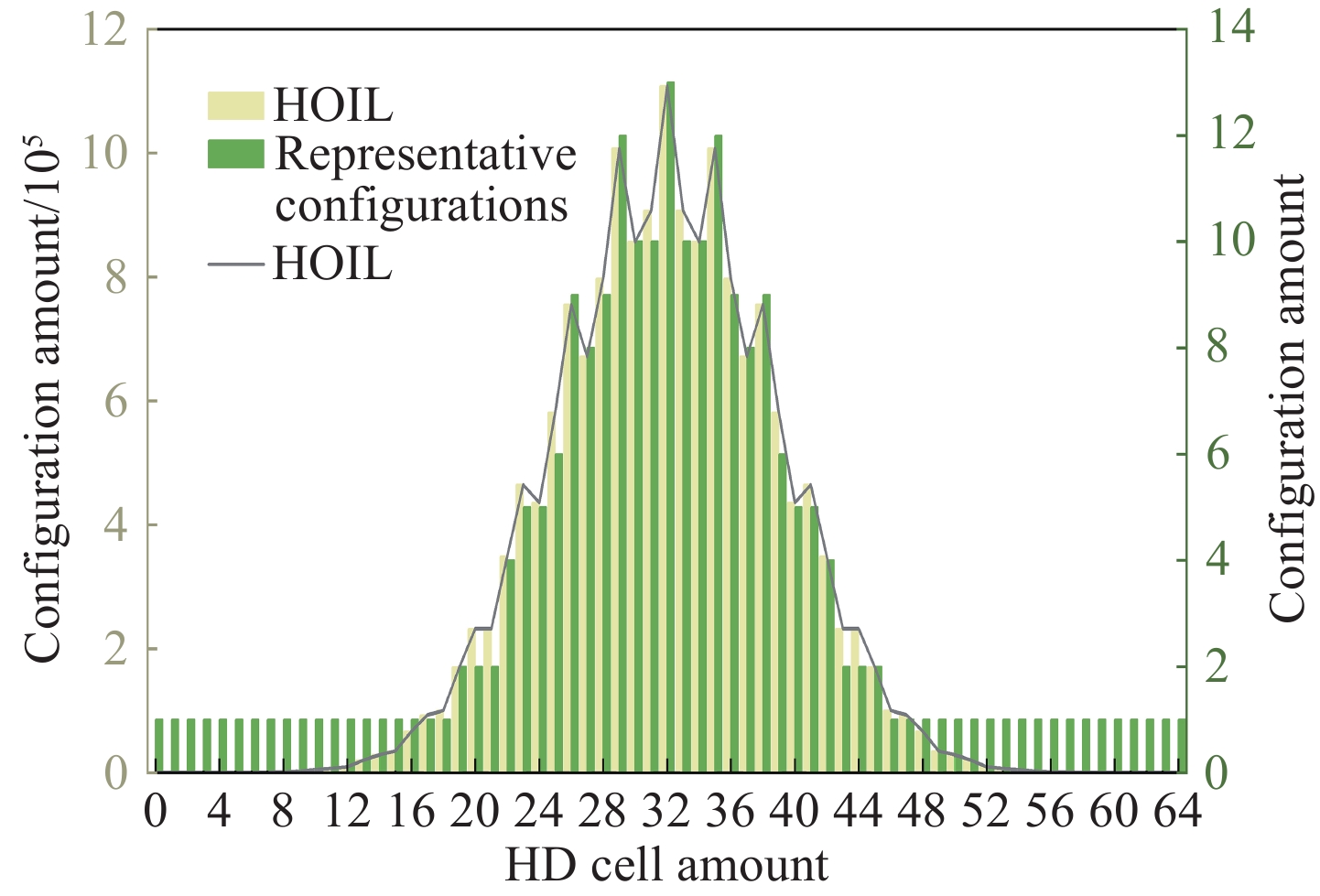
图 3 含有不同HD胞元数量的HOIL分布以及提取的200个代表性构型的分布
Figure 3. Distribution of HOIL containing different HD cell amounts, and distribution of 200 representative configurations
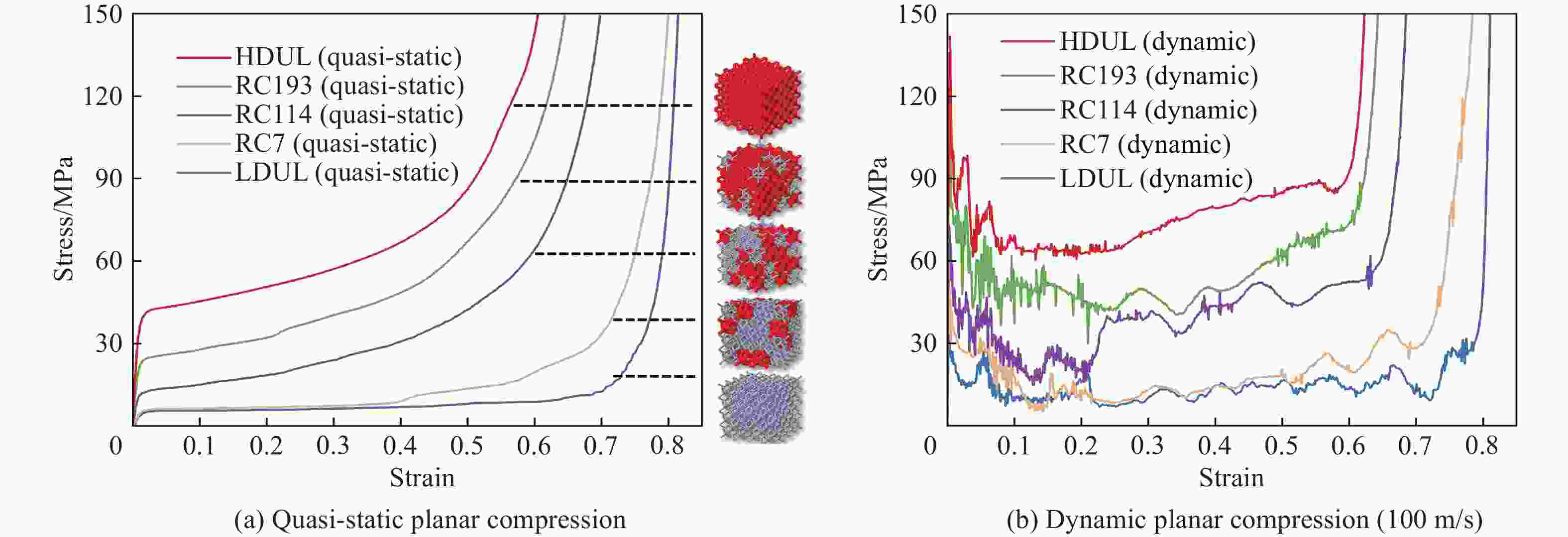
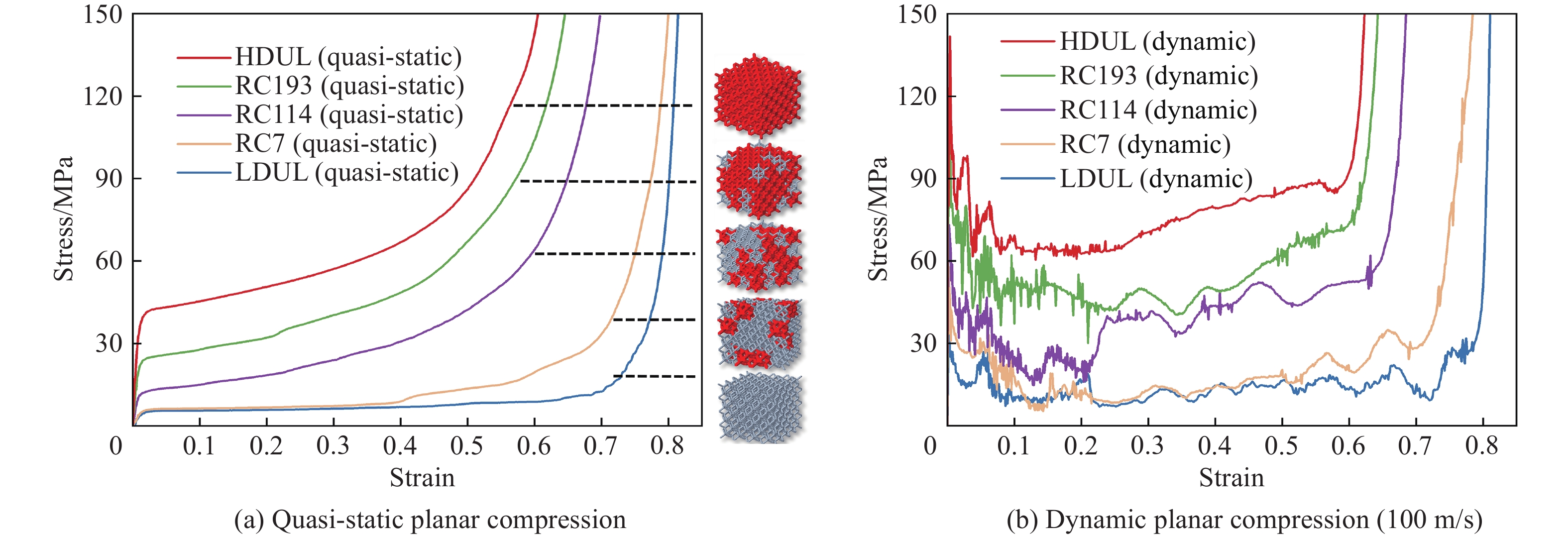
图 4 5种典型构型在准静态压缩和100 m/s动态平面压缩下的准静态应力-应变曲线
Figure 4. Nominal stress-strain curves under quasi-static planar compression and 100 m/s dynamic planar compression for five configurations
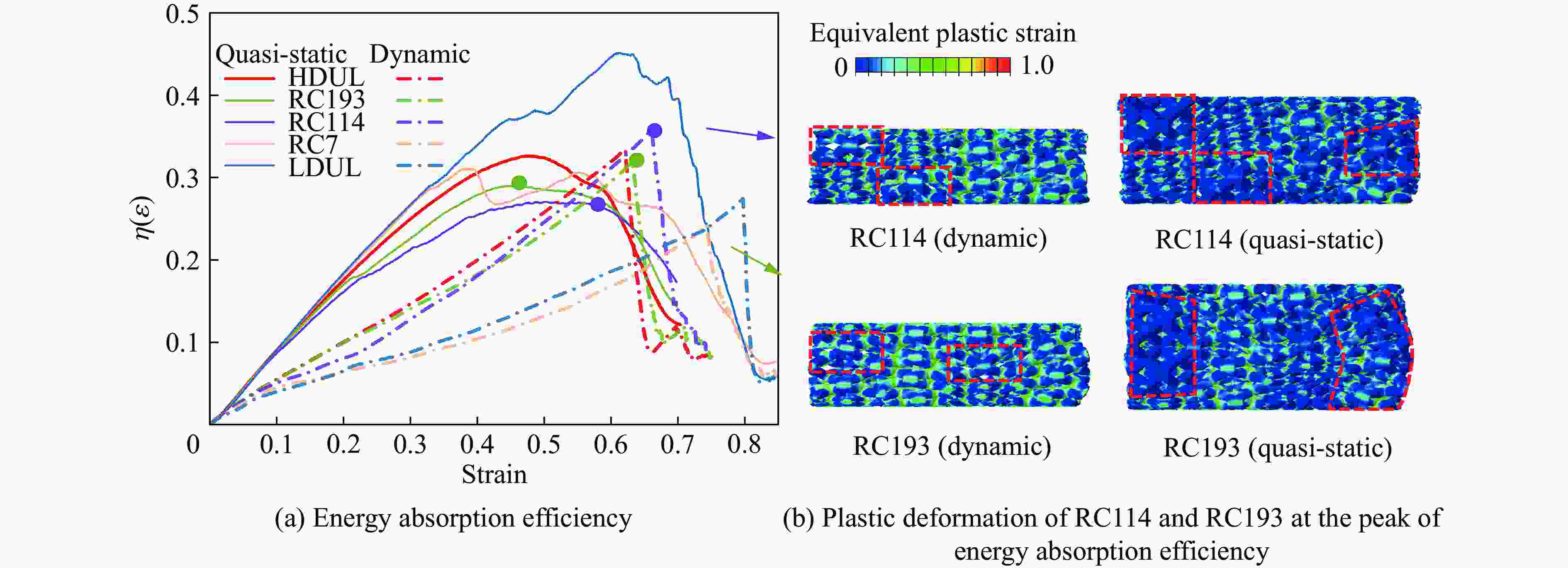
图 6 最大能量吸收效率标准的局限性
Figure 6. Limitations of the maximum energy absorption efficiency standard
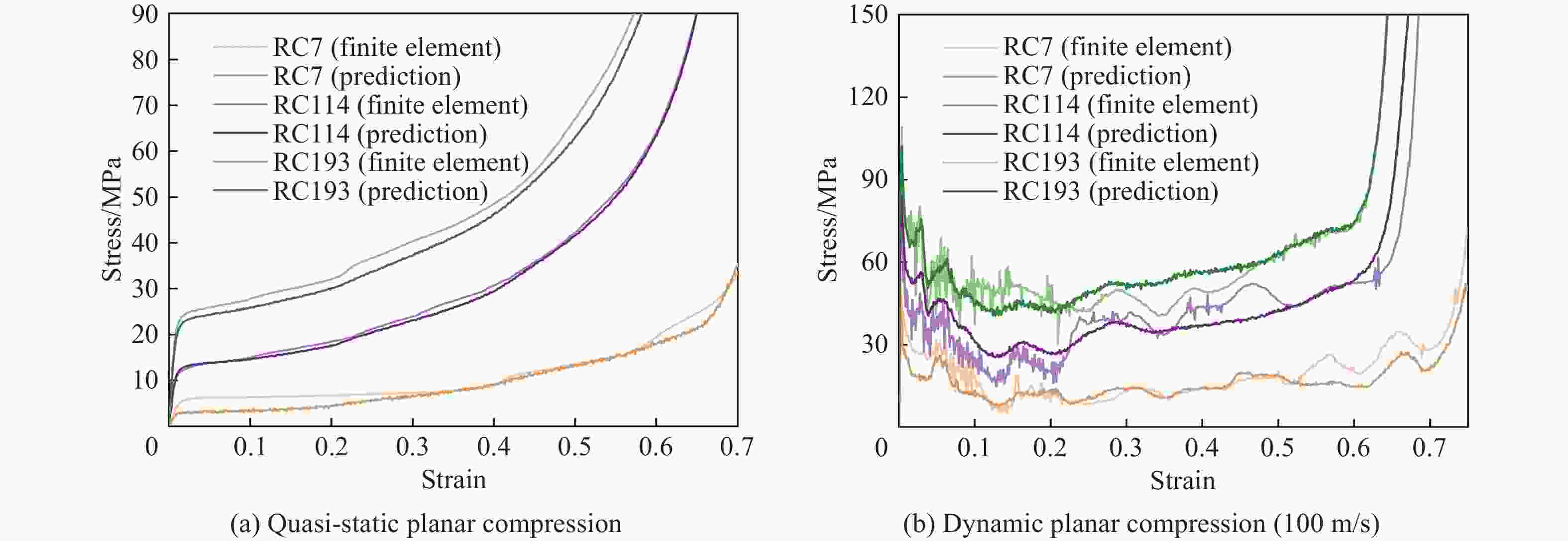
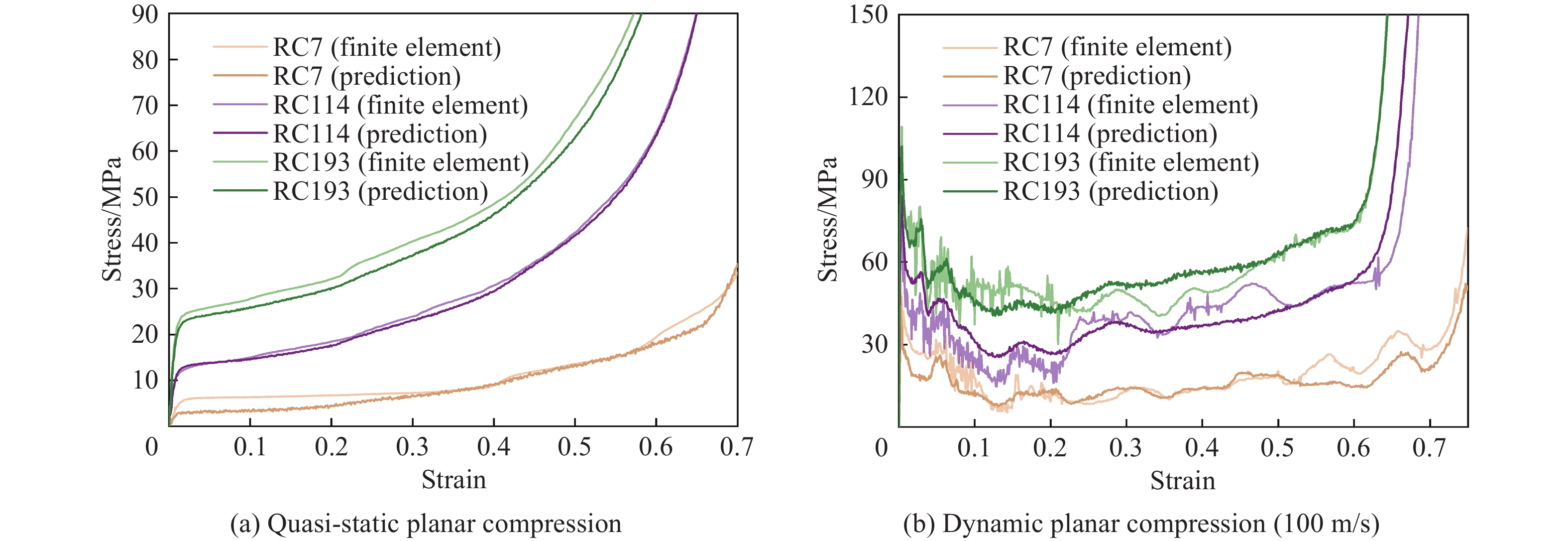
图 7 3种混杂点阵构型的有限元模拟与机器学习模型预测的应力-应变曲线对比
Figure 7. Finite element simulation and machine learning model prediction of stress-strain curves for three HOIL configurations
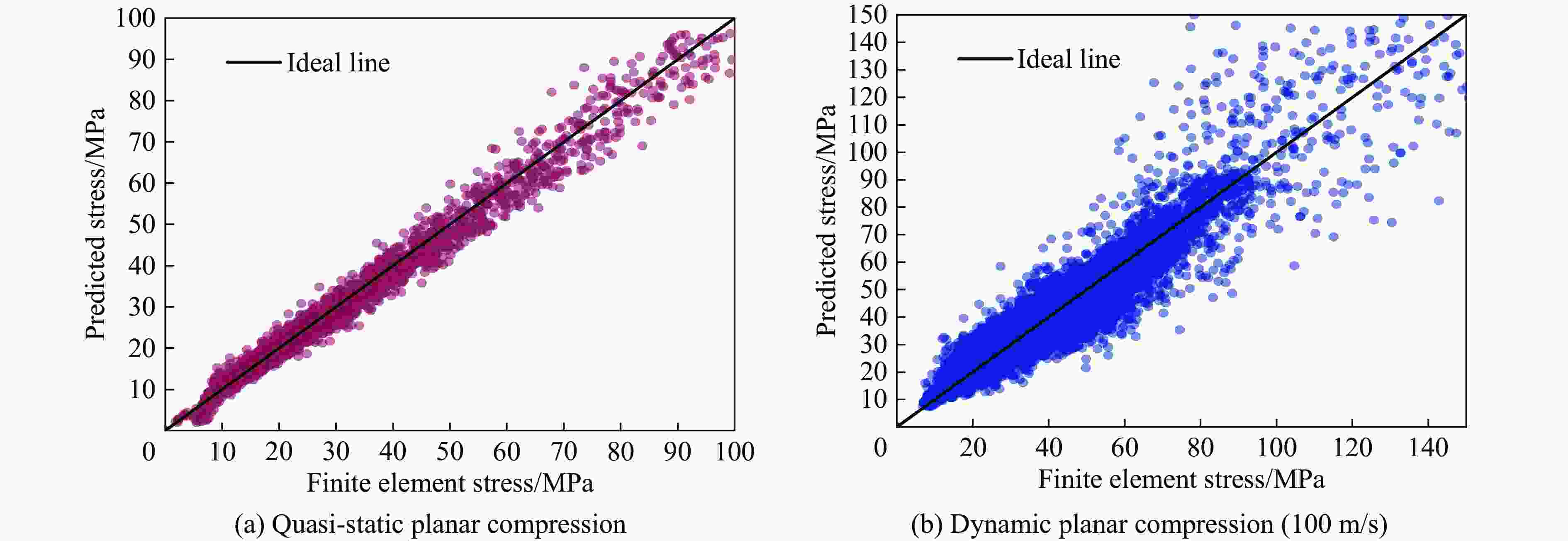
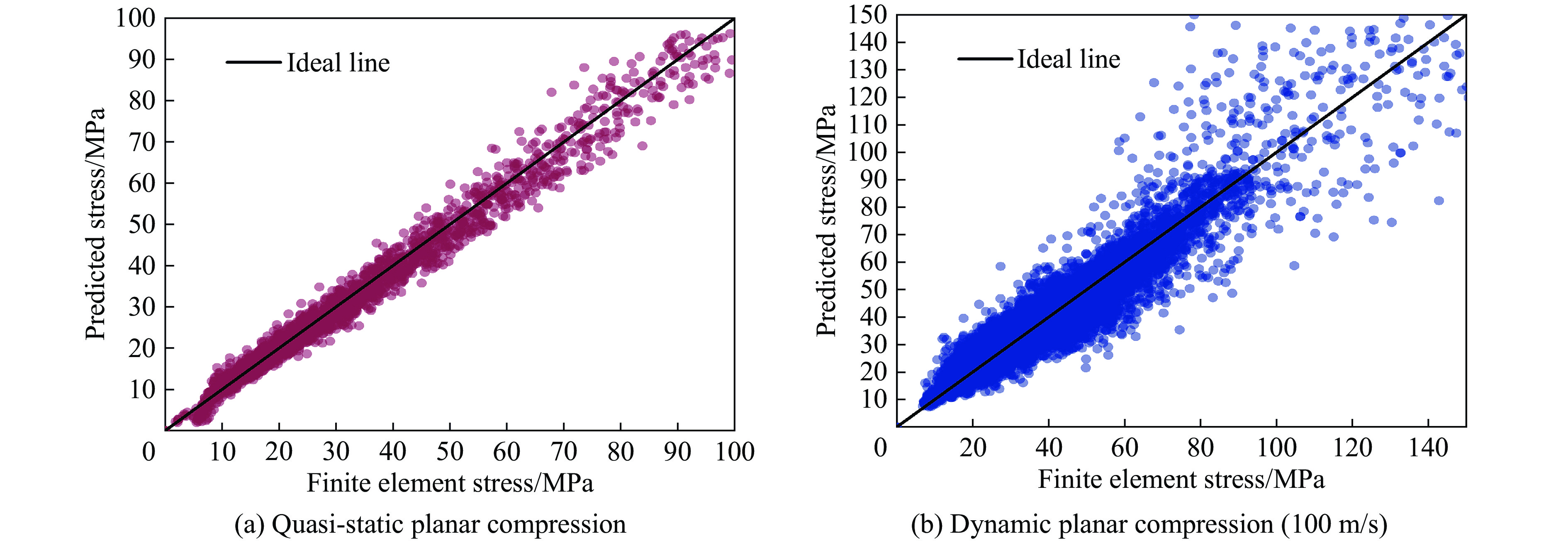
图 8 Bi-LSTM和有限元方法获得应力点的线性关系
Figure 8. Linear relationship between stresses obtained from Bi-LSTM predictions and finite element simulations
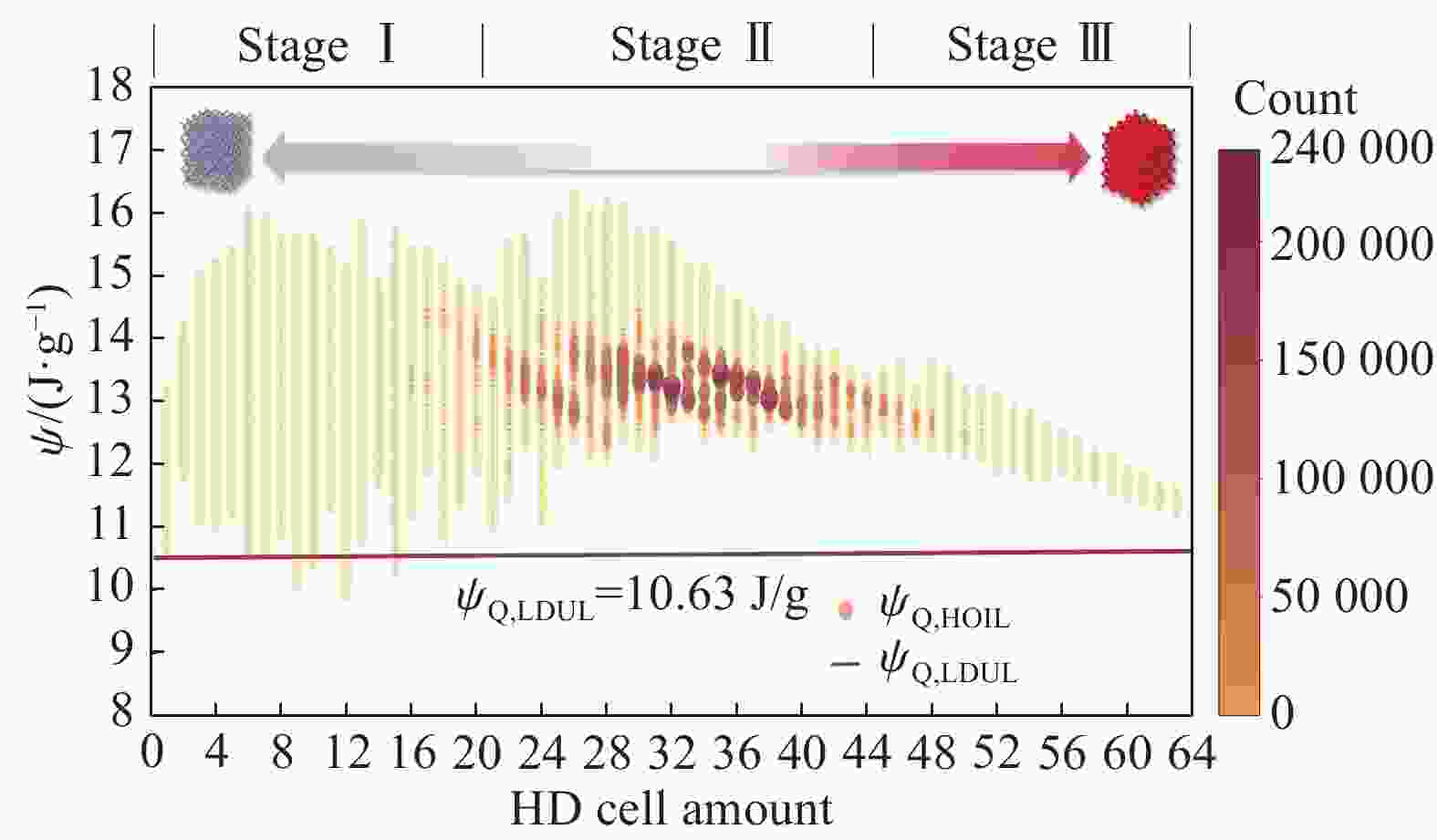
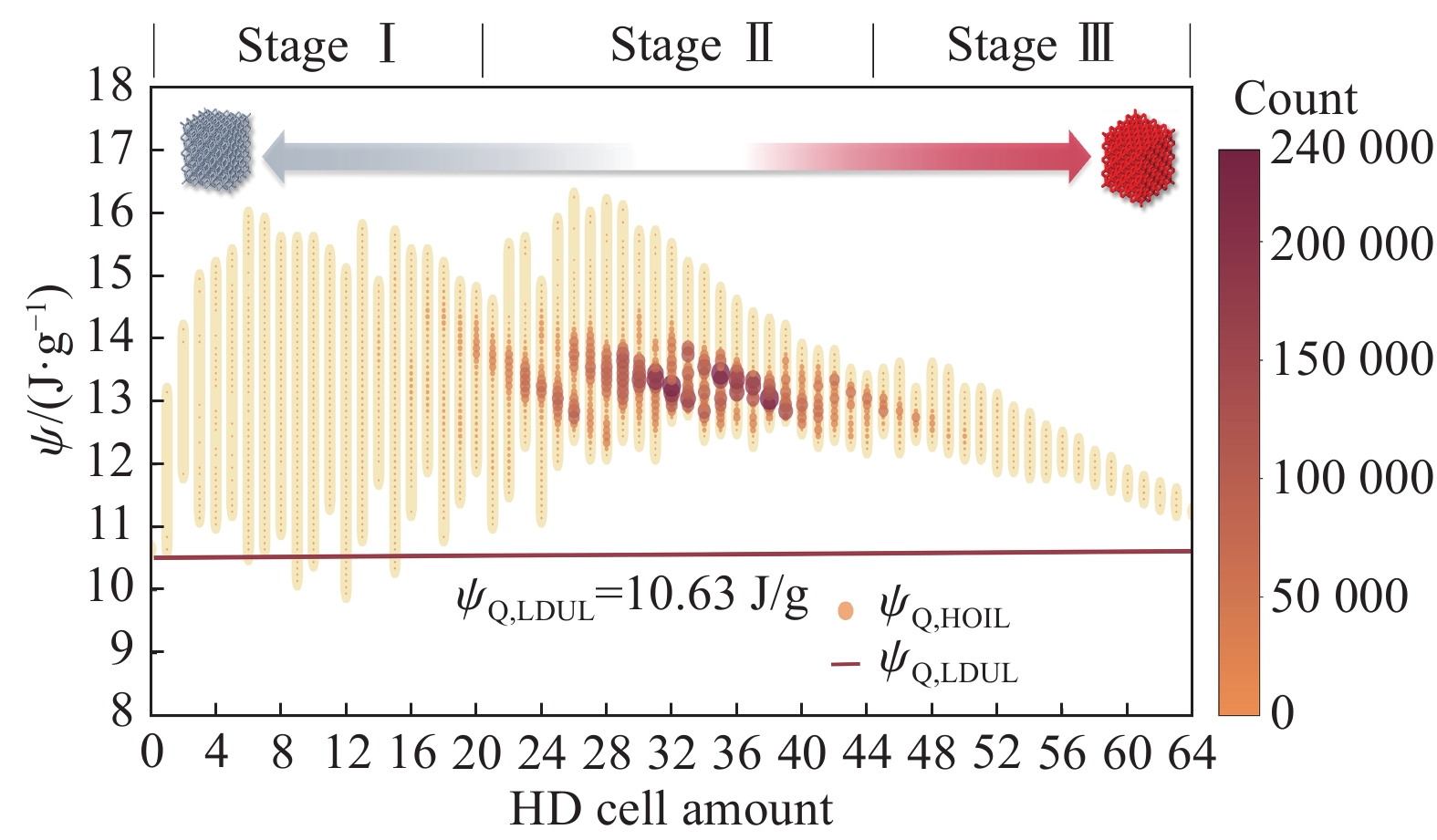
图 9 准静态压缩下HOIL的比吸能随HD胞元数量的变化趋势
Figure 9. Variation trend of SEA of HOIL under quasi-static compression with the increase of HD cell amount
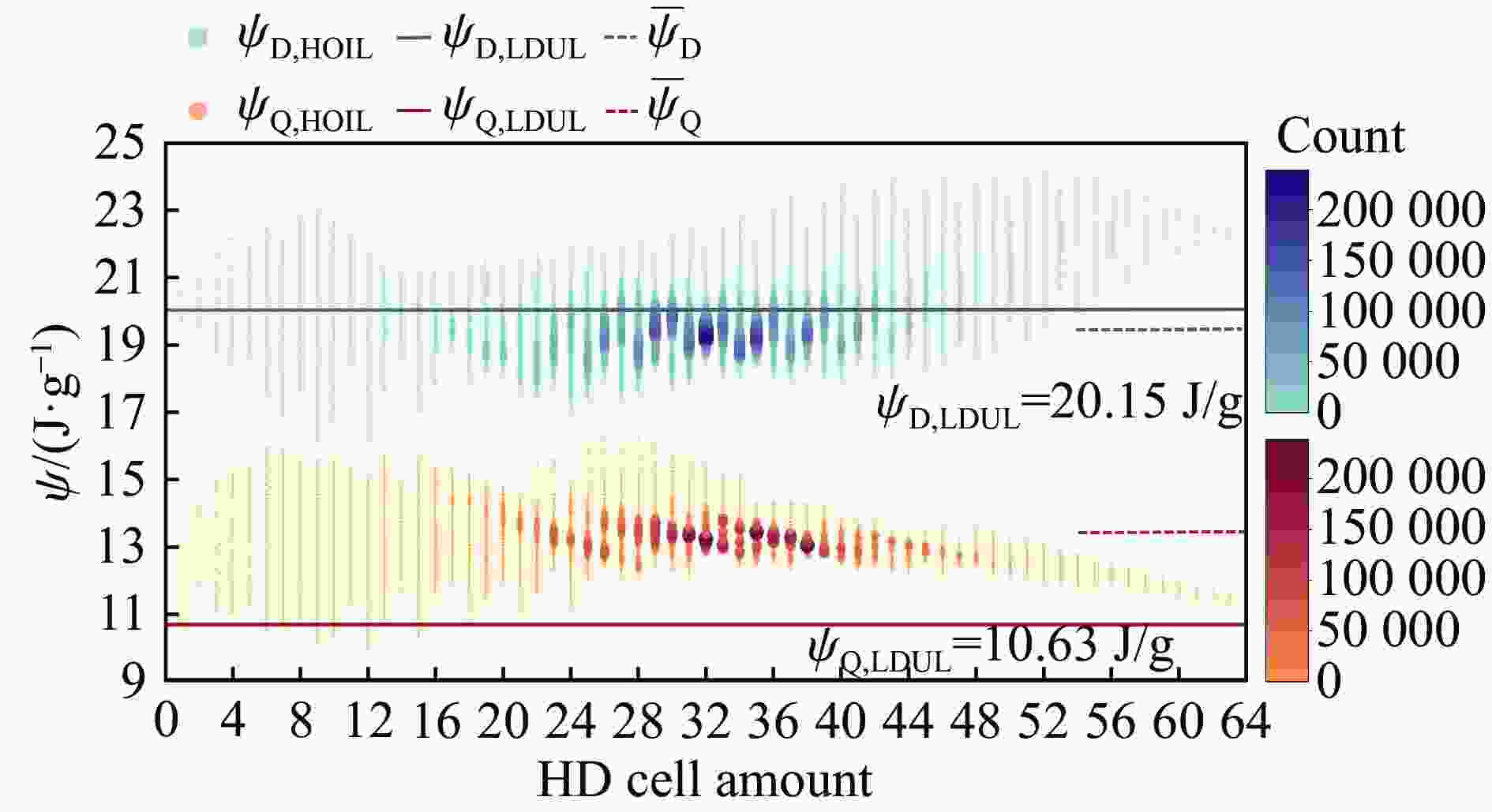
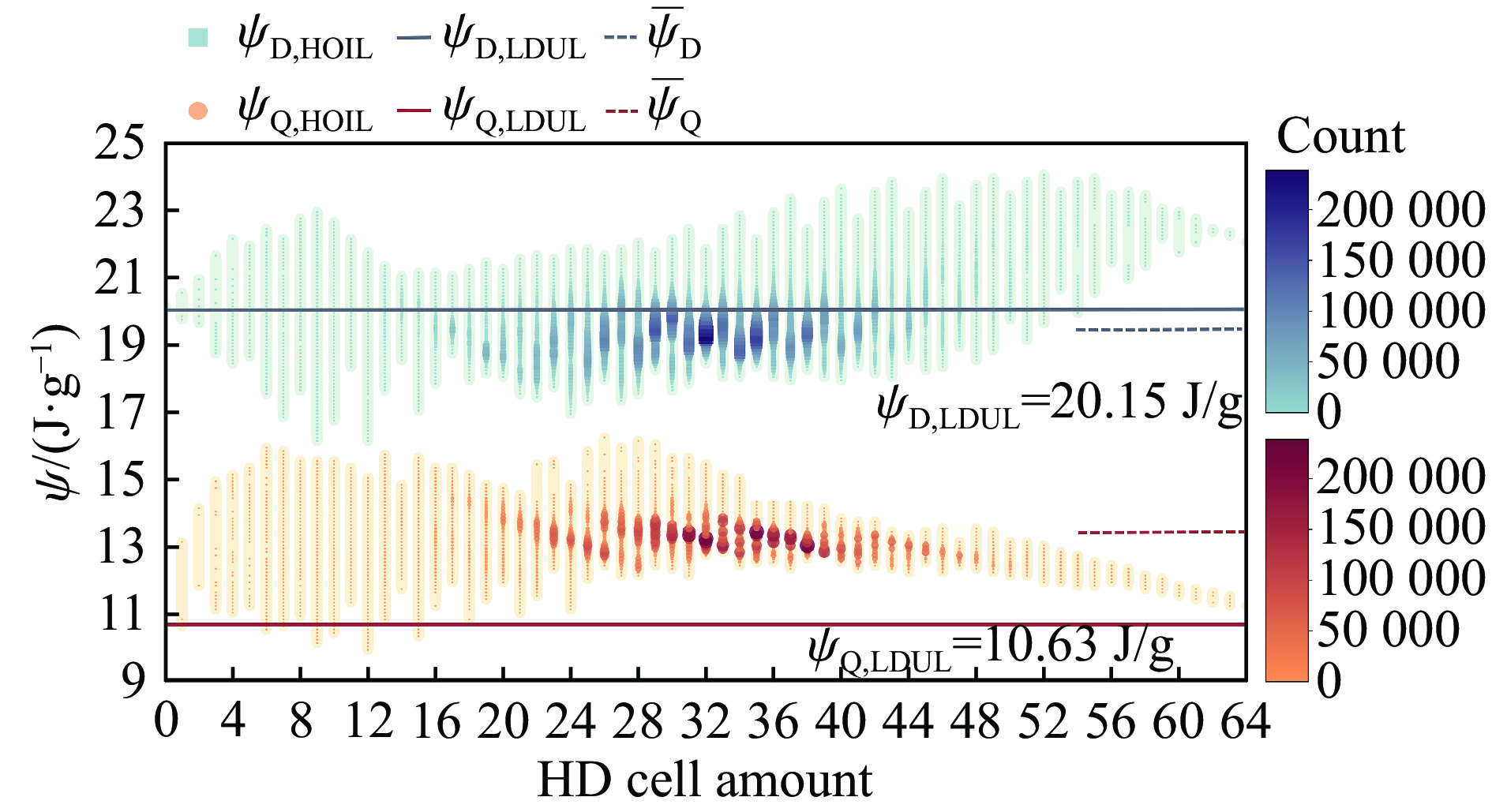
图 10 HOIL的比吸能性能在准静态压缩和100 m/s动态压缩条件下对比
Figure 10. Comparison of SEA of HOIL under quasi-static compression and 100 m/s dynamic compression conditions
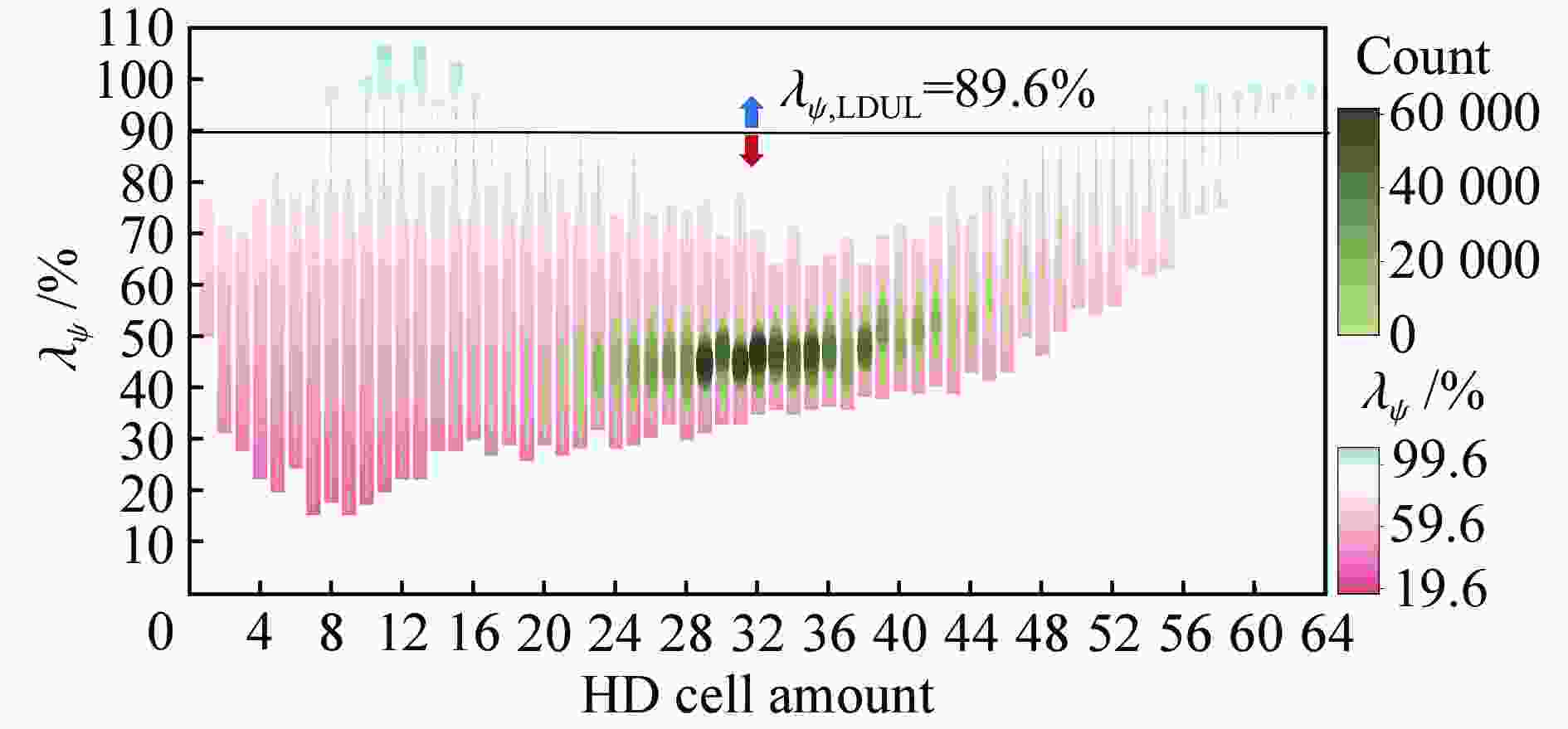
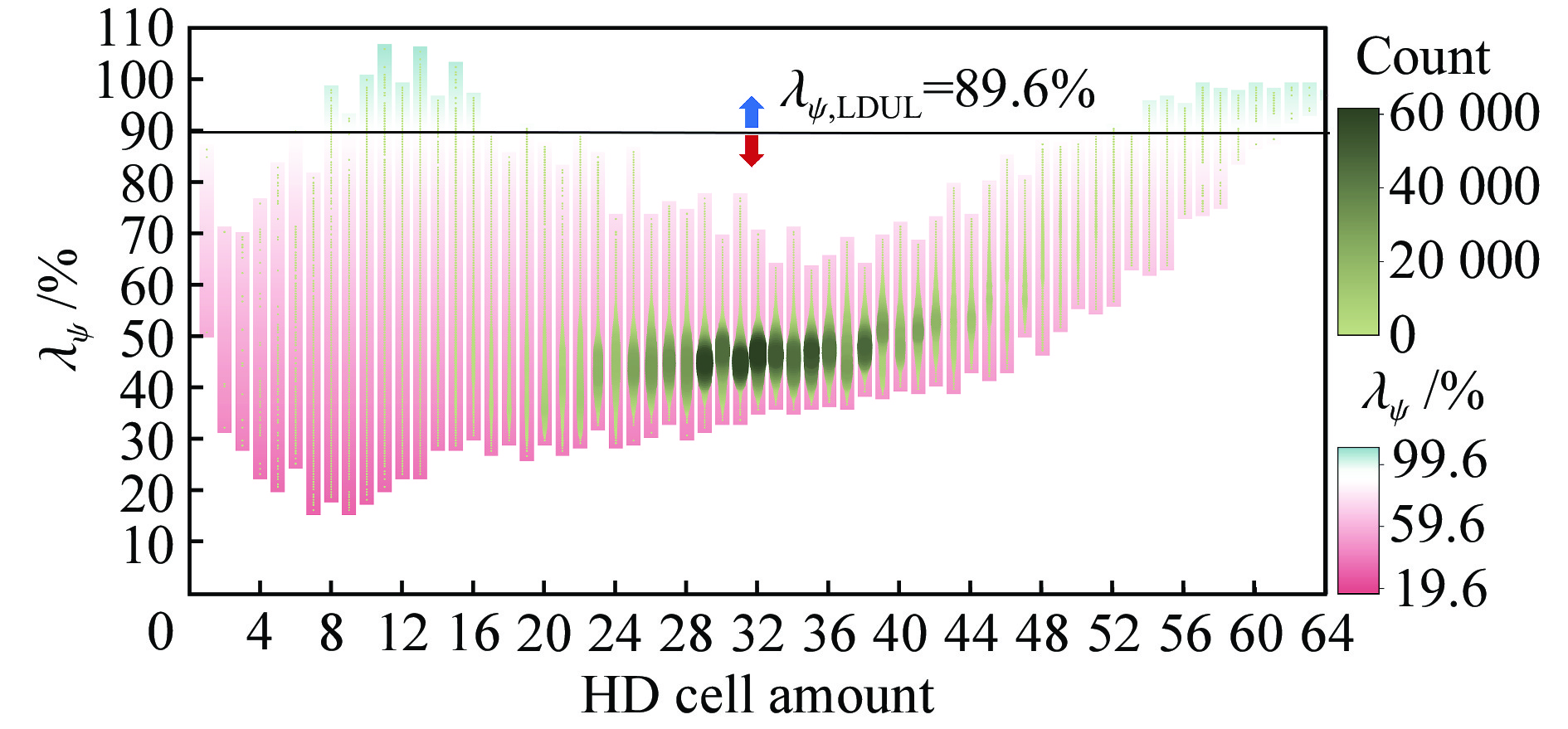
图 11 从准静态到动态加载下HOIL的比吸能提升率分布
Figure 11. Distribution of specific energy absorption improvement rate of HOIL structures from quasi-static to dynamic conditions
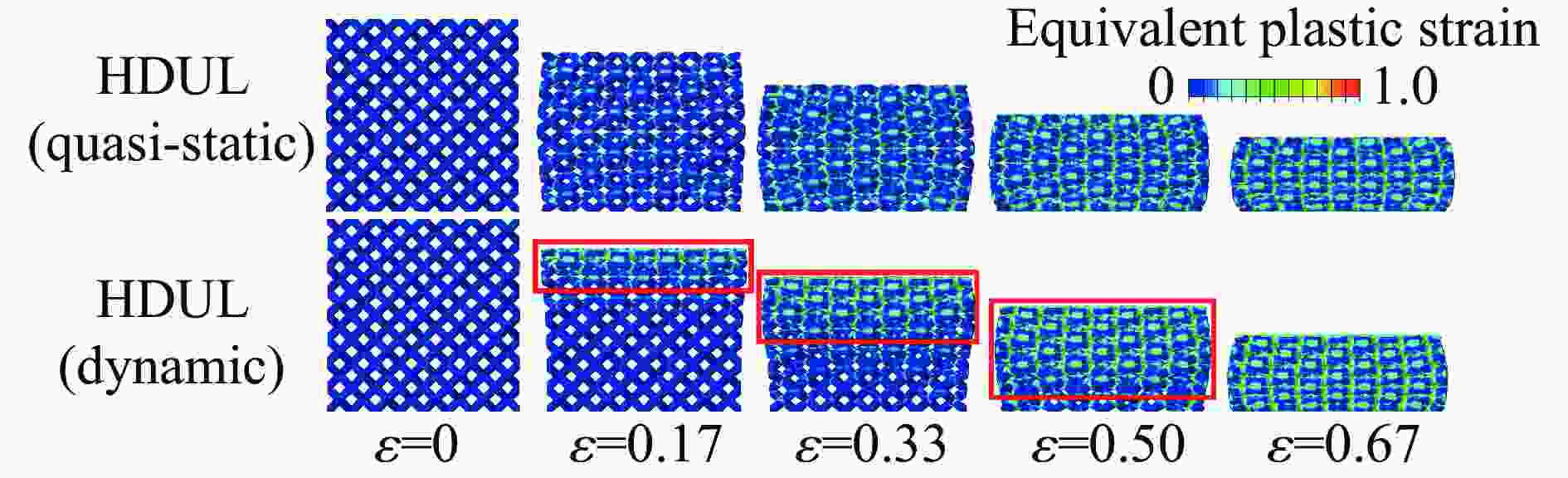
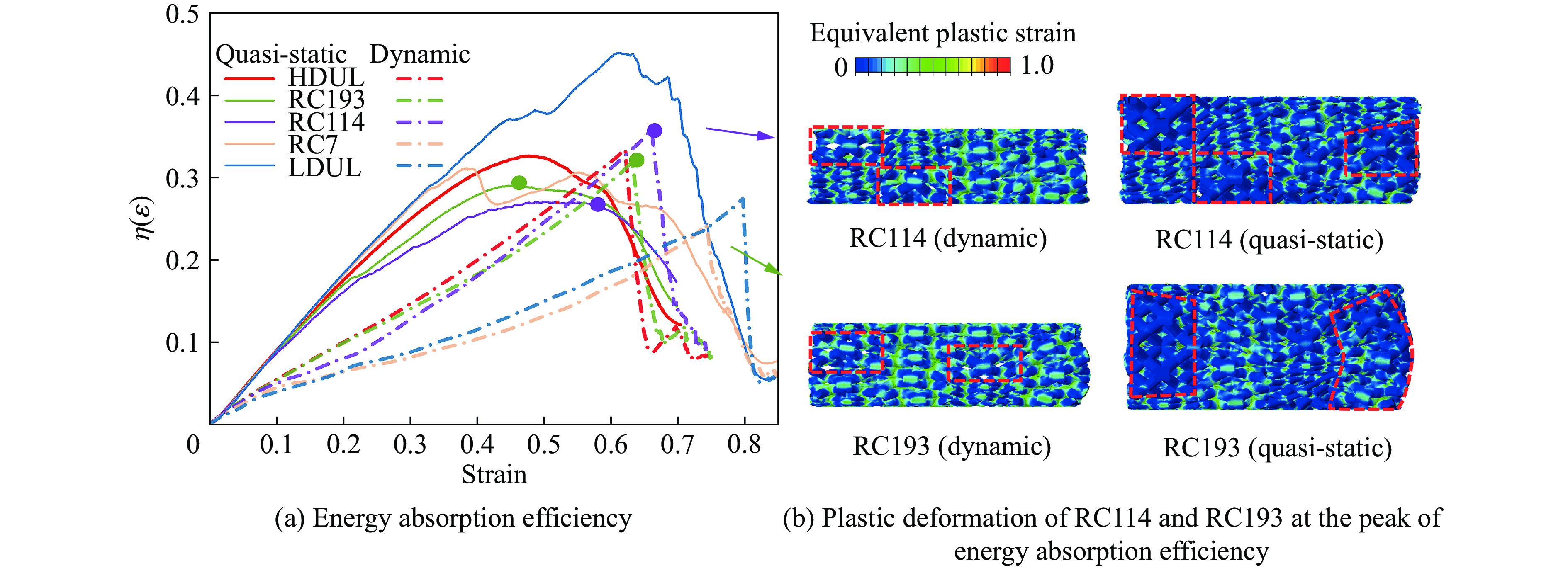
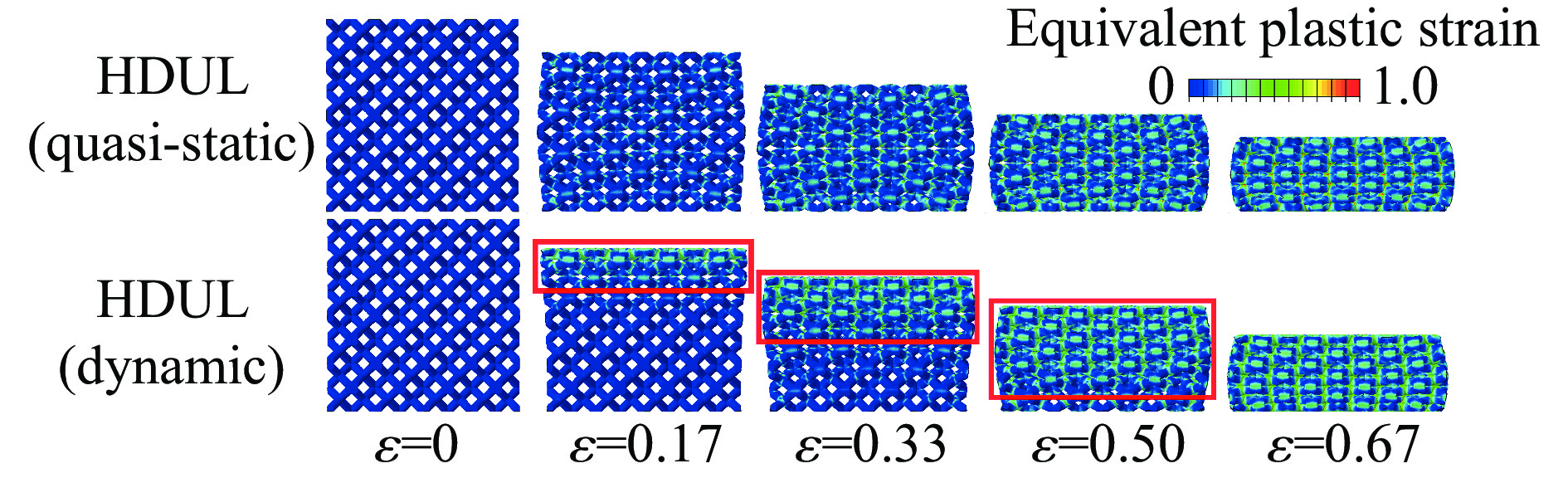
图 12 HDUL在准静态和动态压缩条件下的塑性变形演化
Figure 12. Plastic deformation evolution of HDUL under quasi-static and dynamic planar compression conditions
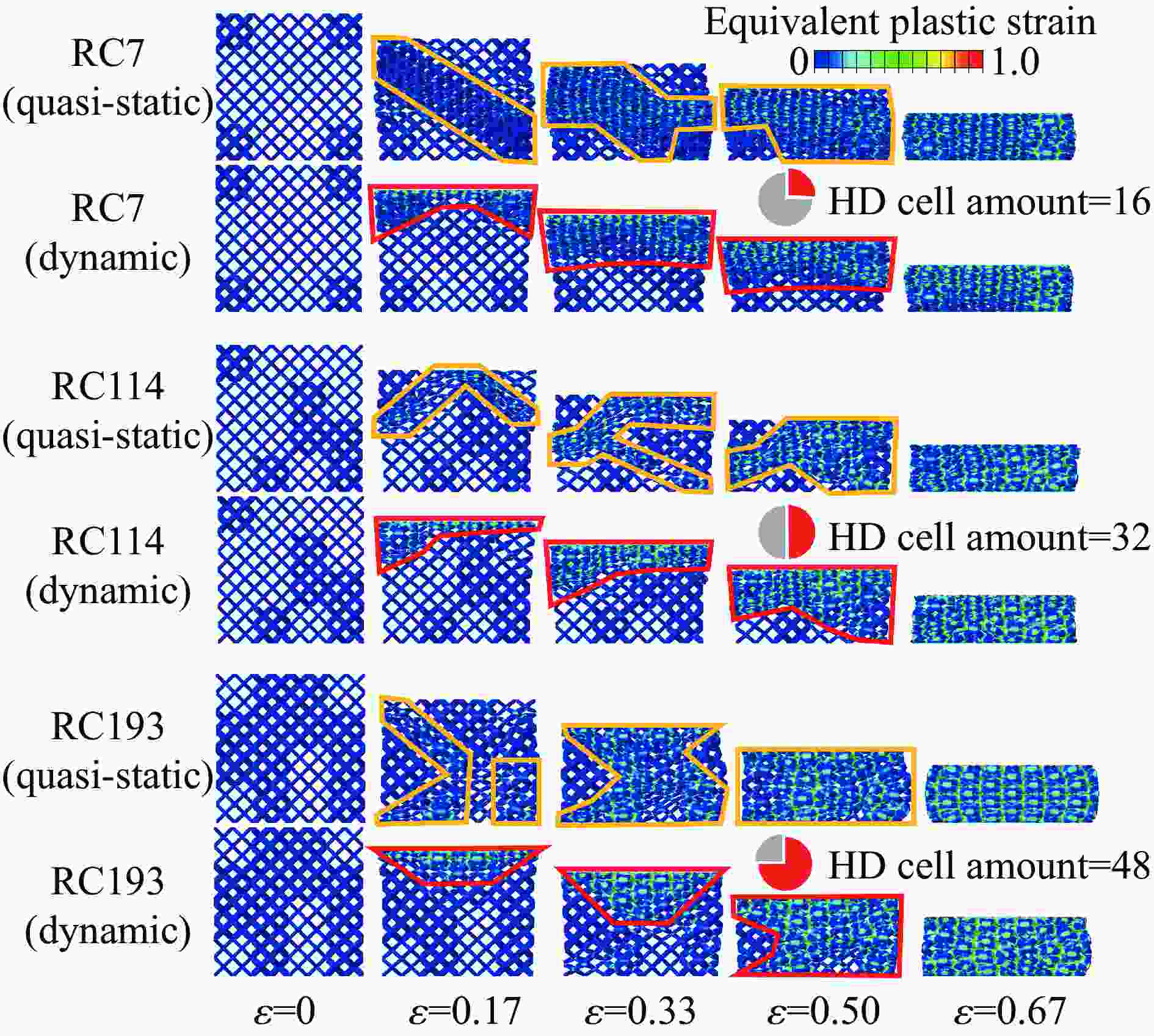
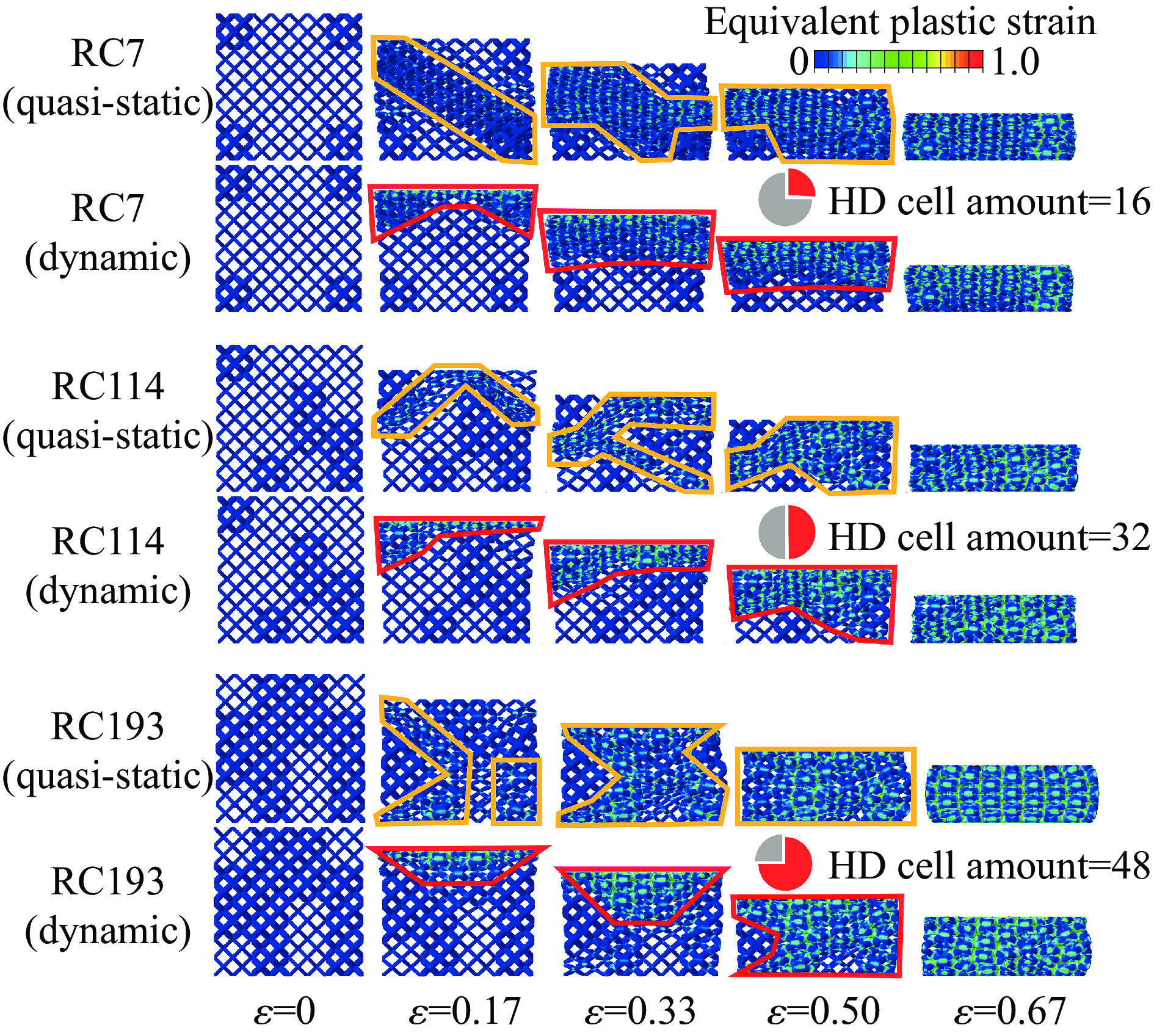
图 13 3种混杂点阵结构在准静态和动态压缩条件下的塑性变形演化
Figure 13. Plastic deformation evolution of three HOIL configurations under quasi-static and dynamic compression conditions
表 1 机器学习预测准确性评估指标
Table 1. Indicators for evaluating the accuracy of machine learning predictions
名称 公式 准静态压缩 动态压缩(100 m/s) 平均相对误差(RE), $ \overline{\left| e\right| } $ $ \left| {e}_{i}\right| =\left|\dfrac{{{{p}_{i}}-y}_{i}}{{y}_{i}}\right|\times 100{\text{%}} $ 6.45% 13.7% 相对误差分布概率P P(|ei|≤10%) 0.787 0.482 P(|ei|≤20%) 0.977 0.773 R² $ {R}^{2}=1-\dfrac{\displaystyle\sum\limits_{i=1}^{N}{\left({y}_{i}-{p}_{i}\right)}^{2}}{\displaystyle\sum\limits_{i=1}^{N}{\left({y}_{i}-\overline{y}\right)}^{2}} $ 0.990 0.971 均方根误差(RMSE), δ $ \delta =\sqrt{\dfrac{\displaystyle\sum\limits_{i=1}^{N}{\left({y}_{i}-{p}_{i}\right)}^{2}}{N}}\ $ 3.98 MPa 20.6 MPa 平均绝对误差(MAE), $ \xi $ $ \xi =\dfrac{\displaystyle\sum\limits_{i=1}^{N}\left| {y}_{i}-{p}_{i}\right| }{N} $ 2.33 MPa 8.90 MPa  下载: 导出CSV
-
[1] 王向明, 苏亚东, 吴斌, 等. 微桁架点阵结构在飞机结构/功能一体化中的应用 [J]. 航空制造技术, 2018, 61(10): 16–25. DOI: 10.16080/j.issn1671-833x.2018.10.016.WANG X M, SU Y D, WU B, et al. Application for additive manufacturing of lattice materials on integrated aircraft structures and functions [J]. Aeronautical Manufacturing Technology, 2018, 61(10): 16–25. DOI: 10.16080/j.issn1671-833x.2018.10.016. [2] LIU Y B. Mechanical properties of a new type of plate-lattice structures [J]. International Journal of Mechanical Sciences, 2021, 192: 106141. DOI: 10.1016/j.ijmecsci.2020.106141. [3] XU Y L, LI X D, HAN G Y, et al. The effect of number and size of cellular structures on compressive properties, deformation behavior, and energy absorption characteristics of Ti6Al4V lattice structures fabricated by selective laser melting [J]. Advanced Engineering Materials, 2025, 27(23): 2501328. DOI: 10.1002/adem.202501328. [4] ANDREW J J, SCHNEIDER J, UBAID J, et al. Energy absorption characteristics of additively manufactured plate-lattices under low-velocity impact loading [J]. International Journal of Impact Engineering, 2021, 149: 103768. DOI: 10.1016/j.ijimpeng.2020.103768. [5] 廖中源, 王英俊, 王书亭. 基于拓扑优化的变密度点阵结构体优化设计方法 [J]. 机械工程学报, 2019, 55(8): 65–72. DOI: 10.3901/JME.2019.08.065.LIAO Z Y, WANG Y J, WANG S T. Graded-density lattice structure optimization design based on topology optimization [J]. Journal of Mechanical Engineering, 2019, 55(8): 65–72. DOI: 10.3901/JME.2019.08.065. [6] 吴彦霖. 基于SLM制备的钛合金三维点阵结构的力学性能研究[D]. 重庆: 重庆大学, 2016.WU Y L. An investigation into the mechanical properties of Ti6Al4V lattice structures manufactured using selective laser melting [D]. Chongqing: Chongqing University, 2016. [7] 廉艳平, 王潘丁, 高杰, 等. 金属增材制造若干关键力学问题研究进展 [J]. 力学进展, 2021, 51(3): 648–701. DOI: 10.6052/1000-0992-21-037.LIAN Y P, WANG P D, GAO J, et al. Fundamental mechanics problems in metal additive manufacturing: a state-of-art review [J]. Advances in Mechanics, 2021, 51(3): 648–701. DOI: 10.6052/1000-0992-21-037. [8] EMANUELLI L, BABAEI M, BIASI D R, et al. Optimising β-Ti21S alloy lattice structures for enhanced femoral implants: a study on mechanical and biological performance [J]. Materials, 2025, 18(1): 170. DOI: 10.3390/ma18010170. [9] KUMAR M, MEENA V K, SINGH S. Mechanical properties and microbial assessment of additively manufactured diamond and gyroid Ti-6Al-4V ELI scaffolds for interbody fusion cages applications [J]. Materials Research Express, 2025, 12(2): 026503. DOI: 10.1088/2053-1591/adaac4. [10] ZHANG M, ZHAO C, LI G X, et al. Mechanical properties of the composite lattice structure with variable density and multi-configuration [J]. Composite Structures, 2023, 304: 116405. DOI: 10.1016/j.compstruct.2022.116405. [11] LI L B, YANG F, GUO Z M, et al. Truss-plate hybrid lattice metamaterials with broadband vibration attenuation and enhanced energy absorption [J]. Virtual and Physical Prototyping, 2024, 19(1): e2345386. DOI: 10.1080/17452759.2024.2345386. [12] CUI Z, ZHAO J Y, XU R, et al. Mechanical design and energy absorption performances of novel plate-rod hybrid lattice structures [J]. Thin-Walled Structures, 2024, 194: 111349. DOI: 10.1016/J.TWS.2023.111349. [13] 霍鹏, 许述财, 范晓文, 等. 鹿角骨单位仿生薄壁管斜向冲击耐撞性研究 [J]. 爆炸与冲击, 2020, 40(11): 113102. DOI: 10.11883/bzycj-2020-0035.HUO P, XU S C, FAN X W, et al. Oblique impact resistance of a bionic thin-walled tube based on antles osteon [J]. Explosion and Shock Waves, 2020, 40(11): 113102. DOI: 10.11883/bzycj-2020-0035. [14] 吴鹤翔, 刘颖. 梯度变化对密度梯度蜂窝材料力学性能的影响 [J]. 爆炸与冲击, 2013, 33(2): 163–168. DOI: 10.11883/1001-1455(2013)02-0163-06.WU H X, LIU Y. Influences of density gradient variation on mechanical performances [J]. Explosion and Shock Waves, 2013, 33(2): 163–168. DOI: 10.11883/1001-1455(2013)02-0163-06. [15] WANG H R, GU D D, LIN K J, et al. Compressive properties of bio-inspired reticulated shell structures processed by selective laser melting [J]. Advanced Engineering Materials, 2019, 21(4): 1801168. DOI: 10.1002/adem.201801168. [16] WANG M, ZHANG J, WANG W, et al. Compression behaviors of the bio-inspired hierarchical lattice structure with improved mechanical properties and energy absorption capacity [J]. Journal of Materials Research and Technology, 2022, 17: 2755–2771. DOI: 10.1016/J.JMRT.2022.02.046. [17] LI S, ZHU H G, FENG G Z, et al. Influence mechanism of cell-arrangement strategy on energy absorption of dual-phase hybrid lattice structure [J]. International Journal of Impact Engineering, 2023, 175: 104528. DOI: 10.1016/J.IJIMPENG.2023.104528. [18] WANG Y L, YU Y, WANG C Y, et al. On the out-of-plane ballistic performances of hexagonal, reentrant, square, triangular and circular honeycomb panels [J]. International Journal of Mechanical Sciences, 2020, 173: 105402. DOI: 10.1016/j.ijmecsci.2019.105402. [19] YANG X F, XI X L, PAN Q F, et al. In-plane dynamic crushing of a novel circular-celled honeycomb nested with petal-shaped mesostructure [J]. Composite Structures, 2019, 226: 111219. DOI: 10.1016/j.compstruct.2019.111219. [20] YAN C, FENG X M, WICK C, et al. Machine learning assisted discovery of new thermoset shape memory polymers based on a small training dataset [J]. Polymer, 2021, 214: 123351. DOI: 10.1016/j.polymer.2020.123351. [21] MURUGAN J, MUNIYANDY E, MIROSLAV M, et al. Accurate estimation of tensile strength of 3D printed parts using machine learning algorithms [J]. Processes, 2022, 10(6): 1158. DOI: 10.3390/pr10061158. [22] 郑伟达, 张惠然, 胡红青, 等. 基于不同机器学习算法的钙钛矿材料性能预测 [J]. 中国有色金属学报, 2019, 29(4): 803–809. DOI: 10.19476/j.ysxb.1004.0609.2019.04.17.ZHENG W D, ZHANG H R, HU H Q, et al. Performance prediction of perovskite materials based on different machine learning algorithms [J]. The Chinese Journal of Nonferrous Metals, 2019, 29(4): 803–809. DOI: 10.19476/j.ysxb.1004.0609.2019.04.17. [23] 吴炜, 孙强. 应用机器学习加速新材料的研发 [J]. 中国科学: 物理学 力学 天文学, 2018, 48(10): 58–70. DOI: 10.1360/sspma2018-00073.WU W, SUN Q. Applying machine learning to accelerate new materials development [J]. Scientia Sinica Physica, Mechanica & Astronomica, 2018, 48(10): 58–70. DOI: 10.1360/sspma2018-00073. [24] NATH D, ANKIT, NEOG D R, et al. Application of machine learning and deep learning in finite element analysis: a comprehensive review [J]. Archives of Computational Methods in Engineering, 2024, 31(5): 2945–2984. DOI: 10.1007/s11831-024-10063-0. [25] 王扬卫, 姜炳岳, 程兴旺, 等. 基于机器学习的梯度点阵材料优化设计 [J]. 北京理工大学学报, 2023, 43(3): 311–319. DOI: 10.15918/j.tbit1001-0645.2022.062.WANG Y W, JIANG B Y, CHENG X W, et al. Optimization design of graded lattice materials based on machine learning [J]. Transactions of Beijing Institute of Technology, 2023, 43(3): 311–319. DOI: 10.15918/j.tbit1001-0645.2022.062. [26] WU Y R, MAO Z F, FENG Y Q. Energy absorption prediction for lattice structure based on D2 shape distribution and machine learning [J]. Composite Structures, 2023, 319: 117136. DOI: 10.1016/j.compstruct.2023.117136. [27] ISANAKA B R, MUKHOPADHYAY T, VARMA R K, et al. On exploiting machine learning for failure pattern driven strength enhancement of honeycomb lattices [J]. Acta Materialia, 2022, 239: 118226. DOI: 10.1016/j.actamat.2022.118226. [28] YÜKSEL N, EREN O, BÖRKLÜ H R, et al. Mechanical properties of additively manufactured lattice structures designed by deep learning [J]. Thin-Walled Structures, 2024, 196: 111475. DOI: 10.1016/j.tws.2023.111475. [29] 陈思远. 轻质三维梯度夹芯结构的设计、制备及冲击吸能特性研究[D]. 哈尔滨: 哈尔滨工程大学, 2021. DOI: 10.27060/d.cnki.ghbcu.2021.000517.CHEN S Y. Research on design, fabrication and impact energy absorption characteristics of lightweight three-dimensional gradient sandwich structure [D]. Harbin: Harbin Engineering University, 2021. DOI: 10.27060/d.cnki.ghbcu.2021.000517. [30] DUAN X M, YU L, CAI S L, et al. Inertia effect of deformation in amorphous solids: a dynamic mesoscale model [J]. Journal of the Mechanics and Physics of Solids, 2024, 193: 105917. DOI: 10.1016/j.jmps.2024.105917. [31] CUI Z, SUN Z P, ZHAO J Y, et al. Response of hybrid plate-rod lattices to static and dynamic compression – an experimental study [J]. International Journal of Impact Engineering, 2025, 202: 105321. DOI: 10.1016/j.ijimpeng.2025.105321. [32] ZHAO J Y, CUI Z, WANG S L, et al. Flexural response of additively manufactured honeycomb sandwich structures with continuous density-gradient variations [J]. Thin-Walled Structures, 2024, 197: 111642. DOI: 10.1016/j.tws.2024.111642. [33] WANG J, ZHU L, DAI T, et al. Deep memory network with Bi-LSTM for personalized context-aware citation recommendation [J]. Neurocomputing, 2020, 410: 103–113. DOI: 10.1016/j.neucom.2020.05.047. [34] WU D W, XUE X H, ZHOU L. Improving the robustness of tree-based prediction model of oil/water relative permeability through hyperparameter optimization and re-ensemble algorithm [J]. Fuel, 2025, 385: 134146. DOI: 10.1016/j.fuel.2024.134146. [35] JAIN S, BHOWMIK A, LEE J. Machine learning approaches for predicting and validating mechanical properties of Mg rare earth alloys for light weight applications [J]. Science and Technology of Advanced Materials, 2025, 26(1): 2449811. DOI: 10.1080/14686996.2025.2449811. -

计量
- 文章访问数: 524
- HTML全文浏览量: 77
- PDF下载量: 89
- 被引次数: 0