



Vacuum explosive welding of a TC4/09MnNiDR steel clad plate and its low-temperature properties
-
摘要: 为探究制备环境压力对钛/钢复合板界面形貌和力学性能的影响机制,利用爆炸焊接技术在20、60 kPa(真空)及100 kPa(常压)下制备了用于−70 ℃低温承压环境的TC4/09MnNiDR钛钢复合板材(分别简称为CP-20、CP-60和CP-100),并使用电子显微镜(scanning electron microscopy,SEM)、能量色散光谱(energy dispersive spectroscopy,EDS)、电子背散射衍射(electron backscatter diffraction,EBSD)及电子探针(electron probe microanalysis,EPMA)对材料的形貌特征、元素分布和晶体特征进行了分析。微观结构表征表明,真空制备环境显著改善复合板界面的质量,随着制备环境压力的降低,界面波形细小且连续均匀,界面熔融层厚度减小,缺陷和脆性金属化合物减少。EBSD分析显示,20、60 kPa压力下界面晶粒细化,再结晶程度提高。这表明通过调节制备环境压力可实现对复合板界面微观结构的有效调控。EPMA分析进一步揭示,熔岛区域主要由Fe和Ti元素组成,焊缝区域成分稳定,Ti与Fe的原子数之比接近1∶1或2∶1,表明界面主要形成TiFe和TiFe2金属间化合物。得益于优化的界面结构,复合板在−70 ℃低温下展现出优异的力学性能:CP-20、CP-60和CP-100的拉伸强度分别为880、911和867 MPa,抗冲击能量分别为17.5、10.2和6.4 J,弯曲强度分别为
1469 、1350 和1167 MPa。本研究表明真空爆炸焊接是一种适用于高性能低温金属复合材料的可靠制备技术。Abstract: Ti/steel clad plates are considered as ideal candidate materials for applications such as marine engineering and low-temperature pressure vessels operating at −70 ℃. However, their large-scale production and application are severely restricted by the manufacturing process and the quality of interfacial bonding. To investigate the influence mechanism of vacuum pressure on interfacial morphology and mechanical properties, TC4/09MnNiDR(Ti/steel) clad plates were fabricated using explosive welding under ambient pressures of 20 , 60, and 100 kPa, and the fabricated clad plates were named as CP-20, CP-60 and CP-100, respectively. A specially designed vacuum chamber was employed to precisely control the environmental pressure during the explosive process. After welding, all specimens were subjected to a uniform stress-relief annealing treatment at 550 ℃ for 2 h under a vacuum atmosphere to eliminate residual stresses and improve the reliability of subsequent characterization. The interfacial microstructure and chemical characteristics were systematically analyzed using multiple characterization techniques. Scanning electron microscopy (SEM) was used to observe interfacial morphology, including wave formation and defect distribution. Energy dispersive spectroscopy (EDS) was applied to examine elemental distribution across the bonding interface. Electron backscatter diffraction (EBSD) was employed to evaluate grain structure, grain boundary characteristics, recrystallization fraction, and texture evolution near the interface. Electron probe microanalysis (EPMA) was conducted to quantitatively determine the chemical composition of the interfacial melting zone and vortex regions, with both mapping and point analyses performed to identify the constituent phases. Mechanical properties at −70 ℃ were evaluated through tensile tests, Charpy impact tests, and three-point bending tests, all carried out in accordance with relevant national standards, with the results reported as mean values ± standard deviations. Results show that the vacuum environment significantly improves interfacial quality. With increasing vacuum degree, the interfacial wave becomes finer, more continuous, and more uniform, while the thickness of the molten layer decreases, and the presence of defects and brittle intermetallic compounds is reduced. EBSD analysis reveals grain refinement and an increased recrystallization fraction at the interface under vacuum conditions, demonstrating that the interfacial microstructure can be effectively controlled by adjusting the ambient pressure. EPMA further reveals that the vortex regions are mainly composed of Fe and Ti elements, while the weld seam region exhibits a stable chemical composition with Ti-to-Fe atom number ratios close to 1∶1 or 2∶1, indicating that the dominant intermetallic phases formed at the interface are TiFe and TiFe2. Benefiting from the optimized interfacial structure, the clad plates exhibit excellent mechanical properties at −70 ℃. The tensile strengths of the CP-20, CP-60 and CP-100 are 880, 911, and 867 MPa, respectively. The impact absorbed energies are 17.5, 10.2, and 6.4 J, respectively. And the flexural strengths are1469 ,1350 , and1167 MPa, respectively. This study demonstrates that vacuum explosive welding is a reliable technique for producing high-performance low-temperature metal composites, with 60 kPa identified as the optimal processing window. -
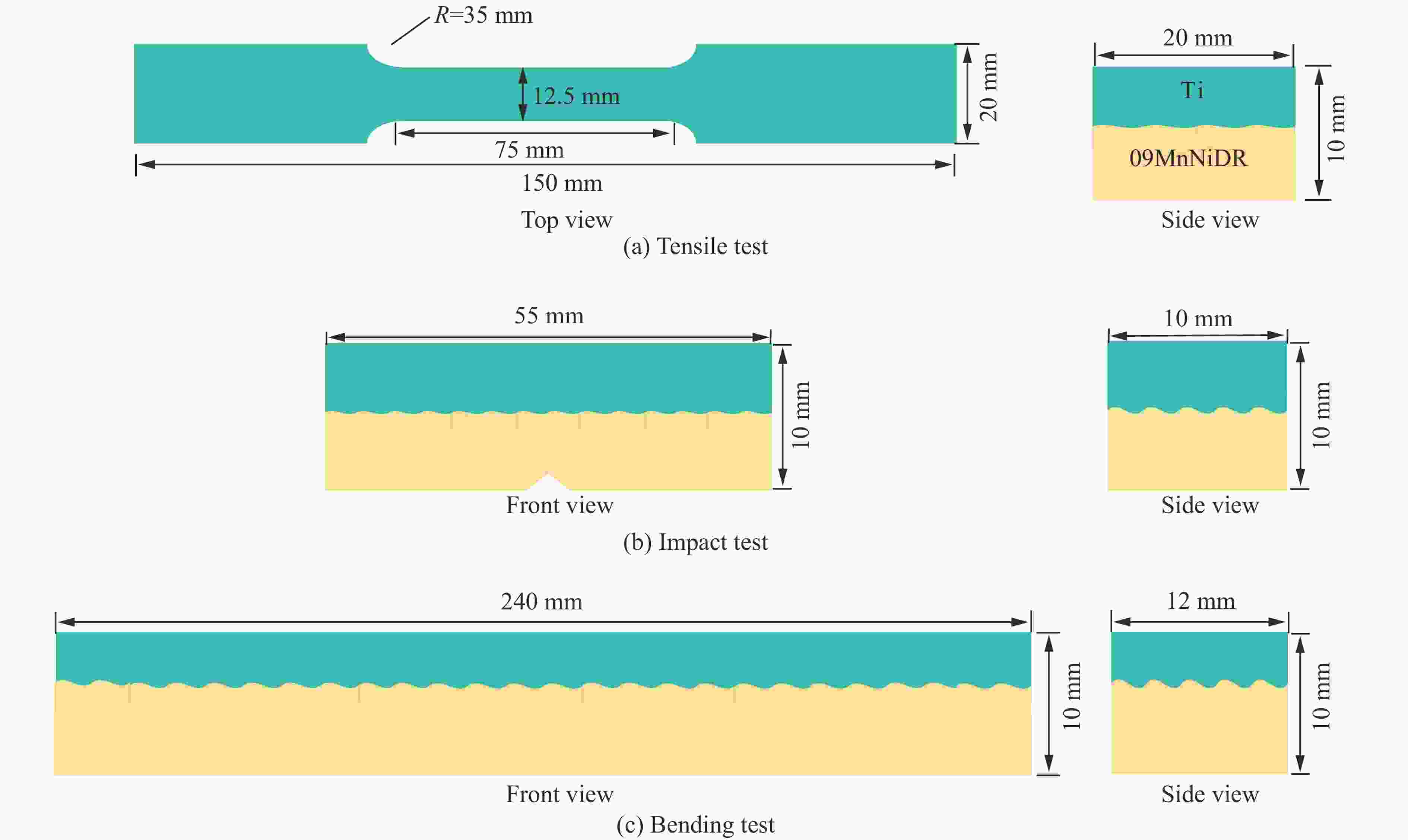
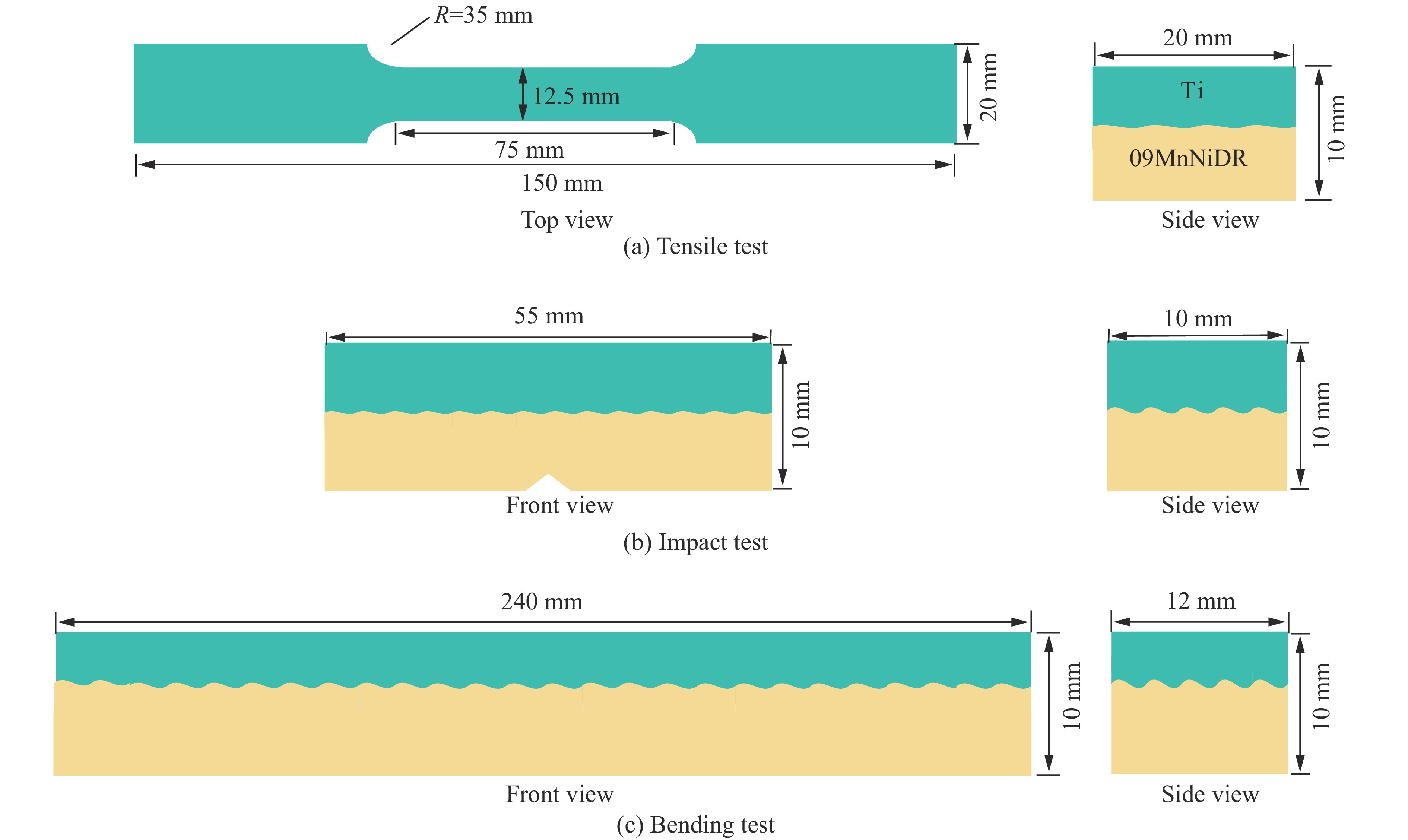
图 2 真空爆炸焊接复合板力学性能测试试件尺寸示意图
Figure 2. Schematic diagrams of specimen dimensions for mechanical property tests on vacuum explosive welded clad plates
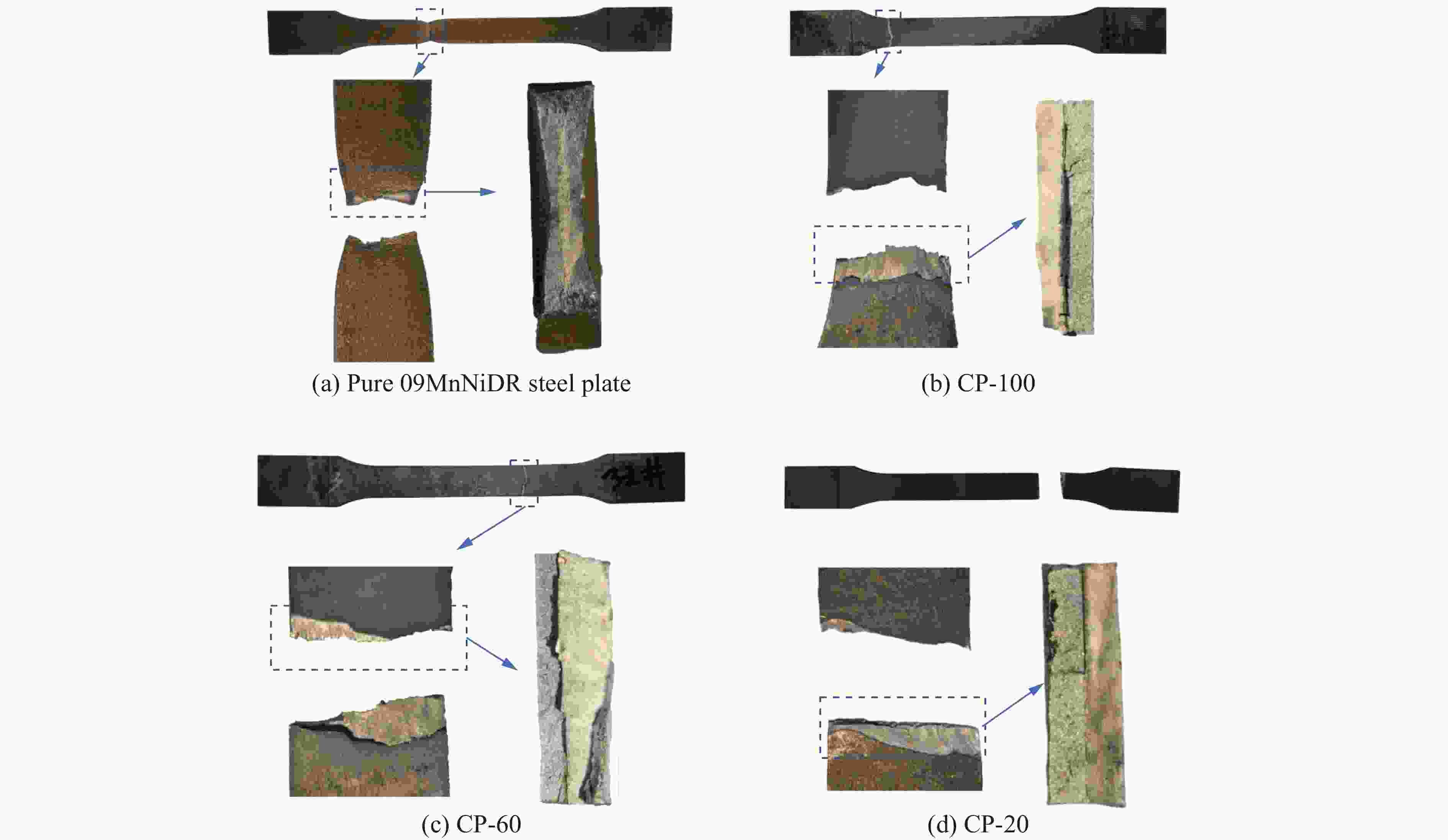
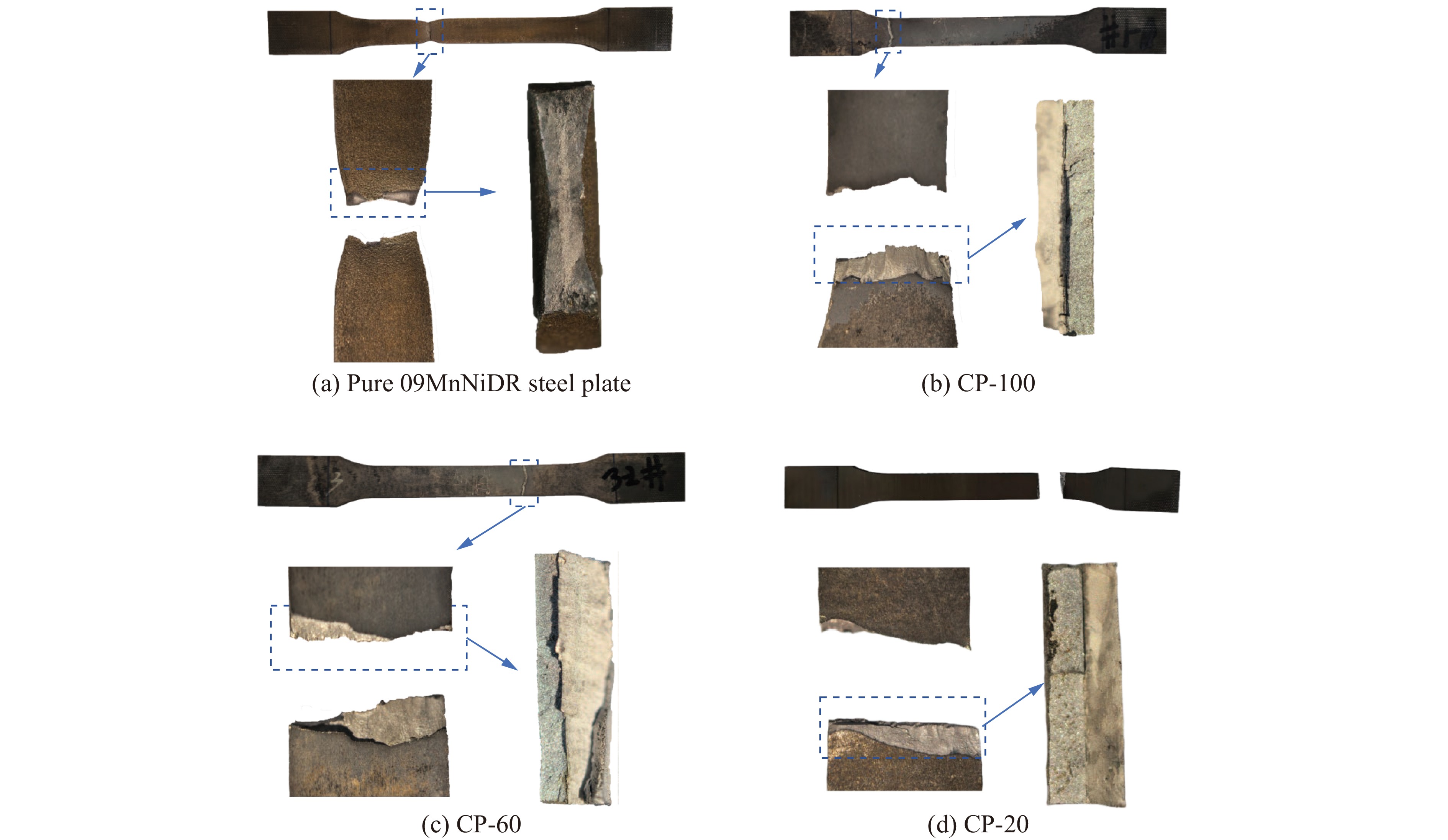
图 3 −70 ℃拉伸实验后纯09MnNiDR钢及不同环境压力下制备的复合板的宏观断口形貌
Figure 3. Macroscopic fracture morphology of pure 09MnNiDR steel and clad plates fabricated under different ambient pressures after tensile test at −70 ℃
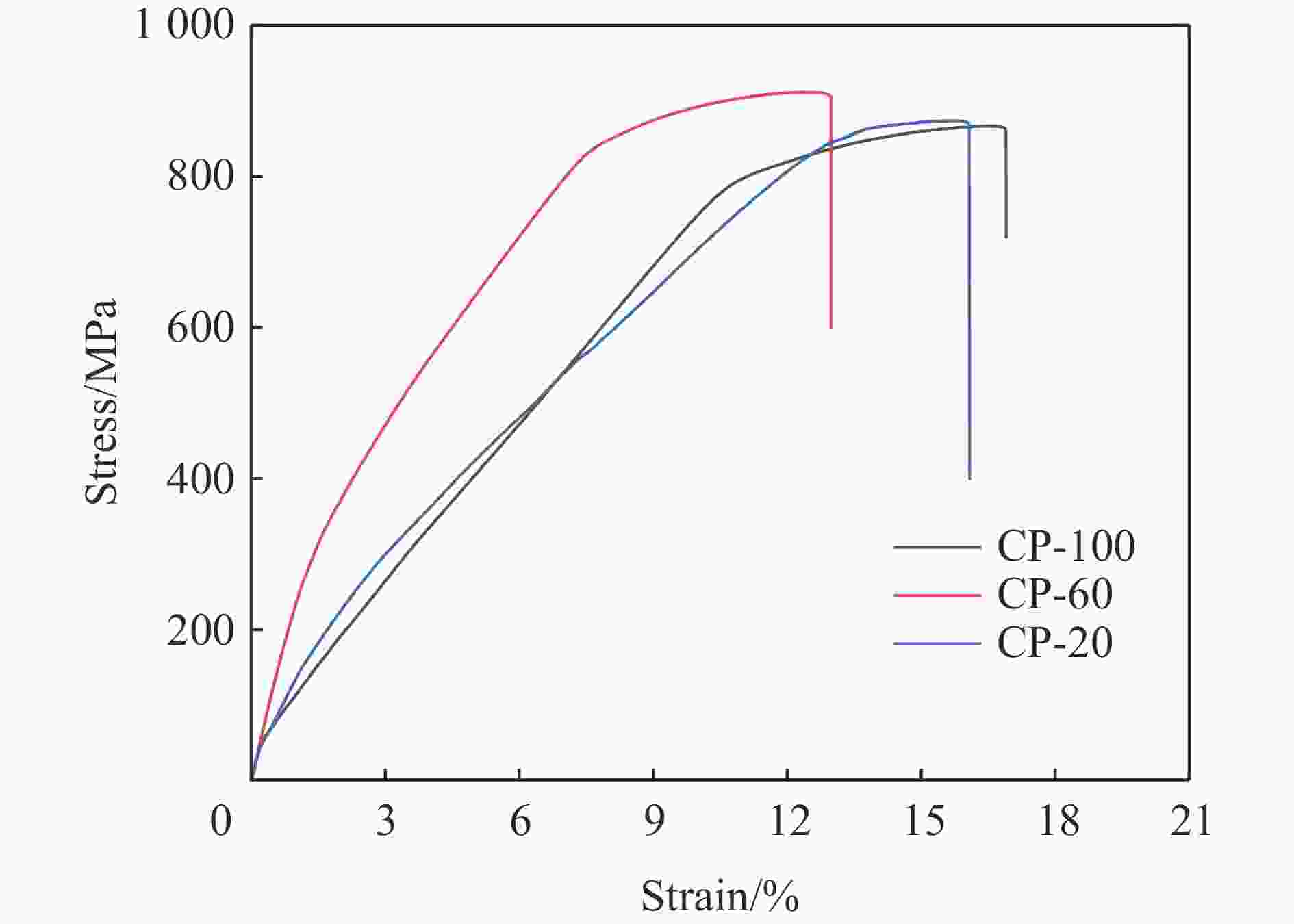
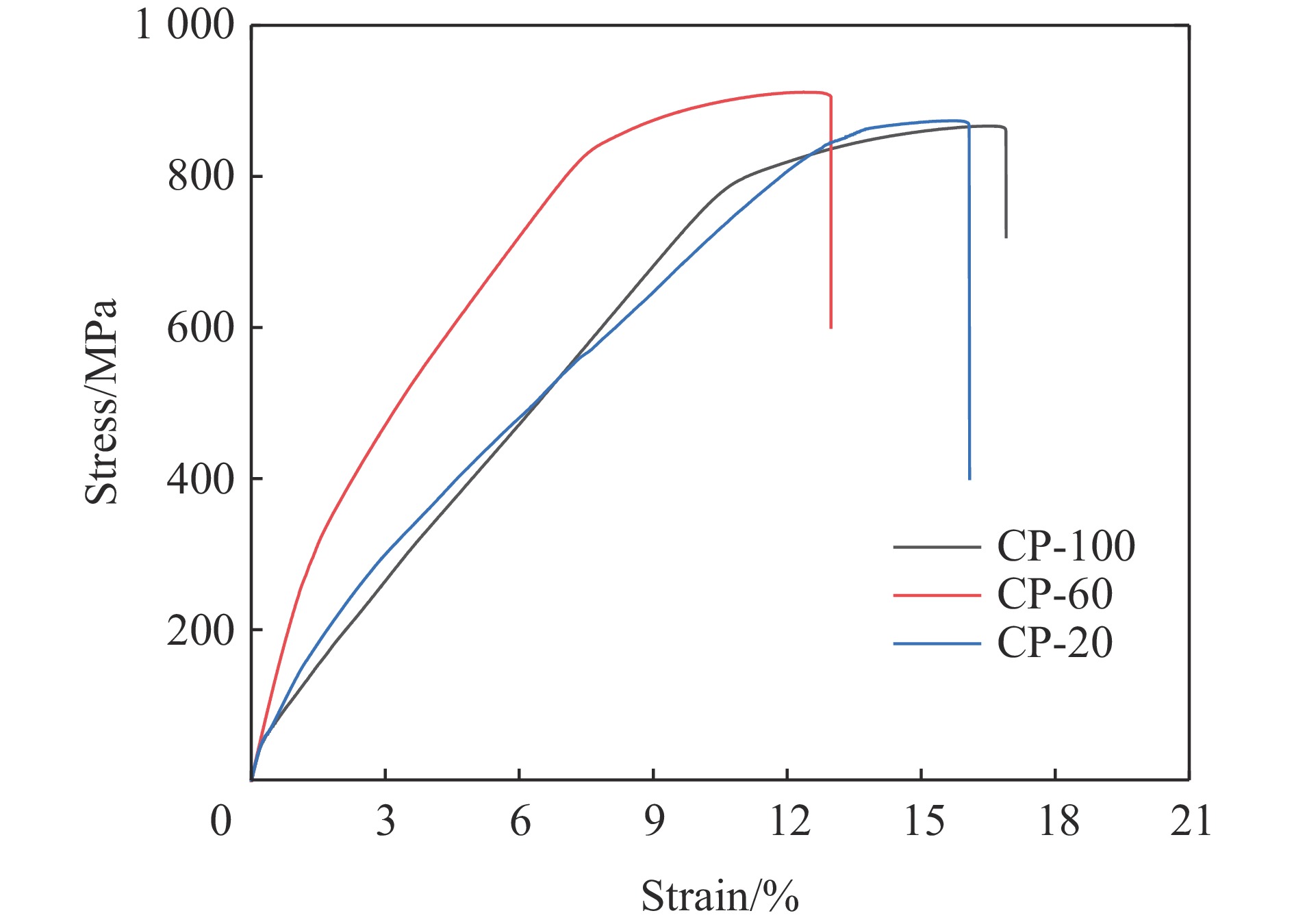
图 4 不同环境压力下制备的TC4/09MnNiDR爆炸焊接复合板在−70 ℃的拉伸应力-应变曲线
Figure 4. Tensile stress-strain curves of TC4/09MnNiDR explosive welded clad plates fabricated under different ambient pressures at −70 ℃
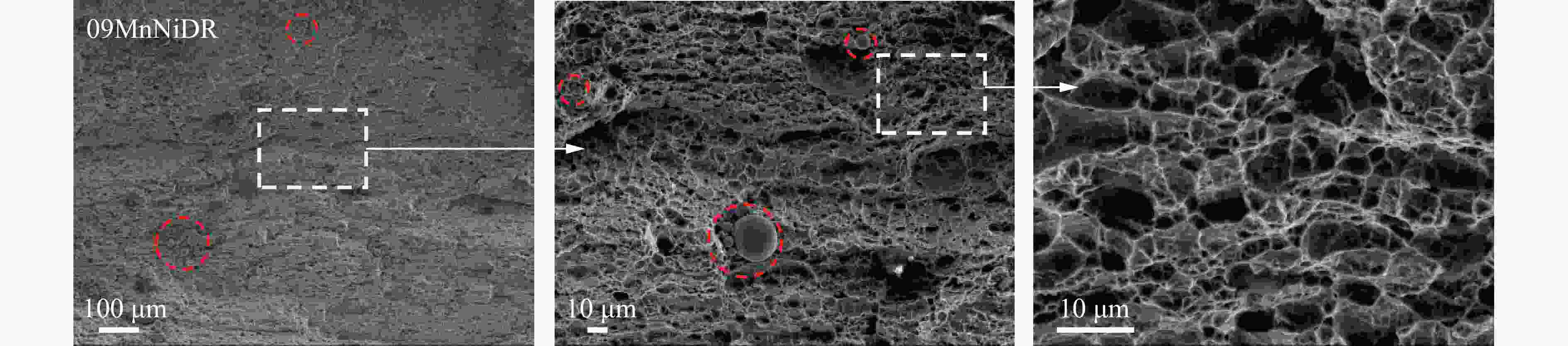
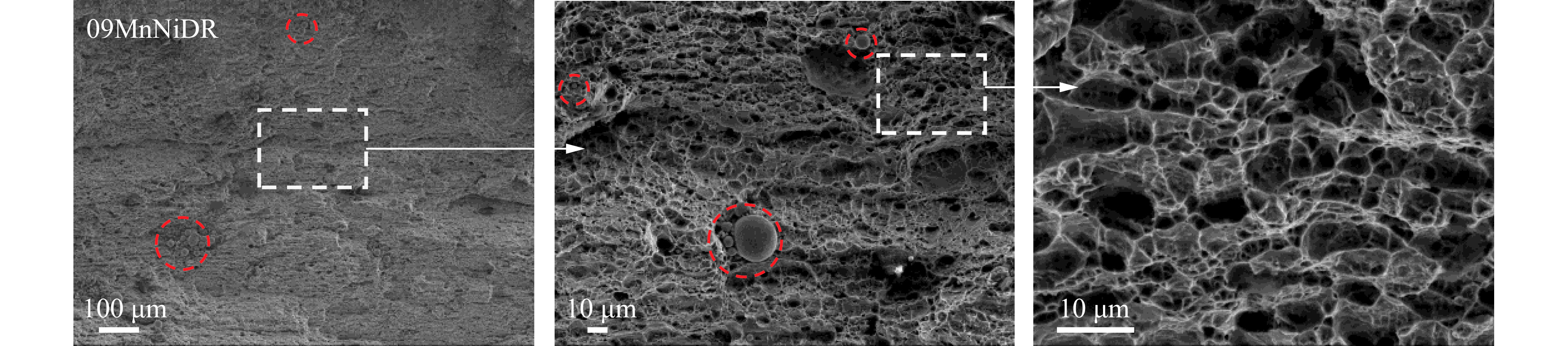
图 5 09MnNiDR钢的拉伸断口形貌
Figure 5. Fracture morphology of 09MnNiDR steel after cryogenic tensile test
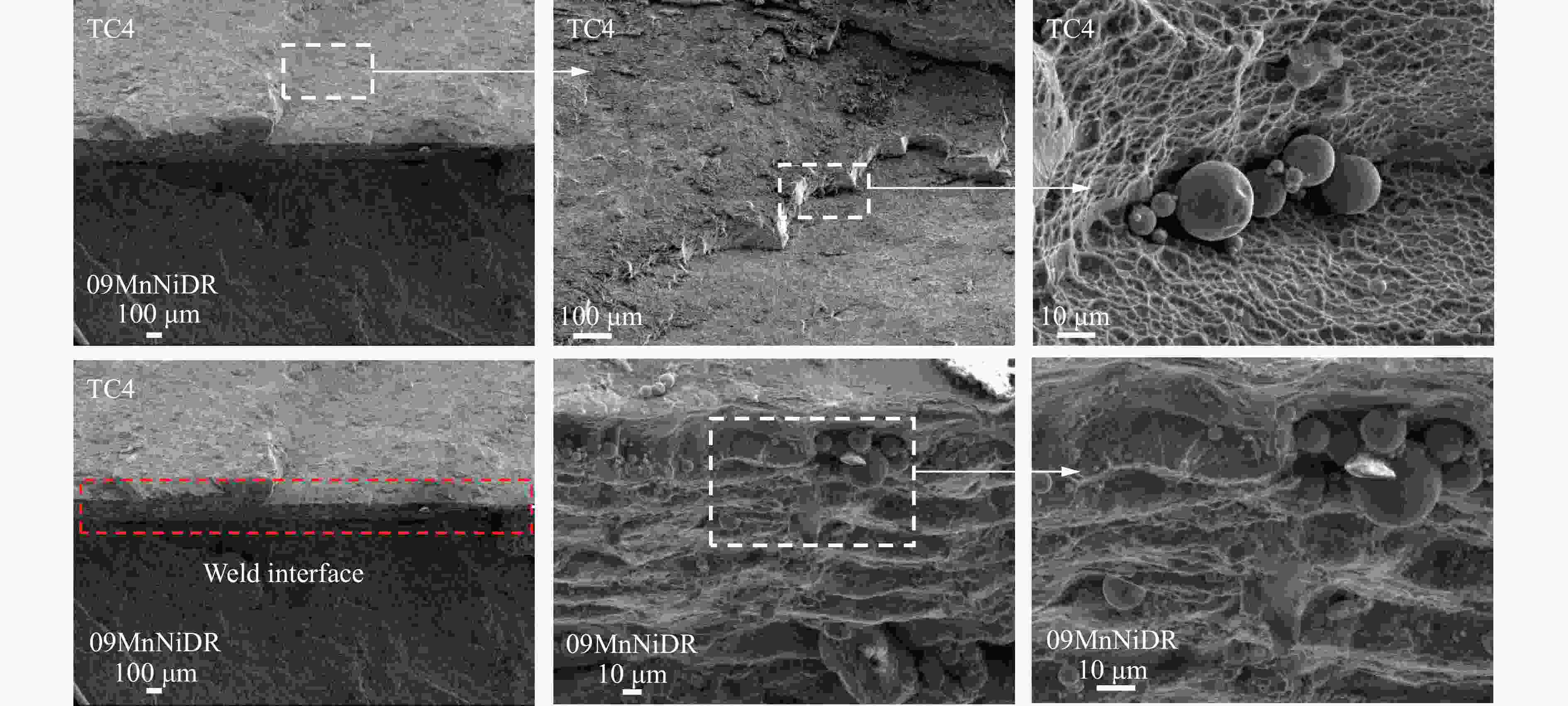
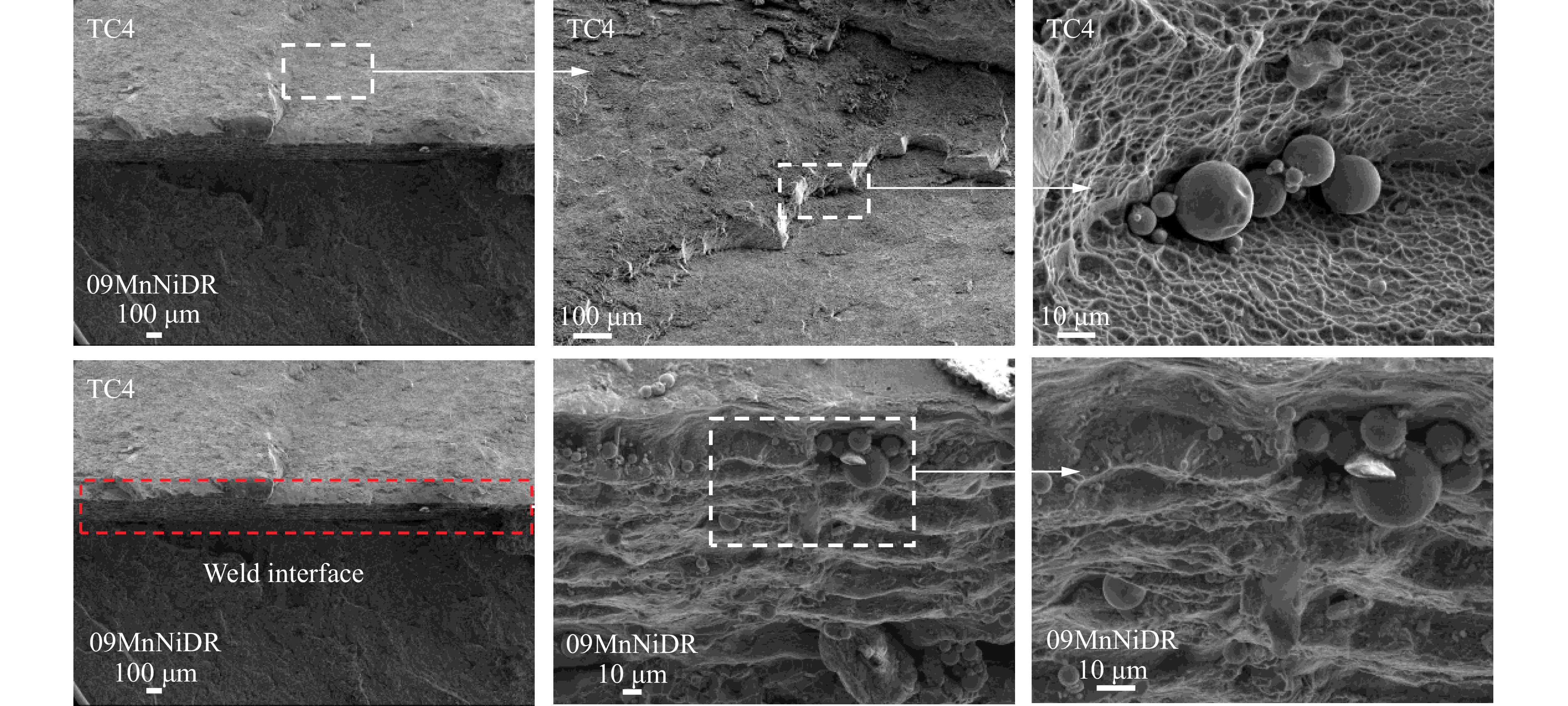
图 6 复合板CP-100的拉伸断口形貌
Figure 6. Cryogenic tensile fracture morphology of clad plate CP-100
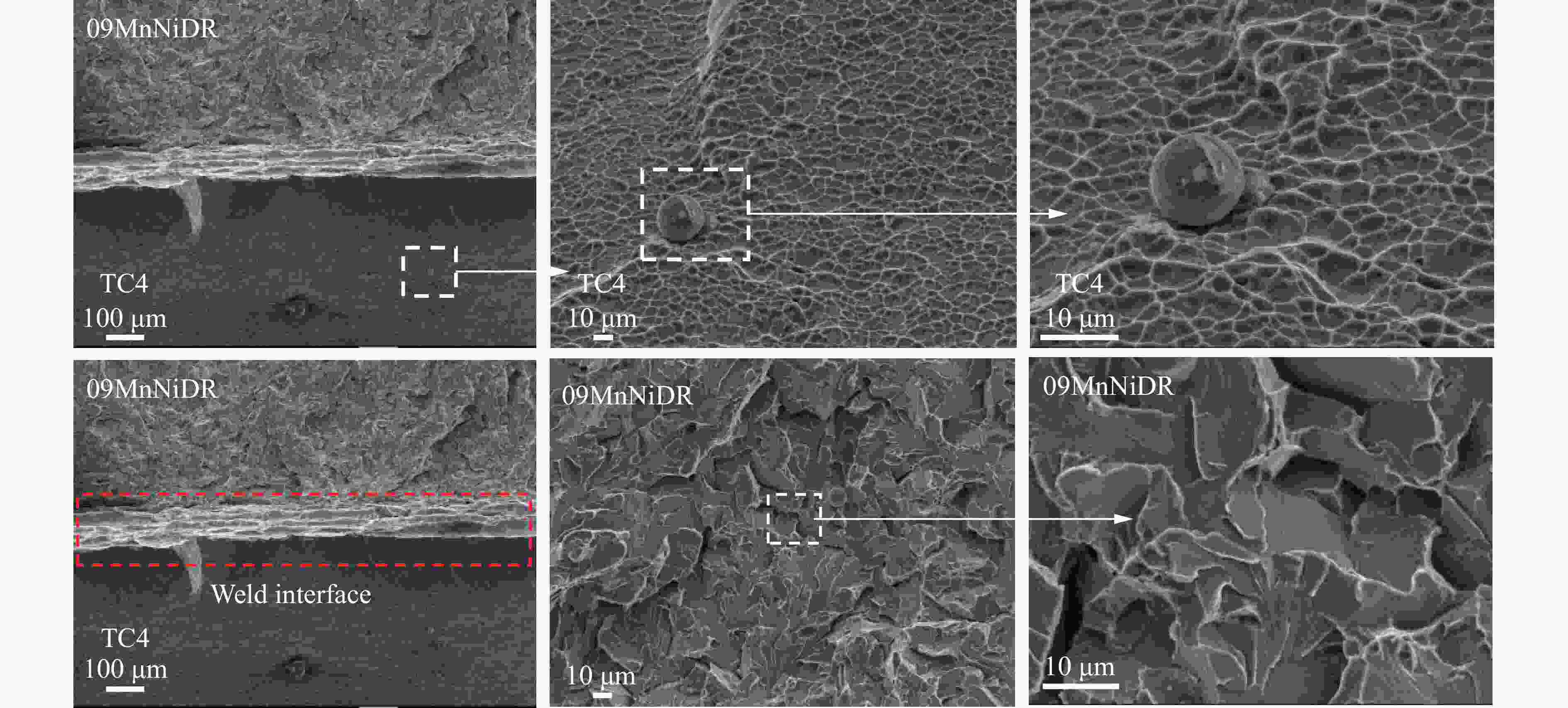
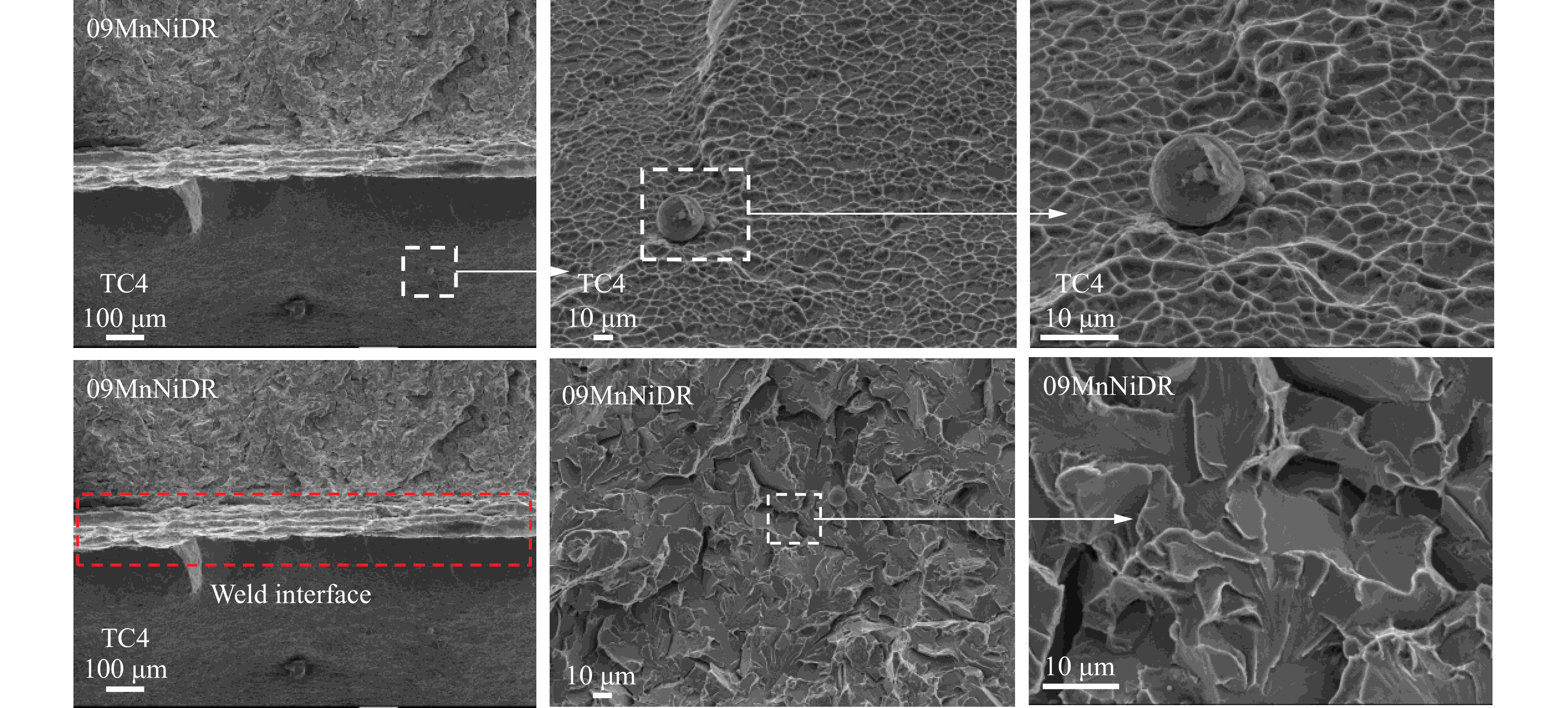
图 7 复合板CP-60的拉伸断口形貌
Figure 7. Cryogenic tensile fracture morphology of clad plate CP-60
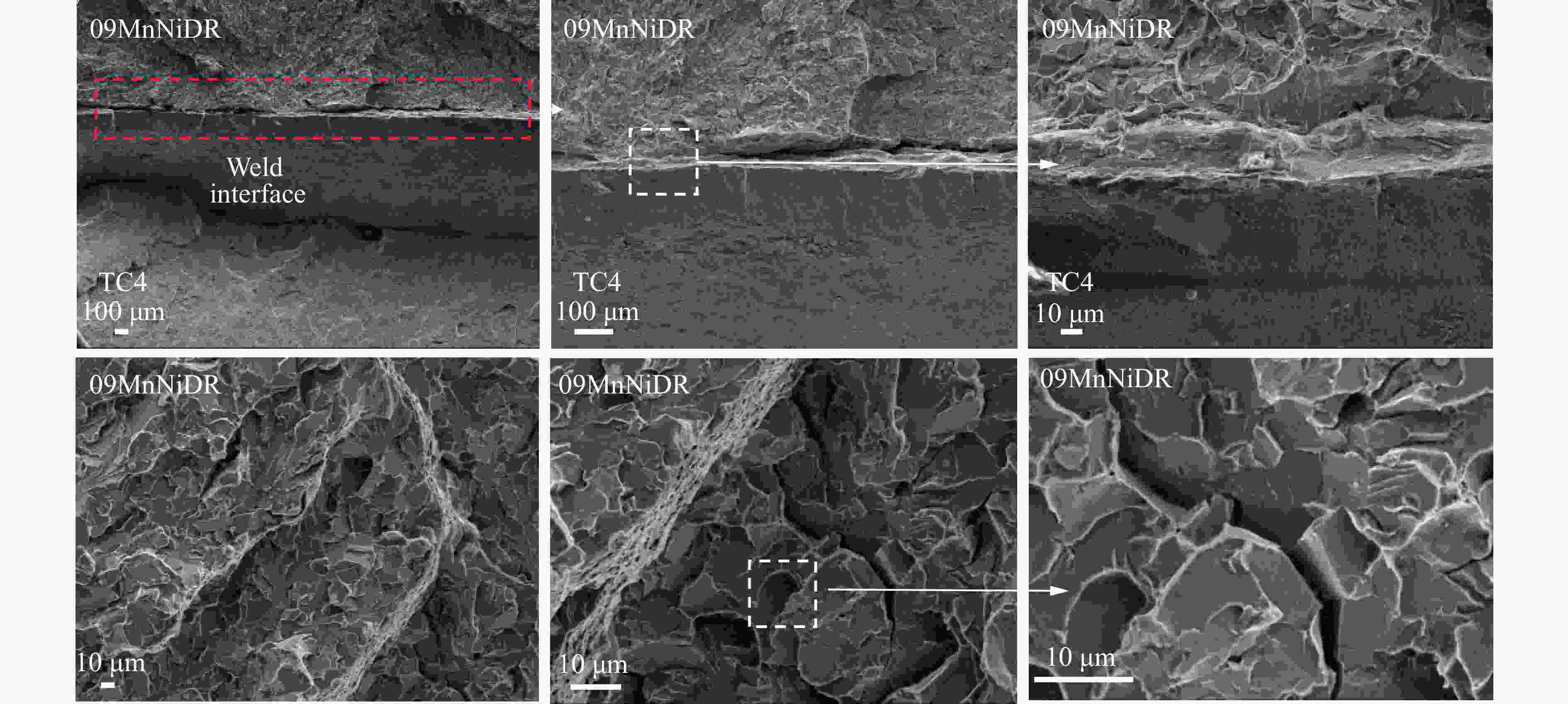
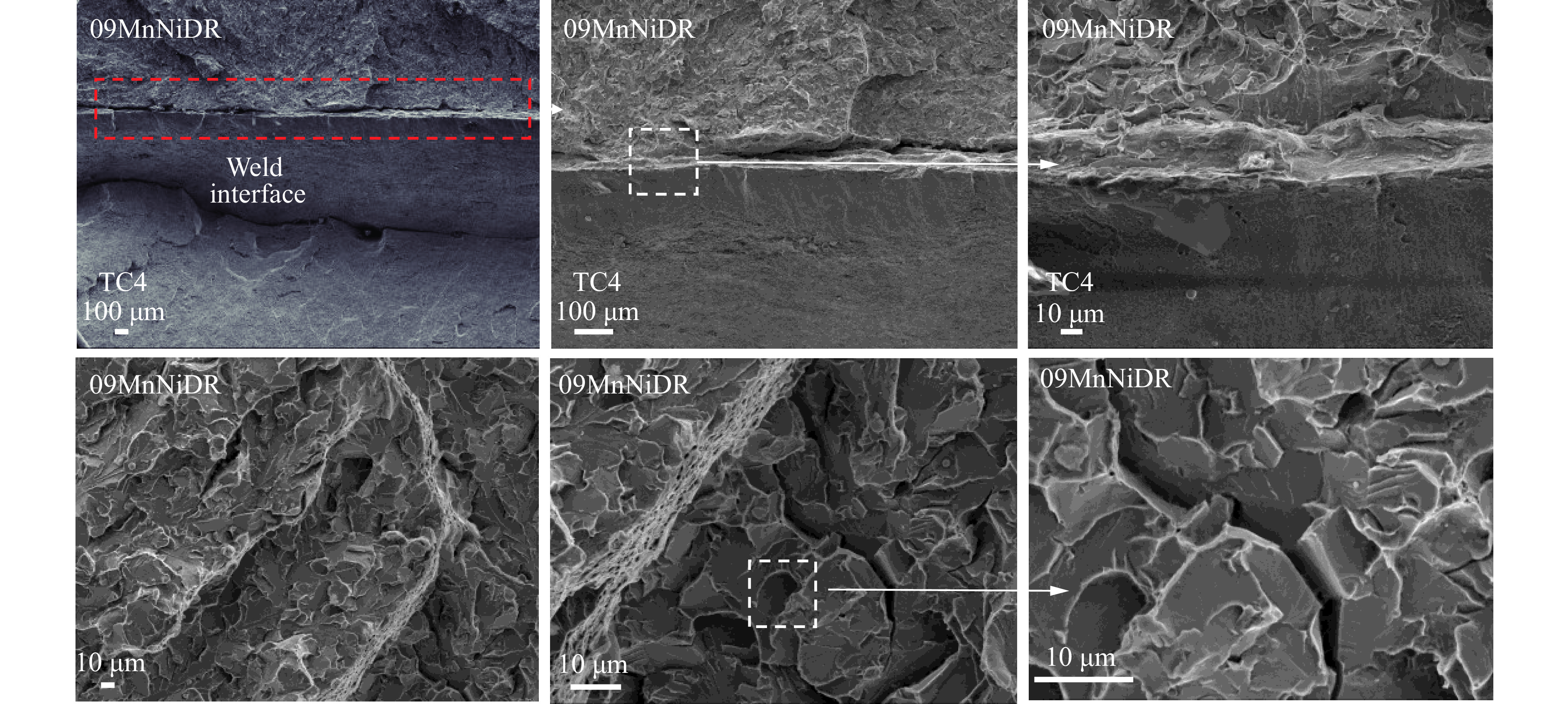
图 8 复合板CP-20的拉伸断口形貌
Figure 8. Cryogenic tensile fracture morphology of clad plate CP-20
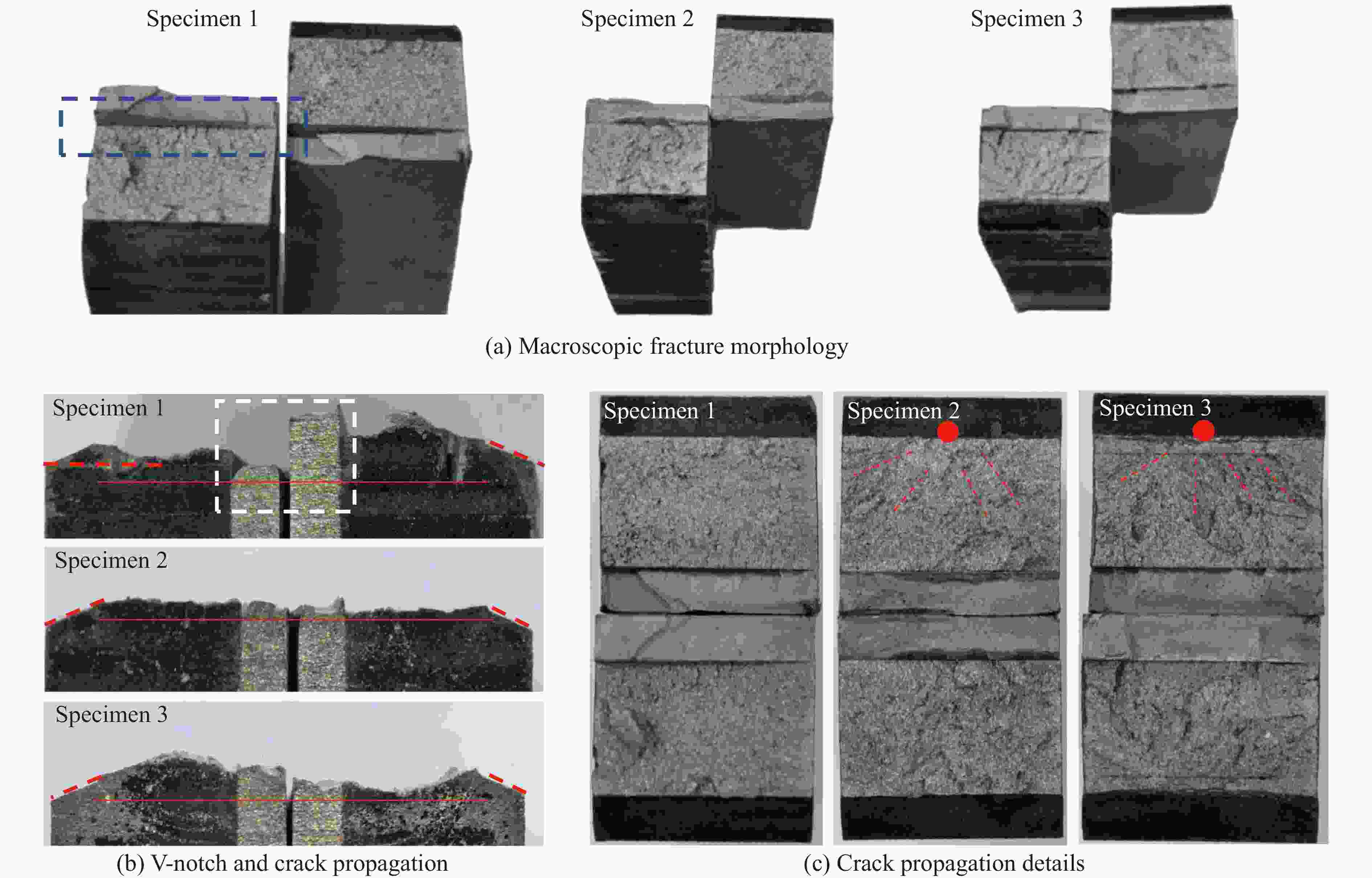
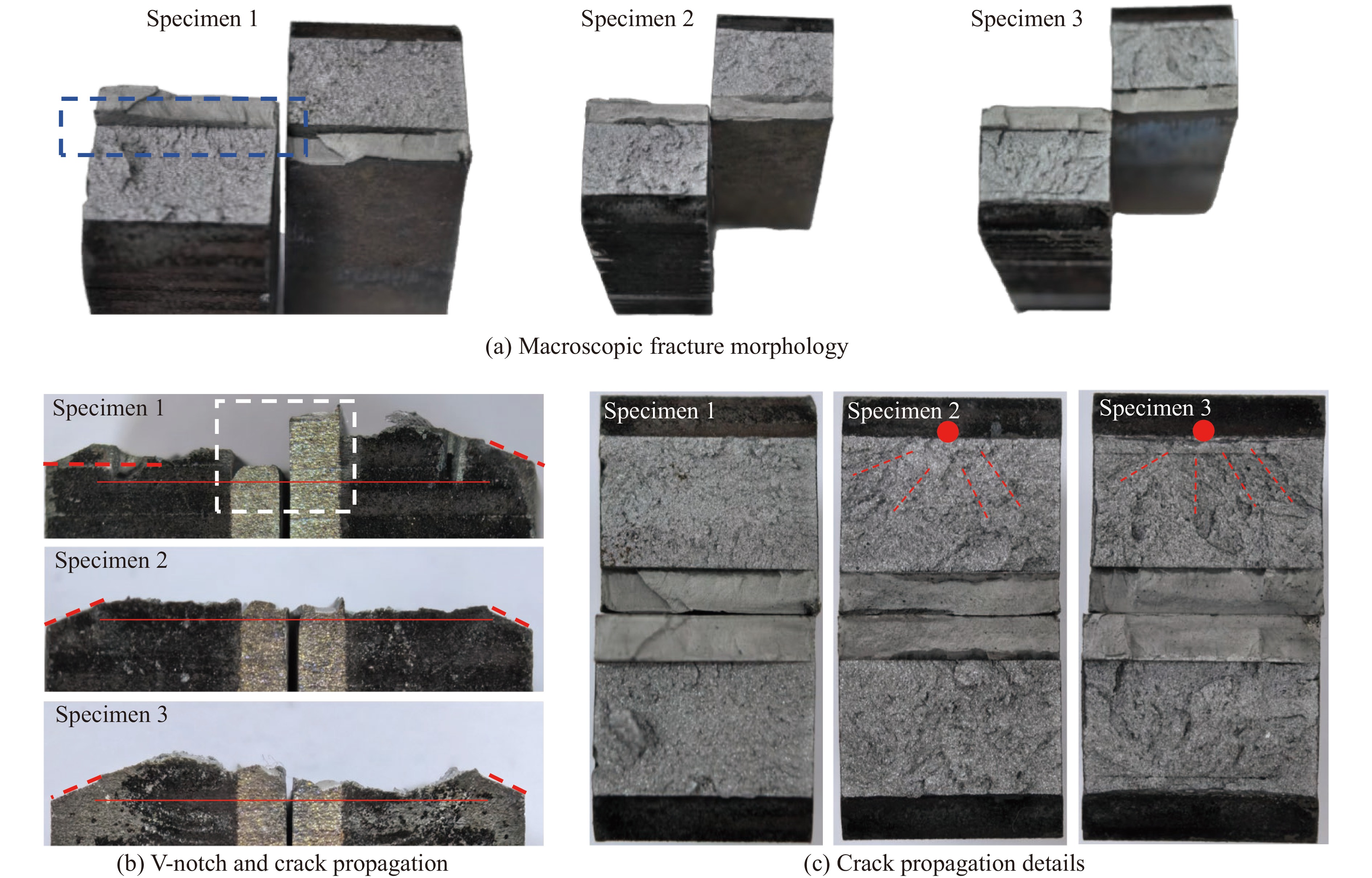
图 9 不同环境压力下制备的TC4/09MnNiDR爆炸焊接复合板经−70 ℃冲击实验后的断口形貌
Figure 9. Fracture morphology of TC4/09MnNiDR explosive welded clad plates fabricated under different ambient pressures after impact experiment at −70 ℃
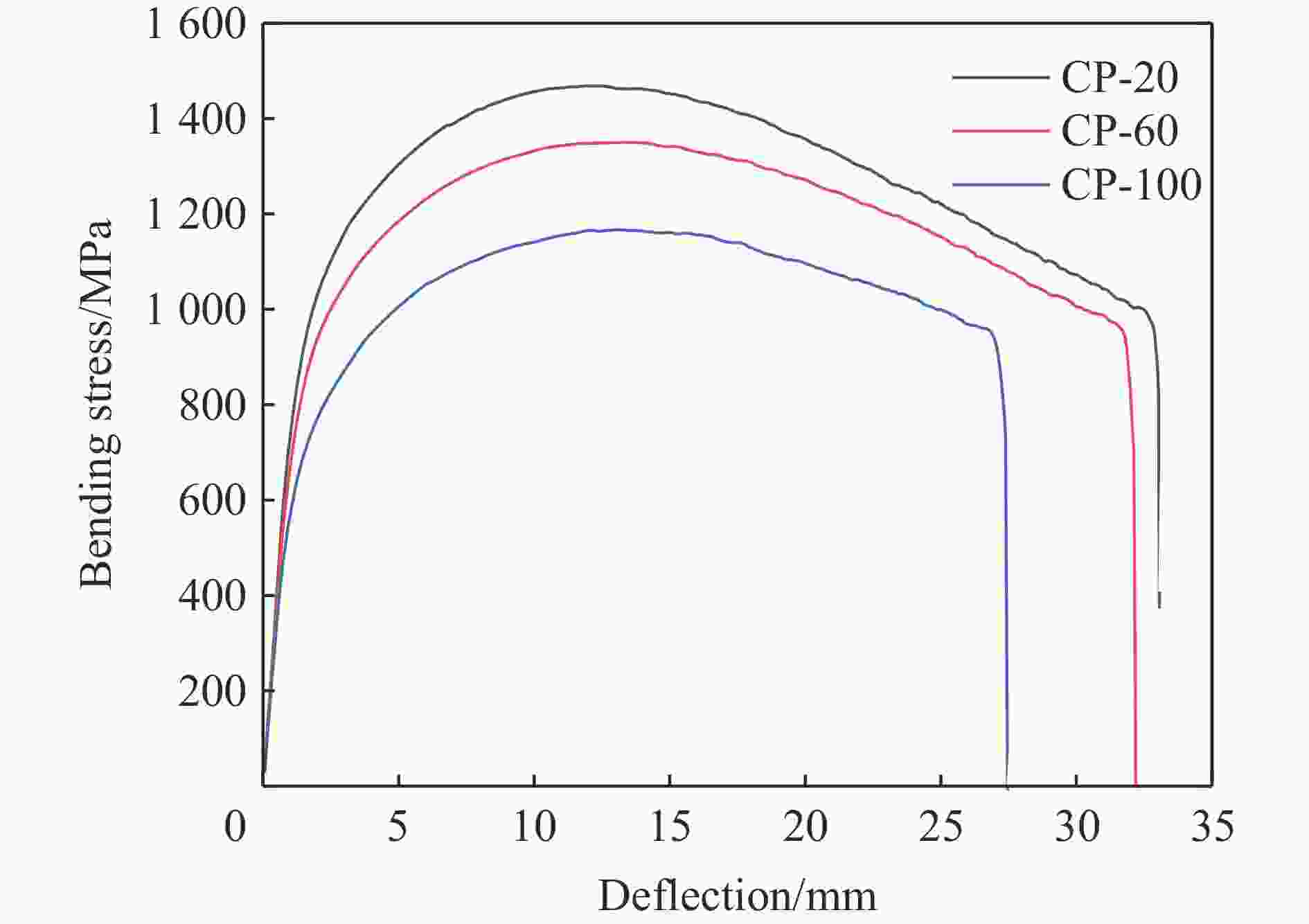
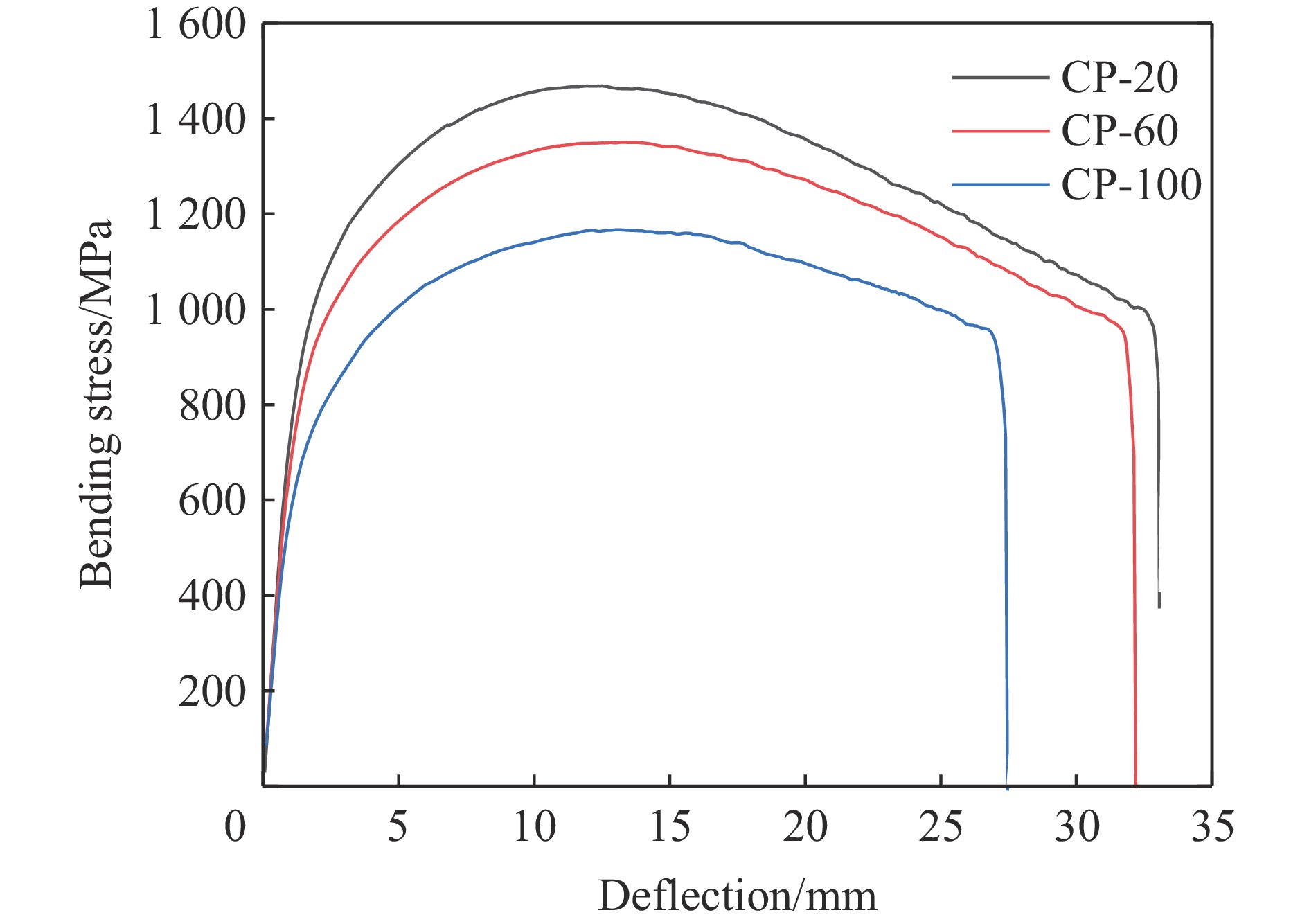
图 10 不同环境压力下制备的TC4/09MnNiDR爆炸焊接复合板在−70 ℃的三点弯曲实验载荷-位移曲线
Figure 10. Load-displacement curves from three-point bending experiments at −70 ℃ for TC4/09MnNiDR explosive welded clad plates fabricated under different ambient pressures
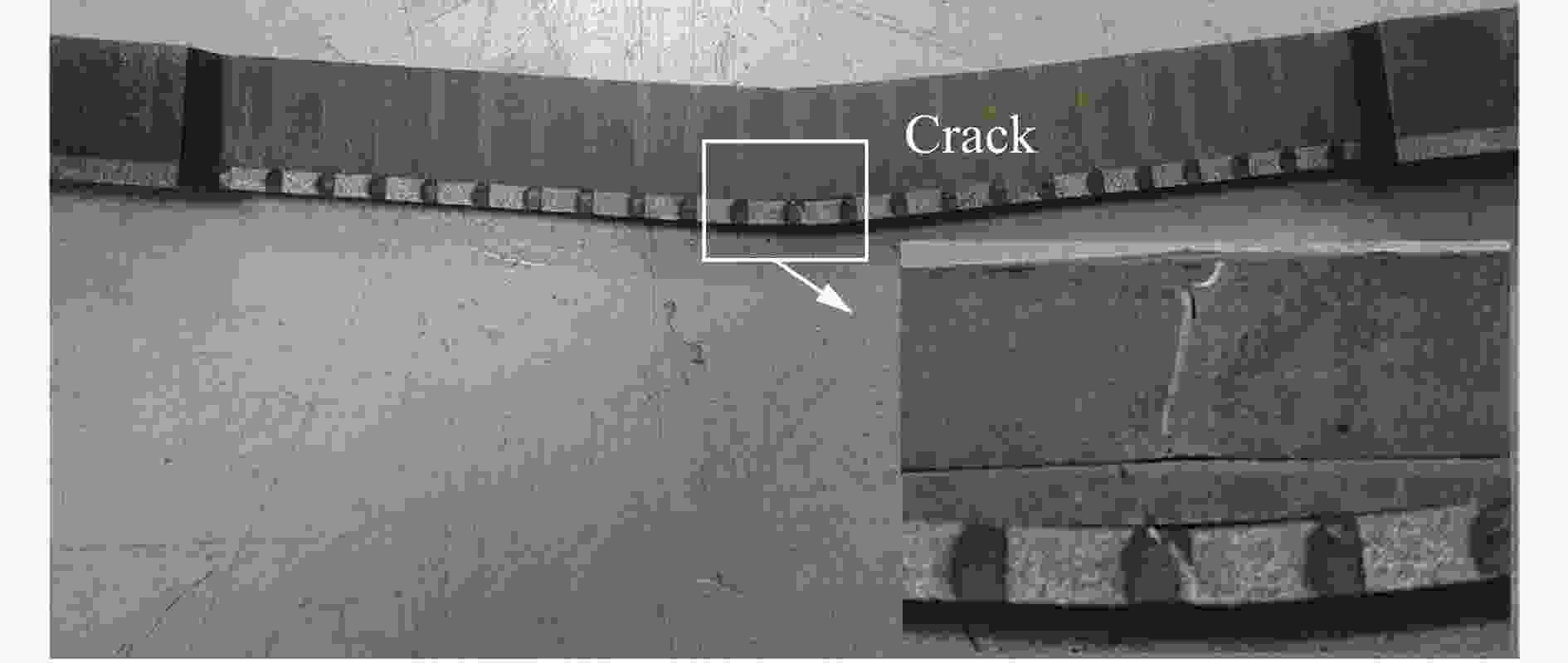
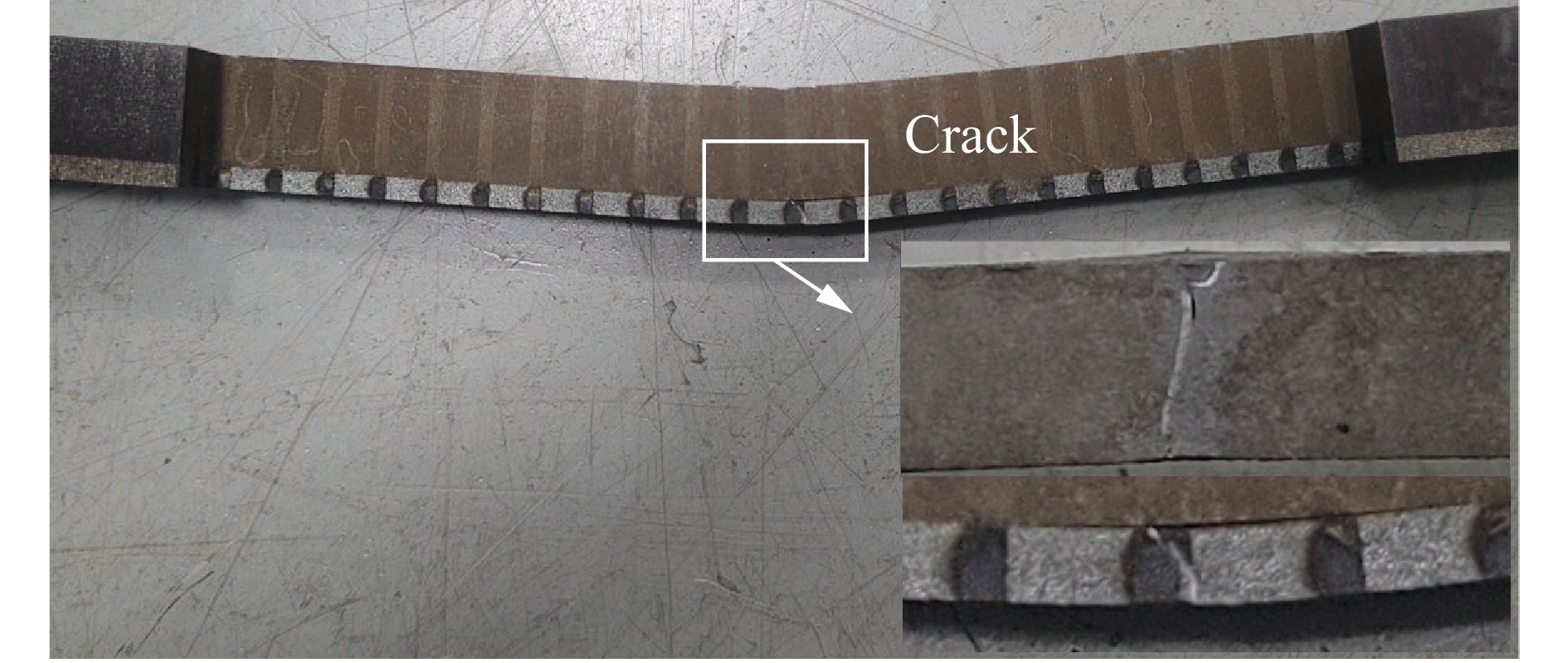
图 11 复合板CP-100复合板低温弯曲断裂形貌
Figure 11. Cryogenic bending fracture morphology of the specimen prepared from clab plate CP-100
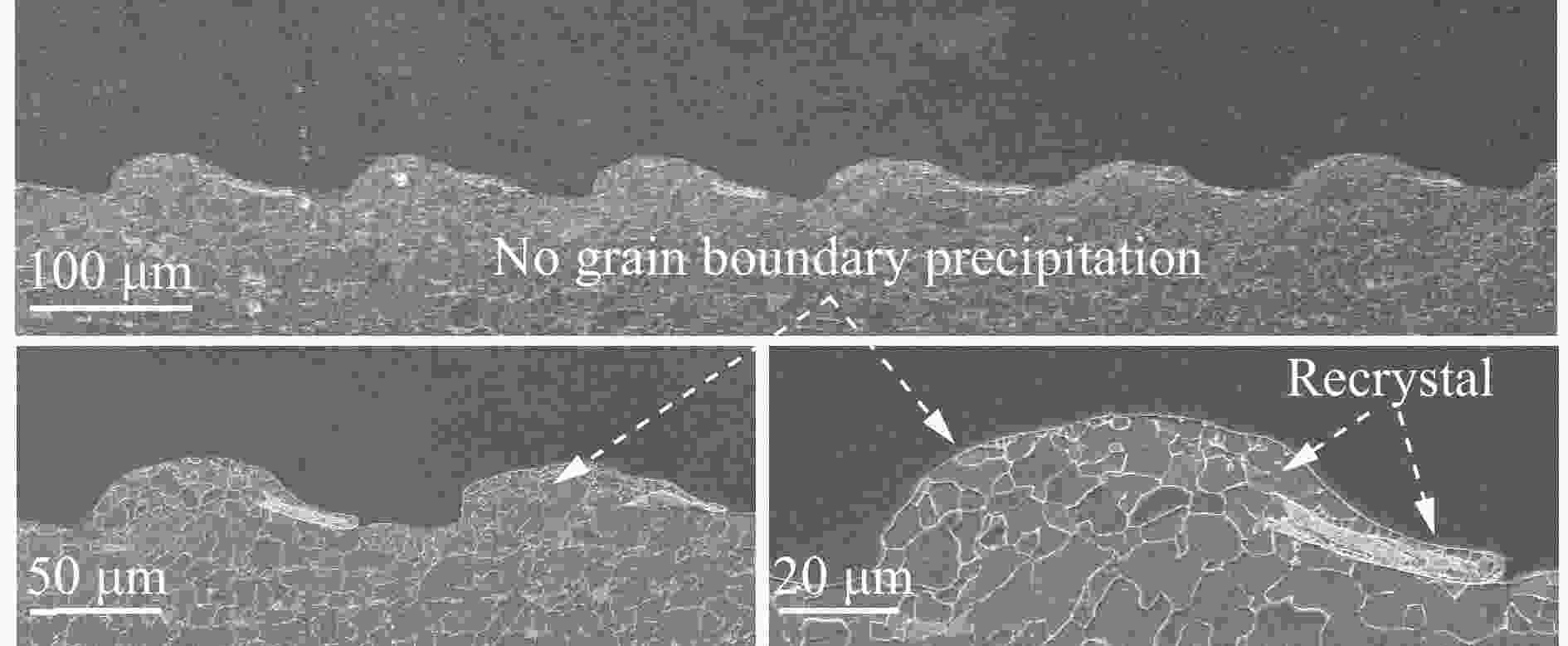
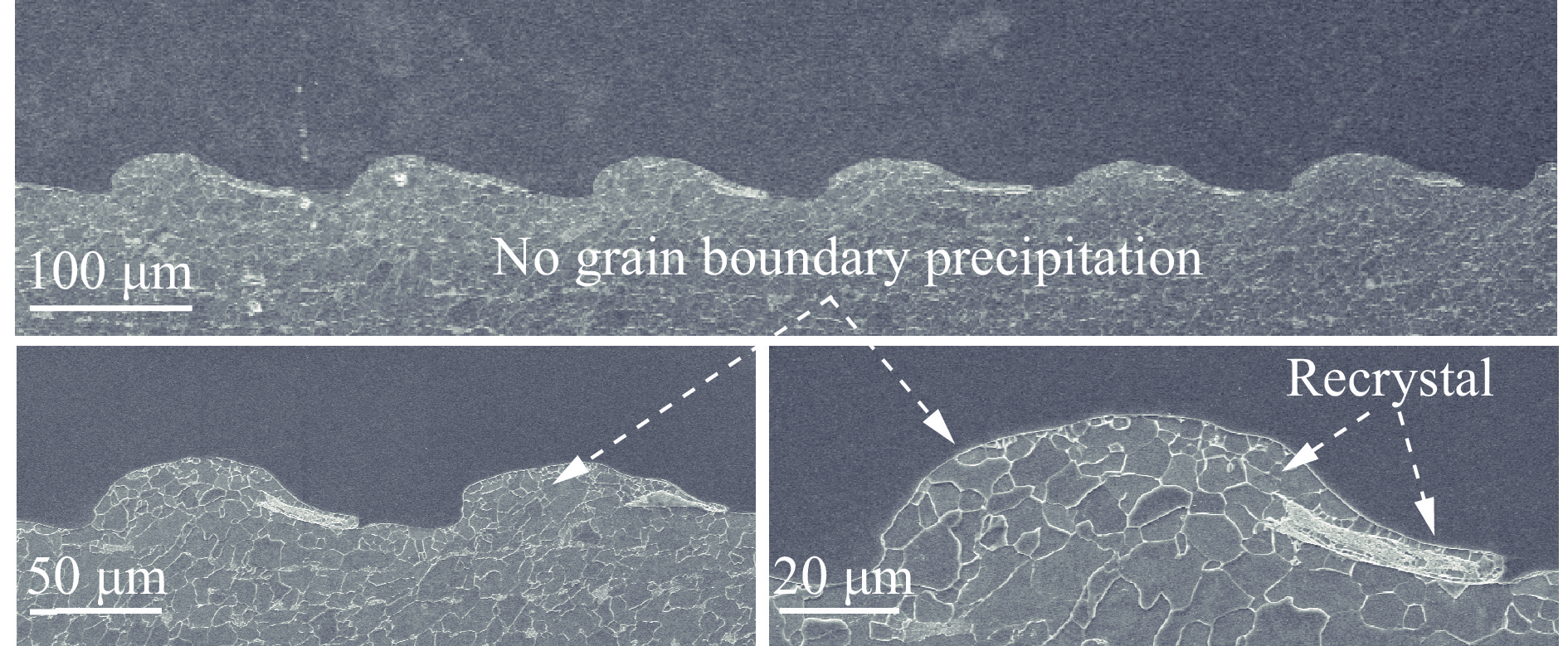
图 12 复合板CP-100界面的金相图
Figure 12. Metallographic images for the interface of the clad plate CP-100
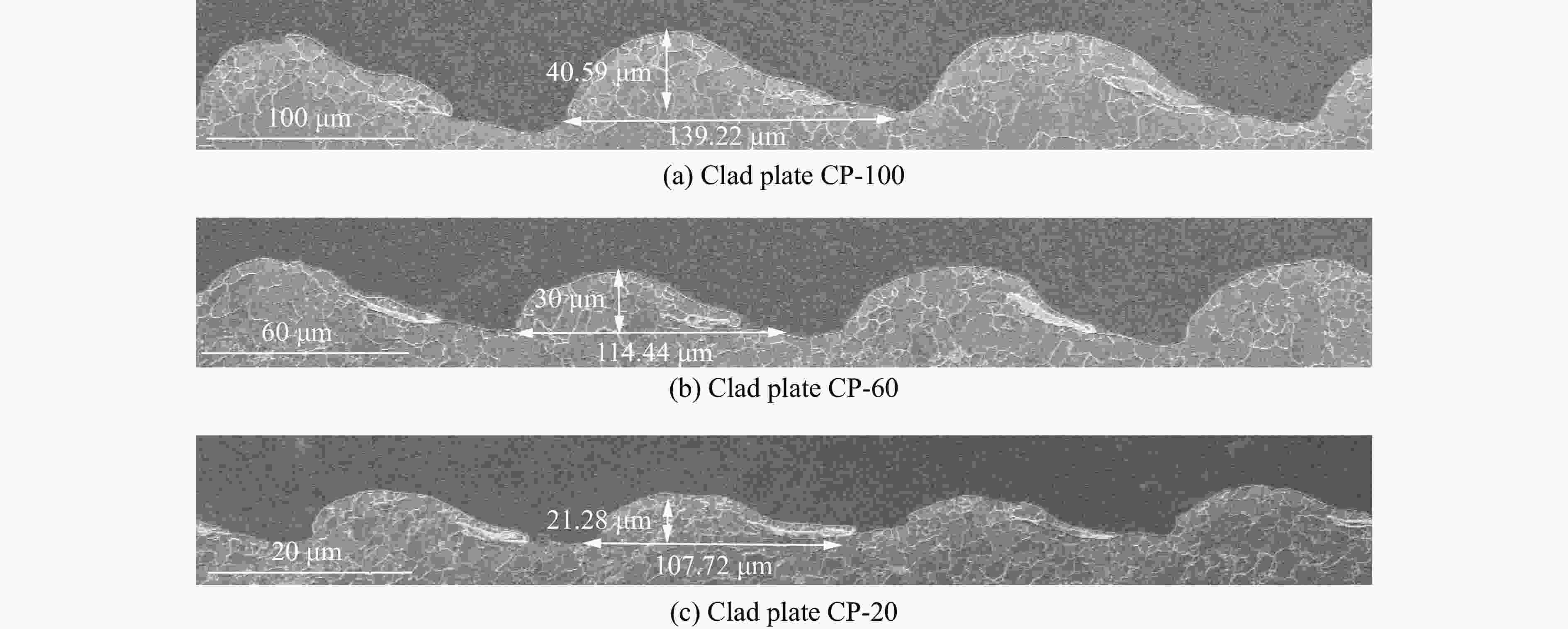
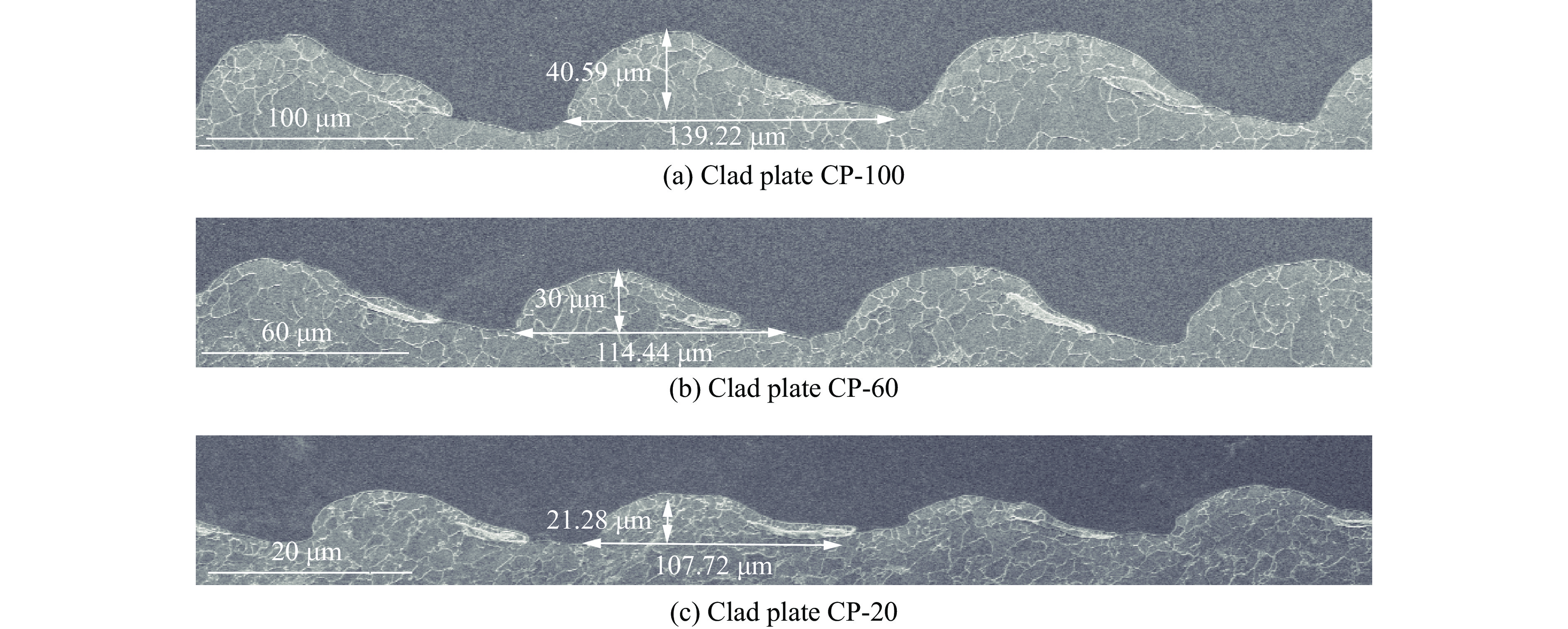
图 13 不同环境压力下爆炸焊接复合板的界面波形图
Figure 13. Waveform diagrams of interfaces of the explosive-welded clad plates fabricated under different ambient pressures
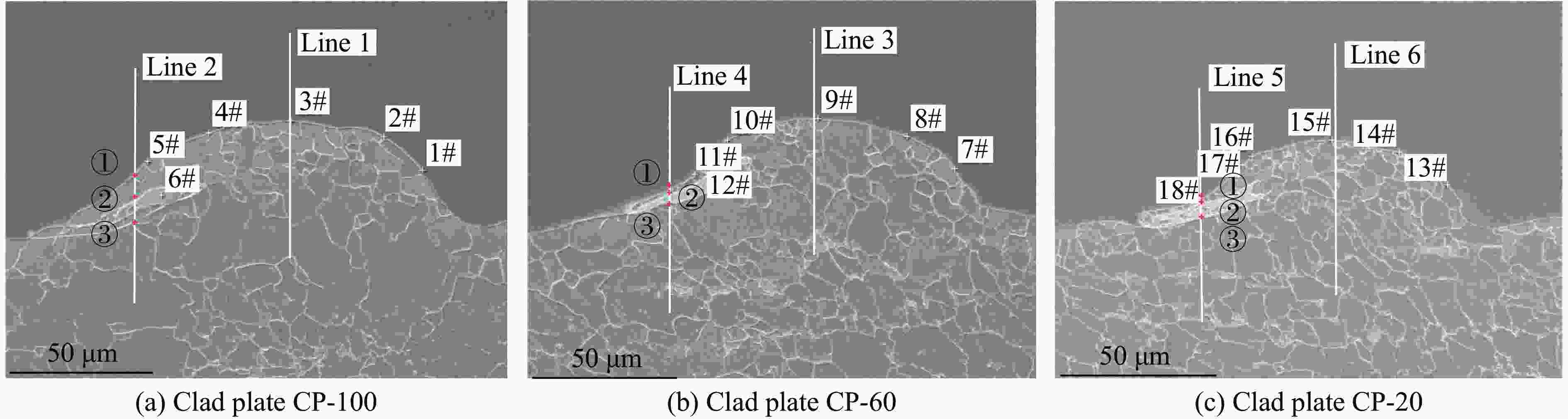
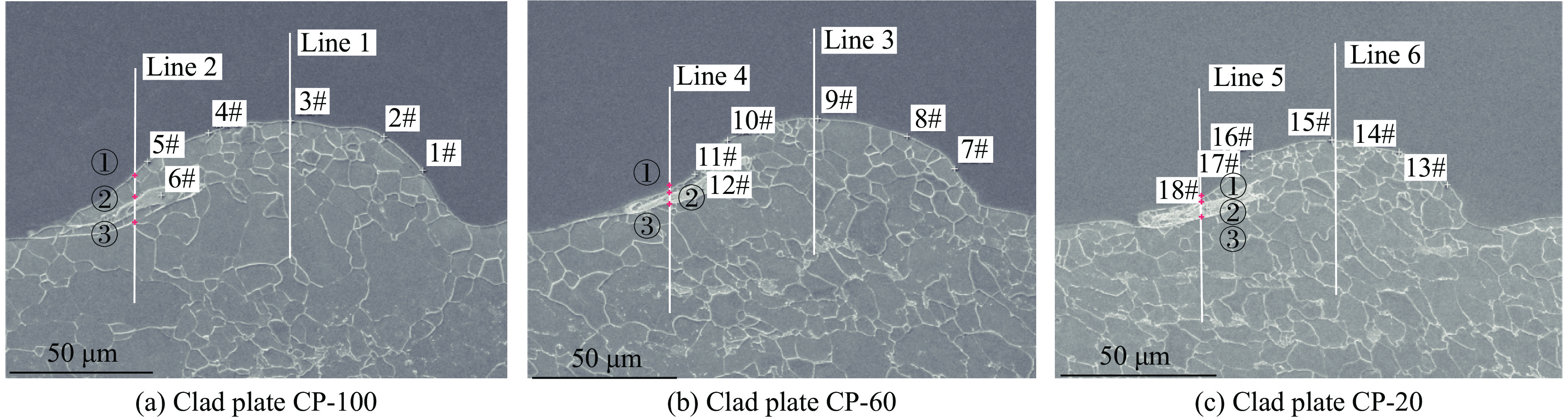
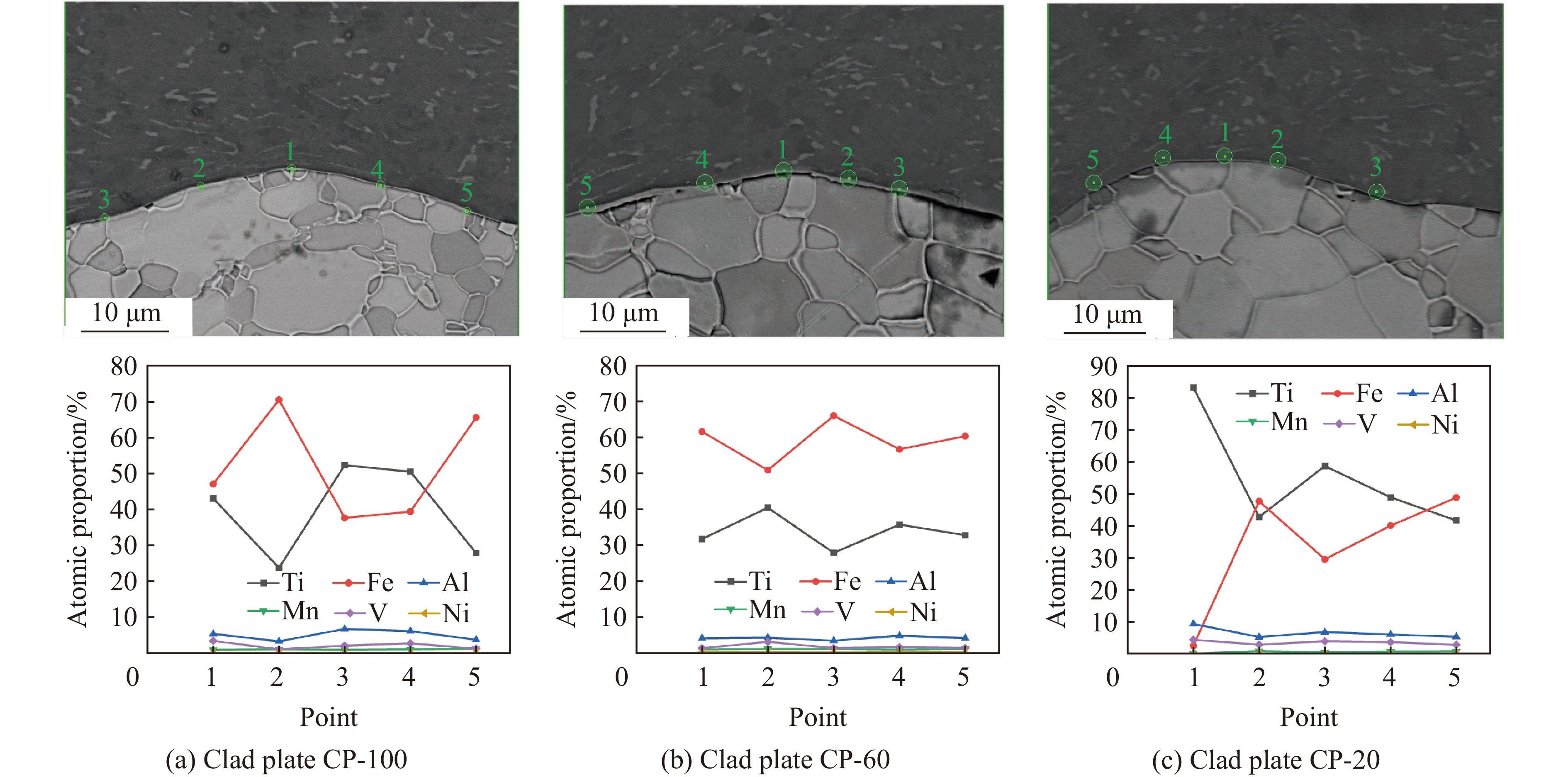
图 14 不同环境压力下爆炸焊接复合板焊接界面点扫描、线扫描测试位置
Figure 14. Point scanning and line scanning test positions at the welding interface of the explosive-welded clad plates fabricated under different ambient pressures.
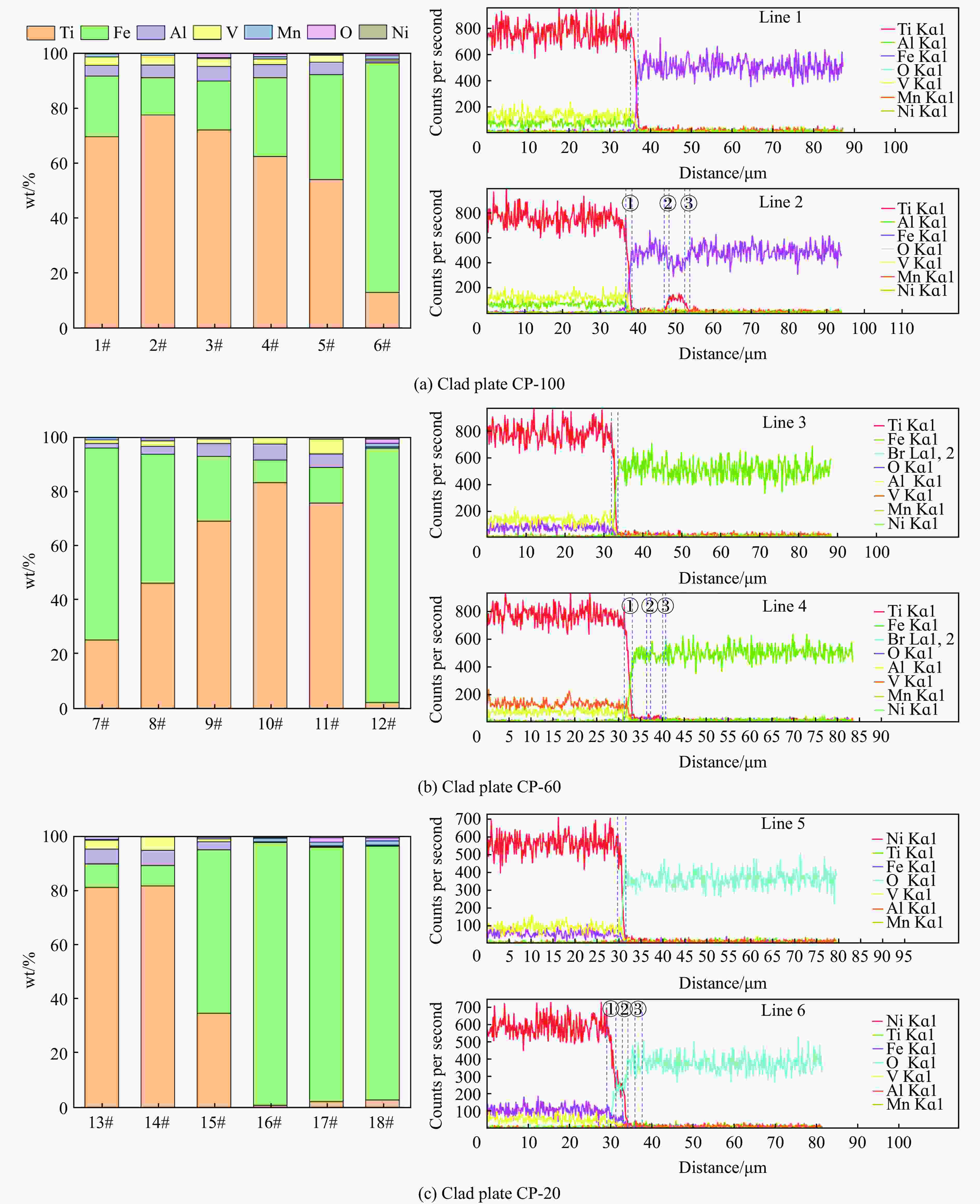
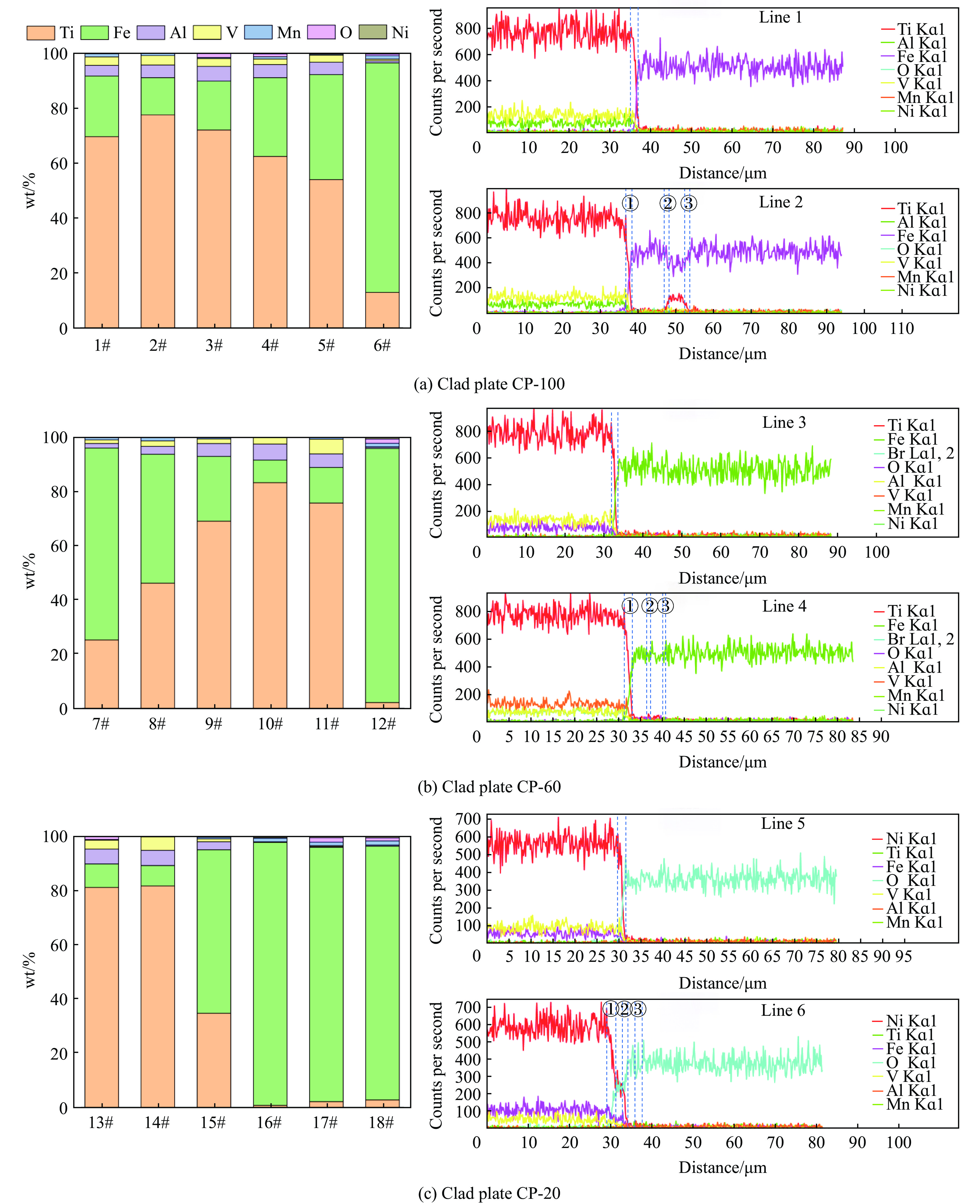
图 15 不同环境压力下爆炸焊接复合板焊接界面点扫描、线扫描结果
Figure 15. Point scanning and line scanning results at the welding interface of the explosive-welded clad plates fabricated under different ambient pressures
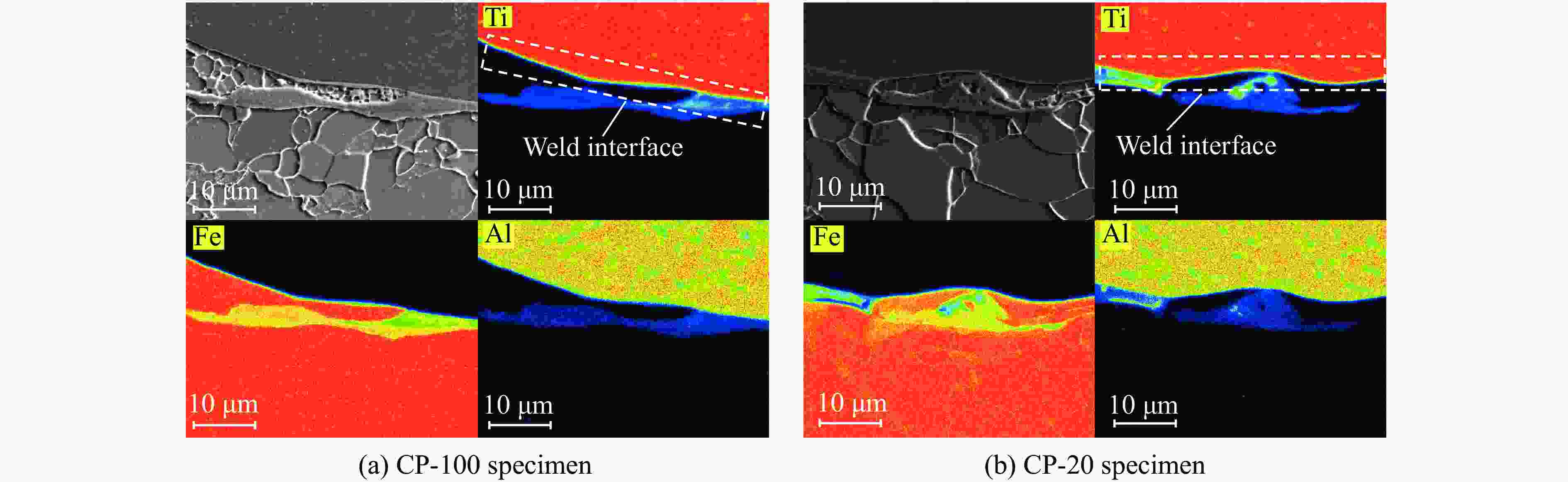
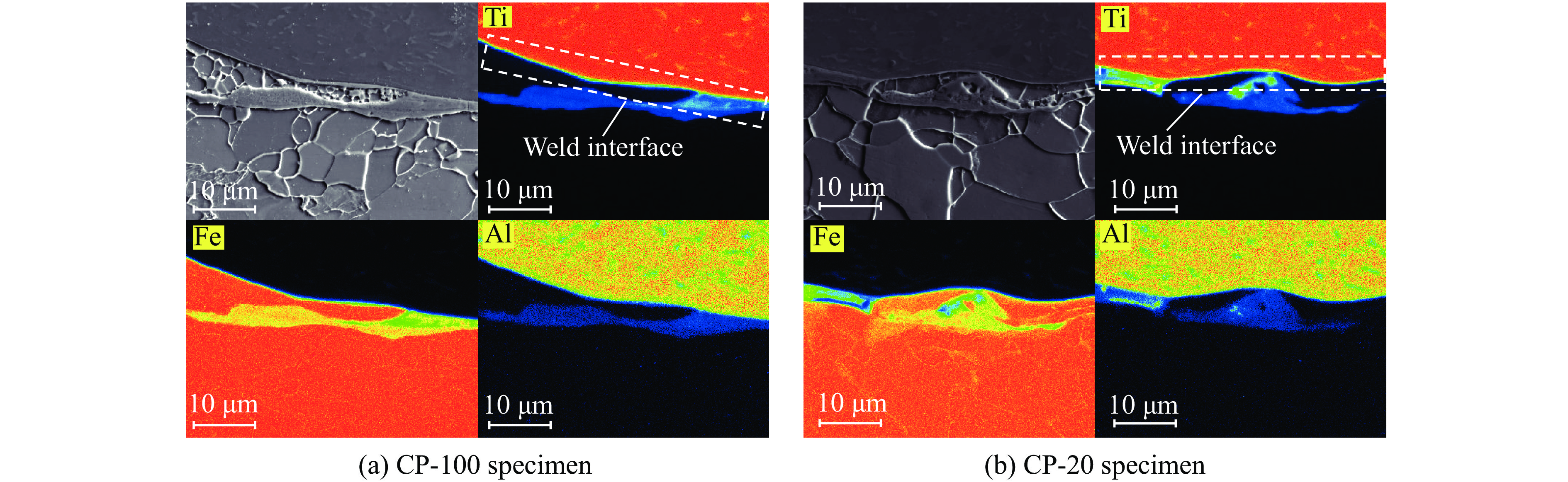
图 16 CP-100和CP-20试件熔岛及焊缝区电子探针元素面扫描图
Figure 16. EPMA elemental mapping of the molten islands and weld zones in the CP-100 and CP-20 specimens
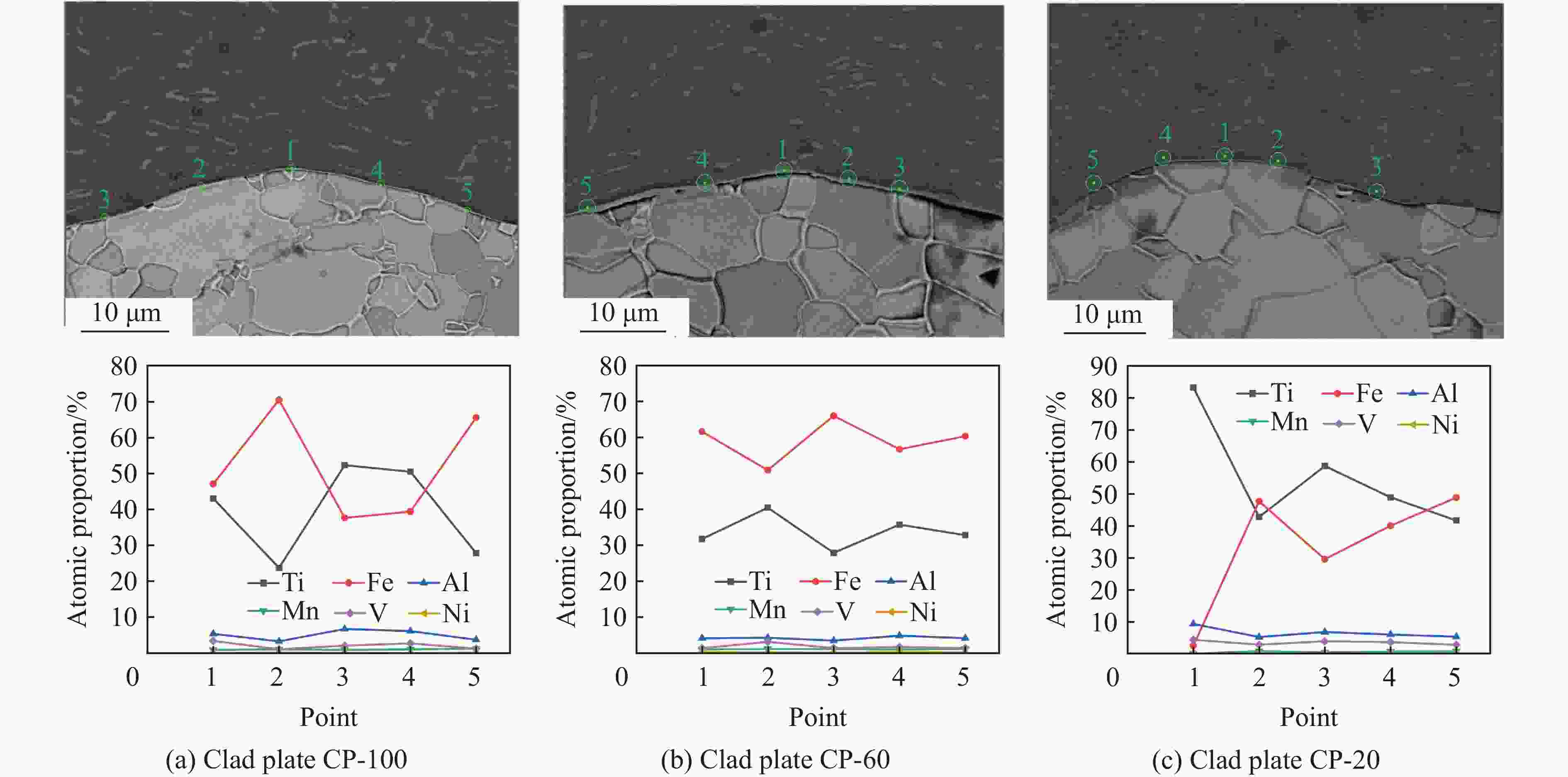
图 17 复合板焊接界面电子探针元素点扫描图
Figure 17. EPMA point analysis results at the welded interfaces of clad plates
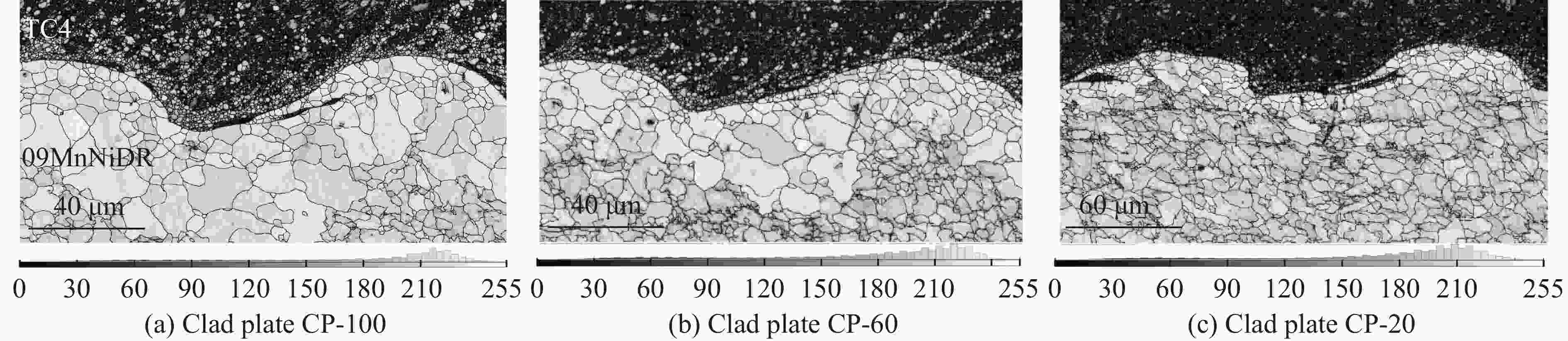
图 18 不同爆炸焊接复合板的焊接界面带
Figure 18. Welded interface zones in different explosive-welded clad plates
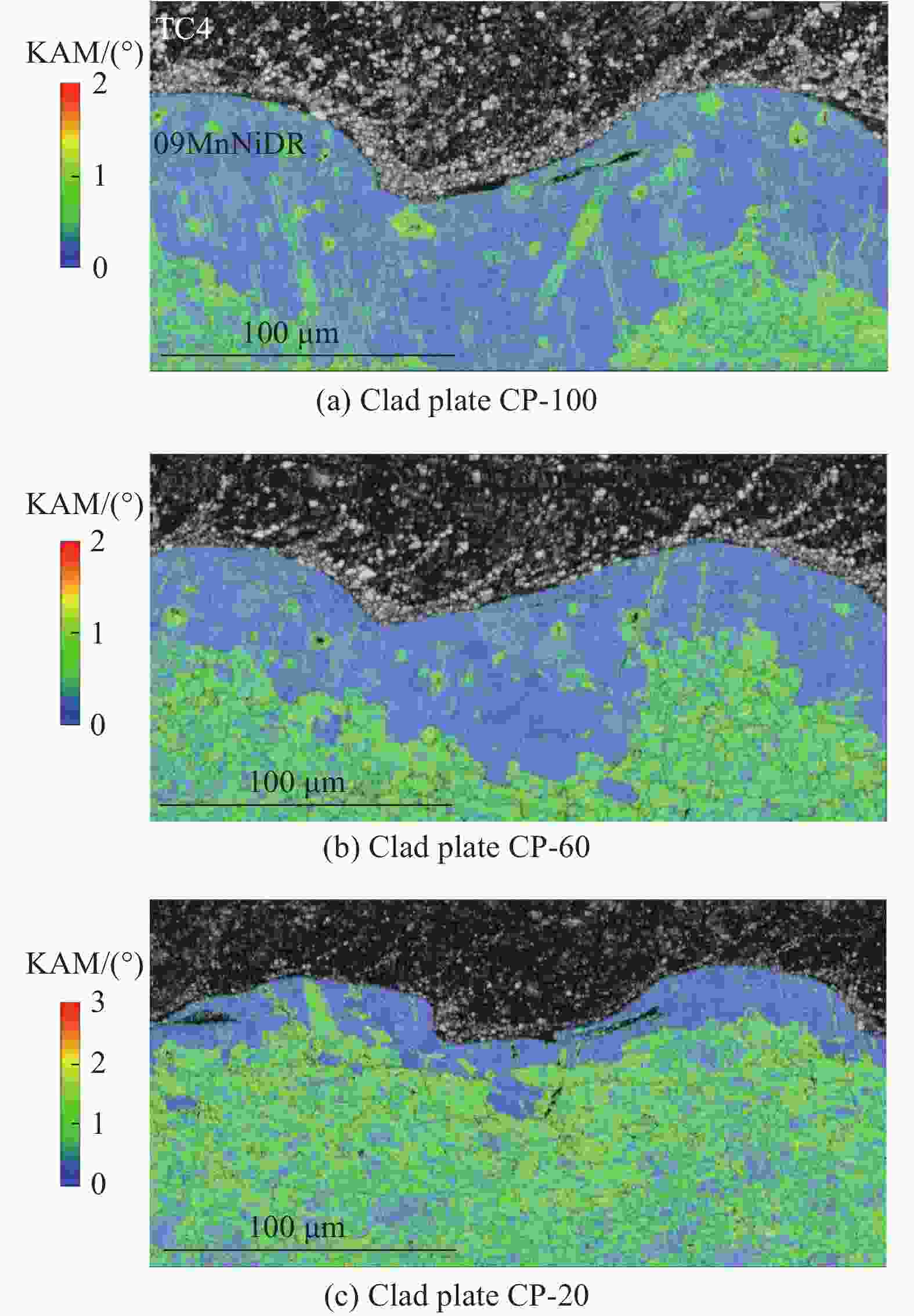
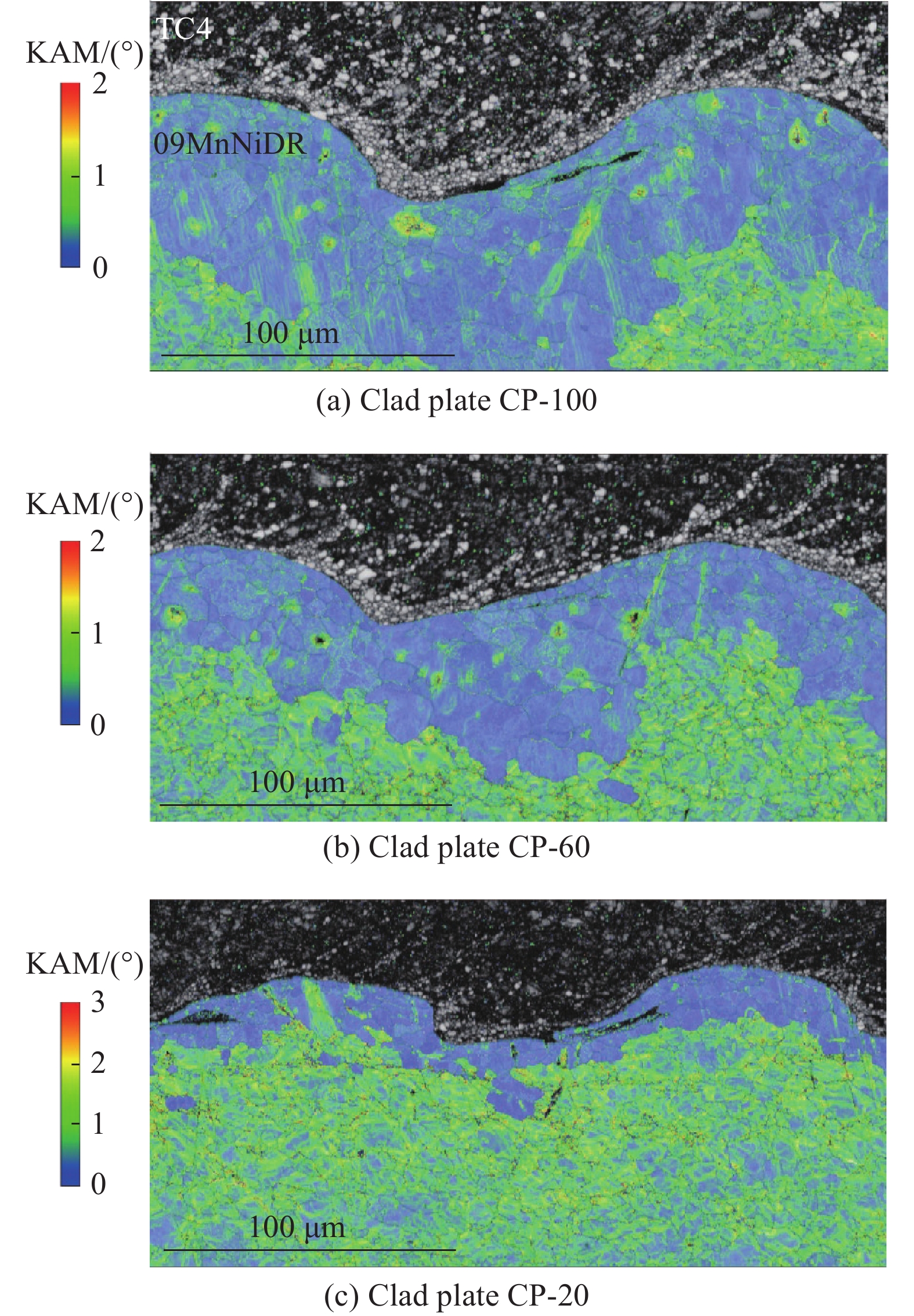
图 19 不同爆炸焊接复合板退火后焊接界面附近钢侧的KAM图
Figure 19. KAM maps of the steel sides near the welded interfaces of different explosive-welded clad plates after annealing
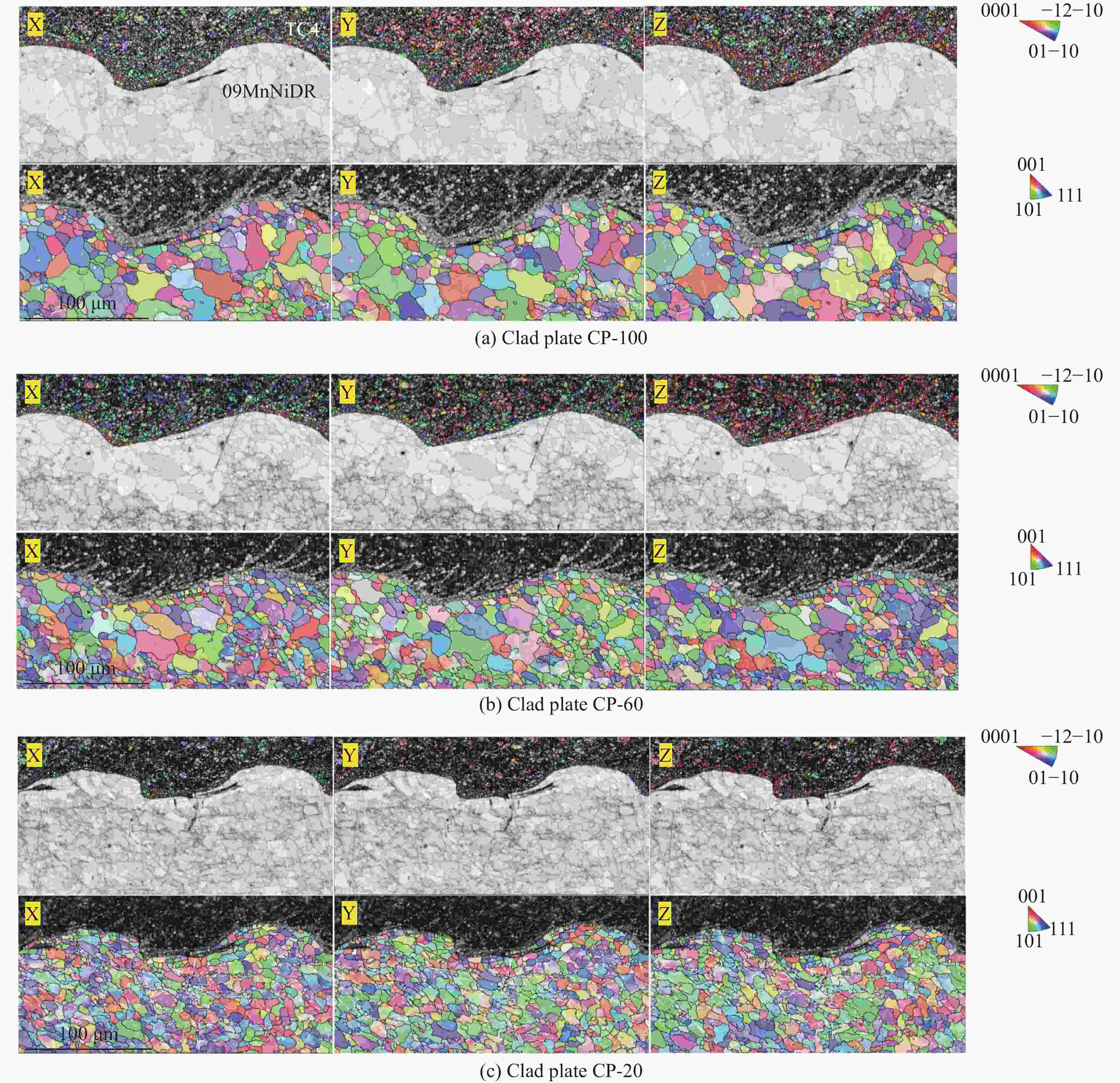
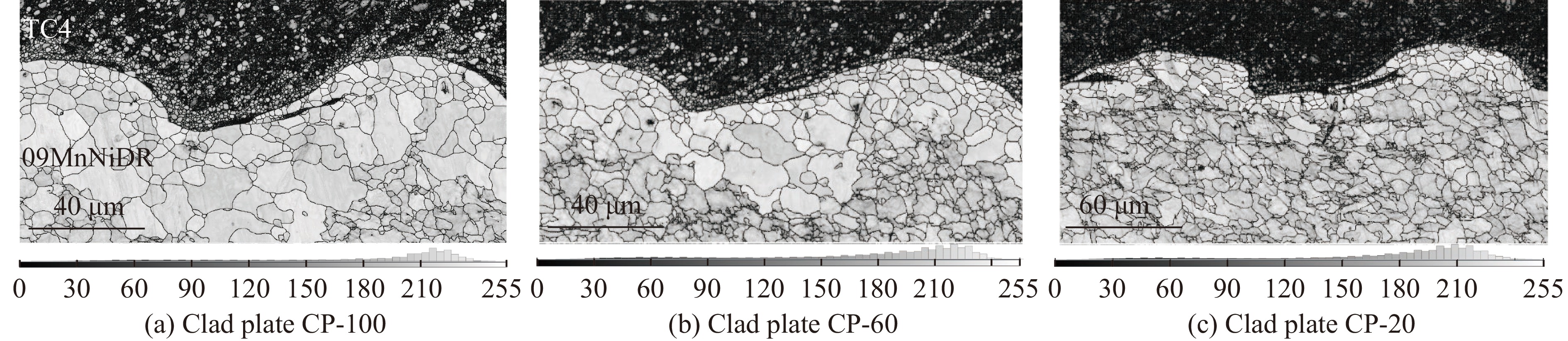
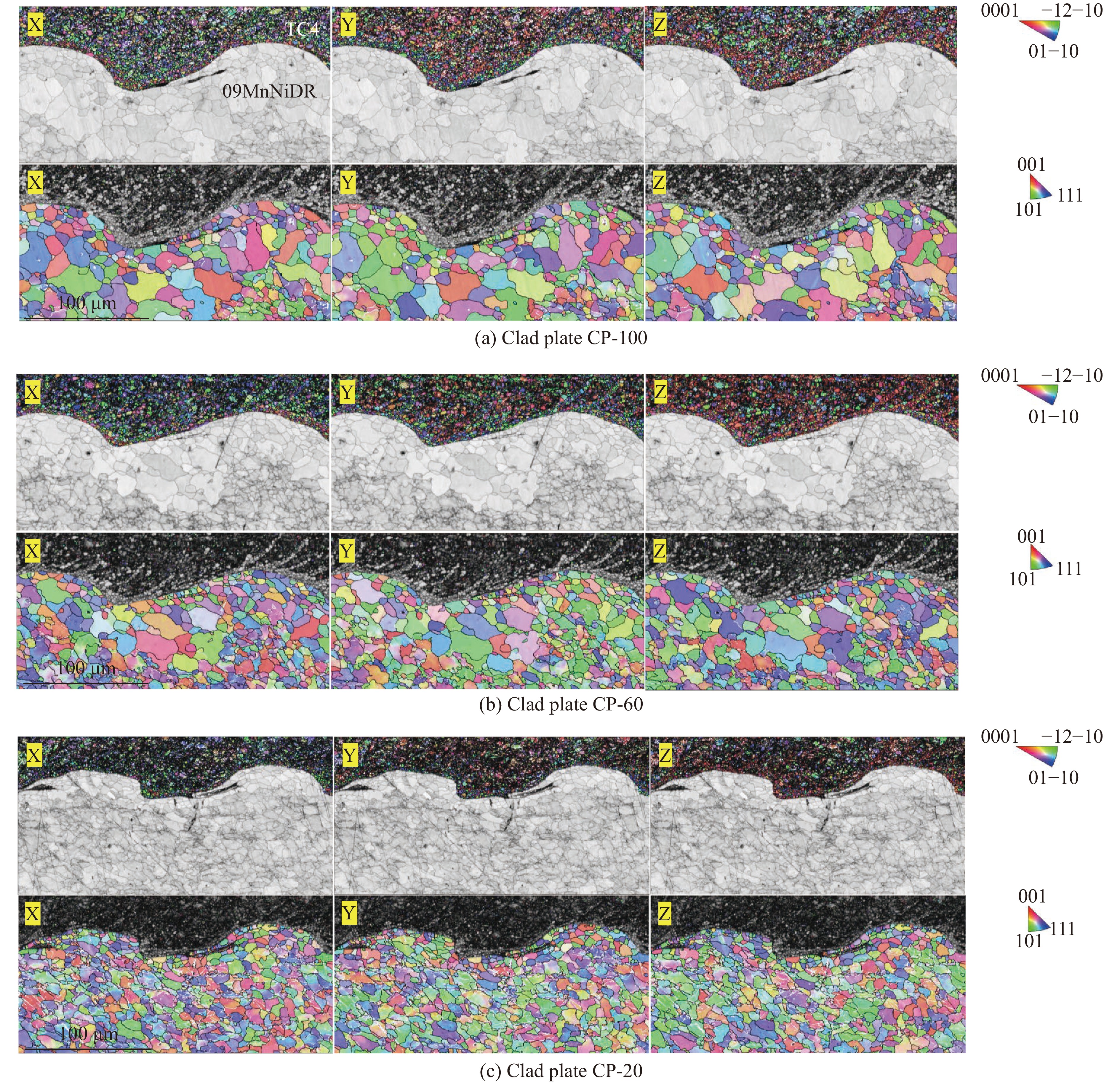
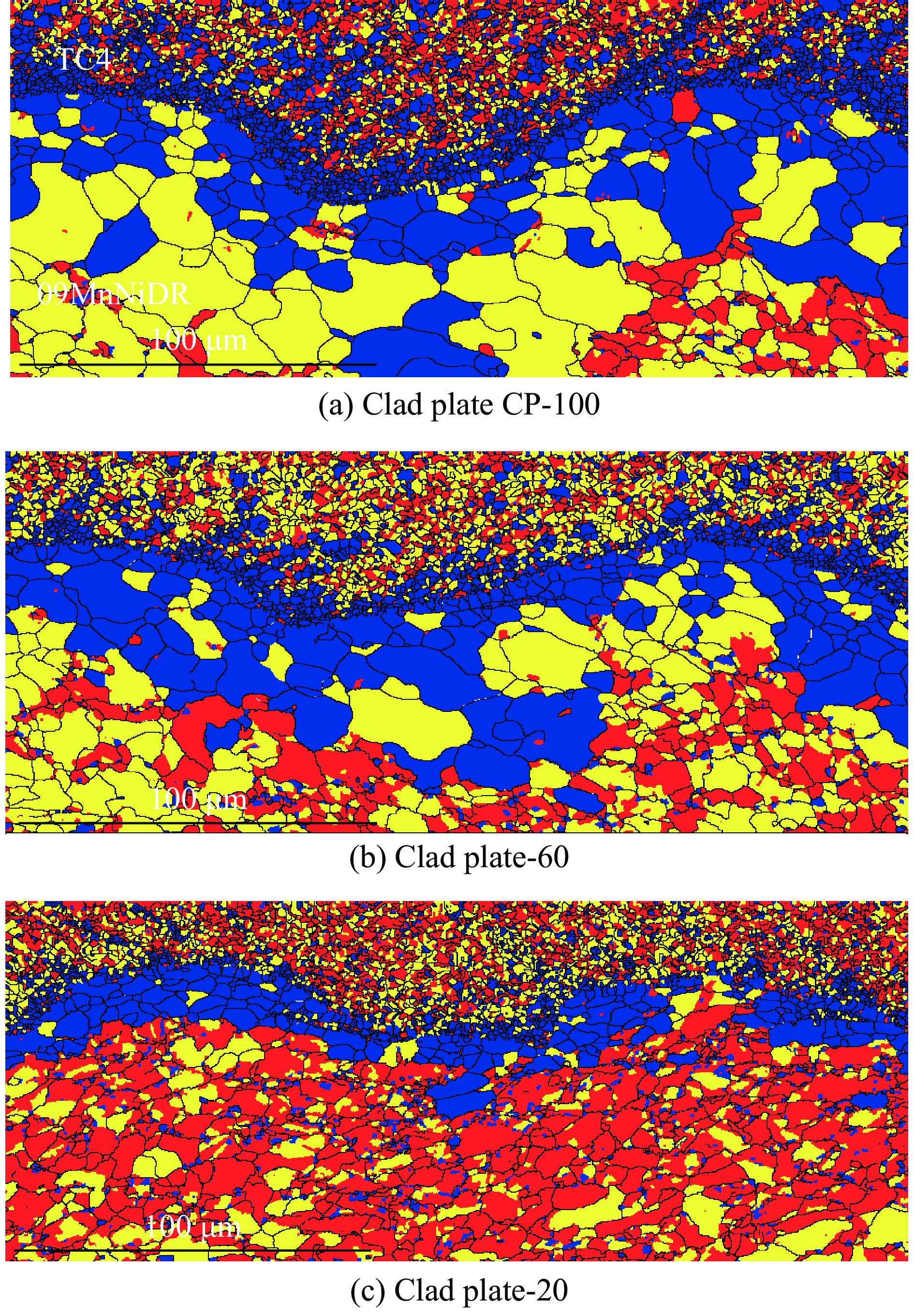
图 20 不同爆炸焊接复合板退火后焊接界面的BC-IPF-GB图
Figure 20. Overlaid band contrast (BC), inverse pole figure (IPF), and grain boundary (GB) maps for the welded interfaces of explosive-welded clad plates after annealing
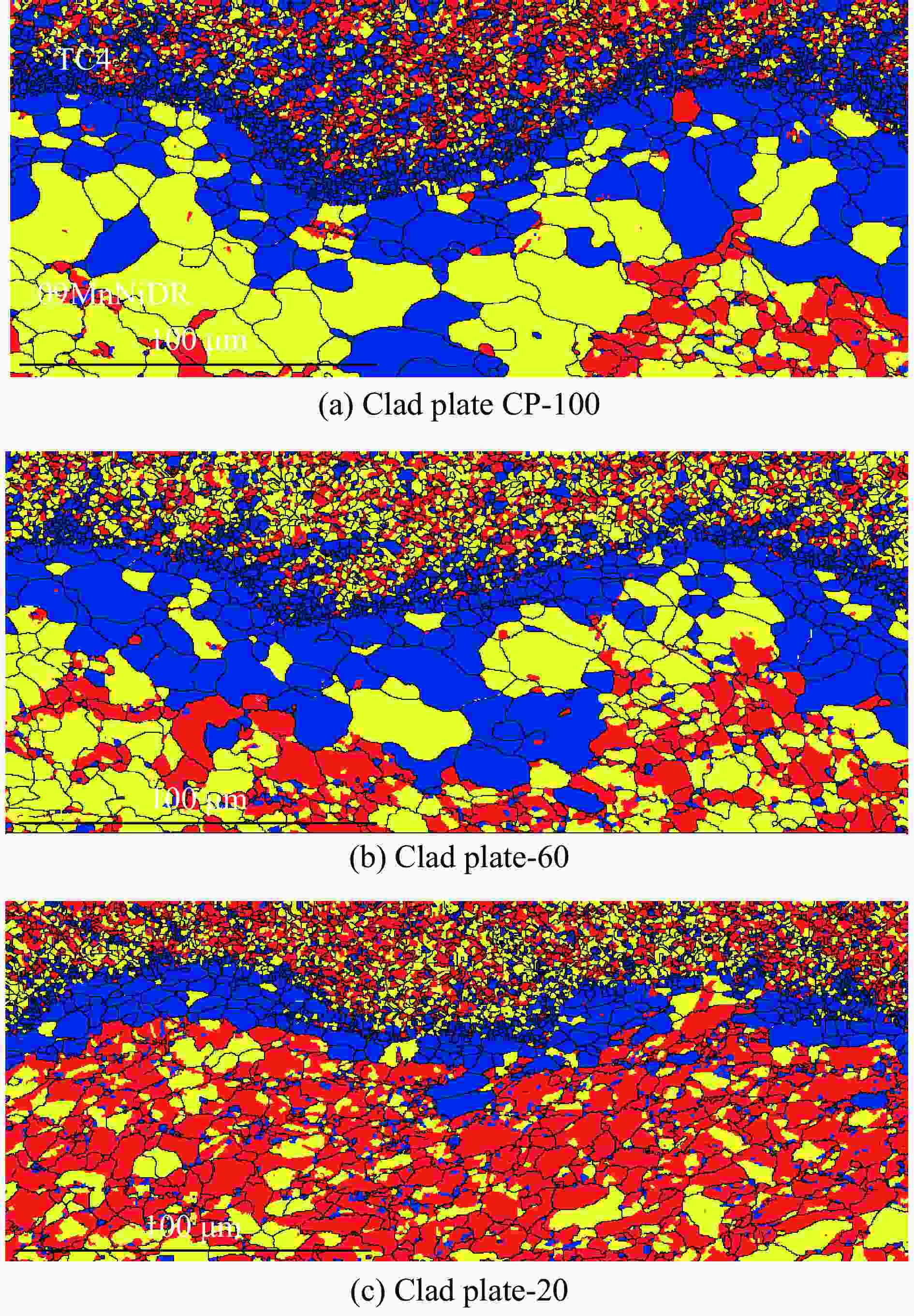
图 21 不同爆炸焊接复合板焊接界面退火后重结晶统计图
Figure 21. Recrystallization statistics for the welded interfaces of explosive-welded clad plates after annealing
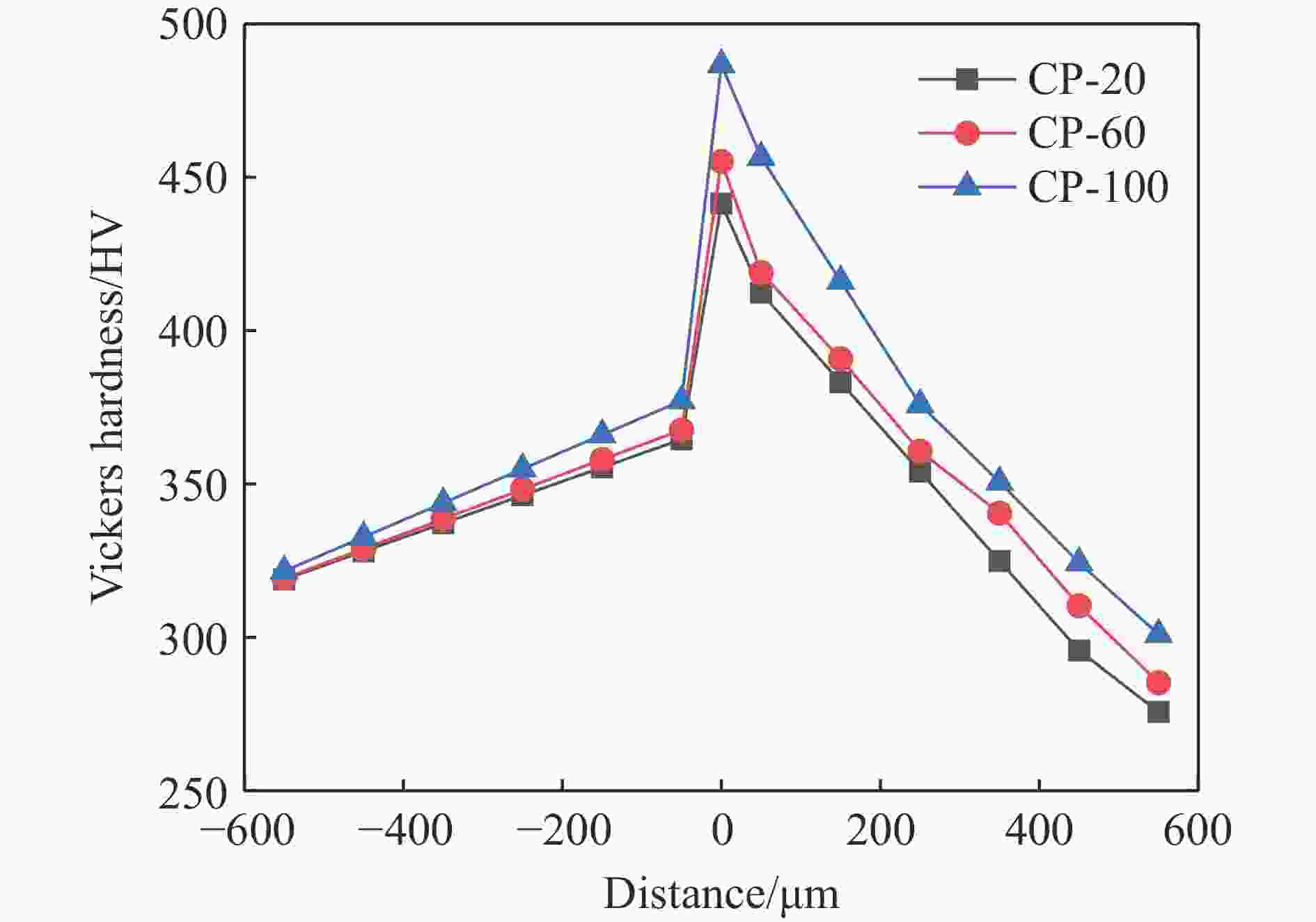
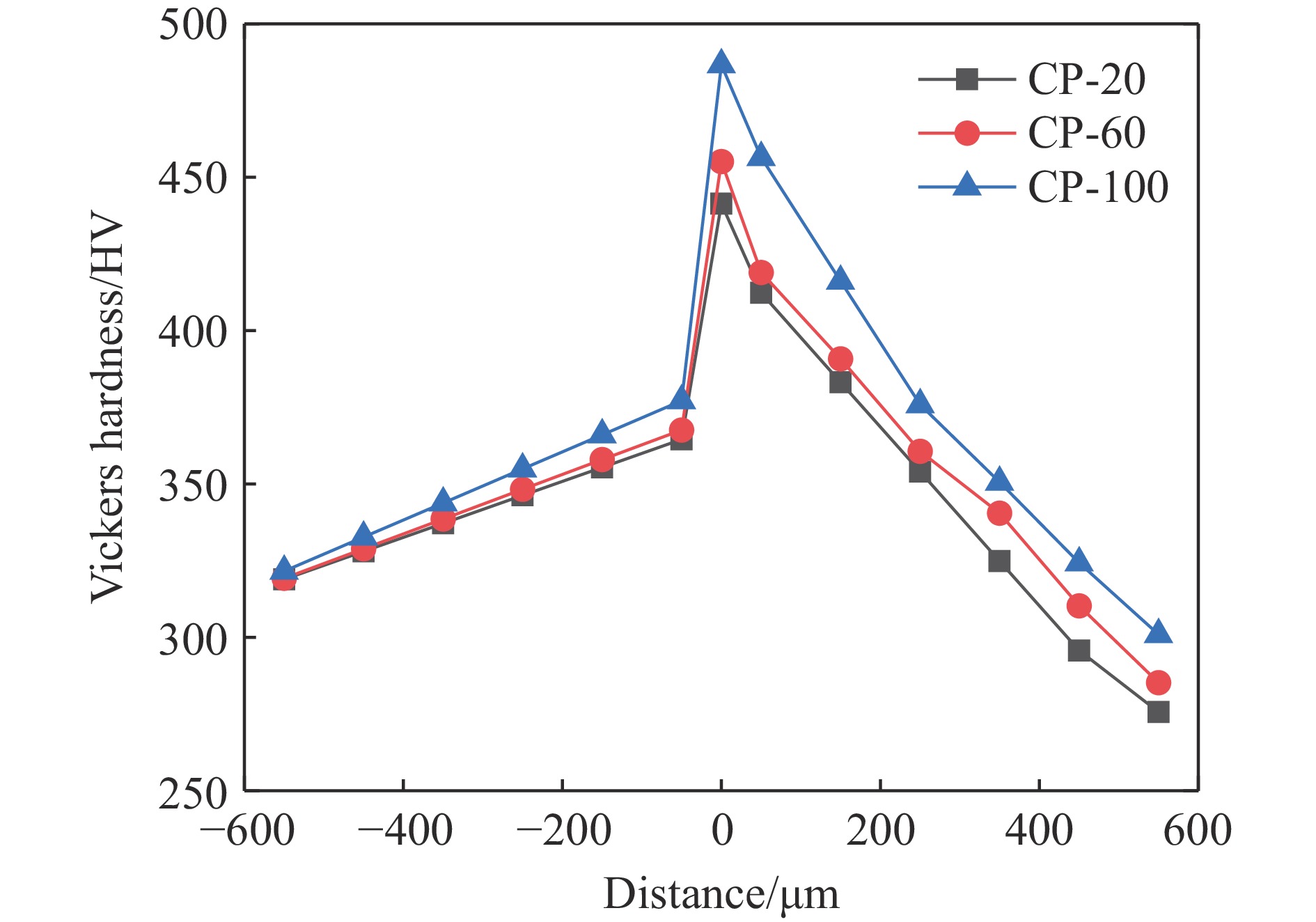
图 22 不同爆炸焊接复合板垂直于波形界面的维氏硬度分布
Figure 22. Distributions of Vickers hardness perpendicular to the wavy interfaces in different explosive-welded clad plates
表 1 基、覆板的化学成分
Table 1. Chemical composition of base and fly plates
材料 质量分数/% Fe Ti Al V Mn C Si Ni 其他 Ti6Al4V ≤0.30 余量 5.5~6.75 3.5~4.5 − ≤0.10 − ≤0.05 0.4 09MnNiDR 余量 − 0.02~0.05 − 1.2~1.6 ≤0.12 0.15~0.5 0.3~0.8 −  下载: 导出CSV
表 2 TC4和09MnNiDR物理参数
Table 2. Physical parameters of TC4 and 09MnNiDR
材料 密度/(g·cm−3) 体声速/(m·s−1) 维氏硬度 抗拉强度/MPa 熔点/℃ 热导率/(W·m−1·℃−1) TC4 4.51 6100 360 859 1660 7.955 09MnNiDR 7.85 5900 276 440 1500 46.500
下载: 导出CSV
表 3 冲击实验试件细节及实验结果
Table 3. Details of impact test specimens and experimental results
试件编号 取材 缺口位置 横截面积/mm2 试件宽度/mm 试件厚度/mm 冲击吸收功/J 损伤 1 CP-100 钢侧 80 10 10 6.4457 断裂 2 CP-60 钢侧 80 10 10 10.2455 断裂 3 CP-20 钢侧 80 10 10 17.5236 断裂 4 CP-100 钛侧 80 10 10 3.6473 断裂
下载: 导出CSV
表 4 不同爆炸焊接复合板界面退火后再结晶状态面积占比
Table 4. Area fractions of recrystallization states in the interface zones of different explosive-welded clad plates after annealing
复合板 材料 再结晶组织面积分数/% 亚结构组织面积分数/% 变形组织面积分数/% CP-100 09MnNiDR 38.63 49.26 12.11 TC4 51.10 19.66 29.24 CP-60 09MnNiDR 39.39 38.25 22.36 TC4 35.17 40.67 24.16 CP-20 09MnNiDR 21.47 21.83 56.70 TC4 22.68 36.26 41.06
下载: 导出CSV
-
[1] 李军, 李亚, 韩刚, 等. 爆炸金属复合材料在低温领域的应用 [J]. 材料开发与应用, 2022, 37(5): 99–102. DOI: 10.19515/j.cnki.1003-1545.2022.05.005.LI J, LI Y, HAN G, et al. Application of explosive metal composites in the field of low temperature [J]. Development and Application of Materials, 2022, 37(5): 99–102. DOI: 10.19515/j.cnki.1003-1545.2022.05.005. [2] ZHOU H W, SHAO F, ZHANG K, et al. Axial compression bearing performance of large-scale explosively welded TA10 titanium alloy/6061 aluminum alloy composite pipes [J]. Thin-Walled Structures, 2025, 216: 113629. DOI: 10.1016/j.tws.2025.113629. [3] 杜青林, 亢淑梅, 李顺涛. 超低温高锰钢焊接技术发展及在LNG储罐中的应用 [J]. 科技创新与应用, 2021(11): 40–43. DOI: 10.19981/j.cn23-1581/g3.2021.11.009.DU Q L, KANG S M, LI S T. Development of cryogenic high-manganese steel welding technology and its application in LNG storage tanks [J]. Technology Innovation and Application, 2021(11): 40–43. DOI: 10.19981/j.cn23-1581/g3.2021.11.009. [4] 郭伟, 蔡艳, 华学明. LNG用低温高锰钢及其焊接技术发展 [J]. 电焊机, 2020, 50(11): 7–11. DOI: 10.7512/j.issn.1001-2303.2020.11.02.GUO W, CAI Y, HUA X M. Development of low-temperature high manganese steel and its welding technology in LNG field [J]. Electric Welding Machine, 2020, 50(11): 7–11. DOI: 10.7512/j.issn.1001-2303.2020.11.02. [5] CHEN X, GUO A M, DONG H X, et al. The properties of high toughness low-temperature −70 ℃ steel 09MnNiDR [J]. International Journal of Pressure Vessels and Piping, 1999, 76(1): 13–17. DOI: 10.1016/S0308-0161(98)00110-0. [6] LI T L, LEI Y W, CHEN L Z, et al. Advances in mechanism and application of diffusion bonding of titanium alloys [J]. Journal of Materials Processing Technology, 2025, 337: 118736. DOI: 10.1016/j.jmatprotec.2025.118736. [7] ARDALANI A, NAFFAKH-MOOSAVY H. Investigating the microstructure and mechanical properties in furnace brazing Ti-6Al-4V to 17-4 PH stainless steel dissimilar joint with BNi-2 filler metal [J]. Journal of Advanced Joining Processes, 2024, 9: 100215. DOI: 10.1016/j.jajp.2024.100215. [8] ÇAM G, MISTIKOGLU S. Recent developments in friction stir welding of Al-alloys [J]. Journal of Materials Engineering and Performance, 2014, 23(6): 1936–1953. DOI: 10.1007/s11665-014-0968-x. [9] HUO K Y, HAN P, WANG W, et al. Role of intermetallic compounds in the fracture of double-sided friction stir welded titanium-steel clad plates [J]. Materials Characterization, 2025, 221: 114757. DOI: 10.1016/j.matchar.2025.114757. [10] DE BRIBEAN GUERRA A, FERREIRA T, BOLFARINI C, et al. Air carbon arc gouging and submerged-arc welding: insights into sensitization and mechanical behavior of AISI 2205 duplex stainless steel [J]. Journal of Materials Research and Technology, 2025, 36: 6196–6218. DOI: 10.1016/j.jmrt.2025.04.273. [11] JANDAGHI M R, SABOORI A, KHALAJ G, et al. Microstructural evolutions and its impact on the corrosion behaviour of explosively welded Al/Cu bimetal [J]. Metals, 2020, 10(5): 634. DOI: 10.3390/met10050634. [12] YANG M, CAO C, WANG J X. Fabrication of high-quality platinum coating using explosive welding technology and its microstructure evolution mechanisms [J]. Materials and Design, 2023, 235: 112372. DOI: 10.1016/j.matdes.2023.112372. [13] CARVALHO G H S F L, GALVÃO I, MENDES R, et al. Explosive welding of aluminium to stainless steel [J]. Journal of Materials Processing Technology, 2018, 262: 340–349. DOI: 10.1016/j.jmatprotec.2018.06.042. [14] 李晓杰, 王宇新, 王小红, 等. 爆炸焊接基复板间隙中的气体冲击波 [J]. 爆炸与冲击, 2021, 41(7): 0753001. DOI: 10.11883/bzycj-2020-0197.LI X J, WANG Y X, WANG X H, et al. Gas shock waves in the gap between the base and cladding plates during explosive welding [J]. Explosion and Shock Waves, 2021, 41(7): 0753001. DOI: 10.11883/bzycj-2020-0197. [15] 周德政, 李晓杰, 王小红, 等. 覆土真空爆炸容器内部载荷及动态响应分析 [J]. 爆炸与冲击, 2024, 44(10): 101407. DOI: 10.11883/bzycj-2023-0455.ZHOU D Z, LI X J, WANG X H, et al. Analysis of internal load and dynamic response of vacuum explosion containment vessel with sand covered for explosive welding [J]. Explosion and Shock Waves, 2024, 44(10): 101407. DOI: 10.11883/bzycj-2023-0455. [16] DING Y X, WEN D S, WANG X W, et al. Interface evolution and mechanical properties of Al/Ta laminated composites fabricated by vacuum-embedded diffusion welding [J]. International Journal of Refractory Metals and Hard Materials, 2025, 133: 107302. DOI: 10.1016/j.ijrmhm.2025.107302. [17] LI X J, ZHANG T Z, DAI X D, et al. Hazardous effects and microstructure of explosive welding under vacuum environment [J]. The International Journal of Advanced Manufacturing Technology, 2024, 130(7/8): 3741–3754. DOI: 10.1007/s00170-023-12892-y. [18] 汪泉, 胡程, 谢守冬, 等. 负压条件对T2/Q235爆炸焊接复合板界面的影响 [J]. 火炸药学报, 2024, 47(1): 64–71. DOI: 10.14077/j.issn.1007-7812.202306020.WANG Q, HU C, XIE S D, et al. Influence of negative pressure on interface of T2/Q235 explosive welded composite plate [J]. Chinese Journal of Explosives & Propellants, 2024, 47(1): 64–71. DOI: 10.14077/j.issn.1007-7812.202306020. [19] 李雪交, 孙标, 张文喆, 等. Mg/Al真空爆炸焊接微观形貌及力学性能 [J]. 高压物理学报, 2024, 38(6): 064105. DOI: 10.11858/gywlxb.20240793.LI X J, SUN B, ZHANG W Z, et al. Micro-morphology and mechanical properties of Mg/Al composites under vacuum explosion welding [J]. Chinese Journal of High Pressure Physics, 2024, 38(6): 064105. DOI: 10.11858/gywlxb.20240793. [20] ZHU G C, GUO H J, ZENG X Y, et al. Study on the microstructure and mechanical properties of aluminum-steel composite joints explosively welded in vacuum or in air [J]. Materials Today Communications, 2025, 48: 113417. DOI: 10.1016/j.mtcomm.2025.113417. [21] YANG M, MA H H, SHEN Z W. Study on self-restrained explosive welding with high energy efficiency [J]. International Journal of Advanced Manufacturing Technology, 2018, 99(9): 3123–3132. DOI: 10.1007/s00170-018-2600-y. [22] ZHOU Q, LIU R, ZHOU Q, et al. Effect of microstructure on mechanical properties of titanium-steel explosive welding interface [J]. Materials Science and Engineering: A, 2022, 830: 142260. DOI: 10.1016/j.msea.2021.142260. [23] 梁汉良, 罗宁, 陈彦龙, 等. TA2/AZ31B/2024Al爆炸焊接复合板界面微观结构特征及其动态力学性能 [J]. 爆炸与冲击, 2024, 44(4): 045301. DOI: 10.11883/bzycj-2023-0367.LIANG H L, LUO N, CHEN Y L, et al. Interfacial microstructure characteristics and dynamic mechanical properties of TA2/AZ31B/2024Al explosively-welded composite plates [J]. Explosion and Shock Waves, 2024, 44(4): 045301. DOI: 10.11883/bzycj-2023-0367. [24] CHU Q L, ZHANG M, LI J H, et al. Experimental and numerical investigation of microstructure and mechanical behavior of titanium/steel interfaces fabricated by explosive welding [J]. Materials Science and Engineering: A, 2017, 689: 323–331. DOI: 10.1016/j.msea.2017.02.075. [25] CHU Q L, ZHANG M, LI J H, et al. Influence of vanadium filler on the properties of titanium and steel TIG welded joints [J]. Journal of Materials Processing Technology, 2017, 240: 293–304. DOI: 10.1016/j.jmatprotec.2016.06.018. [26] LEI X L, DING W H, LU X X, et al. Interfacial modification of titanium/steel composites and its effect on the growth pattern of Fe-Ti compounds [J]. Materials Today Communications, 2024, 39: 109289. DOI: 10.1016/j.mtcomm.2024.109289. -

计量
- 文章访问数: 531
- HTML全文浏览量: 168
- PDF下载量: 109
- 被引次数: 0