



Longitudinal stability analysis of piston-driven pathological detonation wave
-
摘要: 为了研究病态爆轰的传播稳定特性,通过使用摩尔数减小的单步反应实现其爆轰过程,采用一维反应性欧拉方程和高精度数值格式对一维病态爆轰波纵向传播的振荡不稳定过程进行数值模拟,系统考察了活塞驱动速度和活化能对病态爆轰波稳定性的影响,并分析爆轰波稳定性与其反应区结构变化之间的关系。结果表明:在相同的反应放热条件下,病态爆轰波比理想爆轰波更不稳定。活塞驱动速度的增加有利于病态爆轰波的稳定,而活化能的增加则不利于病态爆轰波的稳定。过驱病态爆轰的高频低幅振荡时其反应区结构变化不大;强解条件下爆轰波的低频低幅振荡是反应区强解的2种构型交替出现导致的;而过驱病态爆轰的低频高幅振荡特性则是由流量发生变化的弱解、强解和过驱解等反应区结构的交替变化所表征的。Abstract: Pathological detonation is a non-ideal detonation that cannot effectively support the propagation of detonation waves due to other physical or chemical factors offsetting part of the chemical heat release. It is common in the practical processes, and the study on propagation stability of the detonation is of great significance. A single-step global reaction model was adopted to analyze the propagation stability of pathological detonation waves. Reduction of the reactant molar quantity decreased the overall system volume, introducing a negative-work effect that enables the pathological detonation regime. The process was numerically simulated using the one-dimensional reactive Euler equations, which couples chemical energy release with flow-field dynamics. A high-order finite difference method combined with a high-resolution flux-splitting scheme ensured accurate resolution of shock fronts and detailed reaction-zone structures. Parametric variations in piston-driven speed and activation energy were introduced to represent the effects of external mechanical forcing and intrinsic chemical reactivity, respectively. Comparative analyses of temporal evolution across parameter sets revealed the coupling mechanism between piston-driven flow dynamics and chemical kinetics. Further examination of the spatiotemporal distributions of temperature, pressure, and reactant mass fraction elucidated the link between detonation stability and the internal structural evolution of the reaction zone. The effects of piston-driven speed and activation energy on the stability of pathological detonation wave are systematically investigated, and the relationship between the stability of detonation wave and the reaction zone structure is analyzed. The results show that the pathological detonation is more unstable than the ideal detonation wave under the same reaction exothermic conditions. The increase of piston-driven speed is beneficial to the stability of the pathological detonation wave, while the increase of activation energy can lead to the instability of the pathological detonation wave. The high-frequency and low-amplitude oscillation of overdriven pathological detonation has little change in the structure of the reaction zone; the low-frequency and low-amplitude oscillation of detonation wave under the condition of strong solution is caused by the alternation of two configurations of strong solution in the reaction zone. The low-frequency and high-amplitude oscillation characteristics of overdriven pathological detonation are characterized by the alternating occurrence of reaction zone structures such as weak solution, strong solution and overdriven solution.
-
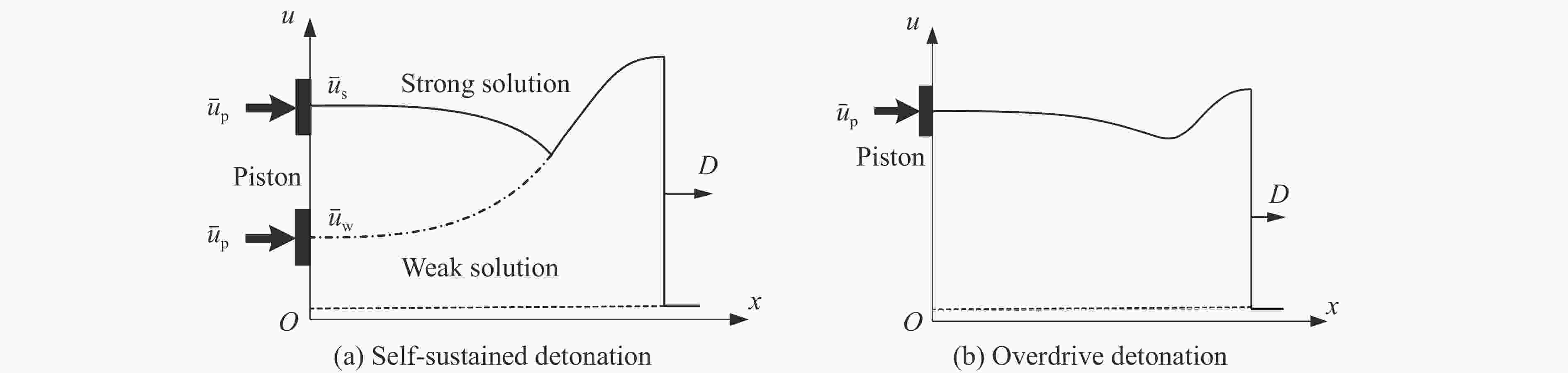
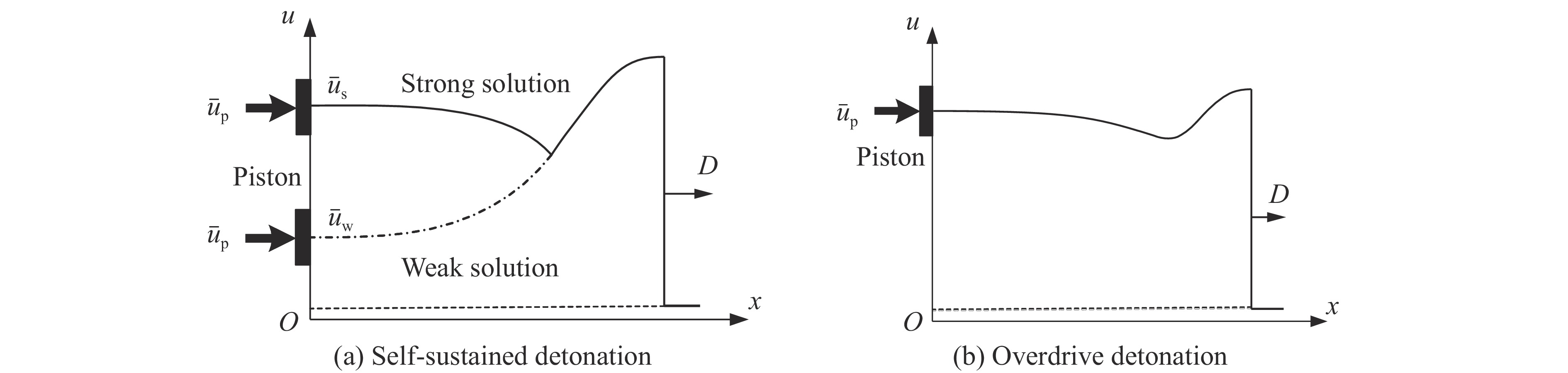
图 2 病态爆轰反应区结构示意图
Figure 2. Schematics of reaction zone structures for pathological detonation
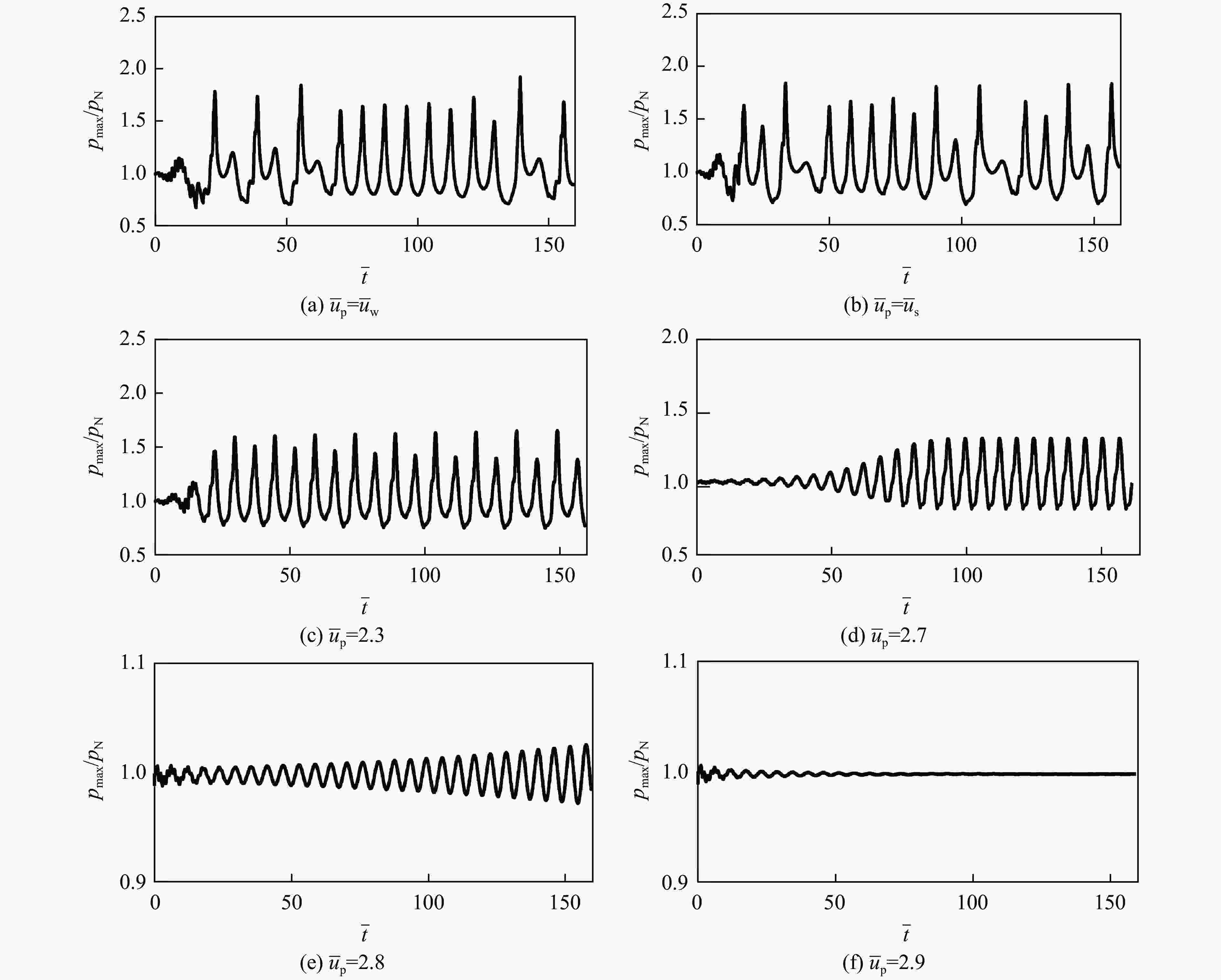
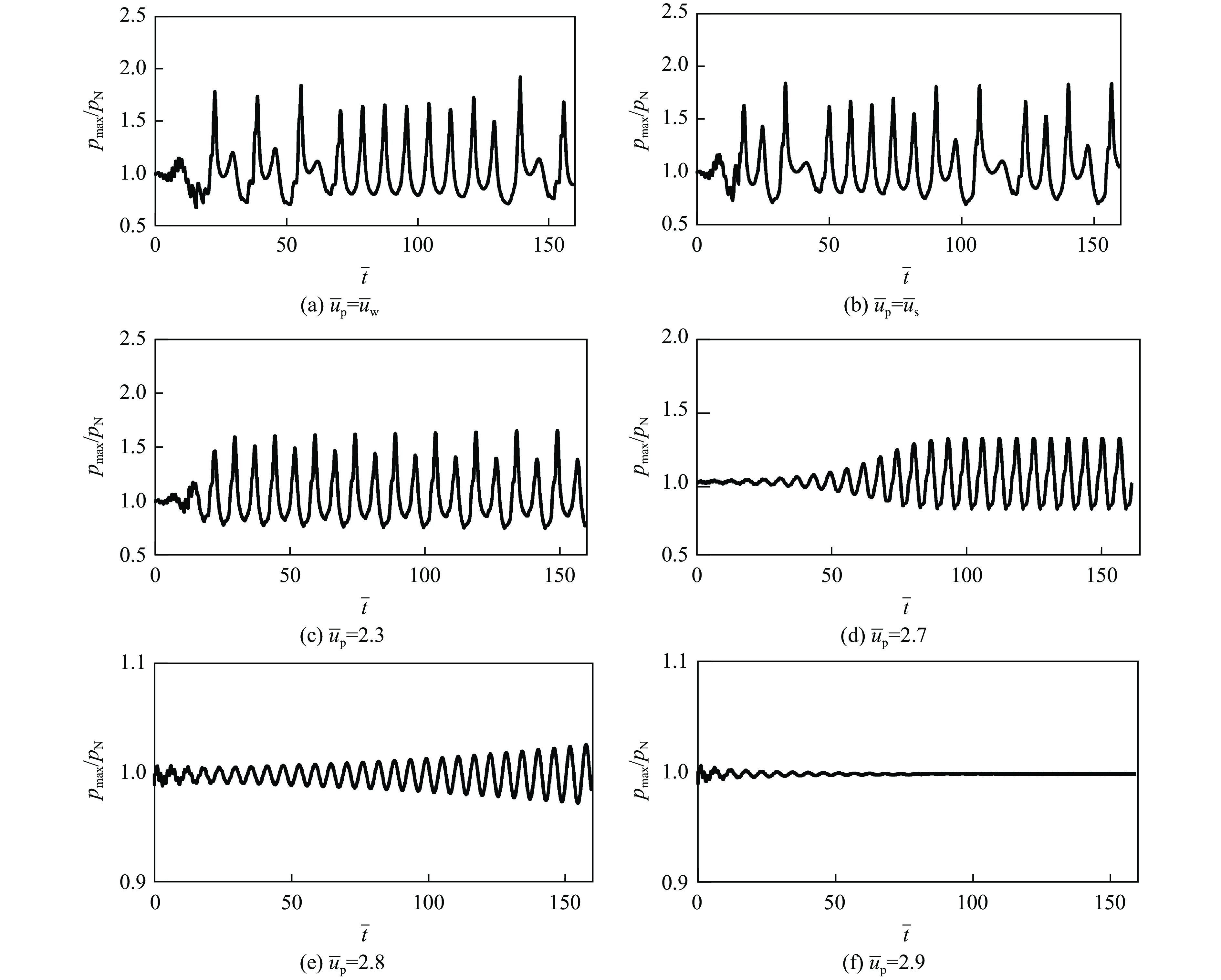
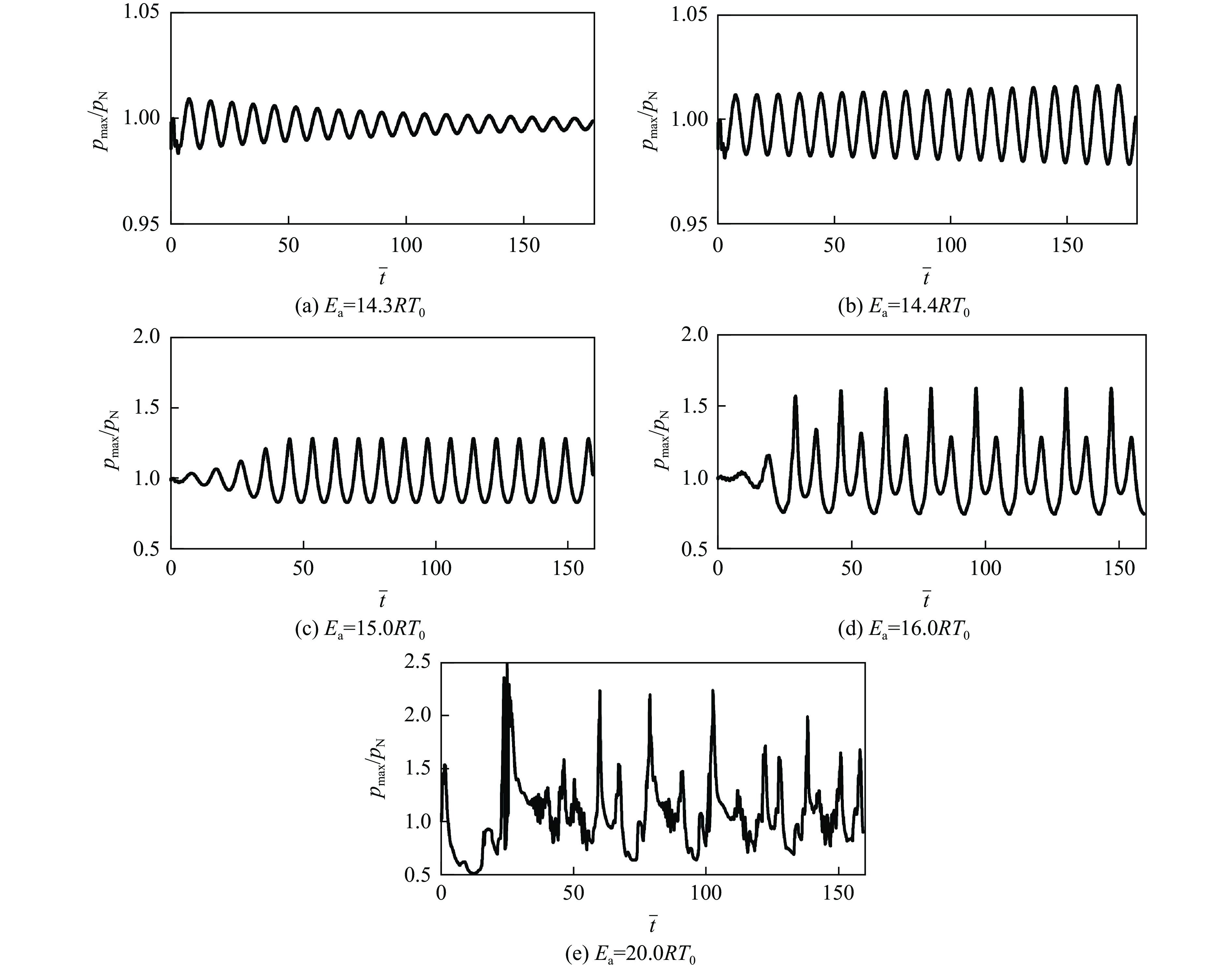
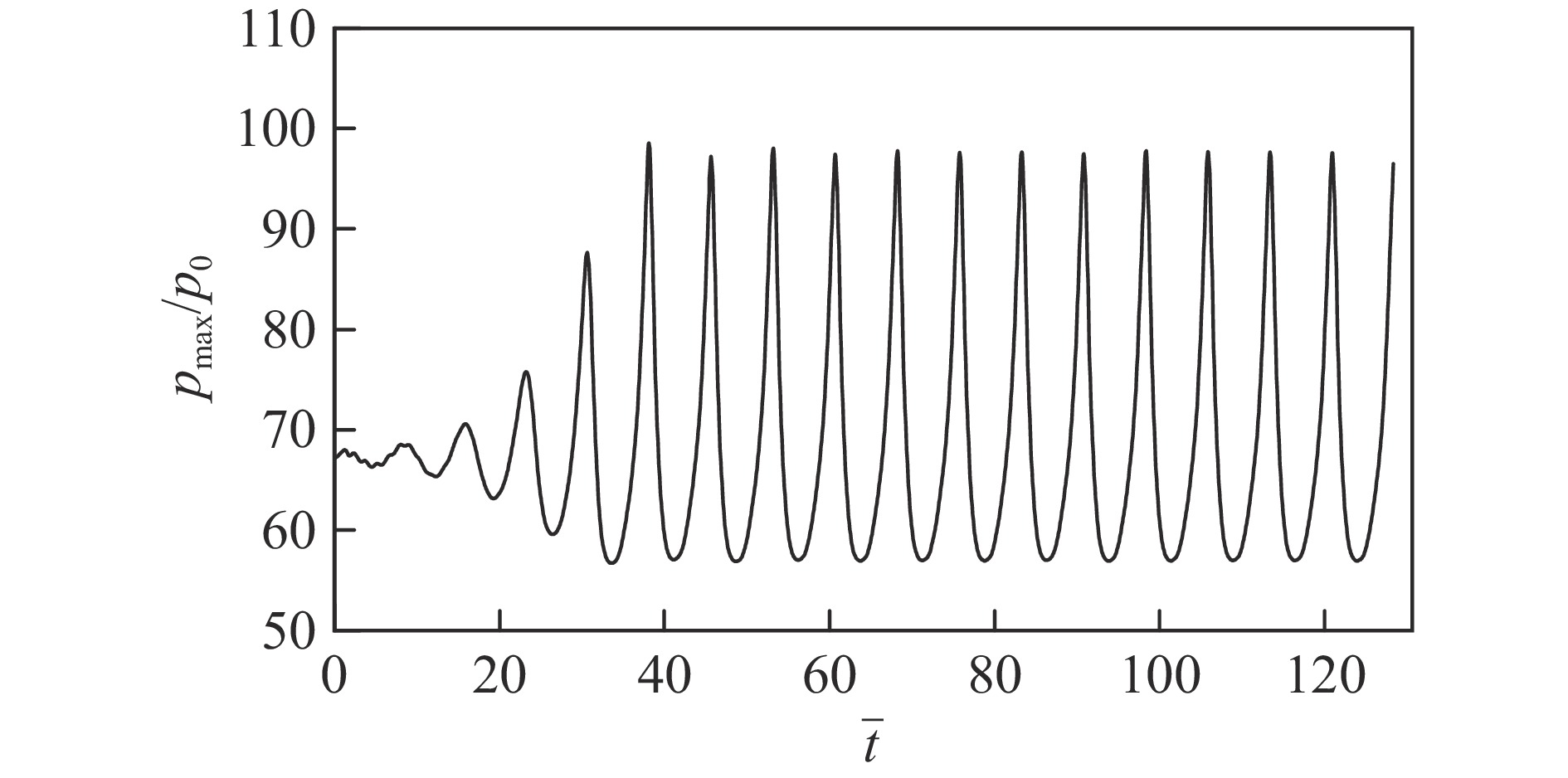
图 3 不同活塞速度驱动下的爆轰波压力峰值振荡曲线
Figure 3. Pressure peak oscillation curves of detonation wave under different piston-driven speeds
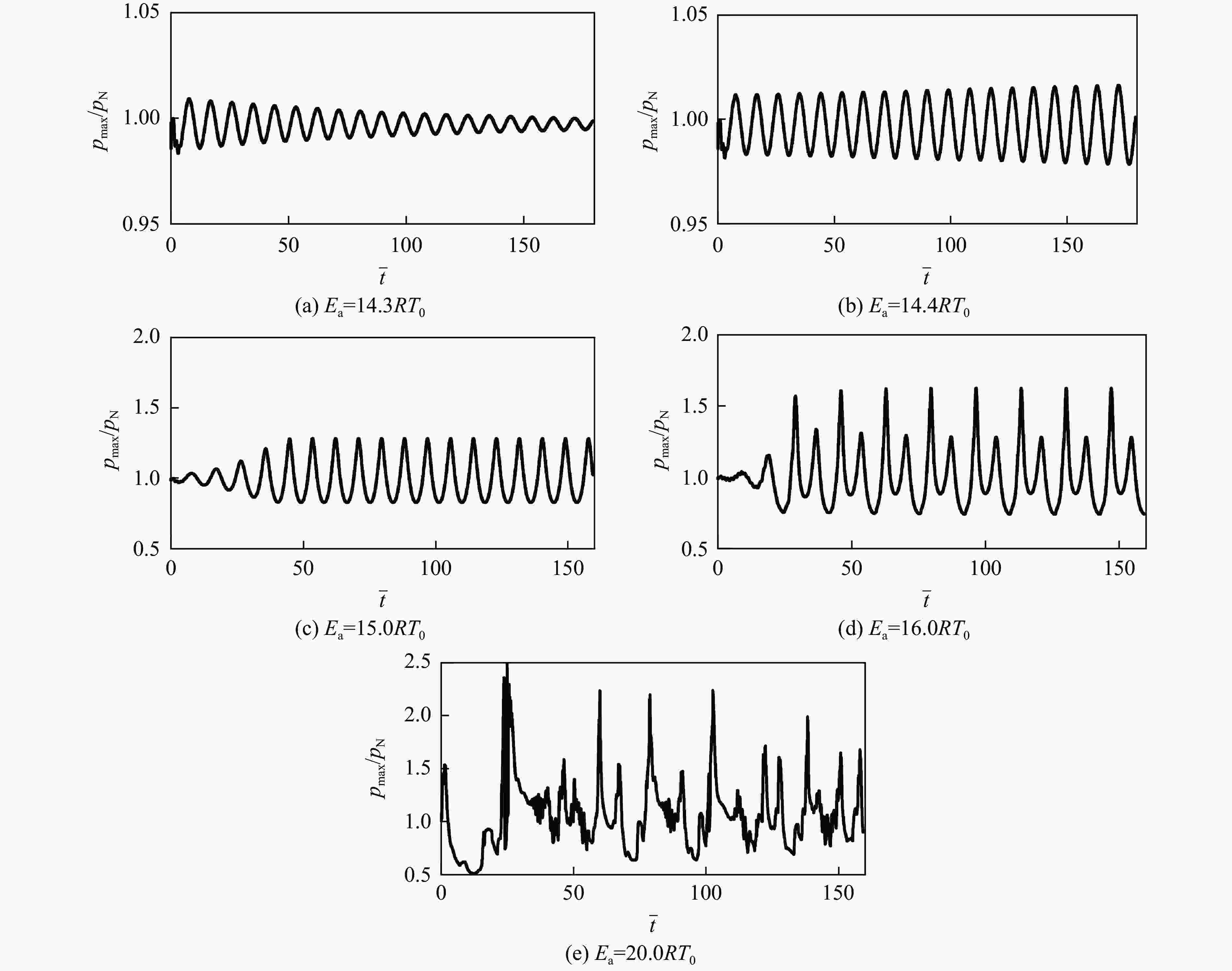
图 4 不同活化能下的爆轰波峰值压力振荡曲线
Figure 4. Peak pressure oscillation curves of detonation wave under different activation energies
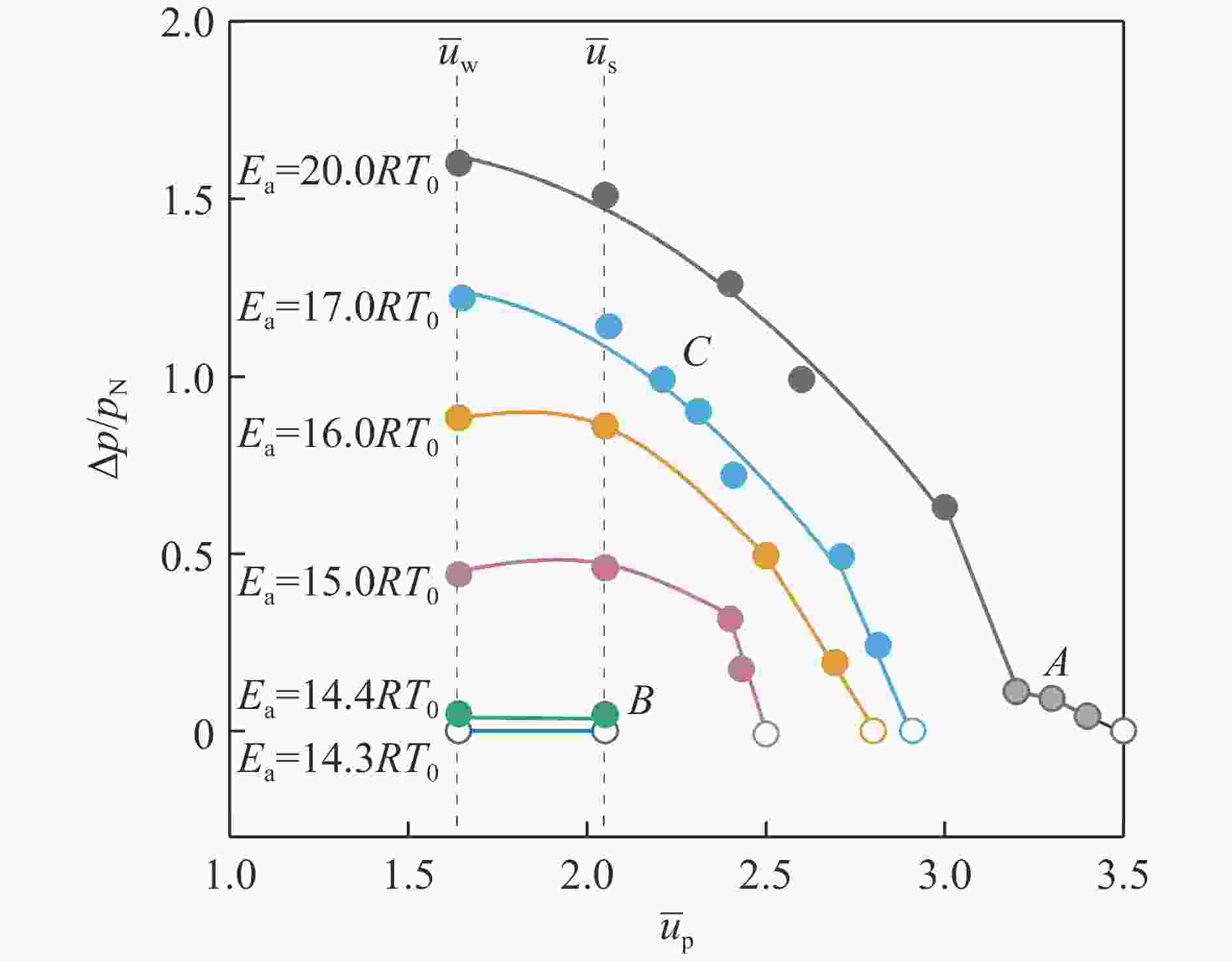
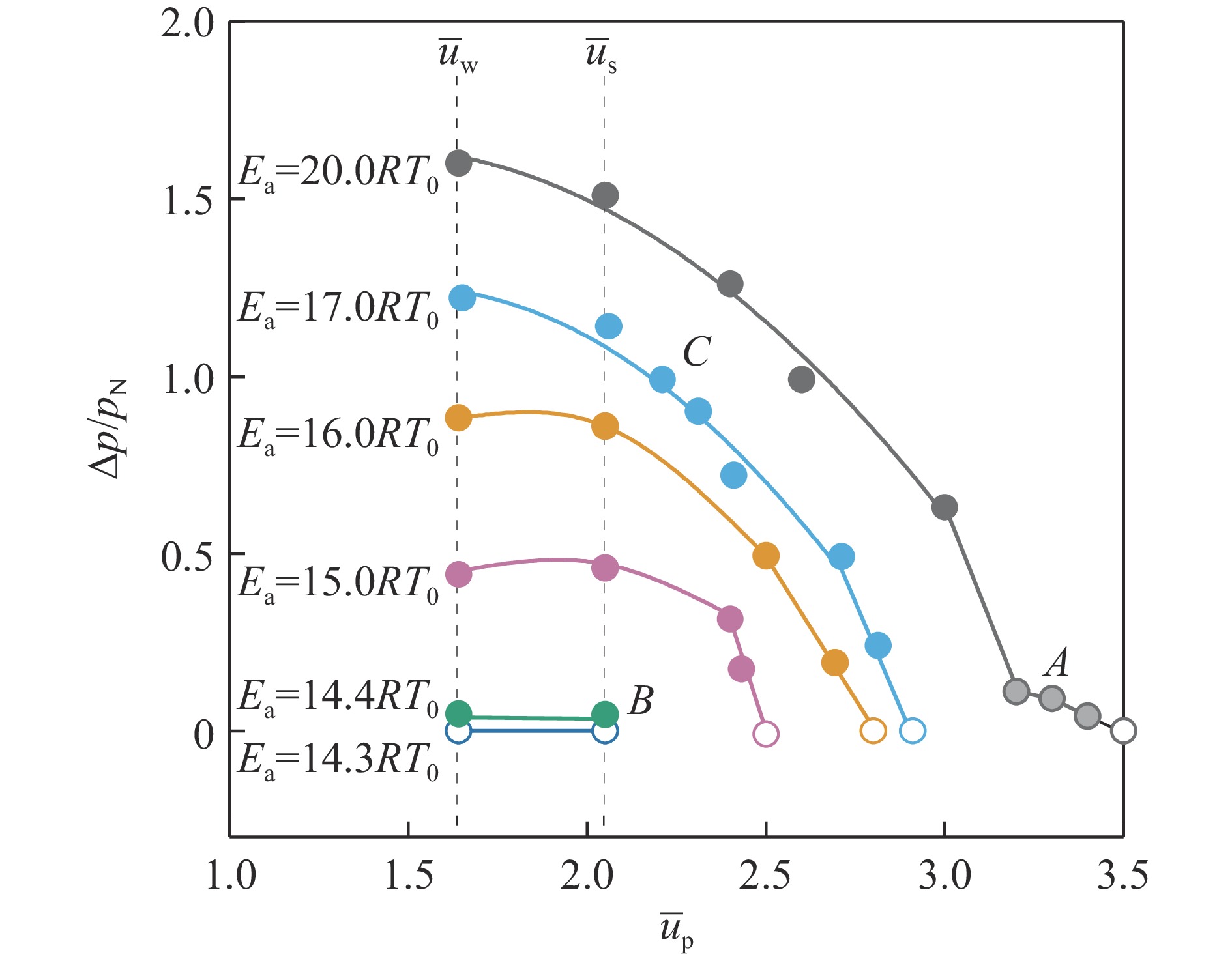
图 5 不同活化能下爆轰波峰值压力振幅随活塞驱动速度的变化
Figure 5. Variation of the oscillation amplitude of the peak detonation pressure with piston driving velocity under different activation energies
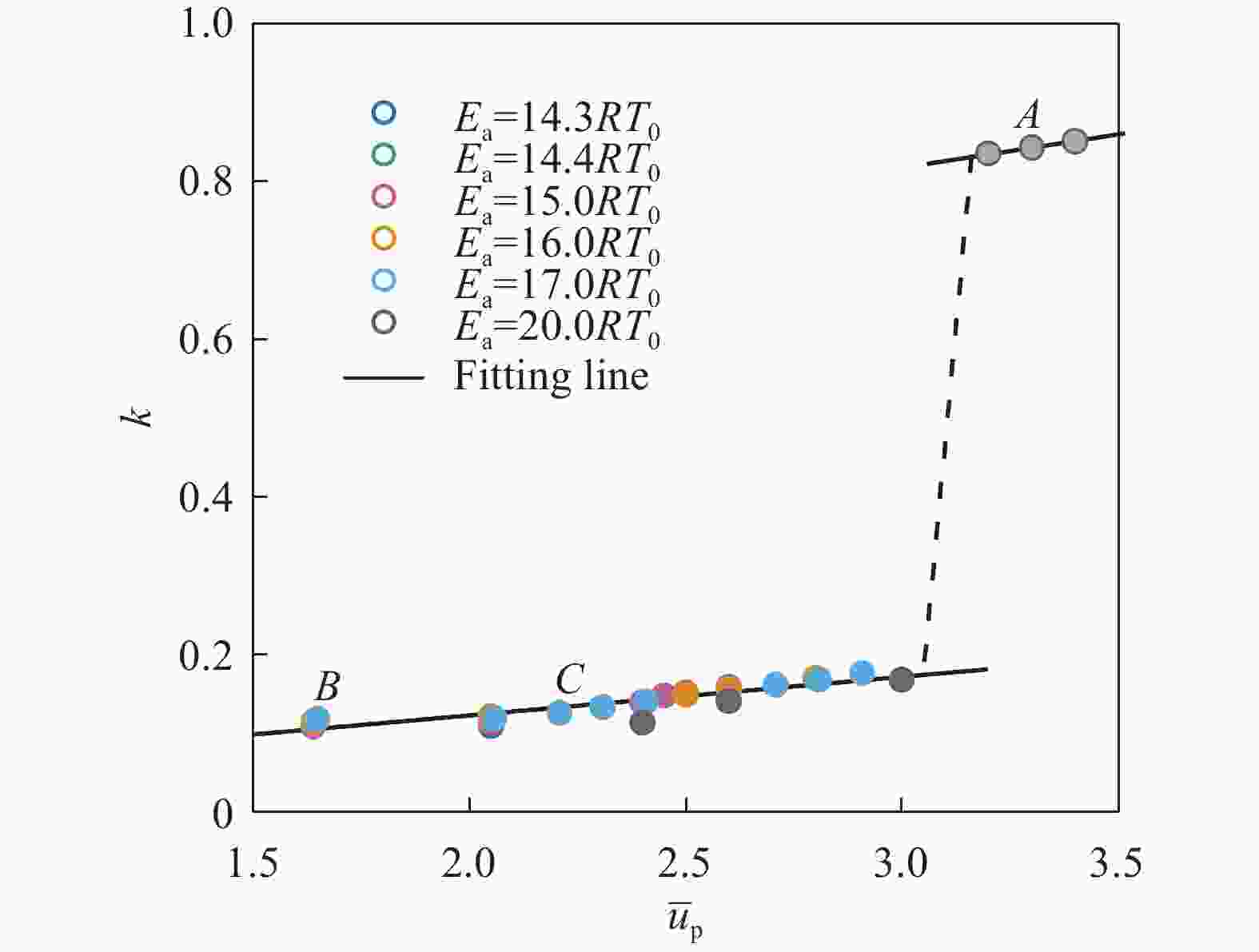
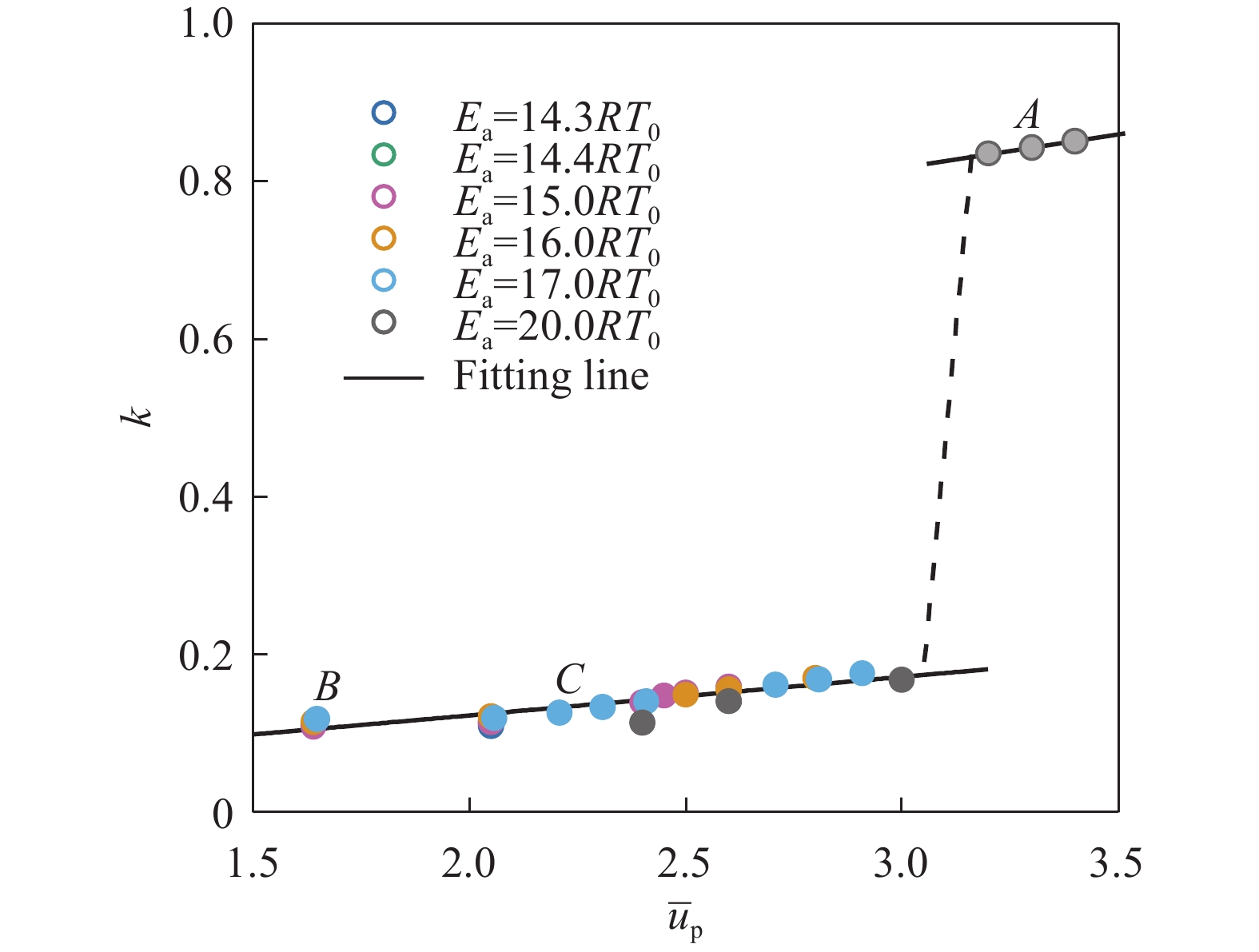
图 6 不同活化能下爆轰波峰值压力主频率随活塞驱动速度的变化
Figure 6. Variation of the dominant frequency of the peak detonation pressure with piston driving velocity under different activation energies
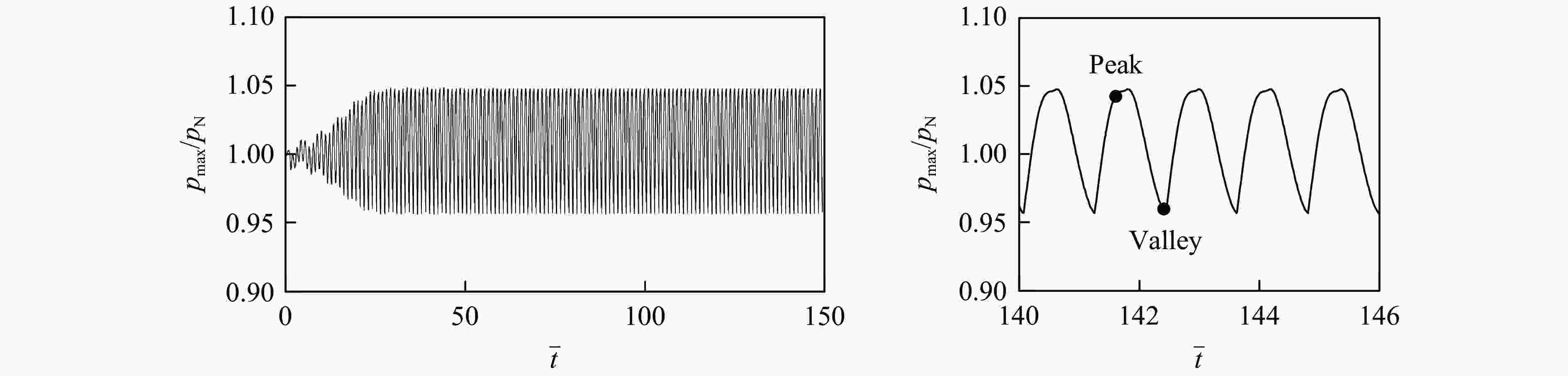
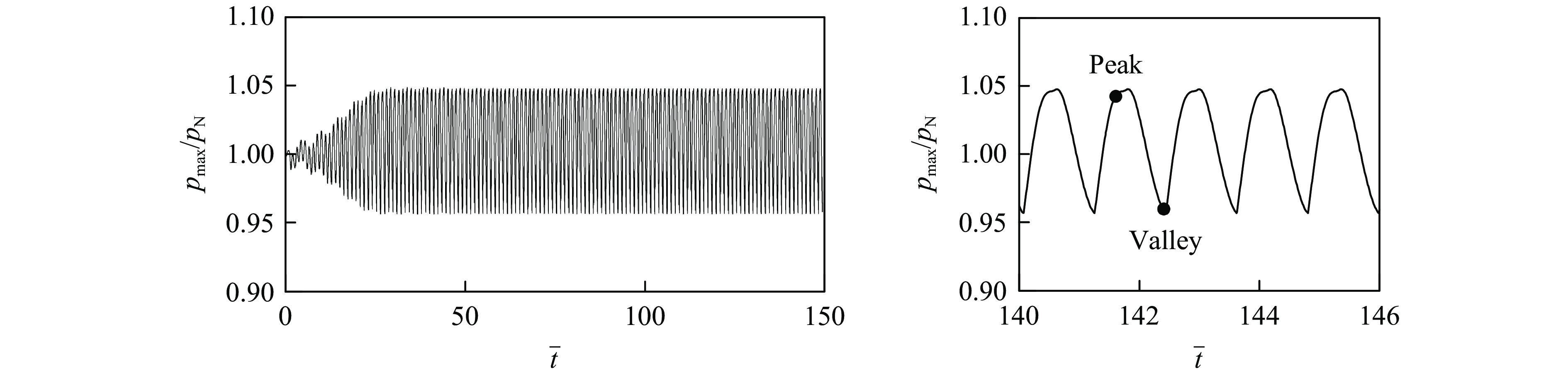
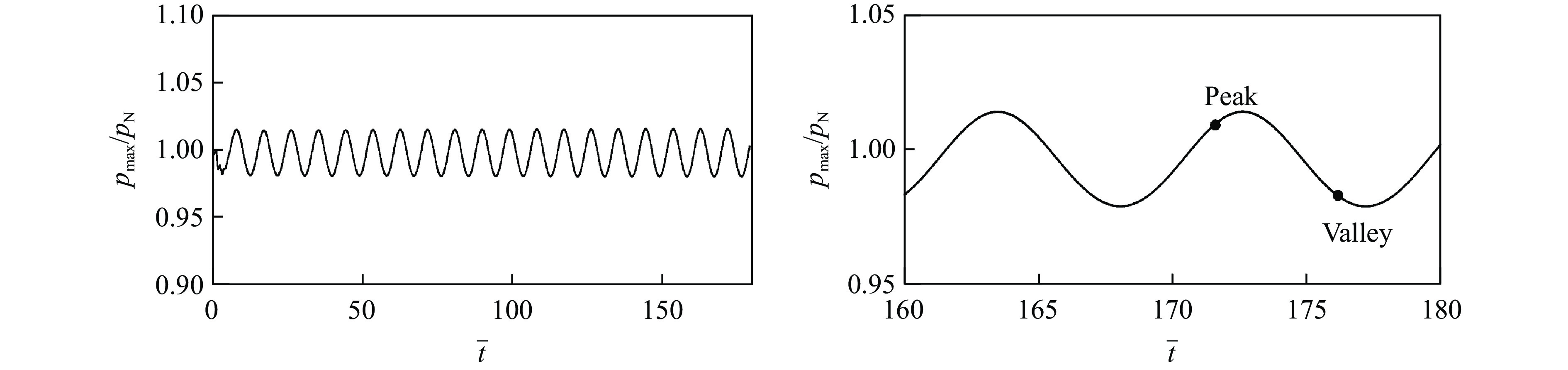
图 7 算例1峰值压力振荡曲线(左)及局部放大图(右)
Figure 7. Peak pressure oscillation curve of case 1 (left) and its locally enlarged curve (right)
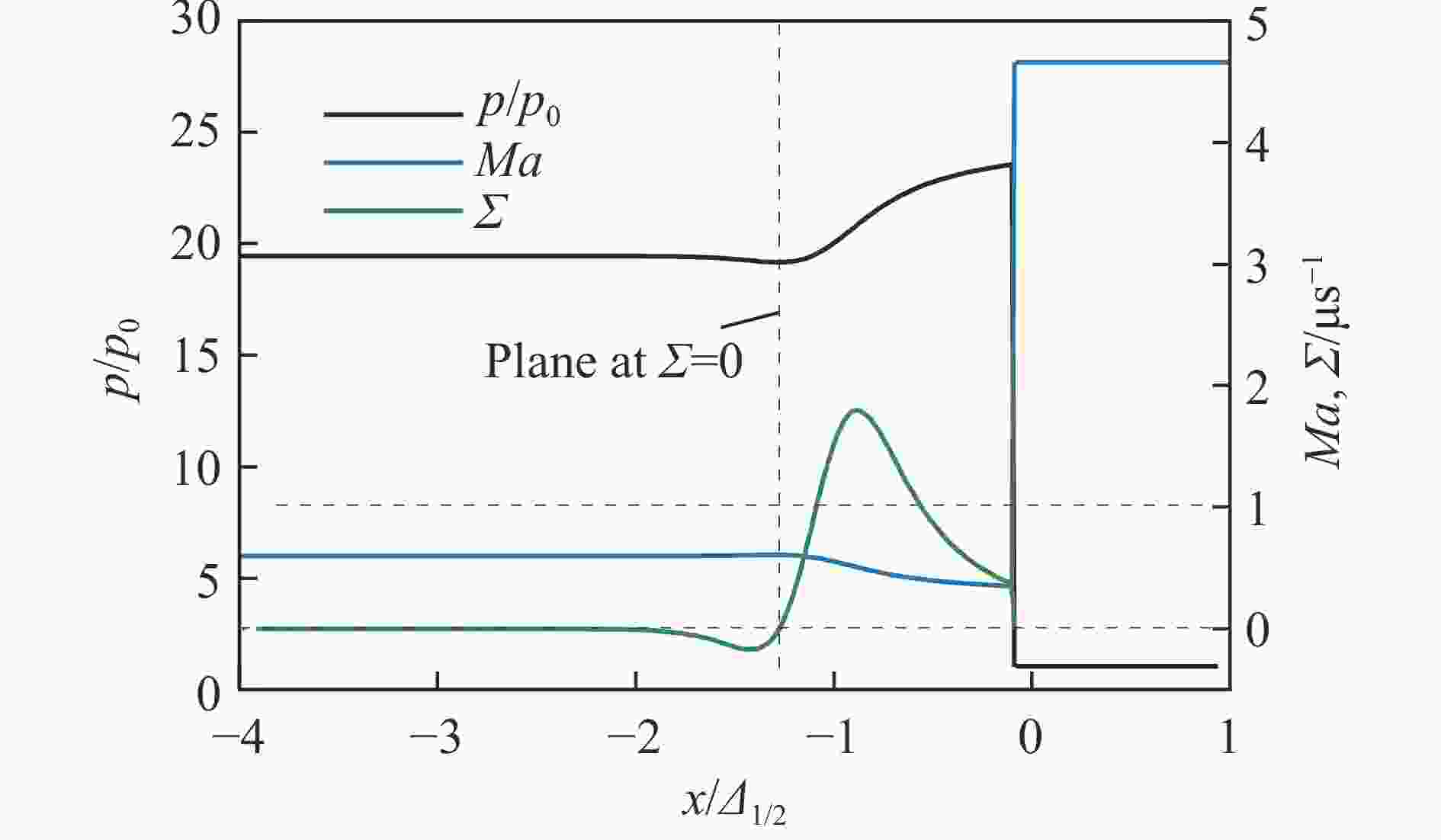
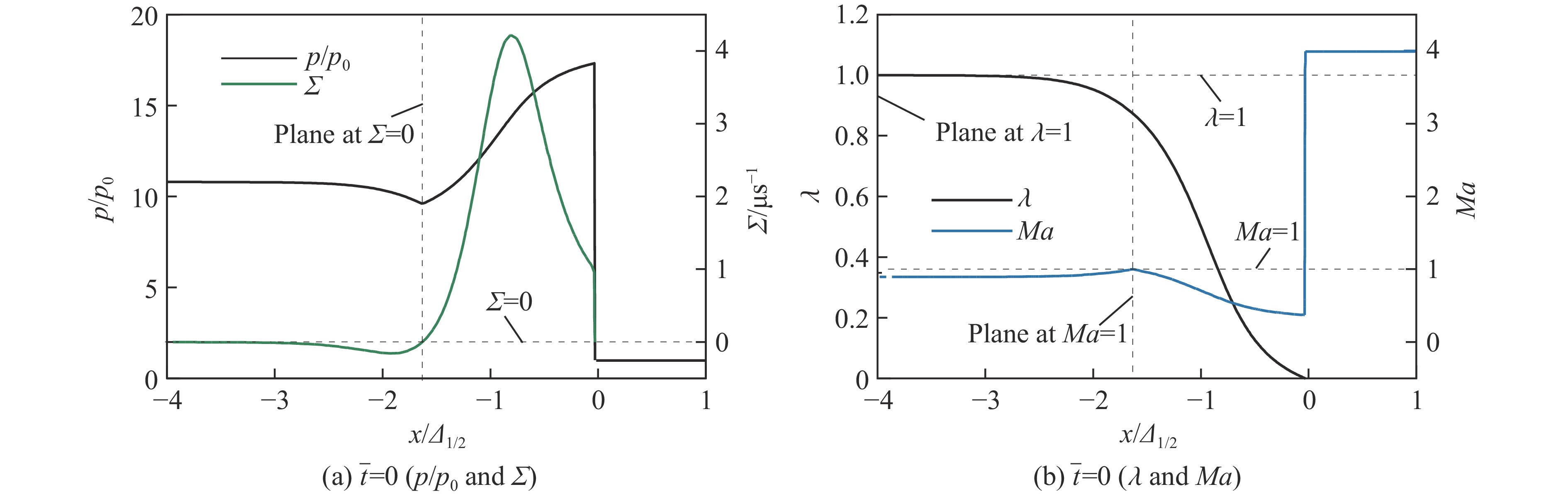
图 8 算例1初始ZND时刻无量纲压力、马赫数和热性沿反应区的变化规律
Figure 8. Dimensionless pressure, Mach number, and thermicity in the reaction zone at the initial ZND state for case 1
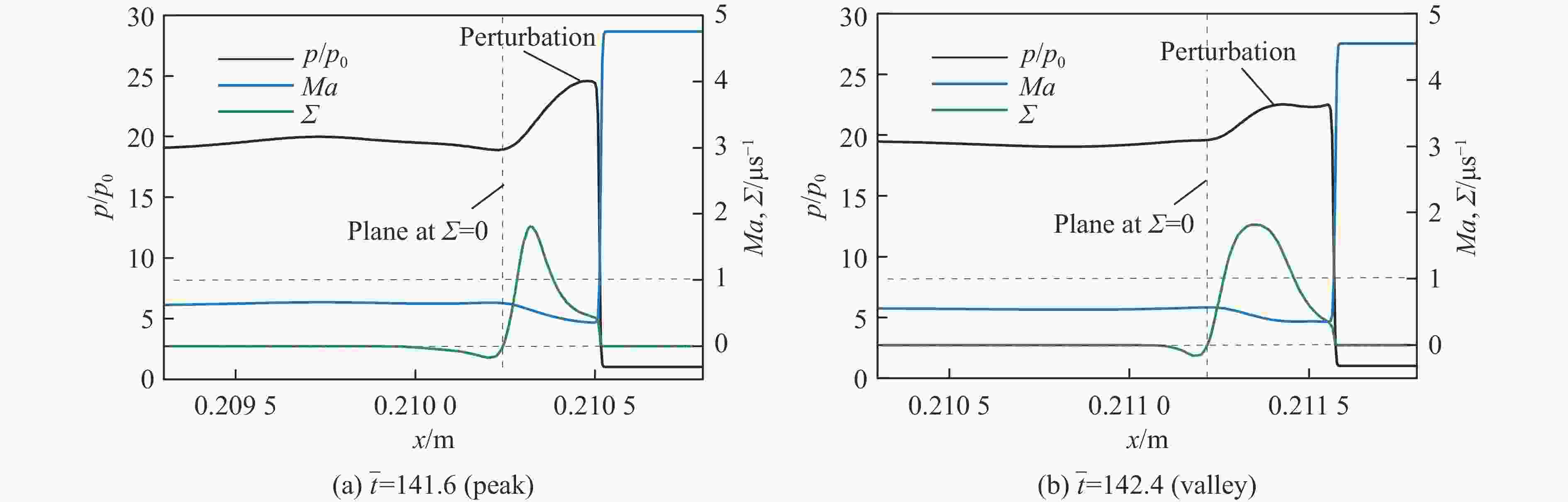
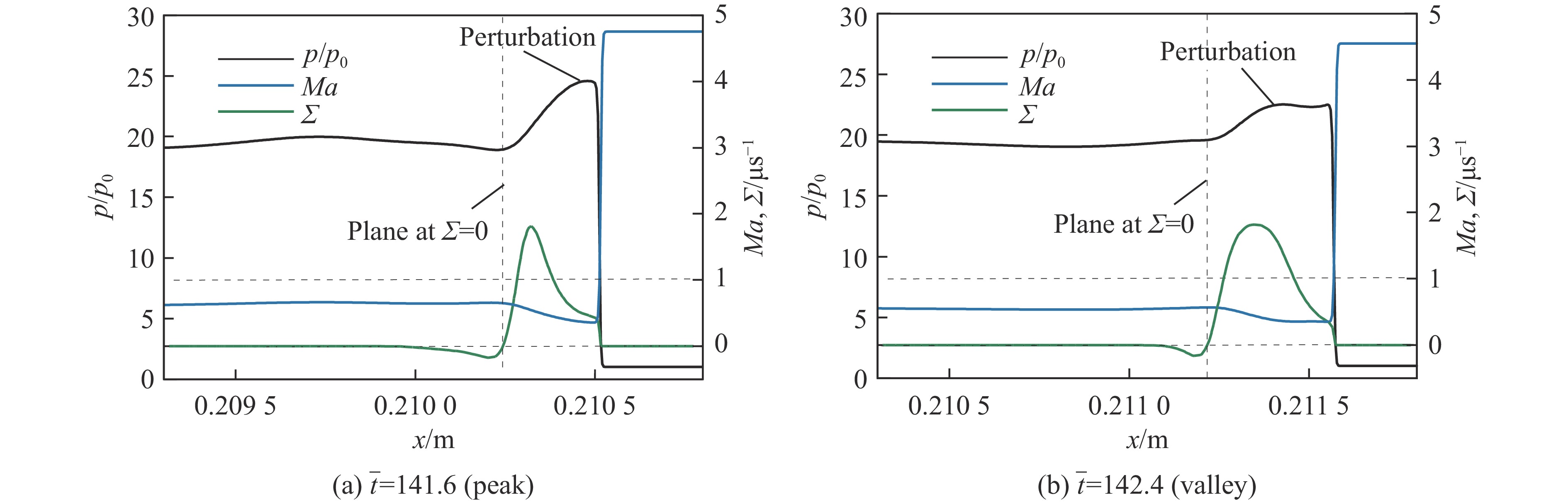
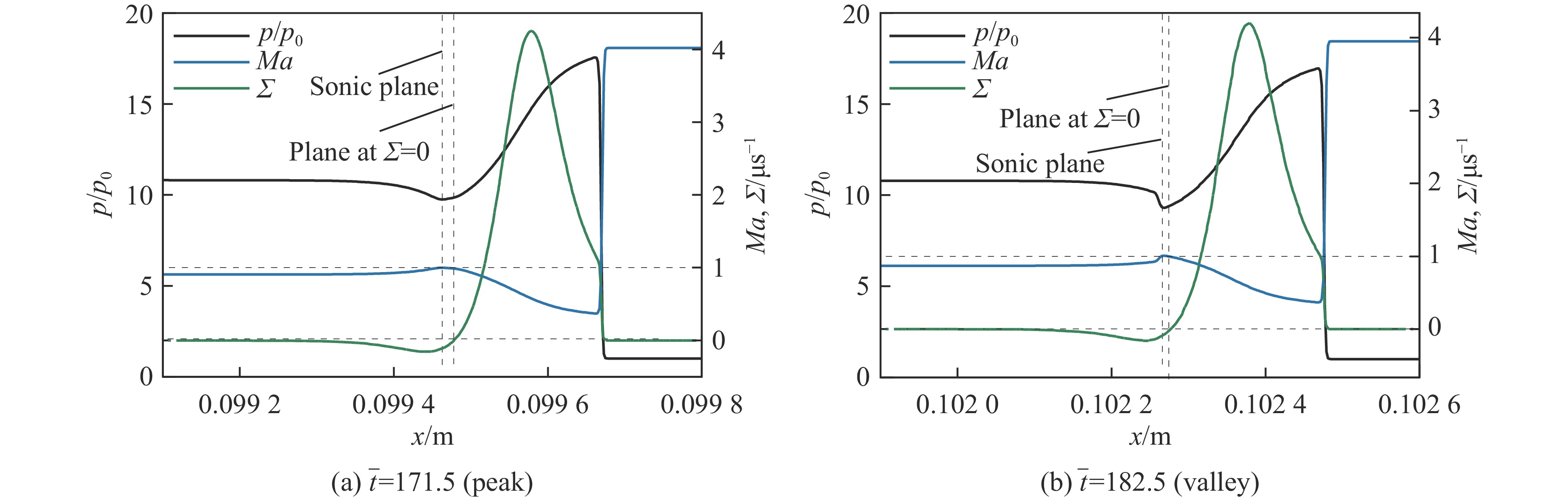
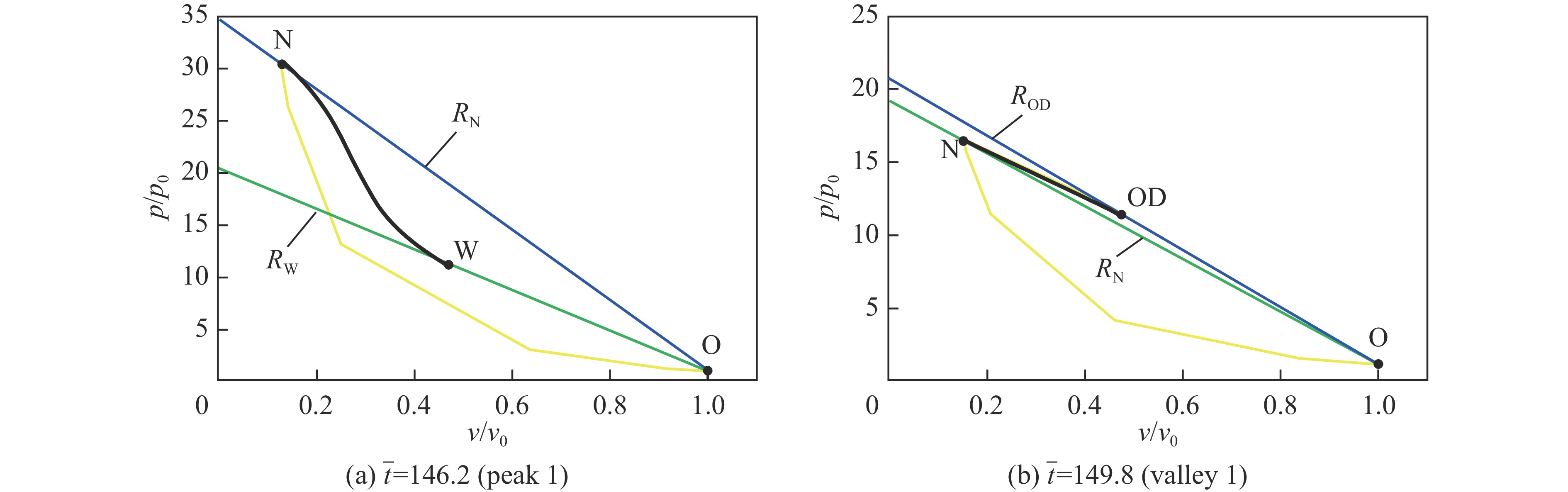
图 9 算例1波峰和波谷时刻无量纲压力、马赫数和热性沿反应区的变化
Figure 9. Dimensionless pressure, Mach number, and thermicity in the reaction zone at peak and valley times for case 1
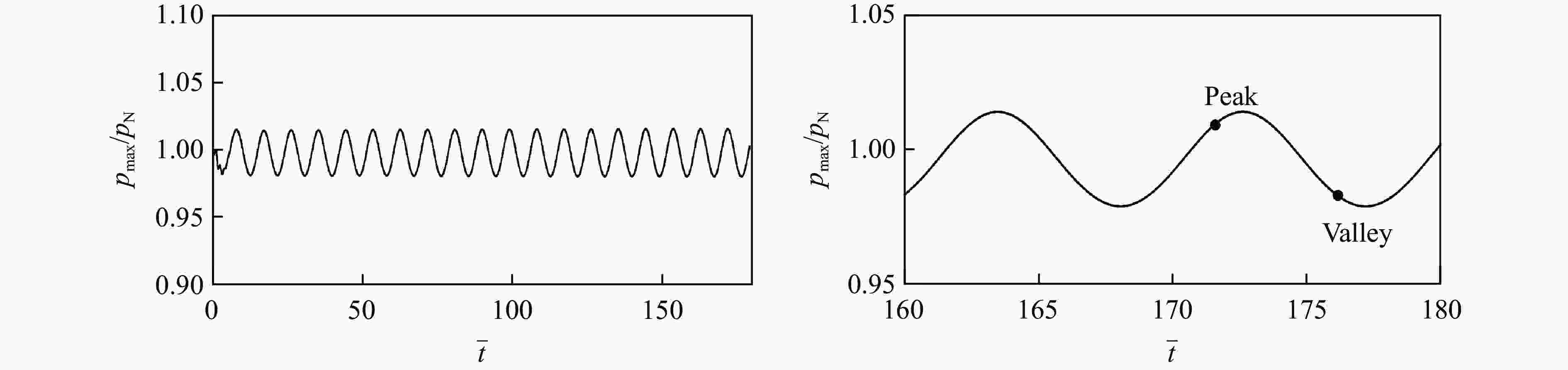
图 10 算例2的峰值压力振荡曲线(左)及其放大图(右)
Figure 10. Peak pressure oscillation curve of case 2 (left) and its locally enlarged curve (right)
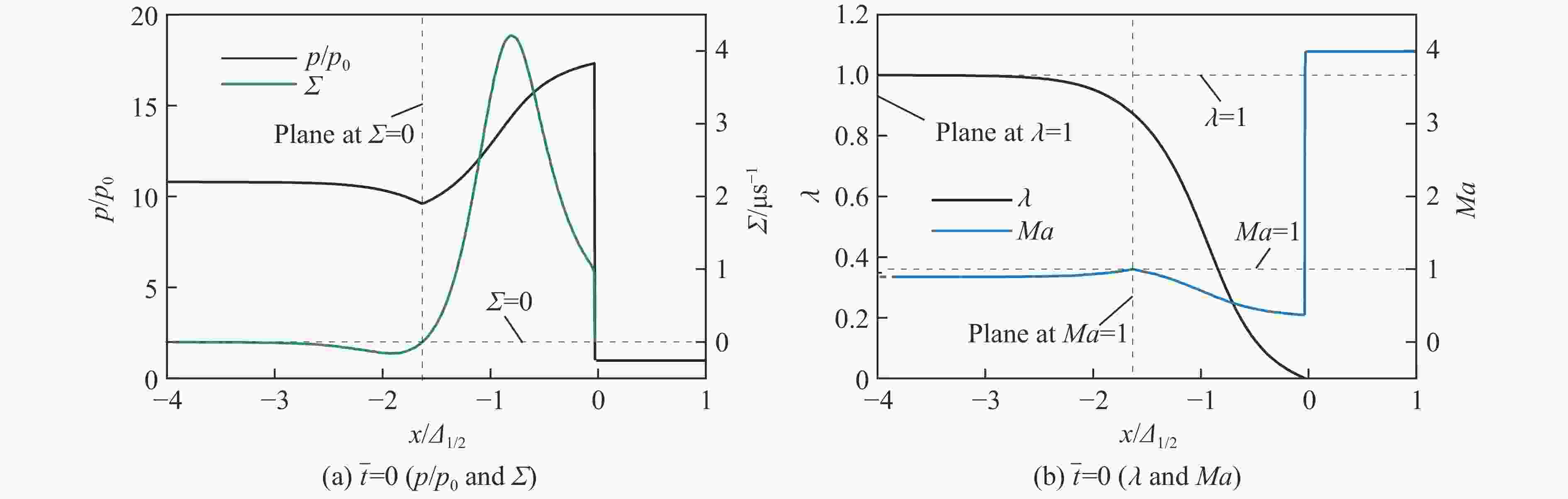
图 11 算例2初始ZND时刻无量纲压力、马赫数、反应进度和热性沿反应区的变化
Figure 11. Dimensionless pressure, Mach number, reaction progress, and thermicity in the reaction zone at the initial ZND state for case 2
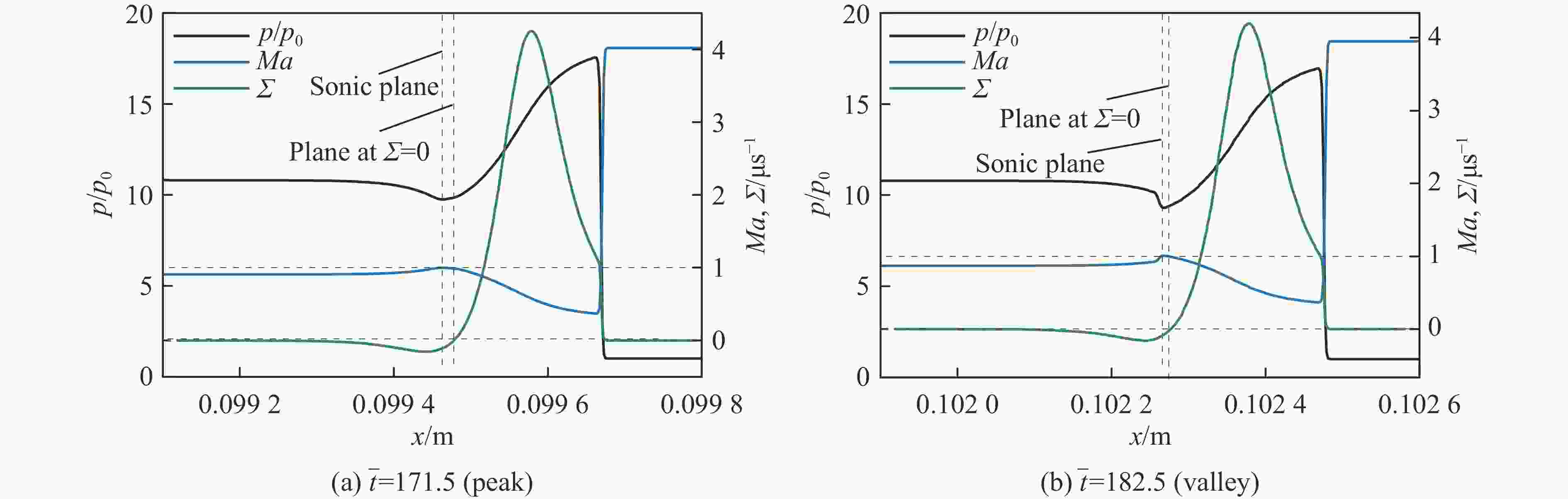
图 12 算例2波峰和波谷时刻无量纲压力、马赫数和热性沿反应区的变化
Figure 12. Dimensionless pressure, Mach number, and thermicity in the reaction zone at peak and valley times for case 2
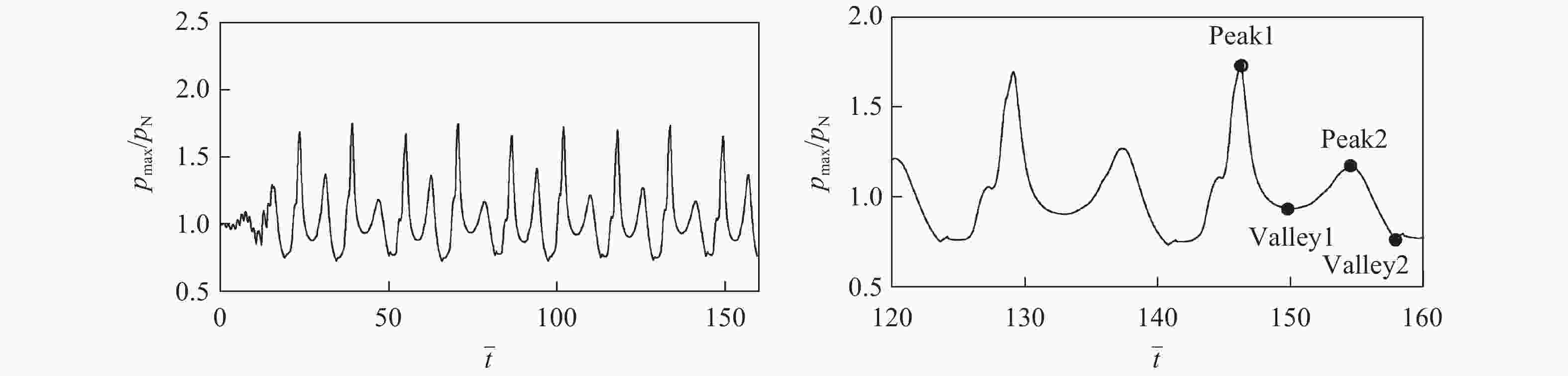
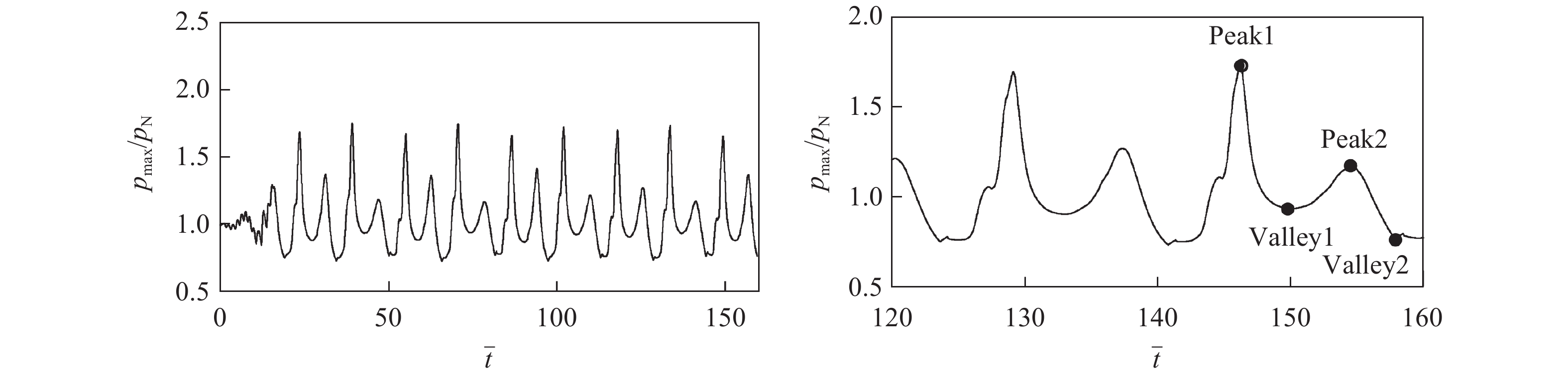
图 13 算例3的峰值压力振荡曲线(左)及其放大图(右)
Figure 13. Peak pressure oscillation curve of case 3 (left) and its locally enlarged plot (right)
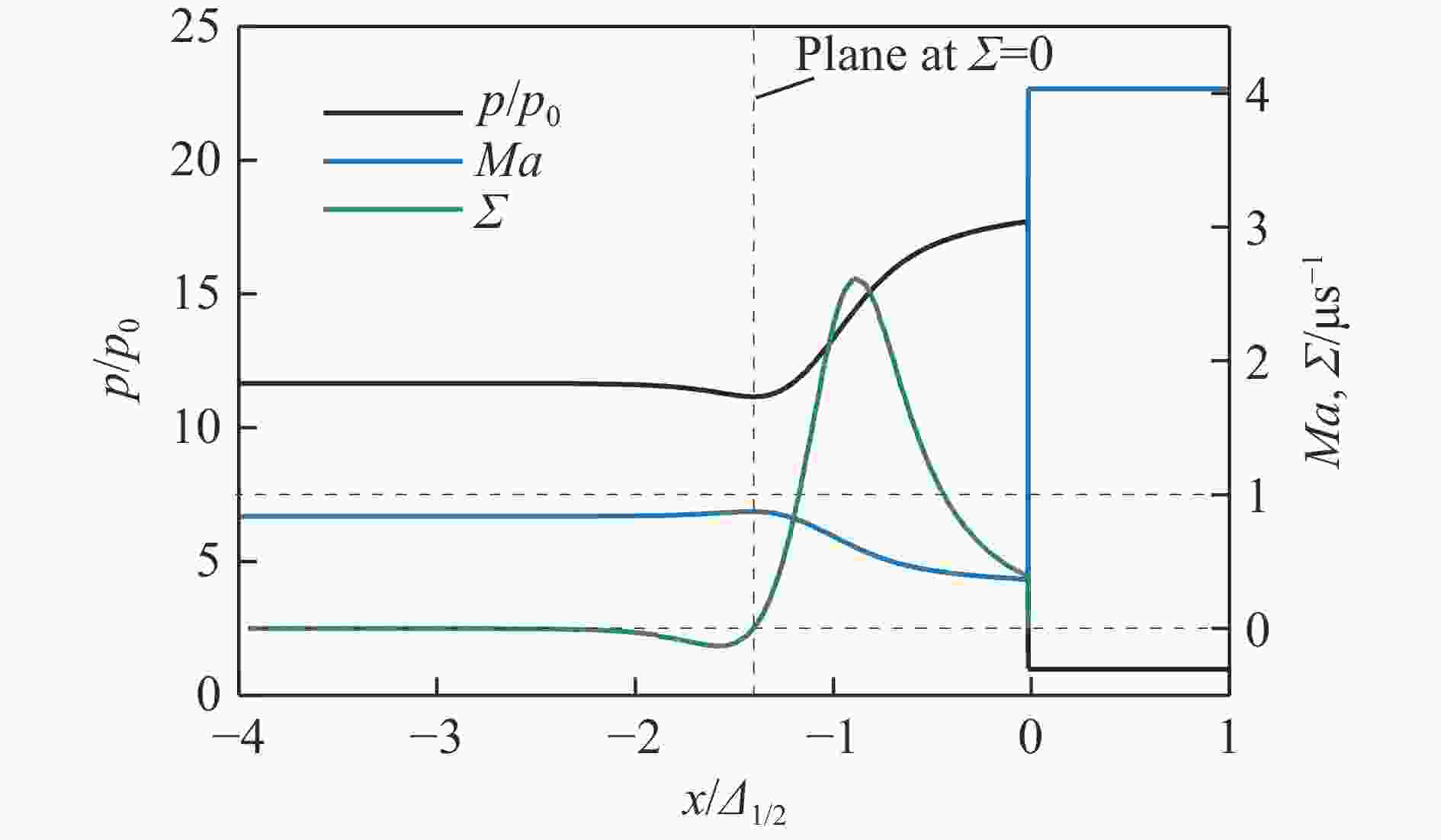
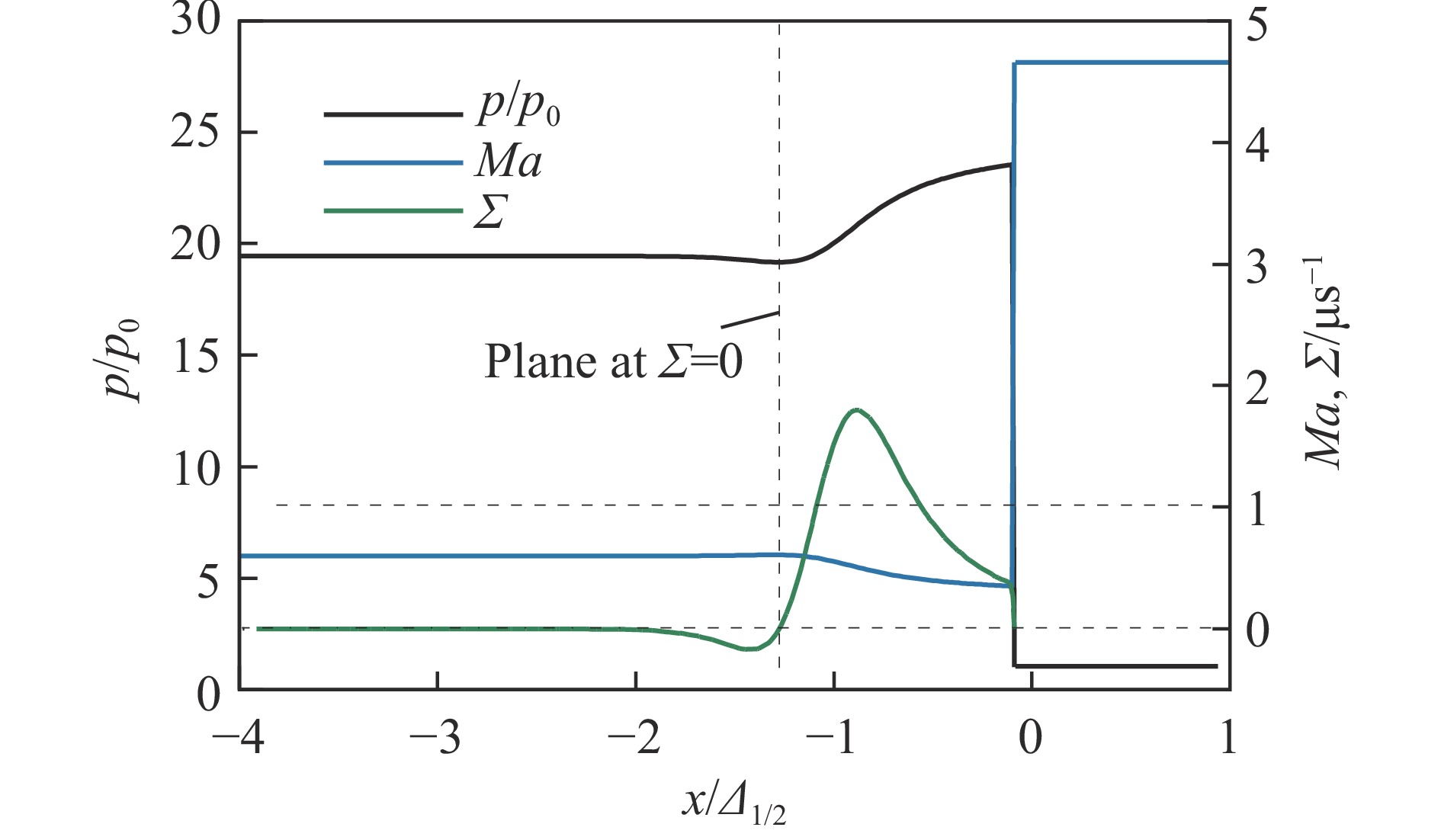
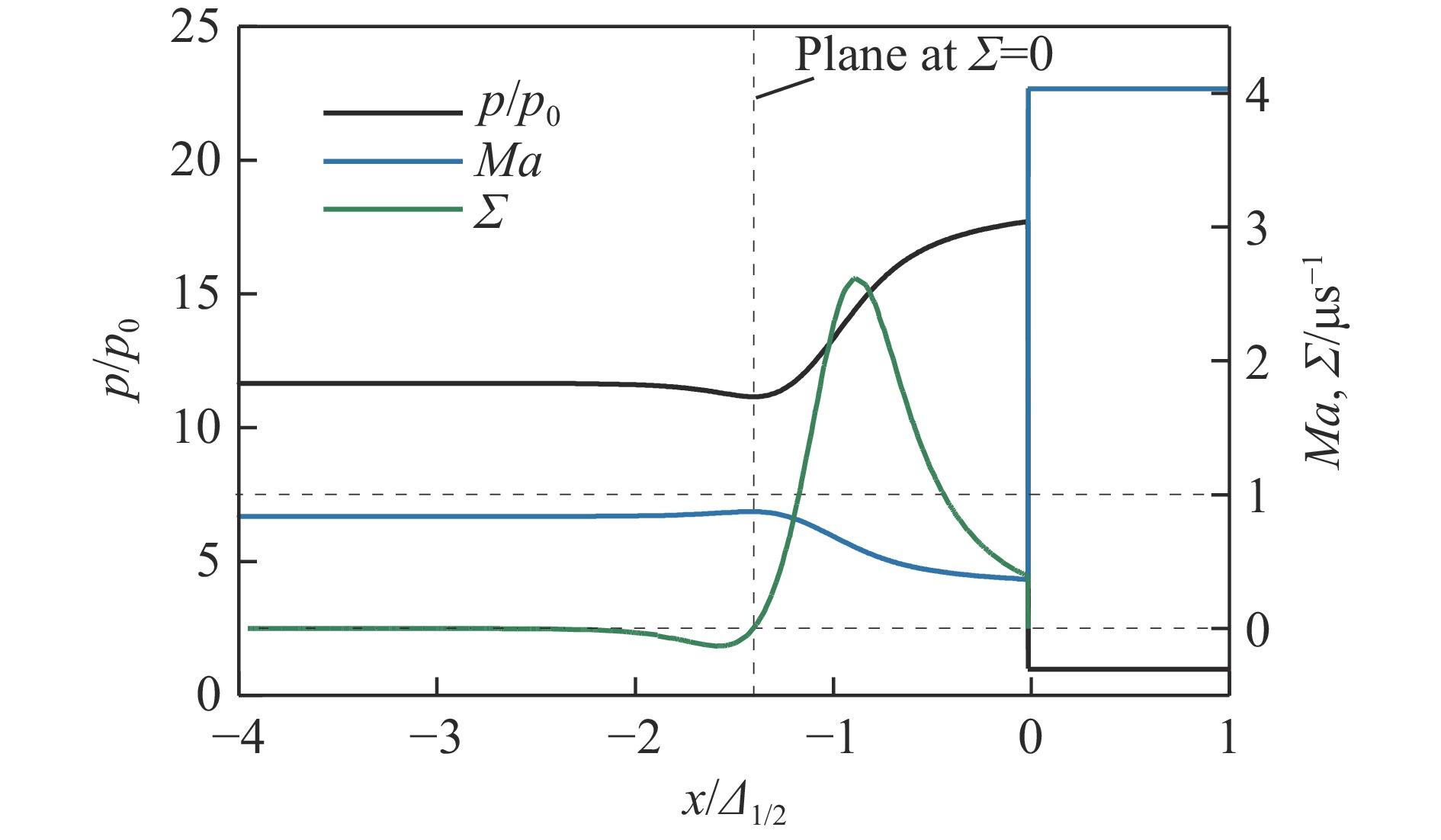
图 14 算例3初始ZND时刻无量纲压力、马赫数和热性沿反应区的变化规律
Figure 14. Dimensionless pressure, Mach number, and thermicity in the reaction zone at the initial ZND state for case 3
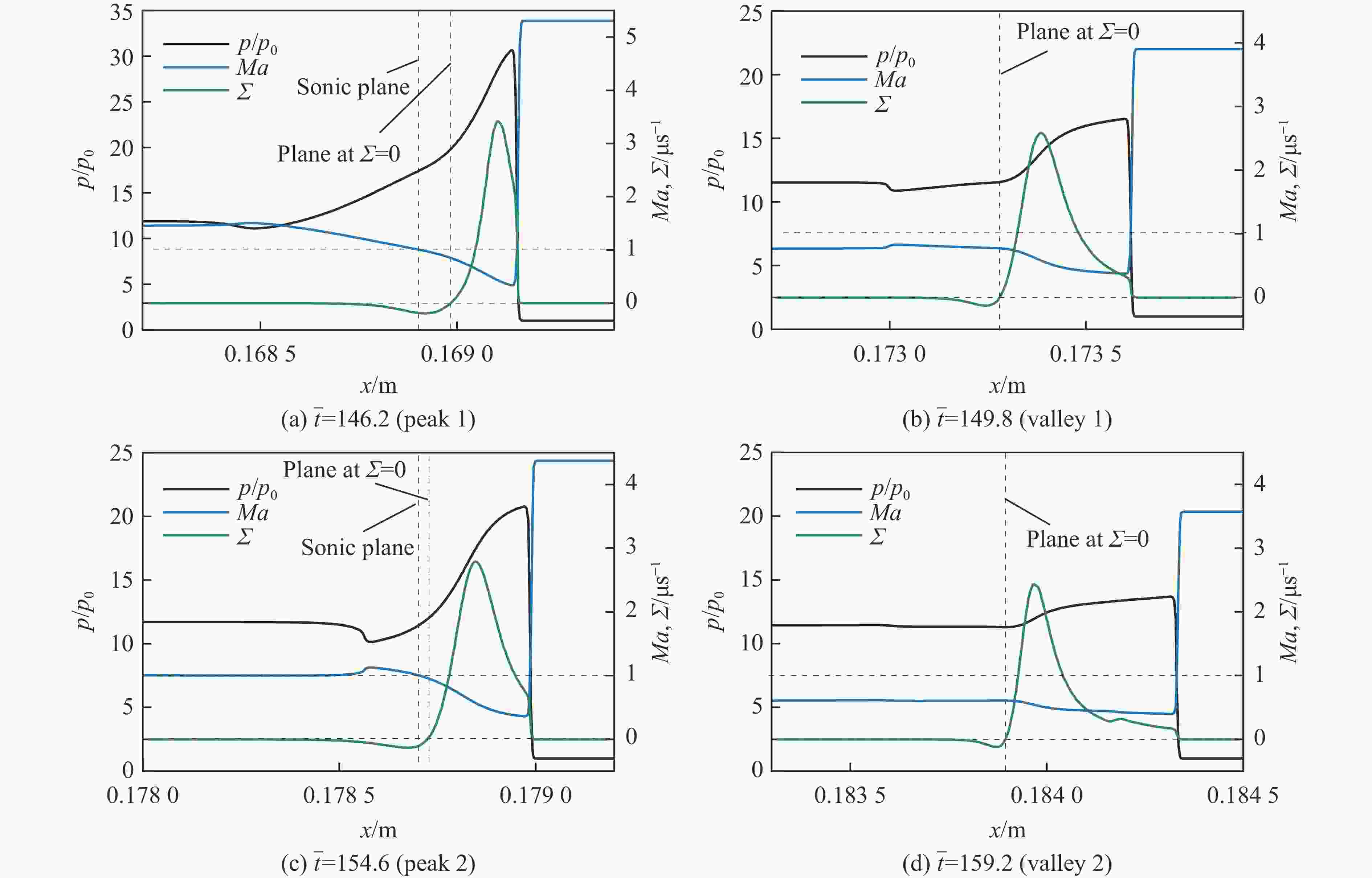
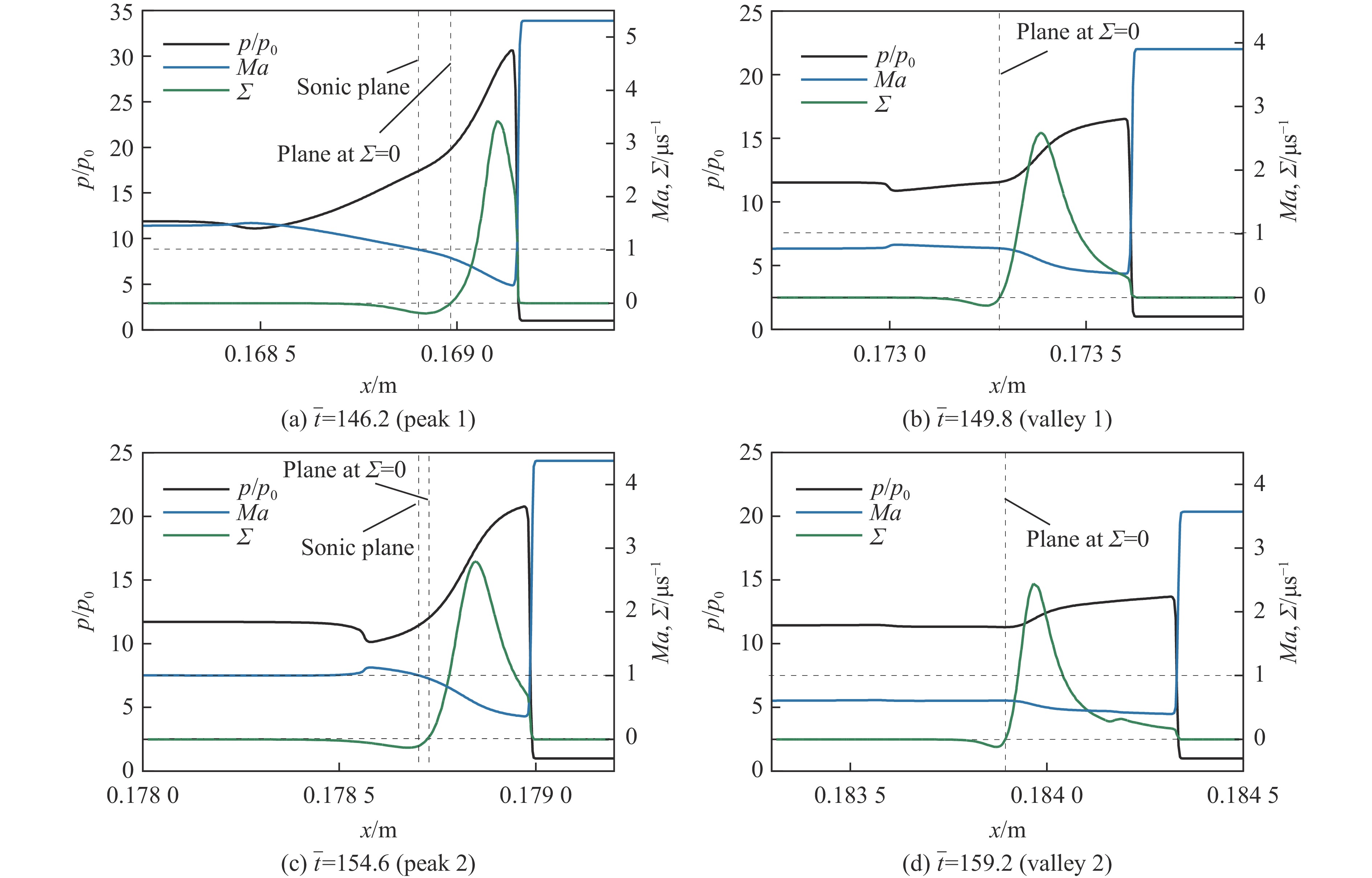
图 15 算例3在1个振荡周期内无量纲压力、马赫数和热性沿反应区的变化
Figure 15. Dimensionless pressure, Mach number, and thermicity in the reaction zone during one oscillation period for case 3
表 1 不同网格分辨率下求得的峰值压力及相对误差
Table 1. Peak pressure and relative error obtained at different grid resolutions
每个半反应区网格点数 无量纲峰值压力pmax 相对误差/% 16 41.36 1.66 32 41.65 0.97 64 41.85 0.50  下载: 导出CSV
-
[1] DIONNE J P, NG H D, LEE J H. Transient development of friction-induced low-velocity detonations [J]. Proceedings of the Combustion Institute, 2000, 28(1): 645–651. DOI: 10.1016/S0082-0784(00)80265-9. [2] 周朱林, 刘卫东, 刘世杰, 等. 受侧向膨胀影响的爆震波传播过程研究 [J]. 推进技术, 2013, 34(5): 713–720. DOI: 10.13675/j.cnki.tjjs.2013.05.018.ZHOU Z L, LIU W D, LIU S J, et al. Investigation on propagation process of detonation wave influenced by lateral expansion [J]. Journal of Propulsion Technology, 2013, 34(5): 713–720. DOI: 10.13675/j.cnki.tjjs.2013.05.018. [3] 曹力文, 王可, 胡龙雨, 等. 轴向侧向膨胀与通道曲率耦合影响下的旋转爆震波传播特性研究 [J]. 航空动力学报, 2024, 40(4): 179–188. DOI: 10.13224/j.cnki.jasp.20240502.CAO L W, WANG K, HU L Y, et al. Experimental study on the propagation characteristics of rotating detonation waves in curved channels under the influence of axial lateral expansion [J]. Journal of Aerospace Power, 2024, 40(4): 179–188. DOI: 10.13224/j.cnki.jasp.20240502. [4] DIONNE J P, DUQUETTE R, YOSHINAKA A, et al. Pathological detonations in H2-Cl2 [J]. Combustion Science and Technology, 2000, 158(1): 5–14. DOI: 10.1080/00102200008947324. [5] ZHANG F, MURRAY S B. , GERRARD K B. Hybrid detonations in aluminum dust-gas mixtures [C]//Proceedings of the 19th International Colloquium on the Dynamics of Explosions and Reactive Systems. Kanagawa, Japan, 2003: 167–170. [6] FICKETT W, WOOD W W. Flow calculations for pulsating one-dimensional detonations [J]. Physics of Fluids, 1966, 9(5): 903–916. DOI: 10.1063/1.1761791. [7] SHARPE G J, FALLE S A E G. One-dimensional numerical simulations of idealized detonations [J]. Proceedings of the Royal Society of London. Series A: Mathematical, Physical and Engineering Sciences, 1999, 455(1983): 1203–1214. DOI: 10.1098/rspa.1999.0355. [8] SHARPE G J, FALLE S A E G. Numerical simulations of pulsating detonations: Ⅰ. nonlinear stability of steady detonations [J]. Combustion Theory and Modelling, 2000, 4(4): 557–574. DOI: 10.1088/1364-7830/4/4/310. [9] HENRICK A K, ASLAM T D, POWERS J M. Simulations of pulsating one-dimensional detonations with true fifth order accuracy [J]. Journal of Computational Physics, 2006, 213(1): 311–329. DOI: 10.1016/j.jcp.2005.08.013. [10] NG H, HIGGINS A, KIYANDA C, et al. Nonlinear dynamics and chaos analysis of one-dimensional pulsating detonations [J]. Combustion Theory and Modelling, 2005, 9(2): 159–170. DOI: 10.1080/13647830500098357. [11] YUNGSTER S, RADHAKRISHNAN K. Pulsating one-dimensional detonations in hydrogen-air mixtures [J]. Combustion Theory and Modelling, 2004, 8(4): 745–770. DOI: 10.1088/1364-7830/8/4/005. [12] YUNGSTER S, RADHAKRISHNAN K. Structure and stability of one-dimensional detonation ethylene-air mixtures [J]. Shock Waves, 2005, 14(1): 61–72. DOI: 10.1007/s00193-005-0242-0. [13] DAIMON Y, MATSUO A. Unsteady features on one-dimensional hydrogen-air detonations [J]. Physics of Fluids, 2007, 19(11): 116101. DOI: 10.1063/1.2801478. [14] RADULESCU M I, NG H D, LEE J H, et al. The effect of argon dilution on the stability of acetylene/oxygen detonations [J]. Proceedings of the Combustion Institute, 2002, 29(2): 2825–2831. DOI: 10.1016/S1540-7489(02)80345-5. [15] HAN W, WANG C, LAW C K. Pulsation in one-dimensional H2-O2 detonation with detailed reaction mechanism [J]. Combustion and Flame, 2019, 200: 242–261. DOI: 10.1016/j.combustflame.2018.11.024. [16] HAN W, HUANG J, WANG C. Pulsating and cellular instabilities of hydrogen-oxygen detonations with ozone sensitization [J]. Physics of Fluids, 2021, 33(7): 076113. DOI: 10.1063/5.0055080. [17] GOLDIN A Y, MEDVEDEVA T O, KASIMOV A R. Mode locking in gaseous detonation propagation in a channel with periodically varying friction [J]. Physics of Fluids, 2022, 34(9): 096104. DOI: 10.1063/5.0103370. [18] SHARPE G J, FALLE S A E G. One-dimensional nonlinear stability of pathological detonations [J]. Journal of Fluid Mechanics, 2000, 414: 339–366. DOI: 10.1017/s0022112000008697. [19] FICKETT W, DAVIS W C. Detonation, theory and experiment [M]. New York: Dover Publications, Inc. , 2000. [20] SHI J, ZHANG Y T, SHU C W. Resolution of high order WENO schemes for complicated flow structures [J]. Journal of Computational Physics, 2003, 186(2): 600–606. DOI: 10.1016/S0021-9991(03)00094-9. [21] 范宝春. 极度燃烧 [M]. 北京: 国防工业出版社, 2018: 134–135. [22] NG H D, ZHANG F. Detonation instability [C]//Shock Wave Science and Technology Reference Library. Detonation Dynamics [M]. Germany, Berlin, Heidelberg: Springer-Verlag, 2012: 107–212. DOI: 10.1007/978-3-642-22967-1_3. [23] LEUNG C, RADULESCU M I, SHARPE G J. Characteristics analysis of the one-dimensional pulsating dynamics of chain-branching detonations [J]. Physics of Fluids, 2010, 22(12): 126101. DOI: 10.1063/1.3520188. [24] DAIMON Y, MATSUO A. Detailed features of one-dimensional detonations [J]. Physics of Fluids, 2003, 15(1): 112–122. DOI: 10.1063/1.1526698. -

计量
- 文章访问数: 491
- HTML全文浏览量: 74
- PDF下载量: 38
- 被引次数: 0