



Design and optimization of corrugated multi-cell gradient structures based on machine learning
-
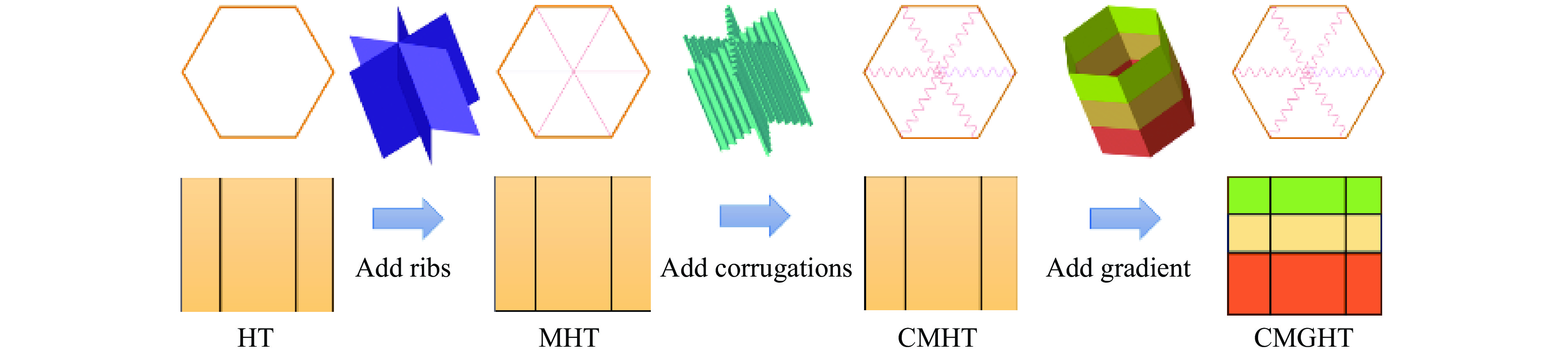
摘要: 针对航空航天、交通运输、土木建筑等领域的碰撞防护需求,提出一种新型多胞梯度结构管(CMGHT)设计方法:在普通六边形管内引入正弦波纹肋板,并融合功能梯度设计理念,以实现结构耐撞性能的提升。首先,构建该结构的有限元模型并开展数值模拟分析。结果显示,在相同壁厚条件下,CMGHT的关键吸能指标表现显著优于现有结构,相较于普通六边形管(HT),其吸收能量(Ea)、比吸能(Esa)、平均压缩力($ \overline{F} $)及压缩效率(η)分别提升390%、76%、395%和46%;相较于多胞六边形管(MHT),上述指标分别提升121%、58%、121%和97%;相较于波纹多胞六边形管(CMHT),Ea、Esa、$ \overline{F} $、η分别提升7%、7%、8%、33%,且初始峰值压缩力(Fmax)降低18%,充分证明其吸能性能更优。随后,以肋板与外管的几何参数为设计变量,通过全因子试验设计生成540组样本,构建支持向量机(SVM)代理模型,并结合冠豪猪优化(CPO)算法完成模型优选,实现对CMGHT耐撞性能的精准预测。最后,采用多目标浣熊优化算法(MOCOA)进行多目标优化,获取最优特征参数组合。优化结果表明,相较于未经过参数优化的CMGHT基础模型(参数基于工程常用范围初步设定:肋板厚度1 mm、肋板幅值3 mm、外管梯度厚度0.5 mm-1 mm-1.5 mm、外管长度33.3 mm),优化后结构的Esa提高22%,η提升53%,$ \overline{F} $增强270%,进一步验证了设计方法的有效性。Abstract: To address the collision protection requirements in fields such as aeronautics and space, traffic transportation, and civil construction, a novel design method for the corrugated multi-cell gradient hexagonal tube (CMGHT) was proposed. The sinusoidal corrugated ribs were introduced into a conventional hexagonal tube, integrated with the functional gradient design concept to improve the energy absorption performance of the structure. First, the finite element model of the structure was established and numerical simulation analysis was conducted. Results indicate that under the same wall thickness condition, the key energy absorption indicators of CMGHT outperform existing structures significantly. Compared with the hexagonal tube (HT), the energy absorption (Ea), specific energy absorption (Esa), mean crushing force ($ \overline{F} $), and crushing force efficiency (η) are improved by 390%, 76%, 395%, and 46%, respectively; Compared with the multi-cell hexagonal tube (MHT), the aforementioned indicators are increased by 121%, 58%, 121%, and 97%, respectively; Relative to a corrugated multi-cell hexagonal tube (CMHT), the enhancements are 7%, 7%, 8%, and 33% respectively, while the initial peak crushing force (Fmax) is decreased by 18%. These results fully demonstrate its superior energy absorption performance. Subsequently, the geometric parameters of the ribs and outer tube were selected as design variables. A total of 540 sample sets were generated via full factorial experimental design, and a support vector machine (SVM) surrogate model was constructed. Combined with the crested porcupine optimization (CPO) algorithm, model optimization was completed to achieve the accurate prediction of the crashworthiness indicators for CMGHT. Finally, the multi-objective coati optimization algorithm (MOCOA) was adopted for multi-objective optimization to obtain the optimal combination of characteristic parameters. The optimization results show that compared with the CMGHT basic model without parameter optimization (the parameters are initially set based on the common range of engineering: rib thickness of 1 mm, rib amplitude of 3 mm, outer tube gradient thickness of 0.5 mm-1 mm-1.5 mm, outer tube length of 33.3 mm), the Esa of the optimized structure is increased by 22%, the η is increased by 53%, and the $ \overline{F} $ is increased by 270%, which further verifies the effectiveness of the design method.
-
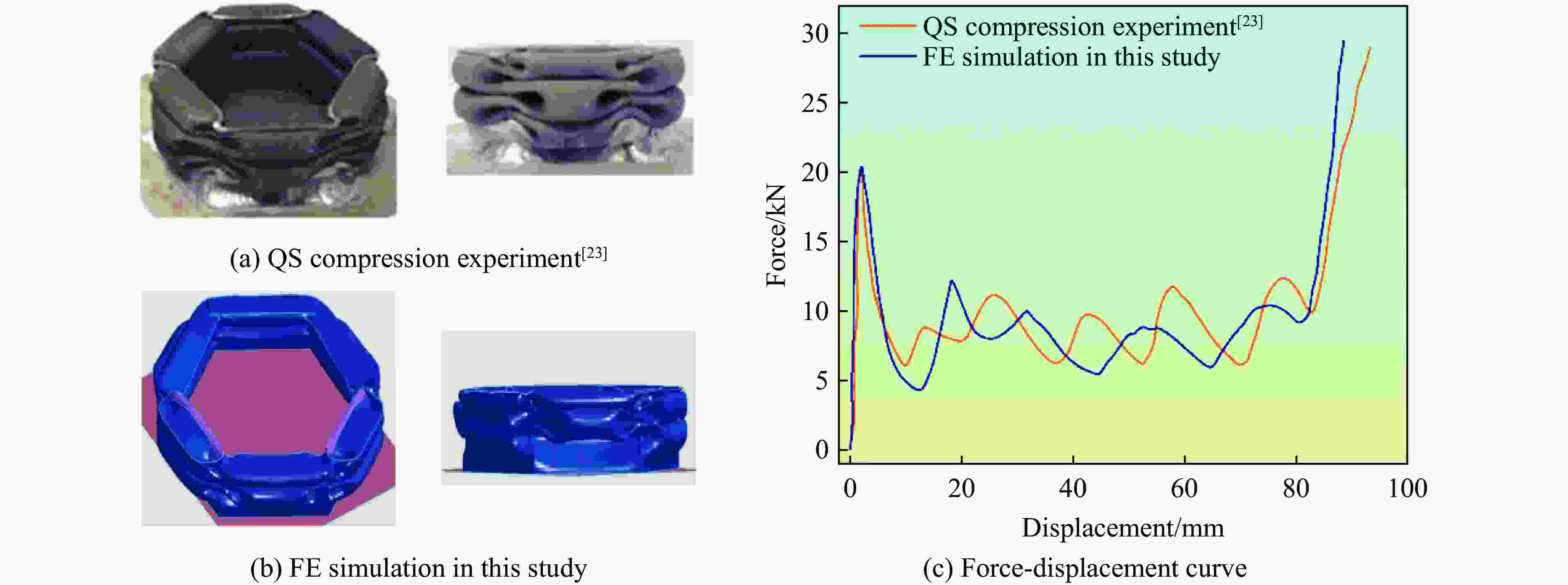
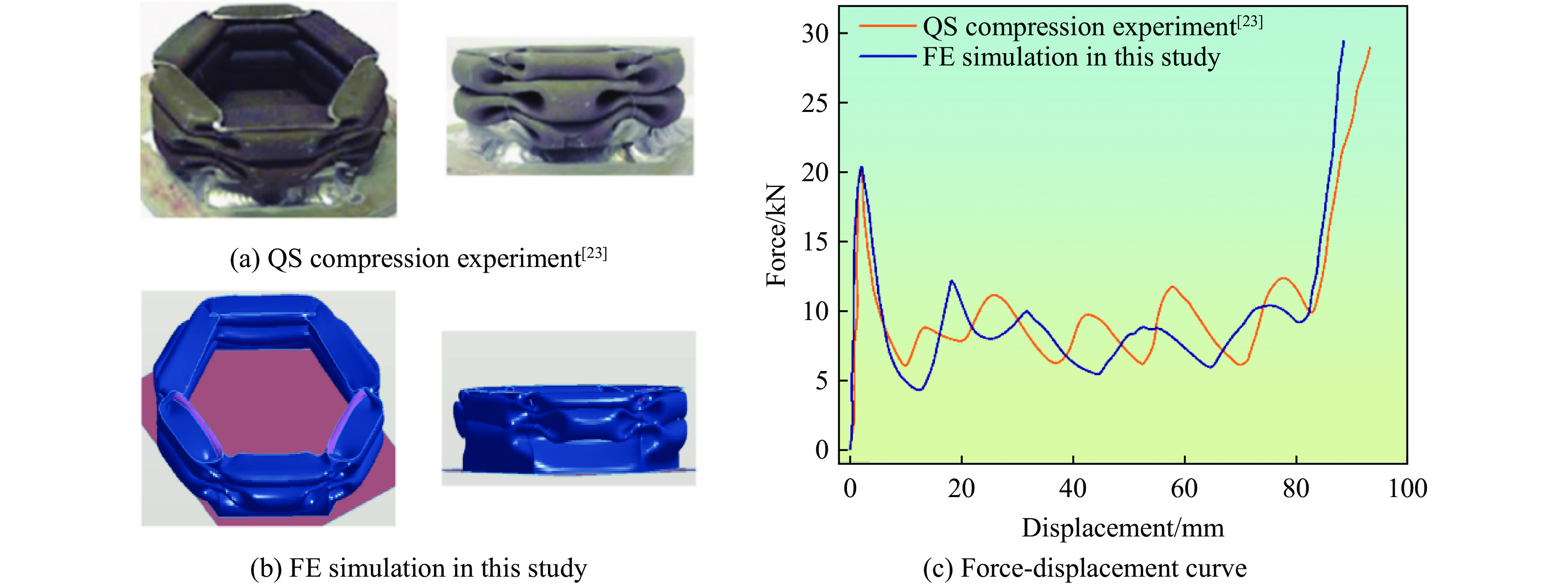
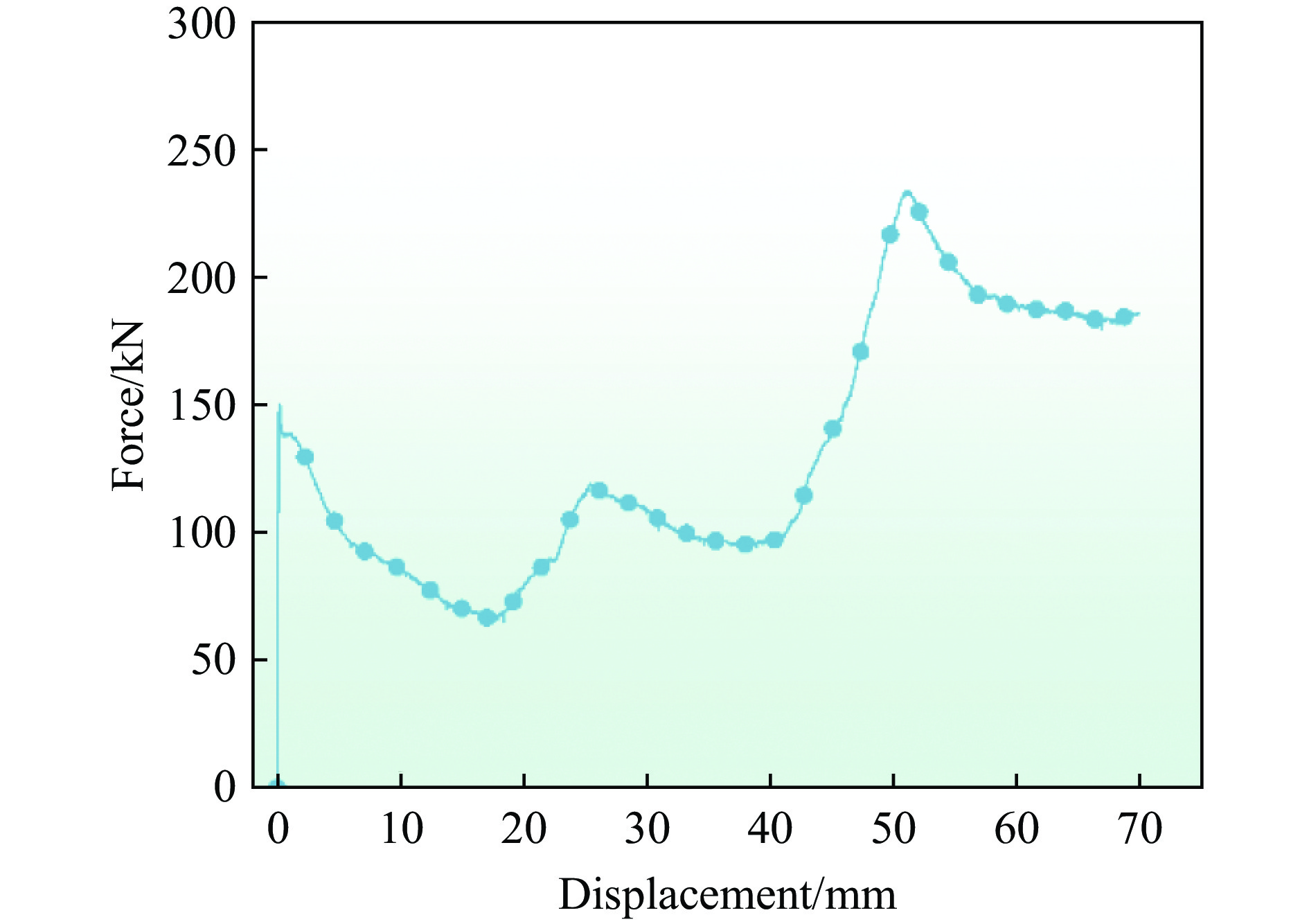
图 3 HT的变形模式与压缩曲线对比
Figure 3. Comparison of the deformation mode and compression curve of HT
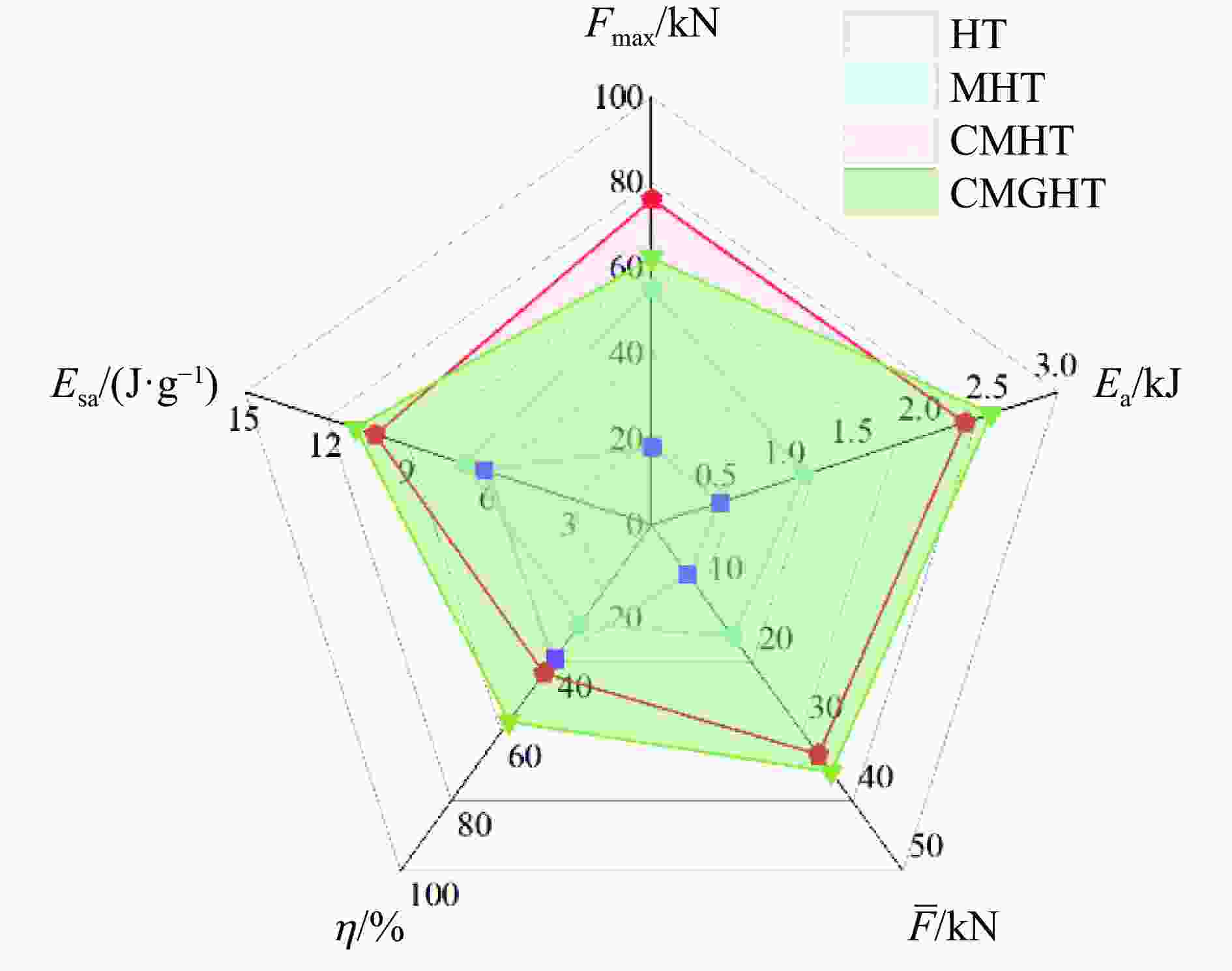
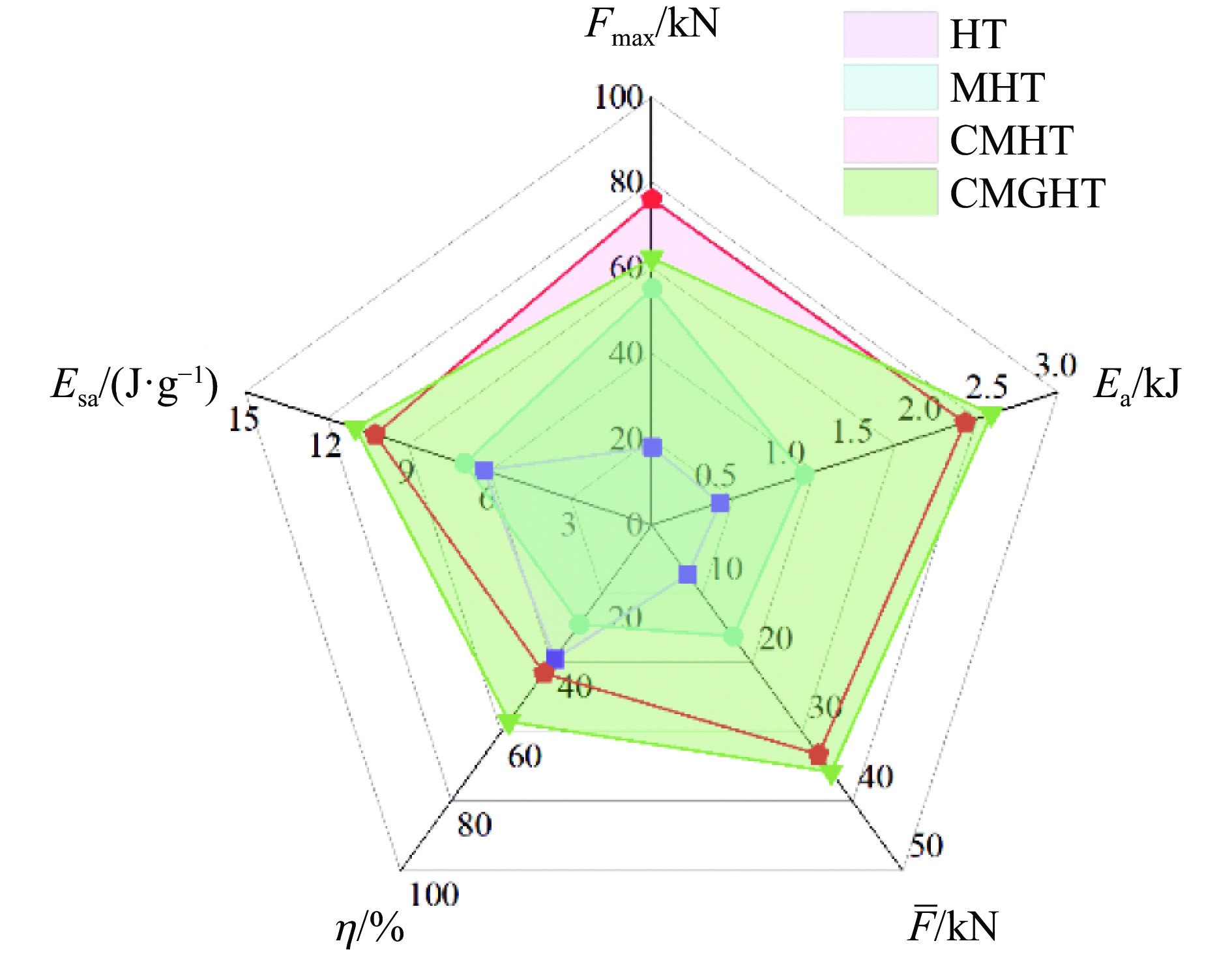
图 5 不同结构管的耐撞性指标雷达图
Figure 5. Radar chart of crashworthiness indicators for different structural tubes
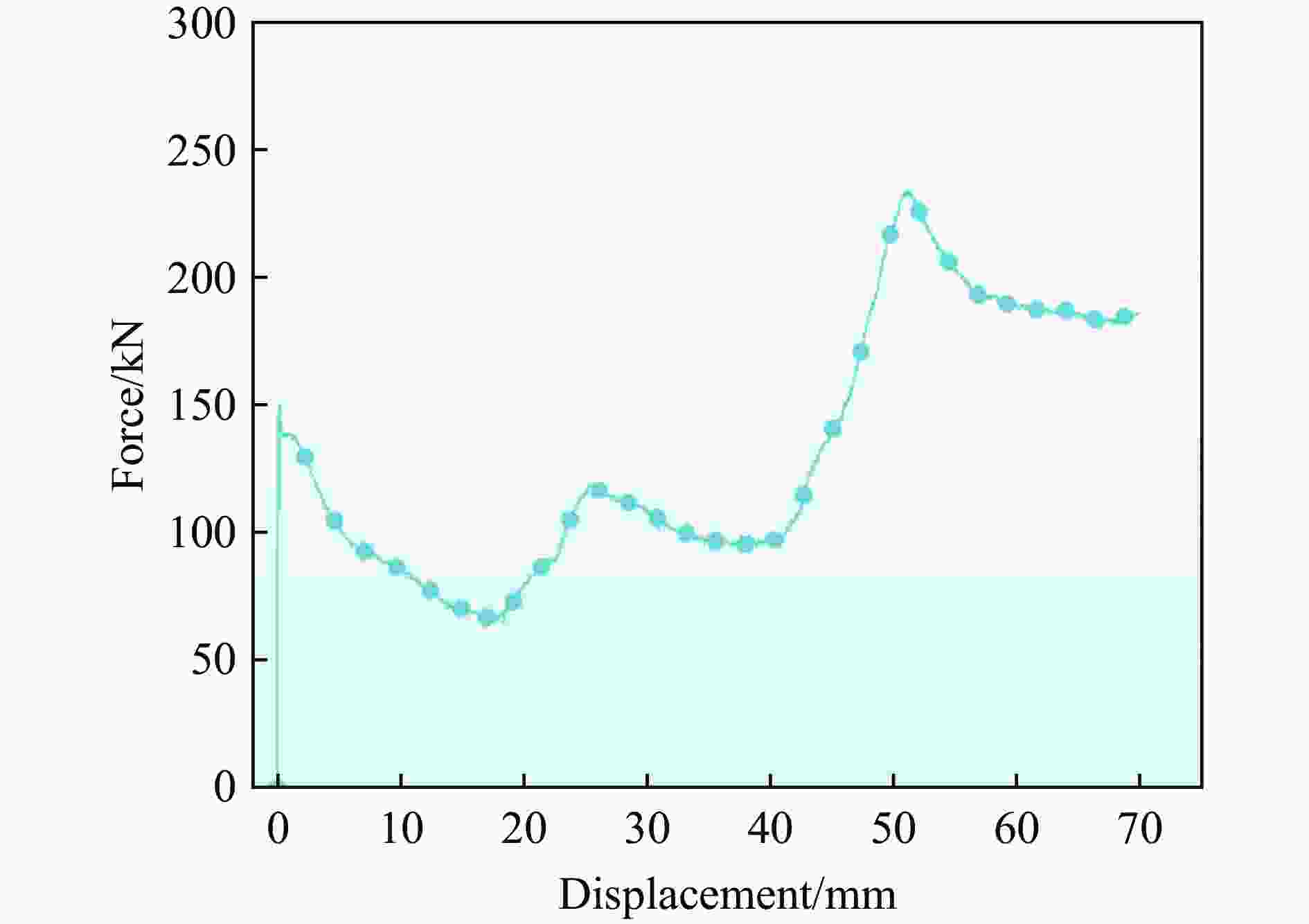
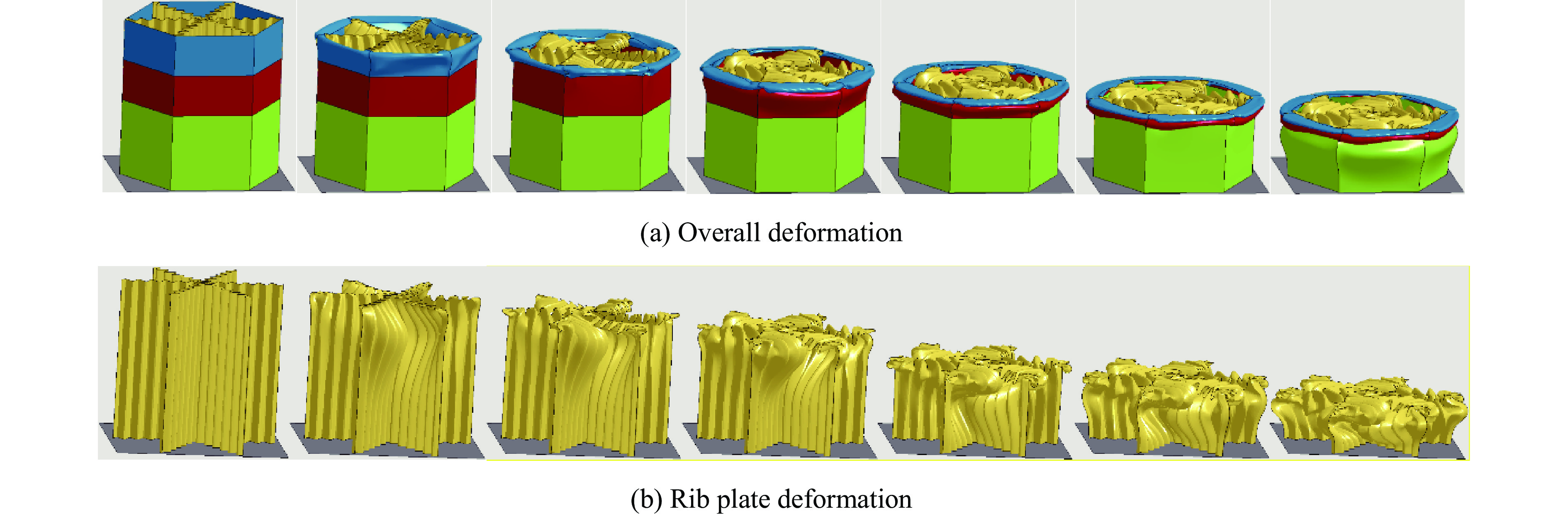
图 11 解B有限元仿真力-位移曲线
Figure 11. Force-displacement curve of FE simulation for Solution B
表 1 HT的耐撞性指标对比
Table 1. Comparison of the crashworthiness indicators of HT
方法 Fmax/kN Ea/kJ $ \overline{F} $/kN η/% Esa/(J·g−1) FE 20.78 0.81 9.64 46 6.982 QS[23] 20.38 0.82 9.78 47 7.086 误差 1.9% 1.3% 1.4% 2.1% 1.4%  下载: 导出CSV
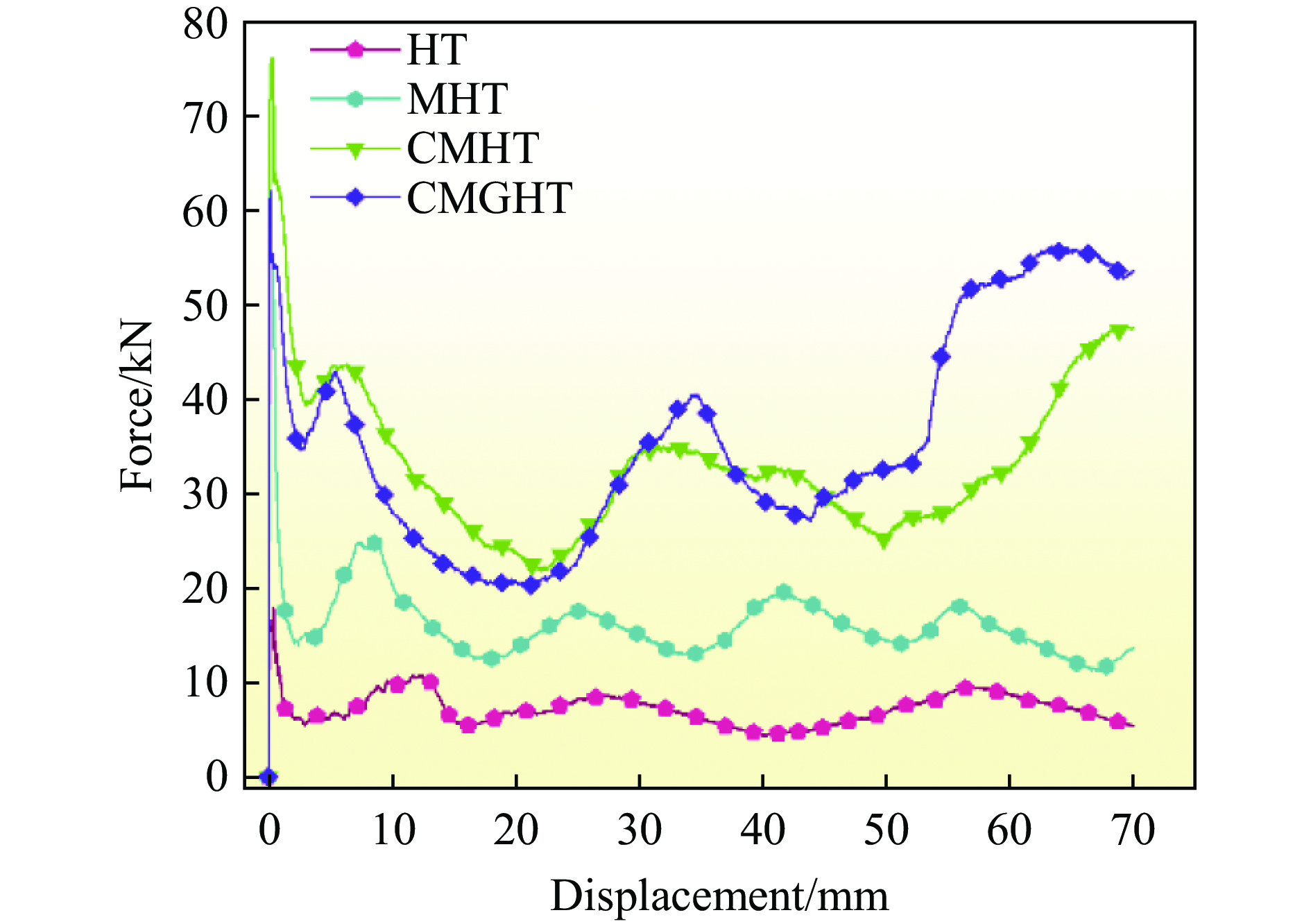
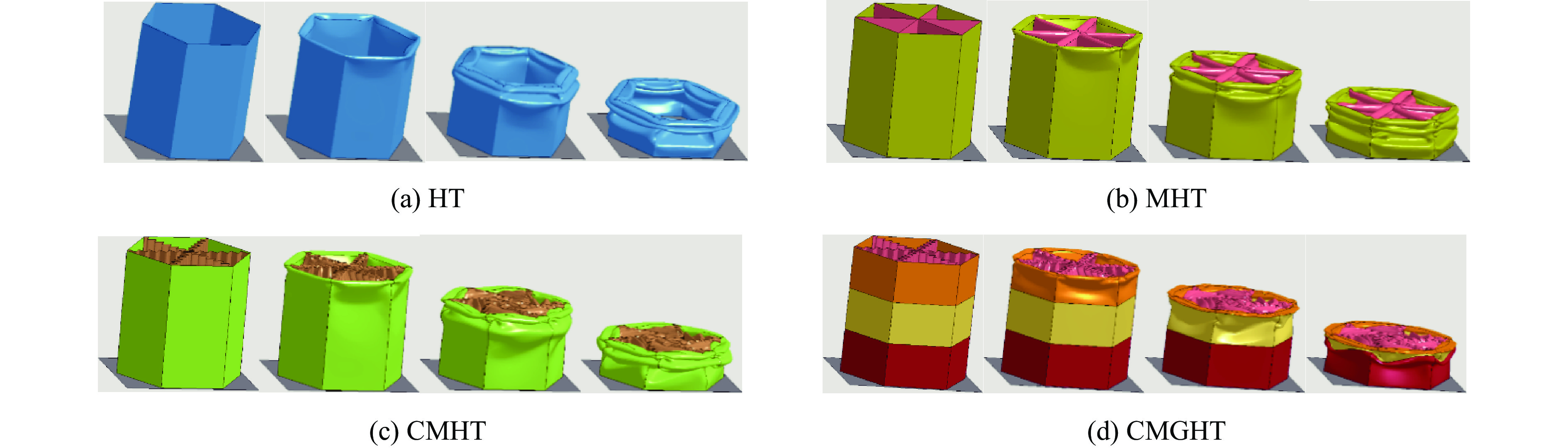
表 2 不同结构管的耐撞性指标对比
Table 2. Comparison of the crashworthiness indicators among different structural tubes
结构 Fmax/kN Ea/kJ $ \overline{F} $/kN $ \eta $/% Esa/(J·g−1) HT 18.18 0.51 7.22 39 6.25 MHT 55.28 1.13 16.20 29 6.96 CMHT 76.20 2.33 33.25 43 10.26 CMGHT 62.27 2.50 35.75 57 10.97
下载: 导出CSV
表 3 CMGHT参数取值范围
Table 3. Design parameter ranges for CMGHT
tr/mm A/mm t0/mm D/mm 0.5~3 1~3 0.5~5 33.3~70
下载: 导出CSV
优化算法 平均收敛代数 适应度 遗传算法(GA) 32±8 0.142 00 粒子群算法(PSO) 18±5 0.121 00 CPO 6±3 0.019 89
下载: 导出CSV
表 5 SVM与CPO-SVR模型的超参数
Table 5. Hyperparameters of SVM and CPO-SVR models
核心参数 SVM CPO-SVR 搜寻范围 核参数 1.0 8.1449 [0.1,100] 惩罚因子 0.25 0.9322 [0.01,10]
下载: 导出CSV
表 6 参数取值边界处与参数范围外CMGHT预测性能
Table 6. CMGHT prediction performance at the parameter boundary and beyond the parameter range
结构参数 Esa/(J·g−1) 误差/% Fmax/kN 误差/% $ \overline{F} $/kN 误差/% 3.2-3-4.1-72(仿真) 18.12 7.4 251.89 5.2 208.54 6.6 3.2-3-4.1-72(预测) 16.77 238.73 194.71 3.4-3-1-30(仿真) 13.41 1.8 181.16 5.9 110.41 5.2 3.4-3-1-30(预测) 13.16 170.44 116.20 0.5-1-1-30(仿真) 6.78 2.3 31.17 9.2 12.67 6.5 0.5-1-1-30(预测) 6.62 34.05 13.5 3.1-1-4.3-74(仿真) 15.09 4.9 211.02 7.2 154.7 1.9 3.1-1-4.3-74(预测) 14.34 195.82 151.71 3-1-0.9-30(仿真) 9.99 3.2 113.01 6.5 53.81 4.9 3-1-0.9-30(预测) 9.67 105.60 56.49 3-3-4.2-70(仿真) 16.36 3.4 244.92 0.4 193.25 3.6 3-3-4.2-70(预测) 15.81 246.14 186.11 3-1-1-30(仿真) 10.38 9.7 117.85 4.2 57.45 2.2 3-1-1-30(预测) 11.39 122.88 56.14 3-3-5-70(仿真) 16.17 0.3 238.62 0.4 187.2 0.5 3-3-5-70(预测) 16.12 237.59 186.2
下载: 导出CSV
对比维度 COA PSO GA CEC-2017(维度为10)核心函数表现 C1(单模态):均值为100,标准差为1.33×10⁻⁵
C3(单模态):均值为300,标准差为4.64×10⁻¹⁴
C10(多模态):均值为1270.97 ,标准差为112.83C1:均值为 3347.23 ,标准差为4427.81
C3:均值为329.38,标准差为8.604
C10:均值为2013.59 ,标准差为348.99C1:均值为 12641048 ,标准差为4849091
C3:均值为15733.23 ,标准差为10584.32
C10:均值为1766.65 ,标准差为320.45CEC-2017(维度为100)核心函数表现 C4(多模态):均值为770.53,标准差为51.36
C6(复合函数):均值为636.39,标准差为2.37
C8(复合函数):均值为1393.98 ,标准差为128.98C4:均值为 2592.37 ,标准差为746.46
C6:均值为663.56,标准差为6.46
C8:均值为1733.68 ,标准差为66.67C4:均值为 9756.10 ,标准差为535.13
C6:均值为665.26,标准差为6.76
C8:均值为2070.20 ,标准差为45.98CEC-2011(实际问题)表现 C11-F1:均值为2.84,标准差为5.69
C11-F7:均值为0.75,标准差为0.12
C11-F12:均值为1186100 ,标准差为42666.96 C11-F1:均值为19.48,标准差为6.94
C11-F7:均值为1.15,标准差为0.32
C11-F12:均值为2428911 ,标准差为176214.5 C11-F1:均值为25.59,标准差为1.27
C11-F7:均值为1.83,标准差为0.28
C11-F12:均值为15862796 ,标准差为113798.6 收敛速度(CEC-2017 维度为30) 迭代500步时,C10函数均值为 4032.98 ,
接近全局最优;收敛曲线陡峭迭代500步时,C10函数均值为228.98,
仅达到COA的81.3%;前期探索缓慢迭代500步时,C10函数均值为 6407.28 ,仅达到COA的62.9%;后期收敛停滞
下载: 导出CSV
表 8 三个帕累托最优解的结构参数
Table 8. Structural parameters of three Pareto optimal solutions
解 tr/mm A/mm t0/mm D/mm A 3.0 3 1.5-2.2-2.4 65 B 2.5 3 0.9-2.2-5.0 48 C 3.0 3 0.5-1.8-4.1 44
下载: 导出CSV
表 9 三种帕累托最优解的对比
Table 9. Comparison of the three Pareto optimal solutions
解 Esa/(J·g−1) Fmax/kN $ \overline{F} $/kN η/% A 12.35 118.92 96.3 80 B 13.06 146.03 129.1 88 C 12.86 187.11 156.2 83
下载: 导出CSV
表 10 模拟结果与预测结果的对比
Table 10. Comparison of the simulation and prediction results
方法 Esa/(J·g−1) Fmax/kN $ \overline{F} $/kN 预测 13.06 146.03 129.1 仿真 13.33 150.81 132.1 误差 2% 3.1% 2.2%
下载: 导出CSV
表 11 CMGHT优化前后各组件吸能对比
Table 11. Comparison of energy absorption of each component before and after CMGHT optimization
对照组 外管吸能/kJ 占比/% 肋板吸能/kJ 占比/% 外管-肋板相互作用耗能/kJ 占比/% Ea/kJ 优化前 0.59 23.6 1.80 72.0 0.11 4.4 2.50 优化后 3.25 35.1 5.61 60.7 0.39 4.2 9.25
下载: 导出CSV
表 12 CMGHT基础模型与优化后CMGHT的耐撞性能对比
Table 12. Comparison of the crashworthiness performances between original CMGHT and optimized CMGHT
对照组 Esa/(J·g−1) η/% $ \overline{F} $/kN 优化前 10.96 57.41 35.7 优化后 13.33 87.59 132.1
下载: 导出CSV
-
[1] 朱擎, 李述涛, 陈叶青, 等. 细长薄壁弹冲击下高强钢-混凝土复合结构的厚度极限计算模型 [J]. 爆炸与冲击, 2026. DOI: 10.11883/bzycj-2025-0023.ZHU Q, LI S T, CHEN Y Q, et al. Calculation model for the thickness limit of high-strength steel-concrete composite structures under the impact of slender thin-walled projectiles [J]. Explosion and Shock Waves, 2026. DOI: 10.11883/bzycj-2025-0023. [2] LIU W Y, LIN Z Q, WANG N L, et al. Dynamic performances of thin-walled tubes with star-shaped cross section under axial impact [J]. Thin-Walled Structures, 2016, 100: 25–37. DOI: 10.1016/j.tws.2015.11.016. [3] RONG Y, LIU J X, LUO W, et al. Effects of geometric configurations of corrugated cores on the local impact and planar compression of sandwich panels [J]. Composites Part B: Engineering, 2018, 152: 324–335. DOI: 10.1016/j.compositesb.2018.08.130. [4] TIWARI G, IQBAL M A, GUPTA P K. Energy absorption characteristics of thin aluminium plate against hemispherical nosed projectile impact [J]. Thin-Walled Structures, 2018, 126: 246–257. DOI: 10.1016/j.tws.2017.04.014. [5] YAHAYA M A, RUAN D, LU G, et al. Response of aluminium honeycomb sandwich panels subjected to foam projectile impact-an experimental study [J]. International Journal of Impact Engineering, 2015, 75: 100–109. DOI: 10.1016/j.ijimpeng.2014.07.019. [6] MOHAMMADI H, AHMAD Z, PETRŮ M, et al. An insight from nature: honeycomb pattern in advanced structural design for impact energy absorption [J]. Journal of Materials Research and Technology, 2023, 22: 2862–2887. DOI: 10.1016/j.jmrt.2022.12.063. [7] XIANG Y F, YU T X, YANG L M. Comparative analysis of energy absorption capacity of polygonal tubes, multi-cell tubes and honeycombs by utilizing key performance indicators [J]. Materials & Design, 2016, 89: 689–696. DOI: 10.1016/j.matdes.2015.10.004. [8] TANG Z L, LIU S T, ZHANG Z H. Analysis of energy absorption characteristics of cylindrical multi-cell columns [J]. Thin-Walled Structures, 2013, 62: 75–84. DOI: 10.1016/j.tws.2012.05.019. [9] KHANCHEHZAR P, NIKNEJAD A, AMIRHOSSEINI S G. Influences of different internal stiffeners on energy absorption behavior of square sections during the flattening process [J]. Thin-Walled Structures, 2016, 107: 462–472. DOI: 10.1016/j.tws.2016.07.006. [10] JIN M Z, HOU X H, YIN G S, et al. Improving the crashworthiness of bio-inspired multi-cell thin-walled tubes under axial loading: experimental, numerical, and theoretical studies [J]. Thin-Walled Structures, 2022, 177: 109415. DOI: 10.1016/j.tws.2022.109415. [11] DENG X L, LIU W Y, JIN L. On the crashworthiness analysis and design of a lateral corrugated tube with a sinusoidal cross-section [J]. International Journal of Mechanical Sciences, 2018, 141: 330–340. DOI: 10.1016/j.ijmecsci.2018.03.001. [12] LI Z X, YAO S G, MA W, et al. Energy-absorption characteristics of a circumferentially corrugated square tube with a cosine profile [J]. Thin-Walled Structures, 2019, 135: 385–399. DOI: 10.1016/j.tws.2018.11.028. [13] BAYKASOGLU C, CETIN M T. Energy absorption of circular aluminium tubes with functionally graded thickness under axial impact loading [J]. International Journal of Crashworthiness, 2015, 20(1): 95–106. DOI: 10.1080/13588265.2014.982269. [14] XU F, TIAN X, LI G. Experimental study on crashworthiness of functionally graded thickness thin-walled tubular structures [J]. Experimental Mechanics, 2015, 55(7): 1339–1352. DOI: 10.1007/s11340-015-9994-3. [15] XU F X. Enhancing material efficiency of energy absorbers through graded thickness structures [J]. Thin-Walled Structures, 2015, 97: 250–265. DOI: 10.1016/j.tws.2015.09.020. [16] 朱创, 丁喆, 黄垲轩. 基于智能优化算法的梯度点阵结构承载性能优化设计 [J]. 力学学报, 2025, 57(11): 2733–2745. DOI: 10.6052/0459-1879-25-256.ZHU C, DING Z, HUANG K X. Optimization design of load-bearing performance for graded lattice structures based on intelligent optimization algorithms [J]. Chinese Journal of Theoretical and Applied Mechanics, 2025, 57(11): 2733–2745. DOI: 10.6052/0459-1879-25-256. [17] WANG C, KOH J M, YU T T, et al. Material and shape optimization of bi-directional functionally graded plates by GIGA and an improved multi-objective particle swarm optimization algorithm [J]. Computer Methods in Applied Mechanics and Engineering, 2020, 366: 113017. DOI: 10.1016/j.cma.2020.113017. [18] MIAO F X, JIN Y. Crashworthiness analysis and structural optimization of thin-walled circular tubes with porous arrays [J]. Structures, 2024, 70: 107811. DOI: 10.1016/j.istruc.2024.107811. [19] LI P F, XIAO J M. Crashworthiness design and multi-objective optimization of bionic thin-walled hybrid tube structures [J]. Computer Modeling in Engineering & Sciences, 2024, 139(1): 999–1016. DOI: 10.32604/cmes.2023.044059. [20] YIN H F, XIAO Y Y, WEN G L, et al. Crushing analysis and multi-objective optimization design for bionic thin-walled structure [J]. Materials & Design, 2015, 87: 825–834. DOI: 10.1016/j.matdes.2015.08.095. [21] ZHANG Z Y, FENG C, ZHAO L B, et al. Crashworthiness analysis and optimization design of special-shaped thin-walled tubes by experiments and numerical simulation [J]. Thin-Walled Structures, 2024, 205: 112240. DOI: 10.1016/j.tws.2024.112240. [22] HA N S, LU G X. Thin-walled corrugated structures: a review of crashworthiness designs and energy absorption characteristics [J]. Thin-Walled Structures, 2020, 157: 106995. DOI: 10.1016/j.tws.2020.106995. [23] ZHANG X, ZHANG H. Energy absorption of multi-cell stub columns under axial compression [J]. Thin-Walled Structures, 2013, 68: 156–163. DOI: 10.1016/j.tws.2013.03.014. [24] FU J, LIU Q, LIUFU K M, et al. Design of bionic-bamboo thin-walled structures for energy absorption [J]. Thin-Walled Structures, 2019, 135: 400–413. DOI: 10.1016/j.tws.2018.10.003. [25] ABRAMOWICZ W. The effective crushing distance in axially compressed thin-walled metal columns [J]. International Journal of Impact Engineering, 1983, 1(3): 309–317. DOI: 10.1016/0734-743X(83)90025-8. [26] 李昊霖, 陈洪胜, 柴斐, 等. 带网格内筋铝合金壳体热旋压组织与性能 [J]. 航空学报, 2026, 47(3): 431981. DOI: 10.7527/S1000-6893.2025.31981.LI H L, CHEN H S, CHAI F, et al. Microstructure and performance of hot spinning of aluminum alloy shell with internal grid reinforcement [J]. Acta Aeronautica et Astronautica Sinica, 2026, 47(3): 431981. DOI: 10.7527/S1000-6893.2025.31981. [27] YANG W D, LOU Z Z, JI B. A multi-factor analysis model of quantitative investment based on GA and SVM [C]//Proceedings of 2nd International Conference on Image, Vision and Computing (ICIVC). Chengdu: IEEE, 2017: 1152–1155. DOI: 10.1109/ICIVC.2017.7984734. [28] KAREEM F Q, ABDULAZEEZ A M. Ultrasound medical images classification based on deep learning algorithms: a review [J]. Fusion: Practice and Applications, 2021, 3(1): 29–42. DOI: 10.54216/FPA.030102. [29] TAO P Y, SUN Z, SUN Z X. An improved intrusion detection algorithm based on GA and SVM [J]. IEEE Access, 2018, 6: 13624–13631. DOI: 10.1109/ACCESS.2018.2810198. [30] ZHANG D K, HAN Y, WANG C L, et al. Time series prediction of tunnel surrounding rock deformation using CPO-CLA integrated model [J]. Journal of Rock Mechanics and Geotechnical Engineering, 2025, 17(12): 7915–7930. DOI: 10.1016/j.jrmge.2025.03.050. [31] ZHENG M, LI T, SUN L P, et al. An automatic sampling ratio detection method based on genetic algorithm for imbalanced data classification [J]. Knowledge-Based Systems, 2021, 216: 106800. DOI: 10.1016/j.knosys.2021.106800. [32] ZHANG D R, MA G, DENG Z R, et al. A self-adaptive gradient-based particle swarm optimization algorithm with dynamic population topology [J]. Applied Soft Computing, 2022, 130: 109660. DOI: 10.1016/j.asoc.2022.109660. [33] DAS S C, KHAN M A A, SHAIKH A A, et al. Interval valued inventory model with different payment strategies for green products under interval valued Grey Wolf optimizer algorithm fitness function [J]. Egyptian Informatics Journal, 2024, 28: 100561. DOI: 10.1016/j.eij.2024.100561. [34] TAN H L, HE Z C, LI E, et al. Crashworthiness design and multi-objective optimization of a novel auxetic hierarchical honeycomb crash box [J]. Structural and Multidisciplinary Optimization, 2021, 64(4): 2009–2024. DOI: 10.1007/s00158-021-02961-9. [35] 范升阳, 栗建桥. 薄壁椭球壳在冲击载荷作用下的动态变形模型 [J]. 爆炸与冲击, 2025, 45(8): 083301. DOI: 10.11883/bzycj-2024-0062.FAN S Y, LI J Q. Dynamic deformation model of thin-walled ellipsoidal shells under impact loading [J]. Explosion and Shock Waves, 2025, 45(8): 083301. DOI: 10.11883/bzycj-2024-0062. [36] 刘苗苗, 张玉莹, 郭景峰, 等. 融合多策略改进的自适应狮群优化算法 [J]. 北京邮电大学学报, 2024, 47(1): 85–93. DOI: 10.13190/j.jbupt.2022-276.LIU M M, ZHANG Y Y, GUO J F, et al. Improved adaptive lion swarm optimization algorithm based on multi-strategy [J]. Journal of Beijing University of Posts and Telecommunications, 2024, 47(1): 85–93. DOI: 10.13190/j.jbupt.2022-276. [37] DEHGHANI M, MONTAZERI Z, TROJOVSKÁ E, et al. Coati optimization algorithm: a new bio-inspired metaheuristic algorithm for solving optimization problems [J]. Knowledge-Based Systems, 2023, 259: 110011. DOI: 10.1016/j.knosys.2022.110011. [38] DEB K, PRATAP A, AGARWAL S, et al. A fast and elitist multiobjective genetic algorithm: NSGA-II [J]. IEEE Transactions on Evolutionary Computation, 2002, 6(2): 182–197. DOI: 10.1109/4235.996017. -

计量
- 文章访问数: 457
- HTML全文浏览量: 166
- PDF下载量: 188
- 被引次数: 0