



Data-driven prediction and evaluation model for explosion damage in reinforced concrete columns with densified stirrups
-
摘要: 为了快速且准确地评估爆炸作用下钢筋混凝土(reinforced concrete, RC)柱的损伤状态,提出了一种基于机器学习(machine learning, ML)的数据驱动模型,用于预测爆炸荷载作用下RC柱的损伤指标。为训练该模型,构建了一个包含
3133 个样本的综合数据库,融合了259个文献数据样本和2874 个数值模拟补充数据样本。该数据集不仅包含了RC箍筋均匀分布柱,还包含了符合抗震设计要求的RC箍筋加密柱。选用11个关键参数作为输入特征,并将钢筋混凝土柱的损伤指数作为输出特征。利用6个ML模型对爆炸荷载作用下钢筋混凝土柱的损伤指标进行预测,并采用四项回归评价指标对6种模型的预测精度进行对比分析。结果表明,表格先验数据拟合网络(tabular prior-data fitted network, TabPFN)展现出最优的预测精度和泛化能力,其在测试集上的决定系数高达0.989,平均绝对误差和均方根误差仅分别为0.018和0.030。进一步利用SHAP (Shapley additive explanations)方法对TabPFN模型进行可解释性分析。分析表明,炸药质量、爆炸距离及柱截面深度是主导RC柱损伤程度的关键特征。值得注意的是,体积配箍率在提升RC柱抗爆性能方面的贡献度显著优于纵筋配筋率。最后,通过与独立有限元模拟工况的对比分析,表明TabPFN模型能够较好地拟合数值计算结果,作为代理模型在未见工况下具备良好的预测稳定性。在计算效能方面,该模型单次损伤预测耗时仅约0.5 s,较传统数值模拟方法的计算效率显著提升了近4个数量级。Abstract: Reinforced concrete (RC) columns are critical load-bearing members in engineering structures. Under explosive loading, they may sustain severe damage and potentially trigger the collapse of the entire structure. Therefore, rapid and accurate assessment of the damage state of RC columns subjected to explosive loading is essential for ensuring structural safety and implementing effective protective measures. Accordingly, a data-driven machine learning (ML) model is proposed to predict the damage indices of RC columns under explosive loading. To train the model, a comprehensive database comprising3133 samples was established by integrating 259 samples collected from the literature and2874 supplementary samples generated through numerical simulations. The database includes both RC columns with uniformly spaced stirrups and those with densified stirrups satisfying seismic design requirements. Eleven key parameters were selected as input features, with the RC column damage index taken as the output. Six ML models were employed to predict the damage indices under explosive loading, and their predictive performance was comparatively evaluated using four regression metrics. The results indicate that the tabular prior-data fitted network (TabPFN) achieved the best predictive accuracy and generalization performance, with a coefficient of determination of 0.989 on the test set and a mean absolute error and a root mean square error of 0.018 and 0.030, respectively. The interpretability of the TabPFN model was further analyzed using SHAP (Shapley additive explanations). The results show that charge mass, standoff distance, and column cross-sectional depth are the key features governing the damage severity of RC columns. Notably, the volumetric stirrup reinforcement ratio contributes more significantly to improving the blast resistance of RC columns than the longitudinal reinforcement ratio. Finally, comparison with independent finite element simulation results confirmed that the TabPFN model exhibits good predictive stability as a surrogate model under unseen loading conditions. In terms of computational efficiency, the proposed model achieves a single-prediction inference time of approximately 0.5 s, representing an efficiency improvement of nearly four orders of magnitude compared with conventional numerical simulation methods. The established model enables rapid surrogate prediction of RC column damage under explosive loading and provides guidance for preliminary parameter analysis in blast-resistant structural optimization design.-
Key words:
- reinforced concrete columns /
- explosive loading /
- machine learning /
- damage assessment
-
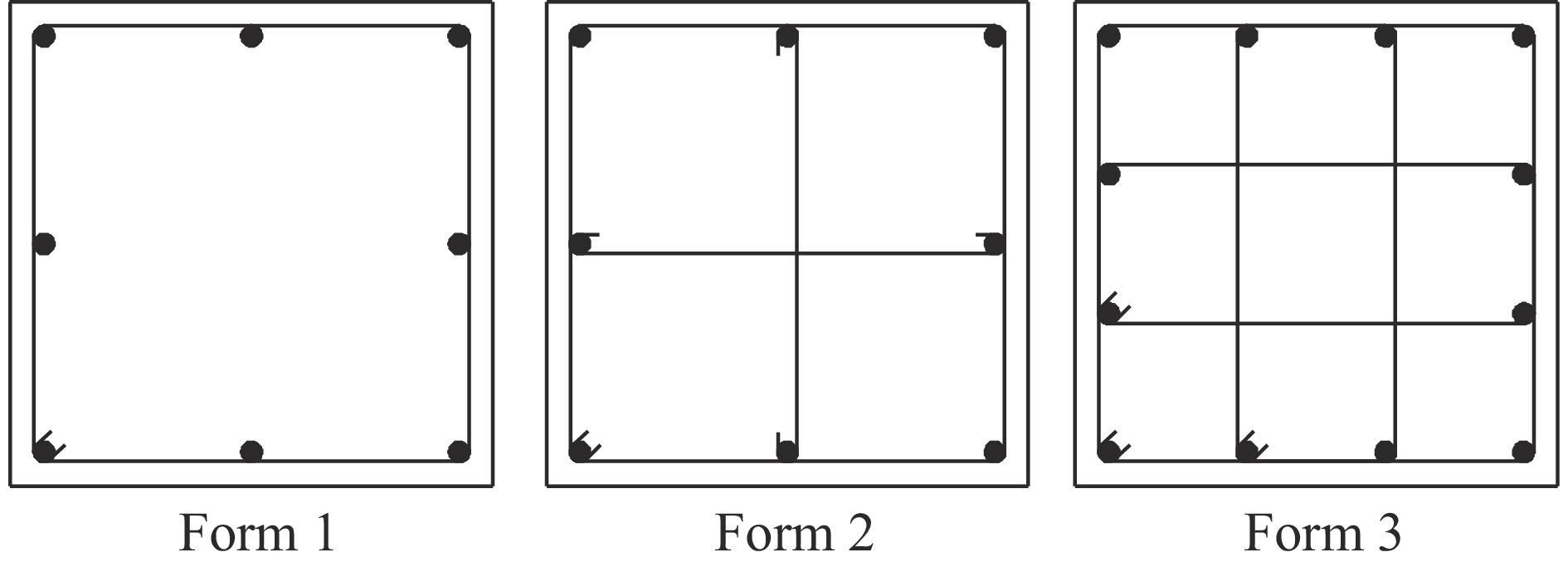
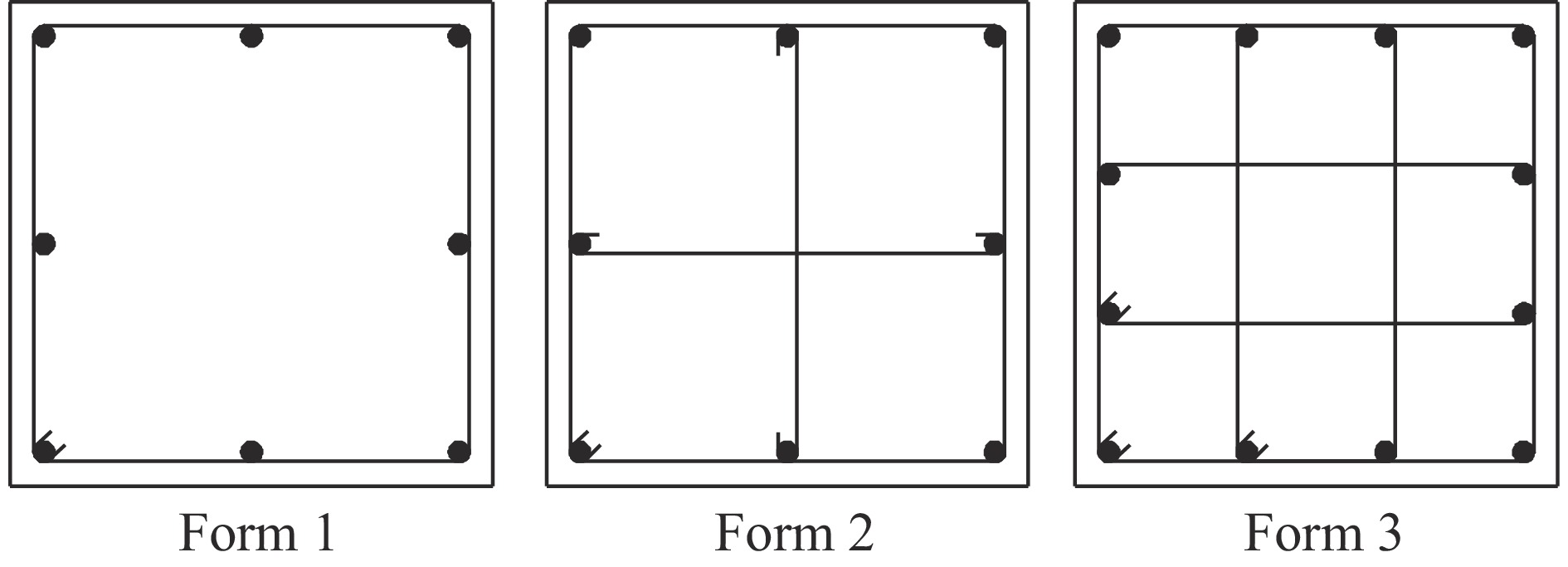
图 5 钢筋混凝土柱的截面配筋构造形式
Figure 5. Cross-sectional reinforcement forms for reinforced concrete columns
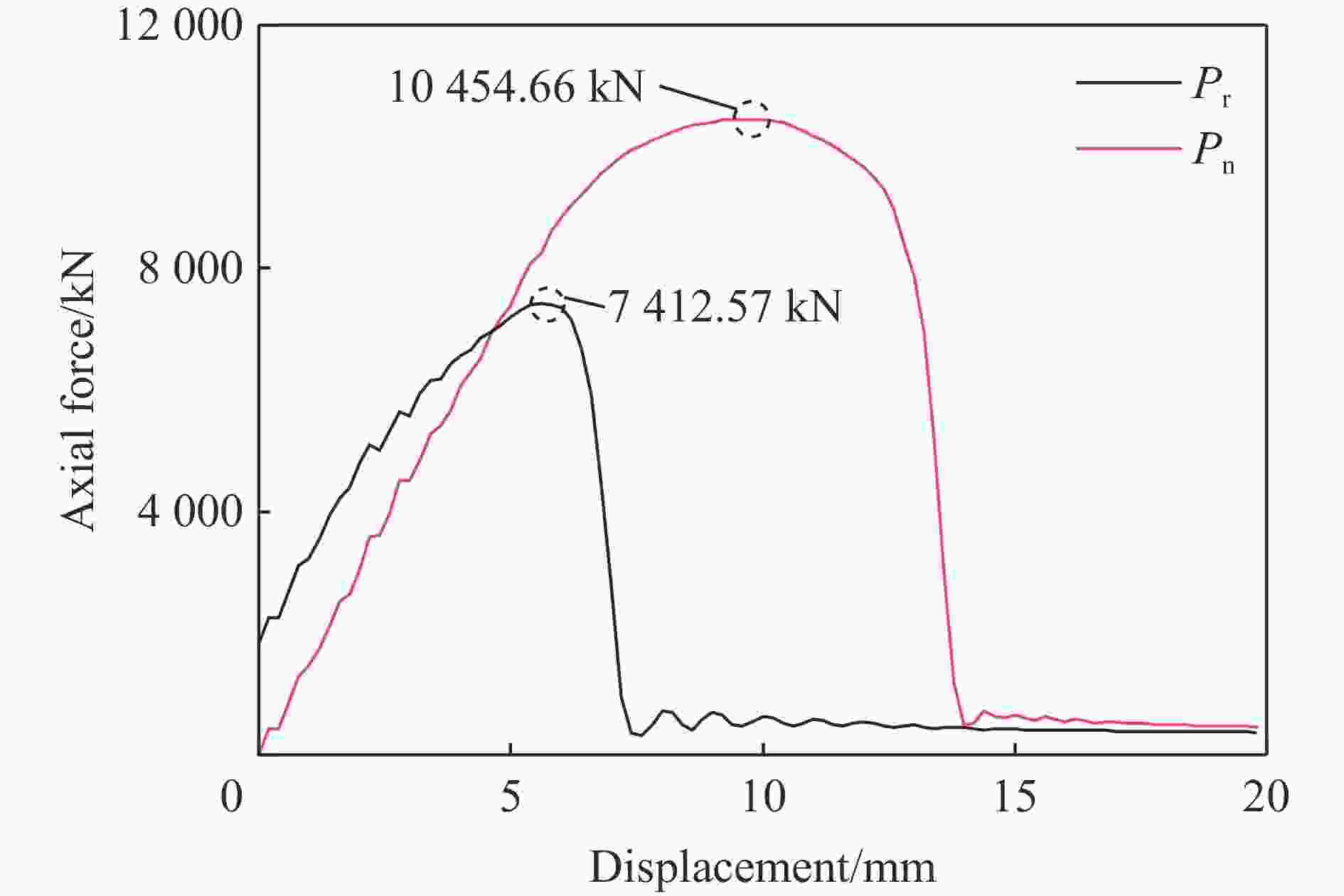
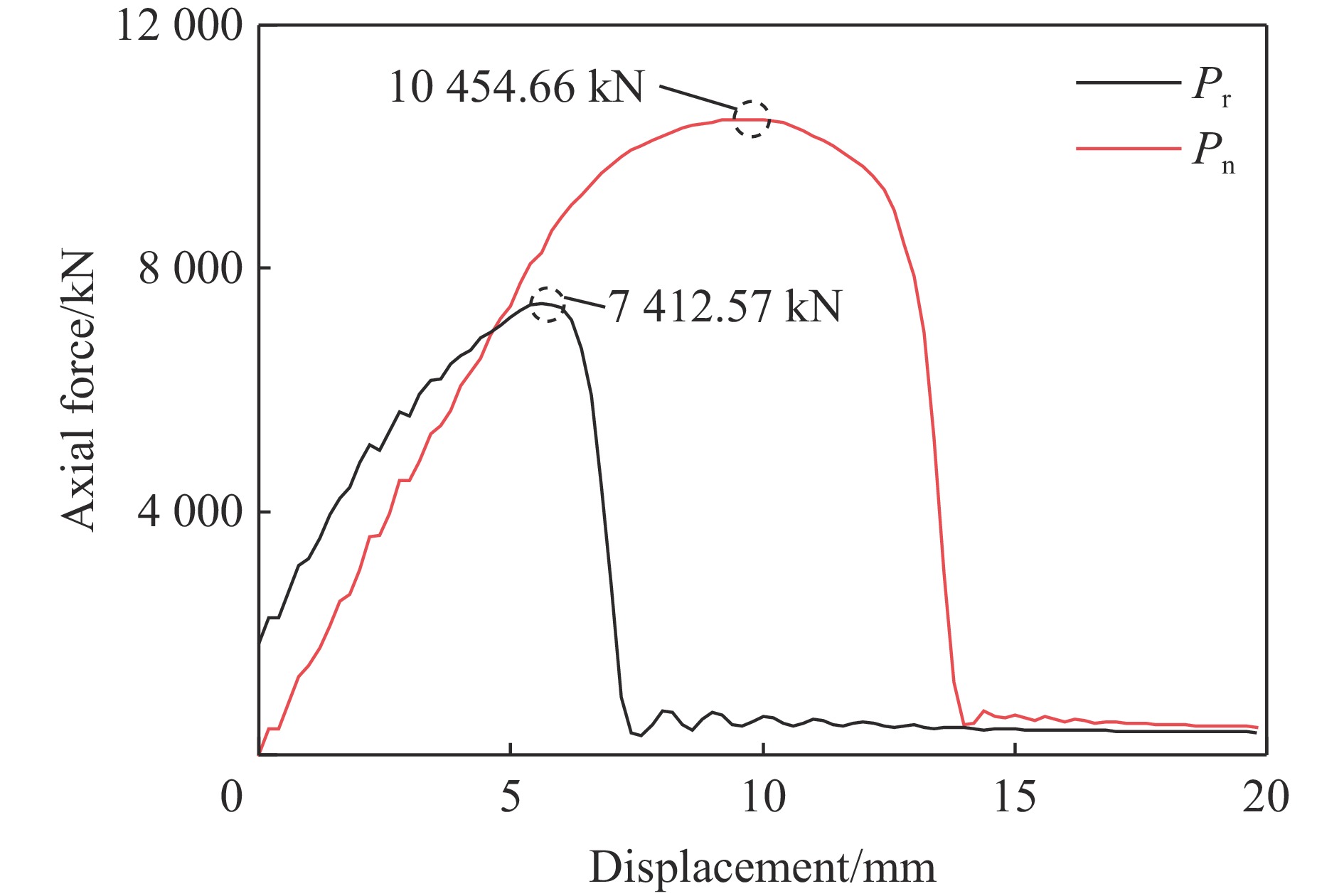
图 7 无损柱和爆炸受损柱轴力-位移曲线
Figure 7. Axial force-displacement curves of undamaged and blast-damaged columns
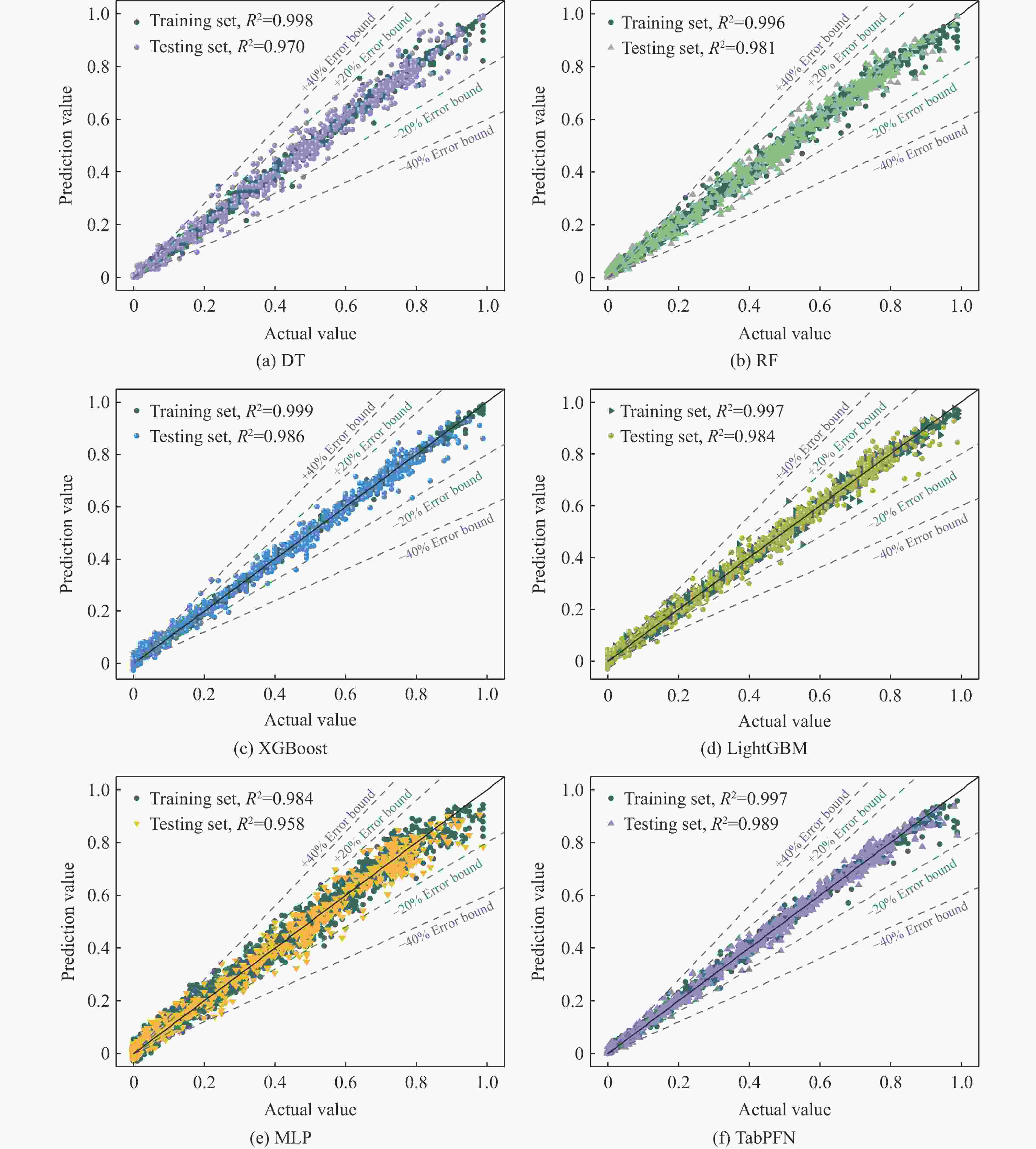
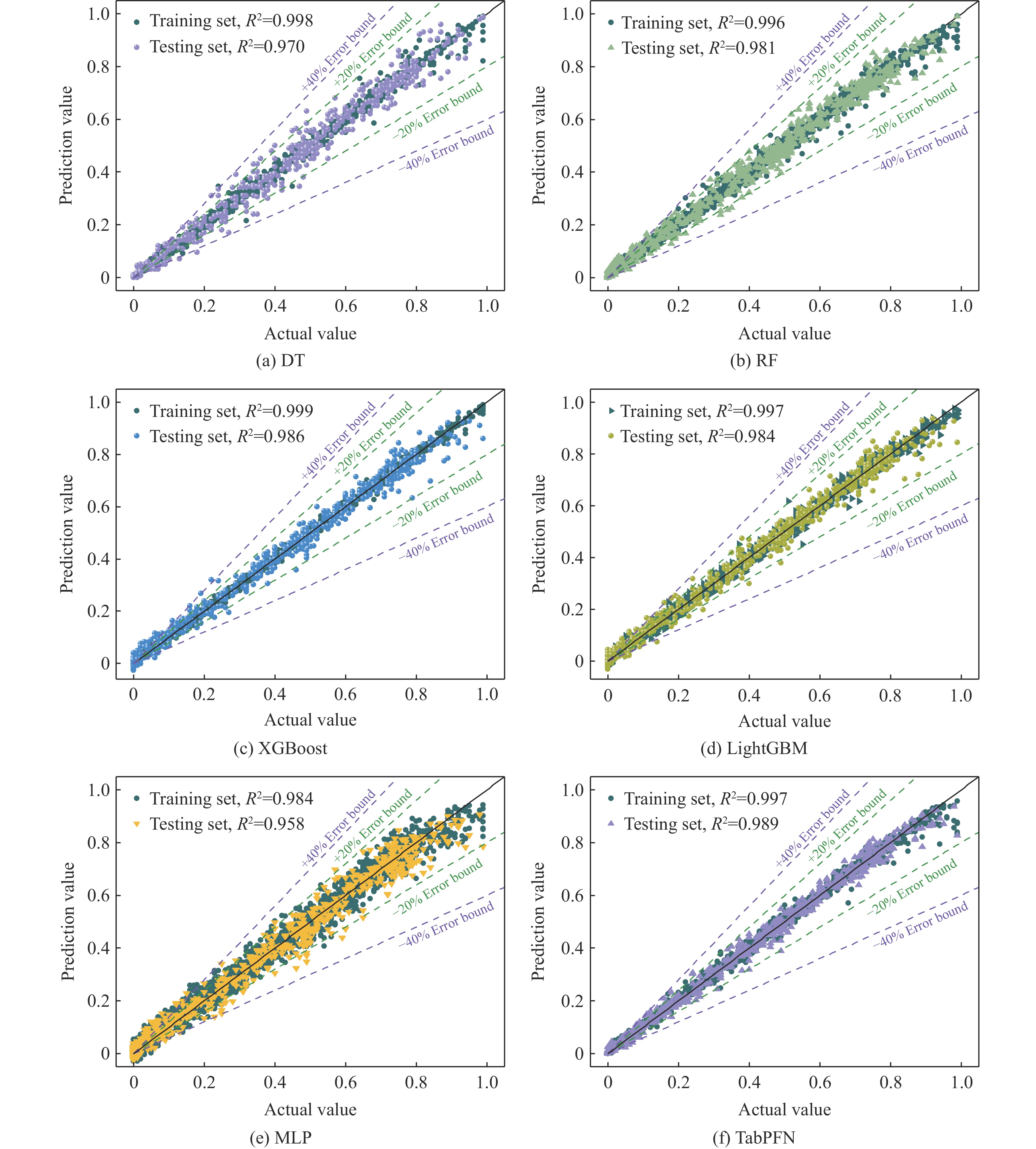
图 11 6种算法的预测值与真实值的比较
Figure 11. Comparison of predicted value and actual value for six algorithms
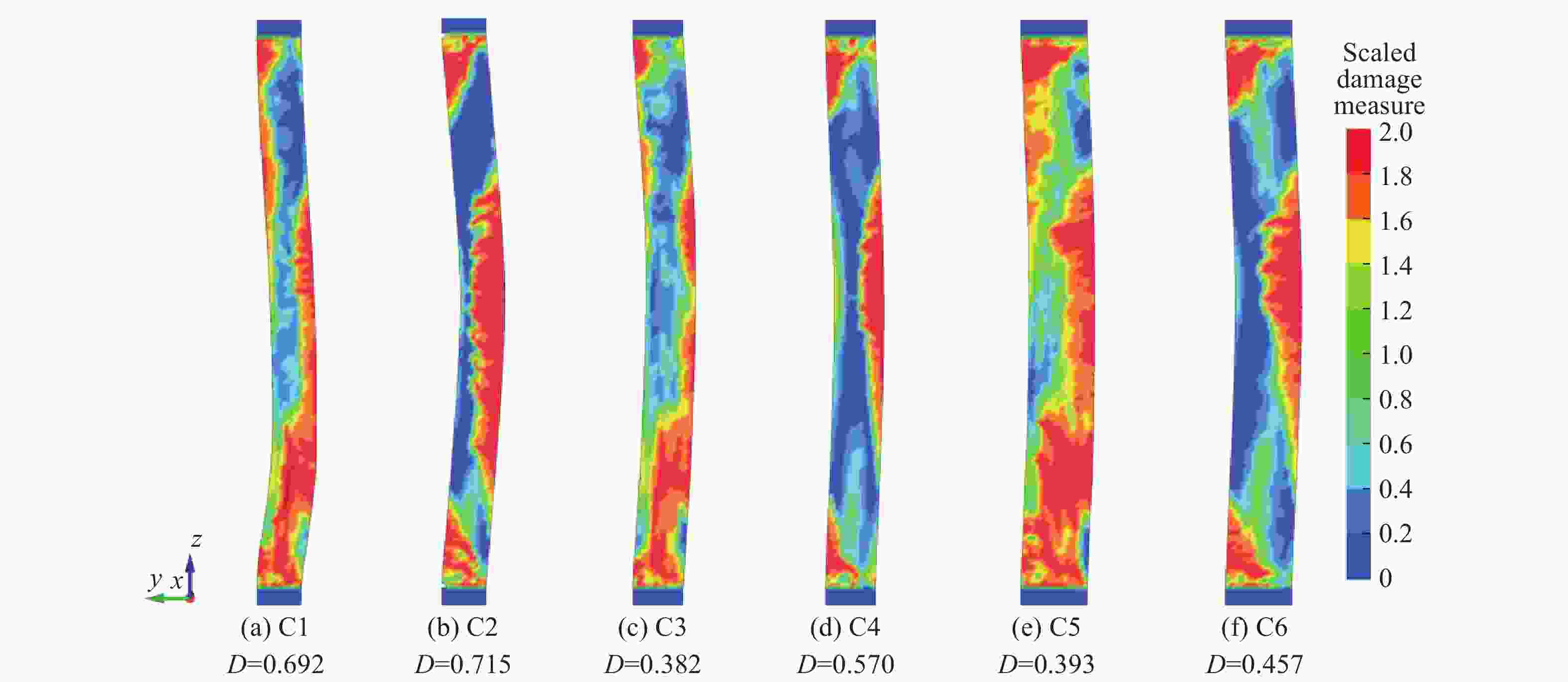
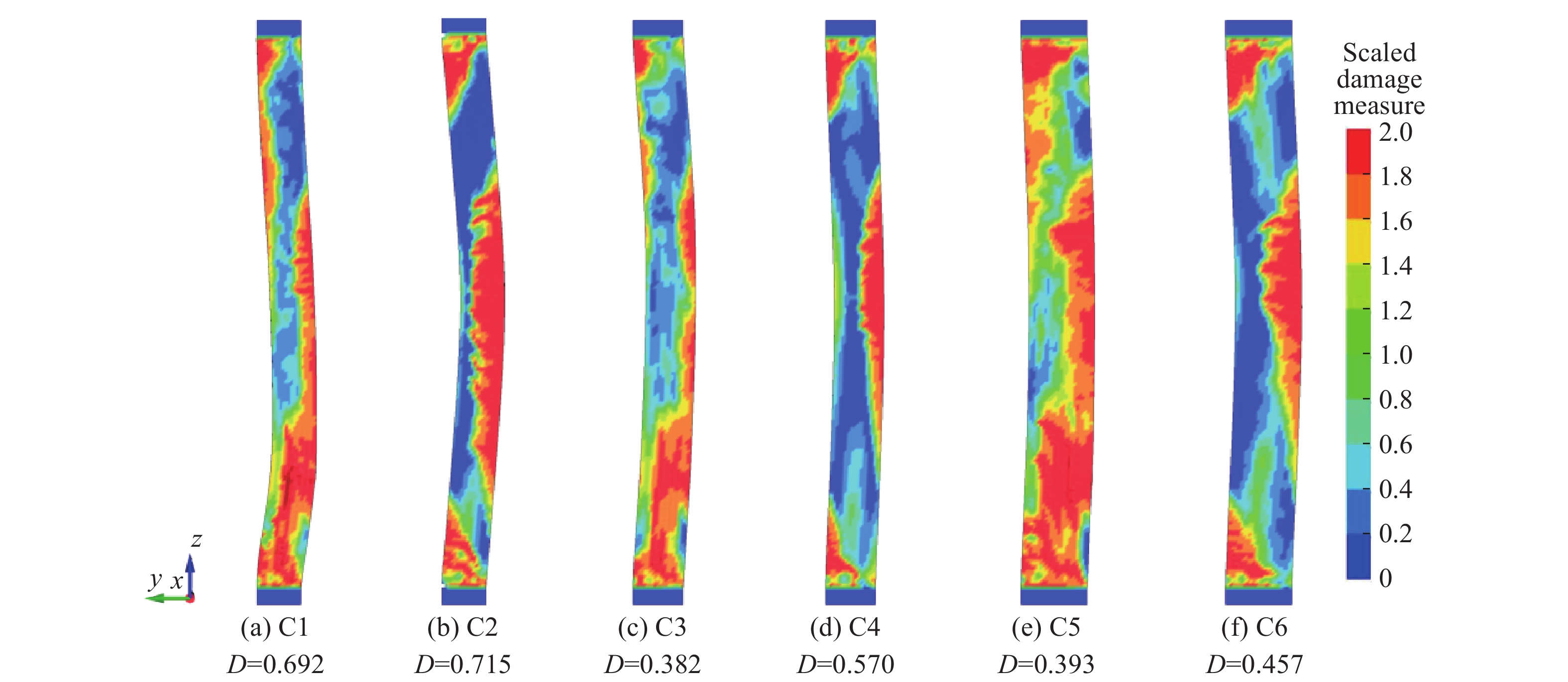
图 13 6组测试工况下的RC柱有限元归一化损伤指标云图(侧视图)
Figure 13. Finite element scaled damage measure contours of RC columns under six test cases (side view)
表 1 钢筋材料参数
Table 1. Reinforcing steel material parameters
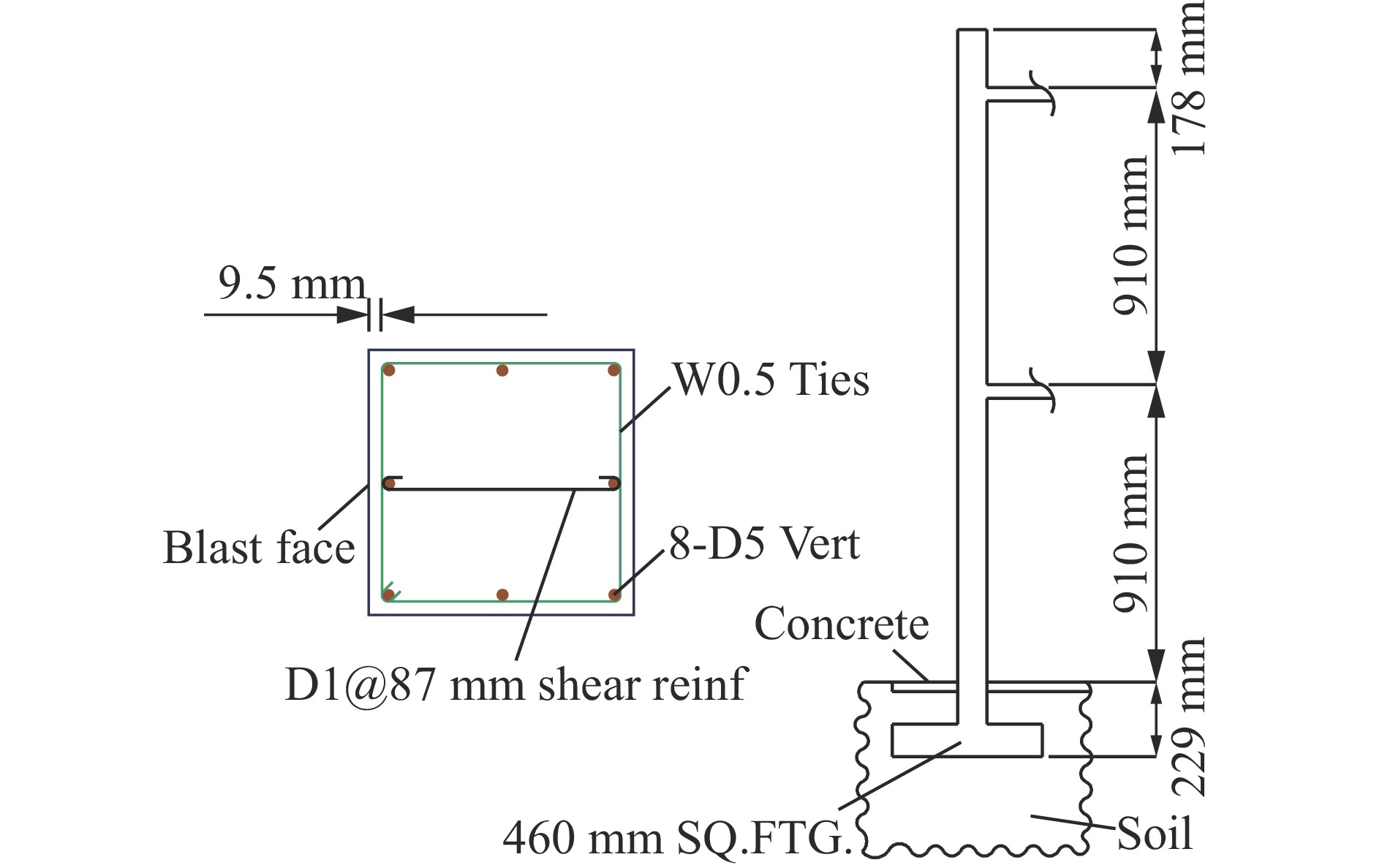
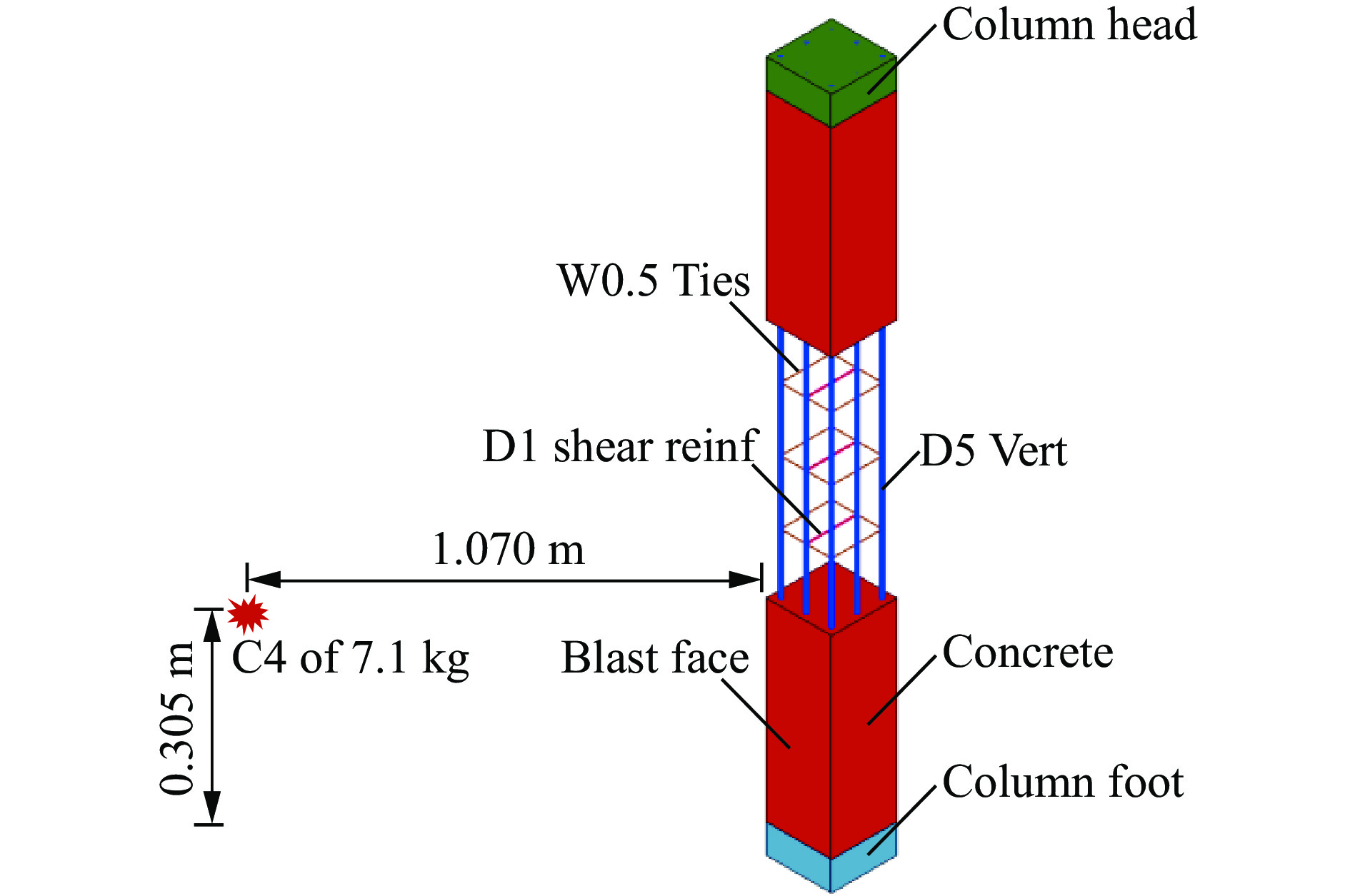
钢筋 截面面积/mm2 屈服强度/MPa 极限强度/MPa W0.5 3.22 441 513 D1 6.45 399 610 D5 32.20 449 513 注:W0.5表示0.005 in2,D1表示0.01 in2,D5表示0.05 in2。  下载: 导出CSV
表 3 收集数据的参数范围
Table 3. Parameter ranges for data collection
参数 范围 参数 范围 柱高 500~ 6000 mm纵筋配筋率 0.2%~3.2% 柱宽 80~ 1200 mm体积配箍率 0.2%~2.4% 柱深 80~800 mm 轴压比 0~0.8 混凝土立方体抗压强度 30~60 MPa 炸药质量 0.15~ 120000 kg纵筋屈服强度 400~500 MPa 爆炸距离 0.09~80 m 箍筋屈服强度 335~500 MPa
下载: 导出CSV
表 4 数值模拟的钢筋混凝土柱参数范围
Table 4. Parameter ranges for reinforced concrete columns in numerical simulation
参数 单位 符号 选择值或范围 柱高 mm H 3000 ,4000 ,5000 柱宽 mm w 300,400,500,700 柱深 mm h 300,400,500,600,700 混凝土立方体抗压强度 MPa fcu 30,45,60 纵筋屈服强度 MPa fy 400,500 箍筋屈服强度 MPa fs 335,400 纵筋配筋率 % ρl 1~2.79 体积配箍率 % ρv 0.48~1.67 轴压比 Nr 0,0.1,0.2,0.4
下载: 导出CSV
表 5 钢筋混凝土柱爆炸参数范围
Table 5. Range of explosion parameters for reinforced concrete columns
参数 符号 单位 选择值 炸药质量 W kg 5, 10, 15, 20, 35, 50, 100, 200, 250, 400, 500, 700, 1000 ,1500 ,2000 ,4000 爆炸距离 S m 1,2,4,6,8,10,15,30
下载: 导出CSV
表 6 模型中的关键超参数
Table 6. Key hyperparameters in the model
模型 超参数 搜索范围 最优值 DT max_depth (3, 21) 20 min_samples_leaf (1, 10) 1 min_samples_split (2, 10) 3 Splitter {best, random} best RF n_estimators (100, 500) 500 max_depth (3, 16) 16 min_samples_leaf (1, 10) 1 min_samples_split (2, 10) 2 XGBoost max_depth (3, 16) 8 learning_rate (0.05, 0.3) 0.05 n_estimators (100, 1200 )700 LightGBM num_leaves (6, 50) 44 min_data_in_leaf (1, 10) 3 learning_rate (0.05, 0.3) 0.05 n_estimators (100, 1000 )700 MLP hidden_layers (1, 5) 3 nodes (12, 24) 16 solver {adam, sgd} adam
下载: 导出CSV
表 7 每个机器学习模型的性能指标
Table 7. Performance metrics for each machine learning model
模型 数据集 R2 eMAE eRMSE eMedAE DT Training set 0.998 0.007 0.014 0.005 Testing set 0.970 0.029 0.050 0.015 RF Training set 0.996 0.010 0.017 0.006 Testing set 0.981 0.026 0.040 0.018 XGBoost Training set 0.999 0.006 0.008 0.004 Testing set 0.986 0.024 0.034 0.018 LightGBM Training set 0.997 0.011 0.016 0.008 Testing set 0.984 0.024 0.036 0.018 MLP Training set 0.984 0.026 0.036 0.019 Testing set 0.958 0.039 0.059 0.024 TabPFN Training set 0.997 0.008 0.015 0.005 Testing set 0.989 0.018 0.030 0.011 注:粗体值表示模型在这方面表现最佳
下载: 导出CSV
表 8 6组测试工况的几何尺寸及爆炸荷载参数
Table 8. Geometric dimensions and explosion load parameters for six test conditions
工况 H/mm w/mm h/mm fcu/MPa fy/MPa fs/MPa ρl/% ρv/% Nr W/kg S/m C1 5000 400 400 45 400 335 1.57 0.97 0.3 30 1 C2 5000 400 400 45 400 335 1.57 0.97 0.1 300 5 C3 5000 450 450 45 400 335 1.50 1.30 0.4 30 1 C4 5000 450 450 45 400 335 1.50 1.30 0.4 300 5 C5 5000 600 600 40 400 335 1.64 1.76 0.1 30 1 C6 5000 600 600 40 400 335 1.64 1.76 0.2 300 5
下载: 导出CSV
表 9 TabPFN模型预测值与有限元模拟结果的对比
Table 9. Comparison of TabPFN model predictions with finite element simulation results
工况 D 损伤程度 有限元模拟值 TabPFN模型预测值 相对误差/% C1 0.692 0.683 1.30 重度破坏 C2 0.715 0.722 0.98 重度破坏 C3 0.382 0.376 1.57 中度破坏 C4 0.570 0.555 2.63 重度破坏 C5 0.393 0.415 5.60 中度破坏 C6 0.457 0.451 1.31 中度破坏
下载: 导出CSV
-
[1] KIAKOJOURI F, DE BIAGI V, CHIAIA B, et al. Strengthening and retrofitting techniques to mitigate progressive collapse: A critical review and future research agenda [J]. Engineering Structures, 2022, 262: 114274. DOI: 10.1016/j.engstruct.2022.114274. [2] YUAN S, LI Y, ZONG Z, et al. A review on close-in blast performance of RC bridge columns [J]. Journal of Traffic and Transportation Engineering (English Edition), 2023, 10(4): 675–696. DOI: 10.1016/j.jtte.2023.07.001. [3] BYFIELD M, PARAMASIVAM S. Murrah Building Collapse: Reassessment of the Transfer Girder [J]. Journal of Performance of Constructed Facilities, 2012, 26(4): 371–376. DOI: 10.1061/(Asce)Cf.1943-5509.0000227. [4] LI Q M, MENG H. Pressure-impulse diagram for blast loads based on dimensional analysis and single-degree-of-freedom model [J]. Journal of Engineering Mechanics, 2002, 128(1): 87–92. DOI: 10.1061/(ASCE)0733-9399(2002)128:1(87. [5] YU R, CHEN L, FANG Q, et al. Generation of pressure–impulse diagrams for failure modes of RC columns subjected to blast loads [J]. Engineering Failure Analysis, 2019, 100: 520–535. DOI: 10.1016/j.engfailanal.2019.02.001. [6] YUAN S, HAO H, ZONG Z, et al. A study of RC bridge columns under contact explosion [J]. International Journal of Impact Engineering, 2017, 109: 378–390. DOI: 10.1016/j.ijimpeng.2017.07.017. [7] DUA A, BRAIMAH A, KUMAR M. Experimental and numerical investigation of rectangular reinforced concrete columns under contact explosion effects [J]. Engineering Structures, 2020, 205: 109891. DOI: 10.1016/j.engstruct.2019.109891. [8] SHI Y C, HU Y, CHEN L, et al. Experimental investigation into the close-in blast performance of RC columns with axial loading [J]. Engineering Structures, 2022, 268: 114688. DOI: 10.1016/j.engstruct.2022.114688. [9] WU K-C, LI B, TSAI K-C. Residual axial compression capacity of localized blast-damaged RC columns [J]. International Journal of Impact Engineering, 2011, 38(1): 29–40. DOI: 10.1016/j.ijimpeng.2010.09.002. [10] LIN S C, HU Z Q, HAN J Q, et al. Failure time of reinforced concrete column under blast load [J]. Structures, 2023, 53: 1122–1134. DOI: 10.1016/j.istruc.2023.04.128. [11] SHI Y C, XIE C L, YU M L. Numerical derivation of pressure-impulse (P-I) diagrams of prefabricated RC columns with steel joints subjected to blast loads [J]. Structures, 2024, 66: 106796. DOI: 10.1016/j.istruc.2024.106796. [12] 赵春风, 吴艺秀, 向思麒, 等. 基于XGBoost的PC板爆炸损伤评估模型 [J]. 爆炸与冲击, 2026, 46(5): 051443. DOI: 10.11883/bzycj-2025-0250.ZHAO C F, WU Y X, XIANG S Q, et al. Blast damage assessment model of PC slabs based on XGBoost [J]. Explosion and Shock Waves, 2026, 46(5): 051443. DOI: 10.11883/bzycj-2025-0250. [13] 朱玉富, 赵春风, 周志航. 基于机器学习的钢筋混凝土板在爆炸作用下的最大位移预测模型 [J]. 高压物理学报, 2023, 37(2): 92–106. DOI: 10.11858/gywlxb.20220667.ZHU Y F, ZHAO C F, ZHOU Z H. Prediction model of maximum displacement for rc slabsunder blast load based on machine learning [J]. Chinese Journal of High Pressure Physics, 2023, 37(2): 92–106. DOI: 10.11858/gywlxb.20220667. [14] 郑文言, 段利亚, 方辉. 近距离爆炸下钢筋混凝土柱损伤的图像识别及快速评估 [J]. 防灾减灾工程学报, 2023, 43(4): 712–720. DOI: 10.13409/j.cnki.jdpme.20211122002.ZHENG W Y, DUAN L Y, FANG H. Assessment of reinforced concrete column damage after near-field explosion based on image recognition [J]. Journal of Disaster Prevention and Mitigation Engineering, 2023, 43(4): 712–720. DOI: 10.13409/j.cnki.jdpme.20211122002. [15] YANG D K, YANG J, SHI J. Prediction and analysis of damage to RC columns under close-in blast loads based on machine learning and Monte Carlo method [J]. Engineering Structures, 2024, 318: 118787. DOI: 10.1016/j.engstruct.2024.118787. [16] ZHAO C F, SU J, ZHU Y F, et al. Machine learning-based two-stage damage prediction method for RC slabs under blast loads [J]. Advances in Engineering Software, 2025, 208: 103959. DOI: 10.1016/j.advengsoft.2025.103959. [17] PENG J Z, PAN L J, WANG Z Q, et al. Self-adaptive graph neural network for predicting blast-induced damage in RC columns across multiple scenarios [J]. Engineering Structures, 2025, 337: 120505. DOI: 10.1016/j.engstruct.2025.120505. [18] MALVAR L J, CRAWFORD J E, WESEVICH J W, et al. A plasticity concrete material model for DYNA3D [J]. International Journal of Impact Engineering, 1997, 19(9/10): 847–873. DOI: 10.1016/s0734-743x(97)00023-7. [19] LI J, HAO H. Influence of brittle shear damage on accuracy of the two-step method in prediction of structural response to blast loads [J]. International Journal of Impact Engineering, 2013, 54: 217–231. DOI: 10.1016/j.ijimpeng.2012.11.008. [20] HAO Y F, HAO H. Influence of the concrete DIF model on the numerical predictions of RC wall responses to blast loadings [J]. Engineering Structures, 2014, 73: 24–38. DOI: 10.1016/j.engstruct.2014.04.042. [21] MALVAR L J, CRAWFORD J E. Dynamic increase factors for steel reinforcing bars [C]// proceedings of the 28th DDESB Seminar. Orlando: 1–18. [22] WOODSON S C, BAYLOT J T. Structural collapse: quarter-scale model experiments: SL-99-8 [R]. US Army Corps of Engineers Engineer Research and Development Center, 1999. [23] SHIN J, JEON J S. Retrofit scheme of FRP jacketing system for blast damage mitigation of non-ductile RC building frames [J]. Composite Structures, 2019, 228: 111328. DOI: 10.1016/j.compstruct.2019.111328. [24] BAYLOT J T, BEVINS T L. Effect of responding and failing structural components on the airblast pressures and loads on and inside of the structure [J]. Computers & Structures, 2007, 85(11): 891–910. DOI: 10.1016/j.compstruc.2007.01.001. [25] THAI D K, KIM S E. Numerical investigation of the damage of RC members subjected to blast loading [J]. Engineering Failure Analysis, 2018, 92: 350–367. DOI: 10.1016/j.engfailanal.2018.06.001. [26] 师燕超, 李绍琦, 李忠献, 等. 基于实测频率的钢筋混凝土柱爆炸损伤快速评估方法 [J]. 建筑结构学报, 2021, 42(11): 155–164. DOI: 10.14006/j.jzjgxb.2019.0664.SHI Y C, LI S Q, LI Z X, et al. Rapid evaluation method for blast damage of reinforced concrete columns based on measured frequency [J]. Journal of Building Structures, 2021, 42(11): 155–164. DOI: 10.14006/j.jzjgxb.2019.0664. [27] 吴文燕, 卢伟. 爆炸作用时钢筋混凝土柱损伤因素分析 [J]. 工程爆破, 2021, 27(2): 58–65. DOI: 10.19931/j.EB.20200063.WU W Y, LU W. Analysis of explosion damage factors in reinforced concrete columns [J]. Engineering Blasting, 2021, 27(2): 58–65. DOI: 10.19931/j.EB.20200063. [28] GB 50010—2010 混凝土结构设计规范 [S]. 北京: 中国建筑工业出版社, 2015.GB 50010—2010 Code for design of concrete structures [S]. Beijing: China Architecture & Building Press, 2015. [29] BERRY M, PARRISH M, EBERHARD M. PEER structural performance database user’s manual (version 1.0) [R]. University of California, 2004. [30] LI Z X, ZHANG X J, SHI Y C, et al. Predication of the residual axial load capacity of CFRP-strengthened RC column subjected to blast loading using artificial neural network [J]. Engineering Structures, 2021, 242: 112519. DOI: 10.1016/j.engstruct.2021.112519. [31] ZHOU X Q, HUANG B G, WANG X Y, et al. Deep learning-based rapid damage assessment of RC columns under blast loading [J]. Engineering Structures, 2022, 271. DOI: 10.1016/j.engstruct.2022.114949. [32] GB 50011—2010. 建筑抗震设计规范 [S]. 北京: 中国建筑工业出版社, 2010.GB 50011—2010 Code for seismic design of buildings [S]. Beijing: China Architecture & Building Press, 2010. [33] T/CECS 736—2020. 民用建筑防爆设计标准 [S]. 北京: 中国建筑工业出版社, 2020.T/CECS 736—2020 Standard for blast protection design of civil buildings [S]. Beijing: China Architecture & Building Press, 2020. [34] GB50180—2018. 城市居住区规划设计标准 [S]. 北京: 中国建筑工业出版社, 2018.GB 50180—2018 Standard for urban residential area planning and design [S]. Beijing: China Architecture & Building Press, 2018. [35] SHI Y C, HAO H, LI Z X. Numerical derivation of pressure–impulse diagrams for prediction of RC column damage to blast loads [J]. International Journal of Impact Engineering, 2008, 35(11): 1213–1227. DOI: 10.1016/j.ijimpeng.2007.09.001. [36] BAO X L, LI B. Residual strength of blast damaged reinforced concrete columns [J]. International Journal of Impact Engineering, 2010, 37(3): 295–308. DOI: 10.1016/j.ijimpeng.2009.04.003. [37] LI J, WU C Q, HAO H, et al. Post-blast capacity of ultra-high performance concrete columns [J]. Engineering Structures, 2017, 134: 289–302. DOI: 10.1016/j.engstruct.2016.12.057. [38] 张兴站. 爆炸荷载作用下钢筋混凝土箍筋加密柱的动力响应 [D]. 西安: 西安建筑科技大学, 2018: 46. DOI: 10.7666/d.D01575277ZHANG X Z. Dynamic response of the stirrup encryption reinforced concrete columns under blast load [D]. Xi’an: Xi’an University of Architecture and Technology, 2018: 46. DOI: 10.7666/d.D01575277. [39] ZHOU B X, CHEN X, CHEN S W. Failure mechanism and residual load bearing capacity of blast-loaded reinforced concrete bridge column considering bottom corrosion effect [J]. Structures, 2025, 75: 108668. DOI: 10.1016/j.istruc.2025.108668. [40] HE J G, JIANG L Q, JIANG L Z, et al. Estimation of blast-induced peak response of concrete-filled double-skin tube columns by intelligence-based technique [J]. Thin-Walled Structures, 2023, 186: 110670. DOI: 10.1016/j.tws.2023.110670. [41] BREIMAN L. Random forests [J]. Machine Learning, 2001, 45(1): 5–32. DOI: 10.1023/a:1010933404324. [42] CHEN T, GUESTRIN C. XGBoost: a scalable tee boosting system [C]//Proceedings of the 22nd ACM SIGKDD International Conference on Knowledge Discovery and Data Mining. San Francisco: Association for Computing Machinery, 2016: 785–794. DOI: 10.1145/2939672.2939785. [43] KE G, MENG Q, FINLEY T, et al. Lightgbm: a highly efficient gradient boosting decision tree [C]//Proceedings of the Advances in Neural Information Processing Systems. Long Beach: Curran Associates Inc. , 2017: 3149–3157. DOI: 10.5555/3294996.3295074. [44] RUMELHART D E, HINTON G E, WILLIAMS R J. Learning representations by back-propagating errors [J]. Nature, 1986, 323(6088): 533–536. DOI: 10.1038/323533a0. [45] HU J, JIANG L, HU Y, et al. Machine learning-based axial compressive capacity estimation of cold-formed steel build-up sections [J]. Thin-Walled Structures, 2025, 206: 112669. DOI: 10.1016/j.tws.2024.112669. [46] YANG J, HAO Y, PENG D, et al. Machine learning-based methods for predicting the structural damage and failure mode of RC slabs under blast loading [J]. Buildings, 2025, 15(8): 1221. DOI: 10.3390/buildings15081221. [47] HOLLMANN N, MULLER S, PURUCKER L, et al. Accurate predictions on small data with a tabular foundation model [J]. Nature, 2025, 637(8045): 319–326. DOI: 10.1038/s41586-024-08328-6. [48] AKIBA T, SANO S, YANASE T, et al. Optuna: a next-generation hyperparameter optimization framework [C]// Proceedings of the 25th ACM SIGKDD International Conference on Knowledge Discovery & Data Mining. Anchorage: ACM, 2019: 2623–2631. DOI: 10.1145/3292500.3330701. -

计量
- 文章访问数: 515
- HTML全文浏览量: 145
- PDF下载量: 169
- 被引次数: 0