



Study on the impact energy absorption mechanism and packaging cushioning application of multilayer paper honeycomb structure
-
摘要: 在包装领域中,用于保护产品的蜂窝纸板用量设计大多依赖于经验,易造成浪费。基于多层纸蜂窝结构的缓冲特性和脆值理论,构建了一套等厚约束下的包装结构快速设计方法。首先,通过静态压缩与动态冲击试验,获取了不同构型蜂窝材料的力-位移曲线和能量吸收特性,同时结合数值模拟方法,揭示了不同构型在加载过程中的变形模式与力学响应机制。基于试验所得的结构缓冲特性数据,实现多层蜂窝包装结构的快速参数化设计,并通过有限元模型对设计方案的缓冲效果进行了数值验证。结果表明,在静压试验中,三层纸蜂窝结构的有效吸能比单层纸蜂窝结构多吸收65.1%的能量,其应力-应变曲线呈现明显的多次平台应力区域,在冲击荷载作用下,三层纸蜂窝在受到小于81.6 J的能量冲击下,未进入致密段,而单层纸蜂窝结构在受到大于53.8 J的能量冲击下,出现力值陡增现象,多层纸蜂窝结构在冲击下具备更优的吸能特性。基于脆值和试验所得多层蜂窝结构的缓冲特性进行结构包装逆向设计,在有限元模型中进行验证,证明了设计方法的有效性。与现有蜂窝包装结构设计方法相比,该方法具备更高的效率和准确性,在缓冲包装结构设计和其它冲击领域中具备一定前景。Abstract: In the field of packaging design, the use of paper honeycomb structures largely relies on empirical experience, which often results in material waste. This study develops a rapid design method for packaging structures based on the fragility theory, under equal thickness constraints, utilizing the buffering characteristics of multi-layer paper honeycomb structures. By conducting static compression and dynamic impact tests, the force-displacement curves and energy absorption characteristics of different honeycomb configurations were obtained. Simultaneously, numerical simulation methods were used to reveal the deformation modes and mechanical response mechanisms of various configurations during the loading process. Based on the structural buffering characteristic data obtained from the experiments, a rapid parametric design of multi-layer honeycomb packaging structures was achieved, and the buffering performance of the design scheme was verified through finite element models. The results show that in the static compression test, the triple-layer paper honeycomb absorbs 65.1% more energy than the single-layer paper honeycomb structure, and its stress-strain curve exhibits multiple distinct plateau stress regions. Under impact loading, the triple-layer paper honeycomb does not enter the densification stage when subjected to an impact energy of less than 81.6 J, whereas the force value of the single-layer paper honeycomb structure increases sharply under an impact energy exceeding 53.8 J. These findings indicate that the multi-layer paper honeycomb structure possesses better energy absorption characteristics under impact. Based on the fragility and the experimentally obtained buffering characteristics of the multi-layer honeycomb structure, a reverse design method for structural packaging is developed and validated through finite element modeling, confirming the effectiveness of the design approach. Compared with existing honeycomb packaging structure design methods, this proposed approach demonstrates significantly higher efficiency and accuracy. It not only reduces redundant design iterations, but also holds considerable promise for applications in cushioning packaging structure design and other impact fields.
-
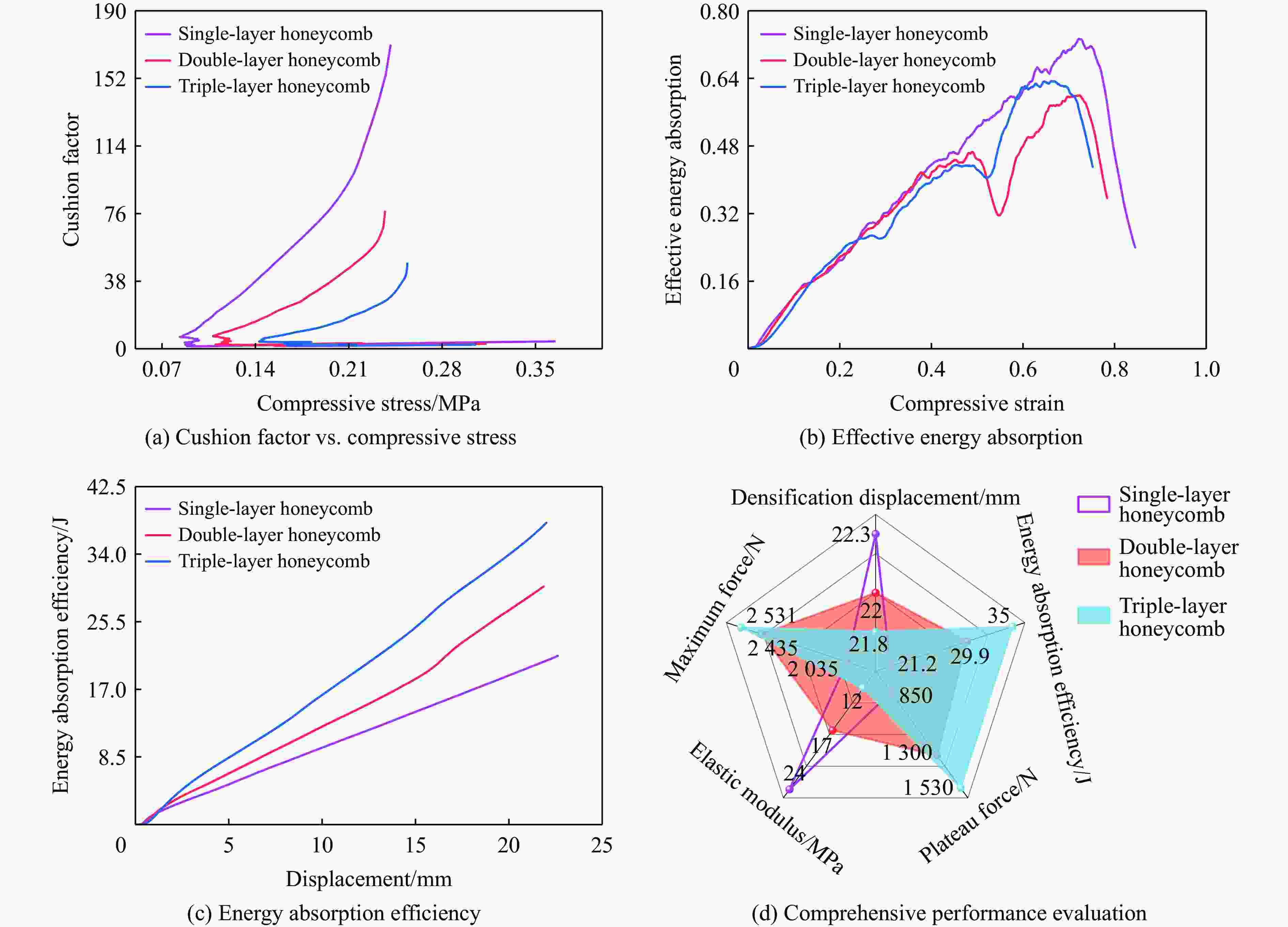
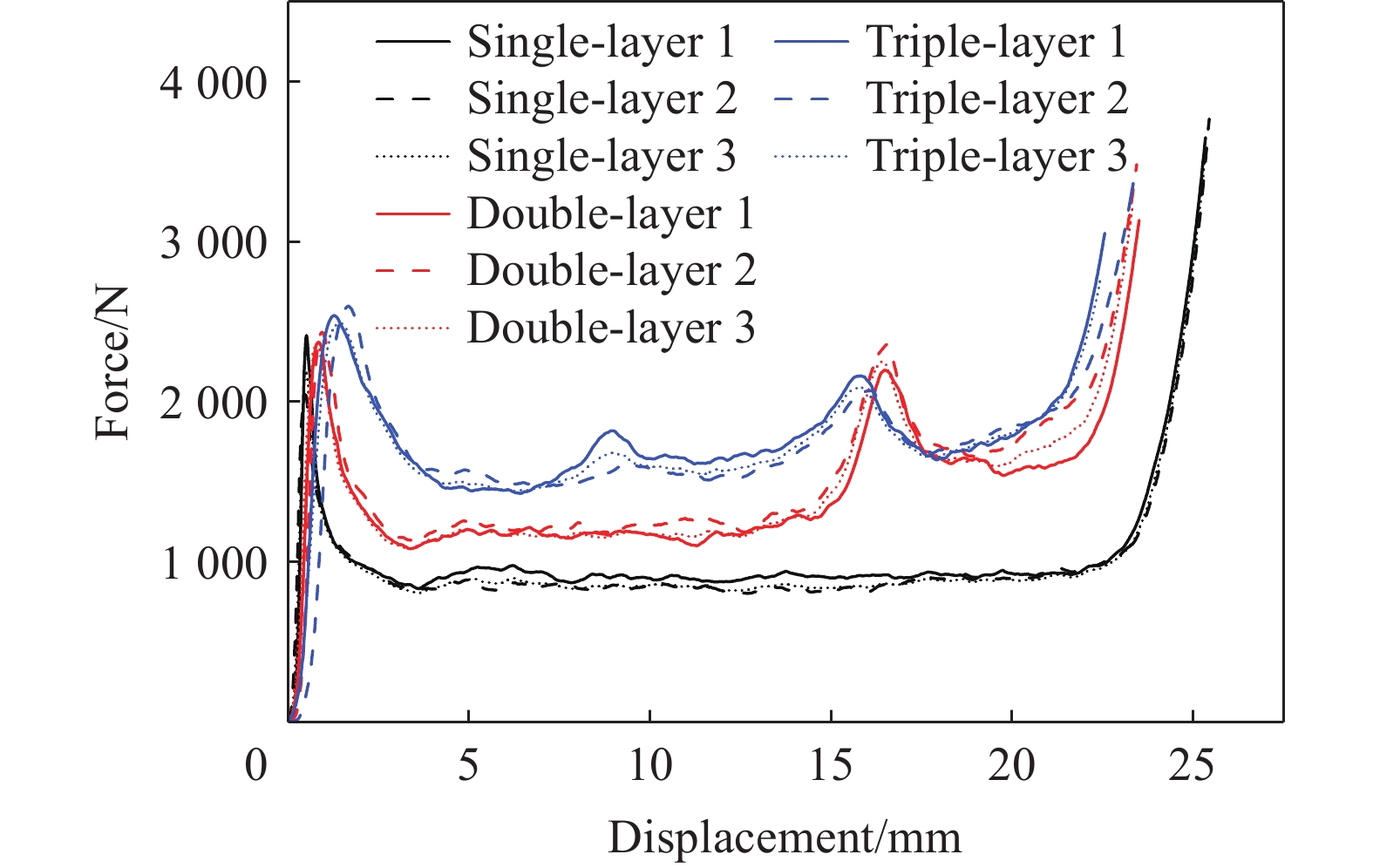
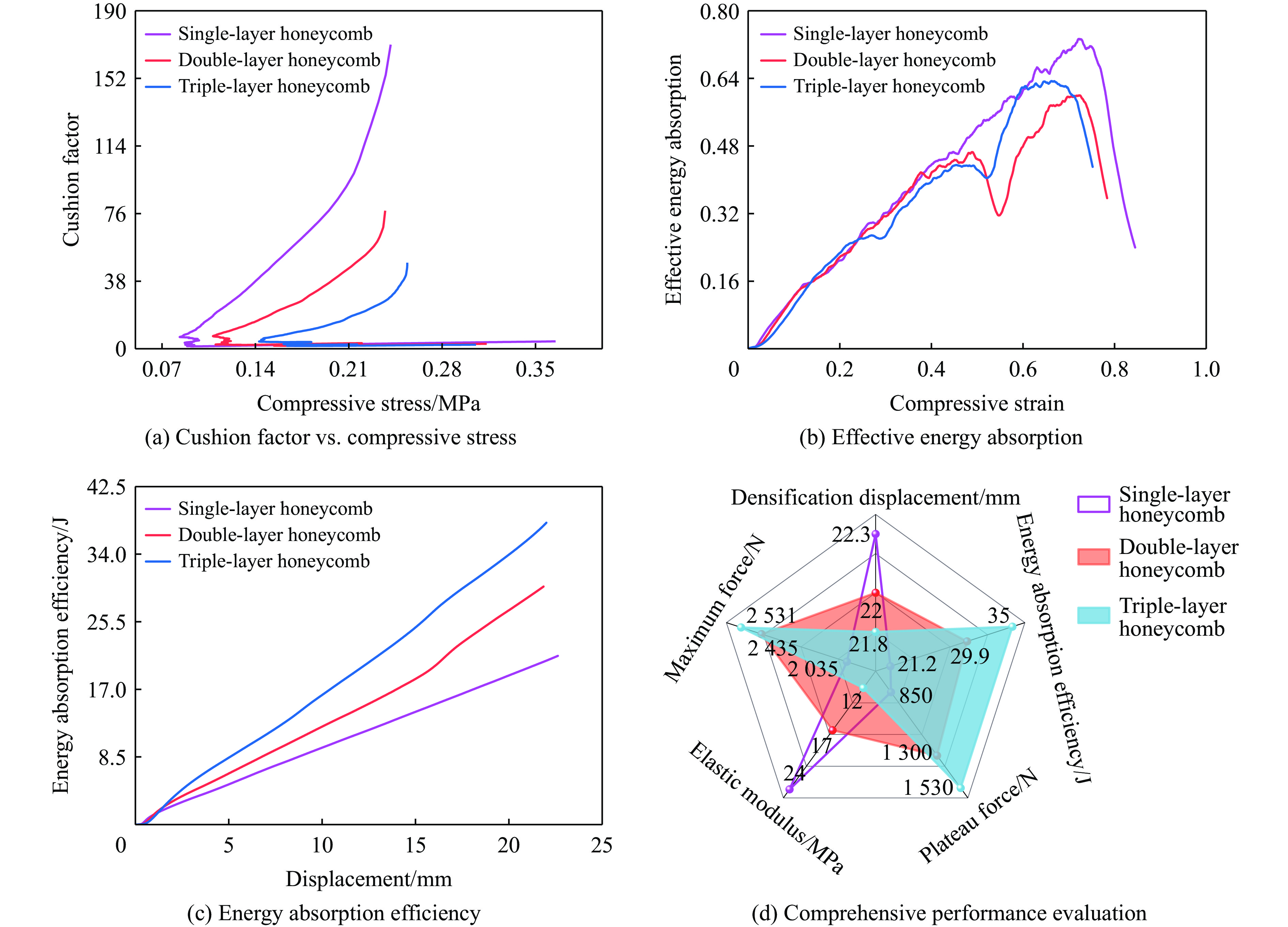
图 8 不同构型蜂窝结构的准静态压缩性能表征对比
Figure 8. Comparison of quasi-static compression performance for different honeycomb configurations
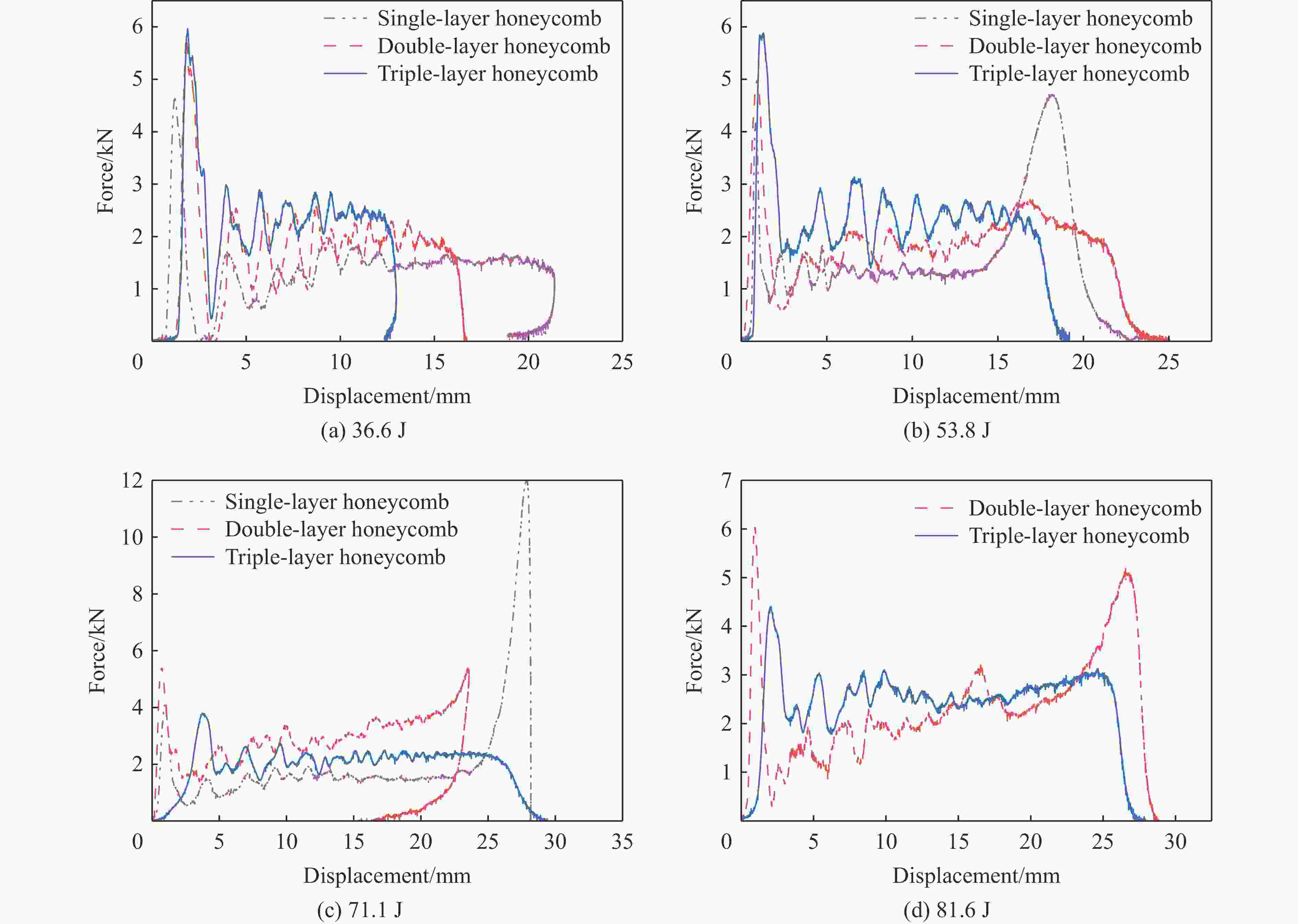
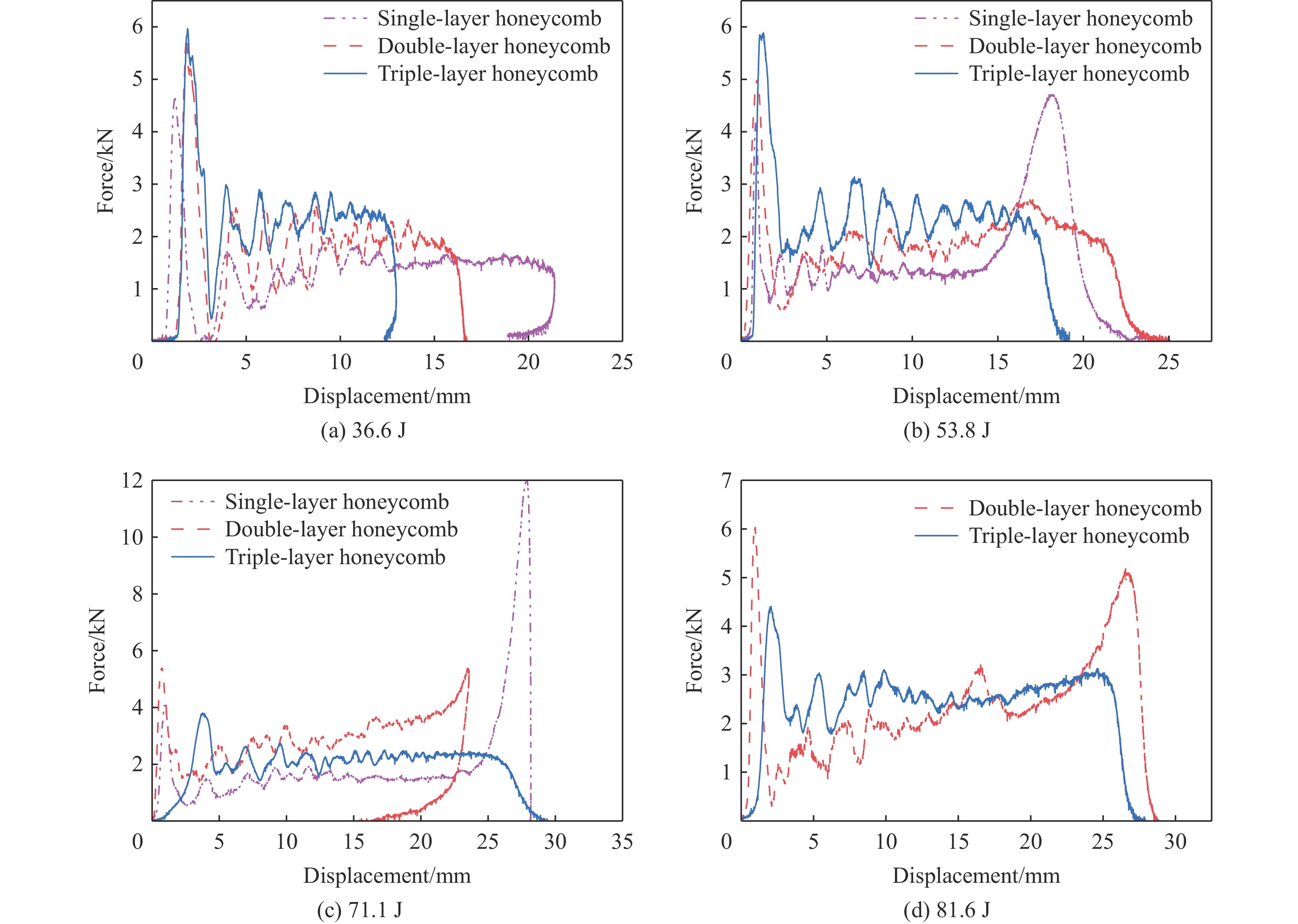
图 10 不同能量冲击下结构力-位移对比图
Figure 10. Comparison of load-displacement responses under different impact energies
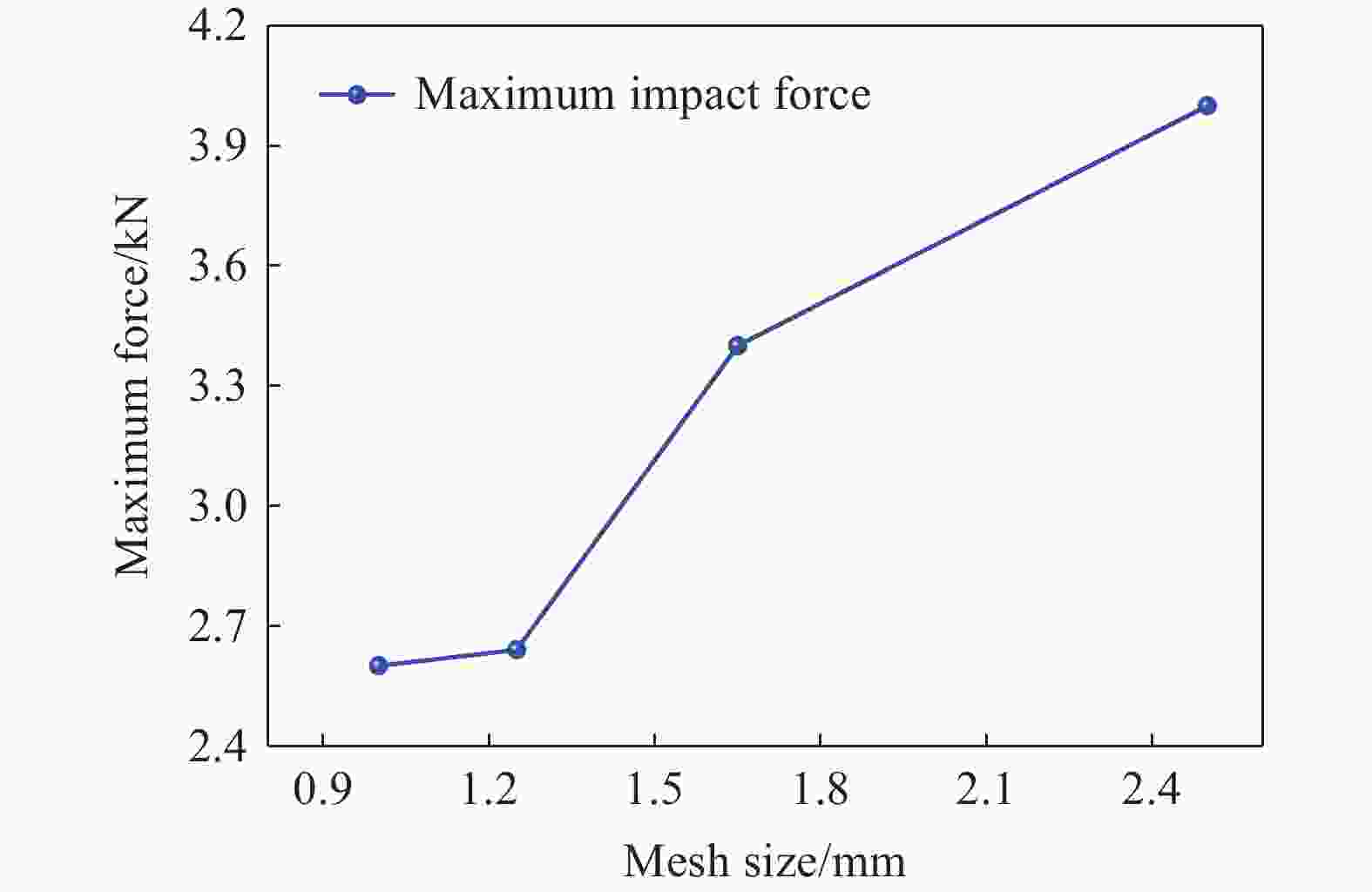
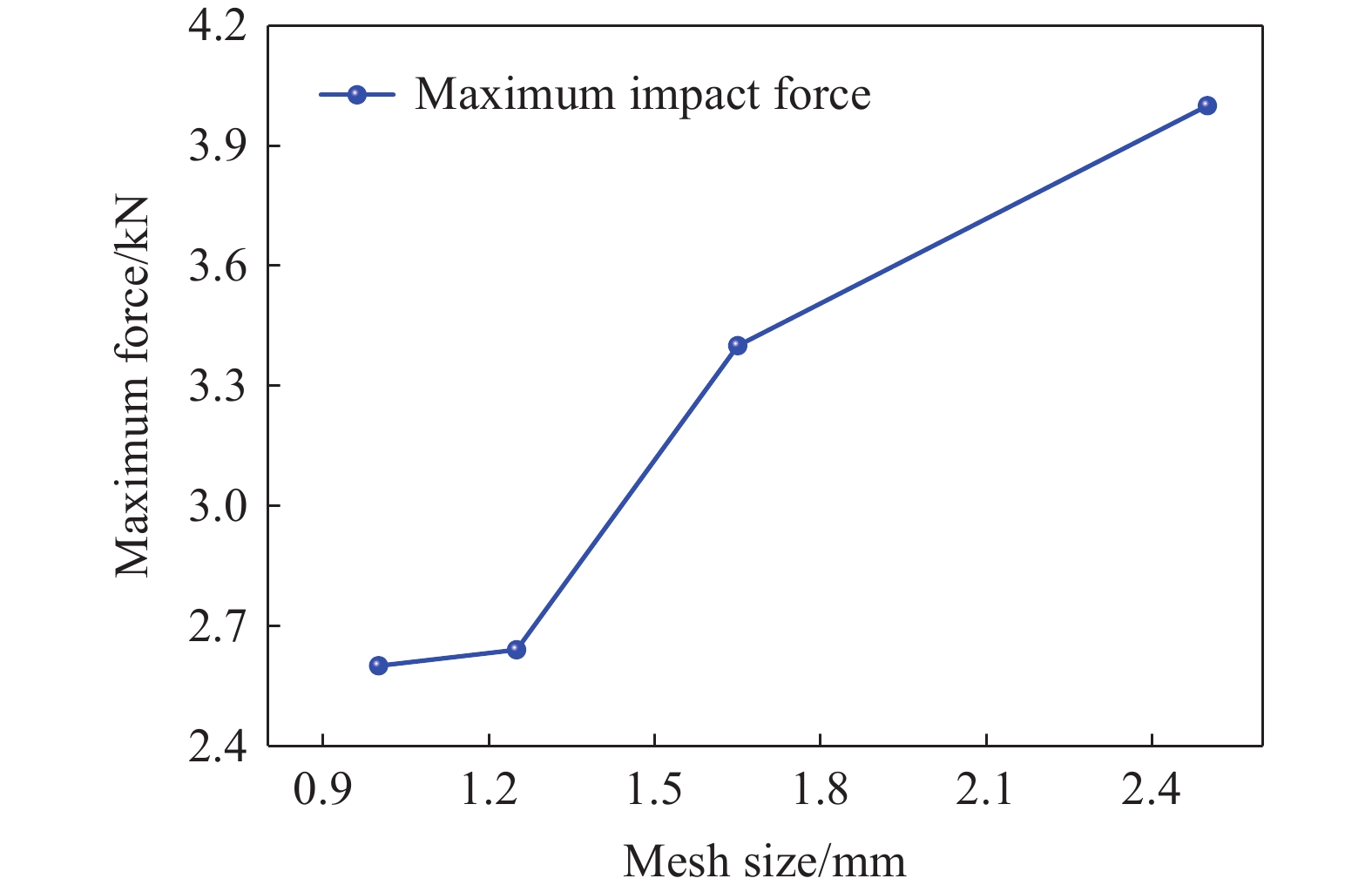
图 12 不同网格尺寸下的最大冲击力
Figure 12. Predicted maximum impact forces for different mesh sizes
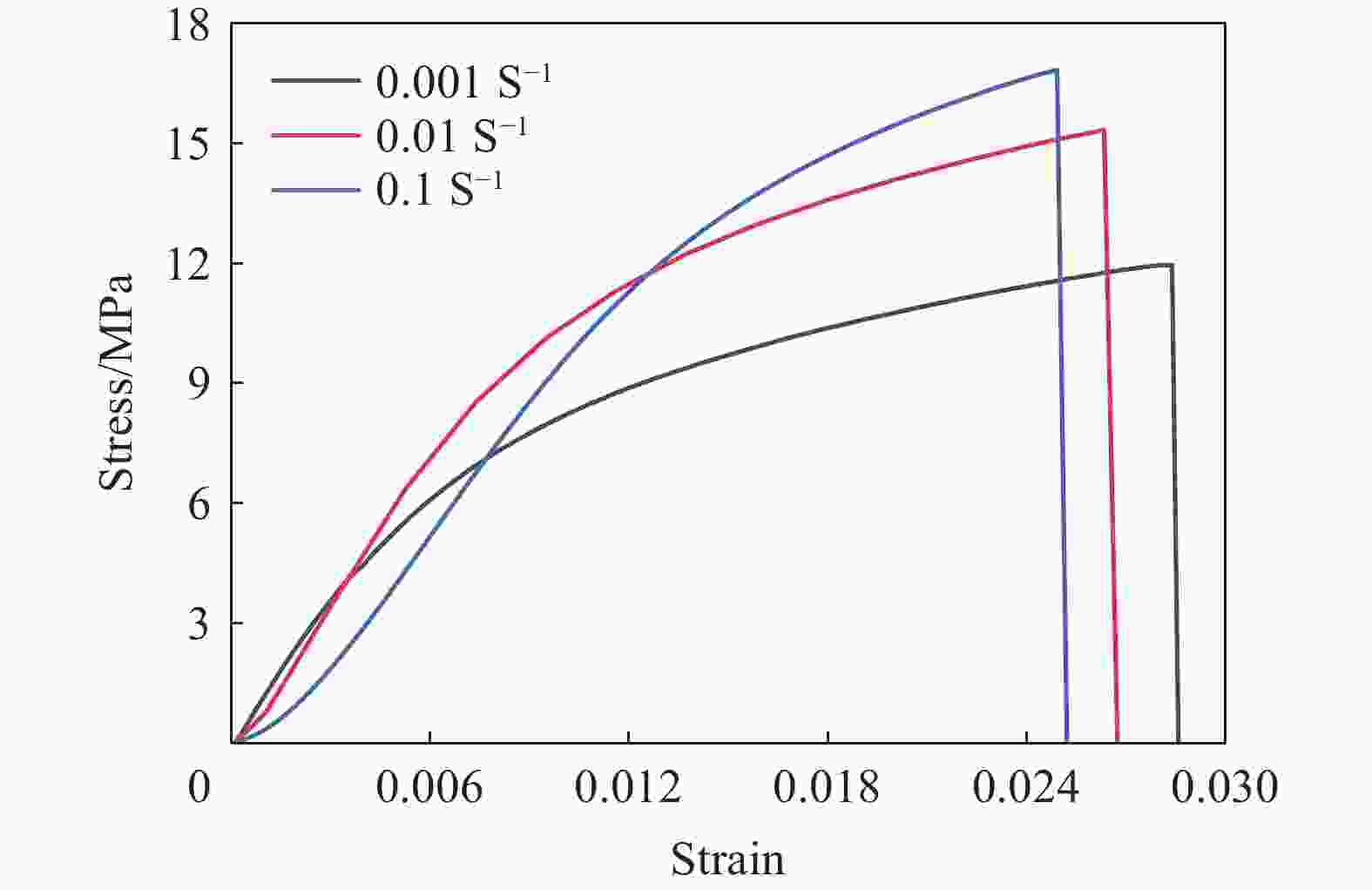
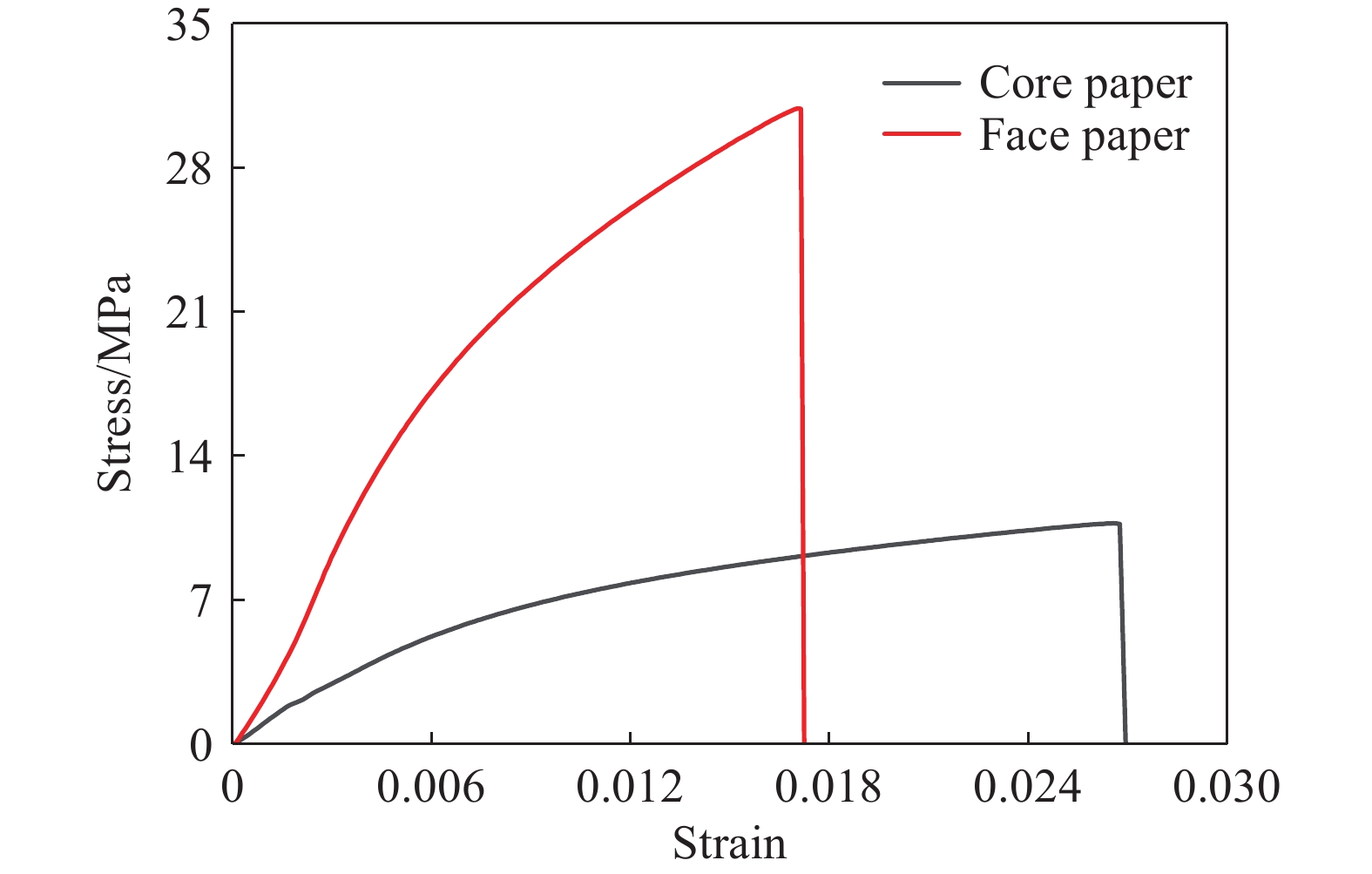
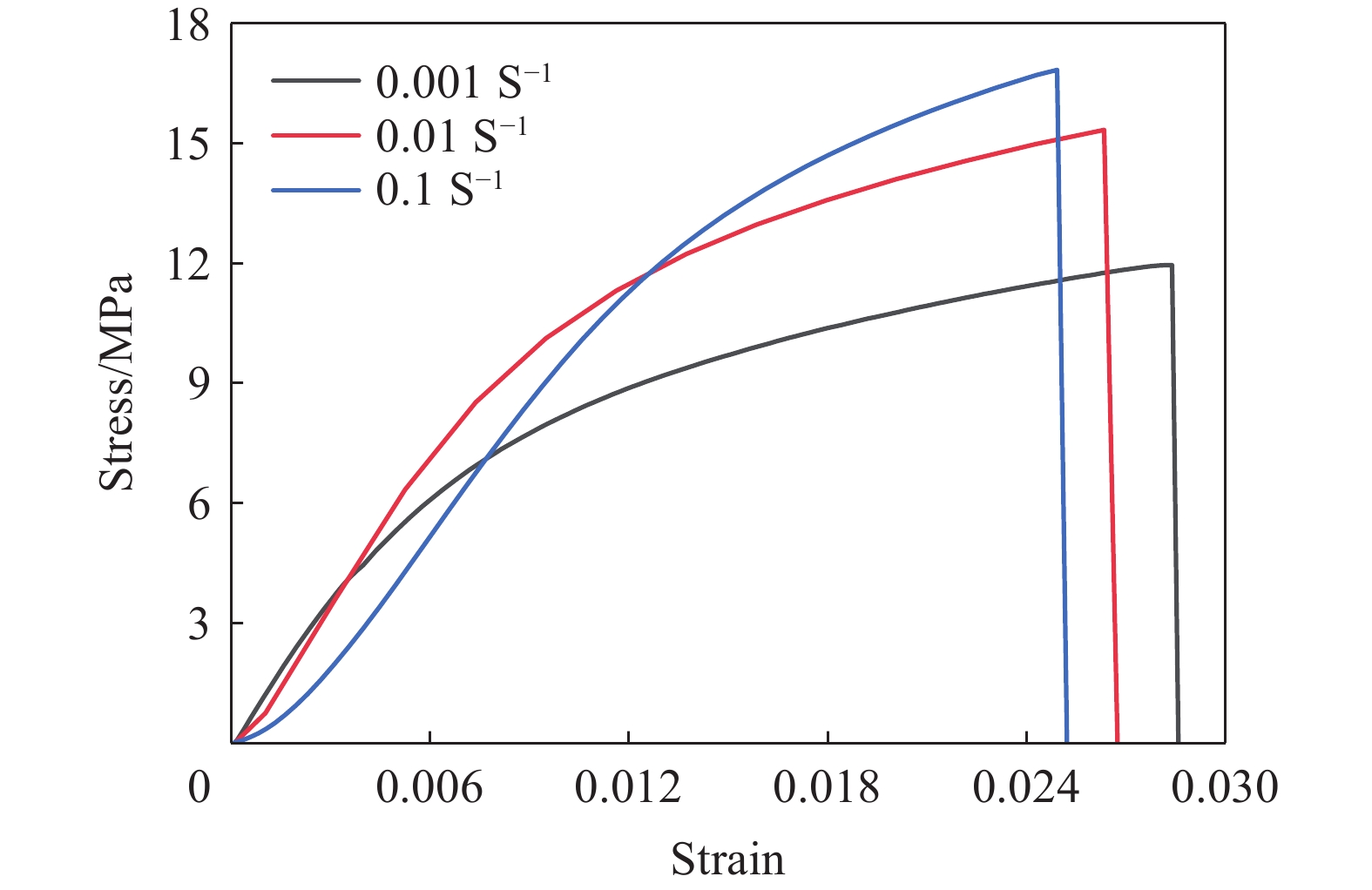
图 14 不同应变率下蜂窝芯纸应力应变曲线
Figure 14. Stress-strain curves of honeycomb core paper at various strain rates
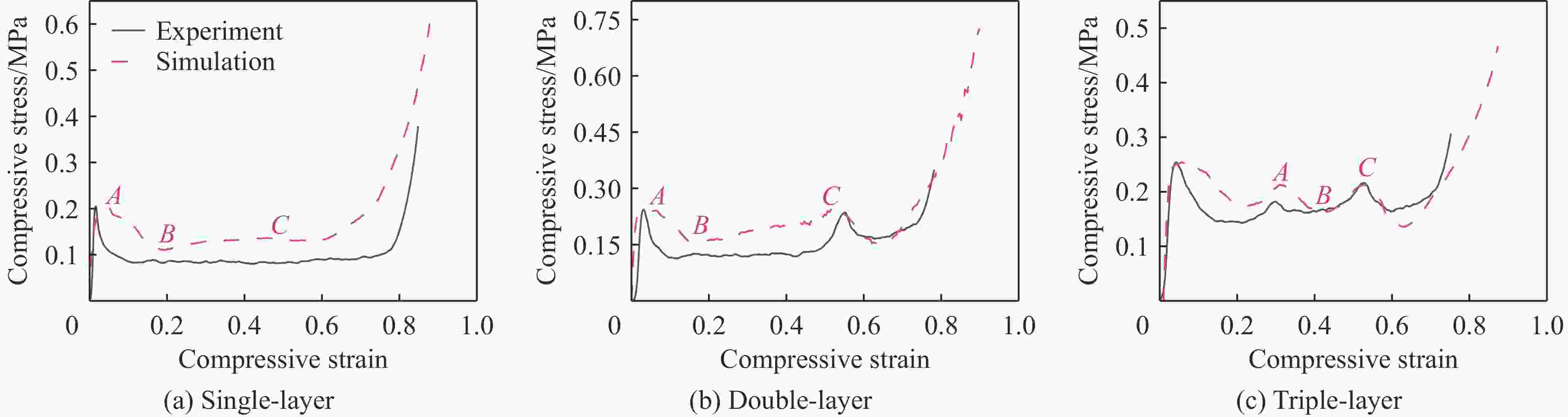
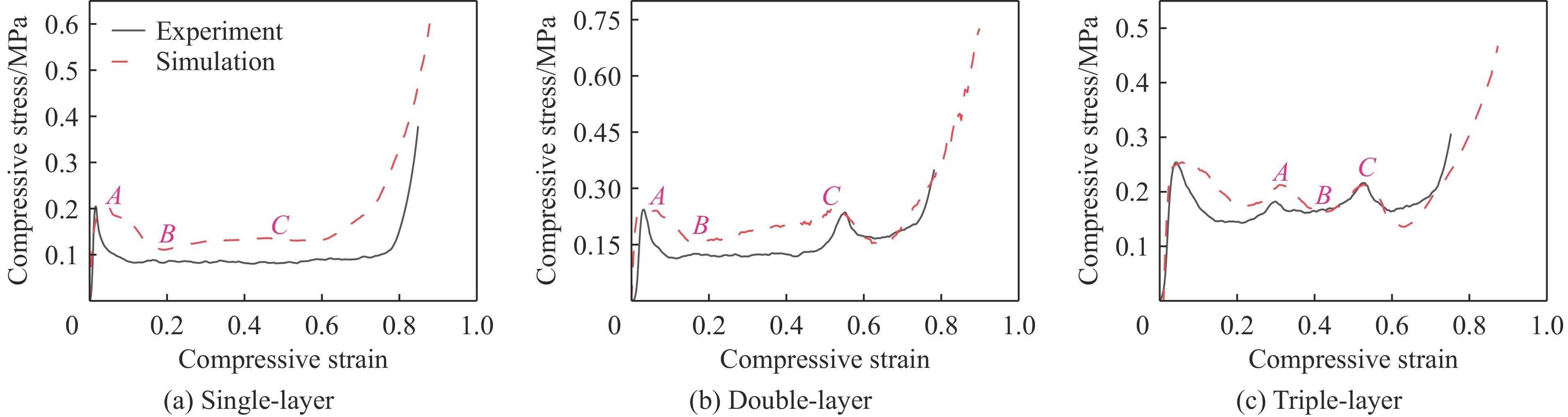
图 15 不同构型蜂窝压缩试验与模拟对比
Figure 15. Comparison of experimental and simulated results for different honeycomb configurations
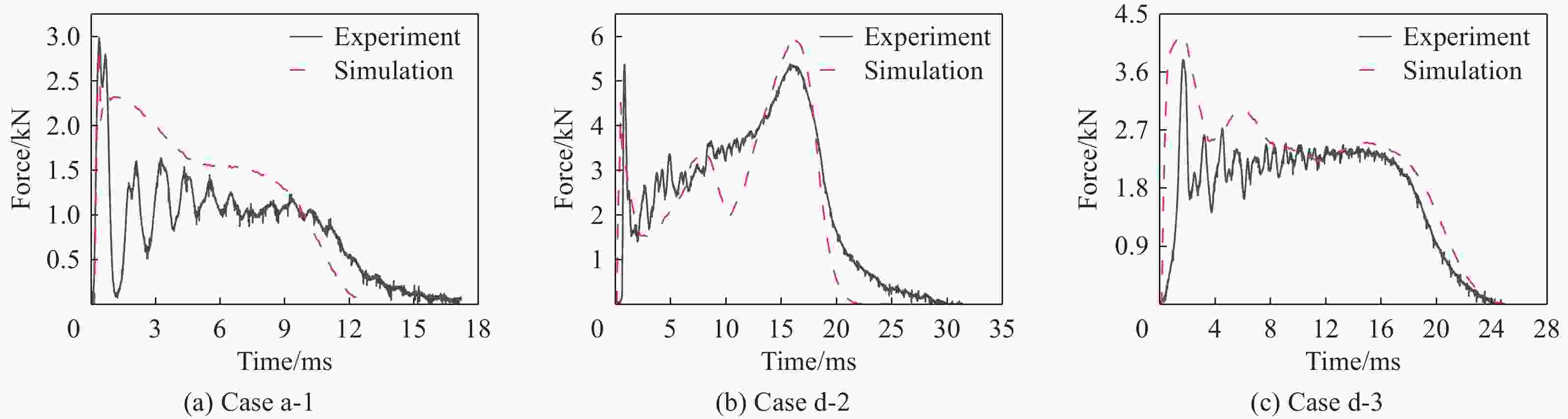
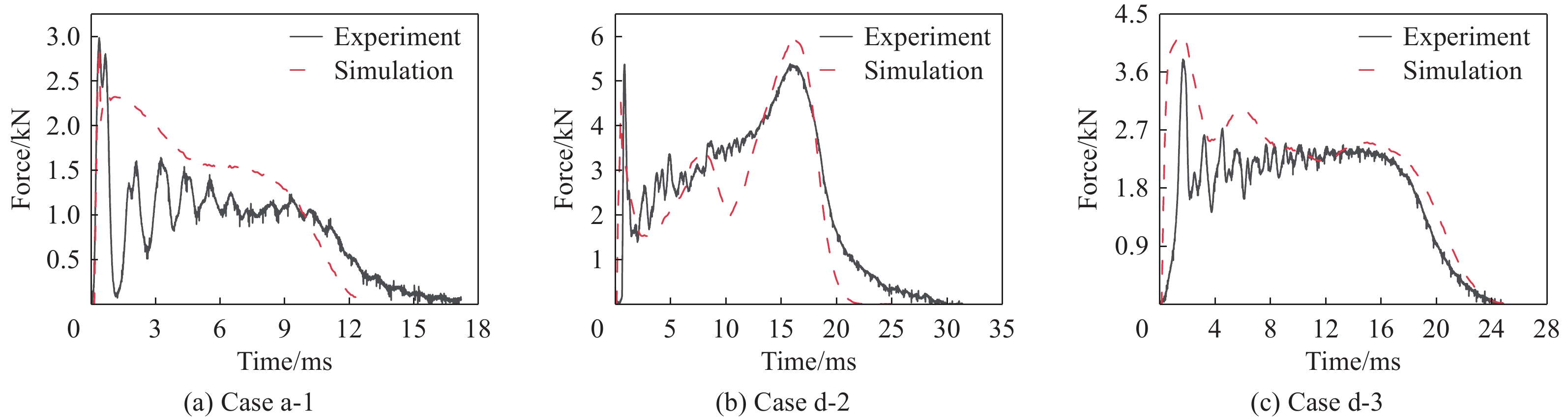
图 16 试验和模拟的力-时间对比
Figure 16. Comparison of experimental and simulated force-time histories

图 17 冲击试验与模拟的形貌结果对比
Figure 17. Comparison of experimental and simulated impact deformation modes
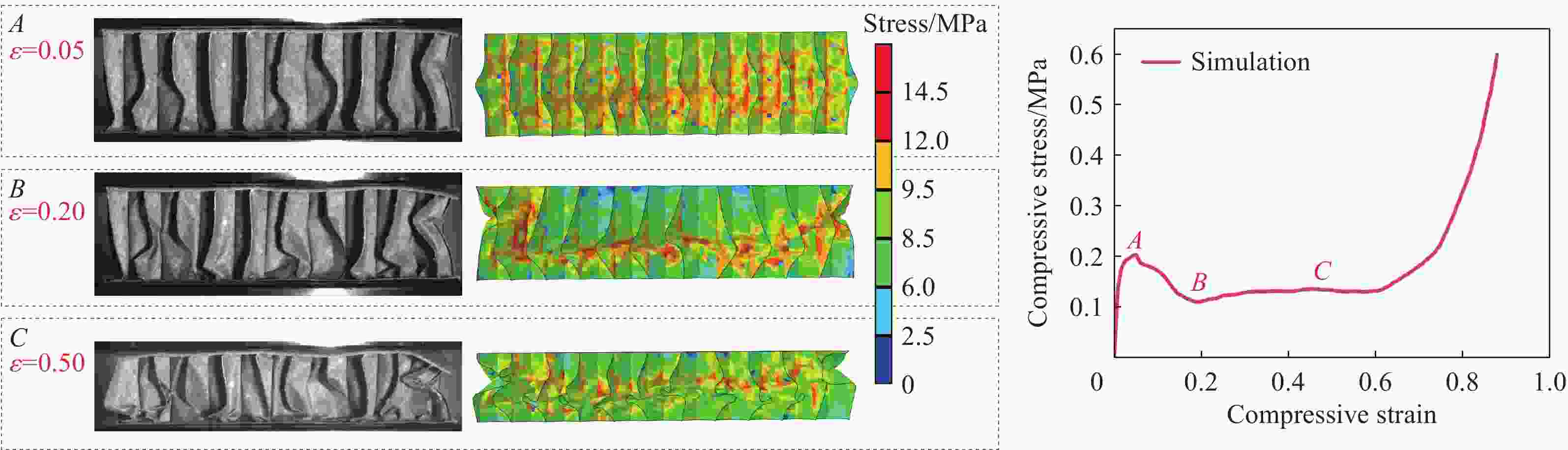
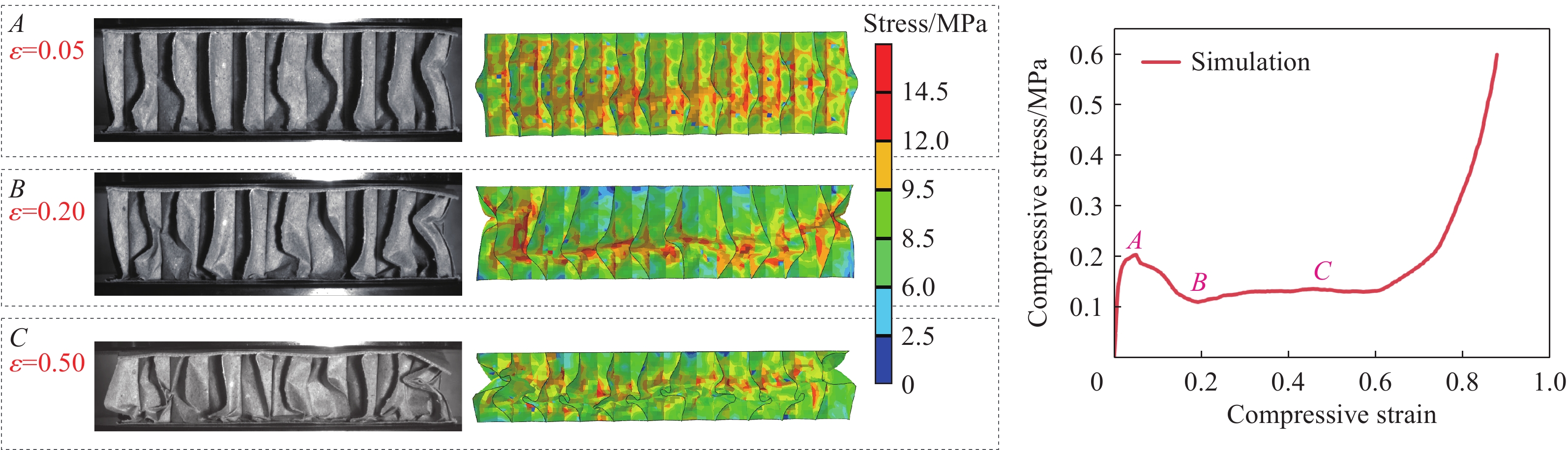
图 18 单层蜂窝变形的试验与模拟结果对比
Figure 18. Comparison of experimental and simulated deformation modes for single-layer honeycomb
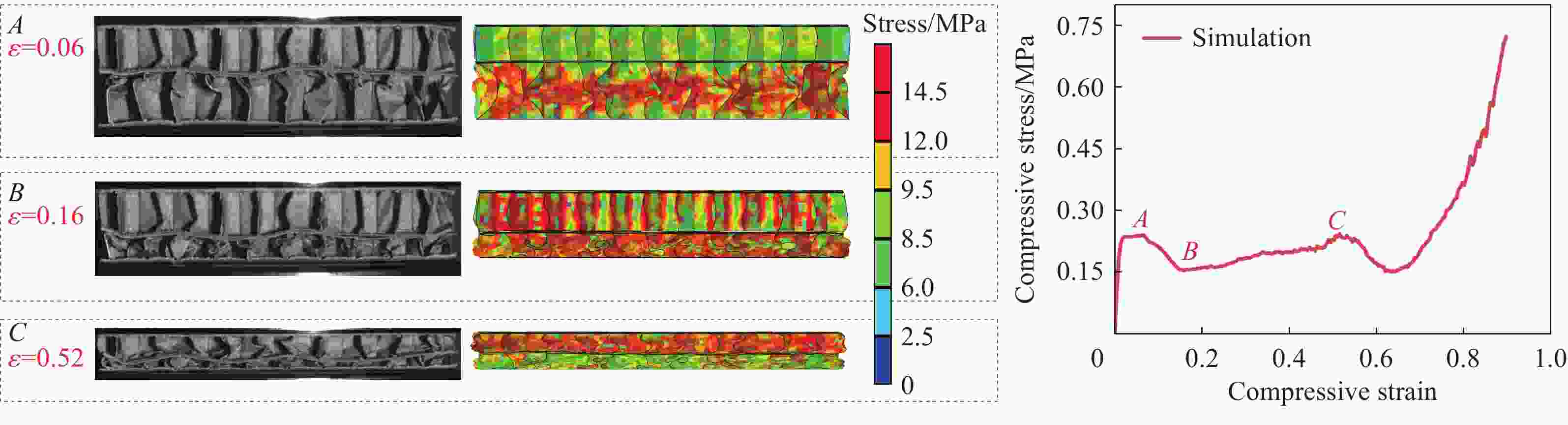
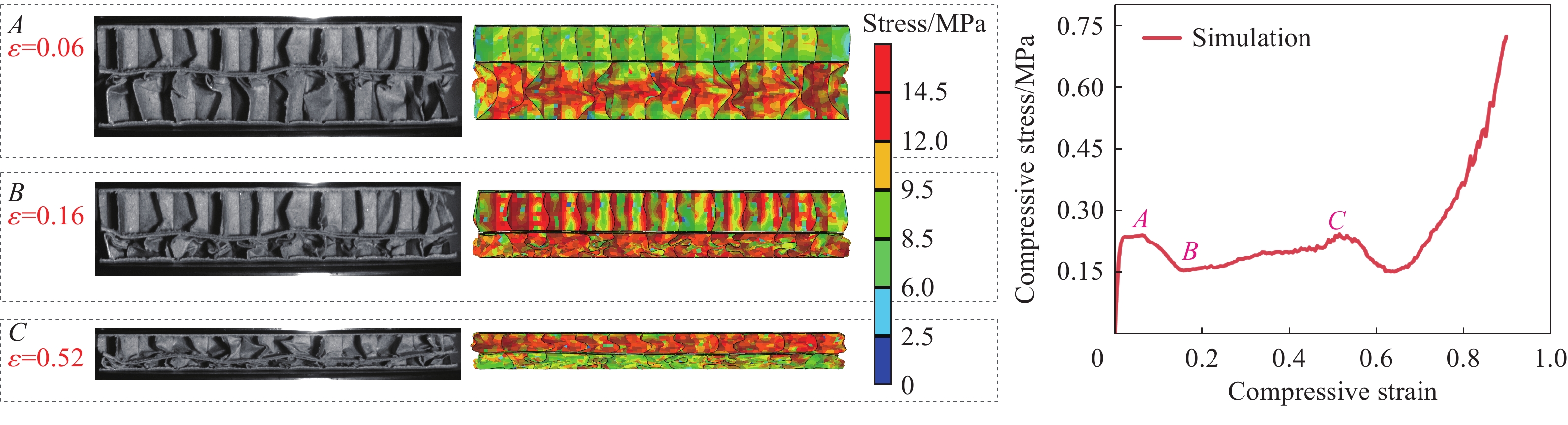
图 19 双层蜂窝变形的试验与模拟结果对比
Figure 19. Comparison of experimental and simulated deformation modes for double-layer honeycomb
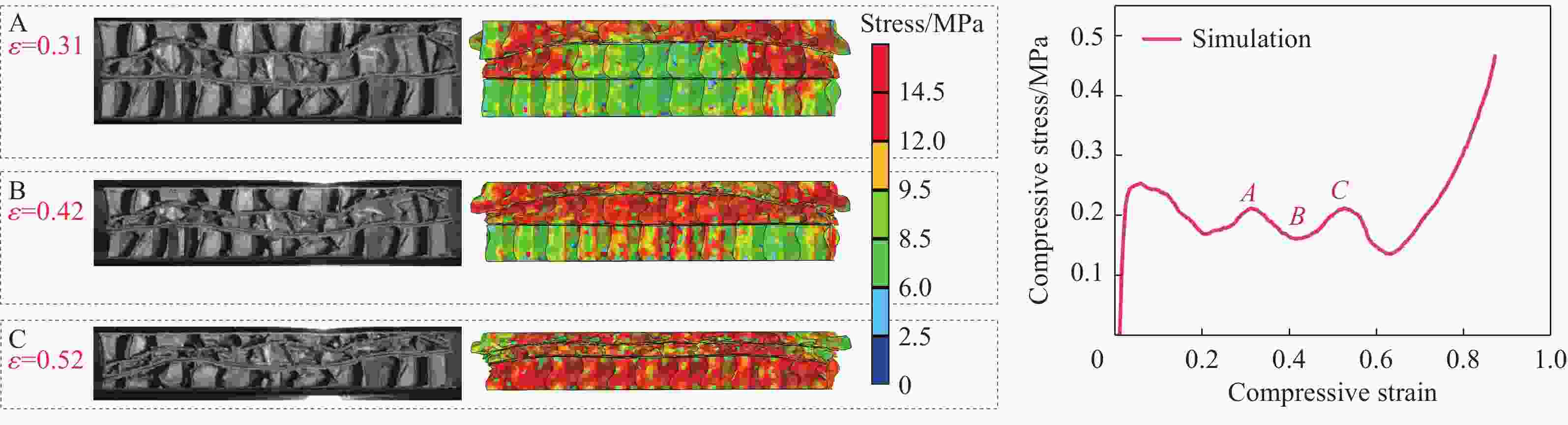
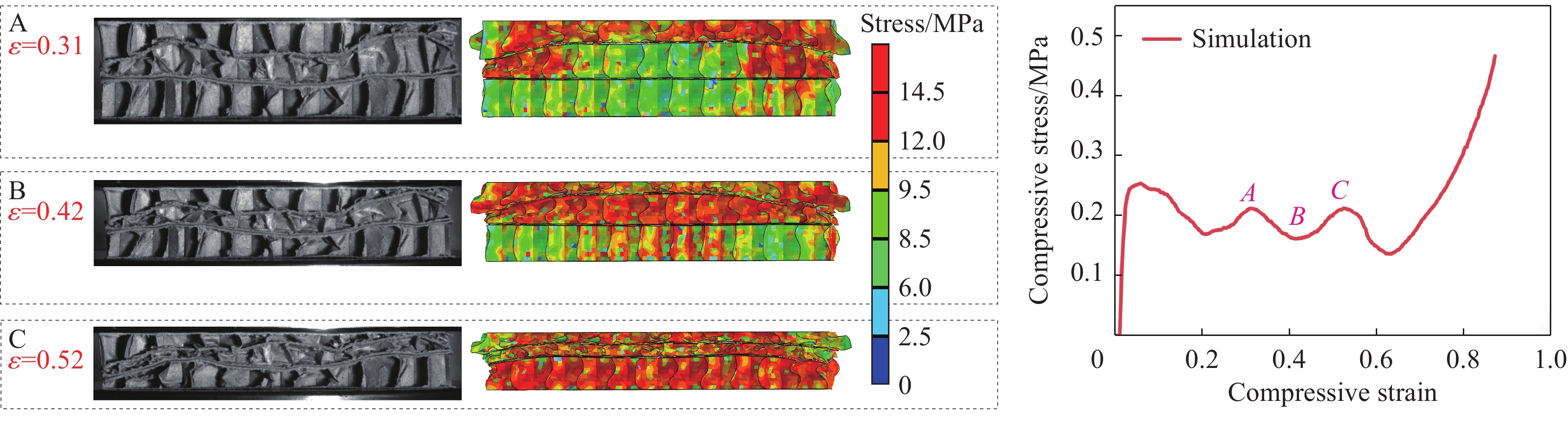
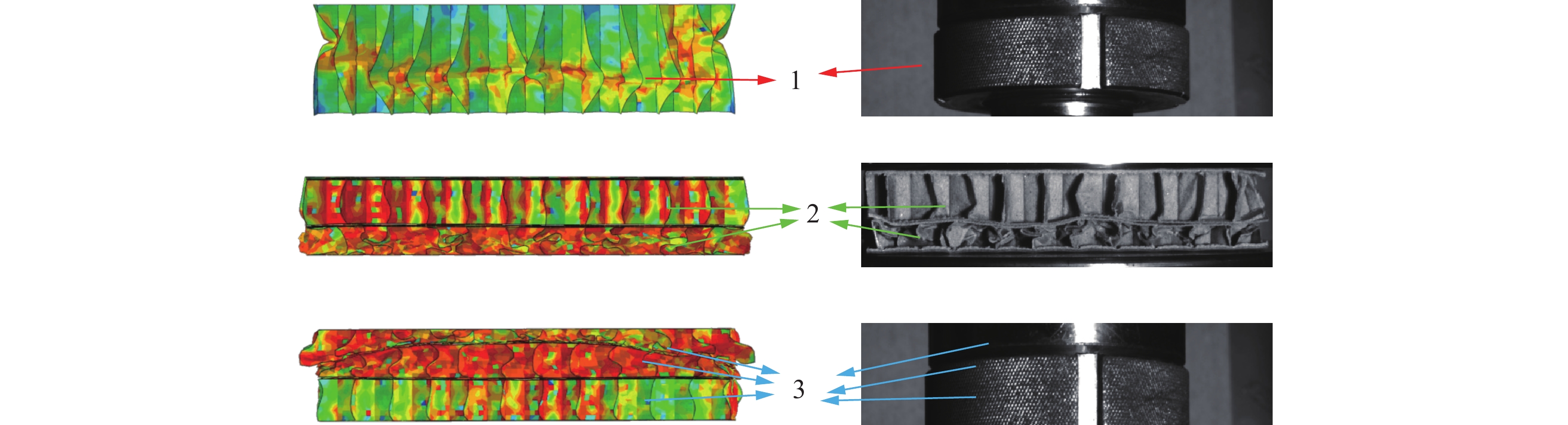
图 20 三层蜂窝变形的试验与模拟结果对比
Figure 20. Comparison of experimental and simulated deformation modes for triple-layer honeycomb
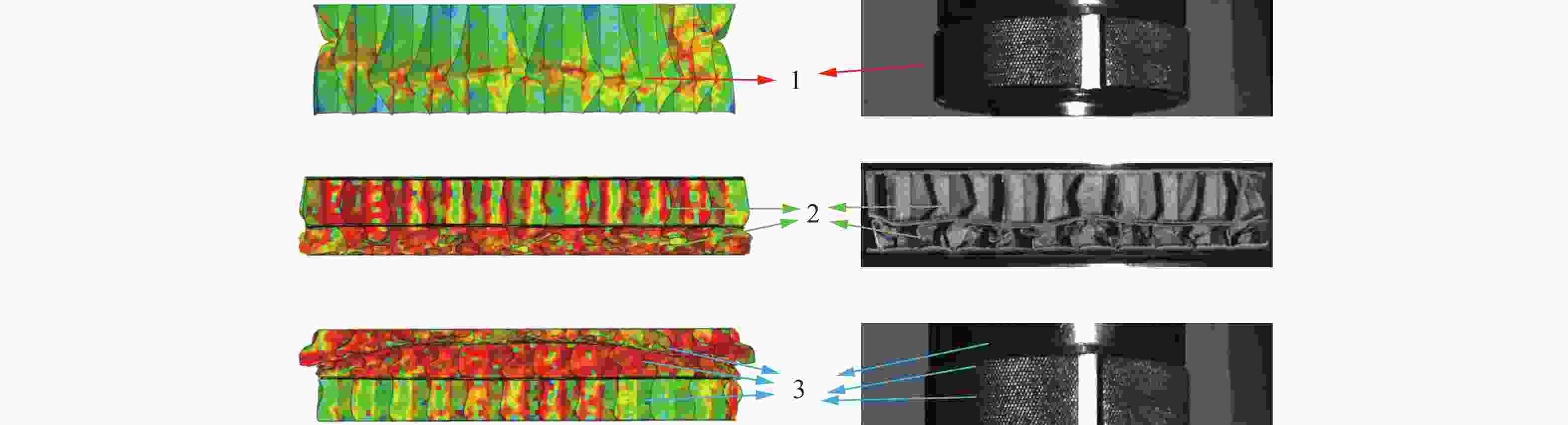
图 21 压缩过程中塑性铰个数对比
Figure 21. Comparison of the number of plastic hinges formed during compression
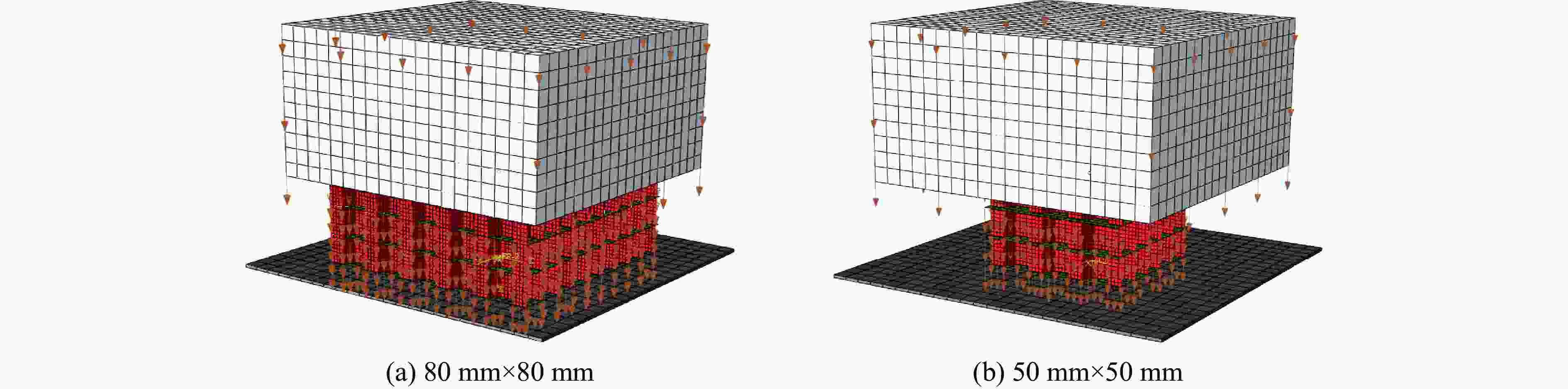
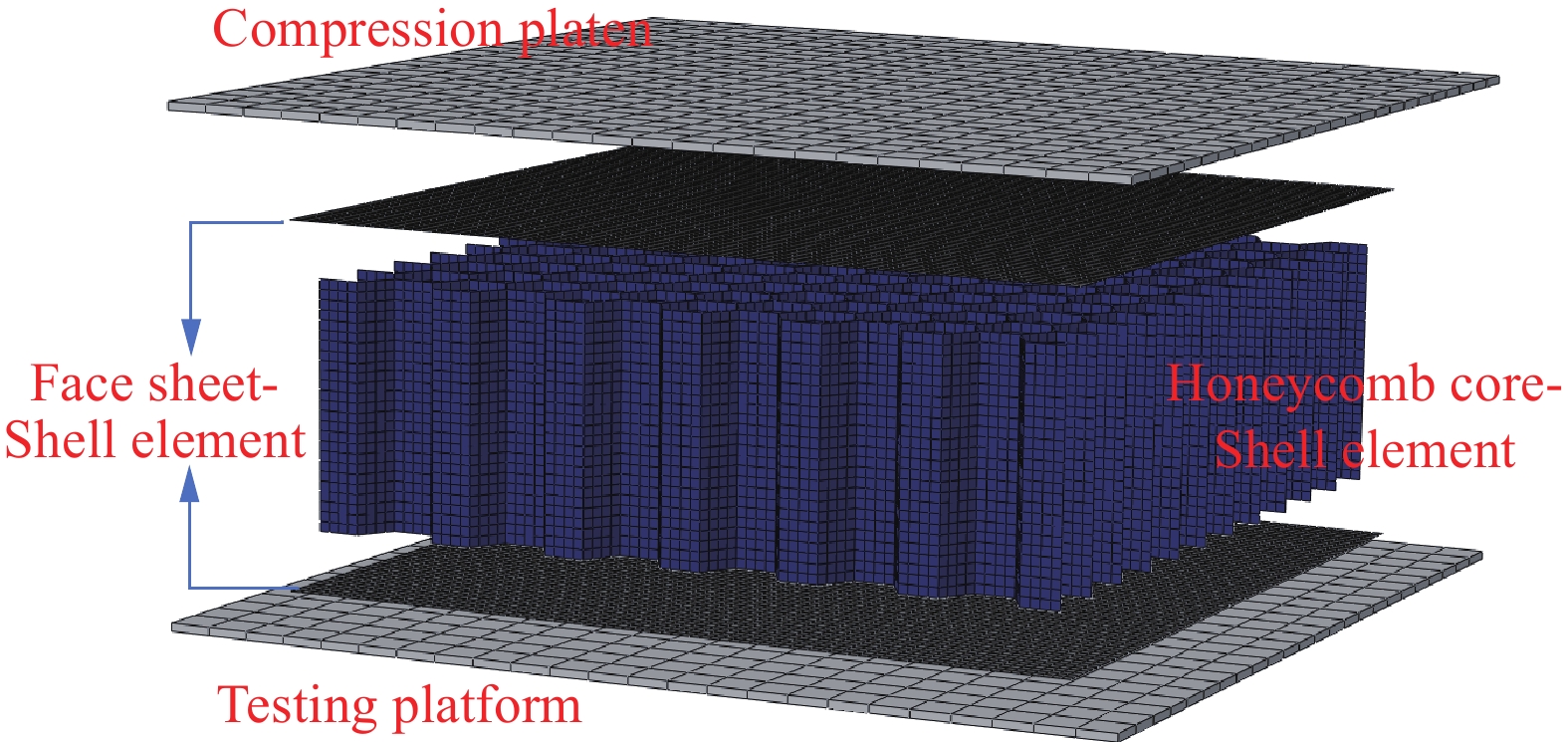
图 26 三层蜂窝包装结构的跌落模型
Figure 26. Drop test finite element model of the triple-layer honeycomb packaging structure
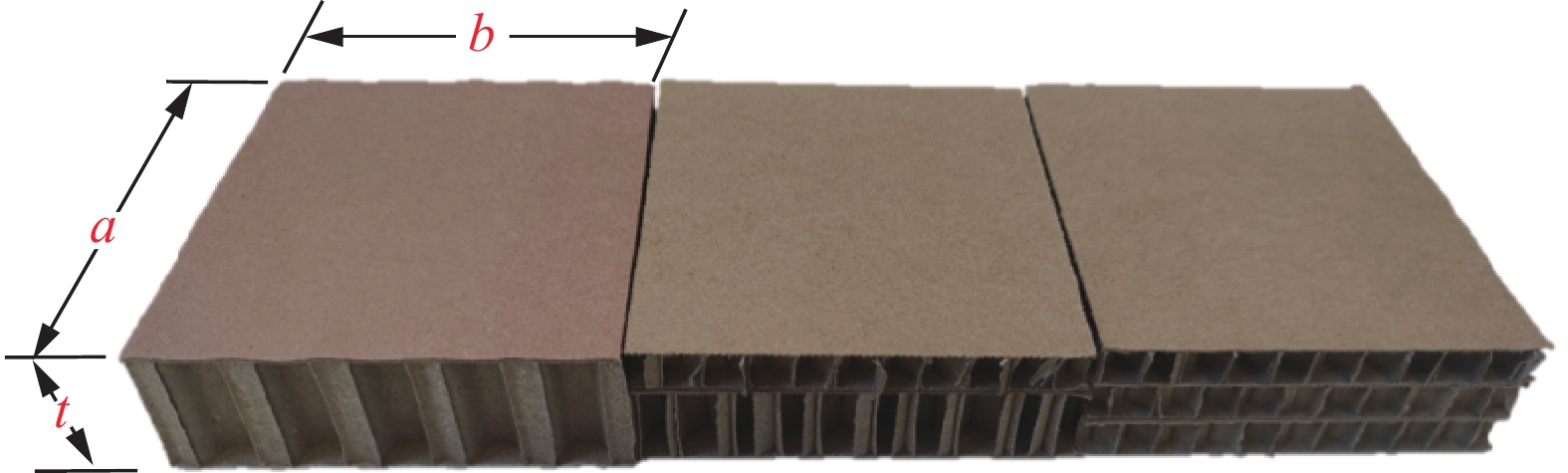
表 1 纸蜂窝结构信息
Table 1. Structural parameters of paper honeycombs
纸蜂窝结构 尺寸a×b×t/mm 构造/mm 单层纸蜂窝 100×100×30 30 双层纸蜂窝 100×100×30 10+20 三层纸蜂窝 100×100×30 10+10+10  下载: 导出CSV
表 2 纸张力学性能参数
Table 2. Mechanical properties of paper materials
定量/(g·m−2) 弹性模量/MPa 泊松比 断裂强度/MPa 蜂窝芯纸 120 798.707 0.32 12.58 蜂窝面纸 160 2 525.670 0.31 33.18 注:定量即为克重,定量=厚度×密度。
下载: 导出CSV
表 3 冲击试验工况表
Table 3. Matrix of impact test conditions
工况编号 冲击高度/mm 冲击能量/J a-1 350 23.7 a-2 23.7 a-3 23.7 b-1 350 36.6 b-2 36.6 b-3 36.6 c-1 350 53.8 c-2 53.8 c-3 53.8 d-1 350 71.1 d-2 71.1 d-3 71.1 e-1 350 / e-2 81.6 e-3 81.6
下载: 导出CSV
表 4 有限元模型材料属性
Table 4. Material properties of finite element model
模型部件 密度/
(kg·m−3)弹性模量/
GPa泊松比 屈服强度/
MPa蜂窝面纸 695 2.525 0.30 20.3 蜂窝芯纸(0.001 s−1) 520 0.800 0.32 7.3 蜂窝芯纸(50 s−1) 520 0.800 0.32 21.4 钢板 7 890 210.000 0.31 220.0
下载: 导出CSV
表 5 模拟与试验的结果对比
Table 5. Comparison between simulation and experimental results
纸蜂窝结构 峰值应力 致密应变 试验/MPa 模拟/MPa 误差/% 试验 模拟 误差/% 单层蜂窝 0.203 0.202 0.5 0.74 0.71 4 双层蜂窝 0.244 0.241 1.1 0.73 0.74 1.3 三层蜂窝 0.253 0.254 0.3 0.73 0.72 1.3
下载: 导出CSV
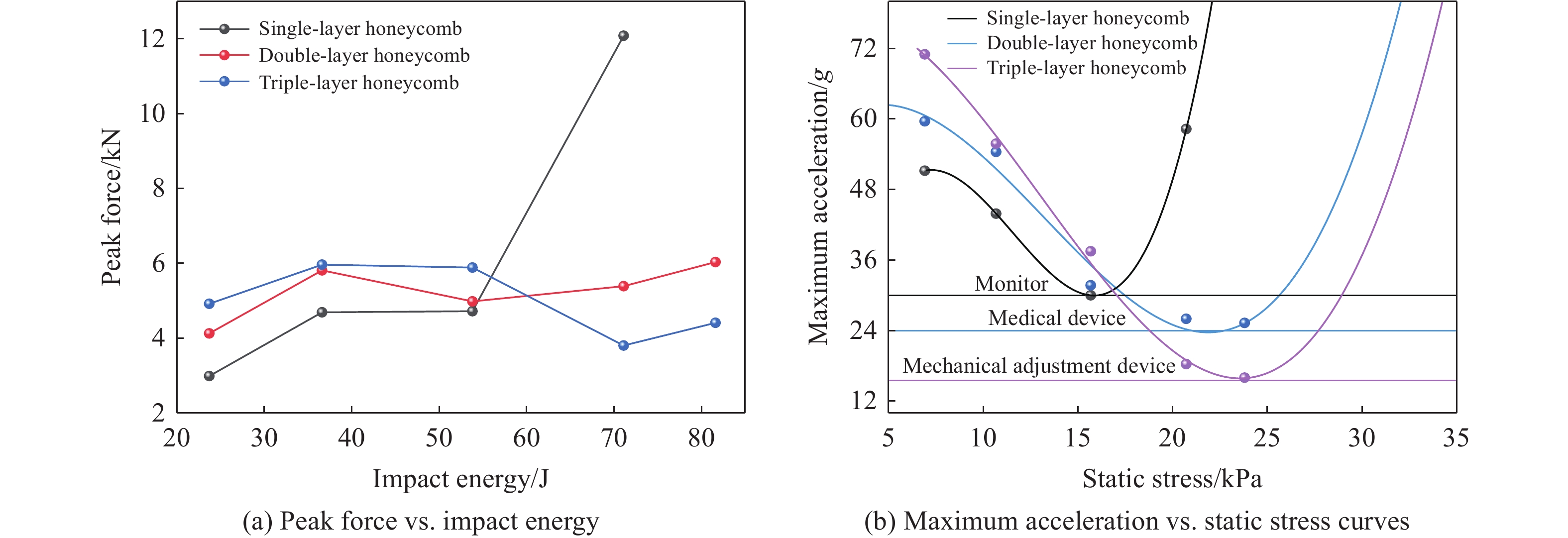
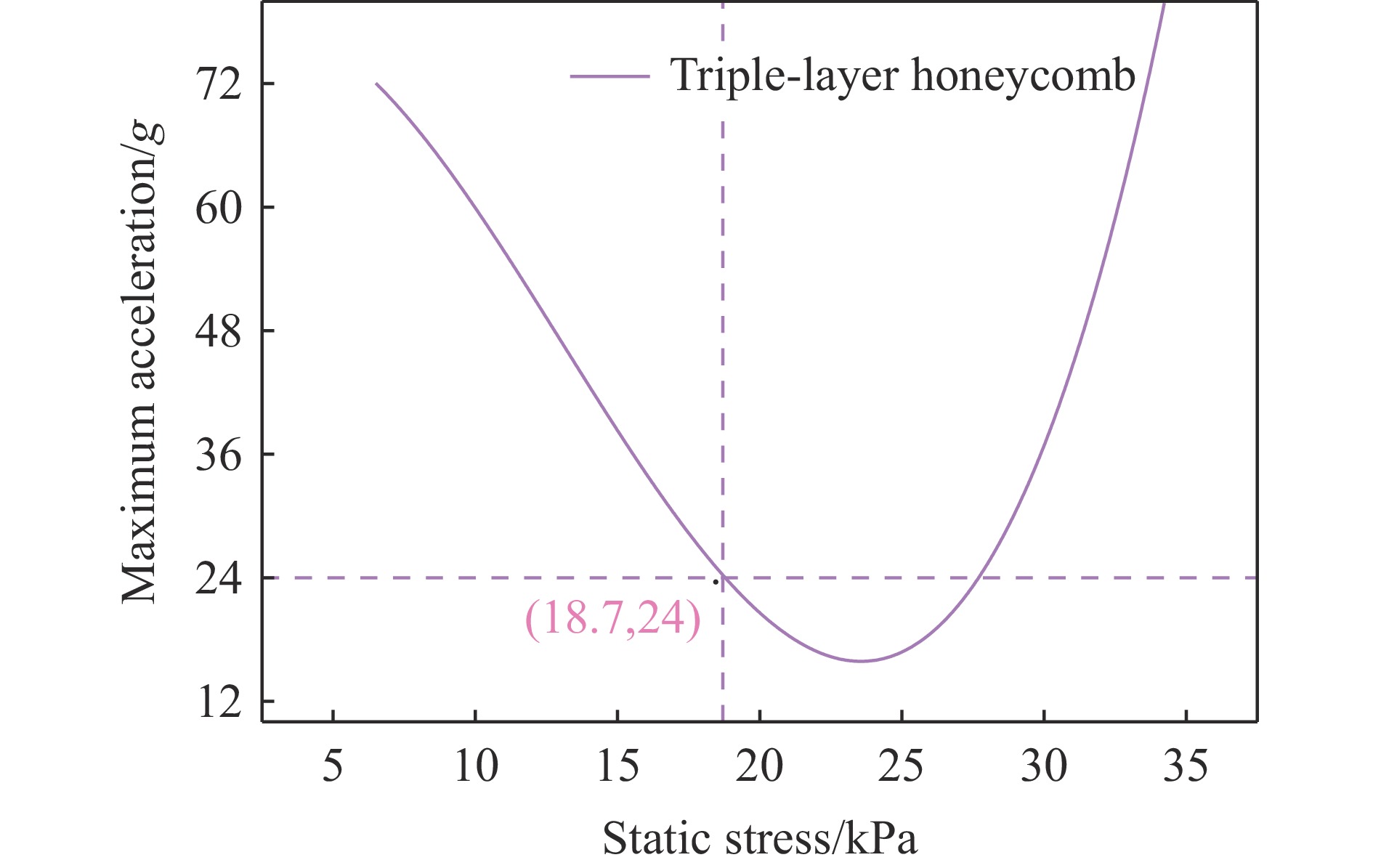
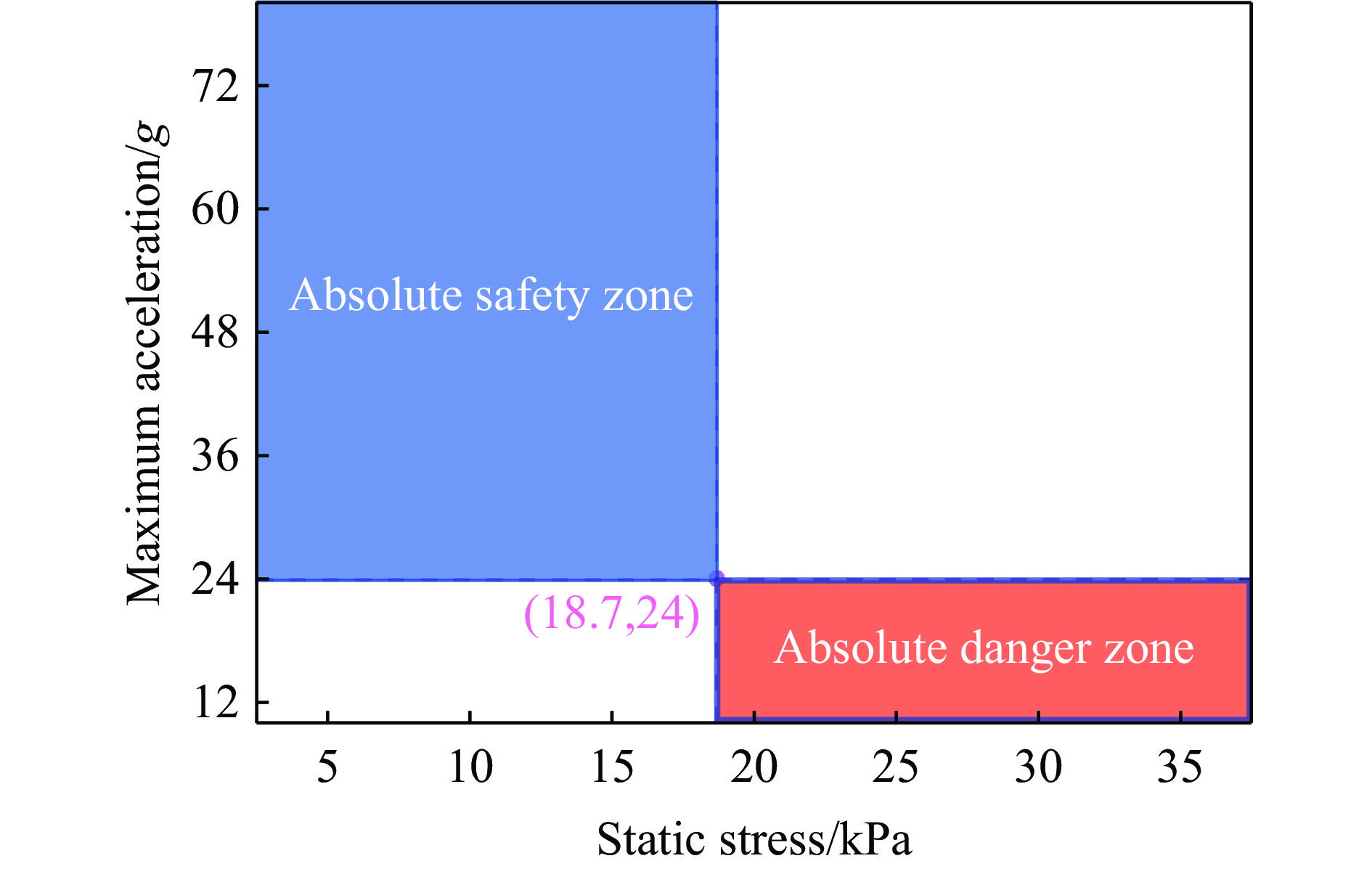
表 6 落锤试验最大加速度-静应力结果
Table 6. Results of maximum acceleration and static stress from drop weight tests
落锤质量/kg 静应力/kPa 最大加速度/g 单层纸蜂窝 双层纸蜂窝 三层纸蜂窝 单层纸蜂窝 双层纸蜂窝 三层纸蜂窝 6.92 6.78 6.78 6.78 51.2 59.6 71.0 10.68 10.47 10.47 10.47 43.9 54.4 55.8 15.68 15.37 15.37 15.37 30.0 31.7 37.5 20.72 20.30 20.30 20.30 58.3 26.0 18.3 23.80 23.30 23.30 23.30 25.3 16.0
下载: 导出CSV
-
[1] MAURYA D K, UPADHYAY C S, KUMARI P. A green light-weight material for packaging and impact resistant structures [J]. Industrial Crops and Products, 2024, 216: 118711. DOI: 10.1016/j.indcrop.2024.118711. [2] LI H F, WANG B. Green packaging materials design and efficient packaging with Internet of Things [J]. Sustainable Energy Technologies and Assessments, 20023, 58: 103186. DOI: 10.1016/j.seta.2023.103186. [3] BORDENAVE N, GRELIER S, Coma V. Hydrophobization and antimicrobial activity of chitosan and paper-based packaging material [J]. Biomacromolecules, 2010, 11(1): 88–96. DOI: 10.1021/bm9009528. [4] BHARDWAJ S, BHARDWAJ N K, NEGI Y S. Effect of degree of deacetylation of chitosan on its performance as surface application chemical for paper-based packaging [J]. Cellulose, 2020, 27(9): 5337–5352. DOI: 10.1007/s10570-020-03134-5. [5] 谢亚, 郭慧超, 牟信妮. 蜂窝纸箱替代瓦楞纸箱的可行性研究 [J]. 印刷与数字媒体技术研究, 2024(1): 92–98. DOI: 10.19370/j.cnki.cn10-1886/ts.2024.01.011.XIE Y, GUO H C, MU X N. Research on feasibility of replacing corrugated carton with honeycomb carton [J]. Printing and Digital Media Technology Study, 2024(1): 92–98. DOI: 10.19370/j.cnki.cn10-1886/ts.2024.01.011. [6] ZHANG Q, LIU H. On the dynamic response of porous functionally graded microbeam under moving load [J]. International Journal of Engineering Science, 2020, 153: 103317. DOI: 10.1016/j.ijengsci.2020.103317. [7] ZHANG J J, LU G X, YOU Z. Large deformation and energy absorption of additively manufactured auxetic materials and structures: a review [J]. Composites Part B: Engineering, 2020, 201: 108340. DOI: 10.1016/j.compositesb.2020.108340. [8] RADLOF W, BENZ C, SANDER M. Numerical and experimental investigations of additively manufactured lattice structures under quasi-static compression loading [J]. Material Design & Processing Communication, 2021, 3: e164. DOI: 10.1002/mdp2.164. [9] WANG Q S, LI Z H, ZHANG Y, et al. Ultra-low density architectured metamaterial with superior mechanical properties and energy absorption capability [J]. Composites Part B: Engineering, 2020, 202: 108379. DOI: 10.1016/j.compositesb.2020.108379. [10] POHL A, FONTANA M. The mechanical and thermal properties of corrugated paper honeycomb: Part 1 – Experimental investigation [J]. Nordic Pulp & Paper Research Journal, 2010, 25(4): 510–518. DOI: 10.3183/npprj-2010-25-04-p510-518. [11] ZHAO X, GAO Q, WANG L M, et al. Dynamic crushing of double-arrowed auxetic structure under impact loading [J]. Materials & Design, 2018, 160: 527–537. DOI: 10.1016/j.matdes.2018.09.041. [12] RUAN D, LU G, WANG B, et al. In-plane dynamic crushing of honeycombs—a finite element study [J]. International Journal of Impact Engineering, 2003, 28(2): 161–182. DOI: 10.1016/S0734-743X(02)00056-8. [13] ZHANG Y, LI Y G, GUO K L, et al. Dynamic mechanical behaviour and energy absorption of aluminium honeycomb sandwich panels under repeated impact loads [J]. Ocean Engineering, 2021, 219: 108344. DOI: 10.1016/j.oceaneng.2020.108344. [14] LIN L H, HU J J, LI D Y, et al. Research on dynamic response under the external impact of paper honeycomb sandwich board [J]. Materials, 2024, 17(8): 1856. DOI: 10.3390/ma17081856. [15] GUO H Y, ZHANG J X. Performance-oriented and deformation-constrained dual-topology metamaterial with high-stress uniformity and extraordinary plastic property [J]. Advanced Materials, 2025, 37(7): 2412064. DOI: 10.1002/adma.202412064. [16] WU X W, GUO H Y, ZHANG J X. Bi-surface induction in biomimetic multi-gradient foam-filled tubes with enhanced energy absorption: theory, experiment, and simulation [J]. Journal of Applied Mechanics, 2025, 92(5): 051010. DOI: 10.1115/1.4068061. [17] YUAN H, WU X W, ZHANG J X. Cutting failure behavior of foam core sandwich plates [J]. International Journal of Solids and Structures, 2024, 303: 113009. DOI: 10.1016/j.ijsolstr.2024.113009. [18] GUO H Y, ZHANG J X. Expansion of sandwich tubes with metal foam core under axial compression [J]. Journal of Applied Mechanics, 2023, 90(5): 051008. DOI: 10.1115/1.4056686. [19] MINDLIN R D. Dynamics of package cushioning [J]. Bell System Technical Journal, 1945, 24(3/4): 353–461. DOI: 10.1002/j.1538-7305.1945.tb00892.x. [20] NEWTON R E. Fragility assessment theory and test procedure [M]. Monterey: Monterey Research Laboratory, Inc. , 1968. [21] 曾克俭, 刘珊. 蜂窝纸板动态缓冲性能分析研究 [J]. 包装工程, 2014, 35(17): 15–18. DOI: 10.19554/j.cnki.1001-3563.2014.17.004.ZENG K J, LIU S. Analysis on dynamic cushioning property of honeycomb paperboard [J]. Packaging Engineering, 2014, 35(17): 15–18. DOI: 10.19554/j.cnki.1001-3563.2014.17.004. [22] 滑广军, 谢勇, 李凤玲. 组合缓冲包装衬垫的缓冲性能研究 [J]. 包装工程, 2016, 37(17): 108–111. DOI: 10.19554/j.cnki.1001-3563.2016.17.023.HUA G J, XIE Y, LI F L. Cushioning property of combination packaging cushion [J]. Packaging Engineering, 2016, 37(17): 108–111. DOI: 10.19554/j.cnki.1001-3563.2016.17.023. [23] 罗瑜莹, 肖生苓, 李琛, 等. 纤维多孔缓冲包装材料泡孔参数与其力学性能的关系 [J]. 林业科学, 2017, 53(5): 116–124. DOI: 10.11707/j.1001-7488.20170514.LUO Y Y, XIAO S L, LI C, et al. Relationships between bubble parameters and mechanical properties of fiber porous cushioning packaging material [J]. Scientia Silvae Sinicae, 2017, 53(5): 116–124. DOI: 10.11707/j.1001-7488.20170514. [24] HU J F, HUANG Y Y, GE R Y, et al. Out-of-plane compression performance of unidirectionally arrayed short fiber reinforced honeycomb structures: experimental and numerical analysis [J]. Composite Structures, 2026, 378: 119935. DOI: 10.1016/j.compstruct.2025.119935. [25] 马昊, 陈美多, 袁良柱, 等. 中等应变率下纸蜂窝结构的力学性能研究 [J]. 高压物理学报, 2024, 38(4): 044104. DOI: 10.11858/gywlxb.20240701.MA H, CHEN M D, YUAN L Z, et al. Study on mechanical properties of paper honeycomb structure at medium strain rates [J]. Chinese Journal of High Pressure Physics, 2024, 38(4): 044104. DOI: 10.11858/gywlxb.20240701. [26] BURGESS G. Generation of cushion curves from one shock pulse [J]. Packaging Technology and Science, 1994, 7(4): 169–173. DOI: 10.1002/pts.2770070403. -





计量
- 文章访问数: 241
- HTML全文浏览量: 40
- PDF下载量: 98
- 被引次数: 0