



Explosion pressure evolution of ammonia–hydrogen premixed gas in a large length-to-diameter end-vented long tube with different vent diameters and a modified NFPA 68 model
-
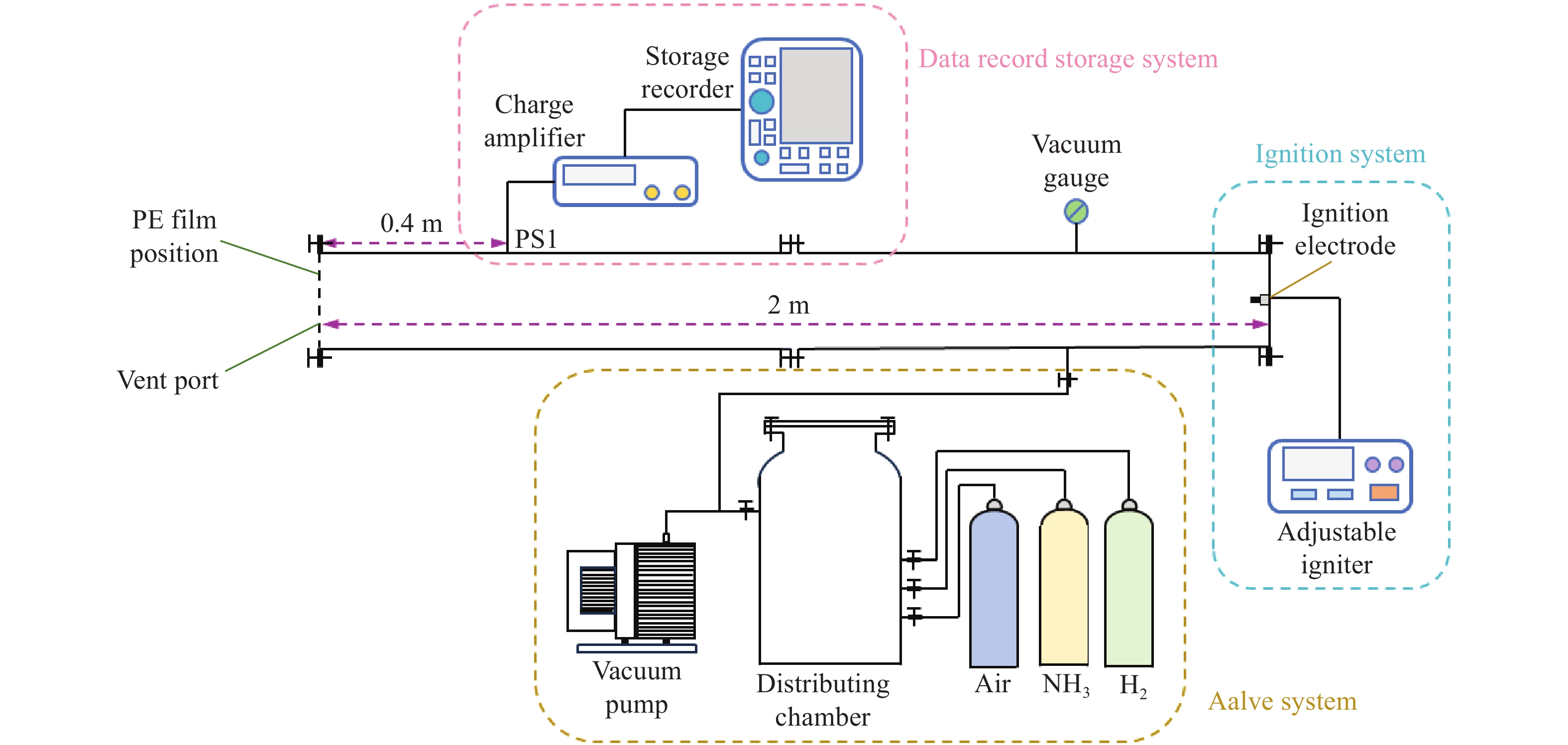
摘要: 为研究大长径比管道内氨氢预混气体泄爆过程中泄爆口径对爆炸压力的影响规律,搭建了一套总长为2 m的不锈钢管道实验装置,采用3种孔径$ D $(120、80和40 mm)的空心法兰和泄爆膜组成泄放装置,对应的泄放比$ \theta $分别为100%、44.4%和11.1%。在近似标准状态下,当量比$ \mathit{\Phi } $固定为0.8,掺氨量$ \varphi $为30%~70%,记录管内压力随时间的变化过程,获得破膜压力pb、泄爆压力pout和外部二次爆炸压力pext等特征参数,分析$ \varphi $与泄爆口径$ D $对压力演化的耦合作用,并在此基础上采用NFPA(national fire protection association) 68标准计算理论最大泄爆压力pred,NFPA 68,将其与实验结果进行对比并提出修正模型。结果表明,在完全泄放条件下,随着$ \varphi $增加,pb仅略有下降,而pout和pext显著降低,维稳平台和类维稳平台的持续时间tb单调增长,高$ \varphi $工况下外部二次爆炸被明显抑制。$ \theta $减小时,管内压力时程曲线振荡增强,tb延长,pb与pout升高,低$ \varphi $时pext随$ \theta $减少而减少,高$ \varphi $时pext随$ \theta $减少而增加。对于本研究所采用的大长径比端部泄爆管道,NFPA 68标准在大口径泄爆条件下的理论值与实验值的最大泄爆压力pred相近,而对中、小口径存在明显高估,偏差主要取决于$ \theta $而非$ \varphi $。通过建立的考虑几何泄放比Kv和静态动作压力pstat的修正模型修正后,修正后的最大泄爆压力pred,corr与pred之比大多控制在1~4范围内,有效减小不同泄爆口径下理论最大泄爆压力与实验值之间的偏差。本研究为氨氢预混气体长管泄爆提供了理论依据和可供参考的经验公式,并为氨氢预混气体大长径比端部泄爆装置的工程设计与安全评估提供参考。Abstract: Vented deflagrations in ducts with a high length-to-diameter ratio are frequently encountered in hydrogen–ammonia energy systems, yet the pressure evolution and the applicability of engineering venting standards remain insufficiently validated for “large length-to-diameter ratio plus small end vent” configurations. An experimental study was therefore conducted to quantify how end-vent diameter affected the internal and external pressure characteristics of ammonia–hydrogen premixed gas in a long tube, and to improve the prediction accuracy of the NFPA (national fire protection association) standard 68, which standard on explosion protection by deflagration venting. Experiments were carried out in a stainless-steel duct system with a total length of 2 m, one end closed and the other end equipped with an end vent sealed by a thin vent membrane. Three circular vent diameters (120, 80, and 40 mm) were tested, corresponding to venting ratios of 100%, 44.4%, and 11.1%, respectively. Tests were performed under near-ambient initial conditions at a fixed equivalence ratio of 0.8, while the ammonia fraction in the fuel (ammonia plus hydrogen) was varied from 30% to 70%. Gas mixtures were prepared by partial-pressure charging after evacuating the mixing vessel, followed by sufficient standing time to promote homogeneity. A pressure transducer installed near the downstream region recorded the pressure–time history. For each condition, 3–4 repeated runs were conducted; representative traces were selected based on proximity to the mean of characteristic parameters. From each pressure trace, the membrane burst pressure, the internal venting peak pressure, the peak pressure associated with an external secondary explosion, and the duration of the pressure plateau or quasi-plateau were extracted. The maximum reduced explosion pressure was also calculated using NFPA 68 and compared against measurements; a correction correlation was then developed by incorporating the geometric venting ratio and the static activation pressure of the venting device. Under full venting, pressure histories exhibited a typical three-peak structure corresponding to membrane rupture, internal venting peak, and external secondary explosion peak. Increasing the ammonia fraction caused only minor changes in burst pressure but markedly reduced both the internal venting peak and the external secondary-explosion peak, while extending the plateau or quasi-plateau duration; at high ammonia fractions, the external secondary explosion was strongly suppressed. Decreasing the vent diameter intensified pressure oscillations, prolonged the time to membrane rupture, and generally increased both burst pressure and internal venting peak pressure; the external peak showed a vent-size-dependent trend that differed between low- and high- ammonia regimes. NFPA 68 predictions were close to measurements for the largest vent but showed systematic overestimation for medium and small vents; the deviation was governed mainly by vent geometry rather than mixture composition. For the investigated duct (length-to-diameter ratio about 16.7) with end venting, the overestimation reached approximately 4–8 times for the medium vent and about 30–80 times for the small vent. A correction model incorporating geometric venting ratio and static activation pressure reduced the discrepancy substantially, with the corrected-to-measured maximum reduced explosion pressure ratio mostly constrained within about 1–4.3. These findings provide experimentally grounded guidance and a practical correlation for vent design and safety evaluation of end-vented long-duct systems using ammonia–hydrogen premixed fuels.
-
Key words:
- ammonia–hydrogen premixed gas /
- vent diameters /
- explosion overpressure /
- NFPA 68
-
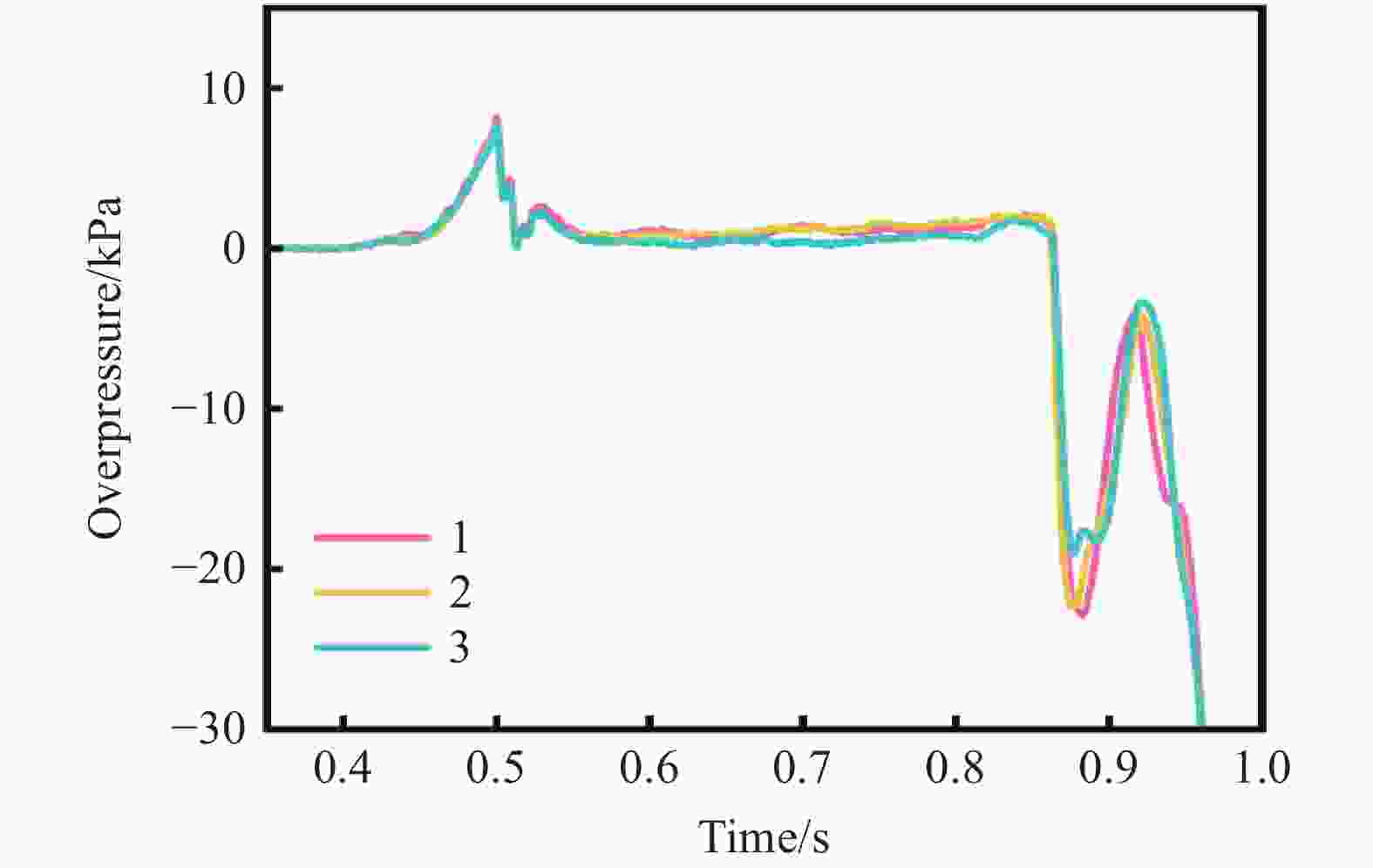
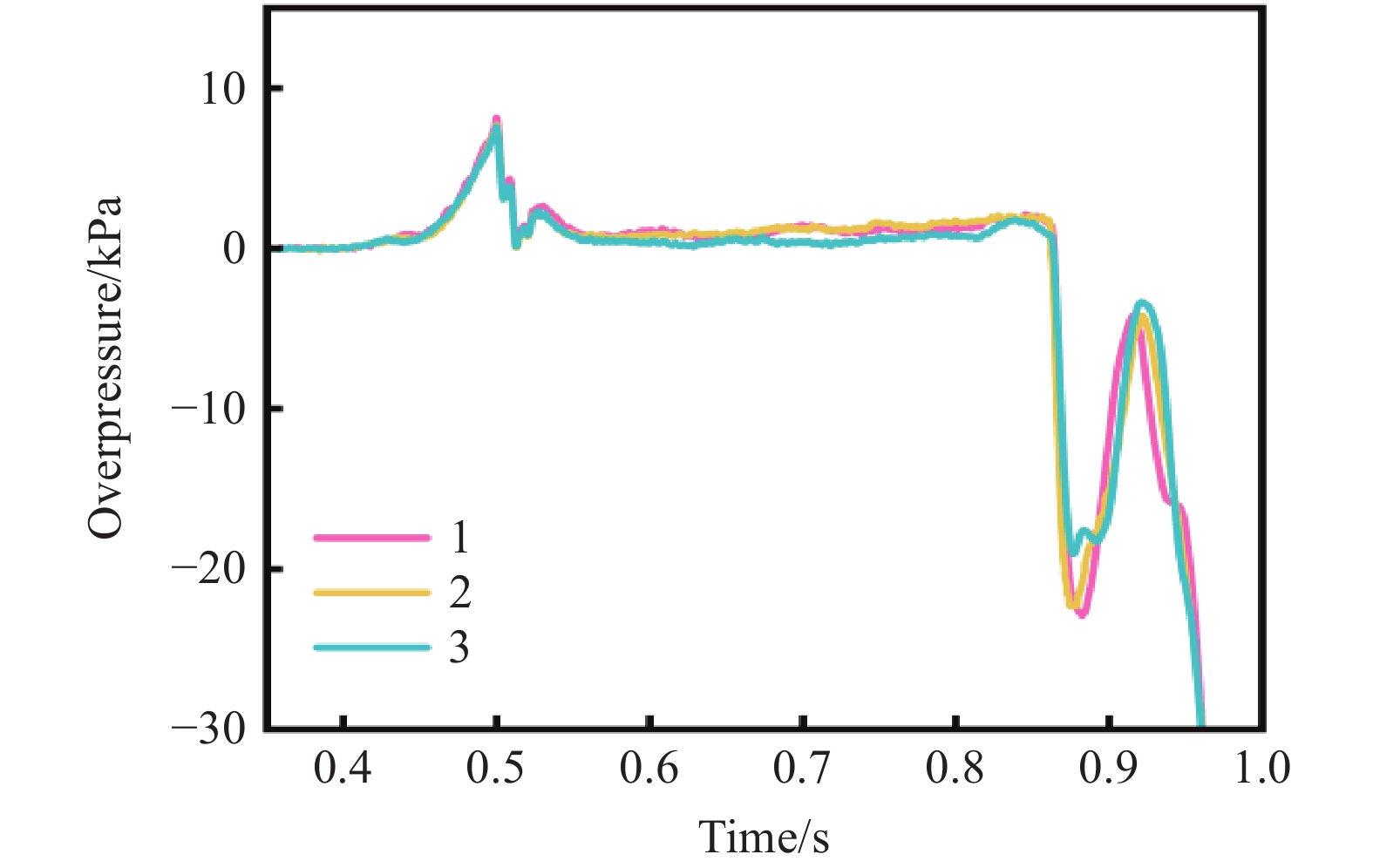
图 2 典型工况下重复试验压力历程对比
Figure 2. Comparison of pressure–time histories from repeated tests under a representative condition
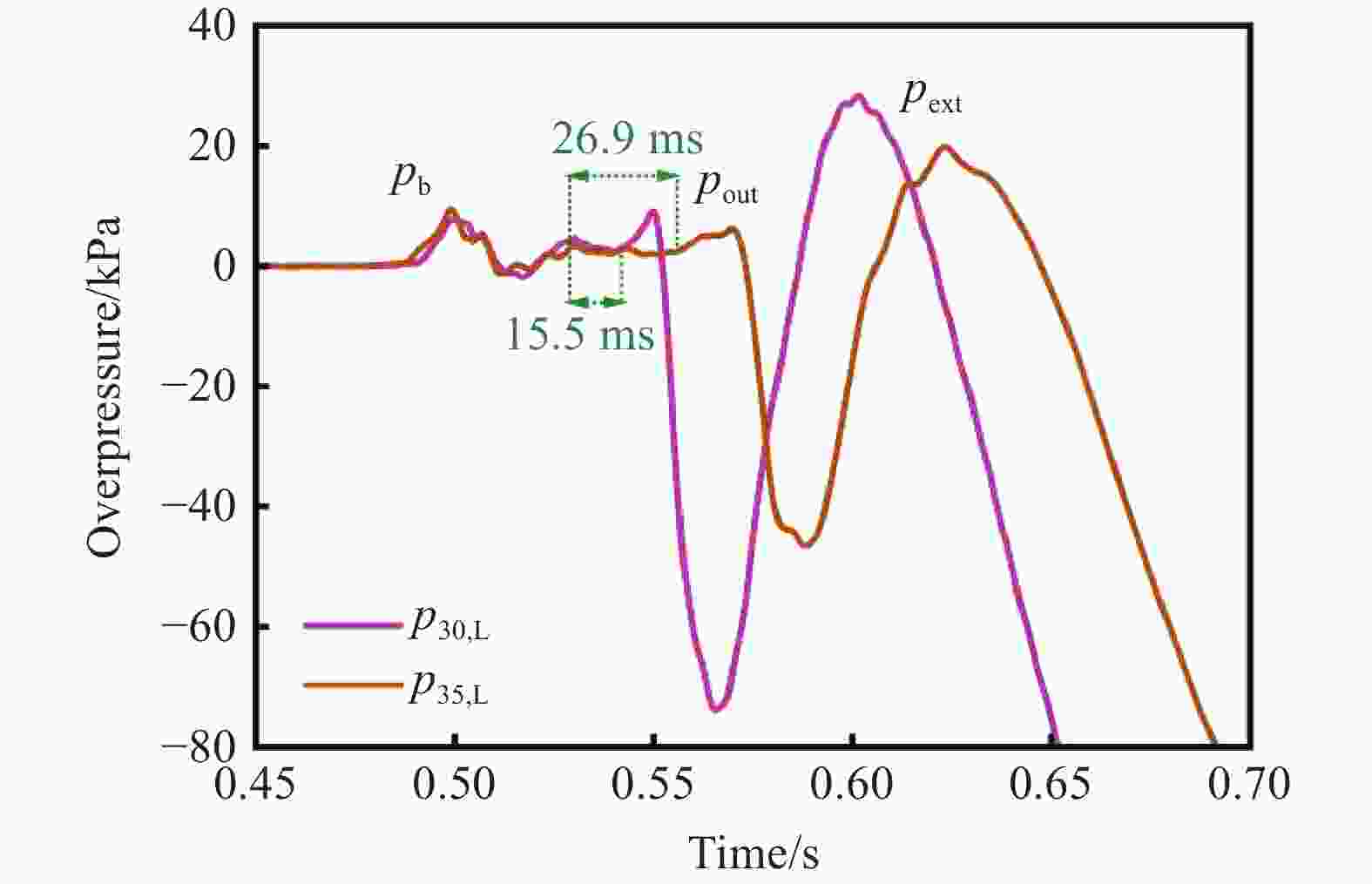
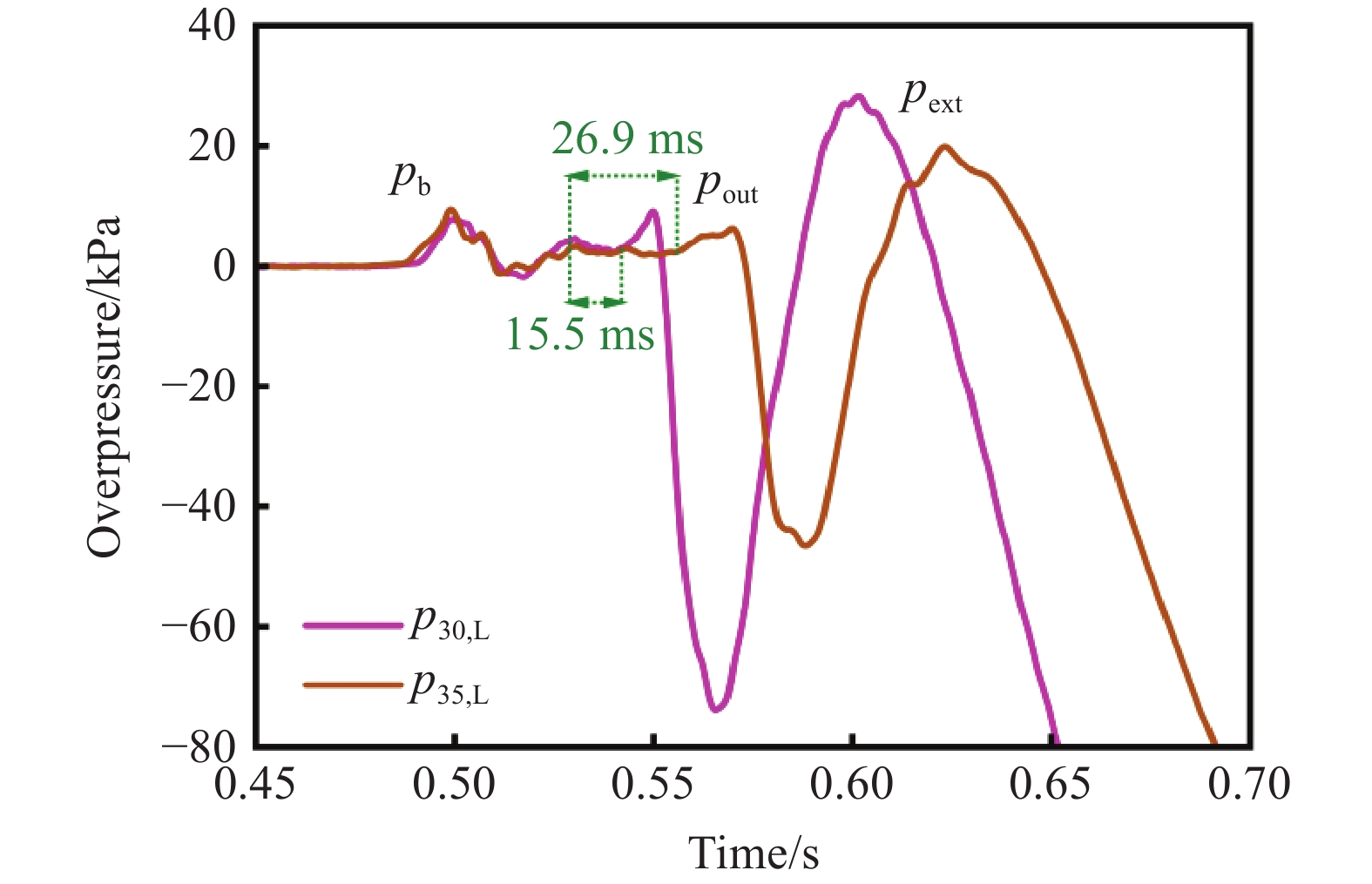
图 3 $ \varphi $=30%、35%在$ \theta $=100%条件下的管内压力对比
Figure 3. Comparison of in-duct pressure under the condition of $ \varphi $=30%, 35% at $ \theta $=100%
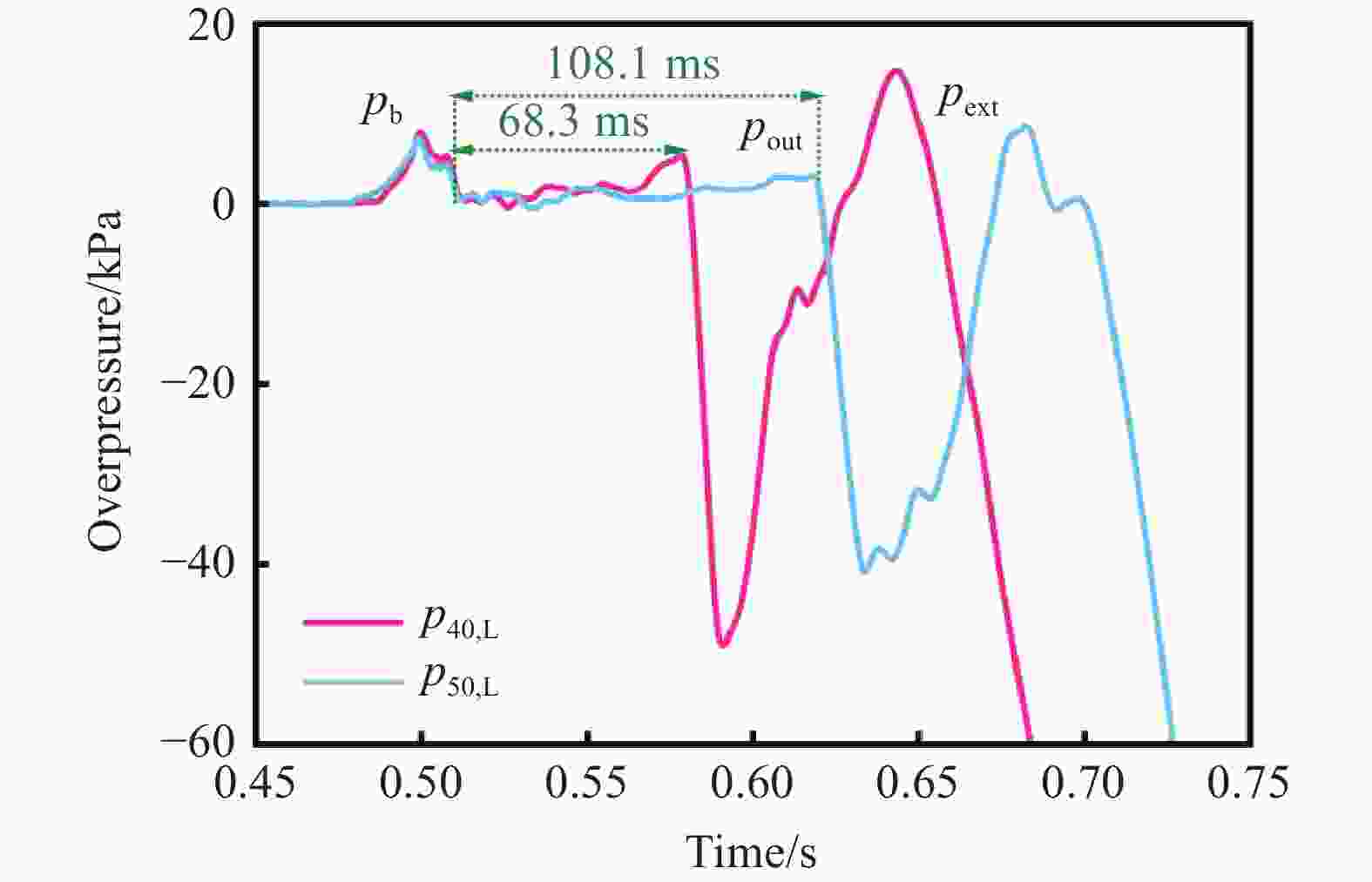
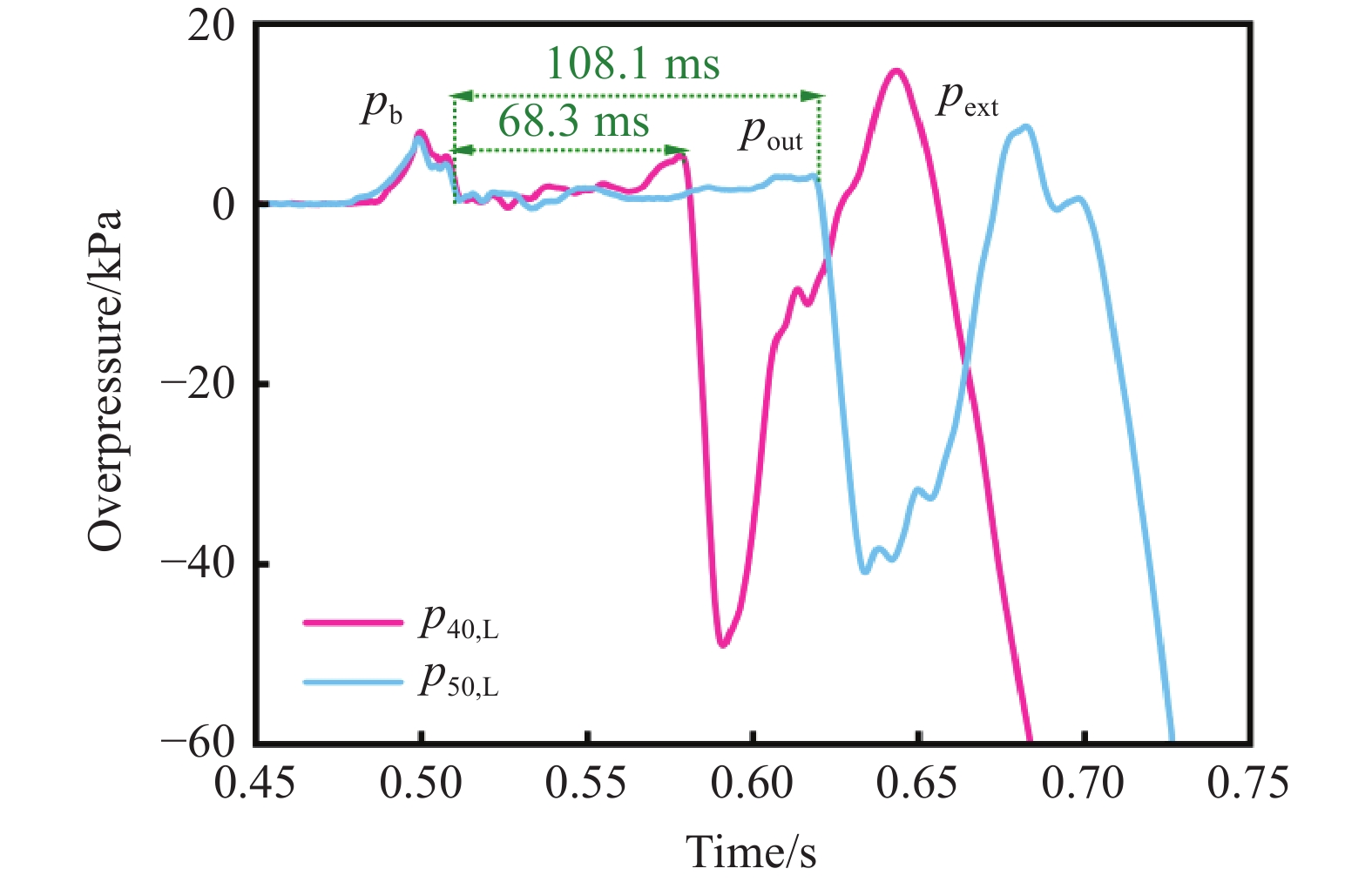
图 4 $ \varphi $=40%、50%在$ \theta $=100%条件下的管内压力对比
Figure 4. Comparison of in-duct pressure under the condition of $ \varphi $=40%, 50% at $ \theta $=100%
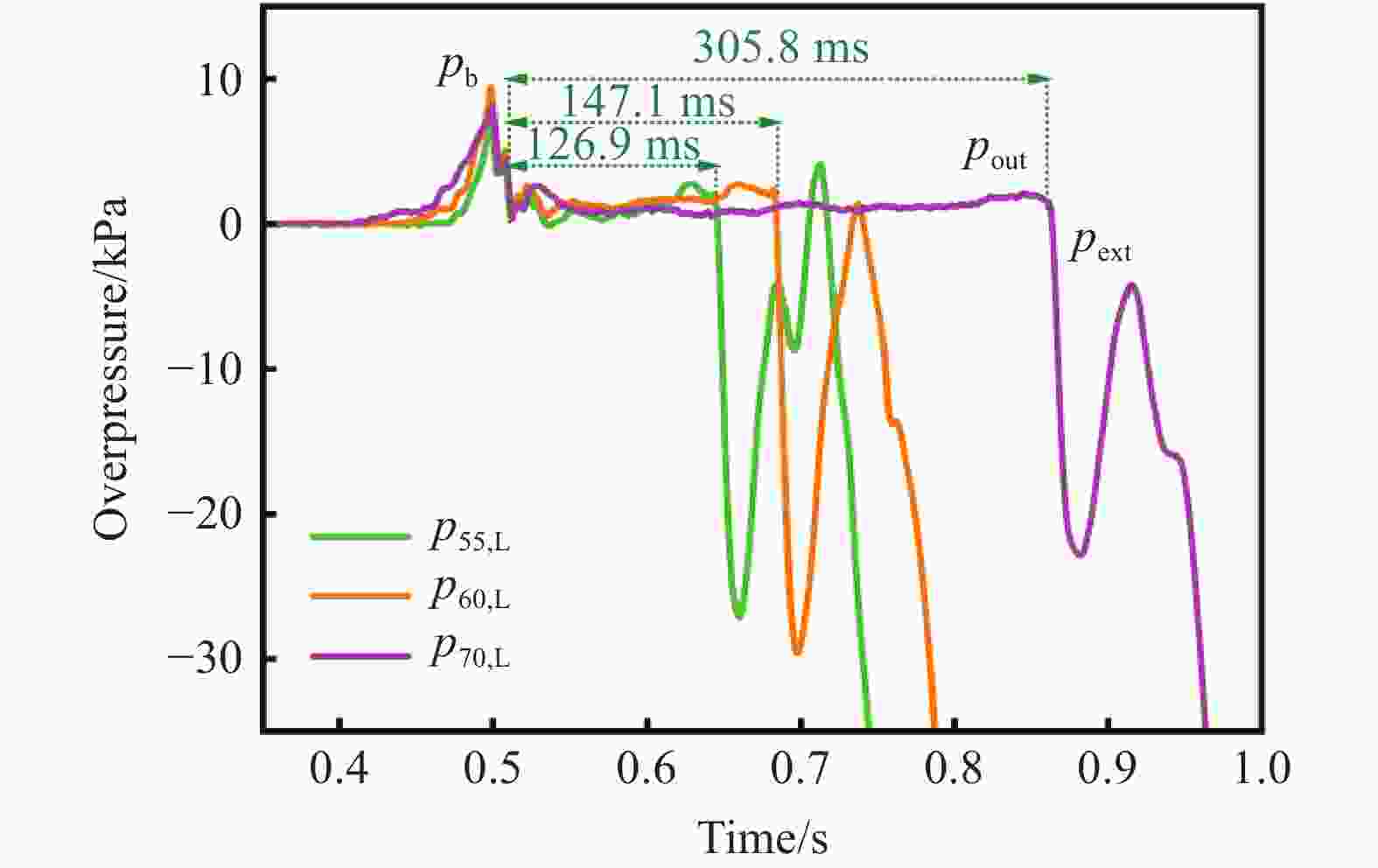
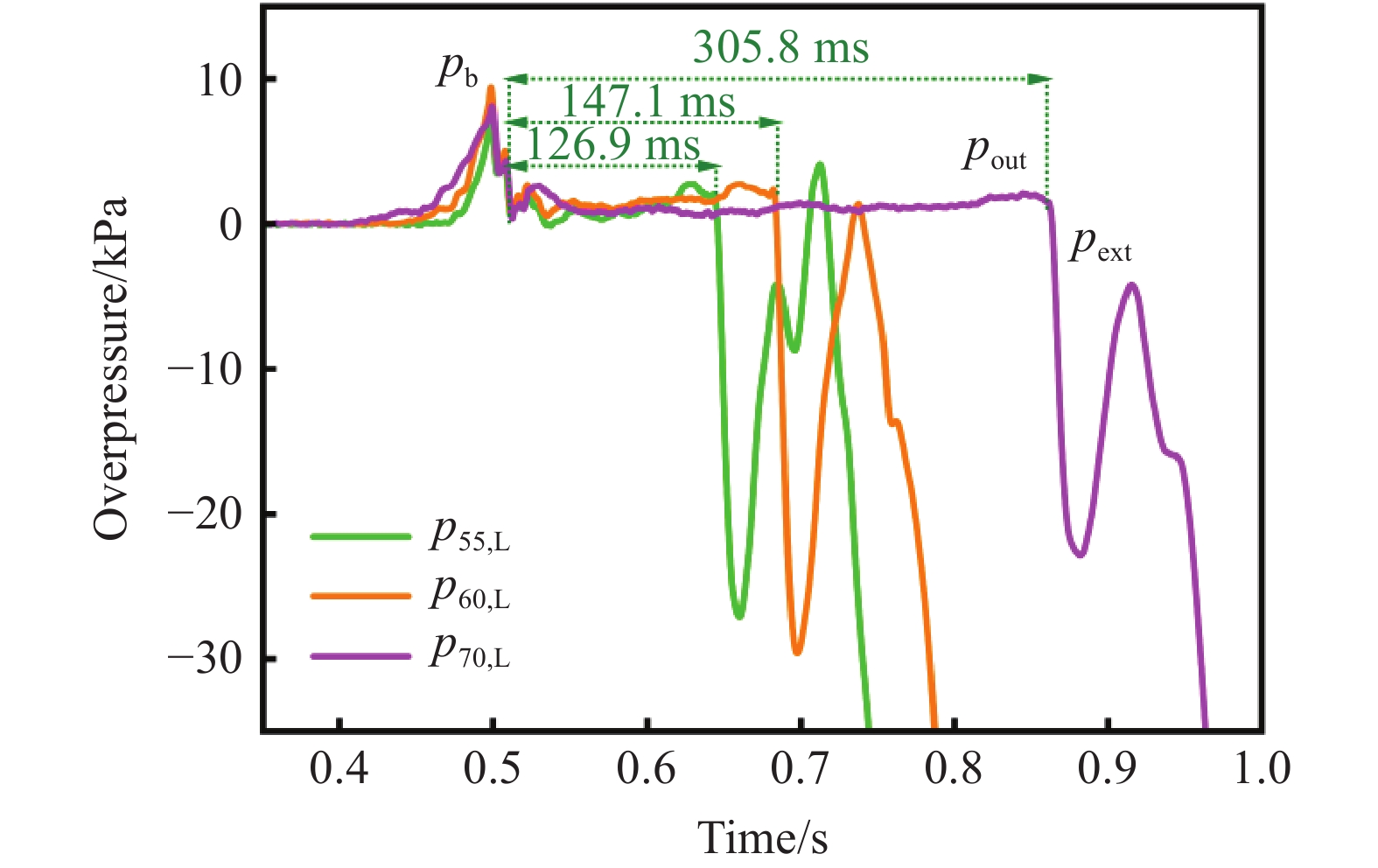
图 5 $ \varphi $=55%、60%、70%在$ \theta $=100%条件下的管内压力对比
Figure 5. Comparison of in-duct pressure under the condition of $ \varphi $=55%, 60%, 70% at $ \theta $=100%
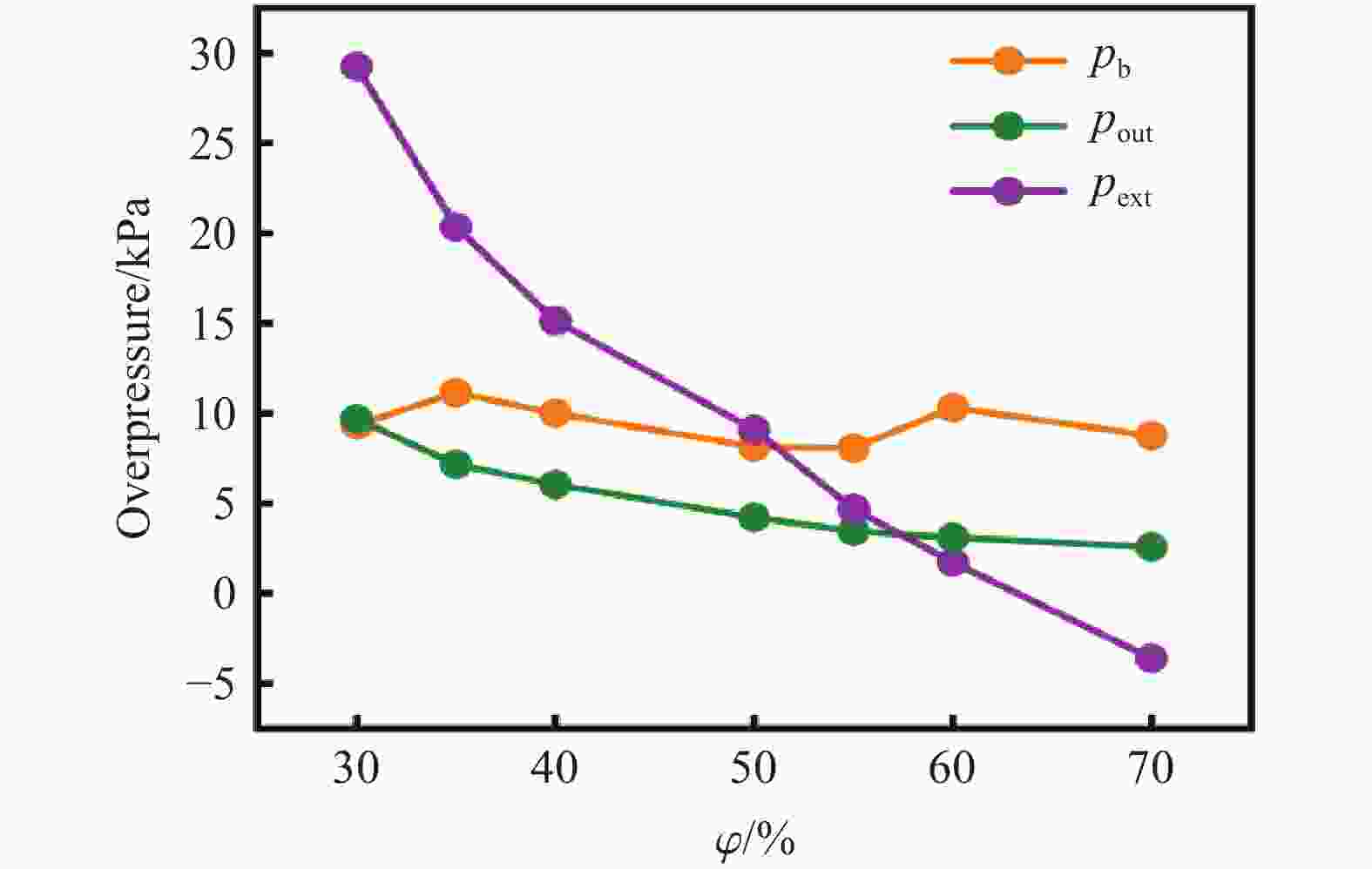
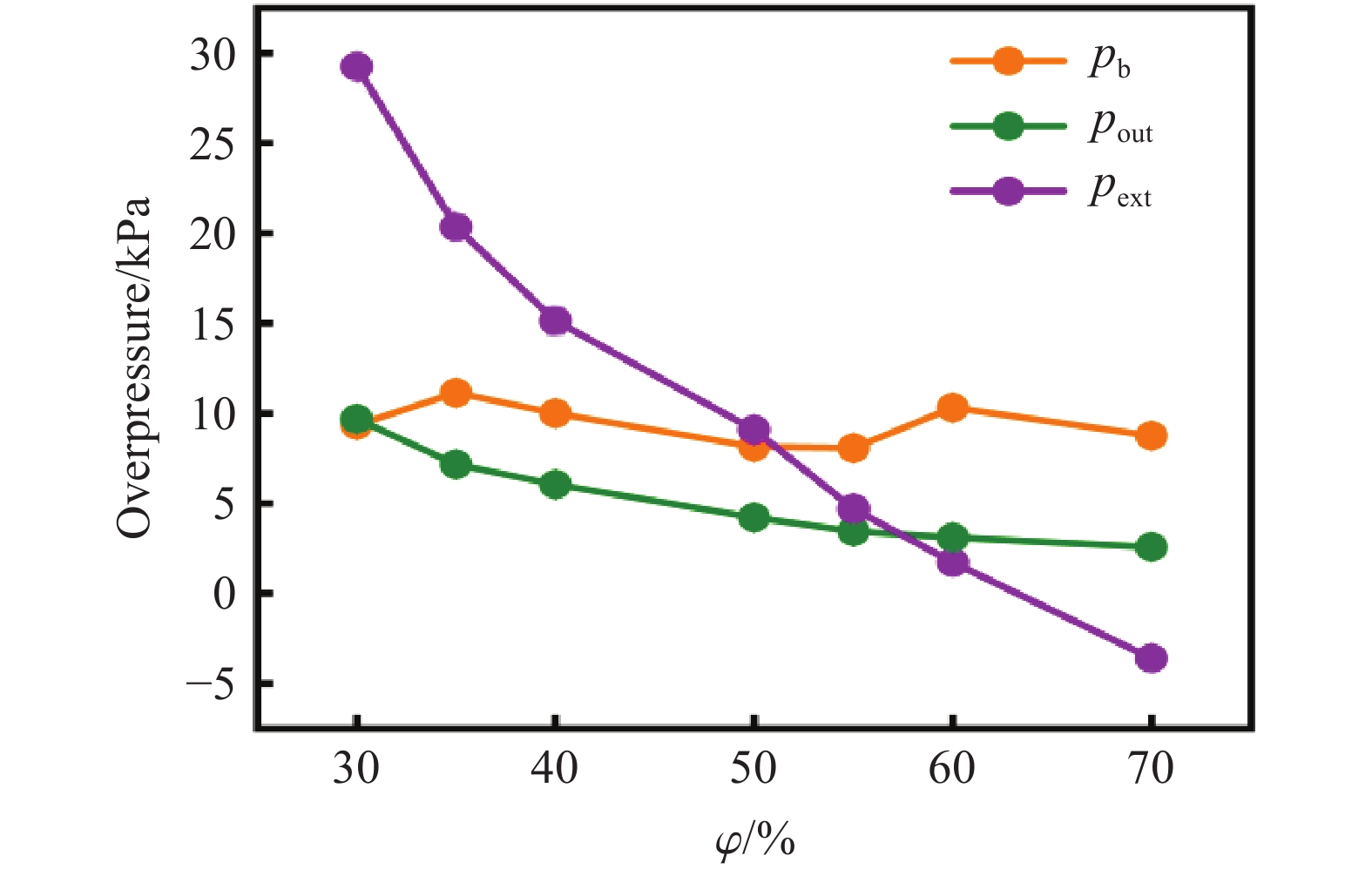
图 6 不同$ \varphi $条件下pb$ 、 $pout、pext在$ \theta $=100%时的变化趋势
Figure 6. Variation trends of pb, pout and pext under the condition of different $ \varphi $ at $ \theta $=100%
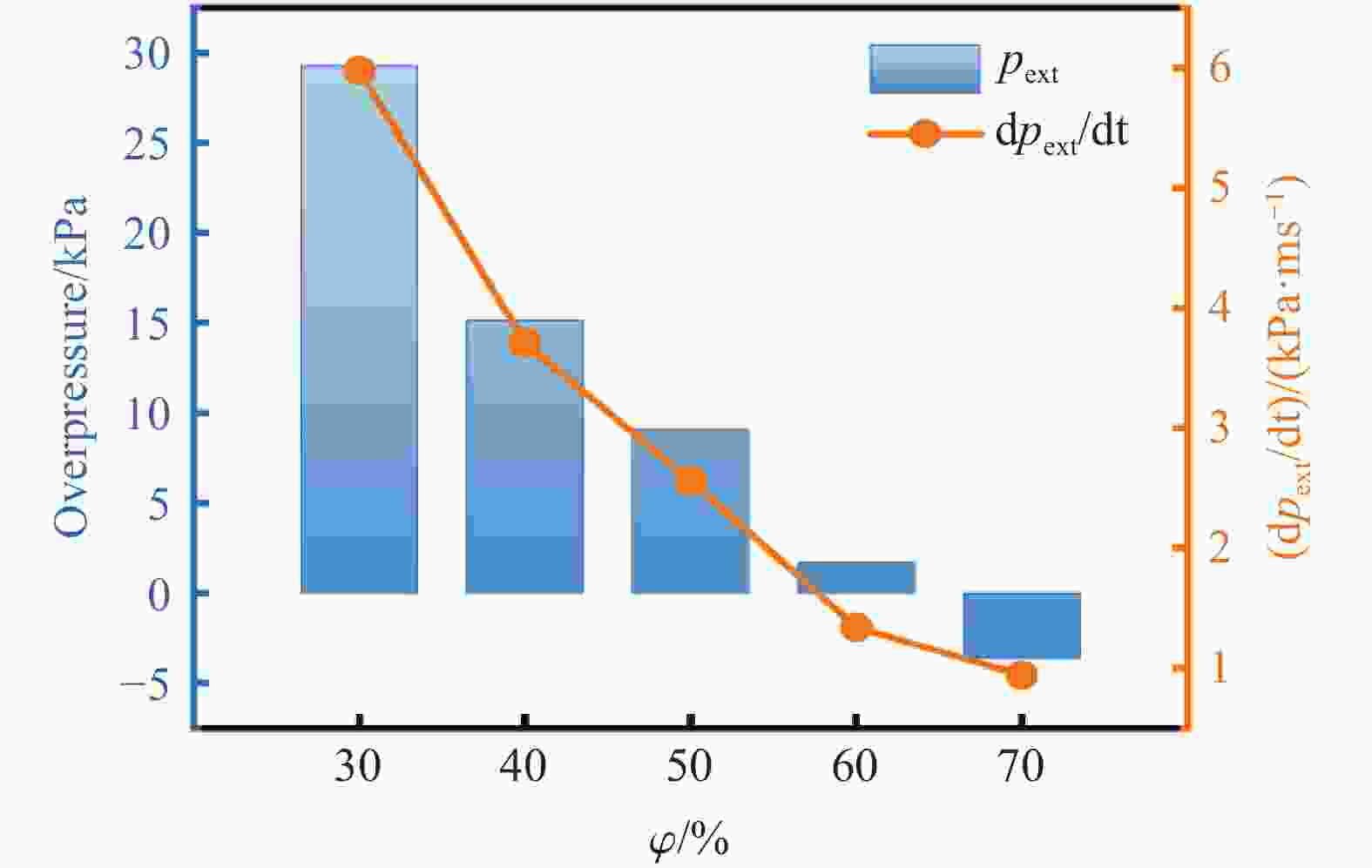
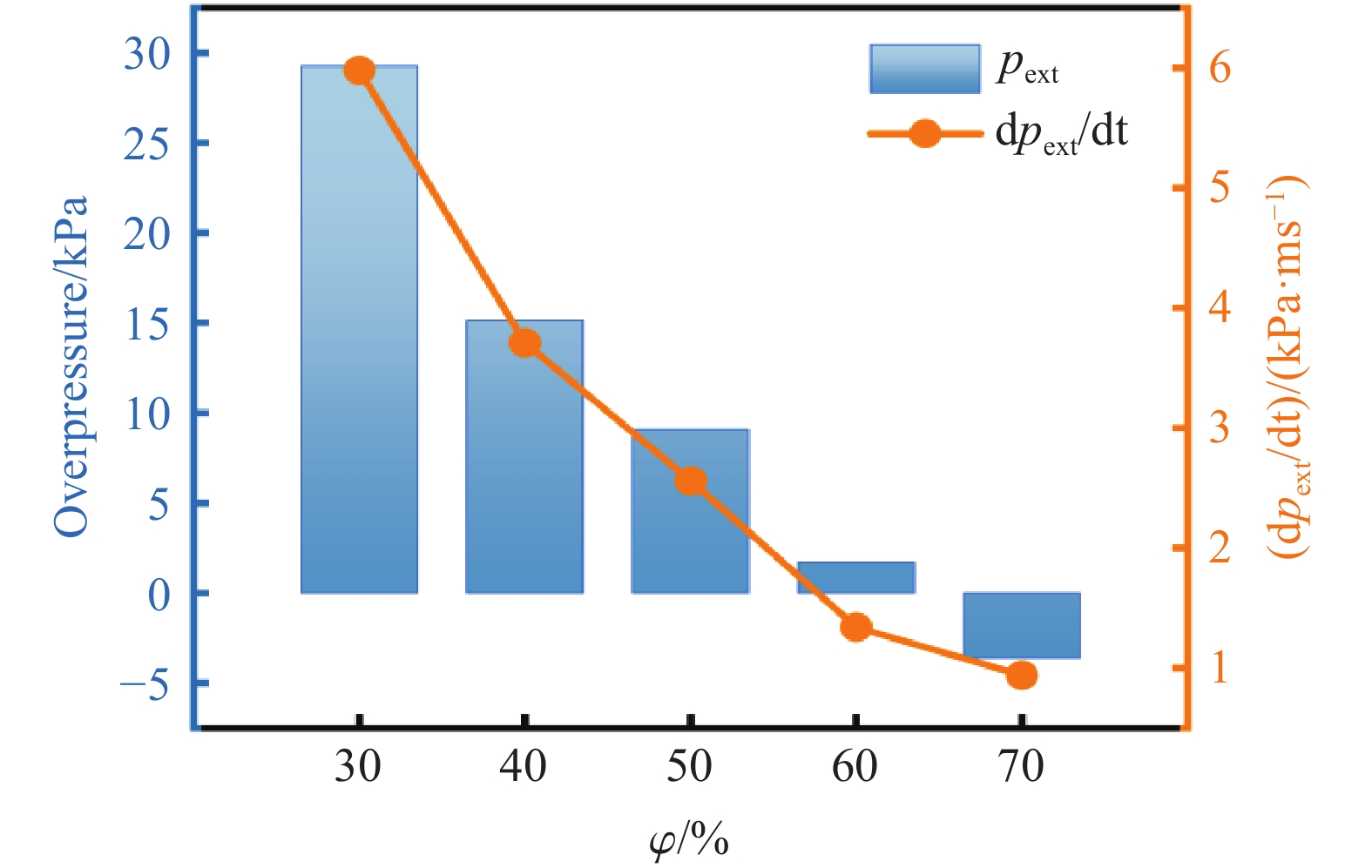
图 7 不同$ \varphi $条件下pext和dpext/dt在$ \theta $=100%时的变化趋势
Figure 7. Variation trends of pext and dpext/dt under the condition of different $ \varphi $ at $ \theta $=100%
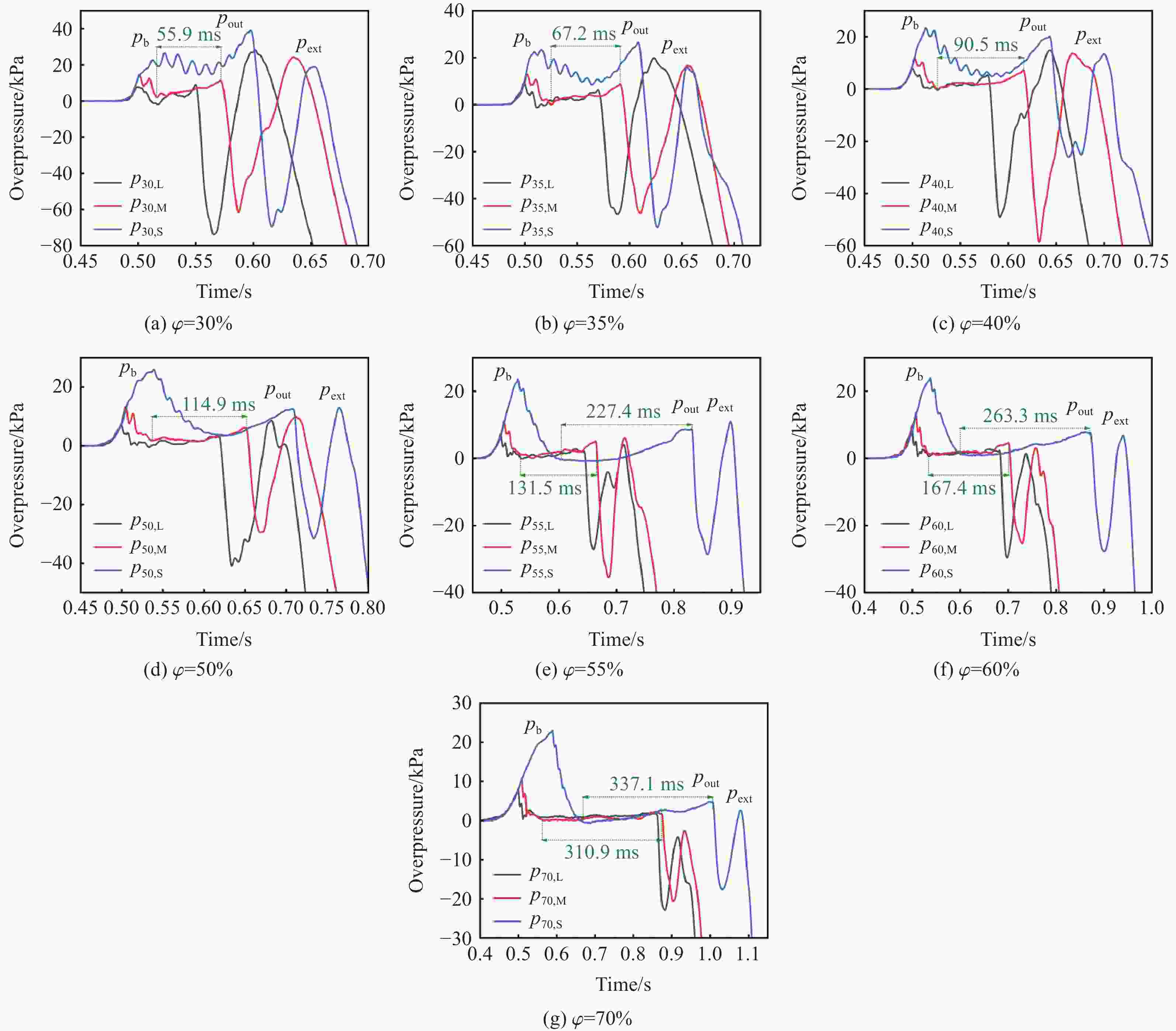
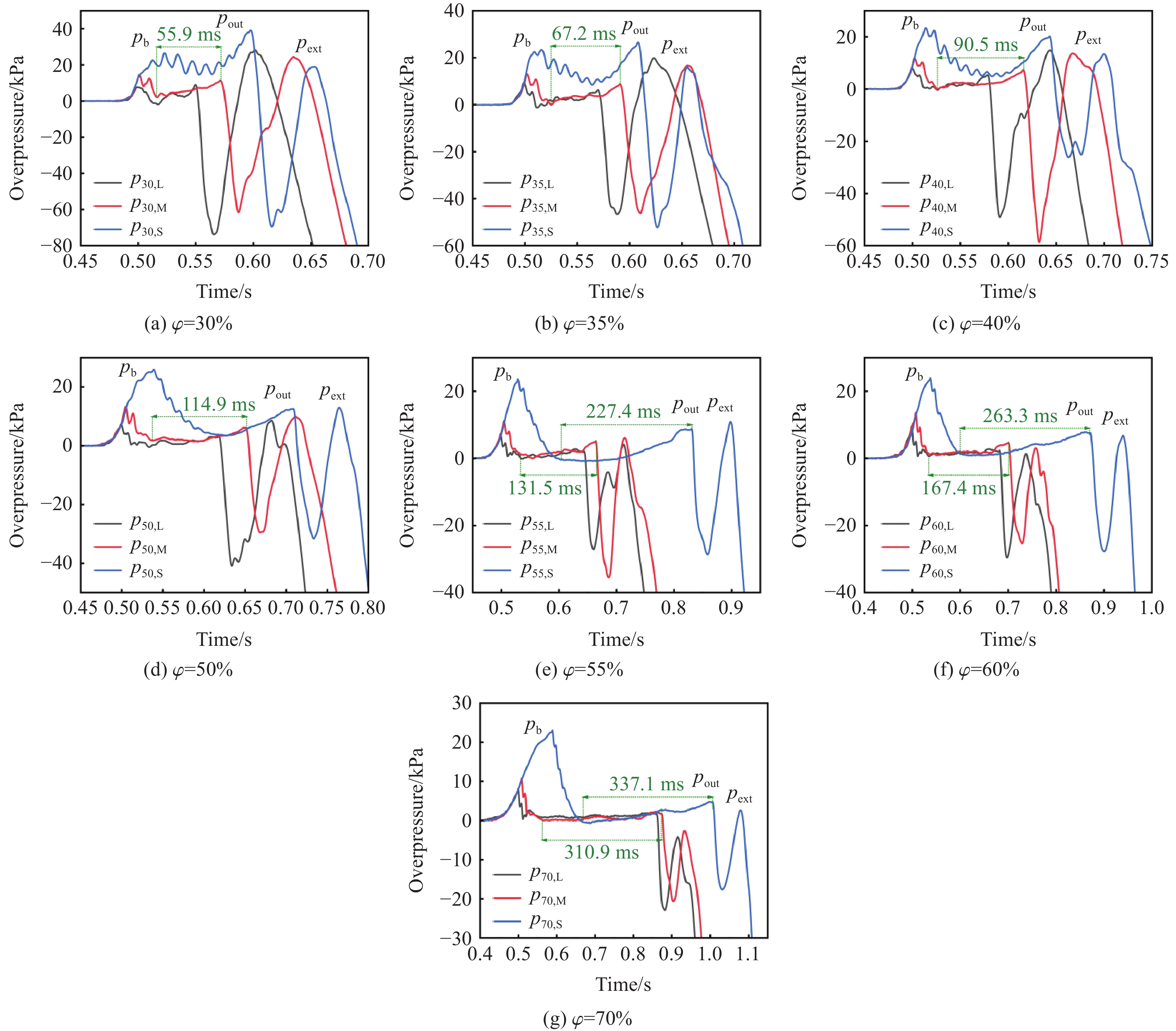
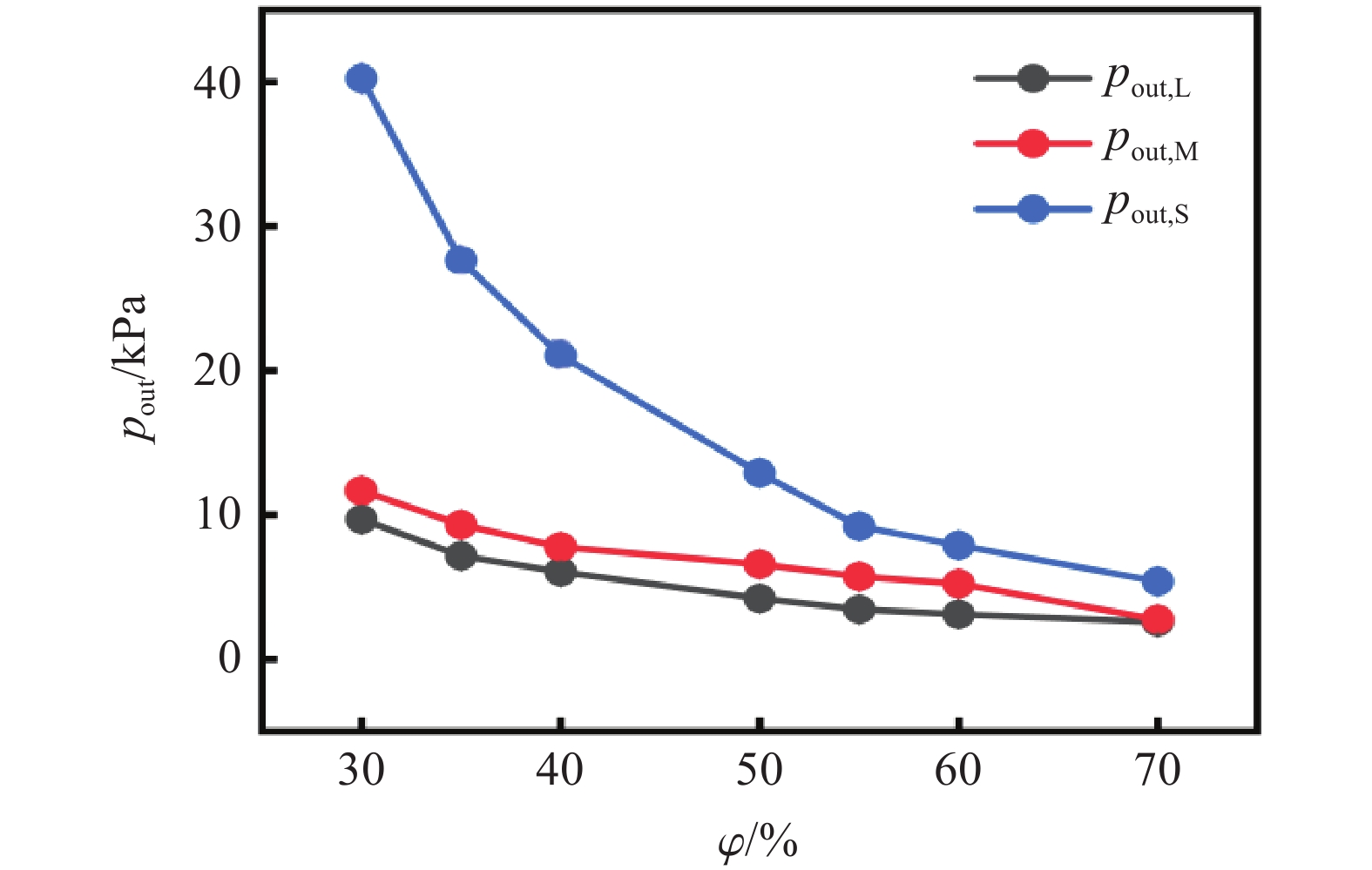
图 8 $ \varphi $=30%、35%、40%、50%、55%、60%、70%分别在不同泄放比($ \theta $=100%、44.4%、11.1%)时的管内压力对比
Figure 8. Comparison of in-duct pressure at $ \varphi $=30%, 35%, 40%, 50%, 55%, 60%, and 70% under different venting ratios ($ \theta $=100%, 44.4%, and 11.1%)
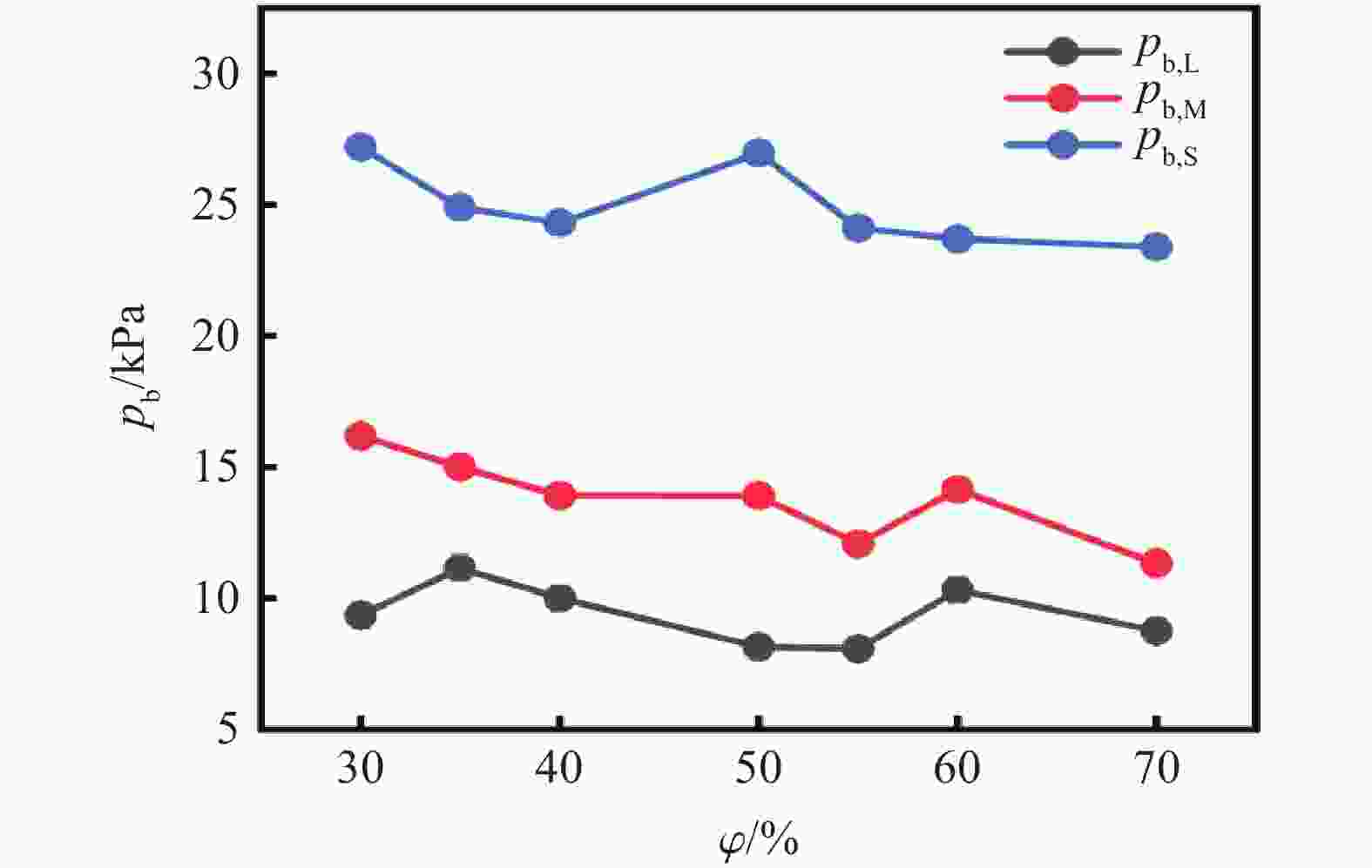
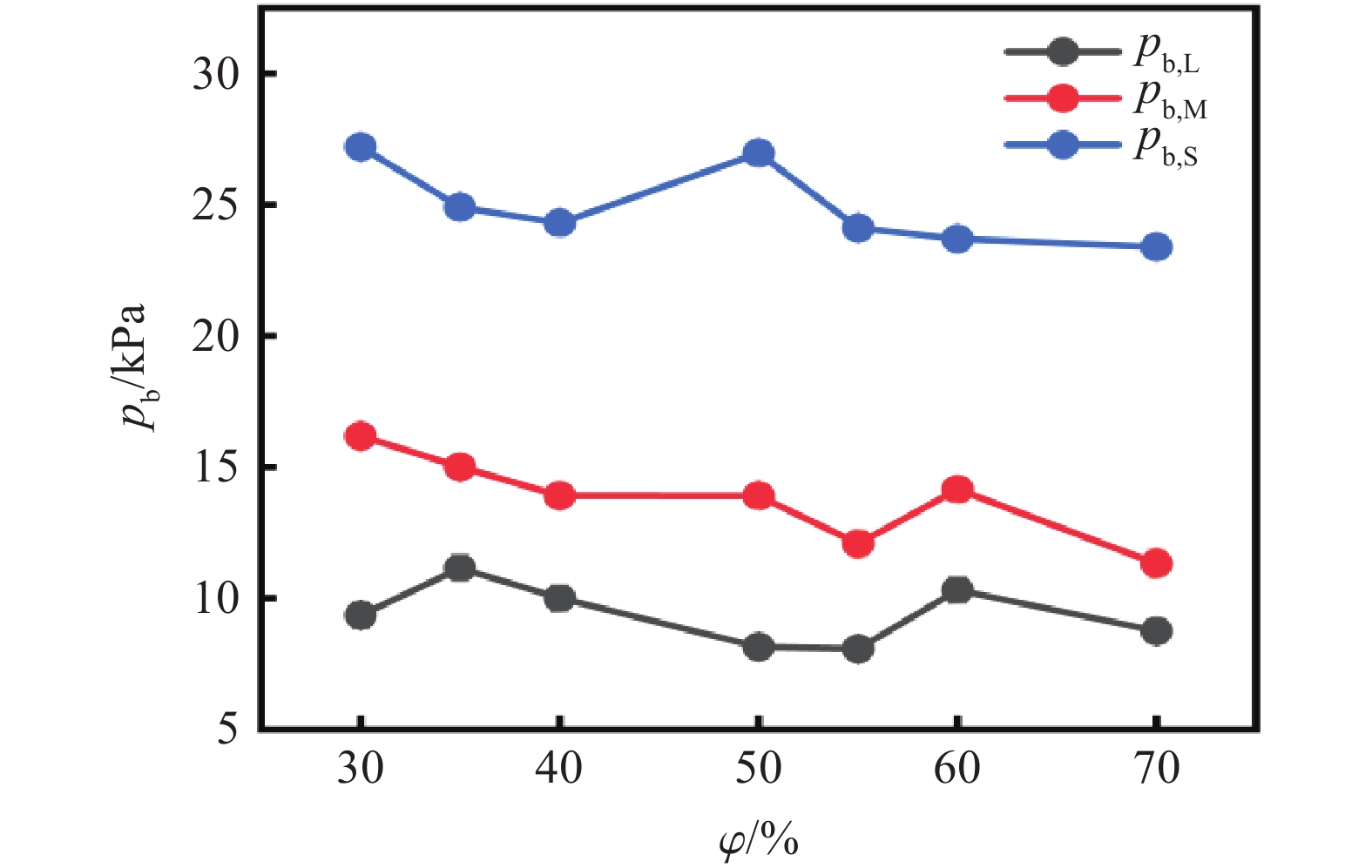
图 9 不同$ \varphi $条件下管内pb在$ \theta $=100%、44.4%、11.1%时的变化趋势
Figure 9. Variation trends of pb under the condition of different $ \varphi $ at $ \theta $=100%, 44.4%, and 11.1%
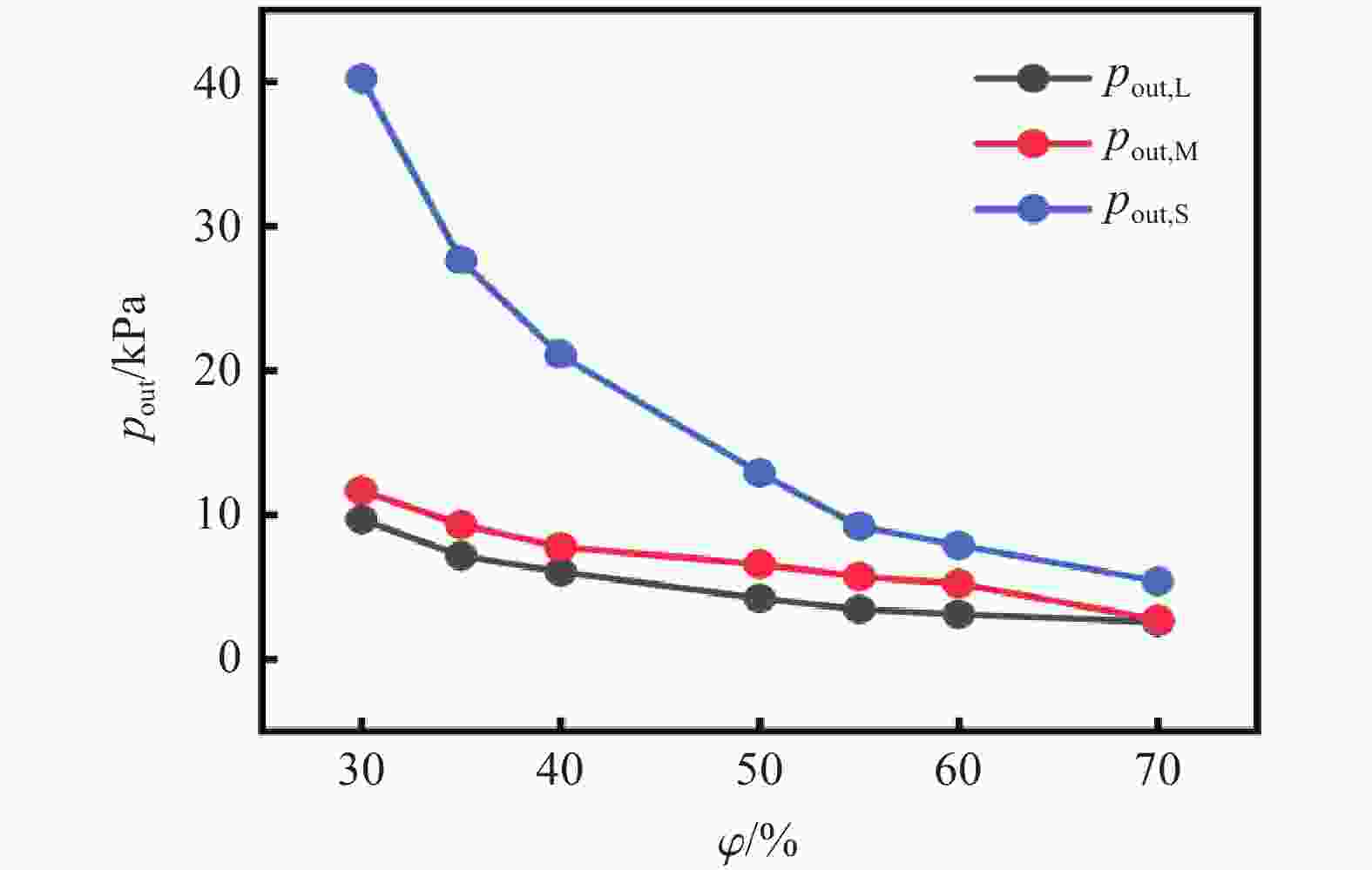
图 10 不同$ \varphi $条件下pout在$ \theta $=100%,44.4%,11.1%时的变化趋势
Figure 10. Variation trends of pout under the condition of different$ \varphi $ at $ \theta $=100%, 44.4%, and 11.1%
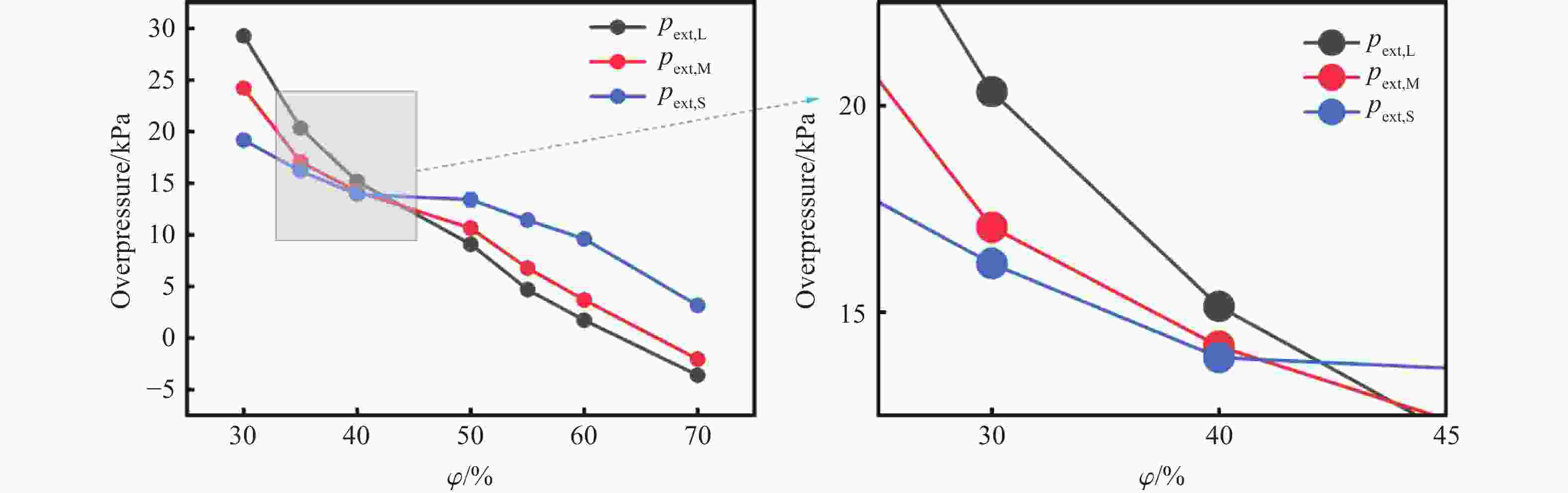
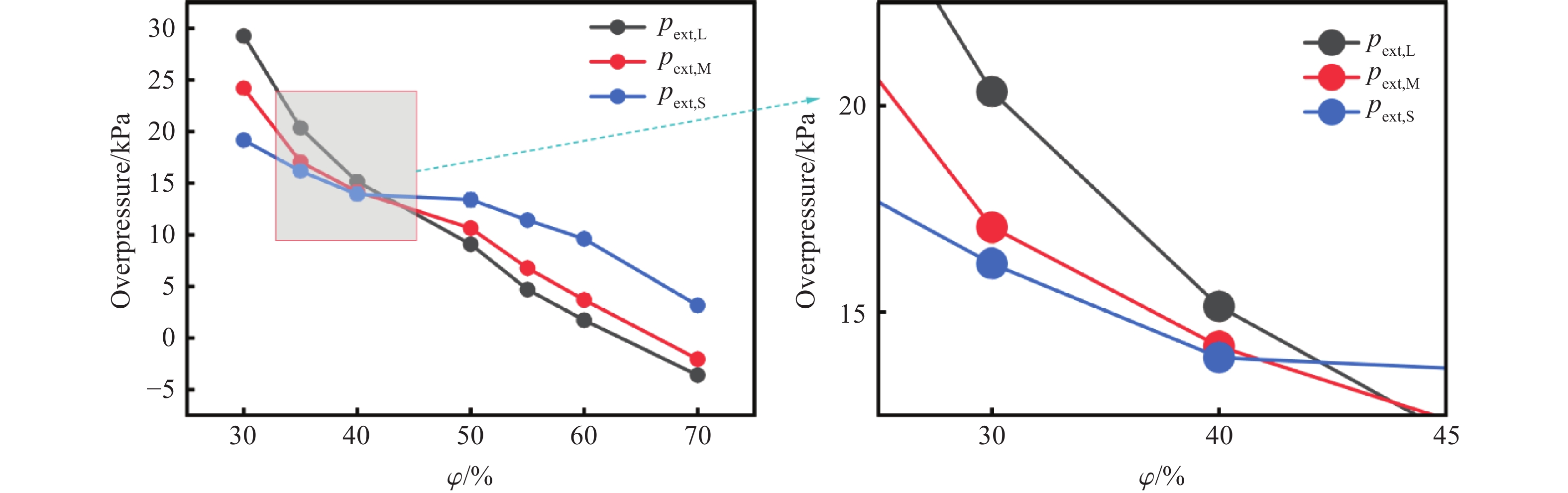
图 11 不同$ \varphi $条件下pext在$ \theta $=100%、44.4%、11.1%时的变化趋势
Figure 11. Variation trends of pext under the condition of different $ \varphi $ at $ \theta $=100%, 44.4%, and 11.1%
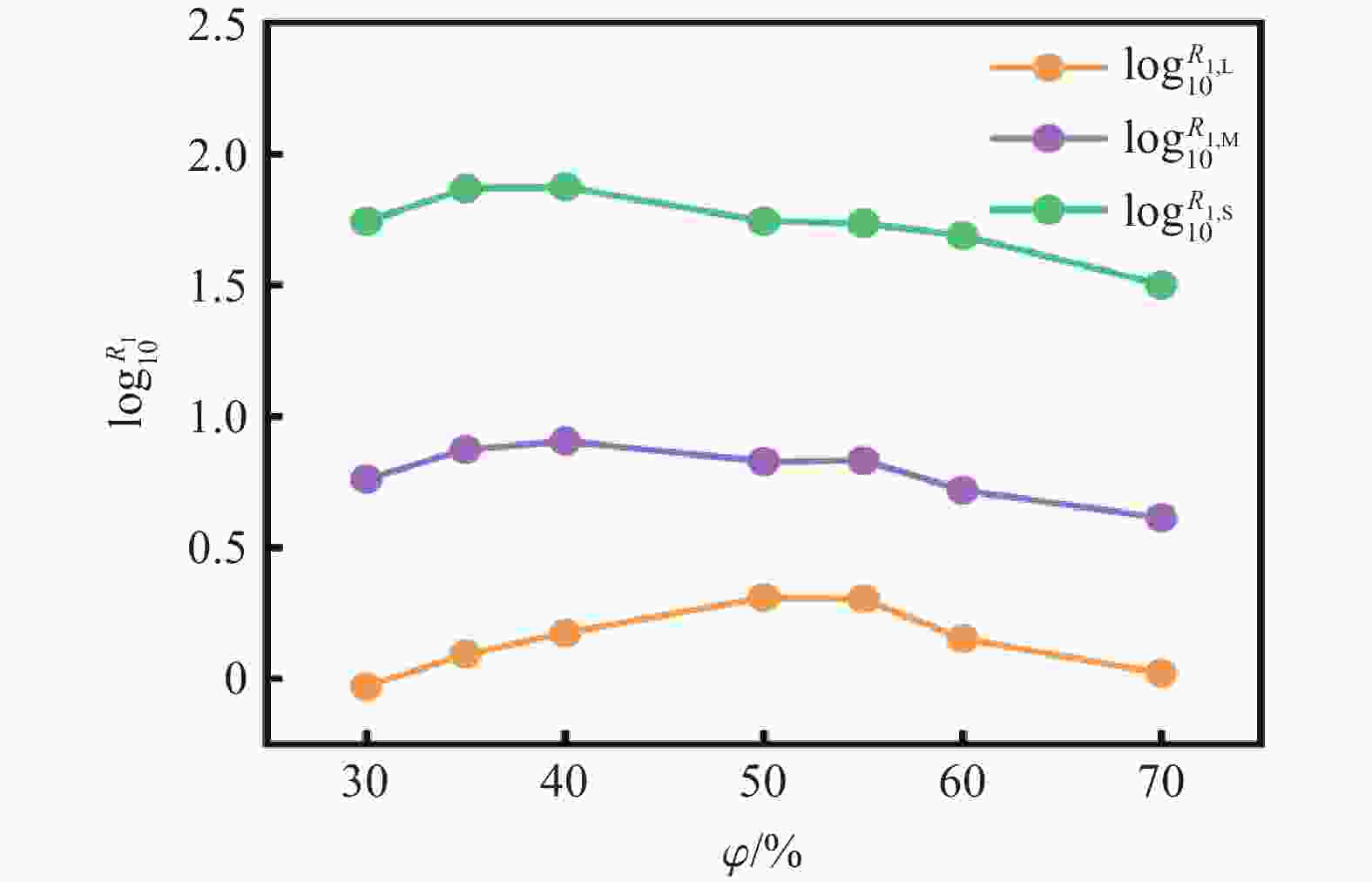
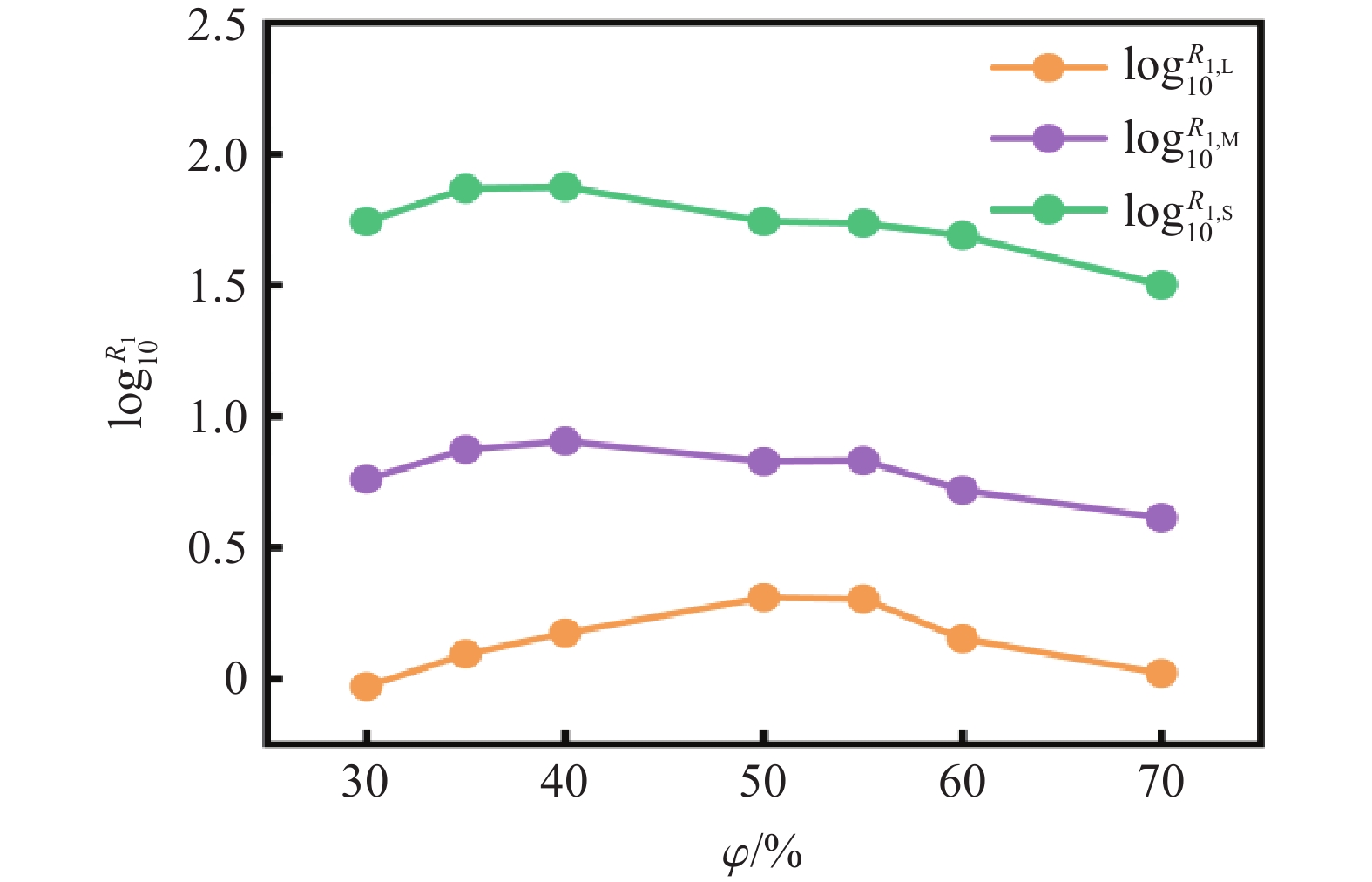
图 12 不同泄爆口径下NFPA 68偏差比$ \log _{10}^{{R}_{1}} $随$ \varphi $的变化
Figure 12. Variation of NFPA 68 deviation ratio $ \log _{10}^{{R}_{1}} $ with $ \varphi $ for different vent diameters
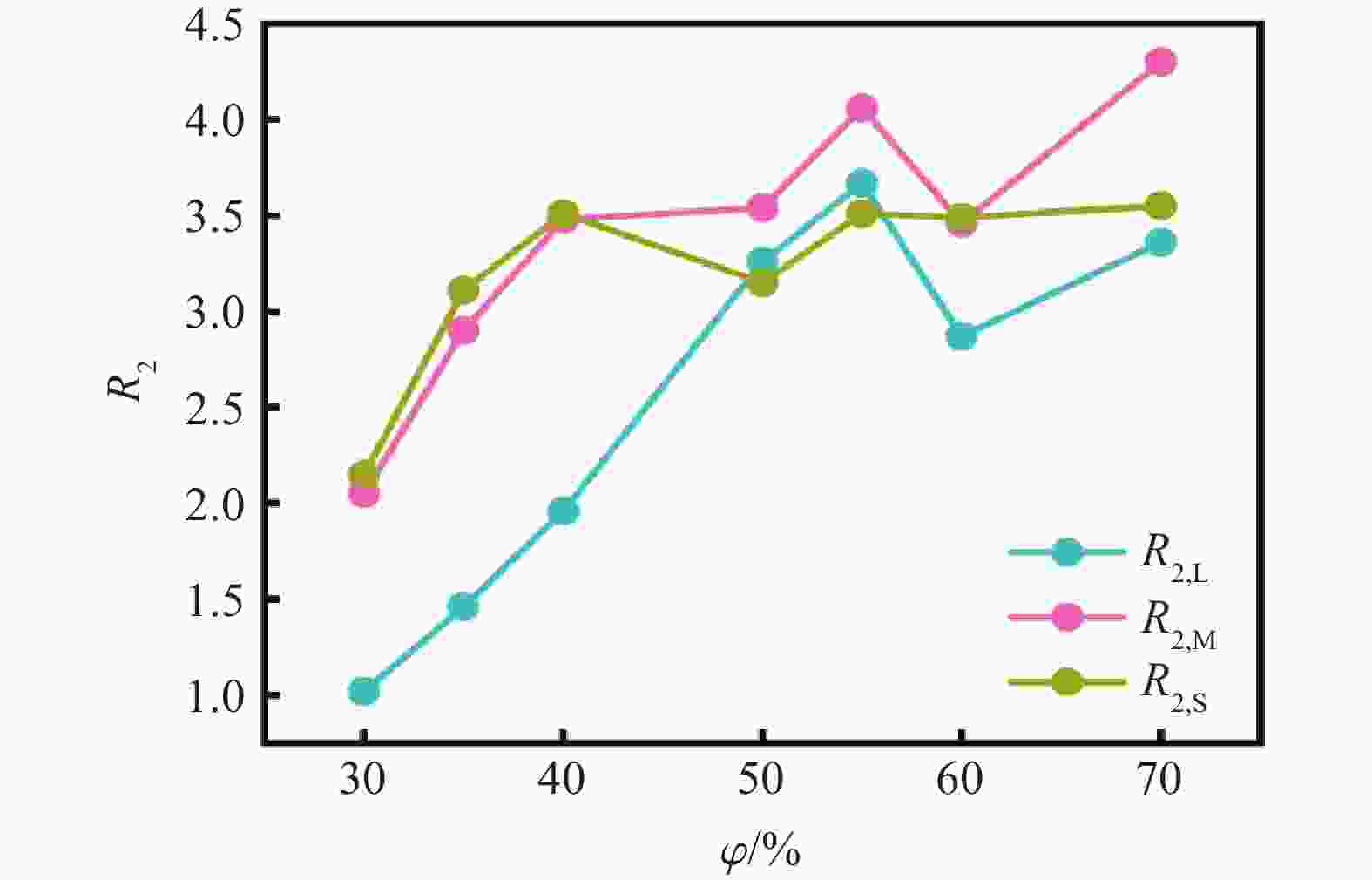
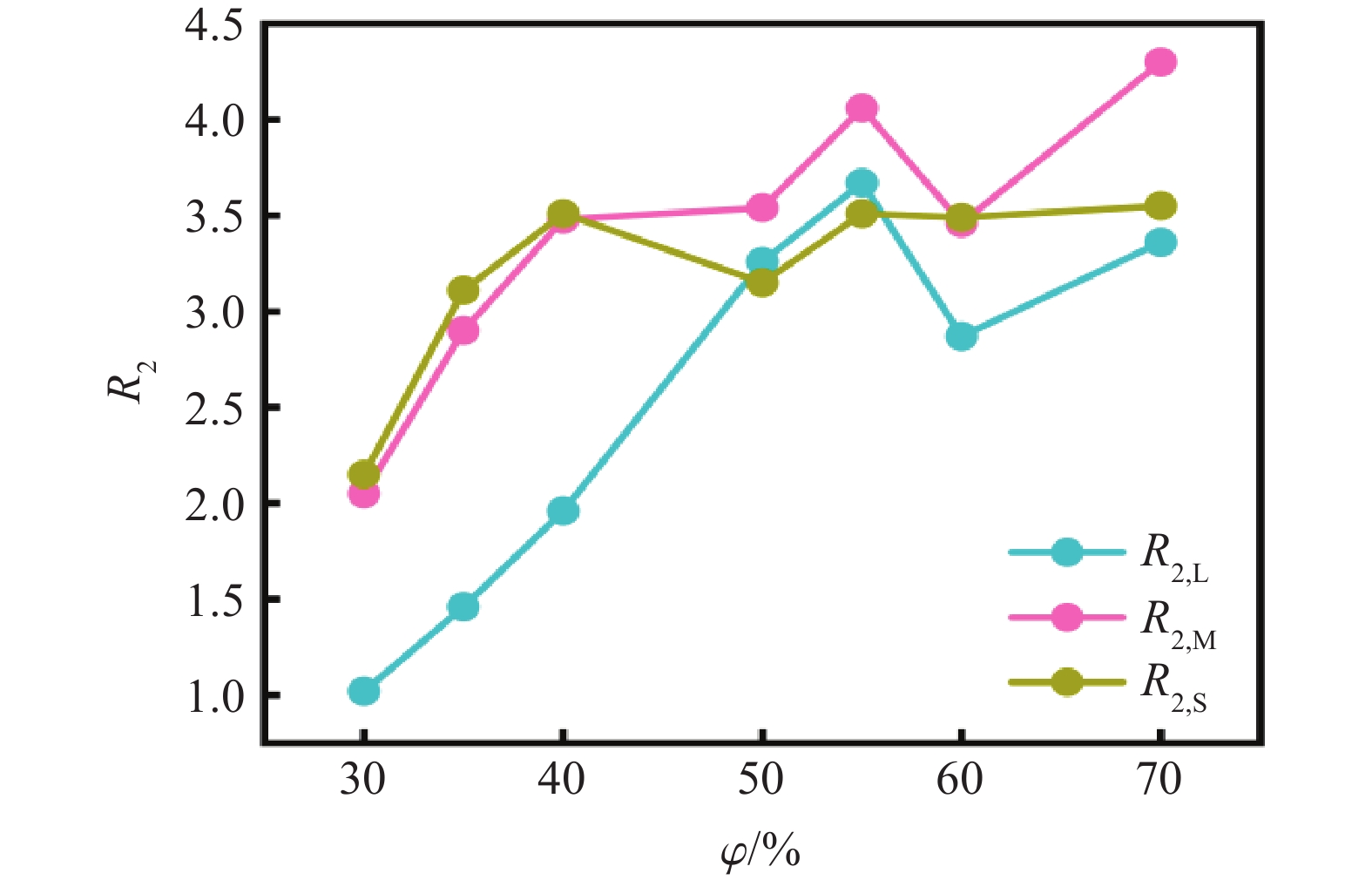
图 13 不同泄爆口径下修正模型偏差比$ {R}_{2} $随$ \varphi $的变化
Figure 13. Variation of Corrected Deviation Ratio $ {R}_{2} $ with ammonia fraction $ \varphi $ for different vent diameters
表 1 泄爆口类型与泄放比的关系
Table 1. Relationship between vent type and venting ratio
泄爆口类型 D/mm SB/cm2 θ/% L 120 450.00 100 M 80 200.68 44.4 S 40 49.88 11.1  下载: 导出CSV
表 2 配气方案
Table 2. Composition of gas mixtures
实验编号 $ \varphi $/% NH3/% H2/% Air/% Φ 1 30 6.78 15.83 77.39 0.8 2 35 7.78 14.45 77.76 3 40 8.75 13.12 78.12 4 50 10.59 10.59 78.81 5 55 11.47 9.39 79.14 6 60 12.32 8.22 79.46 7 70 13.95 5.98 80.07
下载: 导出CSV
表 3 不同泄爆口径下NFPA 68预测压力及偏差比值$ {R}_{1} $
Table 3. NFPA 68 Predicted Reduced Pressures and Deviation Ratios $ {R}_{1} $ for Different Vent Sizes
$ \varphi $/% C pmax[65]/
bar − gpred,L,NFPA 68/
bar − gpred,M,NFPA 68/
bar − gpred,S,NFPA 68/
bar − gpred,L/
bar − gpred,M/
bar − gpred,S/
bar − gR1,L R1,M R1,S 30 7.64 × 10⁻³ 5.90 0.275 1.393 22.293 0.292 5 0.241 9 0.402 5 0.94 5.76 55.39 35 7.31 × 10⁻³ 5.85 0.252 1.276 20.408 0.203 4 0.170 6 0.276 4 1.24 7.48 73.84 40 6.91 × 10⁻³ 5.75 0.225 1.140 18.236 0.151 4 0.141 7 0.243 8 1.49 8.05 74.80 50 6.26 × 10⁻³ 5.60 0.185 0.935 14.967 0.090 8 0.139 0 0.269 7 2.04 6.73 55.49 55 5.86 × 10⁻³ 5.40 0.162 0.820 13.115 0.080 7 0.120 8 0.241 1 2.01 6.79 54.40 60 5.56 × 10⁻³ 5.20 0.146 0.738 11.807 0.103 1 0.141 5 0.241 4 1.42 5.22 48.91 70 4.41 × 10⁻³ 4.20 0.092 0.464 7.428 0.087 5 0.113 2 0.233 9 1.05 4.10 31.76 注:$ {p}_{max} $取自与本文相同工况的14L球形燃烧室的氨氢预混气的最大爆炸压力,对文献已给出数据点者直接读取,仅给出连续曲线者采用数字化读图并在相同工况点进行线性插值获得,同时换算单位为$ \mathrm{bar}-\mathrm{g} $
下载: 导出CSV
表 4 泄爆口径的几何泄放比$ {K}_{v} $及静开动作压力$ {P}_{stat} $
Table 4. Geometric Venting Ratio $ {K}_{v} $ and Static Activation Pressure $ {P}_{stat} $ for the Three Vent Sizes
泄爆口类型 Av/m2 V/m3 pstat[40]/bar − g Kv L 0.011 31 0.022 62 0.059 4 7.07 M 0.005 03 0.097 6 15.91 S 0.001 26 0.160 8 63.65 注:pstat取自课题组前期研究成果,该文所用泄爆膜与本文泄爆膜在材质、厚度与安装方式上保持一致,其pstat通过拟合空气缓慢加压的破膜压力得出三种泄爆口径下的静态动作压力预测模型,本文采用其拟合后的值用于计算。
下载: 导出CSV
-
[1] 黎洁, 杨一方, 刘建喆, 等. 氨能应用现状、挑战与前景分析 [J]. 克拉玛依学刊, 2025, 15(1): 27–35. DOI: 10.13677/j.cnki.cn65-1285/c.2025.01.03.LI J, YANG Y F, LIU J J, et al. Ammonia energy application status, challenge and prospect analysis [J]. Journal of Karamay, 2025, 15(1): 27–35. DOI: 10.13677/j.cnki.cn65-1285/c.2025.01.03. [2] ANIKA O C, NNABUIFE S G, BELLO A, et al. Prospects of low and zero-carbon renewable fuels in 1.5-degree net zero emission actualisation by 2050: A critical review [J]. Carbon Capture Science & Technology, 2022, 5: 100072. DOI: 10.1016/j.ccst.2022.100072. [3] 罗志斌, 孙潇, 高啸天, 等. 双碳背景下绿色氨能的应用场景及展望 [J]. 南方能源建设, 2023, 10(3): 47–54. DOI: 10.16516/j.gedi.issn2095-8676.2023.03.005.LUO Z B, SUN X, GAO X T, et al. Development prospects and application scenarios of green ammonia energy industry under the background of carbon peak and neutrality [J]. Southern Energy Construction, 2023, 10(3): 47–54. DOI: 10.16516/j.gedi.issn2095-8676.2023.03.005. [4] The Royal Society. The role of hydrogen and ammonia in meeting the net zero challenge: Climate Change: Science and Solutions, Briefing 4 [R]. London: The Royal Society, 2021. [5] VALERA-MEDINA A, XIAO H, OWEN-JONES M, et al. Ammonia for power [J]. Progress in Energy and Combustion Science, 2018, 69: 63–102. DOI: 10.1016/j.pecs.2018.07.001. [6] SUN J H, ZHAO N B, ZHENG H T. A comprehensive review of ammonia combustion: Fundamental characteristics, chemical kinetics, and applications in energy systems [J]. Fuel, 2025, 394: 135135. DOI: 10.1016/j.fuel.2025.135135. [7] SAIF A G H, MOKHEIMER E M A. Comprehensive review on ammonia combustion technologies: Combustion characteristics, potential of hydrogen/methane additions, and emerging applications [J]. International Journal of Hydrogen Energy, 2025, 148: 149672. DOI: 10.1016/j.ijhydene.2025.05.302. [8] LEE H, LEE M J. Recent advances in ammonia combustion technology in thermal power generation system for carbon emission reduction [J]. Energies, 2021, 14(18): 5604. DOI: 10.3390/en14185604. [9] AZIZ M, JUANGSA F B, IRHAMNA A R, et al. Ammonia utilization technology for thermal power generation: A review [J]. Journal of the Energy Institute, 2023, 111: 101365. DOI: 10.1016/j.joei.2023.101365. [10] KUMAR L, SLEITI A K. Systematic review on ammonia as a sustainable fuel for combustion [J]. Renewable and Sustainable Energy Reviews, 2024, 202: 114699. DOI: 10.1016/j.rser.2024.114699. [11] ELBAZ A M, WANG S X, GUIBERTI T F, et al. Review on the recent advances on ammonia combustion from the fundamentals to the applications [J]. Fuel Communications, 2022, 10: 100053. DOI: 10.1016/j.jfueco.2022.100053. [12] LIANG H, YAN X Q, SHI E H, et al. Effect of hydrogen blending on ammonia/air explosion characteristics under wide equivalence ratio [J]. Energy, 2024, 297: 131334. DOI: 10.1016/j.energy.2024.131334. [13] KOBAYASHI H, HAYAKAWA A, SOMARATHNE K D K A, et al. Science and technology of ammonia combustion [J]. Proceedings of the Combustion Institute, 2019, 37(1): 109–133. DOI: 10.1016/j.proci.2018.09.029. [14] MAZZOTTA L, LAMIONI R, D'ALESSIO F, et al. Modeling ammonia-hydrogen-air combustion and emission characteristics of a generic swirl burner [J]. Journal of Engineering for Gas Turbines and Power, 2024, 146(9): 091022. DOI: 10.1115/1.4064807. [15] 吴彬华, 郭进, 吴泽龙, 等. 当量比与掺氢比对氨/氢/空气火焰及爆炸特性的影响 [J]. 化工学报, 2026, 77(2): 1009–1020. DOI: 10.11949/0438-1157.20250911.WU B H, GUO J, WU Z L, et al. Influence of equivalence ratio and hydrogen ratio on flame and explosion characteristics of ammonia/hydrogen/air mixture [J]. CIESC Journal, 2026, 77(2): 1009–1020. DOI: 10.11949/0438-1157.20250911. [16] DENG H J, XU C S, LIU Y X, et al. Study of the explosive behaviour of NH3/H2/air mixtures [J]. International Journal of Hydrogen Energy, 2024, 80: 632–645. DOI: 10.1016/j.ijhydene.2024.07.089. [17] LI Y C, BI M S, ZHOU Y H, et al. Characteristics of hydrogen-ammonia-air cloud explosion [J]. Process Safety and Environmental Protection, 2021, 148: 1207–1216. DOI: 10.1016/j.psep.2021.02.037. [18] 罗振敏, 孙亚平, 刘璐, 等. 氢气影响氨气爆炸动力学研究 [J]. 中国安全生产科学技术, 2025, 21(11): 58–67. DOI: 10.11731/j.issn.1673-193x.2025.11.007.LUO Z M, SUN Y P, LIU L, et al. Study on the influence of hydrogen on the explosion kinetics of ammonia [J]. Journal of Safety Science and Technology, 2025, 21(11): 58–67. DOI: 10.11731/j.issn.1673-193x.2025.11.007. [19] CHENG J, ZHANG B. Experimental study on the explosion characteristics of ammonia-hydrogen-air mixtures [J]. Fuel, 2024, 363: 131046. DOI: 10.1016/j.fuel.2024.131046. [20] ZITOUNI S, BREQUIGNY P, MOUNAЇM-ROUSSELLE C. Influence of hydrogen and methane addition in laminar ammonia premixed flame on burning velocity, Lewis number and Markstein length [J]. Combustion and Flame, 2023, 253: 112786. DOI: 10.1016/j.combustflame.2023.112786. [21] LU Y W, FAN R J, LU H C, et al. Influence of vent size on characteristics of hydrogen explosion venting: Experimental investigation and numerical simulation [J]. International Journal of Hydrogen Energy, 2025, 142: 413–425. DOI: 10.1016/j.ijhydene.2024.12.166. [22] CHEN Q, CHENG J P, WANG Y X, et al. Effect of burst pressure and vented area on vented hydrogen explosions [J]. Journal of Thermal Analysis and Calorimetry, 2025, 150(15): 11611–11623. DOI: 10.1007/s10973-024-13745-w. [23] ZHANG S H, ZHANG Q. Effect of vent size on vented hydrogen-air explosion [J]. International Journal of Hydrogen Energy, 2018, 43(37): 17788–17799. DOI: 10.1016/j.ijhydene.2018.07.194. [24] YANG Z X, WANG F, XU C J, et al. Effects of the vent burst pressure on the duct-vented explosion of hydrogen-methane-air mixtures [J]. International Journal of Hydrogen Energy, 2024, 67: 776–785. DOI: 10.1016/j.ijhydene.2024.04.175. [25] LU Y W, FAN R J, WANG Z R, et al. Experimental investigation for the effect of bust pressure on hydrogen explosion venting [J]. Fuel, 2024, 365: 131243. DOI: 10.1016/j.fuel.2024.131243. [26] PANG L, LI G Y, YANG K, et al. Characteristics of external explosions induced by vented hydrogen deflagration [J]. International Journal of Hydrogen Energy, 2023, 48(47): 18129–18140. DOI: 10.1016/j.ijhydene.2023.01.260. [27] TANG Z S, LI J L, GUO J, et al. Effect of vent size on explosion overpressure and flame behavior during vented hydrogen-air mixture deflagrations [J]. Nuclear Engineering and Design, 2020, 361: 110578. DOI: 10.1016/j.nucengdes.2020.110578. [28] ROCOURT X, AWAMAT S, SOCHET I, et al. Vented hydrogen–air deflagration in a small enclosed volume [J]. International Journal of Hydrogen Energy, 2014, 39(35): 20462–20466. DOI: 10.1016/j.ijhydene.2014.03.233. [29] GUO J, WANG C J, LIU X Y, et al. Explosion venting of rich hydrogen-air mixtures in a small cylindrical vessel with two symmetrical vents [J]. International Journal of Hydrogen Energy, 2017, 42(11): 7644–7650. DOI: 10.1016/j.ijhydene.2016.05.097. [30] National Fire Protection Association. NFPA 68-2023 Standard on explosion protection by deflagration venting: 2023 edition [S]. Quincy: National Fire Protection Association, 2023. [31] RAZUS D M, KRAUSE U. Comparison of empirical and semi-empirical calculation methods for venting of gas explosions [J]. Fire Safety Journal, 2001, 36(1): 1–23. DOI: 10.1016/s0379-7112(00)00049-7. [32] ZHANG C S, DONG H G, SHANG S, et al. Investigation of the length-to-diameter ratio of ducts effect on the oscillation propagation behavior and vented characteristics for propane-air vented explosions [J]. Journal of Loss Prevention in the Process Industries, 2023, 86: 105186. DOI: 10.1016/j.jlp.2023.105186. [33] MOKHTAR K M, KASMANI R M, HASSAN C R C, et al. Reliability and applicability of empirical equations in predicting the reduced explosion pressure of vented gas explosions [J]. Journal of Loss Prevention in the Process Industries, 2020, 63: 104023. DOI: 10.1016/j.jlp.2019.104023. [34] SINHA A, RAO V C M, WEN J X. Performance evaluation of empirical models for vented lean hydrogen explosions [J]. International Journal of Hydrogen Energy, 2019, 44(17): 8711–8726. DOI: 10.1016/j.ijhydene.2018.09.101. [35] JI W T, YU J L, YU X Z, et al. Explosion venting of hybrid mixtures: A comparison of standards NFPA 68 and EN 14491 [J]. Journal of Loss Prevention in the Process Industries, 2018, 54: 325–332. DOI: 10.1016/j.jlp.2018.04.009. [36] SHEN A, MILLER D. Ventdef: A new engineering model for vented gas deflagration based on NFPA 68 (2018) [J]. Process Safety Progress, 2022, 41(4): 738–750. DOI: 10.1002/prs.12391. [37] CAO W G, LI W J, YU S, et al. Explosion venting hazards of temperature effects and pressure characteristics for premixed hydrogen-air mixtures in a spherical container [J]. Fuel, 2021, 290: 120034. DOI: 10.1016/j.fuel.2020.120034. [38] KRAFT S, BLOCHING M, BOECK L R. Deflagration pressure prediction using the NFPA 68 engineering model: Sensitivity of fuel-air gas properties [J]. Chemical Engineering Transactions, 2025, 116: 289–294. DOI: 10.3303/cet25116049. [39] ZHANG C S, DONG H G, SHANG S, et al. Experimental investigation of the vented propane-air explosion characteristics at elevated static activation pressures in a large L/D duct [J]. Process Safety and Environmental Protection, 2023, 176: 945–955. DOI: 10.1016/j.psep.2023.06.076. [40] 张军. 无机盐粉对管内瓦斯爆燃火焰传播及泄放特性影响的研究 [D]. 淮南: 安徽理工大学, 2022: 59-61. DOI: 10.26918/d.cnki.ghngc.2022.000334.ZHANG J. Study on the influence of inorganic salt powder on the flame propagation and venting characteristics of methane explosion [D]. Huainan: Anhui University of Science and Technology, 2022: 59-61. DOI: 10.26918/d.cnki.ghngc.2022.000334. [41] 朱文艳, 汪泉, 张军, 等. 泄爆条件对管内气粉两相混合体系燃爆特性的影响 [J]. 爆炸与冲击, 2024, 44(7): 075402. DOI: 10.11883/bzycj-2024-0024.ZHU W Y, WANG Q, ZHANG J, et al. Influence of explosion venting conditions on the deflagration characteristics of gas-powder two-phase mixture system in pipe [J]. Explosion and Shock Waves, 2024, 44(7): 075402. DOI: 10.11883/bzycj-2024-0024. [42] COOPER M G, FAIRWEATHER M, TITE J P. On the mechanisms of pressure generation in vented explosions [J]. Combustion and Flame, 1986, 65(1): 1–14. DOI: 10.1016/0010-2180(86)90067-2. [43] KIM J H, SONG J H, KU J W, et al. Combustion characteristics of premixed ammonia-hydrogen/air flames in a swirl model combustor [J]. International Journal of Hydrogen Energy, 2024, 49: 1075–1086. DOI: 10.1016/j.ijhydene.2023.10.059. [44] ZHU W Y, WANG Q, LI R, et al. Experimental study on the equivalence ratio effects in ammonia–hydrogen–air premixed gas duct-vented explosions [J]. International Journal of Hydrogen Energy, 2024, 88: 977–985. DOI: 10.1016/j.ijhydene.2024.09.262. [45] GIRHE S, SNACKERS A, LEHMANN T, et al. Ammonia and ammonia/hydrogen combustion: Comprehensive quantitative assessment of kinetic models and examination of critical parameters [J]. Combustion and Flame, 2024, 267: 113560. DOI: 10.1016/j.combustflame.2024.113560. [46] HUANG S K, GUO J, MEI L, et al. Study on the deflagrations of NH3/H2/air in an end-open duct: Effects of ignition position and hydrogen fraction [J]. International Journal of Hydrogen Energy, 2024, 60: 55–65. DOI: 10.1016/j.ijhydene.2024.02.115. [47] 葛雨, 汪泉, 朱文艳, 等. 掺氨量对管道氨气-氢气-空气预混气体爆燃特性的影响 [J]. 爆炸与冲击, 2026, 46(2): 022104. DOI: 10.11883/bzycj-2025-0123.GE Y, WANG Q, ZHU W Y, et al. Influence of ammonia content on ammonia-hydrogen-air premixed gas duct-vented explosions [J]. Explosion and Shock Waves, 2026, 46(2): 022104. DOI: 10.11883/bzycj-2025-0123. [48] BRADLEY D, MITCHESON A. The venting of gaseous explosions in spherical vessels. I—Theory [J]. Combustion and Flame, 1978, 32: 221–236. DOI: 10.1016/0010-2180(78)90098-6. [49] BAUWENS C R, CHAFFEE J, DOROFEEV S B. Vented explosion overpressures from combustion of hydrogen and hydrocarbon mixtures [J]. International Journal of Hydrogen Energy, 2011, 36(3): 2329–2336. DOI: 10.1016/j.ijhydene.2010.04.005. [50] SUN H, YANG G G, MA X K, et al. Effects of vent size and pressure on hydrogen explosion dynamic characteristics [J]. ACS Omega, 2024, 9(38): 39743–39756. DOI: 10.1021/acsomega.4c04972. [51] HUANG S K, GUO J, MEI L, et al. Effect of vent area on vented ammonia-hydrogen-air deflagrations in a 1-m-long duct [J]. Fuel, 2024, 362: 130896. DOI: 10.1016/j.fuel.2024.130896. [52] CHU Z H, CHEN R K, LI X F, et al. Characteristics of hydrogen/air premixed explosion venting in a cabinet vessel under different bursting pressures [J]. International Journal of Hydrogen Energy, 2025, 186: 151981. DOI: 10.1016/j.ijhydene.2025.151981. [53] CHEN Y, YUAN D C, GUO J, et al. Research on mechanism and influence factors of the overpressure development in vented hydrogen deflagrations based on numerical simulation [J]. International Journal of Hydrogen Energy, 2019, 44(40): 22681–22690. DOI: 10.1016/j.ijhydene.2019.03.200. [54] National Institute of Standards and Technology. Hydrogen (H2): NIST Chemistry WebBook, SRD 69 [DB/OL]. Gaithersburg, MD: NIST, (2025-03)[2025-11-16]. https://webbook.nist.gov/cgi/cbook.cgi?Name=H2&Units=SI. [55] National Institute of Standards and Technology. Ammonia (NH3). NIST Chemistry WebBook, SRD 69 [DB/OL]. Gaithersburg, MD: NIST, (2025-03)[2025-11-16]. https://webbook.nist.gov/cgi/cbook.cgi?Name=NH3&Units=SI. [56] National Institute of Standards and Technology. Oxygen (O2). NIST Chemistry WebBook, SRD 69 [DB/OL]. Gaithersburg, MD: NIST, (2025-03)[2025-11-16]. https://webbook.nist.gov/cgi/cbook.cgi?Name=O2&Units=SI. [57] National Institute of Standards and Technology. Nitrogen (N2). NIST Chemistry WebBook, SRD 69 [DB/OL]. Gaithersburg, MD: NIST, (2025-03)[2025-11-16]. https://webbook.nist.gov/cgi/cbook.cgi?Name=N2&Units=SI. [58] KABZA A. Fuel cell formulary [EB/OL]. (2024-06-13)[2025-11-16]. https://pemfc.de/FCF_A4.pdf. [59] KLÜSSMANN J N, EKKNUD L R, IVARSSON A, et al. Ammonia application in IC engines: IEA-AMF Annex 63 [R/OL]. IEA Technology Collaboration Programme on Advanced Motor Fuels, 2020 [2025-11-16]. https://iea-amf.org/app/webroot/files/file/other%20publications/Ammonia%20Application%20in%20IC%20Engines.pdf. [60] 王晓栋, 卢德勇. 关于混合气体输运系数计算方案的影响研究 [J]. 空气动力学学报, 2019, 37(5): 819–826. DOI: 10.7638/kqdlxxb-2017.0137.WANG X D, LU D Y. A study on the influence of calculation scheme for transport coefficients in gas mixtures [J]. Acta Aerodynamica Sinica, 2019, 37(5): 819–826. DOI: 10.7638/kqdlxxb-2017.0137. [61] MATMAKE. Viscosity of different gases (dynamic viscosity of gases at 25°C and 1 atm) [EB/OL]. (2025) [2025-11-16]. https://matmake.com/properties/viscosity-of-gases.html. [62] HAYNES W M. CRC handbook of chemistry and physics [M]. 97th ed. Boca Raton: CRC Press, 2016-2017: 1037–1101. [63] CARDARELLI F. Materials handbook: A concise desktop reference [M]. 3rd ed. Cham: Springer, 2018: 6-241-6-242. DOI: 10.1007/978-3-319-38925-7. [64] CHASE M W JR. NIST-JANAF thermochemical tables [EB/OL]. Gaithersburg: National Institute of Standards and Technology, 1998 [2025-11-16]. DOI: 10.18434/T42S31. [65] LI Y C, BI M S, LI B, et al. Explosion hazard evaluation of renewable hydrogen/ammonia/air fuels [J]. Energy, 2018, 159: 252–263. DOI: 10.1016/j.energy.2018.06.174. [66] British Standards Institution. BS EN 14994: 2007 Gas explosion venting protective systems [S]. London: BSI, 2007. [67] 朱文艳. 氨氢预混体系管道泄爆火焰行为和压力特性研究 [D]. 淮南: 安徽理工大学, 2025: 28–37. DOI: 10.26918/d.cnki.ghngc.2025.000605.ZHU W Y. Study on the flame behavior and pressure characteristics of vented ammonia-hydrogen deflagrations [D]. Huainan: Anhui University of Science and Technology, 2025: 28–37. DOI: 10.26918/d.cnki.ghngc.2025.000605. [68] YU J L, ZHAO J Y, CHENG K G, et al. Flame-pressure wave interaction regulated by vent burst pressure in ammonia/hydrogen/air explosion: Overpressure dynamics and flame morphology evolution [J]. Combustion and Flame, 2025, 282: 114488. DOI: 10.1016/j.combustflame.2025.114488. -

计量
- 文章访问数: 436
- HTML全文浏览量: 52
- PDF下载量: 96
- 被引次数: 0