



Ballistic resistance of gradient ceramic ball composite armor
-
摘要: 提出了梯度陶瓷球金属复合结构,并基于12.7 mm穿甲燃烧弹的侵彻实验及其数值模拟,分析了多发弹体侵彻复合靶板过程中前后发弹体间的侵彻行为特征。采用Johnson-Cook和Johnson-Holmquist材料本构模型开展了系列有限元模拟,讨论了陶瓷球尺寸、前后发弹体着弹间距和陶瓷球梯度排列方向等因素对复合结构抗弹性能的影响。结果表明:增大陶瓷球直径可显著扩大损伤区域并增强结构的非均匀性,从而提高靶板对冲击位置的敏感性。在多发弹冲击条件下,前发弹体冲击造成的既有损伤会明显降低靶板的能量吸收能力,并改变后发弹体的侵彻行为,尤其在后发弹体着弹点位于损伤区域时更显著。在一定着弹间距下,由损伤不均匀性诱导的弹体偏转可在动能吸收相近的情况下有效减小背板的侵彻深度。与负梯度结构相比,正梯度陶瓷球复合装甲在相同面密度条件下可使首层陶瓷球的损伤面积减小14.8%~57.8%,有效限制初始损伤区的扩展,在多次打击下保持更高的结构完整性。可见,合理设计陶瓷球梯度分布能够有效改善复合装甲抗多次打击的防护性能。
-
关键词:
- 梯度陶瓷球金属复合结构 /
- 抗弹性能 /
- 弹体侵彻 /
- 二次冲击
Abstract: Ceramic/metal composite armor has attracted extensive attention in lightweight protective structures because of its high hardness, excellent energy dissipation capability, and strong resistance to repeated impacts. However, most existing studies focus on uniformly distributed ceramic balls and single-impact scenarios, leaving the damage evolution and protective mechanisms of gradient ceramic-ball composites under multiple impacts insufficiently understood. To address these limitations, a gradient ceramic-ball metal composite structure was proposed to improve the multi-hit resistance of composite armor. Penetration experiments using 12.7 mm armor-piercing incendiary projectiles were conducted to investigate the ballistic response of the composite target. Based on the experimental conditions, numerical simulations were carried out using the LS-DYNA software to analyze the penetration behavior of successive projectiles impacting the composite target plate. A three-dimensional finite element model was established to reproduce the penetration process, in which the Johnson-Cook constitutive model was employed to describe the mechanical behavior of metallic components and the Johnson-Holmquist ceramic constitutive model was adopted to characterize the dynamic response and failure behavior of ceramic materials. Appropriate contact algorithms and erosion criteria were implemented to simulate the interaction, damage, and fragmentation processes between the projectile and the target materials. Parametric numerical simulations were further performed to analyze the penetration characteristics of successive projectiles during the multi-impact process. The effects of ceramic ball diameter, impact spacing between successive projectiles, and gradient arrangement direction of ceramic balls on the ballistic performance of the composite structure were systematically investigated. In addition, the penetration depth, energy absorption characteristics, damage morphology of the target, and projectile deflection behavior were analyzed to reveal the influence of structural heterogeneity and pre-existing damage on the penetration response. The results show that increasing the diameter of ceramic balls significantly enlarges the damage region and enhances the structural non-uniformity, thereby increasing the sensitivity of the structure to impact location. Under multiple projectile impact conditions, the pre-existing damage caused by the first projectile significantly reduces the energy absorption capacity of the target plate and alters the penetration behavior of the subsequent projectile, especially when the impact point of the latter is located within the damaged region. Within a certain range of impact spacing, projectile deflection induced by damage heterogeneity effectively reduces the penetration depth of the backing plate even when the absorbed kinetic energy remains nearly unchanged. Compared with the negative-gradient configuration, the positive-gradient ceramic-ball composite armor reduces the damage area of the first ceramic layer by 14.8%–57.8% under the same areal density and effectively restricts the expansion of the initial damage region, thereby maintaining higher structural integrity under repeated impacts. These results indicate that a properly designed gradient distribution of ceramic balls can significantly improve the multi-hit resistance of ceramic/metal composite armor and provide useful guidance for the lightweight design and structural optimization of gradient ceramic-ball composite armor. -
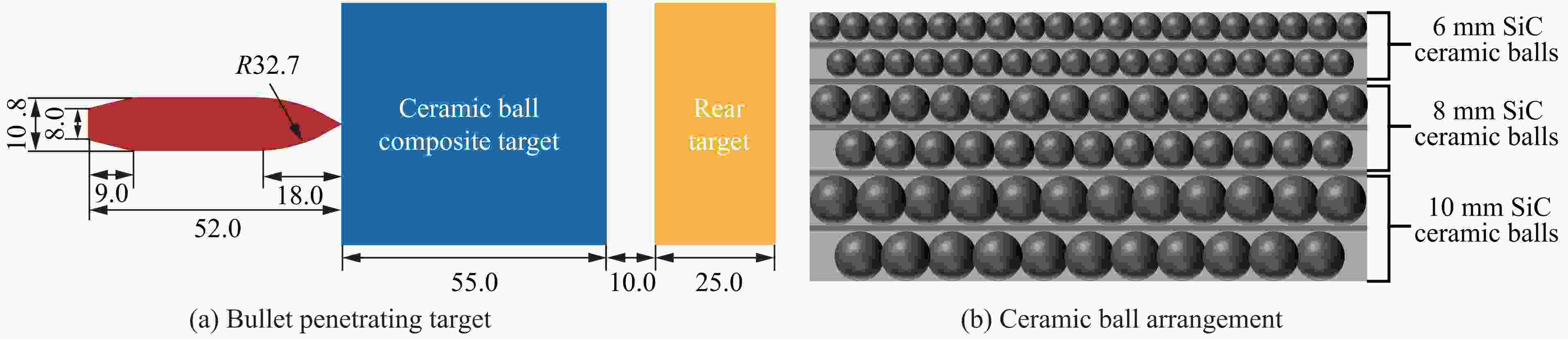
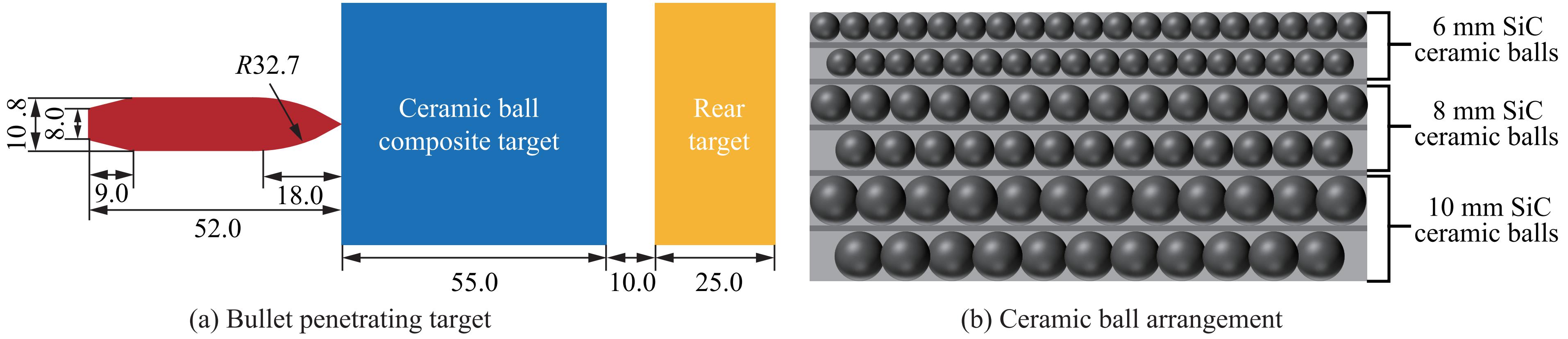
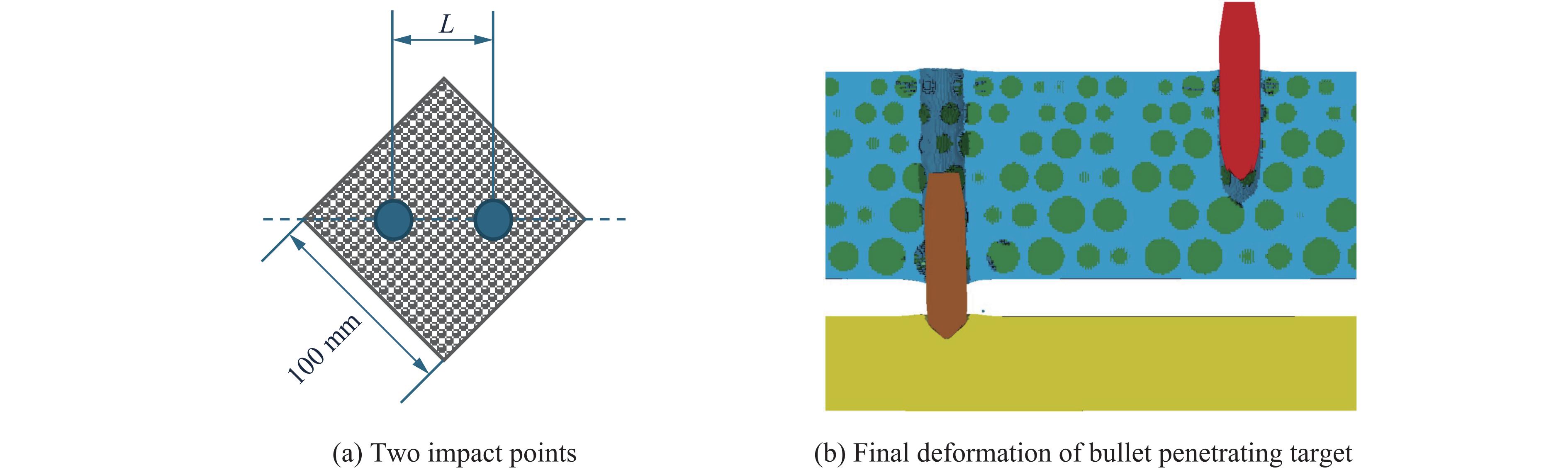
图 2 弹体侵彻复合靶板及陶瓷球排布示意图(单位为mm)
Figure 2. Schematic diagrams of projectile penetration composite target and ceramic ball arrangement (unti in mm)
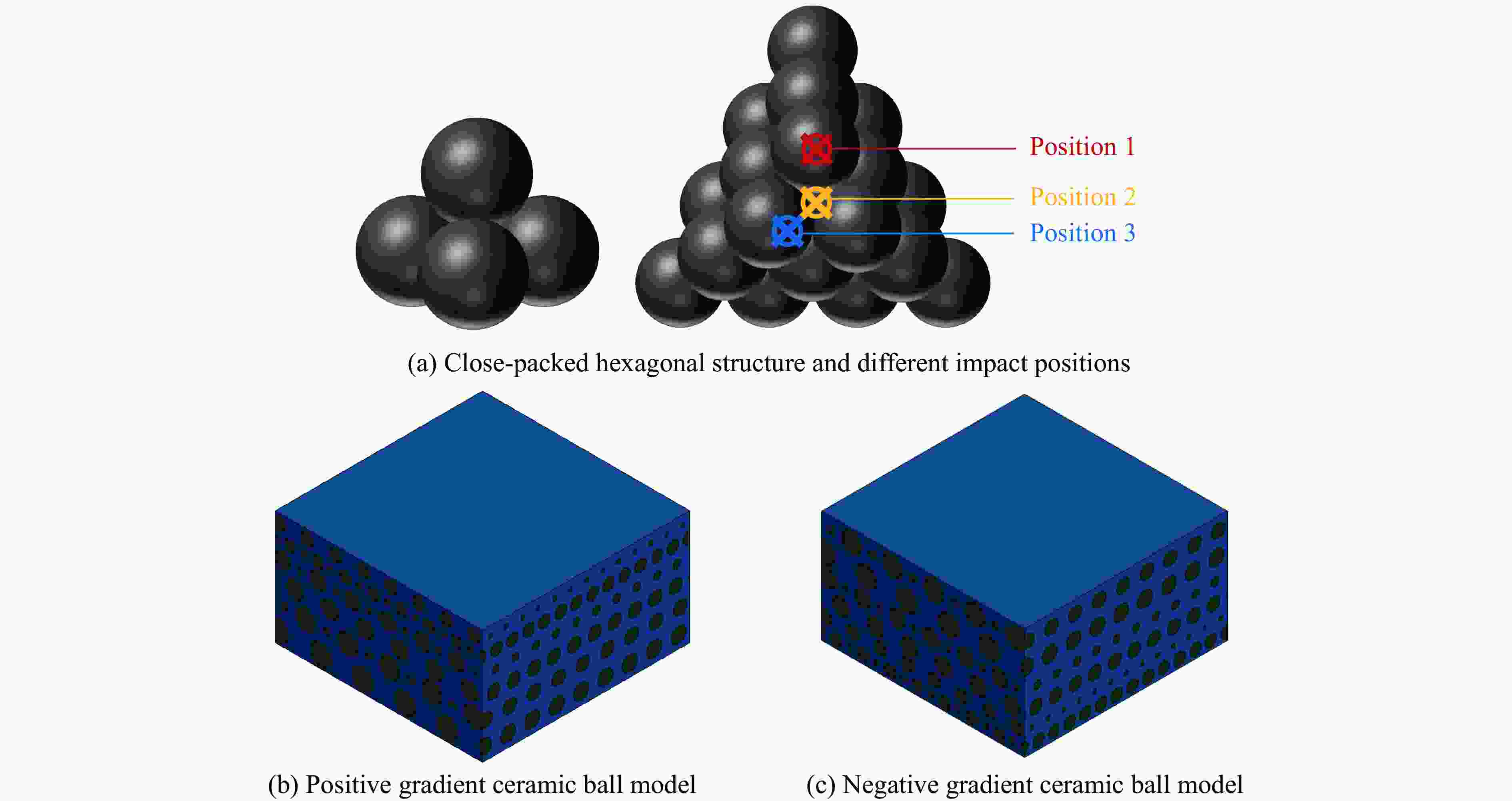
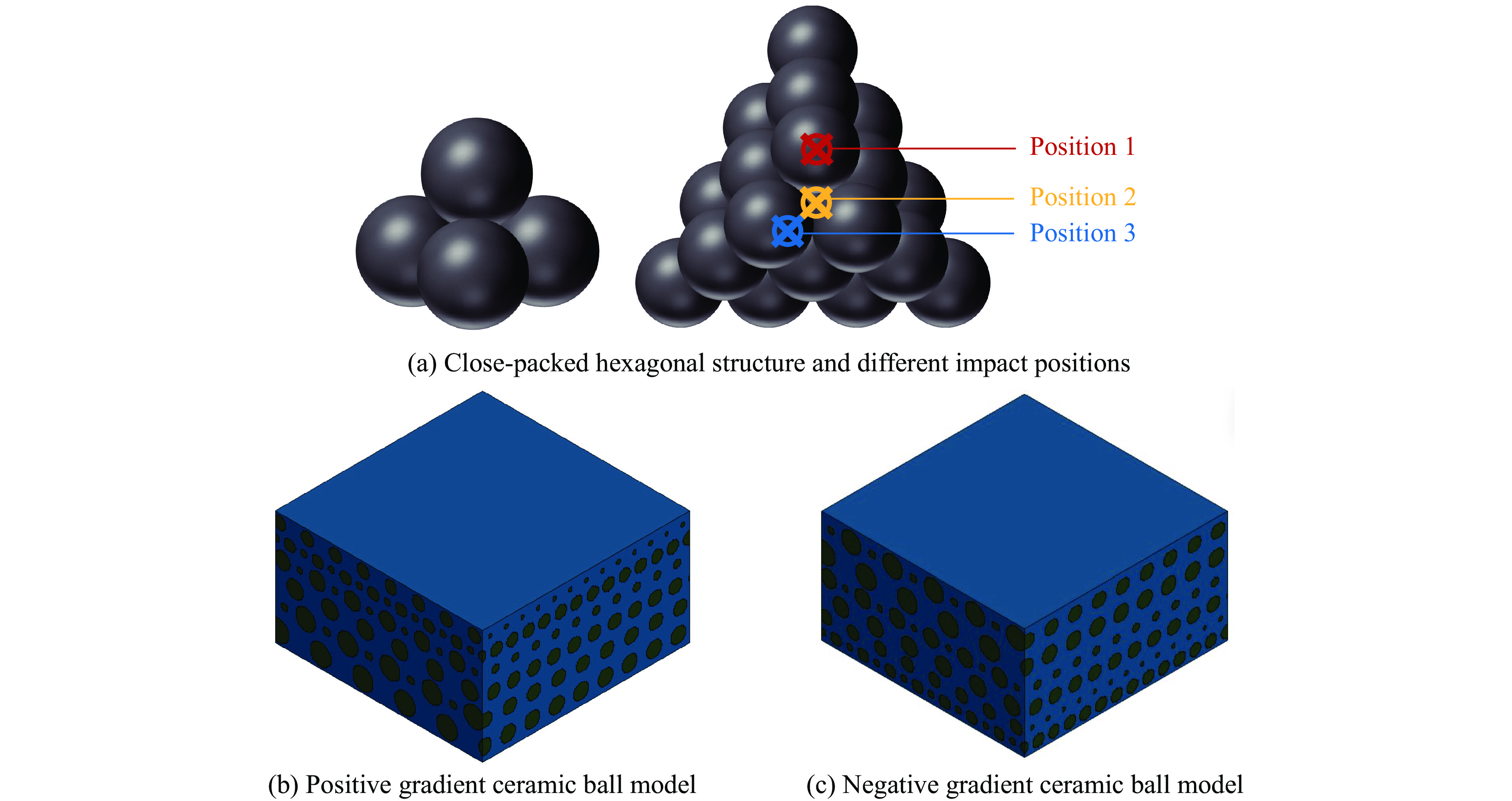
图 5 梯度陶瓷球铝合金复合靶板有限元模型
Figure 5. Finite element models of gradient ceramic-ball aluminum alloy composite target
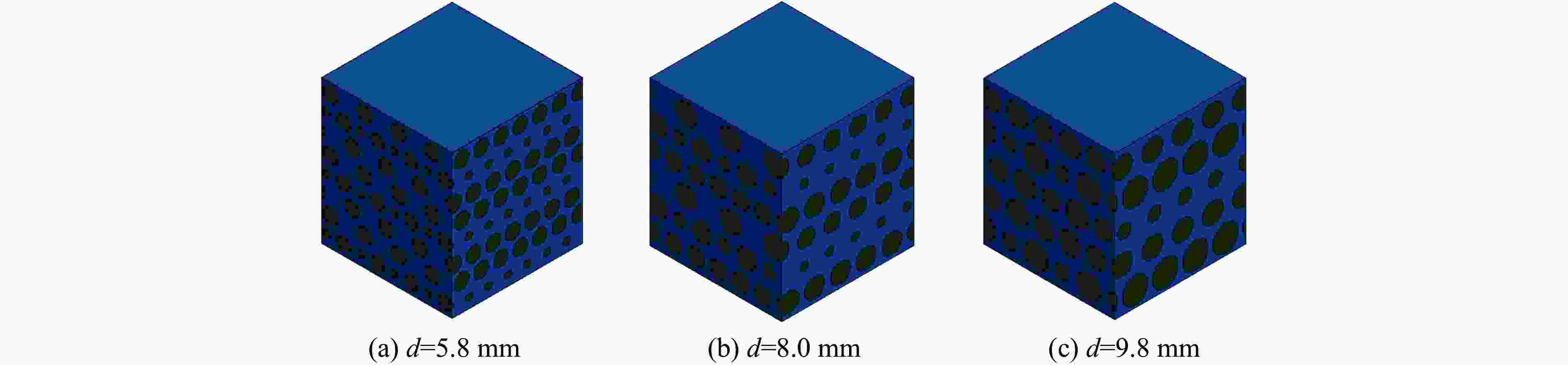
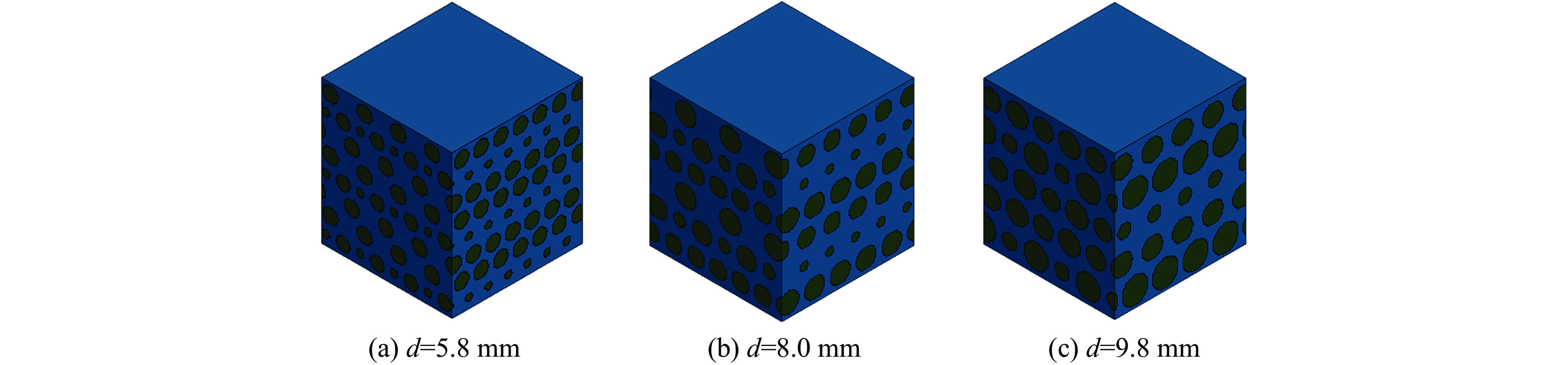
图 6 3种不同陶瓷球尺寸的均布陶瓷球模型
Figure 6. Three uniformly distributed ceramic ball models with different ceramic-ball sizes
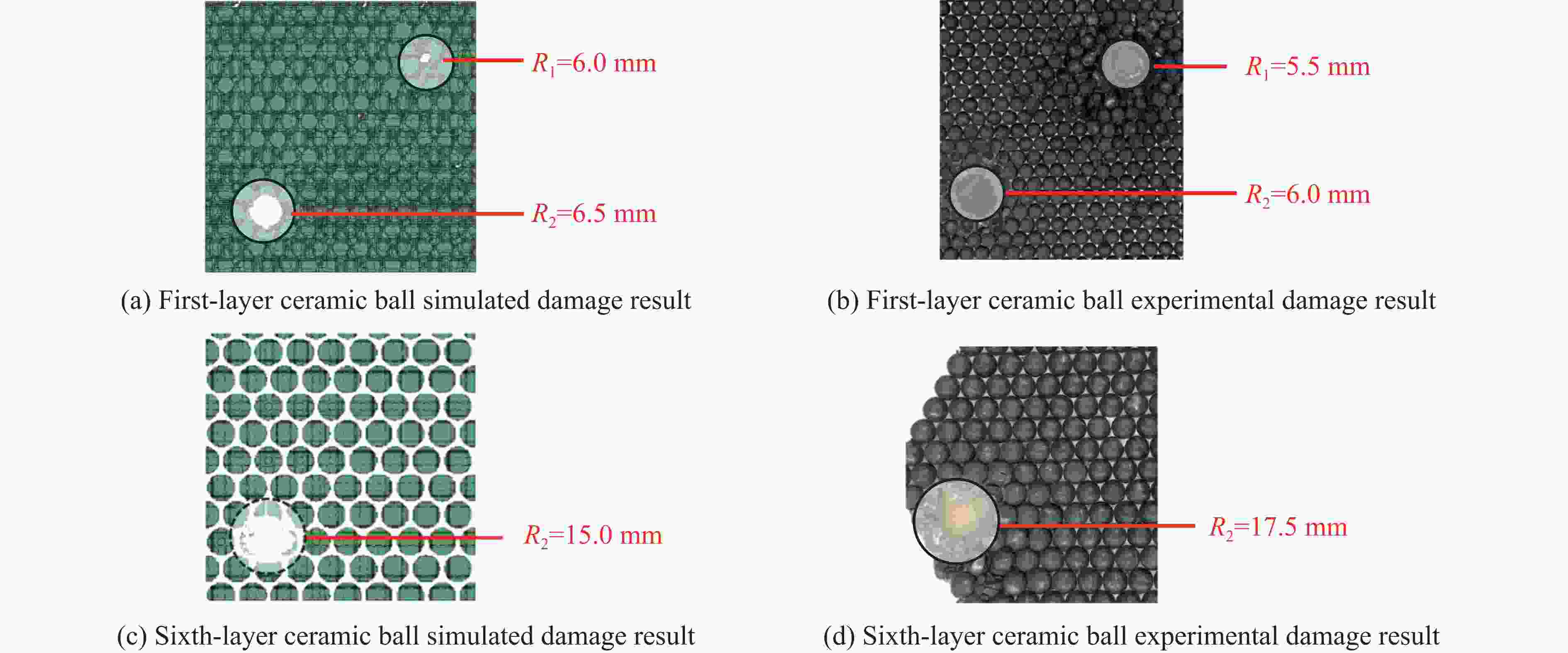
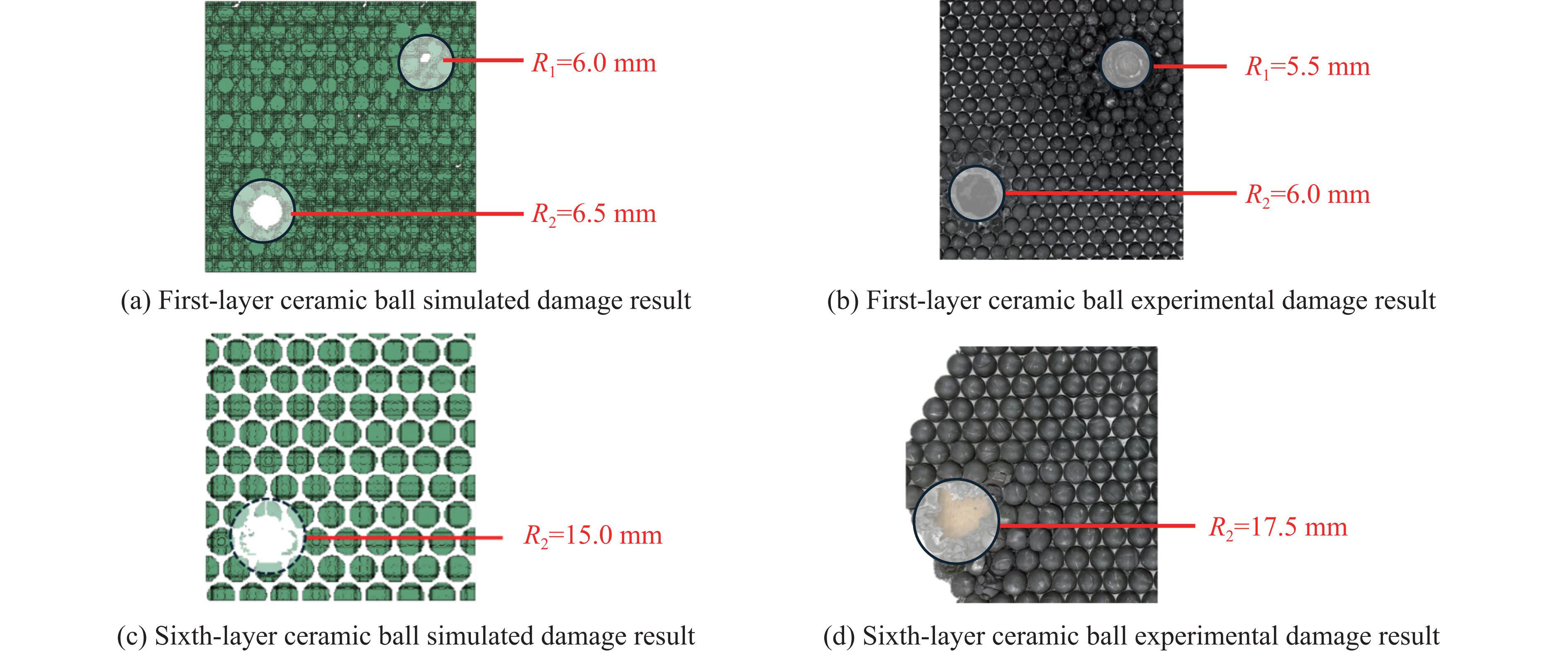
图 8 仿真与实验陶瓷球损伤对比
Figure 8. Comparison of damage in simulated and experimental ceramic balls
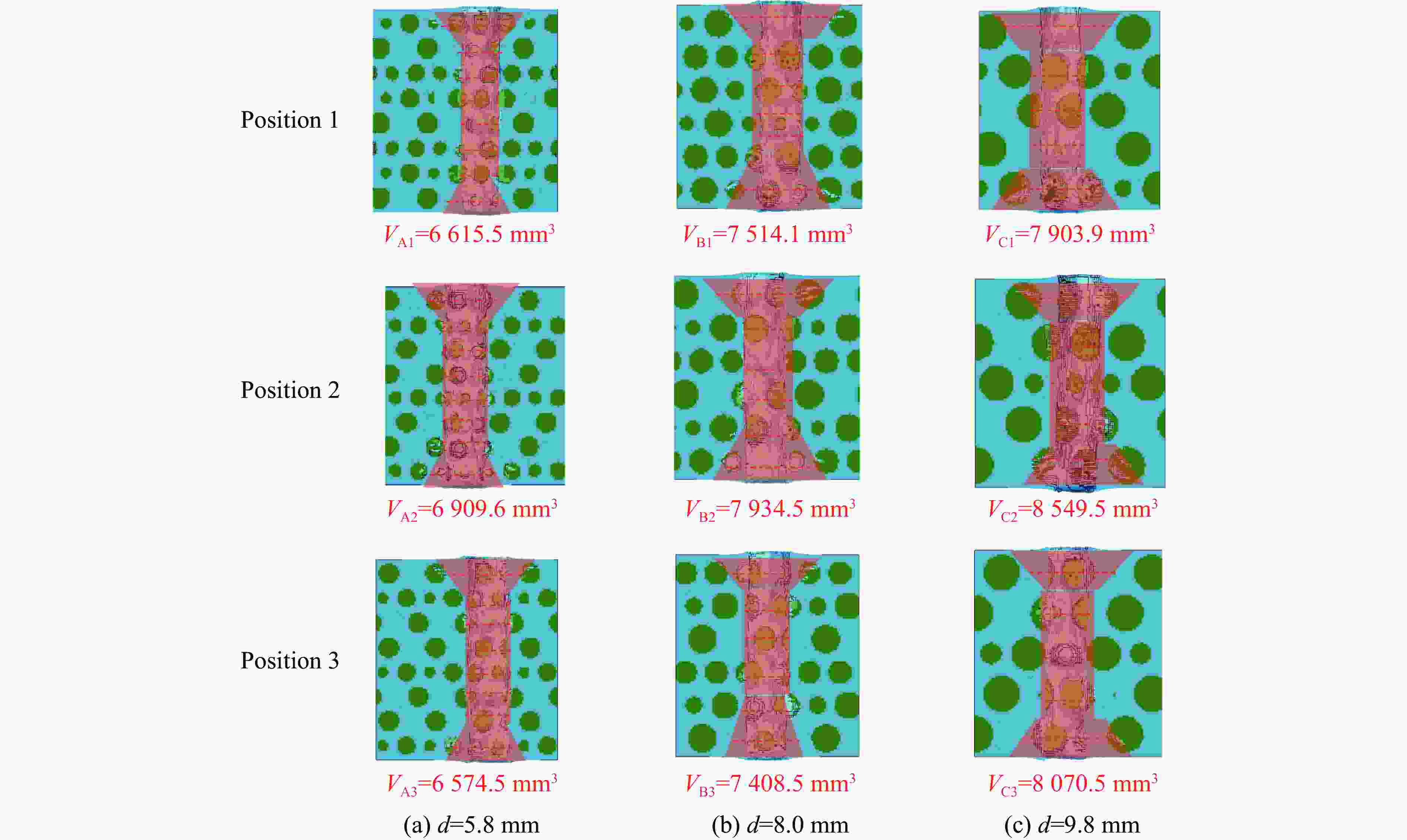
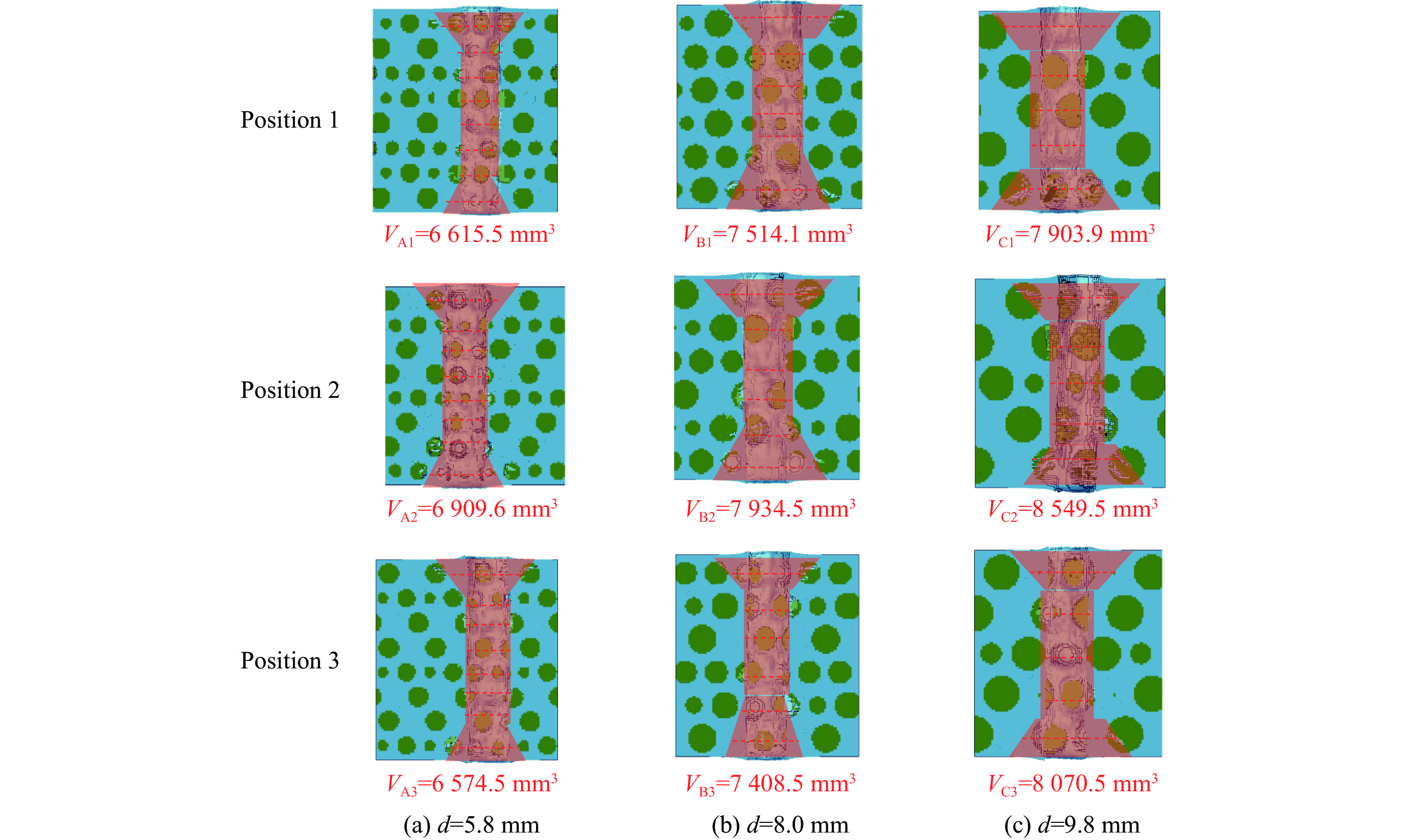
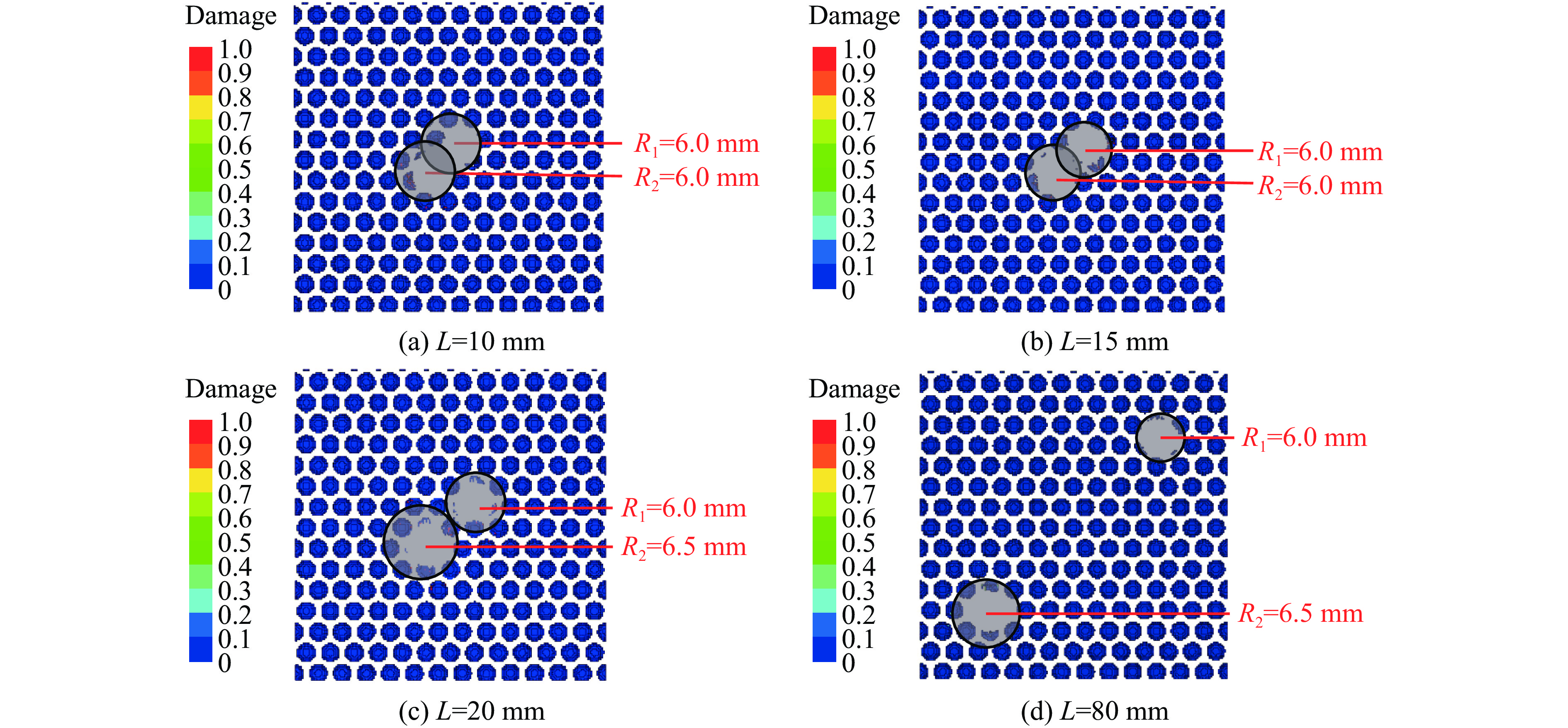
图 9 不同尺寸的陶瓷球复合靶板着弹点的损伤结果
Figure 9. Damage patterns at different impact points on target plates with different-diameter ceramic balls
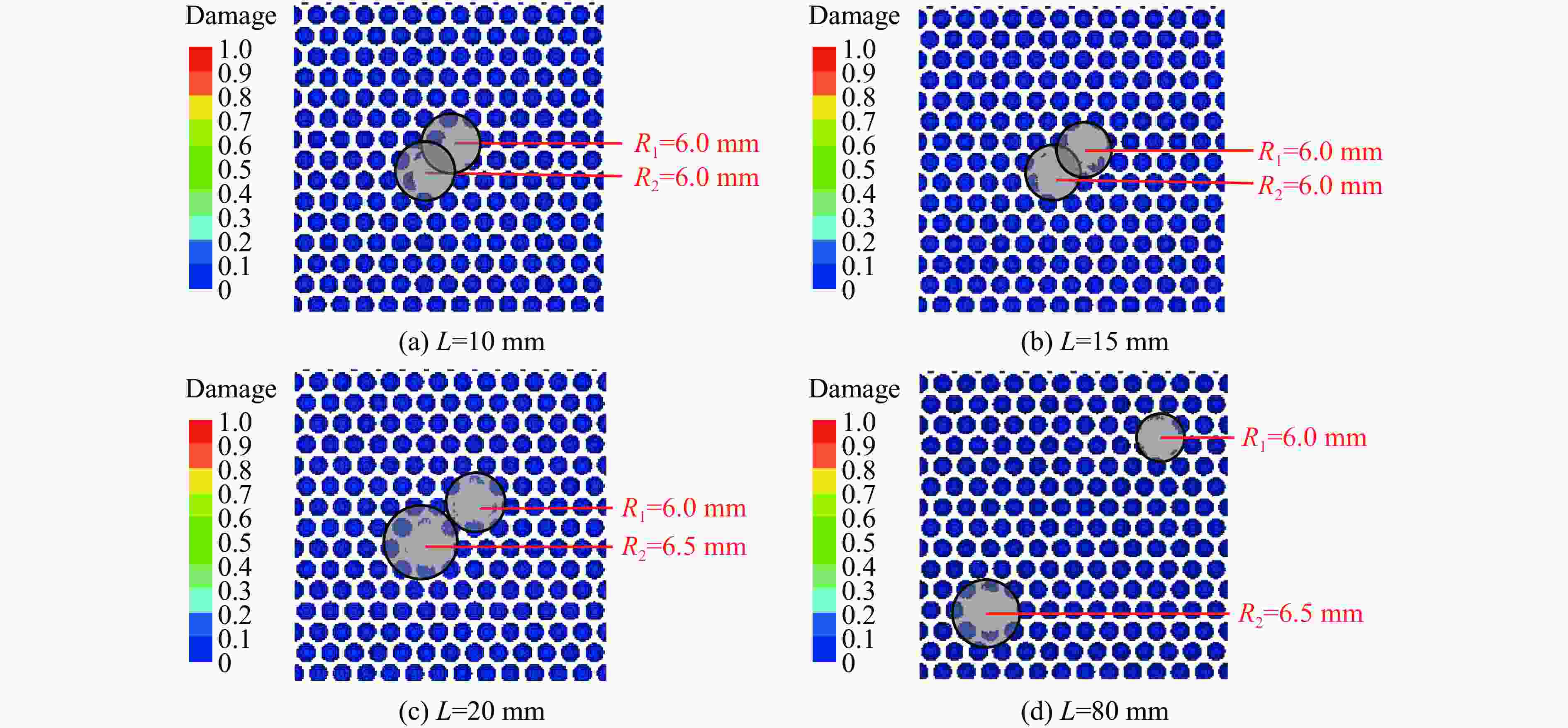
图 10 不同着弹间距下第1层陶瓷球的损伤分布
Figure 10. Damage distribution of the first layer of ceramic balls at different impact spacings
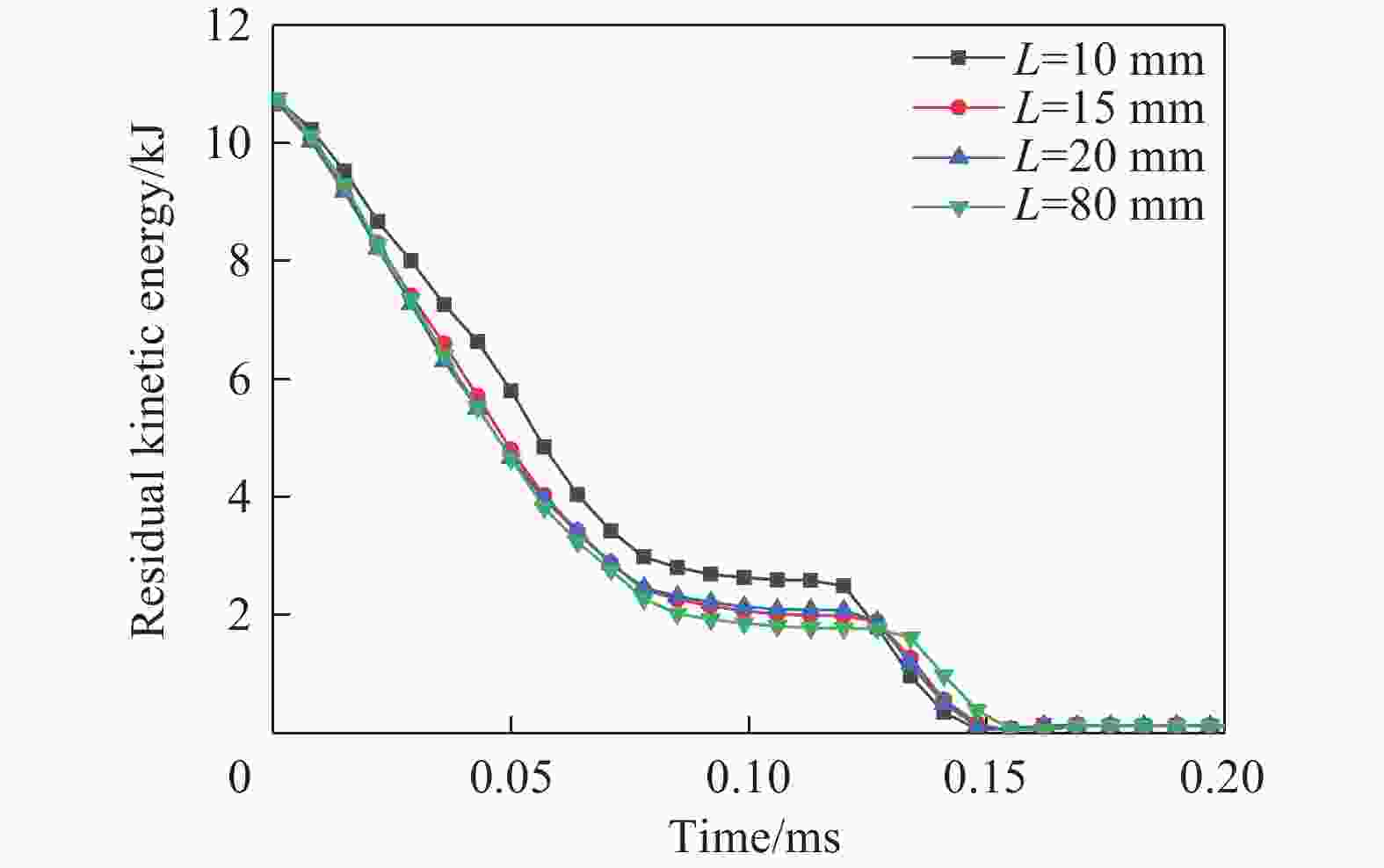
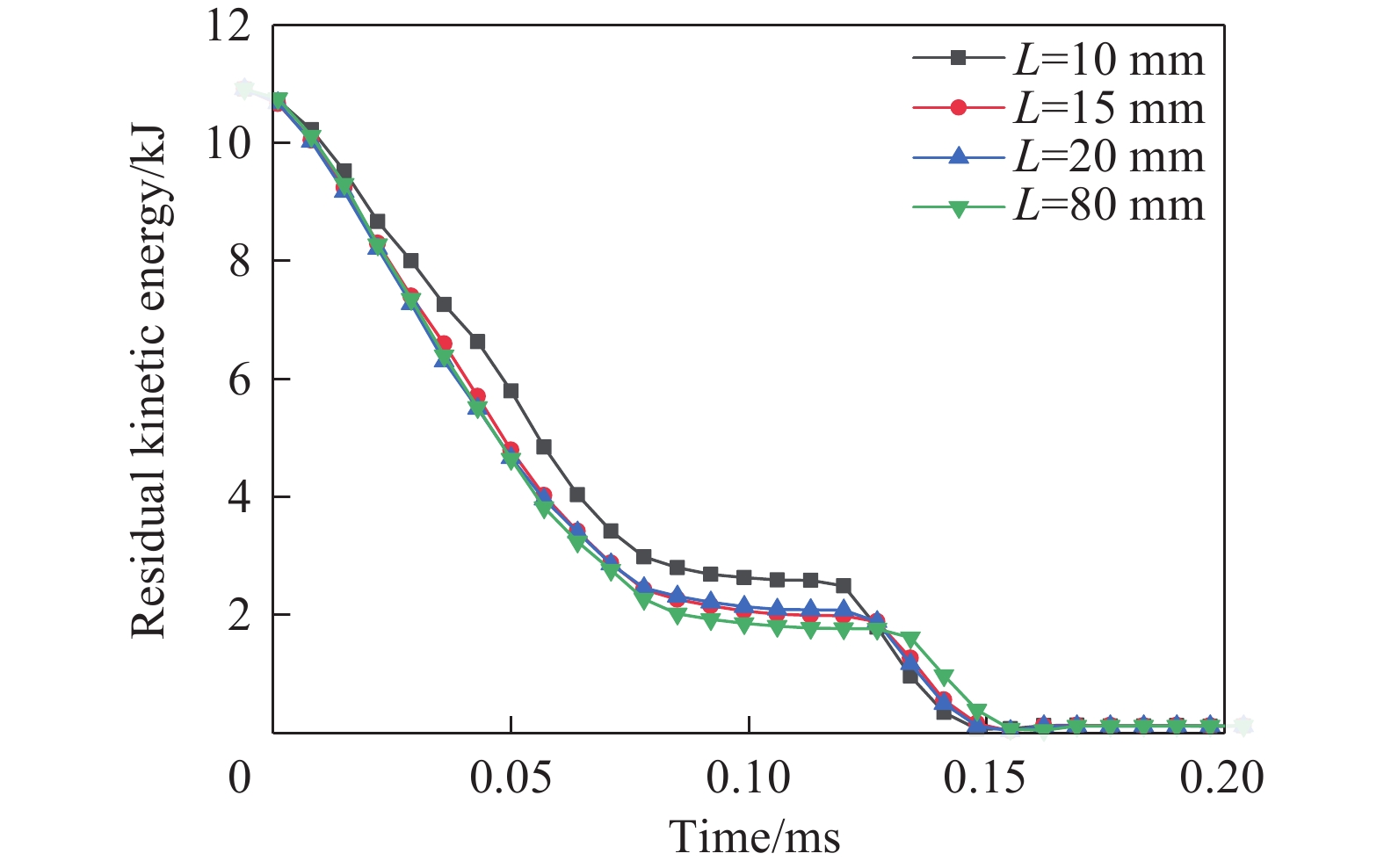
图 11 不同着弹间距下第2发弹的剩余动能随时间的变化
Figure 11. Residual kinetic energy of the the second projectile at different impact spacings varying with time
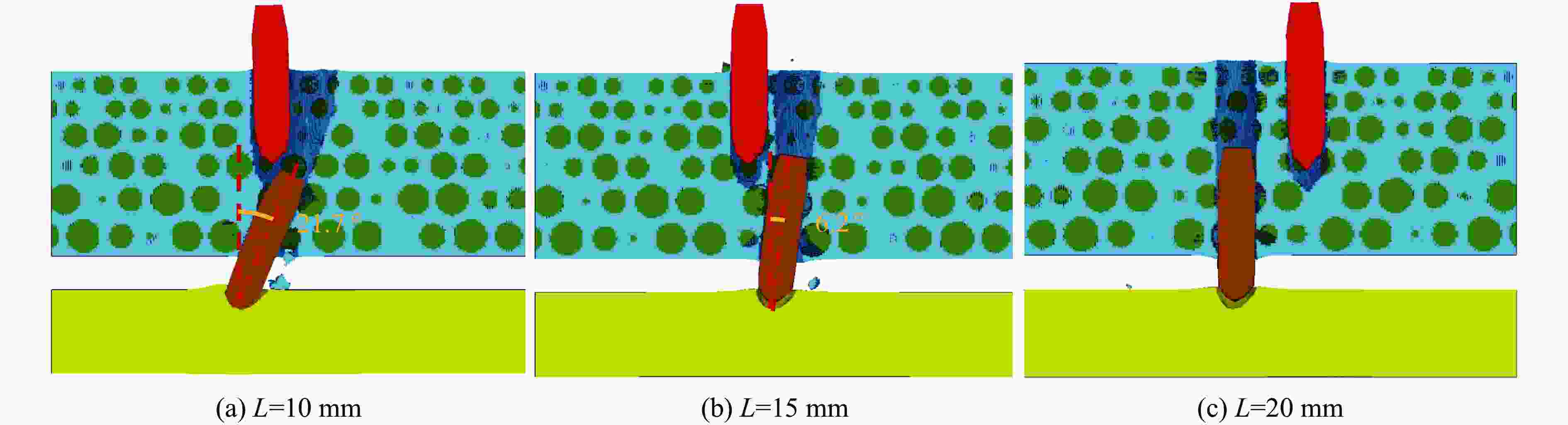
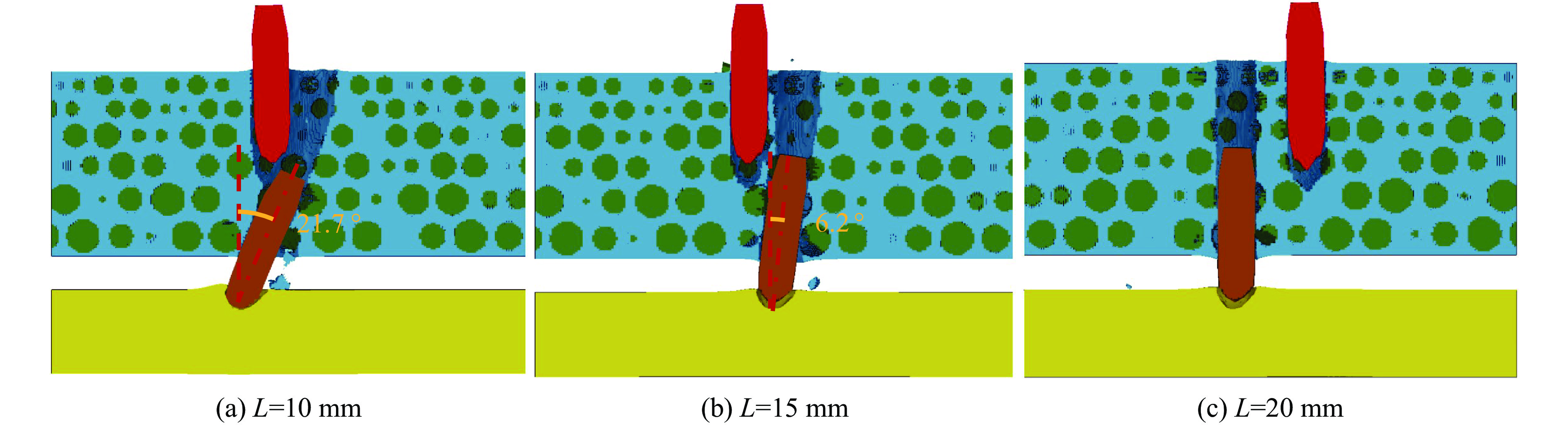
图 12 不同着弹间距下陶瓷球复合靶板的最终变形
Figure 12. Final deformation of ceramic ball composite target plates at different impact spacings
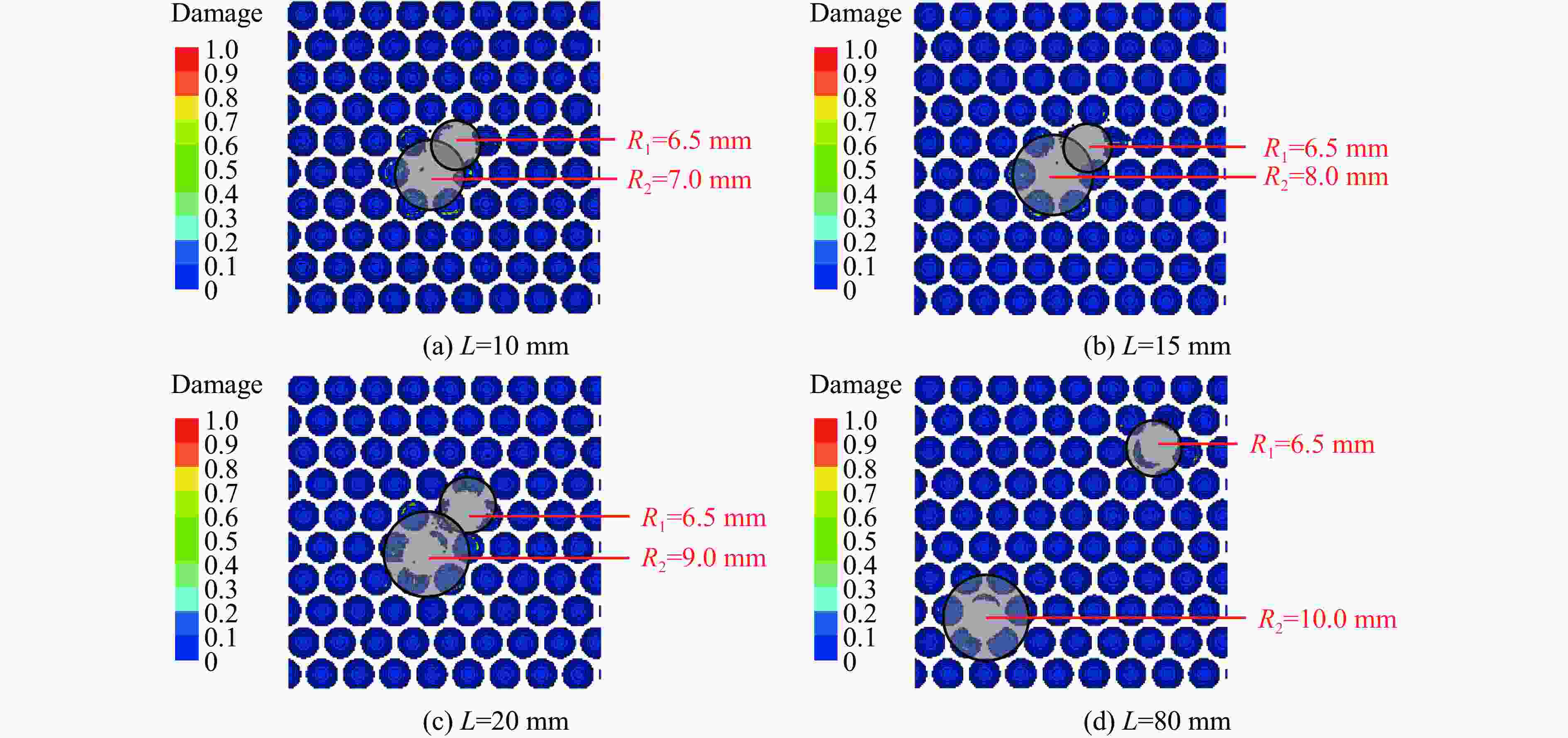
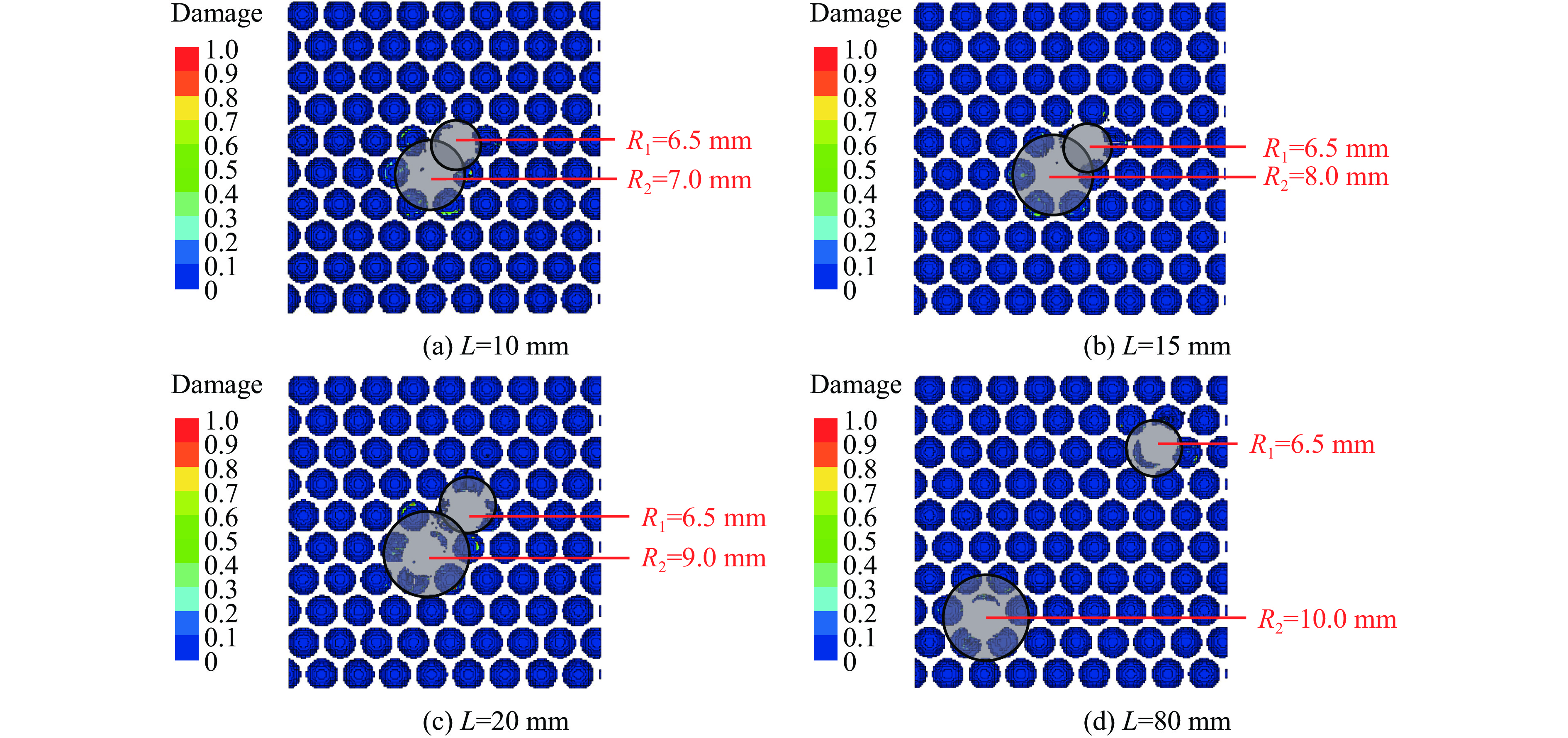
图 13 不同着弹间距下的第1层陶瓷球的损伤分布
Figure 13. Damage distribution of the first layer of ceramic balls at different impact spacings
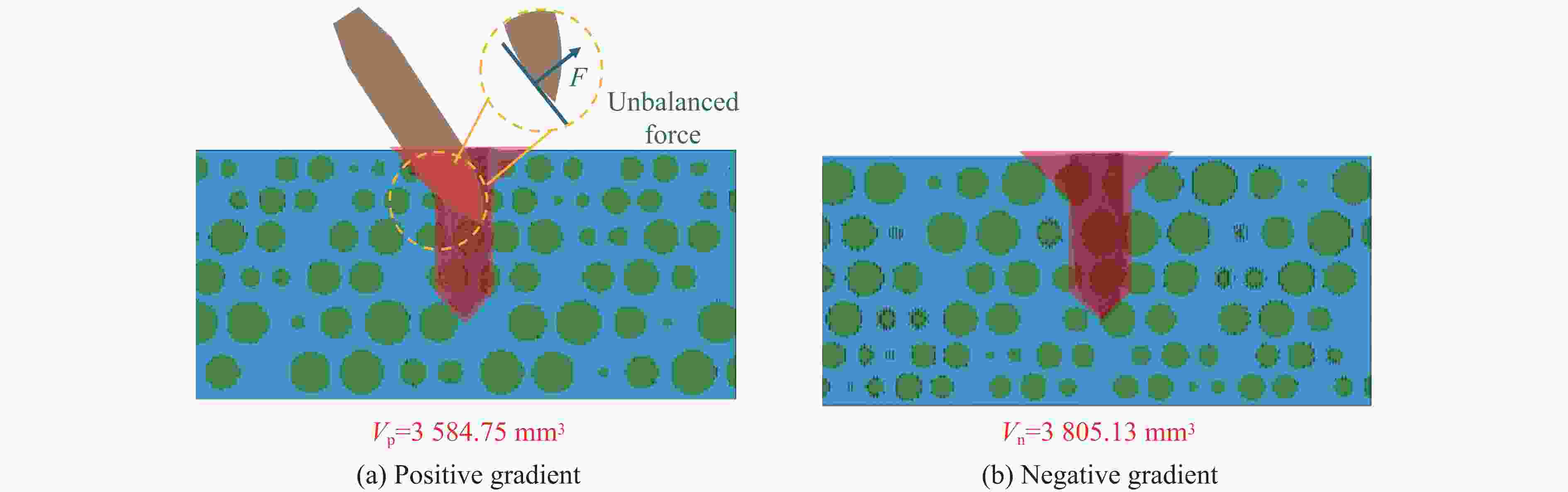
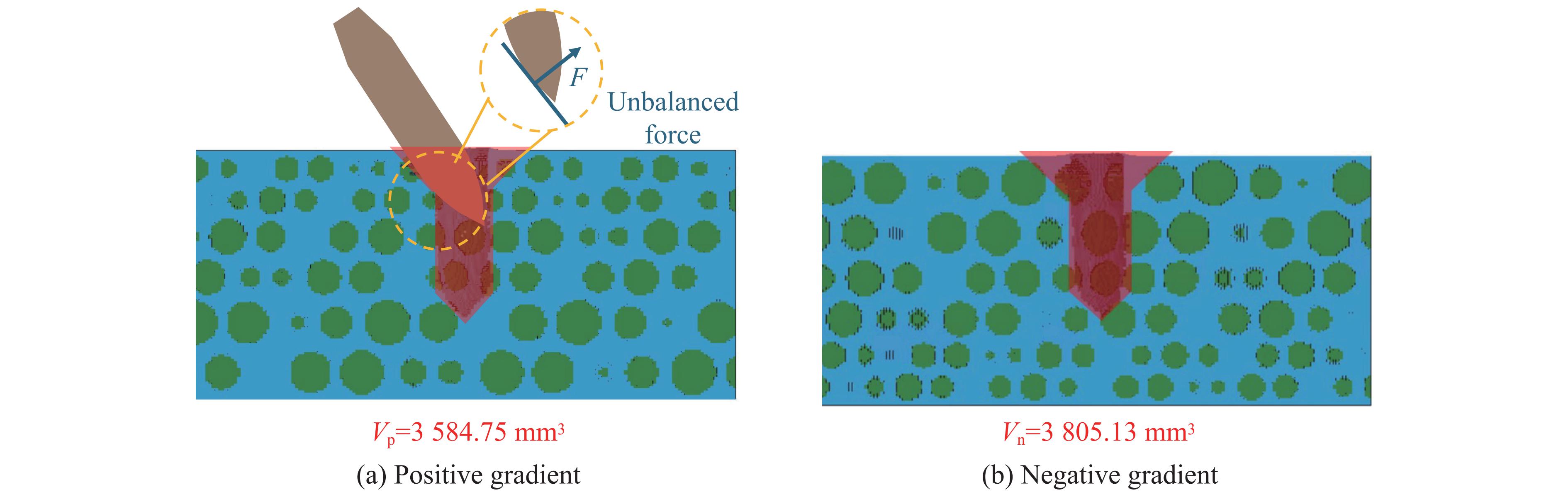
图 14 正负梯度结构中第1发弹的损伤区域对比
Figure 14. Comparison of damage zones of the first bullet in the positive and negative gradient structures
材料 弹性模量/GPa 密度/(kg·m−3) 泊松比 屈服强度/MPa T12A钢 197.57 7830 0.295 3544  下载: 导出CSV
表 2 SiC陶瓷的材料参数
Table 2. Material parameters of SiC ceramics
参数 不同用途对应的参数值 防弹 结构材料 密度/(g·cm−3) ≥3.14 ≥3.10 HV5硬度 ≥ 2400 ≥ 2200 显气孔率/% <0.2 <0.2 抗弯强度/MPa ≥380 ≥400 碳化硅原料纯度/% ≥99 ≥99 最高使用温度/℃ 1600 1600
下载: 导出CSV
表 3 金属的JC模型参数
Table 3. JC model parameters for metals
材料 ρ/(kg·m−3) G/GPa A/MPa B/MPa n C m Tm/K cp/(J·kg−1·K−1) T12A 7850 77 3500 9900 0.16 0 1 1793 477 7075铝 2780 28 369 684 0.73 0.0086 1.7 775 880 603钢[23] 7850 77 830 660 0.36 0.006 0.804 1793 447 材料 D1 D2 D3 D4 D5 c2/(m·s−1) a2 S1 T12A 1.4 0 0 0 0 4569 0.46 1.33 7075铝 0.112 0.123 1.5 0.007 0 3173 0.46 1.49 603钢[23] 0.34 407 7.322 0 0 4569 0.46 1.33
下载: 导出CSV
-
[1] KILIÇ N, EKICI B. Ballistic resistance of high hardness armor steels against 7.62 mm armor piercing ammunition [J]. Materials and Design (1980-2015), 2013, 44: 35–48. DOI: 10.1016/j.matdes.2012.07.045. [2] ATAPEK S H, KARAGOZ S. Ballistic impact behaviour of a tempered bainitic steel against 7.62 mm armour piercing projectile [J]. Defence Science Journal, 2011, 61(1): 81–87. DOI: 10.14429/dsj.61.411. [3] BØRVIK T, DEY S, CLAUSEN A H. Perforation resistance of five different high-strength steel plates subjected to small-arms projectiles [J]. International Journal of Impact Engineering, 2009, 36(7): 948–964. DOI: 10.1016/j.ijimpeng.2008.12.003. [4] RYAN S, LI H, EDGERTON M, et al. The ballistic performance of an ultra-high hardness armour steel: an experimental investigation [J]. International Journal of Impact Engineering, 2016, 94: 60–73. DOI: 10.1016/j.ijimpeng.2016.03.011. [5] TAN M T, ZHANG X F, XIONG W, et al. Influence of layered back plate on the ballistic performance of ceramic armor [J]. Composite Structures, 2023, 308: 116688. DOI: 10.1016/j.compstruct.2023.116688. [6] LIU P, ZHU D J, YAO Y M, et al. Numerical simulation of ballistic impact behavior of bio-inspired scale-like protection system [J]. Materials and Design, 2016, 99: 201–210. DOI: 10.1016/j.matdes.2016.03.040. [7] NAYAK N, BANERJEE A, SIVARAMAN P. Ballistic impact response of ceramic-faced aramid laminated composites against 7.62 mm armour piercing projectiles [J]. Defence Science Journal, 2013, 63(4): 369–375. DOI: 10.14429/dsj.63.2616. [8] WANG J H, SHI X M, CUI C L, et al. Study on anti-penetration performance of metal matrix ceramic ball composite [J]. Journal of Physics: Conference Series, 2024, 2891(5): 052010. DOI: 10.1088/1742-6596/2891/5/052010. [9] GUSAROV A V, PODRABINNIK P A, PINARGOTE N W S, et al. On thermomechanical compatibility in ceramic/metal interpenetrating phase composites [J]. The International Journal of Advanced Manufacturing Technology, 2025, 139(3/4): 1747–1763. DOI: 10.1007/s00170-025-15980-3. [10] LIU J, WU C Q, LI J, et al. Ceramic balls protected ultra-high performance concrete structure against projectile impact: a numerical study [J]. International Journal of Impact Engineering, 2019, 125: 143–162. DOI: 10.1016/j.ijimpeng.2018.11.006. [11] SHAO R Z, WU C Q, SU Y, et al. Experimental and numerical investigations of penetration resistance of ultra-high strength concrete protected with ceramic balls subjected to projectile impact [J]. Ceramics International, 2019, 45(6): 7961–7975. DOI: 10.1016/j.ceramint.2019.01.110. [12] 陈铭, 张永亮, 郑航, 等. 陶瓷球金属复合结构的抗弹性能和梯度设计 [J]. 高压物理学报, 2021, 35(5): 054201. DOI: 10.11858/gywlxb.20210739.CHEN M, ZHANG Y L, ZHENG H, et al. Ballistic performance analysis and gradient optimization design of ceramic ball and metal composite armor [J]. Chinese Journal of High Pressure Physics, 2021, 35(5): 054201. DOI: 10.11858/gywlxb.20210739. [13] KANG N Y, LAI J Z, ZHOU J H, et al. Effect of ceramic balls/UHPC panel on impact resistance of composite armor [J]. International Journal of Impact Engineering, 2023, 178: 104623. DOI: 10.1016/j.ijimpeng.2023.104623. [14] CHAO Z L, JIANG L T, CHEN G Q, et al. The microstructure and ballistic performance of B4C/AA2024 functionally graded composites with wide range B4C volume fraction [J]. Composites Part B: Engineering, 2019, 161: 627–638. DOI: 10.1016/j.compositesb.2018.12.147. [15] WANG Y, LIU Q, ZHANG B, et al. Improved ballistic performance of a continuous-gradient B4C/al composite inspired by nacre [J]. Materials Science and Engineering: A, 2023, 874: 145071. DOI: 10.1016/j.msea.2023.145071. [16] CHAO Z L, WANG Z W, JIANG L T, et al. Ballistic performance and mechanism of a novel multi-scale bionic array gradient (SiCc+B4Cp)/Al armor [J]. Transactions of Materials Research, 2025, 1(2): 100022. DOI: 10.1016/j.tramat.2025.100022. [17] 崔凤单, 马天, 李伟萍, 等. SiC和B4C防弹插板抗多发弹打击损伤特性研究 [J]. 无机材料学报, 2017, 32(9): 967–972. DOI: 10.15541/jim20160667.CUI F D, MA T, LI W P, et al. Damage characteristics of SiC and B4C ballistic insert plates subjected to multi-hit [J]. Journal of Inorganic Materials, 2017, 32(9): 967–972. DOI: 10.15541/jim20160667. [18] PRAKASH A, RAJASANKAR J, IYER N R, et al. Prediction of behavior of ceramic/metal composite panels under two consecutive ballistic impacts [J]. International Journal for Computational Methods in Engineering Science and Mechanics, 2014, 15(3): 192–202. DOI: 10.1080/15502287.2014.882431. [19] SHEN Y H, WANG Y W, DU S F, et al. Effects of the adhesive layer on the multi-hit ballistic performance of ceramic/metal composite armors [J]. Journal of Materials Research and Technology, 2021, 13: 1496–1508. DOI: 10.1016/j.jmrt.2021.05.058. [20] HE Y M, JIA N, ZHOU J Q, et al. Designing SiC ceramic composite armor structure to resist multiple impacts from armor-piercing incendiary bullets [J]. International Journal of Impact Engineering, 2025, 203: 105367. DOI: 10.1016/j.ijimpeng.2025.105367. [21] 余毅磊, 蒋招绣, 王晓东, 等. 轻型陶瓷/金属复合装甲抗垂直侵彻过程中陶瓷碎裂行为研究 [J]. 爆炸与冲击, 2021, 41(11): 113301. DOI: 10.11883/bzycj-2021-0134.YU Y L, JIANG Z X, WANG X D, et al. Research on ceramic fragmentation behavior of lightweight ceramic/metal composite armor during vertical penetration [J]. Explosion and Shock Waves, 2021, 41(11): 113301. DOI: 10.11883/bzycj-2021-0134. [22] JOHNSON G R, COOK W H. Fracture characteristics of three metals subjected to various strains, strain rates, temperatures and pressures [J]. Engineering Fracture Mechanics, 1985, 21(1): 31–48. DOI: 10.1016/0013-7944(85)90052-9. [23] 高伟韬. 典型仿生结构的动态力学行为和防护机理 [D]. 合肥: 中国科学技术大学, 2025: 35–37. DOI: 10.27517/d.cnki.gzkju.2025.000936.GAO W T. Dynamic mechanical behaviors and protective mechanisms of typical biomimetic structures [D]. Hefei: University of Science and Technology of China, 2025: 35–37. DOI: 10.27517/d.cnki.gzkju.2025.000936. [24] JOHNSON G R, HOLMQUIST T J. An improved computational constitutive model for brittle materials [J]. AIP Conference Proceedings, 1994, 309(1): 981–984. DOI: 10.1063/1.46199. [25] GOUR G, IDAPALAPATI S, GOH W L, et al. Equivalent protection factor of bi-layer ceramic metal structures [J]. Defence Technology, 2022, 18(3): 384–400. DOI: 10.1016/j.dt.2021.01.007. -



计量
- 文章访问数: 769
- HTML全文浏览量: 364
- PDF下载量: 464
- 被引次数: 0